Bernie Madoff: The Man Behind the Largest Ponzi Scheme in History

Bernie Madoff's Ponzi scheme is the largest in history. Learn about his background, rise to power, the red flags missed, and the consequences.
Background and Early Life
Bernie Madoff, a prominent American financier, is infamous for executing the largest Ponzi scheme in history. Defrauding thousands of investors out of tens of billions of dollars over approximately two decades, Madoff’s financial swindle left a trail of destruction and devastation across the financial landscape. Born on April 29, 1938, in Brooklyn, New York, Bernie grew up in a middle-class family. His father, Ralph Madoff, worked as a plumber before transitioning to the financial industry with his wife, Sylvia, founding Gibraltar Securities—a firm that was eventually shut down by regulatory authorities. Bernie attended Hofstra University, earning a bachelor’s degree in political science. Initially intending to pursue a law degree at Brooklyn Law School, he later shifted gears and founded Bernard L. Madoff Investment Securities LLC with his brother Peter in 1960. Madoff initially focused on trading penny stocks using the capital he earned through jobs such as installing sprinklers and working as a lifeguard. However, a significant market downturn forced him to rely on family friends’ investments for salvage.
Bernie Madoff was determined not to be left out of the Wall Street establishment. Despite facing numerous challenges throughout his early career, Madoff managed to carve out a niche as a scrappy market maker, catering to clients with small orders that larger firms disregarded. Eventually, he became a pioneer in electronic trading and chaired the Nasdaq exchange in the early 1990s. However, it was his Ponzi scheme that ultimately brought him notoriety and left a lasting impact on the financial world.
Madoff’s rise to success in market making and electronic trading allowed him to amass significant wealth and establish a reputation as a savvy investor. Unfortunately, this respectability would be used as a facade to lure unsuspecting investors into his Ponzi scheme.
The following sections will delve deeper into the various aspects of Bernie Madoff’s life and career, including his early accomplishments in market making and electronic trading, the origins and mechanics of his Ponzi scheme, the role of split-strike conversion in fueling investor confidence, missed opportunities for detection, and the impact on victims.

Rise to Success: Market Making and Electronic Trading
Bernie Madoff’s journey from a small firm to becoming the chair of Nasdaq and a leading figure in market making and electronic trading is an intriguing part of his story. He began as a scrappy market maker, taking orders that larger firms would dismiss, and eventually built one of the most successful electronic trading platforms of his time, handling half of the New York Stock Exchange’s order flow.
Born in Brooklyn, Madoff started his career in finance with modest beginnings. He earned a degree in political science from Hofstra University in 1960 and briefly attended law school at Brooklyn Law School but left before completing it. With only $5,000 to invest, he traded penny stocks, which paid off when the “Kennedy Slide” flash crash of 1962 wiped out many investors’ portfolios. This unfortunate event forced his father-in-law to bail him out, but the experience instilled in Madoff a lifelong commitment to managing risk.
Despite these early setbacks, Madoff remained determined. He and his brother Peter continued to build their firm, Bernard L. Madoff Investment Securities LLC, which initially struggled to gain respectability on Wall Street due to its lack of membership in the New York Stock Exchange (NYSE). However, this perceived disadvantage fueled Madoff’s ambition.
Madoff pioneered market-making techniques and electronic trading, creating a competitive edge for his firm by offering insights into market activity that attracted massive order flow. He paid a substantial portion of the NYSE’s order flow, much to the chagrin of some competitors. As Madoff’s success grew, he became chair of the Nasdaq in 1990 and served on its board in 1991 and 1993. By the late 1980s, Madoff was making over $100 million annually.
The legitimacy of Madoff’s investment strategy, split-strike conversion, remains a topic of debate among finance professionals. This legitimate trading strategy involves using options and stocks to limit risk while potentially increasing returns. However, some critics argue that Madoff’s reported 15% annual returns through this method were unlikely, especially given the market conditions at the time.
Regardless of the legitimacy of his investment approach, Madoff’s reputation as a successful market maker and electronic trader opened doors to Wall Street’s elite, attracting investors who trusted him with their assets. This would eventually contribute to the massive Ponzi scheme that he would later orchestrate.
Stay tuned for the following sections in our comprehensive exploration of Bernie Madoff’s life: The Scheme (early warnings and red flags), The Players (significant investors and their involvement), and The Aftermath (impact, consequences, and distribution of restitution).
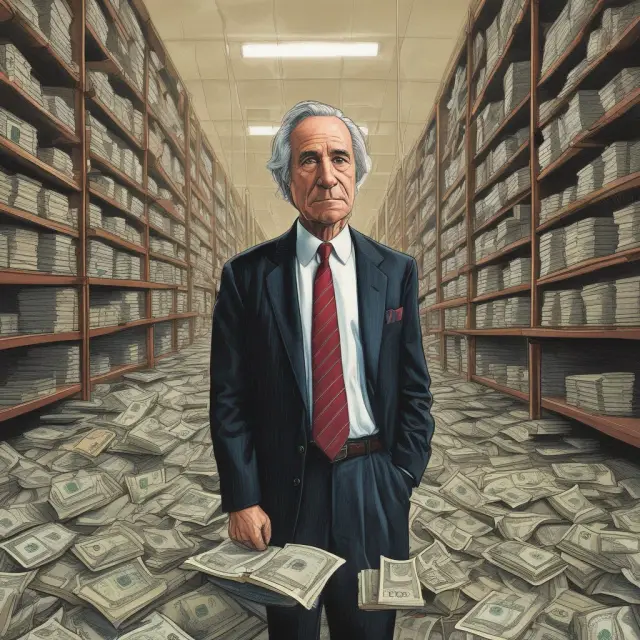
The Ponzi Scheme: How it Started and Attracted Investors
Bernie Madoff’s Ponzi scheme is a dark chapter in modern financial history. This massive fraud, which lasted for at least 17 years, defrauded thousands of investors out of tens of billions of dollars. The question on everyone’s mind is how Madoff managed to pull off this incredible deception and attract so many high-profile investors? In this section, we’ll delve into the details of Madoff’s Ponzi scheme and discuss its early signs, tactics used to attract investors, and the implications for financial regulation.
Bernie Madoff created the illusion of a legitimate investment firm by offering consistent, high returns without raising suspicion. His investment strategy, split-strike conversion, was claimed to be a sophisticated trading method that could generate significant profits. However, in reality, it was just a facade. Behind the scenes, Madoff was depositing new investor funds into an account and using those funds to pay off earlier investors looking for redemptions.
One reason why Madoff’s scheme went undetected for so long is that the early signs were subtle. For example, Madoff maintained an image of exclusivity by initially turning away potential clients. Those who did invest saw their accounts growing steadily, with annual returns averaging around 10% to 15%. Additionally, Madoff donated millions to various charitable causes and even claimed to have lost money during the 2008 financial crisis. These actions reinforced his reputation as a successful and trustworthy investor.
However, there were several red flags that should have raised suspicions earlier. For instance, Madoff’s returns were unusually consistent and high compared to the overall market performance. This inconsistency was particularly evident during bear markets when most investors experienced losses. Moreover, the lack of transparency regarding his investment strategy and the absence of any regulatory oversight further fueled skepticism.
Despite these concerns, many investors chose to overlook these red flags due to several factors. The high returns Madoff offered were appealing, especially during a time when other investments were underperforming. Additionally, Madoff’s reputation as a respected financial professional added an extra layer of legitimacy. Furthermore, many investors believed that they could afford to lose some money while potentially earning significant profits in the long term.
The implications of Madoff’s Ponzi scheme are far-reaching. It exposed weaknesses in financial regulation and oversight, particularly regarding private investment funds. The fact that Madoff was able to operate his fraud for so long highlights the need for increased transparency, better regulatory monitoring, and stronger investor protection measures. Additionally, it underscores the importance of conducting thorough due diligence before investing in any financial instrument.
In conclusion, Bernie Madoff’s Ponzi scheme is a cautionary tale for investors and regulators alike. It demonstrates the risks associated with high-return investments that lack transparency and regulatory oversight. As we continue to navigate the complexities of the modern financial landscape, it is crucial that we remain vigilant against similar schemes and commit ourselves to strengthening our regulatory frameworks to protect investors and maintain trust in the financial system.
Madoff’s Strategy: Split-Strike Conversion
Bernie Madoff’s investment strategy was a crucial element in his ability to attract and retain investors for over four decades. One of the strategies he claimed to use was split-strike conversion, a legitimate trading technique used in options markets. This section will explore what this strategy entails, its legitimacy, and how it contributed to Madoff’s success in luring investors into his Ponzi scheme.
Split-strike conversion is an options trading strategy that involves creating a synthetic long or short position on a particular stock by buying and selling various combinations of calls and puts with the same expiration date but different strike prices. This strategy can help hedge risk, generate income, and provide limited profit potential depending on market conditions. However, it requires a deep understanding of options pricing and is considered complex for many investors.
When Madoff introduced split-strike conversion to potential investors, he presented it as a secretive, exclusive trading strategy that could yield high returns with minimal risk. He claimed to be one of the few experts in this technique, further fueling investor interest. However, there is no evidence that Madoff actually employed this strategy for his clients or even understood it fully. Instead, he used their belief in its legitimacy as a sales pitch.
Madoff’s Ponzi scheme relied on the fact that many investors were unable or unwilling to fully understand the details of his investment strategies. By creating an air of secrecy and exclusivity around split-strike conversion, Madoff was able to attract investors who trusted him implicitly, believing they were getting access to a lucrative trading strategy that only the elite could understand.
The fact that Madoff’s returns remained consistently high even during market downturns further solidified his reputation as a financial genius. However, this consistency was only possible because he was using new investor funds to pay off earlier investors and cover up losses, rather than from actual investment returns.
Investors were also attracted to Madoff due to the respectability and exclusivity of his firm, which had ties to prominent institutions such as the Nasdaq and JPMorgan Chase. This added an extra layer of legitimacy that made it more difficult for investors to suspect fraud.
Madoff’s strategy of using split-strike conversion as a selling point was a masterful ploy that helped him lure in thousands of unsuspecting investors over several decades. It wasn’t until the 2008 financial crisis and Madoff’s inability to meet redemption requests that the truth about his Ponzi scheme came to light, leaving many investors with significant losses and feelings of betrayal.

The Red Flags: Early Warnings of the Scam
Bernie Madoff’s Ponzi scheme was a closely guarded secret for decades. However, there were early warning signs that should have raised suspicions among investors and regulators alike. One of the primary reasons the fraud went undetected for so long is the fact that Madoff created an image of respectability and exclusivity to attract and maintain trust from his clients. He generated seemingly high but not outlandish returns, claimed to use a legitimate strategy known as split-strike conversion, and limited access to his investment pool by turning away potential investors. However, several irregularities emerged that should have raised concerns among those who examined Madoff’s business more closely.
First, it is important to understand the nature of Madoff’s returns. While some believed they were extraordinary due to the consistent and high rate of return, others found them suspicious. For example, during a period when the S&P 500 dropped by nearly 40%, Madoff reported year-to-date gains of 5.6%. This inconsistency between market trends and Madoff’s performance should have been a significant red flag.
Second, despite claiming to invest client funds in blue-chip stocks using a collar strategy, Madoff was applying for massive loans from European banks. This seemingly unnecessary borrowing raised suspicions among financial analysts like Harry Markopolos, who believed that “the lie was simply too large to fit into the agency’s limited imagination.”
In 2005, Markopolos filed a complaint with the Securities and Exchange Commission (SEC) alleging Madoff was running a Ponzi scheme. Despite this warning, the SEC did not act upon the information provided by Markopolos. The reasons for the lack of action remain unclear, but many believe that it was due to the size and complexity of the fraud, as well as Madoff’s reputation and connections within the financial industry.
Another red flag was the undisclosed commissions that Madoff Securities earned instead of the standard hedge fund fee of 1% of total assets under management and 20% of profits. These undisclosed fees were a significant departure from industry norms, indicating potential irregularities within the firm.
Despite these warning signs, Madoff continued to attract new investors due to his reputation for consistent high returns and exclusivity. However, as more investors sought to redeem their funds, Madoff was unable to keep up with the demand, ultimately leading him to confess to his sons in late 2008 that he had been running a Ponzi scheme for decades.
In conclusion, Bernie Madoff’s Ponzi scheme relied on creating an image of respectability and trustworthiness to attract and retain investors despite several red flags that should have raised suspicions. These included inconsistent returns, unexplained borrowing from European banks, and undisclosed commissions. The fact that these warning signs were ignored by both investors and regulators allowed the fraud to go undetected for decades, ultimately leading to billions in losses for victims.

The Investigation: Missed Opportunities
Although Bernie Madoff’s Ponzi scheme was eventually unmasked in 2008, many regulatory bodies had previously shown signs of suspicion towards his business practices. In fact, investigations into Madoff Securities Limited began as early as the 1990s. Yet, despite these red flags, it took nearly two decades for authorities to fully uncover the extent of the fraud.
In 1992, Harry Markopolos, a financial analyst, first raised concerns about Madoff’s trading operations when he noticed several irregularities. He filed his initial complaint with the Securities and Exchange Commission (SEC) in May 2000 but was disregarded. Markopolos’ primary argument against Madoff’s investment strategy was that it seemed implausible for the firm to generate such high returns during market downturns, while sticking to safe investments as claimed.
Moreover, Madoff Securities appeared to be earning ‘undisclosed commissions,’ which was a clear violation of industry standards at that time. However, the SEC failed to act on this crucial piece of information. In 2005, Markopolos submitted another detailed letter to the SEC outlining his concerns and providing evidence of discrepancies in Madoff’s trading records. Again, the regulatory body ignored his warning.
Despite these missed opportunities for intervention, the investigations did not end there. In 2005, the Financial Industry Regulatory Authority (FINRA) launched its own probe into Madoff’s business practices but failed to uncover anything irregular. This inaction is often criticized as a significant oversight, given that FINRA had access to vast amounts of data and resources.
Madoff’s scheme remained largely undetected until 2008 when the global financial crisis hit, causing a wave of redemption requests. It was then that Madoff could no longer maintain the facade and confessed to his sons that he had been running a Ponzi scheme for years. The subsequent fallout resulted in tremendous losses for thousands of investors worldwide, as well as severe consequences for regulatory bodies and financial institutions involved.
The missed opportunities to uncover Madoff’s fraud earlier serve as an important reminder that vigilance and proactive investigation are essential in maintaining the integrity of financial markets. The case also highlights the need for stronger regulatory frameworks and collaboration between various authorities to protect investors from potential scams.
The Players: The Big Four and Other Key Figures
Bernie Madoff’s Ponzi scheme attracted some significant investors, with four in particular, known as ‘The Big Four,’ who invested large sums of money. Carl Shapiro, Jeffry Picower, Stanley Chais, and Norm Levy maintained long-term relationships with Madoff that spanned decades. The details of their involvement in the fraud are not entirely clear, but it’s estimated that each of these men had amassed hundreds of millions of dollars through the scheme.
Carl Shapiro, a real estate developer from Florida, first met Madoff in 1963 when Shapiro invested $250,000 with him. Over the next decades, Shapiro continued to put money into Madoff’s funds. According to court documents, during the 1980s and 1990s, Shapiro’s investments grew exponentially under Madoff’s management. By some estimates, his investment with Madoff reached as high as $1 billion before the Ponzi scheme was exposed in 2008.
Jeffry Picower, another significant investor, had been a client of Madoff since the late 1970s. Picower, an art dealer, had initially invested around $5 million with Madoff but eventually grew his investment to over $7 billion before the scheme’s collapse. According to court documents, Picower was one of the last major investors to withdraw funds from Madoff’s fund just weeks before it imploded in 2008. Picower’s actions allowed him to reap a reported profit of around $5 billion.
Stanley Chais and Norm Levy were also significant investors in Madoff’s scheme. Chais, the former president and chairman of Viacom, invested over $1 billion with Madoff through his family foundation, the Samuel I. Newhouse Foundation. Similarly, Levy, who ran a real estate firm, invested around $200 million with Madoff.
Madoff’s relationships with these men were not just limited to their investments. They often served as ambassadors for him, bringing in new investors and referring business to his firm. The loyalty of these investors is puzzling, given that they all knew each other and had access to the same information about Madoff’s returns. One theory suggests that these investors may have suspected or even known about the scheme but chose to look the other way as long as they continued to profit from it.
The role of the Big Four in the Ponzi scheme raises questions about their complicity and responsibility in the fraud. While Madoff was ultimately responsible for masterminding the scam, their involvement suggests a larger issue with oversight, accountability, and potentially, regulatory failure. The investigation into the Ponzi scheme uncovered missed opportunities to detect the fraud earlier, leaving many wondering whether these investors could have done more to protect themselves and others from being defrauded.
The implications of the Madoff scandal extend beyond just the four major investors. The scheme had a significant impact on various nonprofits and feeder funds. A number of charitable organizations like Hadassah and the Elie Wiesel Foundation for Peace lost millions in investments, causing substantial financial damage and harm to their reputations. Additionally, several feeder funds pumped client funds into Madoff’s firm, further perpetuating the scheme by outsourcing their management responsibilities to him.
The aftermath of the Madoff scandal saw an extensive effort to recover losses for victims of the Ponzi scheme. The Madoff Victims Fund was established in 2010 to compensate individuals who lost money as a result of the fraud. As of September 2021, the fund has made seven distributions totaling over $568 million. While this represents a small fraction of the losses sustained by victims, it is an important step towards making them whole again.
The Madoff scandal serves as a stark reminder of the importance of transparency, accountability, and diligent oversight in the financial sector. It also highlights the need for investors to remain skeptical and question the legitimacy of unusually high returns. The lessons learned from this case continue to shape regulatory frameworks and investor behavior in an attempt to prevent similar frauds from occurring in the future.
The Scheme’s Expansion: Nonprofits and Feeder Funds
Madoff’s Ponzi scheme did not only target individual investors but also expanded to nonprofit organizations and feeder funds. These entities were crucial components of Madoff’s elaborate fraud, as they contributed billions in assets and legitimized his investment firm. Understanding how Madoff targeted these institutions sheds light on the intricacies of his scheme and its far-reaching impact.
Firstly, nonprofits became involved with Madoff through various connections to his firm or individuals within their organizations. Some of the most notable victims include Hadassah, an international women’s charity, and the Elie Wiesel Foundation for Peace. The former lost nearly all of its assets in the fraud, totaling around $160 million, while the latter lost approximately $50 million. Madoff used his friendship with J. Ezra Merkin, an officer at Manhattan’s Fifth Avenue Synagogue, to approach congregants and secure their trust. By various accounts, Madoff swindled over $2.4 billion from its members.
Feeder funds, also known as “limited partnerships,” were another vital piece of the puzzle in Madoff’s Ponzi scheme. These investment vehicles are designed to pool funds from numerous investors and allocate them to other investment managers. The most famous feeder funds involved in Madoff’s case include Fairfield Sentry Ltd., Ascot Partners, and J. Ezra Merkin Investment Management. They served as intermediaries between Madoff’s investors and his investment firm, making it even more challenging for victims to detect the fraud since they trusted their own managers, not directly dealing with Madoff.
In some instances, feeder funds were unknowingly complicit in the scheme. For example, Ascot Partners, which was managed by Zvi Ganzfried, sent over $1 billion to Madoff’s firm between 2003 and 2008. Despite suspicions regarding the high returns generated by Madoff, the feeder fund continued to invest their clients’ money with him due to pressure from those seeking the attractive yields.
In conclusion, nonprofits and feeder funds played a significant role in Madoff’s Ponzi scheme, as they contributed billions in assets and brought legitimacy to his firm. The intricacies of these entities made it more challenging for victims to detect the fraud, ultimately resulting in substantial losses for numerous charities and investment firms.
Understanding this aspect of the Madoff case provides insight into the lengths that Bernie Madoff went to perpetuate one of the largest financial frauds in history and the consequences faced by various institutions involved.

Impact and Consequences: Suicides, SEC Criticism, and Punishment
The aftermath of Bernie Madoff’s Ponzi scheme was both emotionally devastating and far-reaching. The psychological toll on victims and their families, as well as the financial implications for investors and regulatory agencies, highlighted the gravity of Madoff’s deception.
Suicides: Tragically, some victims of Madoff’s fraud took their lives in the wake of their losses. One such victim was Mark Madoff, Bernie’s elder son, who committed suicide exactly two years after his father’s fraud was exposed. Mark, a passionate animal rights activist, left a note saying, “I couldn’t do it anymore,” according to news sources. The reasons for his suicide are not entirely clear, but the financial distress caused by their father’s scheme certainly played a significant role.
Other investors also suffered from the emotional turmoil of losing their life savings and took their own lives. The heart-wrenching consequences underscored the importance of mental health support for victims of financial fraud.
SEC Criticism: Following Madoff’s revelation, criticism towards the Securities and Exchange Commission (SEC) intensified. Financial analyst Harry Markopolos had warned the SEC about Bernie Madoff’s suspicious dealings as early as 1999, but the regulator took no action until 2008. Markopolos’s frustration was palpable in his scathing letters to the SEC, which detailed irregularities and inconsistencies in Madoff’s firm. The slow response from the SEC became a significant point of contention and led to numerous investigations into their handling of the situation.
Punishment: Bernie Madoff was sentenced to 150 years in prison on June 29, 2009, and ordered to pay $170 billion as restitution. His punishment served both as a deterrent for future financial criminals and a reminder of the severity of white-collar crimes. However, despite his long sentence, Madoff’s health began to decline in 2020, prompting his lawyers to request an early release due to a terminal kidney disease. He died at the Butner Federal Correctional Institution on April 14, 2021.
Madoff’s sentence did little to ease the financial hardships of his victims, as the Madoff Victims Fund distributed only $568 million in restitution by September 2021, according to Forbes. The fund was designed to distribute funds to investors who lost money to Madoff and provide some form of compensation for their losses. However, with tens of billions of dollars stolen from victims, the payout was a mere fraction of what was owed to them.
In summary, Bernie Madoff’s Ponzi scheme brought about heart-wrenching consequences, including suicides, criticism towards the SEC, and lengthy punishments for those involved. The aftermath highlighted the importance of mental health support for victims, stricter regulations on financial institutions, and heightened awareness of the psychological effects of financial fraud.

Aftermath: The Winding Down Process
The aftermath of Bernie Madoff’s Ponzi scheme was an intricate process involving significant efforts to compensate his victims for their losses and recover as much capital as possible. With over 4,700 victims and tens of billions in damages, the United States Department of Justice (DOJ) and the Securities Investor Protection Corporation (SIPC) worked together to facilitate a fair distribution of funds.
One of the primary objectives was to establish the Madoff Victim Fund (MVF), which aimed to provide compensation for those harmed by Bernie Madoff’s fraudulent activities. Established in 2009, the MVF received over $4 billion from JPMorgan Chase & Co., which had held much of Madoff’s clients’ funds as custodian.
The recovery process was not only about financial compensation but also involved addressing the emotional turmoil and sense of betrayal experienced by victims. To address these issues, the SIPC organized support groups to provide counseling and assistance for those affected. In addition to this, the organization launched an awareness campaign to help raise public awareness and educate potential victims about investment fraud.
Madoff’s Ponzi scheme was not limited only to individual investors; it also involved several charitable organizations and non-profit entities, which suffered significant losses. The MVF provided financial assistance to these organizations as well, helping them recover from their losses and continue their operations. Among the most notable non-profits affected were The Elie Wiesel Foundation for Peace, Hadassah, and the Manhattan’s Fifth Avenue Synagogue.
The impact of Bernie Madoff’s fraud was far-reaching; it not only harmed those who had invested their savings but also resulted in extensive regulatory and legal repercussions. The SEC faced significant criticism for failing to detect the Ponzi scheme earlier, which led to increased scrutiny and reforms within the organization. To address these concerns, the SEC implemented new regulations aimed at strengthening its ability to monitor financial institutions more effectively.
Additionally, several key figures involved in Madoff’s fraud were brought to justice. Among those who faced criminal charges were Mark Madoff, Bernie’s elder son, who committed suicide two years after his father’s arrest; and Frank DiPascali, Bernie’s accountant, who was sentenced to ten years in prison.
The winding down process also involved the seizure of various assets related to the fraud. The U.S. Marshals Service auctioned off Madoff’s three homes and four boats to help recover some of the funds lost by victims. In total, over $3 billion has been recovered for Madoff’s victims through various channels.
As of September 2021, the Madoff Victim Fund has distributed its seventh distribution of more than $568 million to eligible victims. The fund continues to work with investors and regulators to ensure fair compensation and provide transparency throughout the process.

Frequently Asked Questions (FAQ)
Bernie Madoff’s Ponzi scheme is one of the largest financial frauds in history. In this section, we attempt to answer some frequently asked questions about Bernie Madoff, his Ponzi scheme, and its impact on investors.
Who was Bernie Madoff, and what was his role in finance?
Bernie Madoff was an American financier who rose to prominence as a market maker and chair of the Nasdaq in the 1990s. He also pioneered electronic trading capabilities. However, he is most infamous for executing the largest Ponzi scheme in history, defrauding thousands of investors out of tens of billions of dollars over several decades.
What was the strategy behind Bernie Madoff’s Ponzi scheme?
Madoff claimed to use a legitimate trading strategy called split-strike conversion. However, instead of investing client funds in this strategy, he deposited them into a single bank account and used it to pay earlier investors when they requested their money back. He attracted new investors to cover the payments, perpetuating the fraud.
When did Bernie Madoff’s Ponzi scheme start?
It is unclear exactly when Bernie Madoff’s Ponzi scheme began. He testified in court that it started in the early 1990s, but his account manager indicated that it had been ongoing for much longer.
Who were some of Bernie Madoff’s most significant investors?
Madoff attracted investments from major players on Wall Street and in various industries. Known as the “Big Four,” they included Carl Shapiro, Jeffry Picower, Stanley Chais, and Norm Levy. Several feeder funds also pumped client funds to Madoff’s firm.
Why did investors trust Bernie Madoff despite his unrealistically high returns?
Madoff was successful in cultivating an image of respectability and exclusivity. He turned many potential investors away, making it seem as though he only accepted a select few. Additionally, his apparently conservative investment approach—using safe blue-chip stocks and claiming to use split-strike conversion—gave investors confidence that their money was being well managed.
How did the SEC miss Bernie Madoff’s Ponzi scheme for so long?
The SEC had been investigating Bernie Madoff and his securities firm on and off since 1992 but failed to uncover the fraud. Financial analyst Harry Markopolos was one of the earliest whistleblowers, filing a complaint with the SEC in 2000. However, the regulator ignored him until it was too late. The SEC faced criticism for its slow response and lack of rigor during the initial investigations.
What was the impact on investors and victims?
Madoff’s Ponzi scheme resulted in significant financial losses for thousands of investors. Some victims committed suicide or experienced emotional distress. The Madoff Victims Fund has distributed over $568 million in compensation as of September 2021.
What was Bernie Madoff’s punishment?
Bernie Madoff was sentenced to 150 years in prison and forced to forfeit $170 billion as restitution. He died in prison on April 14, 2021.
Who were some of the victims of Bernie Madoff’s Ponzi scheme?
Some notable victims include several nonprofits, such as the Elie Wiesel Foundation for Peace and Hadassah, along with various individuals and institutions in the financial sector.
What can be learned from Bernie Madoff’s Ponzi scheme?
Bernie Madoff’s Ponzi scheme serves as a cautionary tale on trusting seemingly too-good-to-be-true investment opportunities, as well as the importance of regulatory oversight and investor education. It also highlights the risks associated with lack of transparency and accountability in financial institutions.
 Next entry · No. 402Understanding the Power of a Best Alternative to a Negotiated Agreement (BATNA) in Finance and Investment
See also
-
 No. 4,007
14 May 2025
18 min
Understanding Ponzi Schemes: Unraveling a Fraudulent Investment Strategy
Business Finance
No. 4,007
14 May 2025
18 min
Understanding Ponzi Schemes: Unraveling a Fraudulent Investment Strategy
Business Finance -
 No. 1,471
20 Sep 2024
20 min
Understanding Federal Agencies: Regulation, Securities, and their Role in the Economy
Business Finance
No. 1,471
20 Sep 2024
20 min
Understanding Federal Agencies: Regulation, Securities, and their Role in the Economy
Business Finance -
 No. 397
21 Apr 2024
22 min
Beneficial Ownership: Understanding the Hidden Power Behind Financial Assets
Corporate Finance
No. 397
21 Apr 2024
22 min
Beneficial Ownership: Understanding the Hidden Power Behind Financial Assets
Corporate Finance -
 No. 5,523
16 Sep 2025
23 min
The Volcker Rule: Understanding the Regulation That Prohibits Banks from Certain Trading Activities
Finance Policy
No. 5,523
16 Sep 2025
23 min
The Volcker Rule: Understanding the Regulation That Prohibits Banks from Certain Trading Activities
Finance Policy -
 No. 3,480
01 Apr 2025
19 min
Understanding Non-Objecting Beneficial Owners (NOBOs) in Securities: Definition, Importance, and Arguments
Business Finance
No. 3,480
01 Apr 2025
19 min
Understanding Non-Objecting Beneficial Owners (NOBOs) in Securities: Definition, Importance, and Arguments
Business Finance -
 No. 3,179
07 Mar 2025
24 min
Understanding Mezzanine Financing: A Comprehensive Guide for Institutional Investors
Business Finance
No. 3,179
07 Mar 2025
24 min
Understanding Mezzanine Financing: A Comprehensive Guide for Institutional Investors
Business Finance