Hashgraph Consensus: An Alternative to Blockchain for Institutional Investors

Explore the ins and outs of Hashgraph Consensus, an alternative to Blockchain for Institutional Investors. Discover its advantages, consensus mechanism, & more.
What Is Hashgraph?
Hashgraph is an emerging decentralized ledger technology that aims to address some of the limitations of traditional blockchain consensus mechanisms, such as proof-of-work (PoW). While hashgraph and blockchain share similarities in their role as decentralized ledgers that secure information through cryptography, they differ significantly in the way they reach consensus.
Hashgraph uses a unique consensus mechanism called “gossip,” “gossip about gossip,” and virtual voting, allowing it to surpass the performance limitations of traditional blockchain methods. In this section, we’ll explore what hashgraph is, its underlying data structure, the role of gossip protocol in reaching consensus, and how it compares to PoW-based mechanisms.
Hashgraph Data Structure: A Deep Dive
To begin our journey into hashgraph, it’s essential to understand its basic building blocks – the hashgraph data structure. Hashgraph is a decentralized ledger that stores information in an encrypted format called a “hash.” Each transaction or piece of data is recorded as an event within the hashgraph. The events are interconnected through parent-child relationships, forming a complex network of transactions, creating a consensus tree.
Hashgraph Data Structure Components
- Timestamps: Each event in a hashgraph is assigned a unique timestamp.
- Primary Information (Gossip): Events in the hashgraph are stored as primary information or gossip. The primary information within an event includes details like transaction information and the timestamps of the parent events.
- Secondary Information (Gossip About Gossip): Hashgraph also stores secondary information, which is referred to as “gossip about gossip.” This secondary data contains information on the propagation of events among nodes in the network.
The Data Synchronization Challenge: The Role of Gossip and Gossip About Gossip
In a distributed ledger system like hashgraph, ensuring all nodes have the same updated information is crucial for maintaining consensus. Hashgraph achieves data synchronization through its unique gossip protocol. The gossip protocol ensures that events propagate throughout the network efficiently by having each node communicate with other randomly selected nodes.
When a node receives an event from another node, it passes the event on to random nodes in its network. As these events are passed along, nodes create a consensus tree. Each event is timestamped based on the median of the timestamps received from all nodes that have heard the event. This ensures fairness and eliminates the need for computational validation or the influence of any single node.
Gossip About Gossip plays an essential role in maintaining consensus within the hashgraph network. It records information about the propagation of events between nodes, which is necessary to ensure data consistency in a decentralized environment. By tracking the gossip flow and synchronizing it across the network, hashgraph can maintain consensus and prevent double-spending or other malicious activities.
In the next section, we’ll dive deeper into how this gossip-driven consensus mechanism allows hashgraph to validate transactions more efficiently than traditional PoW mechanisms.

Hashgraph Data Structure and Gossip Protocol
When discussing hashgraph consensus, it is essential to understand its underlying data structure and gossip protocol. Hashgraph is a decentralized ledger like blockchain; however, consensus is reached differently. Let us dive deeper into the unique aspects of hashgraph’s data structure and gossip protocol.
Hashgraph Data Structure:
A hashgraph consists of nodes or participants that communicate with each other and store encrypted transaction records in a distributed ledger. Unlike blockchain, which stores transactions as blocks linked together through cryptographic hashes, hashgraph uses a data structure called a “hashmap.” A hashmap is essentially a dictionary where keys are unique, and their corresponding values are the transactions or data records.
Gossip Protocol:
The gossip protocol is the mechanism responsible for spreading information throughout the network. Nodes exchange information on their local hashmaps with other nodes by selecting random nodes to share updates called “gossip events.” When a node receives new information, it updates its own hashmap accordingly and shares this updated information in further gossip events. By disseminating this information across the entire network, all nodes eventually come to consensus on the most up-to-date state of transactions.
Primary and Secondary Information:
In hashgraph consensus, primary information refers to transaction data—the key (which could be an account address or a message) and its corresponding value (the transaction record). Secondary information, also known as gossip about gossip, is the metadata of each transaction. This includes timestamps, the hash of the parent container, and encrypted signatures that confirm the authenticity of the transactions.
Gossip about gossip helps nodes determine consensus by creating a collaborative history of transactions throughout the network. These records serve as evidence to ensure that all nodes are operating from the same data and that no fraudulent transactions can be introduced without being detected. This mechanism ultimately leads to faster transaction settlement times compared to blockchain, which requires extensive computational power for validation.
The hashgraph consensus protocol’s efficiency arises from its ability to validate transactions based on the information exchanged between nodes rather than requiring an extensive validation process. This approach not only reduces the time needed for transactions but also eliminates the need for third-party validators, creating a more decentralized and democratic system overall.
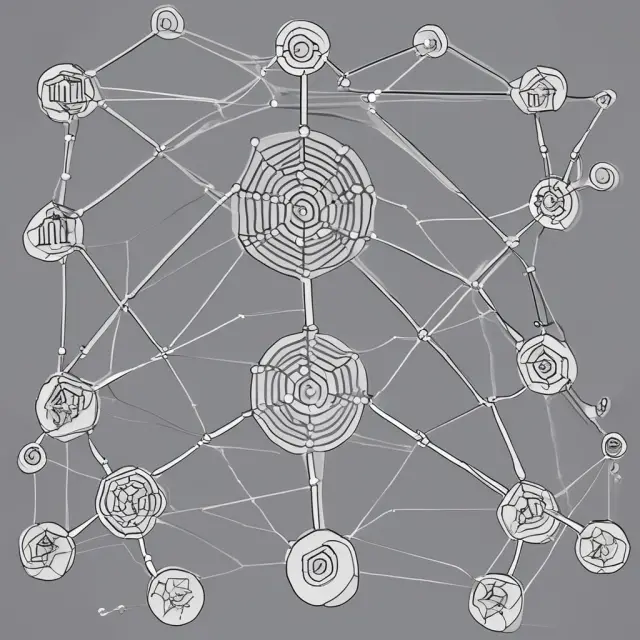
Gossip About Gossip: Data Synchronization in Hashgraph
Hashgraph consensus is a decentralized agreement mechanism that uses a gossip protocol for data synchronization instead of the traditional proof-of-work (PoW) approach. By employing the concept of “gossip about gossip,” hashgraph achieves consensus more efficiently than its counterpart. In this section, we’ll explore how this unique process functions and sets hashgraph apart from other distributed ledger technologies like blockchain.
First, let us clarify that a hashgraph is a decentralized digital ledger just like a blockchain. It securely stores data using cryptography, access control mechanisms, and data validation methods. The primary difference lies in how the consensus mechanism operates within these systems.
When discussing the gossip protocol, it’s essential to understand the role of “gossip” and “gossip about gossip.” In a hashgraph network, every transaction is considered an event with specific data attached to it. This information consists of a timestamp, transactions, or zeros, two hashes from the parent containers, and an encrypted signature.
Primary information within a hashgraph is called “gossip.” This term describes the data associated with each transaction as it spreads through the network via nodes (or users). Nodes continuously create events and sync with other nodes by sharing their latest information. Once a node receives new gossip, it adds it to its own copy of the hashgraph ledger, ensuring consensus on the same shared state across the network.
However, things get more interesting when we delve into “gossip about gossip.” Secondary information is created as nodes communicate their latest updates to others in the network. This information serves to synchronize data and reach consensus within the hashgraph. The process of sharing this secondary information is referred to as a “gossip sync.”
In essence, a gossip sync is a collaborative history of gossip events that propagates throughout the hashgraph network. It’s a way for nodes to validate and ensure consistency with their peers without requiring energy-consuming computational processes like PoW consensus algorithms. With this method, transactions are confirmed much more efficiently than in traditional blockchain systems.
Hashgraph consensus is a game-changer in distributed ledger technology due to its efficiency and fault tolerance. It eliminates the need for time-consuming validations by relying on each node’s knowledge of the entire network. This approach allows transactions to be processed in seconds rather than minutes, making hashgraph an attractive alternative for both businesses and institutional investors seeking faster confirmation times compared to traditional blockchain platforms.
In conclusion, understanding the role of gossip and gossip about gossip within hashgraph consensus is crucial for grasping its unique advantages over other distributed ledger technologies like blockchain. The ability to achieve consensus through efficient data synchronization using a gossip protocol sets hashgraph apart from its competitors and positions it as a promising solution for various industries, including finance and investment.

Virtual Voting: Consensus Mechanism in Hashgraph
Hashgraph consensus relies on the concept of a virtual voting algorithm, which allows nodes to reach consensus through communication rather than computational validation. In traditional proof-of-work (PoW) consensus mechanisms, transactions are validated by nodes performing complex mathematical calculations to add new blocks to the chain. This process is energy-intensive and time-consuming.
In contrast, hashgraph consensus uses a virtual voting algorithm that operates on information propagation throughout the network. Nodes maintain an ordered list of transactions they have received from their peers. When a node receives a new transaction, it appends it to its local copy of the transaction order and broadcasts the updated list to other nodes in the network. Each transaction is assigned a timestamp based on when it was first added to a node’s list.
When a node receives an updated list from another node, it compares the new transaction timestamps to those already present in its local copy. The node then selects the transaction with the lowest timestamp as the consensus result—this is equivalent to a majority vote. This process continues until all nodes in the network have reached consensus on the same set of transactions.
The virtual voting algorithm has several advantages over PoW consensus mechanisms:
- Faster transaction confirmation times: As nodes propagate information about transactions throughout the network, they can quickly reach consensus and finalize new transactions. In hashgraph consensus, average transaction confirmation times range from seconds to minutes, compared to the 10-minute confirmation times in Bitcoin.
- Eliminating the influence of individual nodes: Unlike PoW consensus mechanisms where one node’s computational power might have an impact on confirmation times and the outcome of disputes, hashgraph consensus ensures that all transactions are evaluated based on their creation timestamp. The network decides which transaction is confirmed first by selecting the one with the lowest timestamp.
- Improved handling of message timing issues: Hashgraph consensus utilizes an asynchronous Byzantine fault tolerance model to overcome the problems associated with message timing and ordering in traditional distributed systems. In PoW consensus mechanisms, transactions are added to blocks based on their order of arrival, but hashgraph consensus eliminates the need for this requirement by evaluating each transaction independently.
In conclusion, virtual voting is a crucial component of hashgraph consensus that enables fast, fair, and efficient transaction processing in a decentralized network. By eliminating the reliance on computational validation and enabling quicker decision-making through communication between nodes, hashgraph consensus offers significant advantages over traditional PoW consensus mechanisms in terms of speed, fairness, and handling message timing issues.

Fault Tolerance in Hashgraph Consensus
Hashgraph consensus boasts a higher level of fault tolerance compared to traditional blockchain systems. This is largely due to its Byzantine fault tolerance, which is considered the highest security level for distributed ledgers. Let’s dive deeper into what this means and how hashgraph consensus achieves it.
Byzantine Fault Tolerance: A Primer
The term “Byzantine” refers to a group of ships during ancient Greece that were involved in conflicting orders from their commanders, leading to chaos and uncertainty about the correct course of action. In the context of distributed ledgers and consensus mechanisms, Byzantine fault tolerance is a property that allows a system to function correctly even when some nodes or participants behave maliciously.
Hashgraph Consensus: Overcoming Faults
In a hashgraph network, transactions are validated using timestamps and gossip events as described earlier in this article. This consensus mechanism can tolerate one-third of the nodes acting maliciously. The gossip protocol ensures that every node in the network receives accurate information from other nodes through constant communication. Each event is verified by multiple nodes, reducing the risk of fraudulent activities.
Byzantine Fault Tolerance and Gossip Events
As nodes communicate with one another, they exchange gossip events, which include transactions and their corresponding timestamps. In a Byzantine fault scenario where some nodes act maliciously (i.e., submit conflicting or incorrect information), the rest of the network can still reach consensus using the gossip protocol. The honest nodes in the hashgraph network continue to share accurate information with each other, eventually reaching consensus based on the majority vote from these honest nodes.
A Comparison to Blockchain’s Fault Tolerance
Compared to blockchains, where transactions are verified by a smaller group of validators and are vulnerable to 51% attacks when the majority of nodes are compromised, hashgraph consensus provides a higher level of fault tolerance through its gossip protocol and asynchronous nature. This makes it more robust against malicious actors and network issues.
An Important Step Forward
Hashgraph’s Byzantine fault tolerance represents an important step forward for distributed ledgers, offering faster transaction confirmation times, reduced reliance on third-party validators, and improved resistance to faults and attacks. As this technology continues to evolve and gain traction in the financial sector, it’s worth keeping a close eye on its potential impact and applications.

Advantages of Hashgraph Consensus Over Blockchain
Hashgraph consensus brings several advantages over traditional blockchain consensus mechanisms when it comes to speed, efficiency, and network security. While both technologies aim to achieve consensus in a decentralized manner, hashgraph consensus differentiates itself by using novel algorithms and concepts like gossip, gossip about gossip, and virtual voting.
One of the most significant advantages is transaction speed and confirmation times. Hashgraph consensus achieves near real-time confirmation times compared to blockchain’s often lengthy processing times. This makes hashgraph more suitable for applications requiring quick settlements, such as micropayments or high-frequency trading in financial markets.
Another advantage of hashgraph consensus is the elimination of the need for third-party validation. Traditional blockchain consensus mechanisms rely on miners to validate and add transactions to the network, whereas hashgraph consensus utilizes a peer-to-peer gossip protocol where every node in the network has access to all information and actively shares it with other nodes. This process significantly reduces the reliance on third parties and speeds up transaction processing times.
Message timing issues are also effectively handled by hashgraph consensus. In traditional blockchain systems, transactions may be processed based on their transaction fees, stake, or other factors that can introduce bias in the confirmation process. Hashgraph consensus, on the other hand, ensures all transactions have equal priority and eliminates the influence of any single node or group of nodes over the network by using consensus timestamps and virtual voting algorithms.
Hashgraph consensus is reportedly asynchronous Byzantine fault tolerant (ABFT), which means it can tolerate one-third of the network acting maliciously. This level of fault tolerance ensures that even in the presence of bad actors, the network continues to operate efficiently without interruption. Hashgraph consensus’s fault tolerance is particularly attractive to institutional investors who require secure and reliable systems for managing their assets.
Additionally, hashgraph consensus offers higher throughput rates than traditional blockchain consensus mechanisms due to its efficient gossip protocol and consensus algorithms. This can lead to more scalable solutions for larger networks with high transaction volumes.
In summary, hashgraph consensus addresses the challenges of transaction speed, third-party validation, message timing issues, and fault tolerance better than traditional blockchain consensus mechanisms like proof-of-work (PoW) or proof-of-stake (PoS). By utilizing innovative gossip protocols, virtual voting algorithms, and consensus timestamps, hashgraph consensus offers a more efficient alternative for decentralized systems. However, it remains to be seen how the financial sector will adopt and implement this technology in their operations.

Adoption and Future Prospects of Hashgraph Consensus
Hashgraph consensus is a revolutionary new approach to distributed ledger systems that has the potential to change the way we think about data security, transaction processing, and consensus building. While still relatively new, this alternative consensus mechanism has garnered significant attention from developers, investors, and industry experts alike due to its impressive efficiency, speed, and robustness. Let’s take a closer look at where hashgraph consensus stands today, what it could offer the financial sector, and the challenges it faces in gaining widespread adoption.
Current Developer Interest and Adoption Levels
Hashgraph consensus is not as widely adopted as blockchain technology just yet, but that could change rapidly given its unique advantages. The Hedera Hashgraph network—the most well-known implementation of hashgraph consensus—has attracted some major names in the tech industry, such as Google, IBM, and Boeing, with over 180 organizations now part of the Swirlds Governing Council.
Hashgraph’s potential applications reach far beyond the crypto realm and have significant implications for industries like finance, healthcare, and logistics, where data security, privacy, and consensus building are essential components. By offering faster transaction processing times, greater efficiency, and robust fault tolerance, hashgraph consensus stands to disrupt traditional methods of record-keeping and data sharing.
Future Potential in the Financial Sector
The financial industry could benefit greatly from the implementation of hashgraph consensus due to its enhanced capabilities compared to blockchain technology. With an average transaction confirmation time of only seconds instead of minutes, hashgraph offers significant advantages for sectors like cross-border payments and securities settlement, which have historically been slow and expensive. Additionally, hashgraph’s asynchronous Byzantine fault tolerance ensures that transactions are processed even when some participants act maliciously or fail to respond.
Challenges to Widespread Adoption
Despite the exciting potential of hashgraph consensus, there are still challenges to its widespread adoption. One significant hurdle is the need for a more extensive developer ecosystem and tooling support. While projects like Hedera Hashgraph have made great strides in this area, it will take time before hashgraph reaches the level of developer interest and support that blockchain currently enjoys.
Another challenge lies in educating the public and businesses about hashgraph consensus and its unique capabilities compared to traditional distributed ledger systems like blockchain. As more organizations adopt this technology, it will be essential to demonstrate its advantages and dispel any misconceptions or misunderstandings surrounding its implementation.
Comparing Hashgraph and Blockchain: Key Differences
Hashgraph consensus and blockchain technology share some similarities in their distributed nature and use of cryptography for security. However, hashgraph’s approach to consensus building through gossip, gossip about gossip, and virtual voting sets it apart from its predecessor. In terms of speed, efficiency, fault tolerance, and data synchronization, hashgraph offers notable improvements that could make it a more attractive option for industries and businesses requiring fast transaction processing times and enhanced security features.
Understanding the differences between hashgraph consensus and blockchain is essential to evaluating their respective advantages in various applications and sectors. As this technology continues to evolve, it will be crucial to stay informed about its progress, capabilities, and potential use cases.
FAQ: Commonly Asked Questions About Hashgraph Consensus
Q1: What is the difference between hashgraph consensus and blockchain consensus?
A: Hashgraph consensus relies on gossip, virtual voting, and asynchronous Byzantine fault tolerance to validate transactions, while blockchain consensus mechanisms, like proof-of-work (PoW) or proof-of-stake (PoS), require significant computational power from nodes.
Q2: Is hashgraph consensus faster than blockchain consensus?
A: Yes, hashgraph consensus offers significantly faster transaction processing times due to its efficient gossip protocol and virtual voting mechanism. The average confirmation time is typically measured in seconds instead of minutes.
Q3: Can hashgraph consensus be used for cryptocurrencies?
A: Hashgraph consensus can indeed be used for cryptocurrencies, but it’s not limited to that application. It offers advantages for various industries and applications where data security, privacy, and fast transaction processing times are essential.
Q4: How does hashgraph consensus handle fault tolerance and network latency?
A: Hashgraph consensus is asynchronous Byzantine fault tolerant, meaning it can withstand up to one-third of the nodes acting maliciously or experiencing latency issues without compromising the security of the network.

Comparing Hashgraph and Blockchain: Key Differences
Hashgraph consensus is an increasingly popular alternative to the more traditional blockchain consensus mechanisms used in the world of distributed ledger technology (DLT). Both technologies serve similar purposes, creating decentralized databases that secure information using cryptographic techniques. However, hashgraph consensus and blockchain consensus have distinct differences in their approach to validation, data structures, and performance. In this section, we’ll explore how these two consensus mechanisms differ and the implications of these differences for various use cases.
Consensus Mechanisms: Traditional Proof-of-Work vs. Hashgraph Virtual Voting
Blockchain consensus relies heavily on proof-of-work (PoW), where computational power is harnessed to validate transactions by solving complex mathematical puzzles. On the other hand, hashgraph consensus uses a concept called virtual voting. In this approach, nodes within the network reach consensus through a process of voting, with each transaction assigned a timestamp based on the median consensus of all nodes. This method avoids the need for heavy computational power and allows for faster confirmation times, as nodes do not have to solve complex mathematical problems.
Data Structures: Hashgraph’s Gossip Protocol vs. Blockchain’s Blocks
When comparing hashgraph and blockchain data structures, it’s essential to understand their underlying principles. A hashgraph network employs a gossip protocol that propagates information throughout the system through nodes exchanging “gossip events.” This distributed process ensures each node has consistent information about the network. In contrast, a blockchain stores transactions in a sequential chain of blocks and relies on miners to validate these blocks, creating a centralized point of control.
Use Cases: Suitability for Various Applications
Hashgraph consensus has garnered attention due to its speed and performance benefits compared to traditional PoW blockchains. Its consensus mechanism enables average transaction confirmation times in seconds rather than minutes, making it suitable for applications where quick processing is essential. This can include supply chain management, real-time financial transactions, and other industries where high throughput and low latency are critical factors.
On the other hand, PoW blockchains such as Bitcoin and Ethereum have become synonymous with decentralized finance (DeFi) applications and non-fungible tokens (NFTs). These platforms require a high degree of trustless security and community involvement, making their consensus mechanisms an effective choice.
Trade-Offs: Performance vs. Decentralization and Security
A critical consideration when comparing hashgraph consensus and blockchain consensus is the trade-offs involved in each technology. Hashgraph offers faster transaction processing times but may sacrifice some degree of decentralization and security due to its reliance on a gossip protocol that assumes bad actors will eventually be honest. In contrast, PoW blockchains prioritize decentralization and security through their distributed consensus mechanism, but often suffer from slower transaction speeds and the need for significant computational power.
The choice between hashgraph consensus and blockchain consensus ultimately depends on the specific requirements of an application or use case. Hashgraph may be more suitable for high-throughput applications where faster confirmation times are essential, while PoW blockchains might be better suited for cases where decentralization and security take precedence over speed.
In conclusion, hashgraph consensus and blockchain consensus represent two distinct approaches to solving the problem of creating secure, decentralized databases through distributed ledger technology. Understanding their differences, strengths, and limitations is crucial for developers, investors, and users alike when choosing a platform or application that aligns with their goals.

Hashgraph Consensus: Security and Performance
Security is a crucial factor for institutional investors when considering adopting new financial technologies. One alternative that has emerged is hashgraph consensus, which offers enhanced security features compared to traditional proof-of-work (PoW) mechanisms like those used in Bitcoin. In this section, we will explore the security aspects and performance advantages of hashgraph consensus.
Security in Hashgraph Consensus
Byzantine Fault Tolerance
Hashgraph consensus is asynchronous Byzantine fault tolerant (ABFT), which means it can handle one-third of its nodes being malicious while still ensuring data integrity and consistency. Byzantine fault tolerance is a significant improvement over the traditional PoW consensus mechanisms, as it eliminates the need for a long chain or extensive computational power.
In hashgraph consensus, each transaction is assigned a timestamp based on the median of all the timestamps received from the network. The distributed nature and randomness in the selection of nodes result in a fair, unbiased consensus mechanism where no single node influences the confirmation order.
Performance Advantages of Hashgraph Consensus
Faster Transaction Times and Lower Fees
Hashgraph offers faster transaction times than traditional blockchain networks because it doesn’t require mining or proof-of-work to reach consensus. Instead, transactions are propagated through a gossip protocol, which enables the network to converge more quickly on consensus. Additionally, hashgraph eliminates the need for intermediaries to facilitate transactions and reduces the costs associated with transaction fees.
Handling Message Timing Issues
Hashgraph addresses message timing issues that plague traditional blockchain networks like Bitcoin or Ethereum. As transactions are propagated through a gossip protocol, nodes receive multiple copies of the transaction from different sources, enabling the network to converge on consensus faster and more efficiently than a PoW system.
In conclusion, hashgraph consensus offers institutional investors a secure alternative to traditional blockchain networks with its asynchronous Byzantine fault tolerance and fast transaction times. These features make it an attractive option for financial institutions that require high levels of security, speed, and efficiency when processing transactions.

Hashgraph Consensus and Institutional Investors
Hashgraph consensus is a revolutionary approach to data validation and confirmation for decentralized systems. The system was designed with the intention of addressing the inefficiencies and issues inherent to blockchain consensus mechanisms like proof of work (PoW). While hashgraph consensus is an intriguing technology, how does it apply to institutional investors? This section will explore the potential benefits of hashgraph consensus for institutional investors.
Understanding Hashgraph Consensus
Hashgraph consensus is a decentralized way to validate transactions and reach consensus through gossip and virtual voting in a distributed ledger system. Instead of relying on computational power or validators, nodes communicate information about transactions to other nodes in the network. Each node has access to all the latest transaction data, making the need for block validation unnecessary. This consensus mechanism results in faster confirmation times and greater efficiency compared to traditional methods.
Hashgraph’s Advantages for Institutional Investors
Institutional investors face several challenges when it comes to decentralized systems like blockchain. These challenges include:
- Scalability: The current state of scalability in many blockchains can be a hindrance for institutional investments, as they often require high throughput and large transaction volumes. Hashgraph consensus offers a more efficient solution by eliminating the need for computational power and validators.
- Speed: Institutional investors value quick turnaround times and reliable confirmations for their transactions. The average transaction confirmation time of seconds with hashgraph consensus is much faster compared to minutes in traditional blockchain networks, making it an attractive option.
- Security: Byzantine fault tolerance is one of the highest security levels for decentralized systems. Hashgraph consensus employs this level of security and can tolerate up to one-third of the network acting maliciously. This ensures that institutional investments are safeguarded against potential threats.
- Consistency: Institutional investors demand consistency in their transactions, especially when it comes to order and timing. Hashgraph consensus provides an asynchronous approach that eliminates the need for a third party or any single node to dictate transaction order or influence confirmation times.
- Cost-Effective: Traditional blockchain networks require significant resources to maintain the computational power necessary for validation. In contrast, hashgraph consensus does not rely on this computational power, making it a more cost-effective option for institutional investors.
- Developer Interest and Adoption: Institutional investors are increasingly looking for decentralized systems that demonstrate strong developer interest and adoption. Hashgraph has gained the attention of many developers and enterprises, with projects like Hedera Hashgraph leading the way in its application.
Hashgraph Consensus vs. Blockchain
Comparing hashgraph consensus to blockchain consensus highlights the unique advantages of the former for institutional investors:
- Efficiency: Hashgraph consensus is more efficient than traditional proof-of-work (PoW) consensus mechanisms, as it does not require validation or computational power from nodes. The efficiency saves resources and time, making transactions faster and less costly.
- Security: Byzantine fault tolerance in hashgraph consensus ensures that the network can tolerate up to one-third of its nodes acting maliciously. In contrast, traditional blockchain networks have less robust security mechanisms, potentially leaving institutional investments more vulnerable to threats.
- Scalability: Hashgraph consensus allows for higher transaction throughput and volume without compromising efficiency or performance. Blockchains may struggle with these aspects, which could impact the feasibility of institutional investments.
- Cost-Effective: As hashgraph consensus does not require computational power from nodes, it is significantly more cost-effective than traditional blockchain networks for institutional investors.
- Adoption and Future Prospects: Hashgraph consensus has garnered attention from various enterprises and developers due to its advantages over traditional blockchain systems. The technology is still in its infancy but holds great potential for further adoption, especially within the financial sector.
In conclusion, hashgraph consensus presents an intriguing solution for institutional investors looking to engage with decentralized systems. With faster confirmation times, greater security, and cost savings, it offers a more efficient, secure, and effective alternative to traditional blockchain networks. As the technology continues to gain traction, it is poised to address many of the challenges faced by institutional investors in decentralized finance and beyond.

FAQ: Commonly Asked Questions About Hashgraph Consensus
Hashgraph consensus is a newer technology that aims to solve the problems inherent to traditional consensus mechanisms, such as proof-of-work (PoW), through better speed and efficiency. This FAQ will address common questions about hashgraph consensus and clarify misconceptions.
What is Hashgraph Consensus?
Hashgraph consensus is a protocol for reaching consensus within a distributed network using concepts like “gossip,” “gossip about gossip,” and virtual voting. It is an alternative to PoW, which relies on computational power from the network to validate transactions. Hashgraph consensus reaches consensus through information sharing rather than validation by specific nodes.
What Is a Hashgraph?
A hashgraph is a decentralized ledger that maintains a collaborative history of gossip events as participants add and share information. The hashgraph stores all data in an encrypted ledger, with every user participating in the validation process. In contrast to a blockchain, which consists of blocks linked by data, a hashgraph does not have one chain but rather keeps all information in a single, decentralized structure.
How Does Hashgraph Consensus Differ from Blockchain Consensus?
Hashgraph consensus is faster than traditional blockchain consensus mechanisms because it uses gossip protocol to reach consensus rather than relying on computational power for validation. In hashgraph, each node communicates information to other nodes to create a network-wide understanding of the current state. Hashgraph consensus also offers asynchronous Byzantine fault tolerance, which is more efficient at handling latency and network issues.
What are Gossip, Gossip about Gossip, and Virtual Voting?
Gossip refers to the information about data stored in hashgraph transactions. Gossip about gossip is secondary information that keeps track of the history of gossip events within a hashgraph network. Virtual voting is how nodes come to consensus when comparing events using a voting algorithm. The median timestamp from the nodes in the network acts as the result of the vote, creating a fair transaction system.
How Does Hashgraph Consensus Handle Fault Tolerance?
Hashgraph consensus can tolerate one-third of the network acting maliciously due to its asynchronous Byzantine fault tolerance, which is the highest security level in distributed systems. It assumes that lost or delayed messages will eventually reach their destinations and ensures transactions are processed based on the latest information available in the network.
What Are the Advantages of Hashgraph Consensus Over Blockchain?
The primary advantages of hashgraph consensus over blockchain include faster transaction confirmation times, eliminating the influence one node can have on transactions, and better handling of message timing issues. Hashgraph consensus is also more efficient because all information is retained in the hashgraph, rather than only accepted blocks being kept in a blockchain.
Is Hashgraph Consensus Secure?
Yes, hashgraph consensus offers strong security through its asynchronous Byzantine fault tolerance and gossip protocol that ensures nodes reach a consensus based on validated information shared throughout the network. This makes hashgraph an attractive option for securing transactions in various industries, including finance and technology.
Is Hashgraph Consensus Faster Than Blockchain?
Yes, hashgraph consensus is generally faster than traditional blockchain consensus mechanisms due to its gossip protocol and virtual voting algorithm that reach consensus without relying on computational power or third-party validation. Hashgraph consensus can confirm transactions in seconds compared to the minutes it takes for a blockchain to validate transactions.
Why Isn’t Hashgraph Widely Adopted Yet?
Hashgraph is not as widely adopted as blockchain due to its relatively recent emergence and less established developer community. However, hashgraph has attracted interest from large companies like IBM, Swirlds, and Boeing for its potential in creating faster, more efficient consensus mechanisms for various industries.
In conclusion, hashgraph consensus is an innovative technology that offers improvements over traditional blockchain consensus mechanisms through better speed, efficiency, and security. By understanding the basics of hashgraph consensus and addressing common questions and misconceptions, we can appreciate its potential role in shaping the future of distributed ledger technologies.
 Next entry · No. 2,043Understanding Hawala: An Informal Method of Transferring Money Outside the Banking System
See also
-
 No. 2,040
05 Dec 2024
19 min
Understanding Hash Functions and Their Role in Cryptocurrencies
Crypto
No. 2,040
05 Dec 2024
19 min
Understanding Hash Functions and Their Role in Cryptocurrencies
Crypto -
 No. 1,074
24 Jul 2024
17 min
The Future Format of Ledgers: Understanding Distributed Ledgers
Fintech
No. 1,074
24 Jul 2024
17 min
The Future Format of Ledgers: Understanding Distributed Ledgers
Fintech -
 No. 1,073
24 Jul 2024
23 min
Understanding Distributed Ledger Technology (DLT): A Comprehensive Guide for Institutional Investors
Fintech
No. 1,073
24 Jul 2024
23 min
Understanding Distributed Ledger Technology (DLT): A Comprehensive Guide for Institutional Investors
Fintech -
 No. 3,712
20 Apr 2025
20 min
Understanding Open Source Software: A Gamechanger in Finance and Investment
Tech Tools
No. 3,712
20 Apr 2025
20 min
Understanding Open Source Software: A Gamechanger in Finance and Investment
Tech Tools -
 No. 1,022
17 Jul 2024
22 min
Understanding Digital Currency: An In-depth Analysis of Different Types, Advantages, Disadvantages, and Uses
Crypto
No. 1,022
17 Jul 2024
22 min
Understanding Digital Currency: An In-depth Analysis of Different Types, Advantages, Disadvantages, and Uses
Crypto -
 No. 5,120
13 Aug 2025
18 min
Understanding tZero (t0): A Regulated Distributed Ledger Platform for Tokenized Assets
Fintech
No. 5,120
13 Aug 2025
18 min
Understanding tZero (t0): A Regulated Distributed Ledger Platform for Tokenized Assets
Fintech