The Role and Importance of Notaries: An Essential Function in Society

Explore the role and importance of notaries in society throughout history. Understand their process, benefits, and limits.
Understanding the Role of a Notary
In today’s complex legal landscape, a notary plays an essential role as an impartial witness in document signing processes. A notary is a publicly commissioned official whose duty it is to ensure that the execution and acknowledgment of documents are authentic and that all parties involved have given their consent freely and knowingly. This section will delve into the significance of a notary, its history, the requirements for becoming one, the process itself, and the limits of what a notary can do.
What Exactly Is a Notary?
A notary, or notary public, is a trusted official appointed by a state or country to serve as an impartial witness to the signing of various legal documents, such as real estate deeds, affidavits, wills, trusts, powers of attorney, bills of sale, and other transactional documents. The primary goal of a notary is to create trusted documentation and deter fraud by verifying identities, ensuring that all parties involved have the capacity to consent to the document’s contents, and preventing coercion or undue influence during the signing process.
Notary History: A Timeless Profession
The practice of having official witnesses to legal documents dates back to ancient civilizations like Egypt, Sumeria, Rome, and China. The term “notary” itself comes from the Latin word “notarius,” meaning scribe or secretary. Notaries served as writers and witnesses who documented transactions, events, log resource and labor data, and helped maintain order in their societies.
As history progressed, notaries continued to play a crucial role in various capacities. They accompanied explorers like Christopher Columbus to verify new discoveries for their respective monarchs, and even literary figures like Mark Twain and Salvador Dali held the title of notary. Notaries have also faced challenges, such as being barred from serving women until the 1900s or having their services replaced by technology during the digital revolution. However, they persisted in maintaining the integrity of legal documentation through it all.
The Process: Witnessing and Verifying Signatures
To notarize a document, several steps must be taken. First, the document should contain a clear statement of intent—this is called a “notary clause” or “attestation clause.” Additionally, all parties involved must sign the document in the presence of the notary public and provide proper identification to ensure they are who they claim to be. The notary public will then affix their seal and stamp the document with their official signature.
The Importance and Benefits of a Notary
A notary’s role in ensuring the authenticity of documents is vital for maintaining trust, security, and order within society. By deterring fraud, upholding legal standards, and providing an impartial witness to transactions, notaries contribute to a more transparent and reliable legal system overall. Furthermore, having a document notarized can grant the recipient a higher level of confidence in its validity.
In conclusion, understanding the role of a notary is crucial in today’s complex legal landscape. By examining their history, requirements, processes, and limitations, we gain a deeper appreciation for the significance of this timeless profession.

Notary History
The role of a notary can be traced back to ancient civilizations where the concept of documenting and verifying transactions was essential for governance and record-keeping. Notaries, known as scribes in Egypt and Sumeria around 2750 B.C., were responsible for writing and witnessing important documents.
In ancient Rome, notarii and scribae were appointed officials who played an integral role in public life as document witnesses and recorders. The Roman Empire utilized notaries to ensure the authenticity of speeches, weather reports, and official documentation. Tiro, a Roman servant, is considered the first recognized notary due to his development of shorthand for recording speeches.
The Chinese also employed scribes to document events, teachings, and manage resources and labor data. Notaries accompanied Christopher Columbus on voyages to authenticate discoveries for King Ferdinand and Queen Isabella. Notables in history like Mark Twain, Salvador Dali, Leonardo da Vinci, and Calvin Coolidge were either notaries or had a connection to the profession. Women were excluded from becoming notaries until the 1900s but now constitute a majority of notaries, according to the National Notary Association (NNA).
The path to becoming a notary involves several steps that vary from state to state. Generally, you must be at least 18 years old and reside in the state where you wish to practice. The specifics include completing a notary course, passing an exam, applying for a license, taking an oath of office, purchasing your seal, and adhering to state requirements.
The NNA indicates that becoming a notary has been a significant and trustworthy presence in governments and societies for millennia. From documenting crop yields to verifying documents and signatures online, the role of a notary remains crucial. Notaries can be found in various settings, from banks and post offices to libraries and tax offices, making their services accessible to the public.
With technological advancements, remote online notarization (RON) has become increasingly popular during the Covid-19 pandemic. Many states have adopted RON legislation, allowing you to access notary services online through secure platforms. To ensure your document is authentically notarized in this manner, check with your state’s Secretary of State for regulatory compliance.
As a result, the role and importance of notaries remain essential and enduring. Their presence guarantees trusted documentation and verifies the validity of transactions.

How to Become a Notary: General Requirements and Steps
A notary is an impartial witness to the signing of legal documents, ensuring their authenticity and trustworthiness. Becoming a notary is an achievable goal with specific requirements varying by state. Let’s dive deeper into the process and necessary prerequisites.
First, it’s essential to meet age and residency requirements: Applicants must be at least 18 years old and reside in the state where they intend to become a notary. Once you meet these conditions, follow these steps:
1. Education and Training: Acquire an approved notary training course, which typically covers topics like identification verification processes, notarial procedures, and legal responsibilities. Completing this training is mandatory in most states.
2. Pass the Examination: After completing the training, you must pass a notary exam, testing your knowledge of essential concepts related to being a notary. Passing the exam is a crucial step towards obtaining your notary commission.
3. Application Process: Next, fill out an application form and submit it with necessary documentation, such as identification and proof of training completion. The application must be notarized before submission.
4. Oath of Office: Upon approval, take the oath of office to officially become a notary public. This swearing-in ceremony confirms your commitment to upholding honesty and integrity in your role as a notary.
5. Bond and Fees: Pay for a notary bond, which protects against potential financial losses due to misconduct during the notarization process. Additionally, pay a fee for your commission.
6. Purchase Your Seal: Finally, buy a notary seal featuring your name, title, and commission number to affix onto authenticated documents. This seal serves as visual proof that a document has been properly notarized.
It’s important to note that states differ in their specific requirements, so make sure to consult your state’s Secretary of State or the National Notary Association for accurate information before proceeding with your application. Becoming a notary is an excellent opportunity to contribute positively to society by ensuring the authenticity and trustworthiness of legal documents.

The Notary Process: What Happens During a Signing
A notary public is a publicly commissioned official who serves as an impartial witness during the signing of legal documents, such as deeds, affidavits, wills, trusts, powers of attorney, bills of sale, and other official transactional documents. The primary role of a notary is to deter fraud and ensure that the parties involved in a document’s execution are who they claim to be.
To begin the process, a document must contain a statement requiring notarization. When presented with the document for signing, the notary verifies the authenticity of the parties’ signatures by asking them to provide identification (such as a driver’s license or passport). The notary may also ask questions to verify their understanding and intent regarding the document’s contents.
Once satisfied that the parties are valid signatories, the notary then affixes their official seal and adds a notarial certificate, which includes essential information such as the date of the signing, the names of the involved parties, the type of document, and the notary’s signature and commission number.
It is important to note that a notary is prohibited from refusing to witness a document based on race, nationality, religion, or sex. The primary purpose of the notarization process is to create trusted documentation that establishes the occurrence of an official transaction.
The history of notaries can be traced back to ancient civilizations like Egypt and Sumeria, where scribes acted as both writers and witnesses. In more recent times, notaries accompanied explorers like Christopher Columbus, witnessed historical speeches, and were even employed by notable figures such as Leonardo da Vinci, Mark Twain, and Calvin Coolidge (the only U.S. president sworn into office by a notary).
Although the notarization process has remained essentially unchanged throughout history, it has evolved to address modern challenges. For example, many states have begun exploring electronic and remote notarization options in response to the COVID-19 pandemic, allowing parties to obtain notarial services online from anywhere, provided that their state’s requirements are met.
In conclusion, a notary plays an essential role in creating trusted documentation by acting as an impartial witness during the signing of legal documents. The history and process behind notaries demonstrate their enduring significance in society.

Notaries and Legal Advice: Limits and Consequences
A notary is an essential part of various legal transactions. As a public official, they provide impartial witnessing of document signings, ensuring that the involved parties are authentic, and transactions have taken place. However, their role stops at being just a witness. It’s crucial to understand what notaries can and cannot do when it comes to providing legal advice and acting in their personal interests.
The main responsibility of a notary is to ensure the legitimacy of transactions and documents by serving as an impartial witness. While they might have a wealth of knowledge regarding various legal matters, they are not licensed attorneys and cannot give legal advice. Providing legal advice falls outside the scope of their expertise and responsibilities.
There are consequences if a notary oversteps these boundaries. In many states, a notary who gives legal advice can face severe penalties, including fines, suspension or revocation of their commission, and even criminal charges. For example, in California, providing unauthorized practice of law (UPL) is considered a misdemeanor punishable by up to six months in jail and a fine of up to $10,000.
When it comes to acting in their personal interests, notaries have strict rules to follow as well. Notaries cannot benefit from the document they are notarizing or engage in transactions that might lead to a conflict of interest. If a notary is ever faced with a situation where they feel unable to remain impartial, they must recuse themselves and refer the parties involved to another notary.
In conclusion, understanding the role and limits of a notary is essential when dealing with legal transactions involving their services. Notaries serve an indispensable function in society by ensuring the legitimacy of documents, but they cannot provide legal advice or act in their personal interests. By following these guidelines, notaries maintain the trust and integrity that comes with their public role.

Where to Notarize a Document: Common Places and Methods
In today’s society, the importance of having legal documents notarized is crucial for ensuring their validity and authenticity. A notary public serves as an impartial witness during document signings to deter fraud and create trusted records. In this section, we will discuss common places where you can find a notary and explore the emergence of remote notarization (RON).
Common Places for Notarization:
- Post offices – Most post offices offer notary services alongside mailing, shipping, and packaging services.
- Banks and credit unions – Banks and credit unions often have notaries on-site or can refer you to a local notary if one is not available on the premises.
- Real estate firms – Real estate offices frequently employ notaries due to their close relationship with document signing during property transactions.
- Tax and accounting offices – Accountants and tax professionals often have access to notaries in order to handle documents related to financial matters.
- Libraries – Some libraries offer notary services as a free community service or can refer you to nearby notaries.
- Colleges – University campuses may have notaries available on campus, particularly at the student union or student affairs office.
- Shipping stores – Many shipping stores offer notarization services for documents that require witnessing and signing for international transactions.
- Online – With the rise of remote online notarization (RON), you can now access a notary’s services online from the comfort of your own home.
Remote Online Notarization (RON): Present and Future
The emergence of remote online notarization is transforming the way notarizations are performed by enabling electronic document signings with a real-time video conference between the signing parties and the notary. As a result, it offers significant benefits for those who require notarizations in situations where physical presence is difficult or impossible.
The use of remote online notarization gained popularity during the Covid-19 pandemic when social distancing measures made in-person transactions challenging. Currently, many states have enacted legislation to authorize Remote Online Notarization (RON), making it an increasingly accessible and convenient option for those requiring legal document notarizations.
In summary, understanding where to notarize a document is essential in ensuring that the process runs smoothly and efficiently. From common places such as post offices and banks to emerging remote online notarization solutions, various options are available to accommodate your needs. With knowledge of these resources, you can confidently navigate the notarization process and secure authentic documentation for all your transactions.
In the next section, we will dive deeper into the role and importance of notaries in history as a crucial component of society’s legal infrastructure.

Benefits of a Notary
A notary is an essential public official appointed by a state government to serve as an impartial witness and verify the authenticity of legal document signatures, ensuring that transactions are legitimate. Incorporating trusted documentation into various aspects of life, from real estate deals to wills and trusts, a notary’s role remains integral to maintaining credibility and deterring fraud.
Trusted Documentation: The main objective of having a notarized document is to create a reliable record that transactions occurred officially. Notaries serve as impartial witnesses during signing processes, ensuring the validity of documents by verifying parties’ identities and authenticating their signatures. By creating trusted documentation through notarization, individuals gain peace of mind knowing their legal agreements have been verified and are binding.
Preventing Fraud: The role of a notary in preventing fraud is significant. A notary ensures that the individuals involved in a transaction are who they claim to be by checking their identification prior to signing documents. This process helps prevent fraudulent activities, such as identity theft or forgery, and safeguards against potential disputes. By providing an unbiased third-party presence during document signings, notaries play a crucial role in maintaining the integrity of legal processes.
Flexibility: Notarization offers flexibility to individuals needing documents signed from various locations. A notary’s services can be accessed through traditional methods, such as visiting their office or a public location, or via modern techniques like remote online notarization (RON). RON provides the convenience of having documents notarized over the internet without the need for face-to-face interactions, making it an increasingly popular option for those who require notary services but cannot attend in person.
The importance of notaries can be traced back to ancient civilizations like Egypt and Sumeria, where they served as writers and witnesses, documenting historical events and official transactions. Today, notaries continue to play a vital role in society by maintaining credibility, preventing fraud, and providing a sense of security through trusted documentation.
Notaries in Society: Famous and Infamous Notaries Throughout History
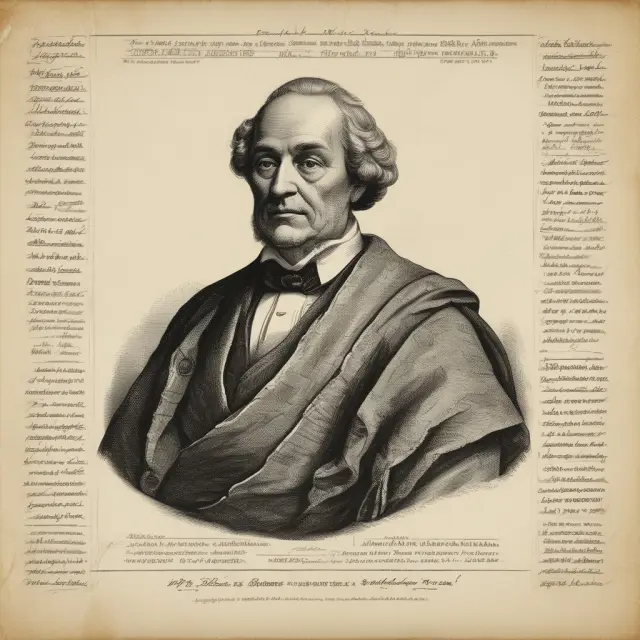
Notaries have been an integral part of society since ancient civilizations. These impartial witnesses to the signing of legal documents have played essential roles throughout history, from documenting the world’s earliest known records in Egypt and Sumeria to assisting Christopher Columbus on his voyages. Here are some notable figures who were notaries or had a connection to this profession.
The oldest recorded example of a notary comes from ancient Egypt around 2750 BCE. Called scribes, these individuals were writers and witnesses who documented much of the history of the ancient world (NNA). Similarly, in ancient Rome, notarii and scribae served as essential figures for recording and authenticating speeches, contracts, and official documents.
In medieval Europe, notaries played a crucial role in the Church’s administrative structure. Notaries were responsible for recording transactions, such as land ownership or property transfers. Their records were used to establish titles, prove rights of inheritance, and settle disputes (Loyola University Chicago). Some historians believe that this is where the profession of notary received its name from the Latin word “notare,” which means “to note” or “to record.”
Mark Twain, the renowned American author, was a notary. In his autobiography, Twain recalls becoming a notary in 1852 in California when he was just 23 years old (Twain Project Online). A more recent example of a notary comes from Leonardo da Vinci, one of the greatest artists and polymaths of all time. Da Vinci served as a notary for various Milanese rulers, documenting their agreements and transactions (Britannica).
Notaries played significant roles in American history as well. For instance, President Calvin Coolidge, the 30th president of the United States, was born to a notary in Plymouth Notch, Vermont. Coolidge is the only U.S. president sworn into office by a notary—his father (National Geographic).
The role of women as notaries is an interesting chapter in history. Women were not allowed to be notaries until the 1900s, but now they outnumber male notaries (NNA). One notable woman who made history as a notary was Clara Shortridge Foltz, who campaigned for women’s rights and became California’s first female notary in 1879.
While these figures have left their mark on history as notaries, there are also infamous examples of notaries whose actions led to significant consequences. One such example is Thomas McElveen, a Louisiana notary who was convicted for selling notarized documents and certificates that he had created himself. McElveen was sentenced to 15 years in prison (Baton Rouge Advocate). Another case of fraudulent activity involved a Texas notary named Glenda Ritz, who was found guilty of illegally notarizing thousands of ballots during the 2014 elections and was sentenced to eight years in federal prison.
As society has evolved, so have the roles of notaries. In modern times, they can be found in various professional settings, including law offices, banks, and government agencies. However, the profession continues to adapt to changing times. For example, many states are now exploring electronic and remote notarization (RON) as a means of providing more convenient access to notary services while maintaining security and trust.
In conclusion, notaries have played essential roles throughout history in various societies, from ancient civilizations to modern times. From documenting world records to serving as public officials, they have contributed significantly to the development of government and administrative structures. Notaries have been instrumental in ensuring the integrity and reliability of legal documents, often serving as a crucial link between individuals and institutions.

Electronic and Remote Notarization (RON): Present and Future
In today’s digital age, the concept of electronic notarization, also known as Remote Online Notarization or RON, is gaining increasing importance and prevalence. This modern approach to document authentication allows for secure, convenient, and efficient processing of documents remotely without requiring an in-person presence. The implications for business, real estate transactions, and other legal proceedings are significant.
Legislation Governing Remote Online Notarization (RON)
In response to the growing need for flexible document signing solutions, many states have enacted legislation to support RON. For instance, in 2019, Virginia became one of the first states to pass comprehensive RON laws, and several others like Texas, Florida, Tennessee, and Colorado followed suit. These laws generally require notaries to comply with specific security protocols, use secure technology platforms, and complete additional training courses to ensure the integrity of remote transactions.
Security Protocols for Electronic Notarization
To guarantee the security and authenticity of electronic documents, various security measures are employed during the RON process. These may include:
- Two-factor authentication
- Digital certificates
- Secure communication channels
- Biometric verification
- Watermarking and time stamping
- Regular audits
Benefits of Electronic Notarization
The benefits of RON are numerous, including convenience, efficiency, reduced risk, and enhanced security:
- Convenience: By conducting notarizations remotely, individuals can save time and resources by avoiding lengthy trips to physical notary locations. This is especially beneficial for those living in remote areas or who have mobility issues.
- Efficiency: Electronic notarization streamlines the document signing process, making it faster and more efficient. For businesses handling numerous transactions, RON can significantly reduce administrative overheads and processing times.
- Reduced risk: With electronic signatures and document authentication, there is a reduced risk of fraudulent activities in comparison to traditional paper-based methods.
- Enhanced security: By adhering to stringent security protocols, electronic notarization provides an increased level of security for sensitive documents.
- Environmental impact: RON also offers environmental benefits as it reduces the need for physical signatures and paper-based documentation.
Looking to the Future: Trends and Predictions
As more states adopt RON legislation, it is expected that this trend will continue to grow in popularity and usage. Some predictions for the future of electronic notarization include:
- Expansion of RON across all 50 states
- Greater adoption by businesses and real estate professionals
- Integration with various industries like healthcare, finance, and education
- Continuous refinement and improvement of technology platforms to address potential challenges and concerns.
In conclusion, the role of a notary has evolved significantly over thousands of years, from ancient scribes documenting speeches to modern-day authentication of digital transactions. With remote online notarization gaining increasing acceptance and importance, it is clear that this essential function in society will continue to adapt to meet the demands of our ever-changing world.
FAQs: Answers to Common Questions About Notaries
1. What is the role of a notary? A notary serves as an impartial witness to the signing and authenticating of legal documents, such as deeds, affidavits, wills, trusts, powers of attorney, bills of sale, or other official transactional documents. Their primary purpose is to deter fraud by ensuring that the parties involved are who they claim to be and that the signatures on the document are genuine.
2. What can a notary do? A notary can witness the signing of legal documents, authenticate copies, administer oaths or affirmations, take acknowledgments, certify and attest copies, and protest and issue letters of protest concerning negotiable instruments. However, they cannot give legal advice or act in their personal interest.
3. What is the history of notaries? Notaries have existed since ancient civilizations like Egypt and Sumeria, where scribes acted as witnesses to document signings. The practice continued throughout Roman times and was eventually formalized with the establishment of notarii and scribae. Today, notaries are required for various legal transactions and are crucial in creating trusted documentation.
4. How do I become a notary? To become a notary, one must meet their state’s requirements, which include being at least 18 years old, residing in the state where they will be licensed, completing approved training, passing an exam, and applying for and taking the oath of office. The specific process varies depending on the state.
5. What are the benefits of having a document notarized? Notarizing a document creates trusted documentation by verifying that the signatures on the document are genuine and that the transaction occurred officially. It also helps deter fraud, making it an essential step for important documents like real estate deeds, powers of attorney, or wills.
6. How can I find a notary? Notaries can be found in various places, including post offices, banks, tax and accounting offices, libraries, colleges, and copy stores. Many states also offer remote notarization options, which allow you to have your documents notarized online.
7. What is the difference between a notary and a lawyer? While both notaries and lawyers can help with legal matters, their roles are distinct. Notaries specialize in authenticating signatures on official documents, while lawyers provide legal advice and represent clients in court. A notary cannot give legal advice but can administer an oath or affirmation, take acknowledgments, protest and issue letters of protest concerning negotiable instruments, certify and attest copies, and authenticate documents.
8. Can a notary refuse to notarize a document? Notaries have the right to refuse to notarize a document if they suspect fraud or identify that one or more parties involved do not appear to be of sound mind, underage, or unable to understand the nature and consequences of signing the document.
9. How much does it cost to become a notary? Costs for becoming a notary vary depending on state requirements. There are fees for training, supplies like a bond and the oath of office, and ongoing recertification in some states.
10. Can I become a notary if I have a criminal record? Each state has different rules regarding criminal history when it comes to becoming a notary. It is essential to research your specific state’s requirements or consult the National Notary Association for more information.
These FAQs address common questions about notaries and their role in document signing, authentication, and legal transactions. Understanding the answers will help you make informed decisions regarding notarization services and when they are necessary.
 Next entry · No. 3,571Understanding Notching: How Credit Rating Agencies Assign Different Ratings to Specific Debts or Obligations
See also
-
 No. 3,812
28 Apr 2025
20 min
Understanding the Over-The-Counter Exchange of India (OTCEI): Features, Requirements, and Transactions
Business Finance
No. 3,812
28 Apr 2025
20 min
Understanding the Over-The-Counter Exchange of India (OTCEI): Features, Requirements, and Transactions
Business Finance -
 No. 4,428
18 Jun 2025
19 min
Understanding Retainer Fees: What They Are and How They Work in Finance and Investment
Business Finance
No. 4,428
18 Jun 2025
19 min
Understanding Retainer Fees: What They Are and How They Work in Finance and Investment
Business Finance -
 No. 3,649
15 Apr 2025
19 min
Offshore Banking Units: What They Are and How They Operate
Business Finance
No. 3,649
15 Apr 2025
19 min
Offshore Banking Units: What They Are and How They Operate
Business Finance -
 No. 3,321
19 Mar 2025
22 min
A Comprehensive Guide to the National Association of Insurance and Financial Advisors (NAIFA) – An Overview, Benefits, and More
Business Finance
No. 3,321
19 Mar 2025
22 min
A Comprehensive Guide to the National Association of Insurance and Financial Advisors (NAIFA) – An Overview, Benefits, and More
Business Finance -
 No. 2,931
15 Feb 2025
22 min
Understanding Listed Companies: Benefits, Requirements, and Processes
Business Finance
No. 2,931
15 Feb 2025
22 min
Understanding Listed Companies: Benefits, Requirements, and Processes
Business Finance -
 No. 2,812
06 Feb 2025
20 min
Understanding Legal Separation: A Comprehensive Guide for Institutional Investors
Business Finance
No. 2,812
06 Feb 2025
20 min
Understanding Legal Separation: A Comprehensive Guide for Institutional Investors
Business Finance