Understanding Assemble-to-Order (ATO): Balancing Customization with Efficiency

Understanding the hybrid approach to manufacturing: Learn about Assemble-to-Order (ATO), its benefits, challenges, and how it differs from Make-to-Stock and…
Introduction to ATO: Make-to-Stock vs Make-to-Order
Assemble-to-order (ATO) is an intriguing business strategy that balances customization with efficiency. This hybrid approach falls between make-to-stock (MTS) and make-to-order (MTO), both traditional methods for managing inventory. In the MTS model, manufacturers produce goods before receiving orders, maintaining large inventories to meet anticipated demand. With the MTO method, products are manufactured only when customers place an order.
Assemble-to-order (ATO) is a strategic middle ground between these two. It combines the benefits of both: allowing for quick delivery while customizing products based on customer requests. A typical ATO setup involves pre-manufacturing basic components, which are then assembled when orders arrive. The resulting product can be personalized to a certain extent without significant time or cost increases.
However, this approach comes with its own set of challenges and advantages. In the following sections, we’ll explore how technology enables ATO strategies, discuss the pros and cons, examine real-life examples, and provide an implementation roadmap for businesses looking to adopt this model.
Understanding Assemble-to-Order (ATO): The Hybrid Approach
Assemble-to-order (ATO) is a production strategy where products are not produced until orders are received but essential components are already manufactured and available. By combining the benefits of make-to-stock (MTS) and make-to-order (MTO), ATO offers quick delivery with flexibility to cater to custom requests while minimizing inventory investment.
The ATO approach typically involves managing and maintaining a well-stocked warehouse filled with basic components that can be quickly assembled into a product upon receiving customer orders. The time and costs for assembling these products are usually minimal, but the upfront costs of manufacturing the parts can be considerable. This approach requires careful planning and coordination between suppliers and manufacturers to ensure an adequate stockpile of necessary components.
Assemble-to-order is a popular choice for businesses producing customizable goods or those that experience fluctuating demand, as it offers more flexibility compared to traditional production methods. Additionally, advances in technology have made ATO strategies increasingly cost-effective and accessible, enabling businesses to offer personalized products without the need for extensive upfront inventory investment.
In the next section, we’ll discuss the technological advancements that make ATO possible and explore their impact on the manufacturing landscape.

The Basics of Assemble-to-Order (ATO)
Assemble-to-Order (ATO), also known as Make-to-Order (MTO) with a build-in inventory buffer, is an innovative hybrid production strategy that strikes a balance between make-to-stock and make-to-order approaches. In this method, companies maintain an inventory of partially assembled or raw materials while only completing the final assembly when customer orders are confirmed. This approach offers several benefits, including reduced inventory holding costs, flexibility to cater to individual customer requirements, and shorter lead times compared to traditional make-to-order strategies.
The core principle behind ATO is that the basic components of the product are manufactured and kept in stock while the final assembly occurs upon receiving orders. For instance, a PC manufacturer might maintain stocks of motherboards, graphic cards, processors, monitors, and keyboards. These parts are then combined to create customized systems when orders arrive.
The advantages of ATO stem from its unique position between make-to-stock (MTS) and make-to-order (MTO) strategies. MTS focuses on producing goods in anticipation of consumer demand, whereas MTO prioritizes production only after receiving an order. By combining both approaches, businesses can enjoy the benefits of inventory control and fast delivery while minimizing the risk associated with unsold stock and longer lead times.
The primary costs involved in ATO are linked to component procurement and storage. Although the assembly process itself is relatively cheap, the time and resources dedicated to obtaining and storing components can add up. Conversely, since inventory levels are typically lower than those required for MTS strategies, businesses can save on storage fees and other holding costs.
In conclusion, ATO provides a compelling solution for companies seeking to deliver personalized products without compromising efficiency or customer satisfaction. By carefully managing component supplies and implementing effective production processes, businesses can leverage the advantages of ATO and provide their customers with tailor-made solutions that meet their unique needs while minimizing unnecessary inventory costs.

Technology Enabling ATO
Assemble-to-order (ATO) strategies have become increasingly popular due to advancements in technology that make customization a reality for businesses. In an ATO model, companies quickly produce products using pre-manufactured parts as soon as orders are confirmed. However, enabling such a strategy requires the right technology and infrastructure. Let’s explore how technology plays a crucial role in making ATO strategies possible.
The foundation of ATO is built on the combination of two traditional production methods: make-to-stock (MTS) and make-to-order (MTO). In an ATO system, companies maintain a stockpile of raw materials and components. These parts are then assembled as orders come in from customers. The primary advantage of this approach lies in its ability to offer quick turnaround times while still allowing for some degree of customization.
To enable the ATO strategy, several technologies must be employed:
1. Advanced inventory management systems (IMS): These tools allow businesses to track inventory levels and manage reorder points effectively. By integrating real-time data on component stock levels and demand forecasts, companies can ensure a steady supply of components for assembly.
2. Real-time communication: Quick response times are essential in an ATO environment. Incorporating technologies like ERP systems, MES, and other advanced communication tools enable businesses to receive and respond to orders more efficiently.
3. Automated manufacturing systems: Assemble-to-order strategies rely on speedy production once orders come in. Implementing automated manufacturing systems can help streamline the process by reducing manual labor requirements and improving overall efficiency.
4. Robust supply chain networks: An effective ATO strategy requires a solid network of reliable suppliers that can deliver components quickly and efficiently. Technology plays a significant role here, with tools like demand forecasting software and advanced logistics solutions helping to optimize supplier relationships and manage the flow of goods.
By employing these technologies, businesses can successfully implement an assemble-to-order strategy while reducing costs, minimizing risk, and offering their customers the customized products they desire. In a world where consumers increasingly value personalization, ATO represents a powerful competitive differentiator that is here to stay.

ATO vs. Traditional Manufacturing: Pros and Cons
When deciding between an assemble-to-order (ATO) and traditional manufacturing strategy, understanding the unique advantages and disadvantages of each approach can provide valuable insights for businesses seeking to optimize their production methods. Let’s delve deeper into these two strategies and compare their strengths and weaknesses.
Make-to-Stock (MTS): Make-to-stock (MTS) manufacturing is a popular strategy where products are produced in advance, inventory is stored, and orders are fulfilled from the stockpile. This method is ideal for industries dealing with high-volume goods or those that can be bought in bulk or as a single unit.
Advantages: MTS manufacturing offers several benefits such as quick order fulfillment, consistent product availability, reduced lead times, and lower inventory carrying costs. However, it also comes with some downsides, like the potential for excess inventory and higher holding costs, increased risk of obsolescence, and lack of customization options.
Assemble-to-Order (ATO): Assemble-to-order is a hybrid approach where products are produced based on customer orders using pre-manufactured components. This strategy offers the benefits of make-to-order and make-to-stock methodologies, providing the ability to quickly fulfill customized orders while avoiding the need for holding inventory.
Advantages: The ATO strategy enables businesses to produce products based on individual customer needs, which is particularly beneficial in industries dealing with high-end goods or those requiring significant customization. Other advantages include reduced lead times, improved cash flow, and lower inventory carrying costs since components are already manufactured.
Disadvantages: On the downside, ATO may result in longer production times due to the need to source or procure components before assembling them for orders. Additionally, there is a risk of lost sales if certain components are out-of-stock, and the possibility of increased complexity in managing the component supply chain.
By weighing these advantages and disadvantages, businesses can make informed decisions about which strategy best suits their production needs and goals.
For example, consider a manufacturer of customized bicycles. By utilizing an ATO approach, they could produce frames in-house while sourcing components like wheels, gears, and pedals from external suppliers. Upon receiving customer orders, the frames are assembled with the appropriate components to meet individual specifications, allowing for quick order fulfillment while catering to a diverse range of preferences.
In conclusion, both make-to-stock and assemble-to-order strategies offer unique advantages and challenges. By understanding these differences and carefully considering your business’s production goals, you can choose the strategy that best aligns with your needs and enables you to provide value to your customers in a competitive market.

Components in ATO: Costs and Sourcing
When it comes to the cost structure for an assemble-to-order (ATO) business, a crucial aspect lies within the procurement of its component parts. In an ATO operation, the costs related to assembling the product are typically negligible due to the minimal time and labor required. However, acquiring components from suppliers can involve substantial costs.
The assemble-to-order strategy is a hybrid between make-to-stock (MTS) and make-to-order (MTO). While it combines advantages of both approaches, understanding the unique aspects of component sourcing is vital to its success. In an ATO business, components are manufactured beforehand but not yet assembled. Once an order is placed, the necessary parts are quickly assembled to create a customized product for the customer.
Costs involved in the procurement process:
- Component Prices: The price of each component, including raw materials and labor costs, affects the overall cost structure for the business.
- Freight Costs: Shipping fees for transporting components from suppliers to the manufacturing site can significantly impact the bottom line.
- Inventory Carrying Costs: Holding inventory incurs holding costs such as storage, insurance, taxes, and obsolescence.
- Lead Times: The time it takes for components to be delivered impacts both production schedules and customer satisfaction.
- Vendor Management: Building relationships with reliable suppliers is essential for ensuring consistent quality and timely delivery of the necessary parts.
Effective component sourcing requires careful planning, negotiation, and communication between the ATO business and its suppliers. By implementing strategies such as Just-In-Time (JIT) inventory management or long-term contracts, companies can optimize their procurement process to minimize costs and maintain a healthy supplier relationship.
Assemble-to-order is an excellent example of how technology has changed the way businesses produce goods. With advancements in production processes, logistics, and inventory management systems, ATO strategies have enabled faster turnaround times while allowing for significant customization opportunities. For companies that require unique or individualized products, assemble-to-order offers a strategic solution to balance customization with efficiency.

Examples of Assemble-to-Order (ATO) Businesses
Assemble-to-Order (ATO) is a popular production strategy for businesses that want to offer customized products without holding extensive inventories or relying entirely on make-to-order (MTO) strategies. This hybrid approach balances the advantages of both make-to-stock (MTS) and make-to-order methods. Let us examine some industries and businesses that effectively utilize the ATO strategy.
- Custom Bikes: Companies like Harley-Davidson employ ATO by keeping an array of components in stock to assemble motorcycles based on customer preferences. The customization options include paint colors, accessories, engine types, and seating configurations, among others. Once a customer places their order, the components are assembled together to create a unique bike that meets the client’s specifications.
- Computer Hardware: Dell is an excellent example of a successful ATO business in the computer industry. The company keeps its components like processors, motherboards, graphic cards, and hard drives in stock. When customers place orders, these components are assembled together to create custom computers according to individual requirements. This approach allows Dell to provide quick delivery without holding vast inventories of finished products.
- Apparel Industry: Fast-growing businesses like Zara use ATO strategies to create fashion items that cater to current trends while still being responsive to consumer preferences. They keep a range of basic clothing items in stock and rapidly respond to popular styles by producing and assembling new designs based on customer demand.
- Automotive: Tesla’s production process is another example of ATO. The company keeps batteries, electric motors, and other essential components in stock while the final assembly of vehicles occurs based on orders. This approach ensures quick delivery to customers, with some customization options available for certain specifications.
- Electronic Devices: Samsung’s production strategy also involves elements of ATO. The company manufactures parts such as displays, processors, and memory chips in advance. When an order is placed, these components are assembled into the desired device—be it a smartphone or a tablet. This approach helps Samsung to cater to customer preferences while minimizing inventory costs.
These examples illustrate how businesses can effectively use the ATO strategy to strike a balance between customization and efficiency. By keeping essential components in stock, they can assemble products based on customer orders while still delivering quickly and offering some level of customization.
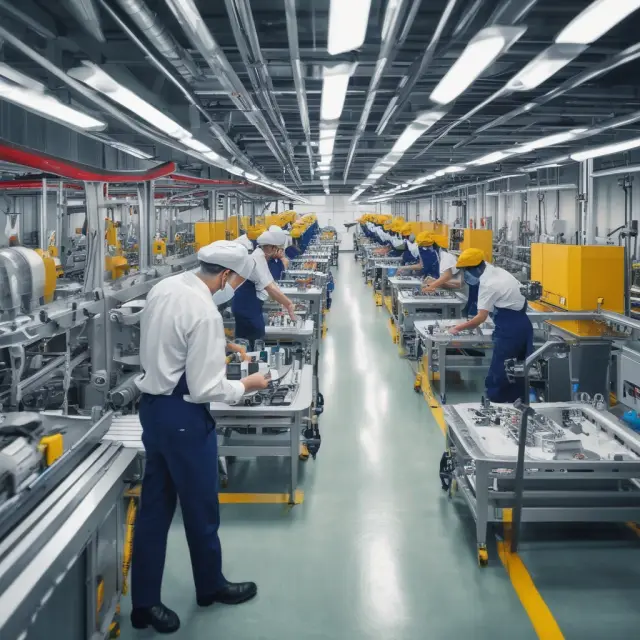
Advantages of Assemble-to-Order (ATO)
Assemble-to-order (ATO) is a hybrid business strategy that offers several advantages over traditional make-to-stock and make-to-order strategies. This approach combines the benefits of both worlds: getting products into customers’ hands quickly, while enabling customization based on individual preferences. In most cases, the assembly process itself has minimal costs, but the expenses involved in building the required components are often considerable.
One significant advantage of ATO is that it eliminates the need for businesses to invest in materials and supplies upfront. This can be especially valuable for companies with high inventory costs or those operating in industries with rapidly changing consumer demands. By only producing goods once orders have been confirmed, organizations can reduce their risk of holding unsold units on hand—a common issue faced by make-to-stock businesses.
Additionally, ATO allows for greater customization, ensuring that each product matches the customer’s unique specifications. This flexibility is particularly attractive to consumers seeking personalized goods or businesses in need of tailored solutions. Although some upfront time and costs are required for component sourcing and assembly, these investments often yield long-term gains in terms of improved customer satisfaction and loyalty.
The ATO model also offers more control over inventory levels compared to make-to-stock strategies. Businesses can prioritize production based on real-time demand, ensuring a steady flow of orders without being bogged down by excess stock. This approach is ideal for industries dealing with complex products or those requiring frequent customization, such as technology, automotive, or healthcare sectors.
Another key advantage of ATO is its ability to minimize the risk of lost sales due to low supply. In contrast, make-to-stock businesses can miss out on potential revenue if they don’t have sufficient inventory in stock to meet demand. By adopting an assemble-to-order strategy, companies can produce goods on-demand and fulfill orders even during periods of high demand or unexpected surges in consumer interest—an essential factor for businesses targeting seasonal markets or niche customer segments.
Despite these advantages, ATO isn’t without its challenges. The potential for longer lead times due to component sourcing and assembly can create an obstacle for organizations that need to deliver goods quickly. However, implementing effective inventory management systems and efficient communication channels between suppliers and manufacturers can help mitigate this risk, ensuring a smooth production process for businesses embracing the assemble-to-order approach.

Challenges and Risks in ATO
Assemble-to-Order (ATO) offers several advantages over traditional manufacturing methods by allowing businesses to produce customized products while keeping inventory costs low. However, implementing an ATO strategy comes with its unique set of challenges and risks. In this section, we’ll explore some potential difficulties businesses might face when adopting an assemble-to-order production model.
1. Coordinating the supply chain: Since components for ATO products are sourced from external suppliers, managing a complex network of suppliers is crucial. Delays in receiving critical parts can impact production schedules, ultimately leading to longer lead times and missed deadlines. Effective communication and collaboration with suppliers are essential to mitigate these risks.
2. Inventory management: Maintaining the right amount of inventory for components is a delicate balance. Having too little can result in stockouts and lost sales, while having excess inventory ties up capital and increases holding costs. Implementing efficient inventory management systems and maintaining open lines of communication with suppliers helps businesses manage their component stocks effectively.
3. Quality control: Ensuring consistent quality across components sourced from multiple suppliers is a challenge. Inspecting incoming parts, testing them for functionality, and implementing quality checks at each stage of the production process are necessary to minimize the risks of producing defective products and maintaining customer satisfaction.
4. Integration with technology: ATO relies heavily on advanced technologies such as inventory management systems, production control software, and real-time communication tools. Ensuring these technologies work seamlessly together is vital for efficient production and smooth order fulfillment.
5. Managing customization: Offering customers a high level of customization can be a significant selling point for businesses adopting an ATO strategy. However, managing the complexity that comes with this level of customization—from tracking orders, managing options, to ensuring accuracy in assembling the final product—requires robust systems and processes.
6. Pricing challenges: Offering customized products often entails higher costs due to increased labor, inventory holding, and logistics costs. Determining accurate pricing for ATO products that still remains competitive can be a challenge for businesses.
7. Flexibility: To remain competitive in the marketplace, ATO businesses must be able to adapt quickly to changing consumer demands and trends. This flexibility requires an agile production process capable of handling varying order volumes and customization options.
In conclusion, implementing an assemble-to-order strategy comes with its unique challenges and risks. From managing complex supply chains, inventory, quality control, technology integration, customization, pricing, to maintaining flexibility—these are just a few areas where businesses need to focus their efforts to successfully adopt the ATO model. By addressing these challenges head-on and investing in robust systems and processes, businesses can reap the rewards of offering quick production times, lower inventory holding costs, and customer-centric customization.

Implementation of Assemble-to-Order (ATO) Strategies
Assemble-to-order (ATO) is an effective business strategy for companies seeking to strike a balance between customization and efficiency. Implementing ATO strategies involves various steps, from setting up the right infrastructure to managing orders effectively. In this section, we will explore what it takes for a business to successfully implement an ATO strategy.
First and foremost, businesses must ensure that they have a robust inventory management system in place. The goal is to maintain an adequate stock of essential components while minimizing inventory holding costs. This requires close collaboration with suppliers to secure regular and reliable deliveries.
To be successful with assemble-to-order strategies, it’s also important for businesses to invest in technology that streamlines the production process. Implementing automated assembly lines or investing in computerized systems that can quickly identify, pick, and place components are crucial steps in reducing turnaround time between receiving an order and delivering a finished product.
Once the necessary infrastructure is in place, it’s essential for companies to establish efficient communication channels with their customers. Clear lines of communication ensure that orders are processed correctly and efficiently. This includes implementing a user-friendly online ordering system where customers can easily customize products based on their preferences.
Effective order management is another critical aspect of ATO strategies. Once an order has been placed, the production team must ensure that all necessary components are ready for assembly, schedule the build process, and monitor progress to meet customer expectations. Additionally, it’s essential to establish a quality assurance process to ensure the final product meets the desired standards before being shipped to the customer.
Businesses implementing ATO strategies should also consider offering multiple shipping options to cater to various customer needs. This includes everything from expedited shipping for those who want their orders delivered quickly to more affordable options for customers who are not in a rush. Offering flexible and convenient shipping options can help differentiate your business and improve overall customer satisfaction.
Finally, it’s essential for companies adopting ATO strategies to have a well-defined process for handling cancellations or modifications to orders. Clear communication channels and an efficient order management system will help ensure that any changes are processed effectively and with minimal disruption to the production schedule.
Implementing assemble-to-order strategies can be complex, but the benefits—improved customer satisfaction through customization and faster turnaround times—can far outweigh the challenges. By investing in the right infrastructure, technology, and communication channels, businesses can effectively implement an ATO strategy to meet their customers’ demands while maintaining operational efficiency.

FAQ: Assemble-to-Order (ATO)
Assemble-to-order (ATO) is an intriguing business strategy that blends speedy production with customizability. In this approach, products are not fully manufactured until orders are confirmed and components are assembled upon receipt of the order. ATO combines elements of make-to-stock (MTS) and make-to-order (MTO) strategies, creating a flexible production system that responds to customer demand while minimizing inventory costs.
What is the difference between assemble-to-order (ATO) and make-to-stock (MTS)?
The primary distinction lies in the timing of manufacturing. Make-to-stock involves producing goods ahead of time, with finished products stored until they are sold. In contrast, ATO manufactures components in advance but only assembles them once an order is placed. This strategy enables customization while reducing inventory costs and minimizing waste.
What industries commonly use the ATO production model?
The ATO strategy is popular among businesses that sell high-value, highly customizable products with long product lifecycles. Industries like electronics, automotive parts, and furniture manufacturing frequently employ ATO strategies to produce customized goods while maintaining efficient inventory management.
How does technology support ATO operations?
Advancements in production processes, supply chain systems, and logistics enable faster and more accurate component assembly upon receiving customer orders. In addition, technological improvements have made it easier for businesses to track component stock levels and manage supplier relationships in real-time.
What are the advantages of using an ATO strategy?
ATO offers several benefits compared to traditional production methods:
a) Minimizes inventory carrying costs
b) Reduces waste by producing goods based on customer demand
c) Provides customization opportunities for customers
d) Improves overall supply chain efficiency and responsiveness
What are the disadvantages of using an ATO strategy?
Despite its advantages, assemble-to-order comes with some challenges:
a) Longer lead times due to the assembly process
b) Increased reliance on external suppliers for components
c) Risk of inventory shortages if component suppliers fail to deliver on time
d) Potential for lost sales due to the time it takes to assemble and ship orders
What is an example of a business that employs an ATO strategy?
Consider a custom bicycle manufacturer. It keeps components like frames, wheels, pedals, and handlebars in stock but only builds the complete bike once a customer places an order. By doing so, it can provide customers with a personalized product while minimizing inventory costs and reducing waste.
 Next entry · No. 230Understanding Assessed Value in Real Estate Property Taxes: Definition, Determination, and Importance
See also
-
 No. 14
28 Mar 2024
21 min
Understanding Absorption Costing – A Comprehensive Guide for Investors
Business Strategy
No. 14
28 Mar 2024
21 min
Understanding Absorption Costing – A Comprehensive Guide for Investors
Business Strategy -
 No. 3,067
26 Feb 2025
19 min
Maximizing Marginal Profit: Understanding the Significance and Calculation
Business Strategy
No. 3,067
26 Feb 2025
19 min
Maximizing Marginal Profit: Understanding the Significance and Calculation
Business Strategy -
 No. 3,066
26 Feb 2025
21 min
Maximizing Profits with Marginal Analysis: An Essential Tool for Institutional Investors
Business Strategy
No. 3,066
26 Feb 2025
21 min
Maximizing Profits with Marginal Analysis: An Essential Tool for Institutional Investors
Business Strategy -
 No. 3,051
25 Feb 2025
24 min
Make to Stock (MTS): A Production Strategy for Matching Inventory with Anticipated Consumer Demand
Business Strategy
No. 3,051
25 Feb 2025
24 min
Make to Stock (MTS): A Production Strategy for Matching Inventory with Anticipated Consumer Demand
Business Strategy -
 No. 3,049
25 Feb 2025
17 min
Make-or-Buy Decision: Analyzing the Costs and Benefits of In-house Production vs External Supply
Business Strategy
No. 3,049
25 Feb 2025
17 min
Make-or-Buy Decision: Analyzing the Costs and Benefits of In-house Production vs External Supply
Business Strategy -
 No. 2,987
19 Feb 2025
21 min
Exploring the Long Run: Understanding Firm Behavior and Economies of Scale
Business Strategy
No. 2,987
19 Feb 2025
21 min
Exploring the Long Run: Understanding Firm Behavior and Economies of Scale
Business Strategy