Understanding Bond Yields: Current Yield, YTM, BEY, EAY & Bond Rating
Learn about bond yields, their importance for investors, and how to calculate various types including YTM, BEY, EAY, and current yield.
Introduction to Bond Yields
Bond yields are a crucial metric for investors in understanding the return they will receive from their investment in a bond. A bond is essentially a loan to the issuer, with the investor earning interest on the borrowed money and receiving the face value of the bond upon maturity. The concept of yield is essential as it reflects the actual return an investor can expect from their bond investment.
The term ‘bond yield’ may be used interchangeably with other related terms such as current yield, Yield to Maturity (YTM), Bond Equivalent Yield (BEY), and Effective Annual Yield (EAY). Each calculation provides a different perspective on the return an investor will earn from their bond investment.
Understanding Bond Basics: Loans to Bond Issuers
Before discussing bond yields, it’s essential first to grasp the fundamental concept of bonds as loans made to issuers by investors. A bond is essentially an IOU representing a borrowed amount with a promise to repay the principal upon maturity and make regular interest payments (coupons) throughout its life.
Bonds are given ratings that assess the creditworthiness of the borrower, providing investors with an indication of the risk associated with investing in the bond. These rating agencies include Fitch Ratings, Standard & Poor’s Global Ratings, and Moody’s Investors Service.
Coupon Rate vs. Current Yield: A Closer Look at Bond Returns
A bond’s coupon rate is the annual interest rate established when the bond is issued. This rate sets the groundwork for calculating the regular payments made to investors throughout the bond’s life. However, yields can be calculated differently depending on whether you are considering the current market price of the bond or its total return until maturity.
The current yield represents the annual interest payment as a percentage of the current market price. For instance, if a $1,000 bond pays an annual coupon of $100 and is currently trading at $950, its current yield would be 10.53% ($100/$950).
Price and Yield: Inversely Related
Bond prices and yields are inversely related—as the price goes up, the yield goes down, and vice versa. This relationship is due to the fact that bondholders receive a steady stream of income from their investment via regular coupon payments and the face value upon maturity.
When interest rates change in the market, the bond’s price adjusts accordingly to reflect its new yield. If yields rise, the bondholder can sell their bond at a profit if they desire, while lower yields lead to a loss on sale. Understanding this relationship is vital for investors looking to buy and sell bonds as market conditions change.
Yield to Maturity: Total Return on a Bond Investment
Yield to maturity (YTM) represents the total return an investor can earn on their bond investment if they hold it until its maturity date. This yield calculation takes into account both the coupon payments and the face value repayment, providing investors with a more complete understanding of their potential returns from the bond investment.
To calculate YTM, one must find the discount rate (interest rate) that makes the present value of all future cash flows equal to the current market price. This calculation involves summing up each cash flow’s present value and setting it equal to the bond’s price. Solving for the interest rate yields the yield to maturity.
Bond Equivalent Yield (BEY) and Effective Annual Yield (EAY): More Complicated Bond Yield Calculations
Investors can use alternative methods to calculate bond yields such as bond equivalent yield (BEY) and effective annual yield (EAY). These calculations provide varying perspectives on the bond’s true yield, depending on the frequency of coupon payments.
Bond Equivalent Yield (BEY) is a simple method that adjusts for a bond’s semi-annual coupon payments by multiplying the yield to maturity by two. This calculation assumes no change in interest rates or time value of money considerations, providing an annualized return for investors.
Effective Annual Yield (EAY) considers both the compounding effect and the time value of money in a bond’s total returns calculation. By taking one plus the yield to maturity and subtracting one, investors obtain a more precise estimation of their total return. This method is ideal for investors looking for a complete understanding of their potential gains from a bond investment.
Bond Yields: Risk and Returns for Investors
Bond yields play a pivotal role in helping investors evaluate risk and returns from their investments. Higher yields can indicate increased risks, making it essential for investors to weigh the potential reward against the associated risk before deciding on their bond investment strategy.
For instance, low-yield bonds may provide lower returns but are considered less risky due to their perceived stability. On the other hand, high-yield bonds offer higher returns but come with a greater degree of risk for investors. Understanding the relationship between risk and yield is crucial for investors looking to construct a diversified portfolio that balances risk and reward effectively.
In conclusion, bond yields play a vital role in evaluating potential investment opportunities. By understanding the various calculations and their significance, investors can make informed decisions on which bonds to invest in based on their risk tolerance and return expectations.
Bond Basics: Loans to Bond Issuers
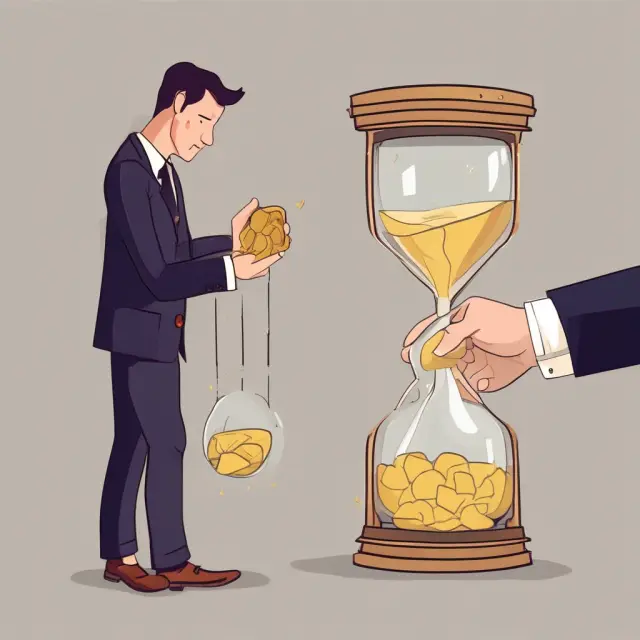
Bonds represent loans made by investors to issuers, offering a fixed income stream in return. These financial instruments can be purchased at a premium, face value, or discount depending on the prevailing interest rates and market conditions. Essentially, an investor lends money to the bond issuer with the expectation of receiving periodic interest payments (coupons) until maturity, and the principal upon maturity.
The creditworthiness of the issuer is evaluated through bond ratings assigned by recognized rating agencies such as Moody’s, S&P Global Ratings, or Fitch Ratings. These ratings range from ‘AAA,’ representing the lowest risk, to ‘D,’ indicating a default status or junk bonds with high-risk profiles.
Understanding Bond Yield: Inverse Relationship Between Price and Yield
The price of a bond and yield are inversely related. As the price of a bond increases, its yield decreases, while an increase in yield leads to a decline in the bond’s price. This inverse relationship stems from the fact that as interest rates rise, newly issued bonds offer higher yields, making older bonds with lower yields less attractive for investors.
The calculation of a bond’s yield starts with its coupon rate, which is expressed as an annual percentage based on its face value and annual coupon payment. For instance, if a $1,000 bond makes annual interest payments (coupons) of $100, then the coupon rate would be 10%.
However, the relationship between the bond’s price and yield is more intricate than the simple calculation of its coupon rate. To gain a clearer picture of the true yield earned by an investor, it’s essential to understand different yield calculations like current yield, yield to maturity (YTM), bond equivalent yield (BEY), and effective annual yield (EAY).
In the next section, we will explore each of these yield calculations in detail, helping you gain a better understanding of the importance of bond yields and their significance for investors.
Stay tuned!

Coupon Rate vs. Current Yield
When investing in bonds, understanding the yield, particularly the difference between coupon rate and current yield, is essential for informed decision-making. A bond’s coupon rate is the annual interest payment set at issuance, while the current yield is calculated as the bond’s price divided by its annual coupon payment.
Coupon Rate: The bond issuer sets a fixed coupon rate when selling a bond. This rate represents the percentage of the bond’s face value that an investor receives in yearly interest payments. For instance, if a bond has a $1,000 face value and a coupon rate of 5%, the investor will receive $50 in annual interest payments.
Current Yield: Conversely, current yield is determined by the market price of the bond and its coupon payment. This calculation reveals the true yield an investor earns based on their purchase price. The current yield may differ from the bond’s initial coupon rate due to changes in the bond’s price over time.
Inverse Relationship: Price and yield are inversely related, meaning that when the price of a bond rises, its yield decreases, and vice versa. When interest rates fall and investors demand bonds, their prices increase, causing yields to decrease. Conversely, as interest rates rise, bond prices drop, and yields increase.
For example, consider a $1,000 bond with a 5% coupon rate that matures in five years. An investor initially purchases this bond for its face value of $1,000. If the market yield falls to 3%, the bond’s price will rise from $1,000 to approximately $1,116, as shown below:
Bond Price = Face Value / (1 + Yield ^ Time to Maturity)
Bond Price = $1,000 / (1 + 0.03 ^ 5)
The bond’s new price of $1,116 results in a lower yield for the investor:
Current Yield = Bond Price / Annual Coupon Payment
Current Yield = $1,116 / $50
Current Yield ≈ 2.23%
This scenario demonstrates that the bond’s current yield is lower than its initial coupon rate. As a result, while the investor initially received a higher annual interest payment of $50, their effective yield has decreased to 2.23%. This reduced yield may not be as attractive for investors seeking high returns but can still offer a lower-risk investment compared to other assets in their portfolio.
In summary, understanding coupon rate and current yield is essential when analyzing bond investments and adjusting to changing market conditions. Awareness of these yields helps investors compare bonds and evaluate potential returns while managing the associated risks.

Price and Yield: Inverse Relationship
Bond yields are a critical factor for investors seeking to understand the potential returns on their bond investments. Bond prices and yields, while distinct concepts, have an intricate relationship. To better comprehend this connection, let’s delve into how price and yield interact, as well as some crucial yield calculations:
Price and Yield Inverse Relationship
Bond Yield is the return an investor earns on their bond investment. It can be calculated using different methods such as coupon rate or more complex calculations like Yield to Maturity (YTM), Bond Equivalent Yield (BEY), or Effective Annual Yield (EAY). The bond’s price and yield are inversely related, meaning that when the price of a bond increases, its yield decreases. Conversely, if the bond’s yield rises, its price falls.
Let’s illustrate this relationship through an example: Suppose we purchase a five-year bond with a $1,000 face value and an annual coupon rate of 6%. At the time of purchase, the prevailing interest rates are also 6%, and the market price of the bond is equal to its face value.
However, if interest rates subsequently rise above the bond’s coupon rate (e.g., 7%), demand for this bond decreases since it offers a lower yield compared to newly issued bonds. Consequently, its price will fall to make the yield attractive enough for investors. When prices decline, yields increase, and vice versa.
To calculate the current yield of the bond using the market price, we divide the annual coupon payment by the bond’s price:
Current Yield = Annual Coupon Payment / Bond Price
In this example, if the price drops to $950, the current yield would be 6.32% ($100 in annual coupons divided by the new bond price of $950). This calculation demonstrates how the inverse relationship between bond prices and yields works.
Stay tuned for further sections on YTM, BEY, EAY, and Bond Ratings to deepen your understanding of bond yields.

Yield to Maturity (YTM)
A bond’s yield to maturity, commonly known as YTM, is a critical calculation for investors when evaluating potential returns from fixed income securities. It represents the total return on a bond if you hold it until it reaches maturity, taking into account both coupon payments and capital gains or losses. To calculate the YTM, we consider all cash inflows – including interest payments and the bond’s maturity value.
First, let us understand that a bond’s price is inversely related to its yield. When bond prices rise, yields decrease, while when bond prices fall, yields increase. As an investor buys a bond, they receive regular coupon payments that provide income during the bond’s life. Once the bond matures, the face value is repaid to the investor, allowing for a complete return of their investment.
When market interest rates change, bond prices adjust accordingly. If market interest rates rise after an investor buys a bond, the bond’s price will fall, and its yield will increase. This relationship makes it challenging to determine a bond’s true yield without considering factors like the time value of money, maturity value, and payment frequency.
To calculate a bond’s YTM using the present value formula, we find the discount rate that equates the bond’s future cash flows (coupon payments and face value) to its current market price. This process involves solving for the interest rate ‘YTM’ in the following equation:
Price = ∑tCt + PV(Maturity Value)
Where:
– Price is the current market price of the bond.
– Ct represents the coupon payment in period t.
– PV denotes present value, and Maturity Value is the face value of the bond paid upon maturity.
Through this calculation, we determine the yield to maturity that generates a present value equal to the current market price of the bond. This method provides an accurate representation of a bond’s true return to maturity for an investor holding it until its final maturity date.

Bond Equivalent Yield (BEY)
The bond equivalent yield (BEY) is a method for annualizing semi-annual yields, commonly used in financial markets when calculating bond yields. In bonds with semi-annual coupons, the bond’s YTM is expressed as a semi-annual rate, which needs to be doubled to obtain a BEY.
Let’s consider an example: Suppose you own a corporate bond with a face value of $10,000, a semi-annual coupon payment of $500, and a semi-annual yield to maturity (YTM) of 6%. To calculate the BEY, simply multiply the semi-annual YTM by two:
BEY = 2 × Semi-Annual YTM
= 2 × 0.06
= 0.12 or 12%
By applying this calculation, you can easily compare and evaluate different bonds, regardless of their coupon payment frequency, in terms of an equivalent annual yield. The BEY does not account for the time value of money’s effect on compounding; that is provided by the Effective Annual Yield (EAY), which we will discuss later.
The bond rating agencies, such as Moody’s, Fitch, and Standard & Poor’s, play a significant role in assigning credit ratings to bonds, helping investors assess risk levels when making investment decisions. These agencies evaluate various factors like the issuer’s financial health, economic conditions, and market trends before assigning a bond rating. A bond with a high credit rating indicates lower risk, while a lower-rated bond comes with higher risks.
Now that we’ve established an understanding of BEY, let’s move on to discussing another essential bond yield concept: Effective Annual Yield (EAY). In the context of bonds with semi-annual coupon payments, EAY is the true annualized yield taking into account compounding effects. To calculate this, use the following formula:
EAY = (1 + YTM )² – 1
If your bond’s semi-annual yield to maturity is 5.979%, calculating the EAY results in an effective annual yield of approximately 12.32%. This value provides a more accurate representation of the total return earned on the investment, considering the compounding effect over time. The difference between BEY and EAY stems from the former only adjusting for frequency but not the time value of money.
Investors can use bond yields to gauge various aspects of their investments, including the risk levels, potential returns, and evaluating yield curves. The slope of a yield curve provides insights into future interest rate changes and economic conditions. A steep yield curve indicates an expectation for rising interest rates in the near term, while a flatter or inverted yield curve might signal that the economy is entering a recessionary phase.
In conclusion, understanding bond yields, specifically BEY and EAY, provides crucial insights into the potential returns and risks associated with bond investments. By evaluating these concepts alongside credit ratings assigned by agencies like Moody’s, Fitch, and Standard & Poor’s, investors can make informed decisions in various market conditions.

Effective Annual Yield (EAY)
Understanding Bond Yield’s Complexity: One of the most intriguing aspects of bond yields is their calculation, which goes beyond the simple coupon rate or current yield. Effective annual yield (EAY), also known as the total return yield, provides a more accurate representation of a bond’s overall yield, taking into account compounded interest and the time value of money.
Investors need to consider EAY when evaluating bonds with semi-annual coupon payments or irregular payment schedules, as the effective annual yield accounts for the frequency and timing of those payments. To calculate EAY, we use a formula based on the bond’s yield to maturity (YTM) and semi-annual compounding:
EAY = (1 + YTM/2)² – 1
The EAY is essential because it reflects the true return an investor earns from the bond. By comparing two bonds with varying yields, one can determine which offers a higher overall yield to an investor, even if they have different coupon payments or payment schedules.
Example: Consider two bonds both having face values of $10,000. Bond A has a 6% semi-annual coupon rate and a YTM of 7%. Bond B, meanwhile, has a 5% annual coupon rate but a lower YTM of 6%. Although the coupon rates may appear different, we can calculate their respective EAYs to assess which bond yields a higher overall return:
Bond A’s EAY: = (1 + 0.07)² – 1 = 0.1392 or 13.92%
Bond B’s EAY: = (1 + 0.06) – 1 = 0.0583 or 5.83%
By comparing the two effective annual yields, one can determine that Bond A offers a significantly higher return for an investor despite having a lower coupon rate due to its semi-annual payment structure and slightly higher YTM.
Effective annual yield plays a crucial role in understanding bond returns, especially when considering bonds with unique payment schedules or irregular coupons. It ensures that investors can make informed decisions based on the true return of their investment.

Bond Rating Agencies and Bond Ratings
When it comes to investing in bonds, understanding their risk level is crucial for investors. This is where bond rating agencies come into play as they evaluate a borrower’s creditworthiness and provide investors with valuable insights.
Three major credit rating agencies in the United States include Fitch Ratings, Standard & Poor’s Global Ratings, and Moody’s Investors Service. These agencies assess bond issuers based on their financial strength, ability to pay the principal and interest in a timely fashion, and assign a bond rating as a result.
Bond ratings range from ‘AAA’ – investment grade with the lowest risk, through ‘BBB’ – or ‘Baa’ considered borderline investment grade, to ‘CCC,’ which are bonds that are considered speculative or “junk” bonds, and eventually ‘D,’ indicating a defaulted bond.
These ratings help investors assess the credit risk involved in investing in a particular bond issue. For instance, a higher-rated bond is generally perceived as less risky than a lower-rated one. Thus, investors can make more informed decisions when choosing between different bonds and constructing their portfolios.
Understanding the Bond Rating Scale:
- AAA – Highest quality credit, with an extremely low probability of default.
- AA – Strong credit quality, with a very low, but somewhat greater than negligible, risk of default.
- A – Moderately strong credit quality, with some degree of vulnerability to adverse economic conditions and changing market trends.
- BBB (or Baa) – Medium grade credits that currently meet the minimum specified requirements for investment-grade securities but are subject to greater credit risk than higher-rated bonds.
- BB – Speculative-grade or “junk” bonds, which generally carry more risk than investment-grade issues and a higher likelihood of default.
- CCC – Extremely speculative-grade or “below investment-grade,” with very high credit risk, and likely to be in default or restructuring negotiations.
- D – In default or currently undergoing bankruptcy proceedings.
When considering bond ratings, it is essential to recognize that each agency may apply slightly different criteria when assigning ratings, but the general principles remain consistent across agencies. Bond rating agencies can change their assessments over time as circumstances evolve, so investors must stay informed about their investments and any potential shifts in a borrower’s creditworthiness.
In conclusion, bond rating agencies are essential sources of information for investors looking to evaluate the risk associated with various bond issues. By understanding the bond rating scale and the role of these agencies in assessing creditworthiness, investors can make more informed decisions about their investments and construct portfolios that align with their risk tolerance.

Factors Affecting Calculation of Bond Yield
Bond yields can be calculated using various methods, including current yield and yield to maturity. However, several factors must be taken into account when calculating bond yields: fractional periods, partial years, and accrued interest.
Fractional Periods
When a bond matures in less than one year, the remaining time until maturity is often referred to as a fractional period. To calculate a bond’s yield during this fractional period, investors should adjust the exponent in the yield calculations to decimal form. For instance, if a bond has four years and eight months left until maturity, the exponent becomes 4.6667 (representing four full years and six months). This calculation takes into account the remaining time until maturity as a fractional period.
Partial Years
When calculating the yield for bonds with less than one year remaining until maturity, adjustments must be made to accommodate partial years. For example, if an investor purchases a bond that has four months left in its coupon period, they will receive the full coupon payment at maturity. However, the price of the bond will be slightly inflated to compensate the seller for the portion of the coupon period that has already elapsed (accrued interest). In such cases, investors can choose to quote bond prices as “clean” or “dirty.” Clean prices exclude accrued interest, while dirty prices include it. When using clean prices, investors will need to adjust their calculation to account for the accrued interest in order to accurately determine the yield.
Accrued Interest
Calculating a bond’s accrued interest involves determining the amount of interest that has accumulated between coupon payments. Accrued interest is particularly significant when buying or selling bonds prior to their maturity date, as it represents an adjustment to the bond price. To calculate accrued interest, investors must determine how long the bond has been held and what the next coupon payment will be. For instance, if a $1,000 bond pays a semi-annual coupon of 5% ($25) and has a remaining term of six months (half a year), its accrued interest would be $12.50 ($25 x 0.5).
By taking these factors into account, investors can accurately calculate bond yields, making more informed investment decisions based on risk and return. In the next section, we will discuss different types of bond ratings and their implications for potential returns.

Bond Yields: Risk and Returns
Understanding the significance of bond yields is crucial for investors as they help determine risk, return, and portfolio diversification. Bond yields can be calculated using various methods, including current yield, yield to maturity (YTM), bond equivalent yield (BEY), and effective annual yield (EAY). These calculations provide essential information regarding a bond’s true worth and the potential returns an investor can expect from their investment.
Let us delve deeper into how these bond yields relate to risk and returns. When evaluating bonds, investors must consider both the interest payments (coupons) and the return of capital upon maturity. By understanding the various yield measures, one can determine a bond’s total potential return, its risk level, and how it fits within an overall investment strategy.
First and foremost, let us explore the relationship between bond yields and risk. Generally, bonds with higher yields come with greater risk due to the issuer’s creditworthiness or market conditions. For example, a bond issued by a company with a lower credit rating will typically have a higher yield as compared to one with a higher credit rating. Similarly, during periods of economic uncertainty or rising interest rates, the prices of bonds with longer maturities and lower yields may decline more significantly, causing their yields to increase.
Now, let us discuss how bond yields impact returns. To determine a bond’s total return potential, one must consider both the coupon payments and capital gains or losses upon maturity. For instance, an investor purchasing a bond with a yield of 5% can expect to receive this interest rate on their initial investment over the bond’s life. However, if market conditions change and the bond’s price rises due to increased demand or decreased interest rates, the investor may be able to sell the bond at a profit before it matures. In such cases, they can enjoy additional gains from capital appreciation.
Additionally, bond yields play an essential role in portfolio diversification. By investing in bonds with varying maturities and yield levels, investors can create a more balanced portfolio that offers both stable income and the potential for growth while managing overall risk exposure. For example, adding high-yield bonds to a portfolio may provide greater returns but also introduce higher volatility. In contrast, low-risk bonds typically offer lower yields but are less susceptible to market fluctuations.
In conclusion, bond yields serve as important indicators for both risk and potential returns in the world of fixed income investing. By understanding the various yield measures and their implications, investors can make informed decisions when constructing a well-diversified portfolio and navigating different market conditions.

FAQ
What is Bond Yield?
Bond yield refers to the total return that an investor earns from a bond investment over its entire life cycle, including both the coupon payments and the maturity value. It can be calculated using various methods such as current yield, yield to maturity (YTM), bond equivalent yield (BEY), or effective annual yield (EAY).
What is the difference between Coupon Rate and Current Yield?
The coupon rate represents the stated interest rate on a bond when it was issued. In contrast, the current yield calculates the real-time return based on the prevailing market price of the bond and its annual coupon payment.
What is the significance of Price and Yield being inversely related?
Price and yield are inverse to each other meaning that when the price of a bond increases, its yield decreases, and vice versa. This relationship holds true since an investor’s total return (yield) decreases as the bond’s price rises due to the reinvestment risk associated with re-investing lower future interest payments.
What is Yield to Maturity (YTM)?
Yield to maturity (YTM) represents the total yield an investor would earn if they held a bond until it matured. This calculation considers both the bond’s coupon income and its capital appreciation potential.
How does Bond Rating affect Yield?
Bond ratings provide investors with an assessment of a borrower’s creditworthiness, which can impact bond yields. A bond rated as high credit quality generally has lower yields since it is considered less risky compared to bonds carrying higher credit risks.
What is the difference between Bond Equivalent Yield (BEY) and Effective Annual Yield (EAY)?
Bond Equivalent Yield (BEY) is an annualized yield based on a bond’s semi-annual yield, while Effective Annual Yield (EAY) considers compounded interest for semi-annual coupon payments. BEY provides a simple way to compare bonds with different payment schedules, whereas EAY offers more accurate yield comparisons when considering the time value of money.
What factors can impact Bond Yield Calculations?
Bond yields are affected by various factors, including fractional periods, partial years, and accrued interest. Accurate calculations require adjustments for these factors to ensure that investors receive a fair return on their investment.
 Next entry · No. 469Understanding Bonds: Types, Characteristics, and Market
See also
-
 No. 853
20 Jun 2024
19 min
Understanding Current Yield and Its Significance in Fixed Income Investing
Investments
No. 853
20 Jun 2024
19 min
Understanding Current Yield and Its Significance in Fixed Income Investing
Investments -
 No. 475
25 Apr 2024
20 min
Understanding Bond Ratings: An Essential Measure for Institutional Investors
Investments
No. 475
25 Apr 2024
20 min
Understanding Bond Ratings: An Essential Measure for Institutional Investors
Investments -
 No. 405
21 Apr 2024
19 min
Understanding Bond Equivalent Yield: Comparing Discounted and Traditional Fixed Income Securities
Investments
No. 405
21 Apr 2024
19 min
Understanding Bond Equivalent Yield: Comparing Discounted and Traditional Fixed Income Securities
Investments -
 No. 1,046
20 Jul 2024
21 min
Understanding Discount Bonds: Benefits, Risks, and Real-World Examples
Business Finance
No. 1,046
20 Jul 2024
21 min
Understanding Discount Bonds: Benefits, Risks, and Real-World Examples
Business Finance -
 No. 803
11 Jun 2024
21 min
Understanding Coupon Rates: Yield, Market Interests, and Special Considerations
Investments
No. 803
11 Jun 2024
21 min
Understanding Coupon Rates: Yield, Market Interests, and Special Considerations
Investments -
 No. 539
29 Apr 2024
20 min
Bullet Repayments: Understanding This Unique Payment Structure for Finance and Investment
Investments
No. 539
29 Apr 2024
20 min
Bullet Repayments: Understanding This Unique Payment Structure for Finance and Investment
Investments