Understanding Dead Cat Bounces: Recognizing This Short-Lived Market Rally

Understanding the concept of a Dead Cat Bounce in finance: what it is, its characteristics, historical examples, consequences for investors, and tips on…
What Is a Dead Cat Bounce?
A dead cat bounce refers to the short-lived recovery of asset prices during a prolonged downtrend or bear market. It’s called a dead cat bounce due to its resemblance to the notion that even a dead cat will bounce if it falls from a great height. At first glance, a dead cat bounce may appear to be a reversal of the prevailing trend. However, this price pattern is merely a continuation of the downtrend as it is not supported by fundamentals and quickly followed by another price drop.
Understanding Dead Cat Bounces in Finance and Investing
Dead cat bounces can occur during bear markets or even in broader economic conditions, such as recessions. These bounces are characterized by a brief period of recovery, where prices temporarily rise, only to fall once more and continue the downtrend. Although short-term traders might try to profit from these rallies, recognizing them ahead of time is quite challenging for even experienced investors due to their deceptive nature.
Characteristics of a Dead Cat Bounce
Dead cat bounces are typically identified through technical analysis and price action. They can be difficult to distinguish from market reversals or bull markets in real-time as they might initially appear to represent a trend change. However, after further analysis, it becomes clear that dead cat bounces lack the underlying fundamentals needed for a sustained recovery.
Historical Examples of Dead Cat Bounces
One well-known historical example is the price action of Cisco Systems stock during and after the dotcom bubble in the early 2000s. Following a steep decline, the stock experienced several dead cat bounces before continuing its downward trend. More recently, the market saw a similar situation following the onset of the COVID-19 pandemic. Despite brief rallies, markets eventually continued their descent before recovering later in the year.
Why Dead Cat Bounces Happen
Dead cat bounces occur due to various factors, including short positions being closed and market participants incorrectly interpreting a market bottom. In essence, they are not driven by fundamentals, and the market continues its decline after such bounces. It is important for investors to recognize that dead cat bounces do not signal a change in trend but instead represent a continuation of a bear market.
Identifying Dead Cat Bounces vs. Market Reversals
Distinguishing between dead cat bounces and market reversals can be a challenge for traders due to their similarities. Dead cat bounces are temporary recoveries in a downtrend that lack fundamental support, while market reversals signify a sustained change in market direction. It is crucial for investors to accurately assess the underlying drivers of price movements in order to make informed decisions.
Dead Cat Bounces vs. Bull Markets and Consequences for Investors
A dead cat bounce represents an inverse relationship with bull markets, where a dead cat bounce is a bearish continuation pattern, while a bull market is a bullish trend. The financial implications for investors can be significant as misinterpreting a dead cat bounce as a bull market reversal could result in substantial losses. Staying informed about market conditions and having a solid investment strategy is essential to navigating these situations effectively.
Limitations in Predicting Dead Cat Bounces
Predicting dead cat bounces can be a challenge for even skilled investors, as the timing of such movements is difficult to pinpoint accurately. It’s important for traders and investors to remember that no strategy is foolproof when it comes to market prediction, and seeking guidance from financial professionals may help mitigate potential risks.
Preparing for Dead Cat Bounces
To protect portfolios during volatile market conditions, investors can consider implementing risk management strategies like diversification, limiting exposure to specific securities or sectors, and remaining informed about broader economic trends. Effective portfolio management can help minimize losses when confronted with a dead cat bounce or similar market movements.

Characteristics of a Dead Cat Bounce
A dead cat bounce, also known as a sucker’s rally, is a temporary but deceiving price recovery that appears within a bear market or prolonged decline. This short-term pattern is identified through its unique characteristics and can be challenging to recognize in real-time due to the brief duration. Dead cat bounces are not based on fundamental improvements in underlying stocks or assets but rather the result of temporary buying pressure. These price movements often leave traders and investors feeling optimistic, only for the trend to reverse and resume the downtrend.
Technically, a dead cat bounce is characterized by a significant price decline followed by a short-lived rally, which can range from just a few days to several weeks. This bounce can be difficult to distinguish from a genuine market reversal or a bull market. Dead cat bounces typically exhibit sharp increases in volume during the recovery phase as investors and traders enter the market, hoping to capitalize on a perceived trend change. However, once the price reaches its peak during this short-term rally, it will ultimately fail to sustain its gains and will eventually drop below its previous lows.
Identifying a dead cat bounce requires keen technical analysis skills, as well as an understanding of market sentiment and trends. While there are no definitive rules or indicators that can confirm a dead cat bounce, some investors may look for specific patterns in price charts, such as bearish divergences, to help them determine the likelihood of a false recovery. It’s essential to remember that these patterns are not foolproof and should be used alongside other fundamental and qualitative analysis methods.
In summary, a dead cat bounce is an intriguing yet short-lived price pattern in financial markets that can leave investors with the false sense of security during bearish market conditions. Understanding the characteristics of this phenomenon can help traders better navigate their investment strategies and make more informed decisions. In the following sections, we will explore historical examples and the implications of dead cat bounces for both traders and long-term investors.

Dead Cat Bounces in Historical Context
Dead cat bounces are temporary price recoveries within the context of prolonged declines or bear markets. These short-lived rallies are typically unsupported by underlying fundamentals, which sets the stage for a continuation of downward price movements. Understanding historical examples can help shed light on this complex financial phenomenon.
Cisco Systems: A Classic Dead Cat Bounce
The technology sector experienced a significant downturn in the early 2000s, with Cisco Systems stock being one of the most prominent examples. The stock reached an all-time high of $82 per share in March 2000 before experiencing a sharp decline. Over the subsequent months and years, the stock saw several dead cat bounces as it continued to fall, reaching a low of $15.81 in March 2001 during the dot-com crash.
A Recovery That Never Was: COVID-19 Pandemic
Another recent example of a dead cat bounce can be traced back to the global COVID-19 pandemic, which led to significant market volatility and uncertainty. In late February 2020, U.S. markets experienced a sharp decline as news headlines began to hit and panic set in. After losing around 12% during that period, the market saw a brief rally of approximately 2%. This brief recovery gave some investors false hope that the worst was over. However, this was, indeed, a dead cat bounce, as markets continued their downward trend, ultimately falling an additional 25% in the following weeks before recovering during the summer of 2020.
Dead Cat Bounces and Investor Behavior: Cautionary Tales
These examples illustrate that even experienced investors can be misled by dead cat bounces, as it is difficult to distinguish them from genuine market reversals based on price movements alone. While technical analysis tools may help identify certain patterns, the unpredictability of these brief rallies highlights the importance of a solid investment strategy and staying informed.
In conclusion, understanding historical examples of dead cat bounces can provide valuable insight into this complex financial phenomenon. These temporary recoveries serve as cautionary tales for investors, emphasizing the challenges of predicting market movements and the importance of remaining vigilant in an ever-changing economic landscape.

Why Dead Cat Bounces Happen
A dead cat bounce, also known as a sucker rally, is a short-lived and often sharp recovery of asset prices from a prolonged decline within a bear market. It’s an unpredictable market phenomenon that can leave even the most seasoned investors puzzled. Dead cat bounces are not based on fundamentals; they occur due to the interplay between technical factors, short positions, and incorrect market assumptions.
Technically speaking, dead cat bounces often result from a clearing of short positions, where investors or traders close their bets against an asset’s downtrend in anticipation of a rebound. As these shorts are bought back, the demand for the stock pushes its price upward, giving the illusion of a reversal in trend. However, this upward move is typically short-lived and quickly reversed as selling pressure reenters the market.
Short sellers aren’t the only reason for dead cat bounces; they can also occur when investors incorrectly interpret a market’s signals or overestimate an asset’s bottom value. In such cases, investors might buy into the temporary rally, further fueling its growth before eventually being caught off guard as prices fall back to their original bearish trendline.
Understanding dead cat bounces is crucial for investors, as they can be deceptive and potentially misleading. Misidentifying a dead cat bounce for a market reversal could lead to missed opportunities or significant losses. The key to navigating these situations lies in thorough market analysis and maintaining an informed investment strategy.
Despite their unpredictable nature, dead cat bounces are not random occurrences. They can be identified by paying close attention to technical indicators and market trends. For instance, recognizing a dead cat bounce often requires the ability to differentiate it from a genuine reversal or a bull market continuation pattern. The importance of accurately interpreting these patterns cannot be overstated in managing risk and making informed investment decisions.

Identifying a Dead Cat Bounce vs. Market Reversal
A dead cat bounce is a short-lived market rally within an overall downward trend that may be easily mistaken for a genuine reversal. The challenge lies in distinguishing between these two phenomena, as the consequences of making the wrong call can result in significant financial loss. Both technical and fundamental analysis tools may be employed to discern a dead cat bounce from a legitimate market reversal; however, it is essential to note that no foolproof method exists for making this determination ahead of time.
Technical analysts often use various indicators to identify potential dead cat bounces. For instance, an abrupt spike in volatility or a sharp divergence between moving averages could indicate the presence of a dead cat bounce. In contrast, a market reversal is typically identified by a sustained change in trend, such as a significant shift from a downtrend to an uptrend.
Fundamentally, a dead cat bounce lacks underlying support and is driven primarily by short-term market sentiment. Traders may buy on the assumption that the security has reached a bottom, resulting in a temporary price increase. However, fundamentals do not drive the rally and the downward trend resumes soon afterward. In contrast, a market reversal is typically driven by changes to economic conditions or company fundamentals, which can lead to sustained price movements in a new direction.
To illustrate the distinction between these two concepts, consider the example of Cisco Systems during the dot-com bubble. After peaking at $82 per share in March 2000, the stock fell to a low of $15.81 in March 2001. During this time, several dead cat bounces occurred as short sellers closed their positions or traders attempted to profit from the temporary rally. However, it was only after the overall downtrend had ended that the stock began its long-term recovery.
A recent example of a dead cat bounce can be seen during the early days of the global COVID-19 pandemic. Following a sharp decline in March 2020, the market rallied for a week before falling once again, leaving investors who had mistakenly assumed the worst was over with significant losses.
In conclusion, identifying a dead cat bounce versus a market reversal is crucial for investors seeking to minimize risk and maximize returns. While various technical and fundamental analysis tools can be employed to make this determination, no foolproof method exists for making these distinctions ahead of time. As always, it is essential to remain informed, stay patient, and consult the guidance of financial professionals when navigating volatile markets.
Dead Cat Bounces vs. Bull Markets
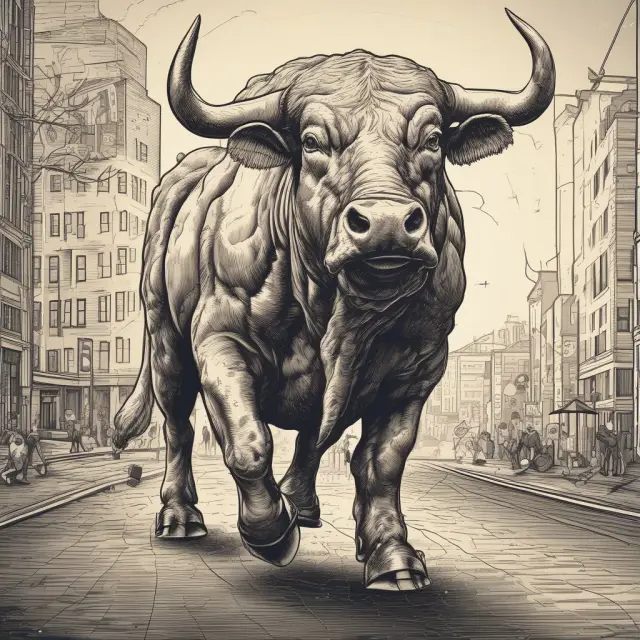
A dead cat bounce is often contrasted with bull markets, which are sustained upward price trends that can last for months or even years. Dead cat bounces, on the other hand, are temporary reversals within a larger downtrend. While it’s essential to understand the difference between these two concepts, it’s also important to recognize the inverse relationship they share.
An inverted dead cat bounce can occur during a bull market when an unexpected event causes a sharp sell-off, often referred to as a bear market rally or a bear market squeeze. This term is used when prices rise temporarily in a bull market due to short sellers covering their positions or new long positions being established after a prolonged period of declining stock prices. The opposite situation—a dead cat bounce during a bear market—has already been discussed at length.
It’s crucial to understand that inverted dead cat bounces don’t negate the underlying trend but instead can signal increased volatility, which may give rise to profit-making opportunities for both short and long-term traders. In contrast to a dead cat bounce in a bear market, which is typically followed by further declines, an inverted dead cat bounce during a bull market usually precedes a continuation of the upswing.
Identifying an inverted dead cat bounce can be challenging for investors and traders due to its unpredictable nature and the inherent uncertainty in trying to time short-term price movements. It’s important to remember that successful investing relies not only on recognizing market trends but also on having a well-diversified portfolio and a solid investment strategy tailored to one’s individual goals and risk tolerance.
In summary, dead cat bounces and bull markets are distinct price patterns with contrasting implications for investors. Understanding the differences between these concepts can help you better manage your portfolio during volatile market conditions.

Consequences of Dead Cat Bounces for Investors
Dead cat bounces may result in significant financial implications for investors, particularly those attempting to capitalize on short-term price movements. Misidentifying a dead cat bounce as a market reversal could lead to substantial losses. Instead, it is essential to recognize and differentiate these patterns from genuine trend reversals that signal prolonged upward swings.
The consequences of misjudging a dead cat bounce can be severe, especially for those who trade securities or employ short-term investment strategies. The risk is amplified when considering the difficulty in accurately predicting market bottoms. Investors may end up buying at inflated prices or locking in losses by entering short positions during this temporary upward trend.
Moreover, the emotional toll can be substantial. When faced with the constant pressure to make informed decisions and profit from even the slightest price movements, the anxiety and stress can be overwhelming. Frequent exposure to volatile markets can result in financial strain and loss of confidence.
To minimize potential losses and protect portfolios, it is vital for investors to stay well-informed about market conditions. Engaging the services of a professional financial advisor or employing reputable investment strategies can help mitigate risks. It’s also crucial to remain calm during times of uncertainty and avoid making hasty decisions based on short-term price fluctuations.
Staying informed is not only essential for identifying dead cat bounces but also for recognizing genuine trend reversals. By thoroughly analyzing market trends, economic indicators, and financial statements, investors can make informed decisions and position themselves accordingly. This proactive approach allows them to react to changing market conditions instead of being caught off guard by unexpected price movements.
In conclusion, dead cat bounces can have significant consequences for investors. Misidentifying a dead cat bounce as a genuine trend reversal could result in losses and emotional strain. Instead, staying informed about market conditions and engaging the services of a professional financial advisor or reputable investment strategy can help mitigate risks and protect portfolios from potential losses due to volatile short-term price movements.

Limitations in Predicting Dead Cat Bounces
While identifying a dead cat bounce pattern can be an intriguing exercise for traders and investors, it’s important to acknowledge its limitations. The difficulty lies in the fact that predicting this price phenomenon is not straightforward, even for experienced financial analysts. Let’s explore why.
Firstly, understanding when a dead cat bounce is taking place requires a keen eye for price patterns, coupled with an awareness of market sentiment and investor behavior. A dead cat bounce might appear to be a trend reversal initially, but its true nature is only revealed once the downtrend continues after the brief recovery. This makes it challenging for traders to differentiate between a dead cat bounce and a genuine trend reversal in real-time.
Secondly, there is no universally accepted methodology to predict this pattern accurately. While various technical indicators may help in identifying potential dead cat bounces, they do not guarantee 100% accuracy. In fact, the ambiguity surrounding this phenomenon often leaves investors and traders with more questions than answers.
It’s also essential to recognize that dead cat bounces are not rooted in fundamentals; instead, they arise due to market sentiment or short-term speculative activities. Consequently, attempting to predict a dead cat bounce based on fundamental analysis can lead to misinterpretations and incorrect conclusions.
Moreover, it’s worth noting that dead cat bounces do not always signify losses for investors. Depending on one’s investment strategy, a temporary price increase might offer an opportunity to enter the market or exit a short position at a favorable price. However, it’s essential to be aware of the potential risks and limitations associated with this phenomenon when making investment decisions.
In conclusion, predicting dead cat bounces can be both intriguing and challenging for traders and investors alike. While there is no guaranteed methodology to accurately forecast these patterns, staying informed, being patient, and seeking professional guidance can help mitigate potential losses during volatile market conditions. As always, diversification and a solid investment strategy remain the foundation of any successful long-term investment approach.

Preparing for Dead Cat Bounces
Although it’s intriguing to observe dead cat bounces in the financial markets, it’s crucial for investors to be aware of their potential implications. The consequences of misjudging a dead cat bounce can result in significant losses and put your portfolio at risk. Here are some tips on how to prepare for and manage risks during volatile market conditions.
1. Diversification: One effective strategy for managing the inherent risks of dead cat bounces is diversifying your portfolio across various asset classes, sectors, and securities. By spreading your investments across different areas, you can potentially reduce overall risk and minimize the impact on your portfolio if one or more holdings experience a dead cat bounce.
2. Stay Informed: Keeping up-to-date with market news, trends, and economic indicators is essential for making informed investment decisions. Monitoring the financial markets closely will help you recognize potential dead cat bounces and other price patterns early, enabling you to take appropriate action before significant losses occur.
3. Maintain a Solid Investment Strategy: Sticking to your long-term investment strategy is crucial during volatile market conditions. Avoid making hasty decisions based on short-term price movements or emotions, as this can lead to costly mistakes and missed opportunities. Instead, focus on your well-researched investment plan, which has been designed to meet your financial goals and risk tolerance.
4. Protect Your Portfolio: Utilize various protective measures such as stop orders and limit orders to safeguard your investments from sharp market swings. These tools can help minimize losses in case of a dead cat bounce or other adverse price movements, ensuring that your portfolio remains aligned with your long-term investment goals.
5. Consult Financial Professionals: If you’re uncertain about how to manage risks during volatile market conditions or are concerned about the potential impact of a dead cat bounce on your portfolio, consider seeking the advice of financial professionals. They can offer valuable insights and guidance based on their expertise and experience in managing various market environments.
In conclusion, understanding the nature and implications of dead cat bounces is essential for any investor looking to navigate the financial markets effectively. By following best practices such as diversification, staying informed, maintaining a solid investment strategy, protecting your portfolio, and seeking professional advice when necessary, you’ll be better equipped to manage risks during volatile market conditions and achieve long-term financial success.

FAQs About Dead Cat Bounces
A dead cat bounce is a term used in finance and investment to describe a short-lived, sharp rally during an extended bear market or downtrend. This price pattern is unsupported by fundamentals and often leaves investors with significant losses if they mistime the reversal of the trend. In this section, we will address common questions about dead cat bounces.
Question: What defines a dead cat bounce?
Answer: A dead cat bounce is a temporary price rally within an overall downtrend that fails to reverse the trend and instead leads to further losses.
Question: Can dead cat bounces be predicted beforehand?
Answer: Predicting a dead cat bounce ahead of time is challenging, even for experienced investors. The pattern can only be identified after the fact, as it requires the continuation of the downtrend following the short-lived rally.
Question: What causes dead cat bounces?
Answer: Dead cat bounces are often attributed to a clearing of short positions or incorrect assumptions about the market bottom by investors. However, they do not have any underlying fundamental support and are typically followed by further declines.
Question: Are dead cat bounces unique to stocks, or can they occur in other asset classes?
Answer: Dead cat bounces can occur in various asset classes, including stocks, bonds, currencies, and commodities.
Question: How long does a dead cat bounce last?
Answer: A dead cat bounce typically lasts only for a few days or weeks, although some can extend over several months. The duration varies depending on the specific market conditions.
Question: What is the opposite of a dead cat bounce?
Answer: An inverted dead cat bounce is a sharp sell-off during an otherwise bullish trend that fails to reverse the trend and instead leads to further gains. It can be compared to a dead cat bounce in its short-term reversal, but ultimately it continues the prevailing uptrend.
Question: How do investors protect themselves from losses due to dead cat bounces?
Answer: Investors should maintain a well-diversified portfolio and closely monitor market conditions to avoid being caught off guard by dead cat bounces. Additionally, seeking professional advice and implementing risk management strategies can help minimize potential losses.
 Next entry · No. 886Understanding the Deadweight Loss of Taxation: An Economist’s Perspective
See also
-
 No. 237
07 Apr 2024
21 min
Understanding the Different Types of Assets: A Comprehensive Guide for Investors
Investments
No. 237
07 Apr 2024
21 min
Understanding the Different Types of Assets: A Comprehensive Guide for Investors
Investments -
 No. 4,824
19 Jul 2025
23 min
Swing Trading: Understanding This Style of Active Investment
Investments
No. 4,824
19 Jul 2025
23 min
Swing Trading: Understanding This Style of Active Investment
Investments -
 No. 3,429
28 Mar 2025
20 min
Understanding Net Change: A Comprehensive Guide for Institutional Investors
Business Finance
No. 3,429
28 Mar 2025
20 min
Understanding Net Change: A Comprehensive Guide for Institutional Investors
Business Finance -
 No. 3,323
19 Mar 2025
20 min
Understanding Naked Calls: A High-Risk, High-Reward Options Strategy for Experienced Investors
Investments
No. 3,323
19 Mar 2025
20 min
Understanding Naked Calls: A High-Risk, High-Reward Options Strategy for Experienced Investors
Investments -
 No. 3,080
27 Feb 2025
21 min
Understanding Margin Calls: How They Occur and How to Manage Them
Business Finance
No. 3,080
27 Feb 2025
21 min
Understanding Margin Calls: How They Occur and How to Manage Them
Business Finance -
 No. 2,218
19 Dec 2024
18 min
Understanding Hot IPOs: The Rise and Fall of Hyped Initial Public Offerings
Business Finance
No. 2,218
19 Dec 2024
18 min
Understanding Hot IPOs: The Rise and Fall of Hyped Initial Public Offerings
Business Finance