Understanding Numeraire: The Economic Benchmark for Measuring Value in Finance and Investment

Exploring the role of Numeraire as an economic benchmark for measuring value, its application in commodities, benefits, challenges, and FAQs.
What Is Numeraire?
Numeraire, an economic term with French roots, serves as a benchmark to measure the value of similar financial instruments or goods. In essence, numeraire acts as the standard unit of account, providing a consistent reference point for comparing values between different assets or markets. This section delves into the definition and significance of numeraire, highlighting its historical origins and modern applications in finance.
Derived from the French words ‘numéraire’ or ‘money,’ numeraire is used to quantify value in a systematic way. The term typically refers to a specific good chosen as the base unit for measuring the worth of other goods, commodities, or assets. When a numeraire is adopted, it establishes a common standard for evaluating economic transactions and comparing their relative values.
The origin of the concept can be traced back to ancient economies, where precious metals like gold or silver were used as the benchmark for exchange. In more recent historical contexts, numeraire was applied when currencies were linked to a commodity, such as gold under the Bretton Woods system during the mid-20th century. The U.S. dollar emerged as the most popular numeraire during this period due to its association with gold.
In modern finance and investment, the U.S. dollar continues to function as the primary numeraire for commodity markets. The reasons are straightforward: the USD is the world’s most liquid currency, making it an ideal unit of account for international trade and financial transactions. By denominating prices in USD, market participants can efficiently compare values across multiple currencies, streamlining the exchange process and minimizing potential complications arising from fluctuating exchange rates.
In sum, understanding numeraire is crucial in evaluating economic activities that involve comparing values of different goods, assets or markets. The concept offers a valuable framework for investors, economists, and policymakers to make informed decisions based on sound comparisons of value. In the subsequent sections, we will explore the application of numeraire in economics and its implications for various financial instruments and markets.
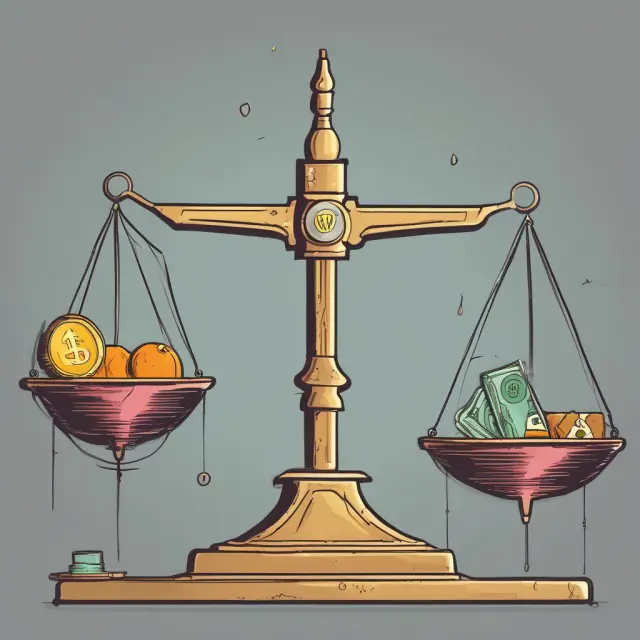
Application of Numeraire in Economics
Numeraire is an essential economic concept that enables us to compare the value of different goods or financial instruments against one another. The term numeraire, derived from the French language, translates as a “money,” “coinage,” or “face value” standard. A numeraire is typically assigned to a single good, which functions as the base unit of measurement for the entire index or market.
Historically, numeraires have been used in various economic contexts. During the mid-20th century, under the Bretton Woods system, the U.S. dollar (USD) served as the benchmark for measuring and comparing values due to its close association with gold. The USD was priced at 1/35th the price of an ounce of gold, establishing it as the standard numeraire for most commodities. In this context, the U.S. dollar’s value functioned as a reliable basis for pricing and calculating currency exchange rates.
Fast forward to today, the U.S. dollar continues to act as the numeraire for most commodity prices, making it the default standard of value in international trade. By denominating commodity prices in USD, transactions become more accessible since the USD is the world’s most widely-traded and liquid currency. This facilitates a streamlined conversion process for companies engaging in international business, ensuring that payments and receipts can be made efficiently.
Moreover, pricing commodities in USD allows countries to compare their oil prices in their own currencies against the USD benchmark, providing valuable insights into how changes in exchange rates impact their costs. For instance, if a country with a weakening currency is a net importer of oil, it will face increased expenses when paying for imported oil, as the cost translates to more local currency units than before.
In conclusion, the numeraire concept plays a vital role in determining the relative value of goods and financial instruments across economies. By establishing a standard unit of measurement, numeraires facilitate accurate comparisons and provide a solid foundation for markets and international trade. In modern contexts, the U.S. dollar maintains its status as the primary numeraire for commodity prices, underlining its significance in the global economy.

The U.S. Dollar as the Current Numeraire in Commodities
Numeraire plays a crucial role in measuring the value of goods and financial instruments by acting as a benchmark for comparison within an exchange. The term numeraire originates from French, meaning ‘money,’ ‘coinage,’ or ‘face value.’ In finance and economics, this single good is selected to serve as a unit of account, facilitating comparisons between various assets or commodities.
The U.S. dollar (USD) holds the position of being the numeraire for most commodity prices in today’s global economy. This designation signifies that the USD acts as a standardized measure against which all other commodity prices are established and compared. The primary reason for the USD’s dominance lies in its status as the world’s most widely traded and liquid currency, providing ease of conversion and transactions for various countries and industries.
The historical Bretton Woods system offers an illustrative example of a numeraire. Under this monetary framework, currencies were valued based on their relationship to gold, with the U.S. dollar fixed at one-thirty-fifth (1/35th) the price of an ounce of gold. Thus, all other currencies were priced as multiples or fractions of the USD. In this context, the U.S. dollar served as a de facto numeraire due to its linkage with the precious metal.
The present-day relevance of the USD as the numeraire for commodities is rooted in the liquidity and global acceptance of this currency. Companies involved in oil transactions can effectively manage their payments or receipts due to the pricing of oil in USD. Additionally, the USD’s status as the benchmark enables countries to compare their local currency values against the value of commodities denominated in U.S. dollars. For instance, if a country is a net importer of oil and experiences a weakening currency versus the U.S. dollar, it would result in a higher cost for oil purchases (in local currency terms) compared to previous periods.
In conclusion, the U.S. dollar’s position as the numeraire for most commodities has significant implications for global trade and financial markets. Its widespread acceptance and liquidity make it an indispensable tool in establishing standardized values for various goods and assets. Understanding the role of a numeraire, such as the U.S. dollar, is essential to comprehending how values are measured and compared within different exchange systems.

Numeraire vs. Pricing Currency
The terms numeraire and pricing currency may seem interchangeable at first glance, but they represent distinct concepts within finance and economics. A numeraire is a benchmark or a unit of measurement used to establish prices for goods, financial instruments, or commodities, while a pricing currency is the currency in which the price of an asset or commodity is quoted.
The Concept of Numeraire
A numeraire, which translates from its French origins as “money,” “coinage,” or “face value,” serves as a reference point to measure the value of other goods, assets, or financial instruments in various markets. It’s like having a standard unit to compare apples to oranges, enabling us to gauge changes in their relative prices or values. A numeraire is usually applied to a single good or asset class that becomes the base value for the entire index or market.
Examples of Numeraires
A notable historical example of a numeraire can be traced back to the Bretton Woods system during the mid-20th century, where the U.S. dollar (USD) was used as a numeraire in determining commodity prices. Under this monetary regime, all currencies were priced relative to the USD. The USD’s value was pegged to gold at $35 an ounce, and all other currencies had an exchange rate relative to that price. In essence, the USD became the de facto benchmark since it provided a stable reference point for establishing prices in the global economy.
The Role of Pricing Currency
On the other hand, pricing currency refers to the specific currency used to quote the price of an asset or commodity. For instance, most oil transactions are priced and quoted in U.S. dollars (USD) due to its widespread usage and liquidity within global markets. This means that when oil prices fluctuate, they reflect changes in the value of USD relative to other currencies as well.
Understanding Numeraire’s Significance
The significance of a numeraire lies in providing a standard unit for comparison across various markets and economic sectors. By establishing a consistent benchmark, it enables us to assess price movements, make investment decisions, and analyze market trends more effectively. In today’s globalized financial landscape, the U.S. dollar continues to serve as the dominant numeraire, due to its status as the world’s most widely-used currency for international trade and transactions.
In summary, while both numeraire and pricing currency are related concepts, they serve different purposes in finance and economics. Understanding their differences can help investors, traders, and economists better navigate complex financial markets and make informed decisions.

Benefits of Using Numeraire in Finance and Investment
Numeraire provides significant advantages when it comes to comparing values and making informed investment decisions. This economic concept, which originated as a French term for ‘money,’ ‘coinage,’ or ‘face value,’ becomes the base unit for measuring the worth of goods or financial instruments. By establishing a numeraire, markets can compare the relative value of different products or assets.
The use of a numeraire simplifies the process of determining value, allowing investors to evaluate various securities more efficiently. In commodity trading, denominating prices in a specific currency, such as the U.S. dollar (USD), serves as an essential numeraire for comparison and standardization. The U.S. dollar’s popularity as the world’s most-traded and liquid currency ensures that it is widely accepted and can facilitate transactions between various parties.
For investors, having a clear understanding of the role of numeraire offers several benefits:
- Consistent measurement: By establishing a numeraire, markets can consistently measure the value of goods or financial instruments against one another, making it easier to assess changes in prices and make informed decisions.
- Simplified trading: A numeraire makes transactions more manageable by standardizing the pricing structure. This is particularly important when dealing with commodities that are traded across multiple markets and currencies, as a consistent benchmark can help reduce complexity and potential confusion.
- Comparative analysis: The use of a numeraire enables investors to analyze different assets or securities side-by-side, enabling them to understand the relative value and performance of each investment compared to others in their portfolio.
- Risk management: Having a clear benchmark can help investors better manage risks by allowing them to quantify and compare the returns of various investments against the numeraire. This information is crucial when making decisions related to asset allocation, portfolio rebalancing, and risk mitigation strategies.
- Global transactions: In an increasingly globalized world, having a standardized benchmark can facilitate seamless cross-border transactions, enabling investors to participate in international markets more effectively while reducing the potential risks associated with currency conversion and exchange rate fluctuations.
In summary, understanding the role of numeraire as a key economic concept is essential for investors, traders, and financial analysts seeking to make informed decisions in an ever-changing market environment. By serving as a consistent benchmark for comparing values, simplifying trading processes, and enabling comparative analysis, numéraire plays a crucial role in the world of finance and investment.

Understanding the Role of Numeraire in Modern-Day Commodity Trading
In today’s interconnected and globalized economy, commodities play a vital role as essential building blocks for industries, as well as stores of value and hedging instruments for investors. To effectively trade, invest, and evaluate the performance of commodities, it is crucial to understand the concept of numeraire and how it influences the valuation and pricing of various commodities.
Numeraire is an economic term representing a unit in which prices are measured; it serves as a standard of value across different exchanges. In modern-day commodity trading, a common numeraire is the U.S. dollar. The U.S. dollar acting as a numeraire simplifies international transactions and price comparisons.
Let’s delve deeper into some real-world examples that illustrate how numeraire is used in various commodities:
Oil: Oil, being a globally traded commodity with prices denominated primarily in U.S. dollars, serves as an excellent example of numeraire in action. Producers and consumers alike deal with oil in USD terms, making it easier to determine profitability, assess market trends, and compare prices between regions.
Gold: Gold is another popular commodity that often serves as a benchmark for other assets. Although its price can be quoted in various currencies, the gold market commonly refers to gold priced in U.S. dollars. The London Bullion Market Association (LBMA) sets the daily gold fixing price in USD, which acts as the standard price for the global gold market.
Agricultural Products: In the agricultural sector, many commodities are traded using futures contracts, with prices being quoted in U.S. dollars per bushel or tonne. Using a common numeraire such as the U.S. dollar simplifies pricing and facilitates efficient trading across different markets and regions.
Having explored various examples of numeraire within commodity markets, it is evident that the usage of this term offers numerous benefits. By using a single standard for measurement, we can:
– Compare prices and values across different commodities and currencies.
– Evaluate profitability, returns, and risk in a consistent manner.
– Streamline transactions, reducing complexity and confusion.
– Analyze market trends and identify patterns more effectively.
It is important to note that while the U.S. dollar serves as a widely accepted numeraire for commodities, it is not always the most appropriate choice for every situation or market. In some cases, alternative benchmarks may be utilized depending on local preferences, market conditions, and trade agreements. Nonetheless, understanding the role of numeraire in modern-day commodity trading provides valuable insights into pricing structures, risk management, and investment strategies within various markets.

Numeraire’s Significance to Institutional Investors and Portfolio Management
Institutional investors play a vital role in the global economy, managing large investment portfolios on behalf of pension funds, endowments, foundations, insurance companies, and other organizations. The ability for these institutions to assess risks, make informed decisions, and allocate resources efficiently is crucial for their long-term success. One essential tool they rely upon is the concept of numeraire in finance, which facilitates value comparisons and enables them to manage risk effectively.
Numeraire as a Risk Management Tool
Numeraire serves as an essential factor in understanding and managing risks for institutional investors. By using a common unit of account, they can evaluate the performance and relative risks associated with various assets or asset classes within their portfolios. For instance, an investor might use one currency as a numeraire to determine the return on investment (ROI) for their bond holdings denominated in another currency. By calculating the ROI against this base currency, they can evaluate the impact of exchange rate fluctuations and make informed decisions regarding potential hedging strategies.
Numeraire and Portfolio Diversification
The use of numeraire also enables institutional investors to effectively diversify their portfolios while managing risk exposure. By establishing a common unit of account, investors can compare the relative performance of various asset classes and assess whether they are achieving their desired level of diversification. For example, an investor may allocate capital between stocks, bonds, and real estate, all priced in the same numeraire, to ensure that no single investment class dominates the portfolio’s risk profile or return expectations.
Numeraire and Performance Measurement
Institutional investors use various performance measurement benchmarks to evaluate the success of their portfolios against specified objectives and market indices. The choice of a suitable numeraire is essential when comparing an investor’s performance to relevant indices like the S&P 500, MSCI World Index, or Bloomberg Barclays Aggregate Bond Index. By using the same numeraire, investors can accurately assess their returns relative to these benchmarks and adjust their investment strategies accordingly.
Numeraire and Asset Allocation Strategies
Institutional investors employ a variety of asset allocation strategies to manage risk, optimize returns, and meet specific financial goals for their clients or organizations. The use of numeraire is vital in implementing these strategies effectively. For example, modern portfolio theory, which focuses on constructing an optimal investment portfolio based on expected return and risk, relies heavily on the concept of a well-diversified portfolio. By choosing a suitable numeraire, institutional investors can ensure that their asset allocation strategy remains balanced and aligned with their objectives while minimizing overall risk.
In conclusion, numeraire plays an essential role in institutional investing by providing a common unit of account for evaluating risks, measuring performance, managing diversification, and implementing various investment strategies. By understanding the significance of numeraire in finance, institutional investors can make informed decisions that lead to long-term success in managing their clients’ assets and achieving their organizational goals.

Potential Challenges and Risks of Using Numeraire in Finance
Although the concept of numeraire provides a valuable tool for comparing values in finance, there are some challenges and risks associated with its usage. First and foremost is the selection of an appropriate numeraire, as this choice can have significant implications for the accuracy and validity of the results. For instance, if we consider the historical gold standard example where gold served as the numeraire, it was eventually abandoned due to its limitations in being a finite resource that could not accommodate global economic growth. Additionally, other currencies or assets that may be considered suitable numeraires might have their own unique risks and challenges.
One such risk is the volatility of the chosen numeraire itself. If an asset or currency experiences extreme price fluctuations, it can significantly impact the values measured in that numeraire and potentially skew the analysis. For instance, the Swiss franc experienced a major appreciation against other currencies during the European debt crisis, which could have distorted the perceived value of assets priced in francs.
Furthermore, using a numeraire can lead to issues related to purchasing power parity and inflation. When comparing values over extended periods or across different countries, price levels can change significantly due to varying inflation rates. Consequently, it is crucial to account for these differences when choosing a numeraire, as the results can be sensitive to the choice made.
In the context of finance and investment, using a numeraire as a benchmark requires investors to make an assumption about which asset or currency will provide the best store of value over the long term. Historically, gold and currencies have served this role but are not without their risks and limitations. For example, currencies can be subjected to devaluation due to monetary policy decisions or political instability, while gold’s value can fluctuate based on investor sentiment and supply/demand dynamics.
Another challenge arises when dealing with complex financial instruments that may not have a straightforward relationship to any single numeraire. In such cases, multiple numeraires may need to be used in conjunction, requiring additional analytical efforts. This complexity can make it challenging for investors and analysts to draw clear conclusions from the data presented.
Finally, the use of numeraire in finance also raises ethical considerations regarding the selection process. The choice of a numeraire might disproportionately impact specific groups or industries, which could potentially result in unintended consequences or biases in financial markets. For instance, if a country heavily reliant on oil exports chooses oil as their numeraire, it could potentially give an unfair advantage to domestic industries and disadvantage others that do not have a similar reliance on the selected asset.
Despite these challenges and risks, understanding the concept of numeraire and its role in finance is essential for investors and analysts seeking to make informed investment decisions and gain insights into global economic trends. By carefully considering these potential issues and adopting appropriate techniques to mitigate them, one can effectively harness the power of a well-selected numeraire to provide valuable perspectives on financial markets and investments.

Numeraire in Cryptocurrencies: A New Frontier
The application of numeraire has not been limited to traditional financial markets; it has found a place in the burgeoning world of cryptocurrencies as well. With the increasing adoption and trading volume of digital currencies, the need for a benchmark to measure their value against one another becomes increasingly important.
In this new frontier, various cryptocurrencies can serve as potential numeraire for specific markets or use cases. For instance, Bitcoin (BTC), the first decentralized cryptocurrency, has long been considered the “digital gold” and could potentially become a leading contender for a benchmark in the crypto space. This is because it has several desirable properties, like scarcity, decentralization, and widespread adoption.
Another potential numeraire candidate is Ethereum (ETH), the most popular smart contract platform. ETH’s utility as a programmable digital currency allows for various decentralized applications (DApps) to be built upon it. This could lead to new markets and use cases where ETH may serve as a benchmark, as seen in decentralized finance (DeFi).
The choice of numeraire can also vary based on specific applications. For example, Stablecoins, like Tether (USDT) and DAI, have been created with the primary goal of pegging their value to fiat currencies, such as the U.S. dollar or Swiss Franc. This makes them potential contenders for numeraire in markets that require stable value comparisons or transactions.
The implications of a chosen numeraire can be profound for various stakeholders in the crypto market. Institutions and investors may use a specific cryptocurrency as a benchmark for their portfolios and strategies, while traders could potentially exploit pricing discrepancies between different markets to generate profit. For instance, if two similarly traded DApps on Ethereum and Binance Smart Chain have different pricing for the same digital asset, a trader can arbitrage between the two platforms.
Additionally, having a benchmark cryptocurrency may attract more institutional investors to the crypto market. The traditional financial industry has long relied on established benchmarks like the S&P 500 or the Dow Jones Industrial Average for investment decisions and risk assessment purposes. Similar benchmarks in the crypto space would enable institutional investors to apply their existing frameworks, further legitimizing the digital asset class.
However, it is essential to recognize that no single cryptocurrency can become the definitive numeraire. Instead, various candidates might coexist and serve specific use cases, depending on market demands and technological advancements. This diverse ecosystem of potential benchmarks can lead to increased competition, innovation, and growth in the crypto space.
In conclusion, the concept of a numeraire has proven its value in traditional finance and is now being applied to cryptocurrencies. The choice of a specific cryptocurrency as a benchmark could have significant implications for various stakeholders, from institutional investors to traders and developers. This new frontier in numeraire’s application represents an exciting opportunity to further develop the crypto market and attract traditional financial institutions.

FAQs on Numeraire in Finance and Investment
What is numeraire in finance?
Numeraire is an economic term used to denote a standard unit of measurement or benchmark for expressing value. In finance, it represents the currency or good against which other assets or commodities are priced and compared.
Why is numeraire important in finance?
Numeraire is essential because it provides a common unit of account that simplifies the process of comparing and analyzing investments, prices, and market indices. It also enables effective risk assessment, asset allocation, and portfolio management strategies by allowing investors to measure their investment performance against a consistent benchmark.
What are some examples of numeraire in history?
Historically, numeraire has been used to denominate currencies against precious metals, like gold or silver, under different monetary systems. For example, during the Bretton Woods system, the U.S. dollar served as the numeraire for most commodities due to its fixation to gold. Today, it remains the de facto benchmark for most commodity prices.
How is a numeraire different from a pricing currency?
Although closely related, there are differences between a numeraire and a pricing currency in finance. While both represent units of account, a pricing currency refers to the currency used to quote the price of assets, goods or services, whereas a numeraire serves as the standard unit of measurement for expressing values across an entire market or economy.
How does the U.S. dollar function as a numeraire in commodities?
The U.S. dollar acts as the numeraire for most commodity markets due to its widespread use and liquidity. By denominating prices in USD, it simplifies transactions, risk assessments, and portfolio management strategies for both buyers and sellers. Additionally, setting prices in USD allows countries to evaluate their currency’s performance against oil or other commodity prices and adjust accordingly.
What are the advantages of using numeraire for measuring value?
Utilizing a numeraire offers several benefits when comparing and measuring values across various assets and markets:
- Simplification of analysis and comparison between different investments
- Provides a consistent benchmark to assess investment performance
- Aids in risk assessment, asset allocation, and portfolio management strategies
- Offers a common language for investors to discuss the value of different securities or commodities.
 Next entry · No. 3,595Numismatics: The Fascinating Study of Currency, Coins, and Collectibles
See also
-
 No. 4,264
04 Jun 2025
24 min
Understanding Quote Currency in Forex: Base vs Quote, Direct vs Indirect
Forex & Currency Markets
No. 4,264
04 Jun 2025
24 min
Understanding Quote Currency in Forex: Base vs Quote, Direct vs Indirect
Forex & Currency Markets -
 No. 4,261
04 Jun 2025
22 min
Understanding Quotations: The Role of Asking Prices and Bid Prices in Financial Markets
Finance Policy
No. 4,261
04 Jun 2025
22 min
Understanding Quotations: The Role of Asking Prices and Bid Prices in Financial Markets
Finance Policy -
 No. 1,845
14 Nov 2024
21 min
Gold Options: Understanding Calls and Puts in the World of Precious Metals
Finance Policy
No. 1,845
14 Nov 2024
21 min
Gold Options: Understanding Calls and Puts in the World of Precious Metals
Finance Policy -
 No. 1,035
18 Jul 2024
23 min
Understanding Direct Quotes in Forex: An In-Depth Analysis
Forex & Currency Markets
No. 1,035
18 Jul 2024
23 min
Understanding Direct Quotes in Forex: An In-Depth Analysis
Forex & Currency Markets -
 No. 5,080
10 Aug 2025
20 min
Understanding the Trilemma: Balancing Currency, Capital, and Monetary Policy
Business Finance
No. 5,080
10 Aug 2025
20 min
Understanding the Trilemma: Balancing Currency, Capital, and Monetary Policy
Business Finance -
 No. 5,027
05 Aug 2025
24 min
Understanding Trading: Roles, Strategies, Skills, and Differences with Investing
Business Finance
No. 5,027
05 Aug 2025
24 min
Understanding Trading: Roles, Strategies, Skills, and Differences with Investing
Business Finance