Understanding Sales Tax: What It Is and How It Works for Professional Investors

Understand sales tax basics, calculations, exemptions, nexus, collection, international comparisons, and its impact on investing.
What Is a Sales Tax?
A sales tax is a consumption tax that governments impose on transactions involving the sale of goods and services. This tax is collected at the point of sale by retailers, who pass it on to the government. A business can become liable for sales taxes in a particular jurisdiction if it has an economic presence there—often referred to as a nexus. The United States has a unique sales tax landscape compared to other countries; some jurisdictions use sales taxes while others opt for value-added taxes (VAT).
Under the conventional sales tax model, only the end user is responsible for paying the tax. Sales taxes are calculated as a percentage of the retail cost and can vary among local, county, or state governments. Four U.S. states—Delaware, New Hampshire, Montana, and Oregon—do not impose any sales taxes. However, Alaska does not have a statewide sales tax but allows individual jurisdictions to levy their own.
Despite the name, sales taxes differ from value-added taxes (VAT). In the context of the U.S., VAT is not implemented on a national level. Instead, individual states can choose to adopt such systems. Under VAT, tax is collected at each stage of production rather than just the point of sale. This results in fewer instances of double taxation and is more commonly used in countries outside the United States.
The history of sales taxes in the U.S. dates back to 1862 when the federal government imposed a tax on luxury items like whiskey, tobacco, and tea as part of the Revenue Act. Later, state and local governments adopted their own sales tax systems to fund public services. Today, sales taxes are an essential source of revenue for many state and local governments.
In the U.S., a sales tax is typically imposed at the point of sale and is collected by retailers on behalf of the government. The tax rate can vary depending on the jurisdiction. For example, some cities or counties may levy their own sales taxes in addition to state-level taxes. In 2018, New York passed a law requiring internet retailers like Amazon to pay sales taxes despite having no physical presence in the state, creating tension between ecommerce and sales taxes.
The collection of sales tax involves record-keeping and regular reporting. Businesses are required to register for a sales tax permit with their state or local government to legally collect and remit sales taxes. Proper documentation is crucial to ensure compliance and avoid potential audits. The lack of a sales tax in some jurisdictions can create opportunities for businesses looking to optimize their operations, particularly those engaging in interstate commerce or operating in multiple jurisdictions.
A sales tax is calculated as a percentage of the retail cost at the point of sale. Sales taxes can be a significant burden for consumers and businesses alike, especially when combined with other taxes like income or property taxes. Understanding the nuances of sales taxes—from how they’re calculated to their history and implications on different industries—is crucial for professional investors looking to navigate complex tax landscapes.

Understanding the Basics of Sales Tax
A sales tax is a consumption tax imposed by governments on the sale of goods and services, levied at the point of purchase and collected by retailers. This tax is charged as a percentage of the retail cost and can be added to local or municipal sales taxes depending on the jurisdiction. Sales taxes are most commonly associated with retail transactions between businesses and consumers; however, they also apply to certain business-to-business transactions.
When a good or service passes through various stages of production, multiple entities may be involved, making sales tax collection complex. For instance, imagine that a sheep farmer sells wool to a yarn manufacturer. The yarn maker must provide a resale certificate, indicating they are not the end consumer, in order to avoid paying the sales tax on their purchases from the sheep farmer. This process continues with subsequent transactions between the garment maker and retailer, each requiring a resale certificate to prevent payment of the sales tax.
Different jurisdictions set various sales tax rates, with states, counties, and municipalities sometimes levying their own taxes. Sales taxes are often related to use taxes, which apply to goods or services acquired outside the purchaser’s jurisdiction. However, collecting these taxes can be challenging, especially for large purchases of tangible items.
To illustrate this, let us consider a Georgia resident purchasing a car in Florida. They would need to pay the local sales tax on the vehicle as though they had bought it at home. This is called an economic nexus and can create complications for both businesses and consumers.
The distinction between sales taxes and value-added taxes (VAT) lies in their collection points. Sales taxes are only charged once at the point of sale, while VAT is collected throughout the production process. Value-added tax schemes, common outside of the United States, charge a percentage on the difference between what each company charges for their product or service and what they pay for raw materials or inputs at every stage of production. This eliminates the potential for double taxation but results in higher total taxes paid by consumers.
In the U.S., sales taxes are the most common form of consumption tax, with a significant number of jurisdictions setting their own rates. Only four states—Delaware, New Hampshire, Montana, and Oregon—do not levy any sales taxes. Alaska does not have a statewide sales tax but allows local governments to charge one.
Sales taxes are collected from end users as a percentage of the retail cost of goods or services at the point of sale. The tax is calculated on the total price before any discounts, coupons, or other reductions. For example, if a consumer purchases a $100 item with a 5% sales tax, they will pay an additional $5 in taxes, for a total cost of $105.
Sales taxes can impact businesses differently depending on the nature of their operations. Certain industries may be subject to excise taxes, which are taxes on specific goods or activities, such as “sin taxes” on tobacco, alcohol, and gambling. Other industries may have exemptions that exempt them from paying sales tax or only require payment for certain types of transactions.
In conclusion, sales taxes are a common consumption tax in the United States, levied at the point of sale and collected by retailers. They can create complexities when applied to goods and services passing through multiple stages of production, and collecting them from consumers outside their jurisdiction can be challenging. Understanding the basics of sales tax, its collection process, and its impact on various industries is crucial for both businesses and investors looking to navigate this aspect of the finance and investment landscape.

Exemptions and Exceptions for Sales Taxes
Understanding Sales Tax Exemptions
Sales taxes can be tricky as they apply to various goods and services differently. Some items are entirely exempt from sales tax, while others may have exceptions based on specific conditions. This section will outline the most common exemptions for sales taxes in the United States.
Food Items
Many states provide an exemption from sales tax for certain food items. While the specifics may vary between jurisdictions, some commonly exempted food categories include:
- Fresh fruits and vegetables
- Groceries
- Meat and fish
- Dairy products
- Prepared meals and ingredients for home consumption
Medications
Prescription medications are usually exempt from sales tax. However, over-the-counter drugs, vitamins, and dietary supplements may or may not be subject to sales tax depending on the jurisdiction. Be sure to consult your state’s specific exemptions.
Machinery or Equipment
Businesses purchasing machinery or equipment for manufacturing or production purposes often qualify for a sales tax exemption. The eligibility criteria may depend on factors such as the size, purpose, and type of business entity. Consult with your local tax authority to determine if your business qualifies for this exemption.
Excise Taxes and ‘Sin Taxes’
Unlike sales taxes, excise taxes are imposed on specific goods or services based on their consumption rather than at the point of sale. Excise taxes can be referred to as “sin taxes” due to their application to items that may be considered harmful or socially undesirable, such as:
- Alcoholic beverages
- Cigarettes and tobacco products
- Gasoline, diesel fuel, and other energy sources
- Luxury goods (e.g., yachts, jewelry)
- Gambling services
The Taxation of Services
Services are increasingly being subjected to sales tax as the economy shifts towards a service-based model. While rules vary between jurisdictions, some common services that may be subject to sales tax include:
- Legal and accounting services
- Consulting, engineering, and architecture services
- Personal services (e.g., beauty, fitness)
- Transportation services (excluding public transportation)
Stay tuned for the next section as we dive deeper into Sales Tax Nexus and its implications for businesses. Understanding these concepts will help you navigate the complex world of sales taxes and maximize your investment strategies.

Sales Tax Nexus: Definitions and Implications for Businesses
A sales tax nexus refers to the point at which a business is required to collect and remit sales taxes on behalf of various jurisdictions due to their presence in those regions. This presence can take three forms: physical, economic, or click-through.
1. Physical Presence: A company has a physical presence when it owns or leases property in a specific state or locality. Brick-and-mortar stores, warehouses, and offices are all examples of physical presences that may trigger sales tax obligations. However, as e-commerce grows, the definition of what constitutes a physical presence is evolving. For instance, some states consider an employee or an affiliate to represent sufficient presence for sales tax purposes, leading to complications and controversies for remote sellers.
2. Economic Nexus: Economic nexus occurs when a business has a certain level of economic activity within a jurisdiction. This can include the number of transactions or sales volume in that region. For example, New York State imposes economic nexus on remote retailers who have over $300,000 in annual gross receipts derived from sales into the state. South Dakota’s landmark Wayfair decision expanded economic nexus beyond physical presence to include online sellers who meet specific thresholds of transactions or revenue within a state.
3. Click-Through Nexus: Also known as affiliate nexus, click-through nexus occurs when a business has an agreement with individuals or entities that generate sales for the company through referral links. These affiliates receive commissions for driving traffic to the business’s website, resulting in sales. States such as California and New York have implemented click-through nexus laws, requiring retailers to collect sales tax if they meet specific thresholds of revenue from affiliate-driven sales.
The implications of sales tax nexus are significant for e-commerce businesses, especially those with a multistate or international presence. Companies must monitor their sales activities in various jurisdictions and adapt to the differing rules and thresholds of each location, which can lead to complexities and compliance challenges. Cross-border transactions, in particular, pose additional complications due to varying tax rates, rules, and regulations between countries.
In conclusion, understanding the definitions of sales tax nexus is crucial for businesses seeking to navigate the increasingly complex landscape of sales tax collection and reporting. By staying informed about physical, economic, and click-through nexus, companies can minimize potential risks, ensure compliance with local laws, and avoid penalties or legal disputes.
As the e-commerce industry continues to evolve, so too will the rules governing sales taxes and their application to online businesses. Staying informed about updates and developments in this area is essential for any professional investor seeking to optimize their strategies and investments while mitigating risks associated with sales tax nexus.
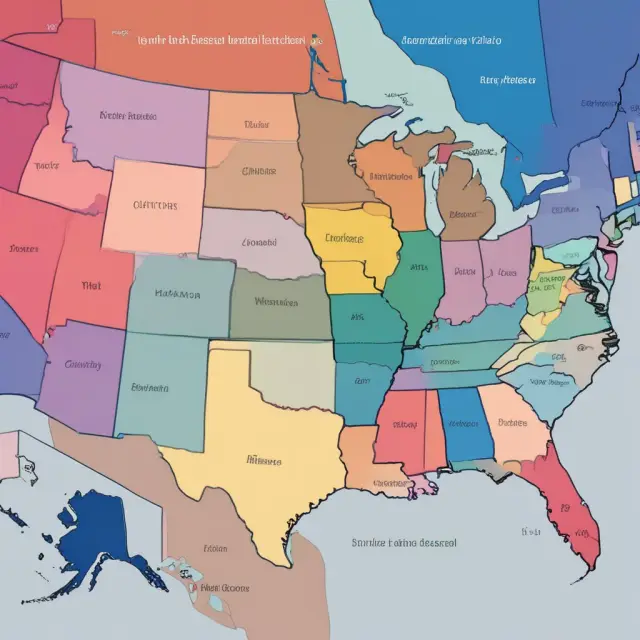
State Sales Tax Rates and Jurisdictions
One essential factor for professional investors to consider when evaluating potential investment opportunities is the sales tax environment within various jurisdictions. Sales taxes, also known as consumption taxes or retail taxes, differ significantly from income or property taxes. This section will explore how sales tax rates vary across states and what implications this has for businesses that may choose to operate or expand into new markets.
United States Sales Tax Rates and Jurisdictions
When considering the sales tax landscape within the United States, it’s important to note that each state is responsible for setting its own sales tax rates and policies. Furthermore, some counties and municipalities also levy their own separate taxes. As of 2021, here are four U.S. states with no sales tax: Delaware, New Hampshire, Montana, and Oregon. Alaska has no statewide sales tax but allows city and county governments to impose a local sales tax.
In contrast, some states have exceptionally high sales tax rates. Louisiana holds the record for having the highest average combined sales tax rate in the United States, with a statewide average of 9.55%. Other states like Tennessee, Arkansas, and Washington also have high average sales taxes above 8%. On the lower end, states such as Hawai’i (4.44%), Wyoming (5.36%), and Alaska (1.76%) have some of the lowest sales tax rates.
Implications for Businesses
Understanding sales tax jurisdictions is crucial for businesses looking to expand into new markets or investors analyzing potential opportunities. Sales taxes can significantly impact a company’s bottom line, especially in industries with thin profit margins. Additionally, state sales tax policies vary regarding which goods and services are exempt from taxation, further complicating matters for businesses.
For example, food is often exempted from sales tax, whereas excise taxes may apply to certain items, such as alcohol or tobacco. Understanding these nuances can impact both the cost structure for a business and its competitiveness within various markets.
In summary, state sales tax rates and jurisdictions are essential factors to consider when evaluating potential investment opportunities or expanding a business into new markets. By understanding how these taxes vary from one location to another, investors and businesses can make more informed decisions about their strategies. In the following sections, we will discuss exemptions and exceptions for sales taxes and explore how these impact different industries and investment strategies.

Sales Tax Collection and Reporting
One essential aspect of managing sales taxes involves the collection, reporting, and remittance of the taxes to the appropriate government entities. Sales taxes are typically calculated at the point of sale by adding a percentage to the price of the product or service being purchased. These taxes are collected on behalf of the government by businesses, known as “tax collectors” or “tax agents,” who pass them along to the taxing authorities.
The collection process varies depending on whether the business has a physical presence in the jurisdiction where it is selling goods and services. For example, if a company operates a brick-and-mortar store in California, it would be required to collect and remit sales taxes for all sales made within that state. The same applies to businesses providing services within a particular jurisdiction or having employees working there.
In cases where a business lacks a physical presence in the jurisdiction but has an economic connection (nexus), collection of sales taxes becomes more complex. Nexus can be established through various means, including the sale of goods or delivery of services via employees, affiliates, or digital platforms. The tax laws and regulations governing such cases differ from one state to another.
When collecting sales taxes, it is crucial for businesses to maintain accurate records of all transactions subject to these taxes. These records include details about the taxable items sold, the jurisdiction where they were sold, and the amount of sales taxes collected. The records must be kept in a systematic manner and made available during audits by taxing authorities.
Periodic reporting of collected sales taxes is another essential aspect of managing this consumption tax. Reporting intervals depend on the jurisdictions involved and the size of the business. For example, some states require monthly reporting while others allow annual reporting. Reporting inaccuracies can lead to significant fines or penalties for noncompliant businesses.
Once collected and reported, sales taxes are remitted to the appropriate taxing authority, usually a state or local government agency. Payment methods may include electronic funds transfer, checks, or credit cards. Properly managing this process is essential for businesses to remain compliant with sales tax regulations while ensuring efficient cash flow management.
In conclusion, understanding the collection, reporting, and remittance of sales taxes is a critical aspect of managing these consumption taxes for professional investors. Ensuring compliance with taxing authorities’ rules and maintaining accurate records is essential for avoiding penalties and fines, while also maximizing efficiency and minimizing financial risks associated with sales tax management.

The Impact of Sales Tax on Investing
Sales taxes can significantly affect various investment strategies and sectors, leading professional investors to pay close attention to tax laws and their implications for businesses in different jurisdictions. In the context of sales taxes, an investor is primarily concerned with how these taxes impact their potential returns from investments in real estate or manufacturing.
One way that sales taxes can influence investing decisions revolves around tax arbitrage opportunities. Tax arbitrage refers to the process where a business seeks to take advantage of different tax regimes or rates across various jurisdictions to improve their overall tax position. In a multi-state investment context, differences in sales tax rates may create such opportunities for investors.
Consider an example: A real estate investor buys property in two neighboring states, one with a lower sales tax rate and the other with a higher sales tax rate. By structuring their business operations correctly, they can shift sales to the state with the lower sales tax rate while maintaining their customer base primarily in the high-tax jurisdiction. This allows them to save money on sales taxes and potentially increase their returns.
Sales tax implications extend beyond real estate investments, impacting manufacturing businesses as well. In cases where a multistate or multinational corporation manufactures its goods across multiple locations, managing sales tax compliance can be complex. Understanding the nuances of various sales tax rules, exemptions, and jurisdictions is vital for minimizing taxes and optimizing overall profitability.
Additionally, sales taxes play an important role in determining the competitiveness of different markets for investors. For instance, a state with high sales taxes may deter businesses from locating there or expanding their operations, as the tax burden could impact their bottom line. By considering these factors, investors can make more informed decisions regarding where to allocate their capital for maximum returns while minimizing potential tax liabilities.
In conclusion, sales taxes have far-reaching implications for professional investors in various industries and investment strategies. Understanding how they operate and being aware of tax arbitrage opportunities can help businesses and investors optimize their overall tax position, enhancing their competitiveness and profitability.

Sales Tax and Economic Development
The potential impact of sales taxes on economic development is an important consideration for businesses seeking to locate or expand in different jurisdictions. Sales taxes, like property taxes and income taxes, can influence business decisions by increasing the cost of doing business in a particular location. This can result in firms opting to establish themselves in areas with lower tax burdens or seeking incentives from governments to offset the added expense.
In evaluating economic development, it is crucial to consider how sales taxes affect businesses in various industries and their interactions with local, state, and federal authorities. Understanding these dynamics can help investors identify opportunities for growth while minimizing potential risks.
One primary concern for businesses is the potential complexity of managing sales tax compliance across multiple jurisdictions. As we discussed earlier, sales tax laws vary significantly from one place to another. A business operating in multiple states or cities must maintain a detailed understanding of each area’s specific regulations and reporting requirements to avoid potential penalties or audits.
In some cases, businesses may be able to leverage their size and influence to secure exemptions or concessions related to sales tax burdens. For instance, they might negotiate with state officials for a reduced tax rate in exchange for creating jobs or investing in the local economy. Alternatively, they could seek to relocate to jurisdictions that offer more favorable tax structures or incentives for businesses within their industry.
The impact of sales taxes on economic development can also be felt at the consumer level. Higher sales taxes may reduce disposable income and dampen demand for goods and services, potentially slowing overall growth in a given region. In contrast, lower taxes might attract more consumers from neighboring areas, boosting local businesses and creating new opportunities for investors.
It’s important to note that sales taxes are not the only factor influencing economic development. Factors such as labor costs, access to transportation infrastructure, and available workforce can play a significant role in shaping business decisions. However, understanding the sales tax landscape is essential for making informed investment choices within a competitive marketplace.
From an investor’s perspective, evaluating the sales tax implications of various investment opportunities can help determine their potential return on investment (ROI). For example, investing in companies that are well-positioned to navigate complex sales tax environments or offer compelling solutions for managing sales tax compliance could be attractive. Alternatively, a focus on industries and regions with lower sales taxes may yield stronger financial returns over the long term.
To make an informed decision about the impact of sales taxes on economic development, it is essential to consider multiple perspectives: those of businesses, investors, consumers, and governments. By understanding these interdependent relationships, we can gain valuable insights into the potential opportunities and challenges that come with managing sales taxes within a dynamic economic landscape.

International Comparisons: Sales Tax vs Value-Added Tax (VAT)
Sales taxes and value-added taxes (VATs) are two primary types of consumption taxes used by governments around the world to generate revenue. Understanding their differences, advantages, and disadvantages can help professional investors make informed decisions when investing in various industries or expanding into new markets.
A Sales Tax: An Overview
A sales tax is a consumption tax that is levied at the point of sale on the purchase price of goods and services. The primary difference between sales taxes and other types of consumption taxes, like excise taxes, is that sales taxes are only imposed on the final transaction between the consumer and the retailer.
The calculation and collection of sales taxes depend on whether a business has a presence, or nexus, in the taxing jurisdiction. Sales tax rates vary from one location to another, with some states, counties, and municipalities imposing additional taxes. Sales taxes are closely related to use taxes, which apply to items from outside their jurisdiction but are more difficult to enforce, particularly for large purchases of tangible goods.
Value-Added Tax (VAT): An Overview
A value-added tax (VAT) is a consumption tax that is levied at various stages of the production and distribution process based on the added value at each stage. In contrast to sales taxes, VATs are more complex since they require extensive documentation for businesses involved in the production and distribution of goods and services.
The main objective of the VAT system is to eliminate tax on tax (i.e., double taxation) that cascades from the manufacturing level to the consumption level, making it a more efficient way to collect taxes compared to sales taxes.
Comparing Sales Tax and Value-Added Tax (VAT): Advantages and Disadvantages for Governments and Businesses
Both sales taxes and VATs have their advantages and disadvantages for governments and businesses.
Government Perspective
Advantages of sales taxes include:
- Lower administrative costs due to simpler collection mechanisms, particularly at the retail level.
- More straightforward tax laws and regulations that may reduce compliance costs for businesses.
- The ability to target specific goods or services through exemptions or lower tax rates.
- The potential for higher revenue generation due to the broader tax base, which includes services, since most VATs exclude certain types of services from their scope.
Disadvantages of sales taxes include:
- Higher administrative costs at the local and state level to administer complex sales tax systems.
- The cascading effect on businesses that can increase prices for consumers.
- Difficulty in collecting taxes on cross-border transactions, which can result in lost revenue.
Advantages of VATs include
- More efficient collection and administration of taxes across multiple jurisdictions due to the unified tax base.
- Reduced compliance costs for businesses since they only need to register with a single tax authority instead of many.
- The ability to recover taxes paid at various stages in the production process, which can help offset input taxes and reduce overall tax burden.
- Greater economic neutrality since VATs do not discriminate between different industries or sectors.
- Improved revenue stability due to the broader tax base.
Disadvantages of VATs include
- More complex administrative procedures, requiring extensive documentation and record keeping for businesses involved in the production and distribution process.
- The potential for increased compliance costs for small businesses that may not have the resources to manage the VAT system effectively.
- The complexity of international trade transactions, which can lead to disputes over taxation and double taxation.
Business Perspective
From a business perspective, the choice between sales taxes and VATs depends on various factors, such as the business’ size, industry sector, and the jurisdictions it operates in. Generally, businesses prefer VATs when they can recover taxes paid on inputs (inputs tax) since it reduces their overall tax burden. Conversely, sales taxes may be more favorable if a business does not have significant input costs or operates primarily within a state with a simple sales tax system.
In conclusion, understanding the differences between sales taxes and value-added taxes is crucial for professional investors to make informed decisions when investing in industries or expanding their businesses into new markets. While both types of consumption taxes have advantages and disadvantages for governments and businesses, careful consideration of the unique circumstances in each situation is necessary to determine which tax system best fits your needs.
FAQs: Sales Tax vs Value-Added Tax (VAT)
What are sales taxes?
A: Sales taxes are consumption taxes imposed at the point of sale on the purchase price of goods and services. They are collected by retailers and passed on to the government.
How does a sales tax differ from an excise tax?
A: A sales tax is a percentage-based tax on finished products, while an excise tax is a specific tax imposed on certain types of goods or activities.
What are value-added taxes (VATs)?
A: Value-added taxes (VATs) are consumption taxes that are levied at various stages of the production and distribution process based on the added value at each stage. They are more complex than sales taxes due to their extensive documentation requirements.
Which countries use sales taxes?
A: The United States is one of the few developed countries where conventional sales taxes are still used. Most other countries have adopted value-added tax (VAT) schemes instead.
What are some advantages of sales taxes for governments and businesses?
A: Sales taxes offer lower administrative costs, simpler collection mechanisms, the ability to target specific goods or services through exemptions, and revenue generation due to a broader tax base that includes services. However, they can also result in higher administrative costs at the local and state level, increased complexity in cross-border transactions, and cascading effects on businesses and consumers.
What are some advantages of value-added taxes (VATs) for governments and businesses?
A: Value-added taxes offer more efficient collection and administration across multiple jurisdictions, reduced compliance costs for businesses, the ability to recover taxes paid on inputs, greater economic neutrality, and improved revenue stability. However, they also require extensive documentation and record keeping, can be complex in international transactions, and may pose higher compliance costs for small businesses with limited resources.

FAQ: Sales Tax Frequently Asked Questions
What exactly is a sales tax?
A sales tax is a consumption tax levied on the sale of goods and services at the point of purchase. It is usually expressed as a percentage of the retail price. Sales taxes are often charged by local, county, and state governments, and they may vary from jurisdiction to jurisdiction.
What distinguishes sales tax from other types of taxes like value-added tax (VAT) or excise taxes?
Sales taxes differ from VAT in that the latter is imposed on the value added at each stage of production rather than being collected once at the point of sale. Excise taxes, meanwhile, are typically levied on specific goods and services like tobacco, alcohol, and fuel.
In what way does a sales tax impact professional investors?
Sales taxes can influence investment strategies in various industries and markets. For instance, they may impact decisions related to production costs, real estate development, and cross-border transactions. Furthermore, understanding the intricacies of sales tax laws in different jurisdictions is crucial for investors seeking to navigate complex tax environments.
What are common exemptions from sales taxes?
Common exemptions from sales taxes include food items, certain prescription medications, and machinery or equipment used for manufacturing processes. Some goods and services may be exempt up to a specific threshold, while others may be subject to special taxes or ‘sin taxes.’
What is the definition of sales tax nexus?
A sales tax nexus refers to the presence that establishes a business’ obligation to collect and remit sales tax in a particular jurisdiction. It can include physical presence, economic presence (e.g., having an employee or affiliate), and click-through nexus.
Which states do not have any sales taxes?
Five U.S. states – Delaware, New Hampshire, Montana, Oregon, and Alaska – do not impose a statewide sales tax. However, some municipalities within these states may levy local sales taxes.
What is the impact of sales taxes on economic development?
Sales taxes can influence economic development by potentially affecting business location decisions and attractiveness to investors. High sales taxes could deter businesses from expanding into certain jurisdictions or dissuade entrepreneurs from starting new enterprises there. Conversely, low sales tax rates may make a state more attractive for investment.
What happens when a business operates across multiple sales tax jurisdictions?
Businesses that operate in various sales tax jurisdictions must comply with the sales and use tax requirements of each location. This includes registering, collecting, reporting, and remitting taxes in every applicable jurisdiction. Failure to do so can result in penalties and interest on unpaid taxes.
What is an example of a ‘sin tax’?
A sin tax is a special excise tax on goods or services considered harmful or negative to society, such as tobacco, alcohol, and gambling. These taxes are designed to discourage their consumption while generating revenue for governments.
What is the difference between a sales tax and a value-added tax (VAT)?
A sales tax is a percentage-based tax on finished products at the point of sale, whereas a VAT is imposed throughout the production process on the value added at each stage. The main objective of a VAT is to eliminate double taxation that can occur as taxes are passed down from one level of production to the consumption level.
What is the history of sales taxes in the US?
Sales taxes have been used in the United States since the late 19th century, with the first recorded sales tax being implemented in Tennessee in 1864 during the Civil War to pay for war-related expenses. Since then, sales taxes have become a common source of revenue for local and state governments across the country.
What are the advantages and disadvantages of sales taxes versus value-added taxes?
Sales taxes are simpler to administer as they only require tax collection at the point of sale. However, they may result in double taxation since taxes can be levied multiple times throughout the production process. Value-added taxes, on the other hand, eliminate double taxation but have more complex administration requirements due to their impact on each stage of production.
What is the sales tax in California?
California has a statewide sales tax of 7.25%. Local governments may also impose additional local sales taxes.
What states have the lowest sales taxes?
The three U.S. states with the lowest average sales taxes are Hawai’i (4.44%), Wyoming (5.36%), and Alaska (1.76%).
Which states have the highest sales taxes?
Louisiana has the highest sales tax, with a statewide average tax of 9.55%. This includes both state and local taxes. Tennessee, Arkansas, and Washington also have high average sales taxes above 9%.
 Next entry · No. 4,556Understanding Salvage Value: A Key Component in Depreciation Schedules for Investors
See also
-
 No. 5,909
17 Oct 2025
20 min
Understanding a Zero Capital Gains Rate: How Tax Exemptions in Enterprise Zones Encourage Economic Development
Business Finance
No. 5,909
17 Oct 2025
20 min
Understanding a Zero Capital Gains Rate: How Tax Exemptions in Enterprise Zones Encourage Economic Development
Business Finance -
 No. 5,220
21 Aug 2025
20 min
Understanding Unearned Discounts in Finance and Investment: What They Are, How to Calculate Them, and Their Significance
Business Finance
No. 5,220
21 Aug 2025
20 min
Understanding Unearned Discounts in Finance and Investment: What They Are, How to Calculate Them, and Their Significance
Business Finance -
 No. 4,891
25 Jul 2025
19 min
Understanding Tax Lien Certificates: An Attractive Investment Opportunity for Professional and Institutional Investors
Business Finance
No. 4,891
25 Jul 2025
19 min
Understanding Tax Lien Certificates: An Attractive Investment Opportunity for Professional and Institutional Investors
Business Finance -
 No. 4,787
16 Jul 2025
20 min
Understanding S Corporations: A Comprehensive Guide for Institutional and Professional Investors
Business Finance
No. 4,787
16 Jul 2025
20 min
Understanding S Corporations: A Comprehensive Guide for Institutional and Professional Investors
Business Finance -
 No. 4,210
31 May 2025
19 min
Understanding Qualified Trusts: A Comprehensive Guide for Professional Investors
Business Finance
No. 4,210
31 May 2025
19 min
Understanding Qualified Trusts: A Comprehensive Guide for Professional Investors
Business Finance -
 No. 3,964
11 May 2025
17 min
Understanding Personal Service Corporations: Taxation and Eligibility
Business Finance
No. 3,964
11 May 2025
17 min
Understanding Personal Service Corporations: Taxation and Eligibility
Business Finance