Understanding the Baltic Dry Index (BDI): A Leading Economic Indicator

Explore Understanding the Baltic Dry Index: A leading economic indicator's definition, calculation methods, and its impact on global supply & demand trends.
Definition and Importance of Baltic Dry Index (BDI)
The Baltic Dry Index (BDI), established by London’s Baltic Exchange, is a globally renowned benchmark index that measures the cost of transporting various raw materials via dry bulk vessels. This index provides valuable insights into global economic conditions as it reflects supply and demand dynamics for essential commodities in manufacturing industries.
The BDI encompasses four sub-indices representing different sizes of dry bulk carriers or merchant ships: Capesize, Panamax, Supramax, and Handysize. By gathering rates from multiple shipping paths for each indexed vessel, the Baltic Exchange compiles an average to create a comprehensive composite measurement. The daily release of the BDI offers investors essential information on global supply and demand trends, often serving as a leading indicator of future economic growth.
The significance of the Baltic Dry Index lies in its relationship with raw materials, as changes in the index are considered predictors of economic activity. The major dry bulk commodities – iron ore, coal, and grain – account for approximately two-thirds of global dry bulk trade. These essential materials serve as building blocks for infrastructure and manufacturing industries, which makes the BDI an influential indicator of future production levels and economic conditions.
The index’s ability to provide early insights into economic trends is attributed to its sensitivity to global demand shifts. Raw material prices typically precede finished goods prices due to their less speculative nature. A rising or contracting Baltic Dry Index suggests a potentially developing trend in the economy, offering valuable information to investors and policymakers alike.
The BDI also functions as a crucial market-making hub for freight derivatives, including forward freight agreements (FFAs). FFAs are financial contracts that enable shipping companies and cargo owners to hedge against future price fluctuations. This role of the Baltic Exchange plays a pivotal part in managing risks associated with volatile commodity markets and global trade dynamics.
In conclusion, understanding the Baltic Dry Index is crucial for investors, analysts, and policymakers as it offers unique insights into the health and direction of the global economy by reflecting trends in the demand for essential raw materials. This powerful economic indicator can help gauge future production levels and forecast potential market shifts, providing valuable information to inform investment strategies and decision-making processes.

History and Calculation Methods of the Baltic Dry Index
The Baltic Dry Index (BDI), a landmark creation by the London-based Baltic Exchange, is a globally recognized index that measures changes in the cost of transporting dry bulk materials across various sea routes. This essential barometer of the global shipping market has been an integral part of economic analysis since its inception in the late 1980s. The index is widely regarded as a leading indicator of global economic activity, given its significant relationship with important raw materials used in manufacturing and construction industries worldwide.
The calculation methodology behind the Baltic Dry Index involves several steps. Members of the exchange, consisting primarily of shipping brokers and analysts, directly contact shippers to assess shipping rates for various routes, cargo sizes, and delivery times. The BDI is a composite of four sub-indices that measure different sizes of dry bulk carriers or merchant ships: Capesize, Panamax, Supramax, and Handysize (also referred to as “Handymax” or “Handysize”). Each index measures shipping rates for the respective size vessels.
To calculate the average, members contact numerous shippers worldwide to gather their prices. Once all data is collected, an average is calculated for each index, providing depth and comprehensive insight into the global shipping market. The Baltic Exchange releases this vital information daily.
Understanding how the Baltic Dry Index works can offer valuable insights into global supply and demand trends. A rising or contracting index often serves as a leading indicator of future economic growth. Raw materials such as iron ore, coal, and grain form the foundation for manufacturing and infrastructure development. The demand for these commodities is generally an indication of economic health and expansion.
The Baltic Exchange not only operates as a provider of pricing data but also functions as a market-maker in freight derivatives. One notable financial instrument used by market participants includes forward freight agreements (FFAs), which can be compared to options on futures contracts in the stock markets. FFAs enable buyers and sellers to agree on shipping costs for future delivery dates, offering protection against potential price swings and enhancing overall risk management strategies.
By understanding the history and calculation methods of the Baltic Dry Index, investors can gain essential insights into global trade trends and make informed decisions based on the information provided daily by the respected Baltic Exchange.

Sizing of BDI Vessels: Capesize, Panamax, Supramax, Handysize
The Baltic Dry Index (BDI) is an essential tool for understanding the dynamics of global commodity markets and their impact on economic conditions. One crucial aspect of this index is the classification of dry bulk cargo ships used for transporting various raw materials, including iron ore, coal, grains, and other commodities. The BDI comprises four major vessel classes: Capesize, Panamax, Supramax, and Handysize, each with unique features that influence their performance and the overall index.
Capesize vessels represent the largest category in the BDI, with a carrying capacity of 100,000 deadweight tonnage (DWT) or higher. The average Capesize ship measures around 156,000 DWT. These massive vessels primarily transport iron ore and coal on long-haul routes, making them unsuitable for the Panama Canal due to their large dimensions. Capesize ships are indispensable for maintaining global supply chains as they cater to the demand for essential raw materials.
The second category in the BDI is the Panamax class, which has a carrying capacity of between 60,000 and 80,000 DWT. These medium-sized ships are commonly used for transporting coal, grains, and minor bulk products such as sugar and cement. While smaller than Capesize vessels, Panamax ships still require specialized equipment for loading and unloading, and their size barely permits them to pass through the Panama Canal.
The smallest class of dry bulk cargo ships in the BDI is Supramax or Handysize. These ships have a carrying capacity between 45,000 and 59,999 DWT. Although they are similar in size to Panamax vessels, Supramaxes typically possess specialized equipment for loading and unloading. Their primary use is in ports where larger Panamax vessels cannot access.
The varying sizes of the BDI vessels play a significant role in the index’s overall value. These ships accommodate different raw materials and cater to various markets worldwide, enabling global trade and facilitating economic growth. Understanding these vessel classes offers valuable insights into the dynamics of the Baltic Dry Index and its predictive capabilities as an indicator of economic conditions.

Major Dry Bulk Commodities: Iron Ore, Coal, Grain
The Baltic Dry Index (BDI) is an influential economic indicator that monitors the shipping rates of major dry bulk commodities, primarily coal, iron ore, and grain. Understanding the dynamics of these commodities is essential for investors, policymakers, and analysts to gauge global supply-demand trends, predict future economic conditions, and identify potential investment opportunities.
Coal: A Key Fossil Fuel Commodity
Coal, a fossil fuel, has been one of the most traded dry bulk commodities globally due to its extensive use in power generation, particularly in developing countries like China, India, and Japan. In 2019, global seaborne coal trade accounted for around 850 million metric tons (mt) or approximately two-thirds of total dry bulk shipping tonnage. Coal prices are influenced by factors such as production costs, geopolitical risks, environmental regulations, and infrastructure developments in major importing countries.
Impact of BDI on Coal Prices: When the Baltic Dry Index falls significantly, coal prices often follow due to weakened demand for raw materials and decreased transportation activity. Conversely, a rising index can lead to higher coal prices as increased global economic activity results in greater demand for power generation. In recent history, the BDI’s decline between September 2019 and January 2020 foreshadowed the COVID-19 pandemic and its impact on both global trade and coal markets.
Iron Ore: The Backbone of the Global Steel Industry
Iron ore is a crucial raw material for producing steel, which accounts for about 60% of all dry bulk shipping worldwide. The main iron ore producers are Australia, Brazil, and China, while major consumers include China, Japan, and South Korea. In recent years, the global seaborne trade in iron ore has grown steadily due to increasing demand from emerging economies, especially China’s rapid industrialization.
Impact of BDI on Iron Ore Prices: Similar to coal, iron ore prices are heavily influenced by the Baltic Dry Index. A contracting index can indicate a decrease in steel production due to weakened economic conditions, resulting in lower demand for iron ore and ultimately lower prices. Conversely, an expanding BDI could signal strong global growth, driving up iron ore prices as steel demand increases.
Grain: An Essential Food Commodity
Grain, primarily consisting of maize (corn), wheat, rice, and soybeans, represents another significant component of the dry bulk trade. These grains are crucial for food production and livestock feed. In 2019, global seaborne grain trade accounted for around 450 million mt or approximately one-third of total dry bulk shipping tonnage.
Impact of BDI on Grain Prices: The Baltic Dry Index can influence grain prices through the impact it has on shipping costs and availability of transportation. When the index falls, transportation expenses increase, making it more expensive to move grains between production and consumption areas. This can lead to lower demand for grains as buyers look for cheaper alternatives or delay purchases. Conversely, a rising BDI can reduce shipping costs and make it easier for grain producers and traders to transport their goods, potentially boosting demand and prices.
Understanding the dynamics of major dry bulk commodities like coal, iron ore, and grain is essential for interpreting trends in the Baltic Dry Index and anticipating future economic conditions. As a leading indicator of global supply-demand trends, the BDI provides valuable insights into raw material markets and offers important implications for investors, traders, and policymakers.

Minor Dry Bulk Commodities: Steel Products, Sugars, Cement
In addition to major dry bulk commodities like iron ore and coal, which account for almost two-thirds of the global dry bulk trade, minor dry bulk commodities play an essential role in completing the remaining one-third of this market segment. The importance of minor bulks lies in their significance as raw materials used in manufacturing processes worldwide.
Steel products, a key industrial input, are an essential component of various industries, such as automotive, construction, and engineering. Their versatility makes steel products indispensable for infrastructure development, vehicle manufacturing, and other large-scale production operations. Steel can be transported in different forms like coils, billet, slab or scrap, and its bulk shipments are essential to various industries’ supply chains.
Sugars, another minor dry bulk commodity, are a vital component of our everyday lives. They serve as primary sweeteners in food manufacturing, pharmaceutical production, and alcoholic beverages. The global sugar market is driven by demand from the food industry and its reliance on imports due to crop deficits or lower domestic production levels. Sugar is primarily transported in vessels like Panamaxes and Supramaxes, which require specialized equipment for loading and unloading due to their bulk solid nature.
Cement, the third major minor dry bulk commodity, is used extensively in infrastructure development and construction projects. The global cement market relies heavily on seaborne transportation as it is a challenging material to transport over long distances due to its high weight and volume. Cement can be shipped in bagged form or in bulk using specialized vessels called cement carriers. This type of vessel can carry up to 10,000 metric tons of cement per shipment.
The importance of minor dry bulk commodities like steel products, sugars, and cement lies in their significant impact on the global economy and trade flows. Their demand is usually a leading indicator of industrial activity, making them an essential component for forecasting economic trends. Moreover, these commodities are vital to various industries’ supply chains, ensuring a steady flow of raw materials and finished goods.
Understanding the importance and role of minor dry bulk commodities within the broader context of global dry bulk trade is crucial for investors, traders, and analysts interested in the shipping industry and macroeconomic trends. By tracking these commodities’ prices and shipping patterns, one can gain valuable insights into the health of various industries and anticipate future economic conditions.
In conclusion, minor dry bulk commodities like steel products, sugars, and cement play a vital role in the global economy by acting as essential raw materials for manufacturing industries. Their importance lies in their impact on industrial activity and supply chains, making them significant indicators of economic trends. By monitoring these commodities’ prices and shipping patterns, investors and analysts can gain valuable insights into the health of various industries and anticipate future economic conditions.
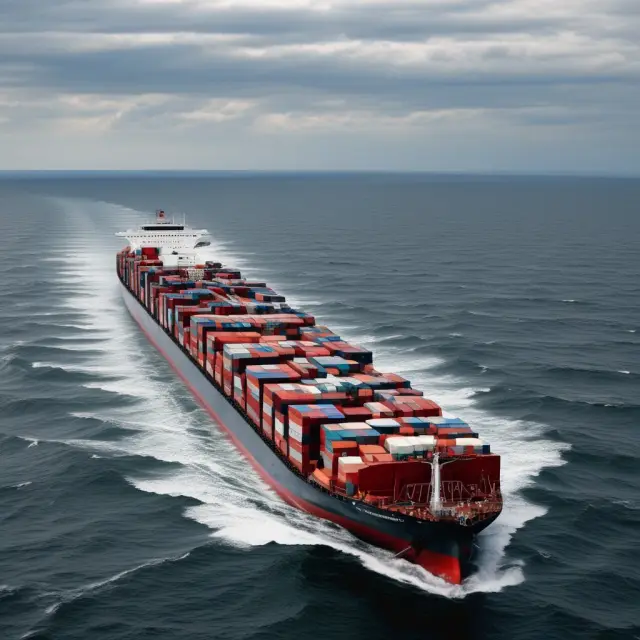
How the Baltic Dry Index Impacts Global Supply and Demand Trends
The Baltic Dry Index (BDI) is an essential indicator of economic health due to its strong correlation with supply and demand trends for vital raw materials used in manufacturing, such as iron ore, coal, and grain. This shipping index can offer valuable insights into future global economic conditions.
As a leading indicator, the BDI reflects the worldwide demand for key commodities used to construct buildings and infrastructure, rather than when buyers possess excess supplies or cease production. The index’s movements are driven by raw material imports, as countries import these resources for their primary energy and electricity needs, such as India, China, and Japan.
The Baltic Dry Index influences global supply and demand trends through the following factors:
1. Supply of Large Carriers: The availability of large carriers, such as Capesize vessels, impacts the index’s pricing. With fewer vessels available, shipping rates rise due to increased demand for transportation services. Conversely, a surplus of large carriers causes lower rates, which can lead to decreased freight earnings and potential financial losses for ship owners.
2. Lead Times: The Baltic Dry Index is also affected by the long lead times associated with constructing and launching new vessels. When demand for dry bulk commodities surges suddenly, existing carriers struggle to meet shipping demands, causing a ripple effect throughout the supply chain and driving up freight rates.
3. Production Costs: The index is influenced by production costs, which can vary significantly depending on the type of vessel and its size. For instance, constructing a new Capesize vessel can cost hundreds of millions of dollars, making these carriers relatively expensive to build and maintain compared to smaller vessels.
The Baltic Dry Index has proven its predictive capabilities during significant economic downturns, such as the 2008 recession and the COVID-19 pandemic. During these periods, the index showed a clear correlation with global economic trends before they were fully realized by traditional economic indicators. The BDI’s ability to forecast future economic conditions makes it an essential tool for investors, traders, and policy makers.
In conclusion, the Baltic Dry Index is a vital indicator of economic health that provides insights into global supply and demand trends by measuring shipping prices for major dry bulk commodities like iron ore, coal, and grain. This index’s correlation with raw material imports offers valuable insights into future economic conditions, making it an essential tool for investors, traders, and policy makers alike.

The Role of the Baltic Exchange: Freight Derivatives and Forward Freight Agreements
The Baltic Exchange is a leading organization in the maritime industry, renowned for creating various indices that provide valuable insights into global economic trends. Among these indices is the widely-followed Baltic Dry Index (BDI), which measures the cost of transporting different dry bulk materials across more than 20 shipping routes. However, the Baltic Exchange’s role extends beyond providing a reliable and up-to-date index, as it also plays a significant part in making markets for freight derivatives, specifically forward freight agreements (FFAs).
In a nutshell, forward freight agreements are financial contracts where parties agree to exchange future freight rates for the transportation of certain commodities between specified ports at predetermined future dates. This is crucial as it allows both shippers and receivers to hedge against price fluctuations in the shipping market, providing them with risk management tools and promoting price stability.
The Baltic Exchange facilitates FFAs by acting as a central counterparty, which reduces transaction costs, lowers credit risks, and fosters standardization. Shipowners, traders, and commodity buyers can participate in these markets to mitigate their freight-related exposure, making it a vital component of the maritime industry’s risk management landscape.
Additionally, the exchange offers an array of freight derivatives, allowing market participants to trade on futures and options for different BDI sub-indices like Capesize, Panamax, Supramax, and Handysize. This diversification in trading instruments enables investors to take advantage of various market conditions and gain exposure to the shipping industry’s underlying dynamics.
The Baltic Exchange’s role as a leading provider of freight derivatives not only benefits individual market participants but also adds value to various industries reliant on seaborne trade, including steel, energy, agriculture, and construction. The insights gained from these markets help analysts, economists, and investors understand the economic conditions that drive global supply and demand trends for dry bulk commodities, ultimately providing a clearer picture of future macroeconomic prospects.

Examples of BDI’s Predictive Capabilities: 2008 Recession and COVID-19 Pandemic
The Baltic Dry Index (BDI) is widely regarded as a leading economic indicator due to its strong correlation with global supply and demand trends. By examining the movements in the index, investors and economists can derive valuable insights into future economic conditions. Two significant historical events that demonstrate BDI’s predictive capabilities are the 2008 recession and the COVID-19 pandemic.
The 2008 Recession: The BDI started to show signs of a downturn in late 2007, well before the official start of the global financial crisis that ensued in 2008. As the world’s economy was expanding at a robust pace, there was an increased demand for raw materials such as iron ore and coal to fuel industrial production and construction activities. The BDI, which measures shipping prices for these commodities, followed suit and reached all-time high levels by August 2008.
However, in the ensuing months, the global economic landscape began to change dramatically. As the financial crisis unfolded, demand for raw materials started to wane. The BDI responded accordingly and experienced a steep decline, which continued until late 2016. This early warning signal from the index allowed investors to take defensive positions and adjust their portfolios in anticipation of the economic downturn.
COVID-19 Pandemic: The Baltic Dry Index also provided valuable insights during the onset of the COVID-19 pandemic, which began in late 2019. As global supply chains were disrupted by lockdowns and travel restrictions, demand for raw materials dropped significantly. Between September 2019 and January 2020, the BDI fell by more than 70%, signaling a sharp economic contraction ahead.
This decline was attributed to a multitude of factors, including reduced demand due to lockdowns and travel restrictions, as well as disrupted global supply chains that affected commodity production and transportation. However, the rapid fall in the BDI provided an early indicator of the impending economic downturn caused by the pandemic. As the world began to recover from the pandemic in 2021, the BDI rose dramatically due to increased demand for raw materials and global supply chain disruptions.
In conclusion, the Baltic Dry Index (BDI) has proven to be a valuable leading economic indicator throughout history. Its correlation with global supply and demand trends has made it an essential tool for investors and economists alike. The index’s ability to predict economic downturns, as demonstrated by its early warning signals during the 2008 recession and the COVID-19 pandemic, highlights its importance and value in assessing future economic conditions.

Factors Influencing the Baltic Dry Index: Global Demand, Production Costs and Lead Times
The Baltic Dry Index (BDI) is a leading economic indicator that provides insight into the global supply and demand trends of major raw materials used in manufacturing. Several factors influence this index, including global demand, production costs, and lead times. Understanding how these elements interact can help investors and analysts interpret the BDI’s implications.
Global Demand: The Baltic Dry Index is directly affected by global demand for key industrial commodities such as iron ore, coal, and grains. Countries with high importation rates for these materials, including India, China, and Japan, are significant players in driving the index’s movements. A strong global economy often translates to increased demand for raw materials, leading to higher shipping prices. Conversely, economic downturns or stagnancy can result in lower demand and decreased BDI values.
Production Costs: The production costs of dry bulk carriers are a critical factor determining the Baltic Dry Index’s value. Large cargo ships have high production costs due to their specialized equipment and relatively small build volumes. Additionally, these ships require long lead times for construction, often taking several years to be built and commissioned. As a result, the prices of large dry bulk carriers can vary significantly based on market conditions.
Lead Times: Long lead times are another crucial factor affecting the Baltic Dry Index’s value. The time it takes to build a new cargo ship and put it into operation can impact the index by influencing supply levels. For instance, if there is an increase in global demand for raw materials while new ships are being built, this could result in a tightening of supply and an upward shift in BDI values. Conversely, during periods of weak demand or economic recession, longer lead times may not translate to an immediate improvement in the index when demand eventually returns.
In summary, the Baltic Dry Index (BDI) is influenced by global demand for major raw materials, production costs, and long lead times. As a leading indicator of economic activity, changes in the BDI can give investors and analysts valuable insights into future supply-demand trends and potential implications for various industries and economies.

FAQs on the Baltic Dry Index (BDI)
The Baltic Dry Index (BDI), created by the London-based Baltic Exchange, is a widely followed economic indicator that measures changes in the cost of transporting various raw materials such as coal and iron ore. This index has gained significant attention due to its predictive capabilities regarding global supply and demand trends. Below, we answer some common questions about the Baltic Dry Index.
What is the Baltic Dry Index (BDI)?
The Baltic Dry Index (BDI) represents an average of shipping prices for transporting major bulk commodities like iron ore, coal, and grain across more than 20 global trade routes. It’s calculated daily by the Baltic Exchange based on assessments from its members who contact shipping brokers to gather shipping rate information. The BDI comprises four sub-indices: Capesize, Panamax, Supramax, and Handysize, which measure different sizes of dry bulk carriers or merchant ships.
Why is the Baltic Dry Index important?
The Baltic Dry Index (BDI) is considered a leading indicator of economic activity as changes in the index reflect supply and demand for essential materials used in manufacturing. The index’s predictive nature can give investors insights into future economic growth trends.
How does the BDI work?
Members of the Baltic Exchange contact shipping brokers to gather data on various shipping rates across more than 20 routes for each of the BDI component vessels (Capesize, Panamax, Supramax, and Handysize). The exchange calculates an average of these rates to obtain the daily index value.
What is a typical size of a Baltic Dry Index vessel?
Baltic Dry Index vessels come in various sizes: Capesize (100,000 deadweight tonnage [DWT] or larger), Panamax (60,000 to 80,000 DWT), Supramax (45,000 to 59,999 DWT), and Handysize (less than 50,000 DWT). The largest vessels, Capesizes, primarily transport coal and iron ore on long-haul routes.
What types of commodities are included in the Baltic Dry Index?
The Baltic Dry Index mainly focuses on major dry bulk commodities such as iron ore, coal, and grain, which make up nearly two-thirds of global dry bulk trade. Minor bulks like steel products, sugars, cement, and others account for the remaining one-third.
Can the Baltic Dry Index predict economic trends?
The Baltic Dry Index has a reputation as a leading indicator of future economic growth due to its correlation with supply and demand for essential materials used in manufacturing. A rising or contracting index can be an early signal of economic expansion or contraction.
How is the Baltic Exchange involved in freight derivatives?
The Baltic Exchange operates as a maker of markets in freight derivatives, including forward freight agreements (FFAs). These financial contracts allow parties to hedge against future shipping costs and can help mitigate risk in volatile industries like dry bulk shipping.
 Next entry · No. 331Bancassurance: A Profitable Partnership Between Banks And Insurance Companies
See also
-
 No. 5,912
18 Oct 2025
21 min
Understanding the ZEW Indicator of Economic Sentiment for Institutional Investors
Finance Policy
No. 5,912
18 Oct 2025
21 min
Understanding the ZEW Indicator of Economic Sentiment for Institutional Investors
Finance Policy -
 No. 5,861
14 Oct 2025
18 min
Understanding Yield Curves: Normal, Inverted, and Flat – Predictors of Economic Transitions
Business Finance
No. 5,861
14 Oct 2025
18 min
Understanding Yield Curves: Normal, Inverted, and Flat – Predictors of Economic Transitions
Business Finance -
 No. 5,712
01 Oct 2025
17 min
Understanding Wholesale Trade: A Key Economic Indicator for Institutional Investors
Business Finance
No. 5,712
01 Oct 2025
17 min
Understanding Wholesale Trade: A Key Economic Indicator for Institutional Investors
Business Finance -
 No. 5,662
27 Sep 2025
20 min
The Weekend Effect in Finance: Understanding This Persistent Market Phenomenon
Finance Policy
No. 5,662
27 Sep 2025
20 min
The Weekend Effect in Finance: Understanding This Persistent Market Phenomenon
Finance Policy -
 No. 5,628
24 Sep 2025
18 min
Understanding Wassily Leontief: An Economist Pioneer in Input-Output Analysis and the Leontief Paradox
Economics
No. 5,628
24 Sep 2025
18 min
Understanding Wassily Leontief: An Economist Pioneer in Input-Output Analysis and the Leontief Paradox
Economics -
 No. 5,383
04 Sep 2025
20 min
Understanding Vacancy Rates: Key Metric for Real Estate and Employment
Real Estate
No. 5,383
04 Sep 2025
20 min
Understanding Vacancy Rates: Key Metric for Real Estate and Employment
Real Estate