Understanding the Federal Reserve’s Balance Sheet: A Key Indicator of Monetary Policy and Economic Health

Explore the significance of the Federal Reserve's balance sheet as a key indicator of monetary policy and economic health. Discover components, QE impact &…
Introduction to the Federal Reserve and Its Balance Sheet
The Federal Reserve System, often referred to simply as “the Fed,” is a powerful financial institution with the unique responsibility of maintaining the stability and integrity of the United States’ monetary and financial system. Established in 1913 following years of economic instability and numerous banking crises, the Federal Reserve acts as the country’s central bank, providing a safety net during times of crisis and ensuring that the economy remains stable through various monetary policy tools. One of the most critical indicators of the Federal Reserve’s actions and overall financial health is its balance sheet – an extensive list detailing its assets and liabilities.
A Comprehensive Look at the Fed Balance Sheet: Assets and Liabilities
The Fed’s balance sheet offers a clear representation of its financial situation, revealing assets primarily composed of U.S. Treasury securities and agency mortgage-backed securities, as well as credit extended to various financial institutions. Its liabilities include deposits held by commercial banks and other financial institutions, currency in circulation, and the reserve balances that commercial banks maintain with the Federal Reserve. By closely examining the balance sheet, analysts can glean significant insights into the Fed’s market operations, monetary policy decisions, and its role as a lender of last resort during times of economic distress.
Unleashing Quantitative Easing: The Significance of the Fed Balance Sheet in Unconventional Monetary Policy
In response to major financial crises, such as the 2008 global financial crisis and more recently, the COVID-19 pandemic, the Federal Reserve has employed an unconventional monetary policy tool known as quantitative easing (QE). This monetary policy involves the Fed purchasing large quantities of government securities or other assets on the open market. The goal is to hold down long-term interest rates and signal a loose monetary policy stance, providing support for economic growth beyond what could be achieved through conventional methods like lowering short-term interest rates to near zero.
Understanding the Implications of Quantitative Easing: Economic Consequences and Criticism
The implementation of quantitative easing has led to significant changes in the size and composition of the Fed balance sheet, with assets growing substantially as a result. The economic consequences of these policies have been debated extensively, with proponents arguing that they have helped spur economic growth and prevent prolonged recessions, while critics point to potential inflationary pressures and concerns over the long-term sustainability of the Fed’s ballooning balance sheet.
The Federal Reserve Balance Sheet as a Key Economic Indicator
Aside from its role in facilitating monetary policy actions, the Fed balance sheet offers valuable insights into the overall health and dynamics of the economy and financial markets. By analyzing the composition of the Fed’s assets and liabilities, observers can gain essential information about inflationary pressures and assess the strength of various sectors, providing a unique perspective that cannot be found elsewhere.
Differences between Central Bank Balance Sheets and Corporate Balance Sheets
It is important to note that while a Fed balance sheet may appear similar to a corporate one at first glance, there are significant differences. Unlike corporations, whose primary goal is profit maximization, central banks do not exist with the intention of making money; instead, their mission is focused on maintaining economic and financial stability. The Fed’s role can be compared to that of the bank in the board game Monopoly: its objective is not to win but to ensure a stable financial environment for all players.
Navigating the Impact of COVID-19 on the Federal Reserve Balance Sheet
The ongoing COVID-19 pandemic has brought about unprecedented challenges for central banks, requiring innovative monetary policy responses and substantial adjustments to their balance sheets. As the Fed continues to navigate this new economic landscape, understanding its balance sheet and its role in implementing unconventional policies remains crucial for investors, economists, and policymakers alike.
Managing the Fed’s Assets and Liabilities: Tools and Methods
In order to effectively manage its assets and liabilities, the Federal Reserve employs various tools and methods, such as open market operations and setting interest rates, to maintain control over the size and composition of its balance sheet. Through these actions, the Fed can influence monetary policy, stabilize financial markets, and provide necessary liquidity in times of economic uncertainty.
The Future of Quantitative Easing and the Fed Balance Sheet: Perspectives and Expectations
With the Fed’s balance sheet continuing to expand as a result of ongoing economic challenges, it is essential to consider future perspectives on this powerful tool and its implications for monetary policy. As central banks like the Federal Reserve navigate these uncharted waters, understanding the significance of their balance sheets remains vital for investors, economists, and policymakers alike.
FAQs: Answers to Common Questions about the Fed Balance Sheet and Its Role in Monetary Policy
To help clarify any potential questions or misconceptions regarding the Federal Reserve’s balance sheet and its importance in monetary policy, we have compiled a list of frequently asked questions (FAQ) covering key topics such as the composition of the Fed balance sheet, how it influences interest rates, and its role in managing crises. These FAQs aim to provide valuable insights for readers seeking a better understanding of the Fed’s critical financial tool.

Components of the Fed’s Balance Sheet
The Federal Reserve System (Fed), as the central bank of the United States, plays a vital role in maintaining financial stability and managing the nation’s monetary policy. Among the key indicators reflecting its activities is the balance sheet, which lists its assets and liabilities. This section delves into the essential elements of the Federal Reserve’s balance sheet and their significance in comprehending the central bank’s actions.
The Federal Reserve Balance Sheet: An Overview
The weekly reports issued by the Federal Reserve, titled “Factors Affecting Reserve Balances,” outline a detailed breakdown of the Fed’s assets and liabilities, forming what is known as its balance sheet. This consolidated statement offers insight into the financial condition of all 12 regional Federal Reserve Banks.
Understanding Assets on the Fed’s Balance Sheet
The majority of the Federal Reserve’s assets consist of U.S. Treasury securities and agency securities, acquired through open market operations to influence monetary policy or in response to financial crises. These acquisitions increase the size of the Fed’s balance sheet. Furthermore, credit extended to banks and other financial institutions is also considered an asset on the balance sheet.
Understanding Liabilities on the Fed’s Balance Sheet
The Fed’s liabilities include bank and Treasury reserve balances held with the Fed, as well as U.S. currency in circulation. This division between assets and liabilities allows the Fed to manage monetary policy by controlling the supply of reserves in the banking system.
Quantitative Easing (QE) and the Role of the Federal Reserve Balance Sheet
The significance of the Fed’s balance sheet grew exponentially following the 2008 global financial crisis, as the central bank implemented a monetary policy known as quantitative easing (QE). This unconventional approach to addressing economic downturns involved the purchase of large quantities of government bonds and other securities on the open market. The Fed’s balance sheet expanded significantly as a result of these asset purchases, allowing it to inject additional liquidity into the economy and signal loose monetary policy.
Central Bank Balance Sheets: A Unique Entity
Although the Fed’s balance sheet shares some similarities with those of corporations, it is essential to recognize the unique nature of central bank balance sheets. Central banks differ from corporations in their unlimited ability to issue currency. Unlike a corporation whose primary goal is to maximize profits, the Federal Reserve exists to ensure economic and financial stability. Its role is comparable to that of the bank in Monopoly: its objective is not to win but to supply sufficient money for the game to continue smoothly. The optimal asset level for the Fed is that which supports its mandate effectively.
The Impact of COVID-19 on the Federal Reserve Balance Sheet
Following the outbreak of the COVID-19 pandemic, the Fed once again resorted to quantitative easing and other unconventional measures to shore up financial markets and stabilize economic conditions. The Fed’s balance sheet continued to expand significantly during this period, underscoring its role as a powerful tool in the central bank’s monetary policy arsenal.
Managing the Fed’s Assets and Liabilities
To maintain financial stability and manage the economy effectively, the Federal Reserve employs various tools and methods for managing its assets and liabilities. Open market operations serve as one crucial mechanism to influence the supply of reserves in the banking system and ultimately control short-term interest rates. Additionally, setting interest rates provides another tool for the Fed to balance economic growth with price stability.
In conclusion, a thorough understanding of the Federal Reserve’s balance sheet is essential for grasping its role in implementing monetary policy and maintaining financial stability. By examining the components of the Fed’s balance sheet, investors, economists, and policymakers alike can gain valuable insight into the Fed’s actions and intentions.

Quantitative Easing: The Role of the Federal Reserve in Market Operations and Monetary Policy
Following the global financial crisis of 2008, the Federal Reserve (Fed) adopted an unconventional monetary policy tool called quantitative easing (QE). This section focuses on understanding the Fed’s role in market operations through QE and its impact on the central bank’s balance sheet.
Quantitative Easing: An Overview
Quantitative easing is a monetary policy method used by a central bank, such as the Federal Reserve, to stimulate economic growth by purchasing large quantities of government bonds or other securities in the open market. The primary objective of QE is to hold down long-term interest rates and signal loose monetary policy when traditional tools like setting interest rates near zero become less effective. This policy has become increasingly popular among central banks, including the European Central Bank and the Bank of Japan, as a response to economic and credit crises.
Fed’s Response to Financial Crises: Quantitative Easing
In response to the financial crisis in 2008, the Fed employed QE by purchasing massive quantities of government securities and extending credit to banks and other financial institutions. This strategy aimed to improve liquidity in the banking system, stabilize the financial sector, and ultimately boost economic growth. The Fed’s balance sheet grew significantly as a result, with assets expanding from $900 billion in 2007 to over $4 trillion by 2015.
Impact of Quantitative Easing on the Fed Balance Sheet
The implementation of QE led to substantial growth in the Fed’s balance sheet due to the large-scale asset purchases. This expansion had notable consequences, including:
- Increased demand for securities: The Fed’s purchases put downward pressure on long-term interest rates and provided a signal of loose monetary policy.
- Injection of liquidity into the financial system: By purchasing securities in the open market, the Fed injected new liquidity into the financial system to help stabilize it during periods of economic uncertainty.
- Potential for inflationary pressure: The significant increase in the size of the Fed’s balance sheet raised concerns over potential inflationary pressures due to the large influx of newly created money. However, the Fed maintained that this risk was manageable through other policy tools and communication with financial markets.
Criticism and Debate Surrounding Quantitative Easing
Despite its benefits in stabilizing the economy following the financial crisis, QE has faced criticism for potential negative consequences such as:
- Moral hazard risk: Critics argue that the Fed’s actions encouraged excessive risk-taking by banks and investors, potentially leading to future crises.
- Inequality: QE disproportionately benefited wealthy individuals through increased asset prices and lower interest rates on mortgages and other debt.
- Political pressure: The Fed has faced political criticism for its role in the economy, with some arguing that its actions exceeded its mandated responsibilities or that it should have done more to address income inequality.
In conclusion, the Federal Reserve’s balance sheet plays a crucial role in understanding the central bank’s monetary policy and its response to economic crises such as quantitative easing. As demonstrated by the Fed’s actions following the 2008 financial crisis, QE significantly affected the balance sheet, shaping the economic landscape with implications for inflation, interest rates, and financial stability.

Impact and Criticism of Quantitative Easing
Quantitative easing (QE) has been a vital part of the Federal Reserve’s monetary policy toolkit since the 2008 financial crisis. As a form of unconventional monetary policy, QE involves the Fed purchasing large quantities of securities in order to inject liquidity into the economy and keep long-term interest rates low. However, this innovative approach has not been without controversy. In this section, we will discuss both the economic consequences of quantitative easing and the political criticism it has faced.
Economic Consequences of Quantitative Easing
The primary aim of QE is to boost economic growth and support financial stability by increasing the overall supply of money in the economy. When the Fed engages in asset purchases, it essentially injects newly created money into the banking system. This additional liquidity encourages banks to lend more freely to businesses and consumers, driving down interest rates and making credit cheaper and more accessible.
The economic benefits of QE have been most evident during periods of financial instability, such as the 2008 crisis or the onset of the COVID-19 pandemic. During these times, traditional monetary policy tools, like cutting short-term interest rates to zero, proved insufficient in stimulating economic growth. By buying securities and injecting more money into the economy through QE, the Fed has been able to provide a critical lifeline to financial institutions and prevent a potential collapse of the banking system.
Criticism of Quantitative Easing
Despite its successes, quantitative easing has faced significant criticism from various sectors. One common concern is that QE amounts to printing money and could lead to hyperinflation. While it’s true that the Fed creates new money in the process of asset purchases, there are important differences between creating money through QE and other means. For instance, during QE, newly created money is absorbed by financial institutions and used to buy securities, rather than entering circulation freely as paper money might. Additionally, the Fed has shown a commitment to controlling inflation, making it unlikely that QE would lead to hyperinflation.
Another criticism of QE revolves around its potential negative impact on economic inequality and asset prices. In particular, critics argue that the policy could benefit the wealthy more than average Americans since it tends to inflate asset prices, like stocks and real estate. The argument is that while these assets may appreciate, they are not accessible to all individuals, leaving those without substantial wealth or financial assets behind.
Political Criticism of Quantitative Easing
The political criticism of quantitative easing has been particularly vocal, with some arguing that the policy infringes upon Congress’s power to control the money supply and issue debt. The Constitution grants the power to regulate the value of currency and coinage to Congress. However, the Fed is an independent entity, meaning it can exercise its monetary policy independently while operating under a congressional charter.
Despite these criticisms, quantitative easing has proven to be an effective tool in managing economic instability. The Federal Reserve continues to use this approach as part of its monetary policy arsenal and will likely continue to do so in the future as circumstances require.
In conclusion, the impact and criticism of quantitative easing provide a fascinating look into the complexities of modern monetary policy. While some may argue that it’s a necessary lifeline in times of economic turmoil, others believe it comes with significant drawbacks. As the global economy continues to evolve, understanding the implications and criticisms of QE will remain essential for investors, economists, and policymakers alike.

The Importance of the Federal Reserve Balance Sheet as an Economic Indicator
Understanding the Federal Reserve’s (Fed) balance sheet is crucial not only for financial markets professionals but also for investors, economists, and anyone interested in the intricacies of monetary policy. As a vital economic indicator, the Fed balance sheet provides valuable insights into the overall health of the economy and financial markets. This section focuses on the significance of the Fed balance sheet as an essential tool for assessing inflationary pressures.
The Federal Reserve System, established in 1913 by Congress to maintain financial stability, has grown from a relatively obscure entity to a global powerhouse in the financial world. While the Fed’s role is multifaceted, its primary objective remains ensuring the economic and financial well-being of the United States. The balance sheet plays an essential role in achieving this goal by offering valuable information about the Federal Reserve’s actions, assets, and liabilities.
Each week, the Fed issues a report titled “Factors Affecting Reserve Balances,” which details its balance sheet, including the types and amounts of its assets and liabilities. Assets held by the Fed consist mainly of government securities it has purchased and credit extended to banks and financial institutions. The liabilities primarily include bank and Treasury reserve balances on deposit with the Fed and U.S. currency in circulation.
The Fed balance sheet has grown substantially over the past decade, especially after the 2008 global financial crisis and again following the outbreak of COVID-19. This expansion reflects the Fed’s efforts to support the economy by engaging in unconventional monetary policy tools such as quantitative easing (QE). By purchasing securities in large quantities on the open market, the Fed aims to hold down long-term interest rates and signal a loose monetary policy stance.
Quantitative Easing and the Role of the Fed Balance Sheet
The relationship between QE and the Federal Reserve balance sheet is intertwined. Quantitative easing refers to a monetary policy where a central bank, in this case the Federal Reserve, purchases large quantities of government bonds or other securities to keep long-term interest rates low and inject liquidity into the economy. The Fed’s balance sheet is an essential tool for assessing the scope and scale of its QE program, as it reveals the size and composition of its assets.
The expansion of the Fed balance sheet during periods of quantitative easing is a topic of intense interest to financial markets participants and economists alike. The balance sheet provides insight into the monetary policy stance, allowing analysts to gauge the pace of asset purchases and estimate future economic growth. Moreover, it offers crucial information on inflationary pressures by illustrating the amount of excess reserves in the banking system.
A Central Bank’s Unique Role and Balance Sheet
It is important to remember that central banks, including the Federal Reserve, are unique entities compared to corporations. Unlike a corporation aiming for profits, central banks like the Fed exist to ensure economic stability and financial market functionality. In this regard, assessing the Fed balance sheet is vital in understanding its role in maintaining price stability and overall economic health.
The balance sheet’s growth is not necessarily indicative of profitability but rather a reflection of the Fed’s actions to meet its mandate. The amount of assets held on the balance sheet is crucial as it determines the amount of reserves available for banks to borrow from the Federal Reserve. This, in turn, influences short-term interest rates and ultimately the cost of borrowing for businesses and consumers.
In conclusion, understanding the significance of the Federal Reserve’s balance sheet as an economic indicator is essential for anyone seeking insights into monetary policy, inflationary pressures, and the overall health of the economy and financial markets. By analyzing the assets and liabilities on the Fed balance sheet, investors, economists, and policymakers can make informed decisions based on up-to-date information about the central bank’s actions and intentions.

The Unique Nature of Central Bank Balance Sheets
A central bank’s balance sheet stands apart from those of corporations in numerous ways, and it’s crucial to recognize these differences when analyzing the Federal Reserve (Fed) and its monetary policy actions. While a corporate balance sheet provides insight into the financial health and solvency of an entity, the Fed’s balance sheet serves as a primary tool in maintaining economic stability.
The Fed, established in 1913 to provide stability for the American banking system, holds a unique role within the economy. Its balance sheet, like that of any organization, is a statement detailing its assets and liabilities. However, it’s essential not to overlook the Fed’s distinct function as a central bank: to manage the nation’s monetary policy and financial stability.
Central banks such as the Federal Reserve possess an unparalleled capacity to issue currency. Unlike corporations, which exist to make money, the goal of the Fed is not to generate profits but rather to ensure financial and economic stability. The Fed achieves this by manipulating the monetary base – the total amount of banknotes and reserves in circulation. Consequently, understanding the composition and fluctuations of the Fed’s balance sheet becomes a critical aspect of assessing its policy objectives and impact on the economy.
The Fed’s balance sheet primarily consists of three main components: currency in circulation, securities held (i.e., government bonds), and reserves that commercial banks hold with the Fed. By managing these assets and liabilities, the Fed effectively controls interest rates and adjusts the supply of money to meet its monetary policy targets.
In periods of crisis or economic instability, central banks can employ unconventional monetary policies, like quantitative easing (QE), which significantly influence their balance sheets. QE involves purchasing large quantities of securities on the open market to maintain downward pressure on long-term interest rates and signal loose monetary policy. The Fed’s balance sheet has grown substantially since 2008 due to the implementation of QE following the global financial crisis and, more recently, in response to the COVID-19 pandemic.
As the Federal Reserve manages its assets and liabilities to meet its mandate, it plays a pivotal role in stabilizing the economy and maintaining confidence during periods of uncertainty. The Fed’s balance sheet is not merely an accounting statement; it serves as a reflection of its efforts to promote financial stability and economic growth through monetary policy actions.

The Impact of COVID-19 on the Federal Reserve Balance Sheet
In late 2019, the world was hit by an unexpected crisis in the form of a global pandemic. The outbreak of COVID-19 caused widespread panic and economic uncertainty, leading central banks worldwide to reevaluate their monetary policies to support their economies. Among them was the Federal Reserve (Fed), which quickly adjusted its stance to respond to the rapidly changing landscape.
The Fed’s primary tool for implementing monetary policy is the open market operations (OMO) through which it buys and sells securities in the financial markets. During normal times, the Fed uses this method to control short-term interest rates by buying or selling government bonds. However, the unconventional monetary policy response to COVID-19 required a shift towards large-scale asset purchases or quantitative easing (QE).
The significance of QE for the Fed’s balance sheet lies in its role as an economic indicator and the potential impact on inflationary pressures. Prior to 2020, the Fed had already expanded its balance sheet significantly following the 2008 global financial crisis. The COVID-19 pandemic forced another dramatic increase in assets, as the Fed sought to provide emergency liquidity and stabilize markets under unprecedented economic uncertainty.
As of March 31, 2023, the Federal Reserve’s total assets stood at $9.5 trillion – a more than four-fold increase since early 2020. The majority of these assets were held in the form of Treasury securities and mortgage-backed securities (MBS). This marked a significant deviation from the Fed’s traditional role as a lender of last resort, where it primarily dealt with commercial banks to maintain financial stability during crises.
The large-scale asset purchases aimed at supporting the economy through this challenging period, but they also raised concerns among critics about potential inflationary pressures and long-term economic implications. The Fed countered these arguments by emphasizing its commitment to maintaining price stability and full employment as part of its dual mandate.
In conclusion, the Federal Reserve’s balance sheet has been a critical tool for understanding the central bank’s actions during times of economic crisis. In response to the COVID-19 pandemic, the Fed significantly expanded its balance sheet through quantitative easing. This move allowed the institution to provide much-needed liquidity and support financial stability while maintaining interest rates at historically low levels. The balance sheet remains an essential indicator for investors, economists, and policymakers seeking insight into the Fed’s monetary policy stance and its broader implications for the economy.
The following section will delve deeper into the components of the Federal Reserve’s balance sheet and their significance in understanding the central bank’s actions and economic context.
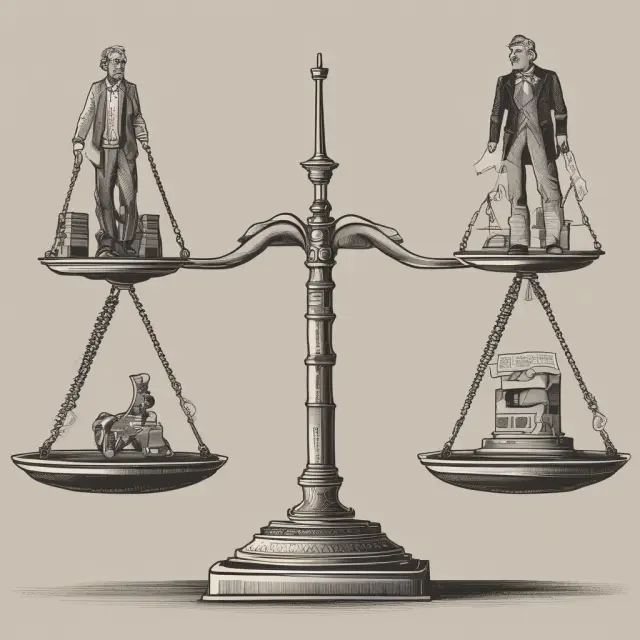
How the Fed Manages Its Assets and Liabilities
The Federal Reserve’s balance sheet plays a crucial role in maintaining financial stability and implementing monetary policy, making it essential to understand the methods the central bank employs to manage its assets and liabilities. The Fed Balance Sheet is essentially a consolidated statement of all 12 regional Federal Reserve Banks, listing their assets and liabilities.
The Fed’s primary tools for managing its balance sheet include open market operations (OMO) and setting interest rates. Open market operations are transactions in the financial markets that allow the Fed to buy or sell securities, mainly Treasury securities, in order to influence the supply of reserves in the banking system and control short-term interest rates. By purchasing securities, the Fed injects cash into the financial system, increasing the amount of reserves held by banks and reducing short-term interest rates. Conversely, selling securities decreases the amount of reserves available to banks, leading to higher short-term interest rates.
Setting interest rates refers to adjusting the federal funds rate – the interest rate at which banks lend to one another overnight. The interest rate acts as a benchmark for other borrowing costs and helps guide monetary policy decisions. By raising or lowering the interest rate, the Fed can influence economic growth, inflation, and inflation expectations.
The Fed’s balance sheet has expanded significantly since the 2008 financial crisis and again following the outbreak of COVID-19. In response to these crises, the Fed employed quantitative easing (QE), a monetary policy tool where the central bank purchases large quantities of securities in order to hold down long-term interest rates and signal loose monetary policy. The Fed’s balance sheet provided insight into the scope and scale of its market operations during QE, enabling analysts to monitor the pace of asset purchases.
It is important to note that the Fed and other central banks possess an unlimited supply of currency, a key distinction from corporations. Their role is not to generate profits but to ensure economic and financial stability. The goal for the Fed is to maintain an appropriate balance sheet size that enables it to effectively meet its mandate. The Fed’s assets mainly consist of Treasury securities and credit extended to banks and other financial institutions, while its liabilities include bank and Treasury reserve balances on deposit with the Fed and U.S. currency in circulation.
In conclusion, the Federal Reserve’s balance sheet is a vital tool for understanding the central bank’s role in maintaining financial stability and implementing monetary policy. The Fed manages its assets and liabilities through open market operations and setting interest rates, providing valuable insight into the Fed’s actions during times of crisis like quantitative easing.

The Future of Quantitative Easing and the Fed Balance Sheet
Quantitative easing (QE) has been a crucial monetary policy tool employed by the Federal Reserve since the 2008 financial crisis, and the central bank’s balance sheet has grown significantly as a result. The Fed uses QE to buy large quantities of securities on the open market, aiming to control interest rates and boost the economy. As we delve deeper into understanding the role of the Federal Reserve balance sheet in monetary policy and its current state, it becomes essential to examine future expectations.
The Current State of the Fed Balance Sheet
As of October 2021, the Federal Reserve’s assets stood at over $8.6 trillion, with liabilities at around $4.6 trillion. These figures represent a dramatic increase from the pre-financial crisis era when the balance sheet hovered below $1 trillion in assets and liabilities combined. The Fed’s asset purchases under QE primarily consist of Treasury bonds and mortgage-backed securities. On the liability side, deposits held by banks at the Federal Reserve have significantly increased due to the central bank’s efforts to provide liquidity and stabilize the financial system following the 2008 crisis and the COVID-19 pandemic.
The Future of Quantitative Easing
Following the onset of the COVID-19 pandemic, the Fed resumed its asset purchase program in March 2020, aiming to help mitigate the economic impact of the virus through record-low interest rates and increased liquidity. With inflation concerns mounting, the Fed has signaled that it will begin tapering its monthly bond purchases by reducing the pace at which new assets are acquired. However, no specific date for ending QE has been announced. As the economy recovers, the Fed is expected to maintain a larger balance sheet than before the pandemic, serving as a backstop for financial markets and ensuring stability.
Implications for Monetary Policy
The future of the Fed’s balance sheet will significantly influence monetary policy decisions and economic expectations moving forward. As the central bank winds down its asset purchases, investors will closely watch the Fed’s actions to gauge any changes in interest rate expectations. Additionally, the Fed’s continued role as a large holder of securities and the potential for reinvesting maturing assets may continue to impact markets and financial stability.
Political Debate and Criticism
While quantitative easing has proven effective in stabilizing financial markets during periods of economic stress, it has faced criticism from some quarters for potentially fueling inflation and creating asset bubbles. As the Fed navigates its future monetary policy stance amidst an evolving economy, political debates around the role and implications of its balance sheet are likely to continue.
In conclusion, the Federal Reserve’s balance sheet remains a crucial indicator of monetary policy and economic health. Understanding the past, present, and potential future of this critical tool offers valuable insight into the Fed’s role in maintaining financial stability and shaping economic outcomes. As the central bank navigates its ongoing response to the COVID-19 pandemic and the eventual winding down of QE, the importance of its balance sheet in shaping monetary policy and financial markets will only grow more prominent.

Frequently Asked Questions (FAQ)
What Is the Federal Reserve, and What Is Its Role in the Economy?
Answer: The Federal Reserve, or “The Fed,” is the central bank of the United States, founded in 1913 to ensure financial stability and maintain a stable monetary policy. The Fed plays a crucial role in managing the nation’s money supply, implementing monetary policy, supervising banks, and providing financial services to the U.S. government and other financial institutions.
What Is the Federal Reserve Balance Sheet?
Answer: The Federal Reserve balance sheet is a public document detailing the Fed’s assets and liabilities. Assets include securities purchased through open market operations, credit extended to depository institutions, and foreign currency owned by the Fed. Liabilities consist of reserve balances held by financial institutions and U.S. currency in circulation.
Why Is the Federal Reserve Balance Sheet Important?
Answer: The Federal Reserve balance sheet is a key indicator of monetary policy and economic health. It reveals the size, composition, and changes to the Fed’s holdings of securities and liquidity, allowing economists and investors to assess its impact on inflationary pressures, interest rates, and financial markets.
What Is Quantitative Easing (QE), and How Has It Affected the Federal Reserve Balance Sheet?
Answer: Quantitative easing is an unconventional monetary policy tool used by central banks to stimulate economic growth when conventional interest rate reductions are ineffective. The Fed implemented QE during and after the global financial crisis by purchasing large quantities of Treasury bonds and mortgage-backed securities, expanding its balance sheet significantly as a result.
Why Is the Fed’s Balance Sheet Different From Corporate Balance Sheets?
Answer: While a corporation’s balance sheet reports its assets and liabilities to assess financial health, the Federal Reserve’s balance sheet has unique features. The Fed serves a distinct role as the central bank and can create money, which sets it apart from corporations. Its goal is to ensure financial stability rather than maximize profits.
How Does the Federal Reserve Manage Its Balance Sheet?
Answer: The Federal Reserve manages its balance sheet through open market operations, adjusting its holdings of securities and reserve requirements to maintain desired interest rates and liquidity levels in the economy. It sets short-term interest rates based on the federal funds rate and influences long-term rates through large-scale asset purchases and sales.
What Are Some Criticisms of Quantitative Easing?
Answer: Critics argue that quantitative easing can lead to inflation, increase income inequality, and weaken the value of a currency. They also claim it can create moral hazard among banks by rewarding risky behavior and encouraging excessive borrowing. Despite these concerns, QE remains a popular monetary policy response to economic downturns when interest rates have reached their lower bounds.
How Has COVID-19 Affected the Federal Reserve Balance Sheet?
Answer: In response to the unprecedented economic uncertainty caused by the COVID-19 pandemic, the Fed has implemented a number of measures to support financial markets and stabilize the economy. It increased its asset purchases significantly, leading to an expanded balance sheet, and offered new facilities designed to help businesses and households affected by the crisis.
How Do I Access Information About the Federal Reserve Balance Sheet?
Answer: The Fed releases detailed information about its balance sheet every week through its “Factors Affecting Reserve Balances” report. You can find this document on the Federal Reserve website, along with additional resources and data on monetary policy and economic trends.
 Next entry · No. 1,471Understanding Federal Agencies: Regulation, Securities, and their Role in the Economy
See also
-
 No. 1,479
21 Sep 2024
21 min
Understanding the Role and Significance of the Federal Discount Rate in Monetary Policy
Finance Policy
No. 1,479
21 Sep 2024
21 min
Understanding the Role and Significance of the Federal Discount Rate in Monetary Policy
Finance Policy -
 No. 1,478
21 Sep 2024
20 min
Understanding the Federal Reserve System: Monetary Policy, Banks, and Functions
Finance Policy
No. 1,478
21 Sep 2024
20 min
Understanding the Federal Reserve System: Monetary Policy, Banks, and Functions
Finance Policy -
 No. 4,225
01 Jun 2025
22 min
Understanding Quantitative Easing 2: The Federal Reserve’s $600 Billion Economic Stimulus
Business Finance
No. 4,225
01 Jun 2025
22 min
Understanding Quantitative Easing 2: The Federal Reserve’s $600 Billion Economic Stimulus
Business Finance -
 No. 3,031
23 Feb 2025
19 min
Understanding M1 Money Supply and Its Role in Economics: Definition, Calculation, and Impact on Inflation
Economics
No. 3,031
23 Feb 2025
19 min
Understanding M1 Money Supply and Its Role in Economics: Definition, Calculation, and Impact on Inflation
Economics -
 No. 1,476
21 Sep 2024
19 min
Understanding the Federal Funds Rate: Impact, Determination and Difference
Business Finance
No. 1,476
21 Sep 2024
19 min
Understanding the Federal Funds Rate: Impact, Determination and Difference
Business Finance -
 No. 1,216
13 Aug 2024
25 min
Understanding Economic Stimulus: Monetary and Fiscal Policy Tools for Jumpstarting Private Sector Growth
Economics
No. 1,216
13 Aug 2024
25 min
Understanding Economic Stimulus: Monetary and Fiscal Policy Tools for Jumpstarting Private Sector Growth
Economics