Bitcoin Cash (BCH): A Faster Alternative to Bitcoin – A Comprehensive Overview

Explore the creation, technical differences, advantages, and future developments of Bitcoin Cash (BCH), a faster alternative to Bitcoin with lower…
Introduction to Bitcoin Cash
The digital currency landscape experienced a significant shift in August 2017 with the creation of Bitcoin Cash (BCH). This new cryptocurrency emerged as a result of a hard fork from the original Bitcoin blockchain. The primary objective of Bitcoin Cash was to address two pressing issues: transaction speed and fees. These concerns stemmed from the rapid increase in the number of transactions being processed on the Bitcoin network, causing confirmation times to slow down significantly and transaction costs to soar.
In response, a group of developers advocated for increasing the block size limit to allow more transactions per block, thereby reducing fees and confirmations times. Their proposal was met with opposition from other members within the Bitcoin community, resulting in a split, or hard fork, giving birth to Bitcoin Cash. While both cryptocurrencies maintain several technical similarities—such as utilizing the same consensus mechanism and a capped supply of 21 million coins—they differ significantly regarding transaction processing capabilities.
Section Title: The Need for Faster Transactions and Lower Fees in Bitcoin – A Catalyst for Change
Bitcoin’s blockchain, which was initially designed to process around seven transactions per second, struggled to maintain its original purpose as a peer-to-peer electronic cash system. Transactions began taking longer to confirm, with costs steadily increasing due to network congestion. This led to the emergence of alternative solutions like Segregated Witness (SegWit) and off-chain transactions, such as Lightning Network. However, these approaches did not entirely resolve the issue and left some within the community seeking a more radical solution.
Section Title: The Birth of Bitcoin Cash – Faster Transactions and Lower Fees Through Increased Block Size
Bitcoin Cash aimed to address scalability concerns by increasing the block size limit to 8MB, allowing for a greater number of transactions per block. This modification was implemented with the understanding that as more people adopted BCH and the network became busier, future increases in the block size could be made if needed. In 2018, Bitcoin Cash underwent another hard fork, resulting in two separate branches: Bitcoin Cash ABC (now eCash) and Bitcoin Cash SV.
Section Title: The Technological Differences Between Bitcoin Cash and Bitcoin – Scalability, Block Size, and Segregated Witness
In comparison to its predecessor, Bitcoin Cash adopted a more permissive approach to transactions by not enforcing SegWit. This decision was made with the intention of allowing for larger transactions that would fit within the larger block sizes. With each subsequent hard fork, Bitcoin Cash increased its block size limit to 16MB (November 2018), 32MB (May 2020), and most recently to 64MB (June 2021). These changes have contributed to the reduction in fees and improvement of transaction confirmation times.
Section Title: The Market Performance and Adoption of Bitcoin Cash
Bitcoin Cash’s market capitalization has fluctuated throughout its existence, with a current trading price significantly lower than that of Bitcoin. Despite these differences, it continues to be a popular choice among cryptocurrency enthusiasts due to its fast transaction speed and relatively low fees. Bitcoin Cash has seen varying levels of adoption within the merchant community, with some businesses accepting it as a means of payment.
Section Title: The Advantages of Using Bitcoin Cash for Transactions
The benefits of using Bitcoin Cash for transactions include faster confirmation times and significantly lower fees compared to Bitcoin. Additionally, there are regulatory considerations that could potentially favor Bitcoin Cash over its counterpart due to its greater transaction throughput and potential compatibility with current financial regulations.
Section Title: Security Considerations for Holding Bitcoin Cash – Wallets, Cold Storage, and Potential Risks
Security is always a top priority when dealing with cryptocurrencies. Bitcoin Cash holders can choose from various wallet options, including hardware wallets, mobile wallets, and web wallets. It’s important to consider cold storage solutions to protect larger investments and mitigate potential risks associated with holding large amounts of BCH.
Section Title: Mining Bitcoin Cash – Profitability, Current State, and Alternative Methods
Mining Bitcoin Cash remains profitable for some, especially those who have access to low-cost electricity or mining rigs. However, the profitability of mining depends on various factors such as market prices and competition. For those who don’t wish to mine, alternative methods, such as staking, can be used to acquire BCH.
Section Title: Future Developments for Bitcoin Cash – Upgrades, Partnerships, and Innovations
The future of Bitcoin Cash looks promising with several upgrades and partnerships on the horizon. These developments aim to improve network scalability, further reduce fees, and enhance overall user experience, making it a more attractive option for users and businesses alike.

Bitcoin Cash’s Desire for Faster Transactions and Lower Fees
In late 2017, the Bitcoin network faced escalating issues surrounding scalability and transaction fees. As more people began using Bitcoin for transactions, the number of pending transactions in the mempool (a pool of unconfirmed transactions) grew exponentially. This led to significant increases in both confirmation times and transaction fees, with some users reporting waits of up to a week for their transactions to be confirmed and fees reaching as high as $50 per transaction. To address these concerns, a group of developers proposed a hard fork to create a new cryptocurrency called Bitcoin Cash (BCH), which would increase the maximum block size from 1MB to between 8MB and 32MB to enable more transactions to be processed per block.
Bitcoin Cash’s creators believed that increasing the block size was an essential step towards ensuring that it could function as a viable digital currency for everyday transactions, while Bitcoin’s supporters argued that smaller blocks were crucial for maintaining security and preserving the integrity of the network. The disagreement between these two groups eventually led to the creation of two separate cryptocurrencies through the hard fork on August 1st, 2017.
Although both Bitcoin Cash and Bitcoin share some similarities, such as their use of the same consensus mechanism and capped supply at 21 million coins, they differ significantly in terms of block size limits and implementation of Segregated Witness (SegWit). Bitcoin Cash’s larger blocks aim to facilitate faster transaction processing and lower fees by allowing more transactions to be confirmed per block. In contrast, Bitcoin continues to operate with a 1MB block size and has adopted SegWit, which enables the storage of only the necessary data for each transaction within a block.
These differences in consensus led to further division within the cryptocurrency community. In November 2018, Bitcoin Cash experienced its own fork, splitting into two separate versions: Bitcoin SV (Satoshi Vision) and Bitcoin ABC (Adjusted Blocksize Cap). The split occurred due to disagreements over the implementation of various upgrades, with Bitcoin SV advocating for a larger block size and more centralized governance, while Bitcoin ABC emphasized smaller blocks and community-driven consensus.
Despite these challenges, both Bitcoin Cash and its derivatives have continued to evolve and adapt to changing market conditions. In 2021, Bitcoin ABC rebranded itself as eCash, with a renewed focus on building an ecosystem that can facilitate faster, cheaper transactions for everyday use. As of August 2022, Bitcoin Cash remains available for trading, with over 19 million coins in circulation and a market capitalization of around $2.56 billion. It trades at approximately $133.50, significantly less than the price of Bitcoin. The success of Bitcoin Cash depends on its ability to deliver on its promise of providing fast and affordable transactions that can challenge mainstream payment systems like credit cards and fiat currencies.
For investors interested in buying Bitcoin Cash, it is available for purchase on most major cryptocurrency exchanges. Setting up a trading account and making an initial deposit are the first steps to acquiring BCH. However, as with any investment, it’s essential to do thorough research into the project, its potential risks, and the broader market conditions before investing.
As the cryptocurrency landscape continues to evolve, Bitcoin Cash remains a fascinating experiment in scalability, transaction processing, and community governance. Its ongoing development and adoption by businesses and individuals will be worth watching as the world of decentralized finance and digital currencies continues to shape our financial future.
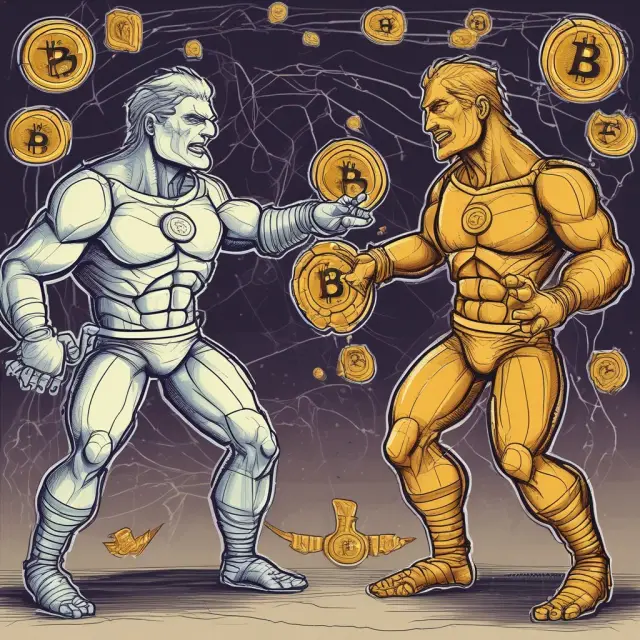
Technical Differences Between Bitcoin Cash and Bitcoin
Bitcoin Cash (BCH) and Bitcoin (BTC) share some fundamental similarities, such as utilizing the same consensus mechanism and having a capped maximum supply of 21 million coins. However, they diverge significantly in their approaches to scalability and block size. This section delves into the technical differences between these two digital currencies, focusing on block sizes, SegWit implementation, and the importance of scalability and transaction confirmation times.
Block Size: A Major Point of Contention
Scalability is a crucial issue for both Bitcoin Cash and Bitcoin due to their increasing popularity and rising demand for transactions. The original Bitcoin network faced significant challenges with handling increased transaction volumes, causing lengthy confirmation times and escalating transaction fees. As a result, the need for a solution became imperative.
Bitcoin Cash was created as a response to these scalability issues by implementing larger blocks in comparison to Bitcoin. At present, the maximum block size for Bitcoin Cash is 32 MB (as of June 2022), significantly higher than Bitcoin’s initial 1MB limit. This change was intended to process more transactions per block and ultimately reduce fees and confirmation times for users.
Another pivotal moment in Bitcoin Cash’s history occurred when it underwent a hard fork in November 2018, leading to two distinct branches: Bitcoin SV (Satoshi Vision) and Bitcoin ABC (now eCash). The primary reason for the split was disagreement on block size limits; Bitcoin SV advocated larger blocks of up to 128 MB, while Bitcoin ABC adopted a more modest approach with a 32 MB block size limit.
SegWit: A Contentious Upgrade
Another significant difference between Bitcoin Cash and Bitcoin is the implementation of Segregated Witness (SegWit) technology. SegWit is a protocol upgrade designed to improve scalability by removing signature data from transactions, thus enabling more transactions to be included in each block. This change frees up space on the blockchain while preserving transaction validation security.
While Bitcoin successfully implemented SegWit in August 2017, it was not adopted by Bitcoin Cash. The community behind Bitcoin Cash believed that larger blocks were the more effective solution for addressing scalability challenges and improving overall performance, making SegWit implementation redundant in their perspective.
Implications of Scalability and Transaction Confirmation Times
Scalability is a crucial factor for both cryptocurrencies to maintain a robust network and provide an acceptable user experience. By allowing more transactions per block and reducing fees, Bitcoin Cash aimed to improve its standing as a viable alternative payment method for daily transactions. The larger block size also supports the vision of enabling a higher transaction volume without compromising on decentralization.
Transaction confirmation times are another essential aspect in understanding the differences between Bitcoin Cash and Bitcoin. In a rapidly evolving digital world, faster confirmation times can provide users with a more responsive network that is well-suited for instant transactions. For instance, businesses seeking to accept payments in either currency may prefer a network with quicker confirmation times as it minimizes potential revenue loss due to delayed transactions.
In conclusion, Bitcoin Cash and Bitcoin share some essential similarities but differ significantly when it comes to scalability and transaction confirmation times. The implementation of larger blocks and the omission of SegWit are two distinct approaches these digital currencies have taken to address their respective challenges. As both cryptocurrencies continue to evolve, it remains to be seen which path will ultimately lead to broader user adoption, seamless transactions, and long-term success.

The Forks Within Bitcoin Cash: BCH vs. BSV
In the aftermath of Bitcoin Cash’s creation in 2017, another significant event unfolded within the Bitcoin Cash community. In November 2018, Bitcoin Cash underwent a hard fork, resulting in two distinct versions: Bitcoin Cash ABC (now eCash) and Bitcoin SV (Satoshi Vision). This section will delve into the reasons behind these forks and their respective block size limits.
The Reasons for the Forks
The disagreements between developers and miners within the Bitcoin Cash community over the optimal approach to addressing scalability issues ultimately led to the hard fork in November 2018. The primary point of contention was the desired block size limit: ABC supporters advocated for a larger block size, while SV backers favored a smaller one.
Bitcoin Cash ABC (eCash)
The Bitcoin Cash ABC (BCHABC) or eCash fork aimed to increase the maximum block size from 32MB to 64MB through an upgrade called “Hard Fork Activation Proposal 18” in May 2019. The eCash community’s primary goal was to maintain a large block size and continue focusing on transaction speed and lower fees, ultimately making it more desirable for merchants and businesses as a medium of exchange.
Bitcoin Cash SV (BSV)
On the other hand, Bitcoin Cash SV (BCHSV or simply BSV), led by entrepreneur Craig Wright, aimed for a block size limit of 128MB through an upgrade called “Satoshi Vision.” The BSV community argued that this larger block size would facilitate faster confirmation times and greater overall network efficiency.
The Impact on the Market
As of August 2022, Bitcoin Cash ABC has a market capitalization of around $3.2 billion, with Bitcoin Cash SV sitting at roughly $1.4 billion. Bitcoin Cash ABC is currently trading for approximately $178, while Bitcoin Cash SV trades for around $106. Both versions continue to exist and trade independently, reflecting the ongoing debates within the community over scalability and block size limitations.
Conclusion
The hard fork of Bitcoin Cash in November 2018 ultimately led to the creation of two distinct branches: eCash (BCAHABC) and Satoshi Vision (BSV). The disagreements between developers and miners within the community over ideal approaches to addressing scalability issues ultimately resulted in these forks. The block size limitations of each fork remain a key point of contention, with eCash aiming for larger blocks and Bitcoin SV focusing on smaller ones. As both versions continue to develop and trade independently, it remains to be seen which one will gain more traction within the broader cryptocurrency market.

Adoption and Market Performance of Bitcoin Cash
Since its creation in August 2017 as a result of a hard fork from Bitcoin, Bitcoin Cash (BCH) has been on a rollercoaster ride, facing both challenges and opportunities. With the goal of improving transaction speeds and lowering fees compared to its parent cryptocurrency, Bitcoin Cash was met with mixed reactions from the industry and investors. Let’s examine how BCH has fared in terms of market capitalization, trading price, and adoption.
Market Cap and Trading Price Comparison
As of August 2022, Bitcoin Cash had a market capitalization of around $2.56 billion with a trading price of approximately $133.50. This is significantly lower than Bitcoin’s market cap of over $650 billion and trading price of more than $23,000. The discrepancy between the two values stems from different investor perceptions of their respective use cases: Bitcoin as a digital gold or “store of value,” versus Bitcoin Cash as a transactional currency with faster confirmation times and lower fees.
Despite its lower market cap and trading price, Bitcoin Cash holds a large enough user base to be the fourth-largest cryptocurrency by market capitalization and ranks 29th in terms of liquidity. This puts it ahead of well-known altcoins like Cardano (ADA) and Solana (SOL).
Adoption and User Base
The question of Bitcoin Cash’s success lies primarily in its adoption as a viable alternative to Bitcoin or as a standalone currency with unique value propositions. While the debate continues, there have been some noteworthy milestones for Bitcoin Cash:
- Merchant Adoption: Over 350 merchants accept Bitcoin Cash as a form of payment, including Whole Foods Market, BurgerKing Spain, and Microsoft’s Azure platform.
- Partnerships: Bitcoin Cash has partnered with companies like nChain to develop the world’s first decentralized data marketplace, allowing individuals to monetize their personal data while maintaining privacy.
- Mining: The Bitcoin Cash network is supported by a strong mining community, which ensures its continued security and stability through proof-of-work consensus mechanism.
However, adoption rates remain relatively low compared to other cryptocurrencies like Ethereum or Binance Coin (BNB). This could be attributed to several factors:
- Market saturation: With the emergence of numerous cryptocurrencies catering to various use cases and goals, the market is increasingly competitive.
- Regulatory challenges: Bitcoin Cash faces regulatory hurdles similar to other digital currencies, including potential tax implications and regulatory oversight.
- User experience: The user interface for many wallets and exchanges can be confusing for new users, potentially deterring them from using or adopting the currency.
In conclusion, Bitcoin Cash represents an intriguing case study within the cryptocurrency marketplace. Its unique features, such as larger block sizes, faster confirmation times, and lower fees, position it as a compelling alternative to Bitcoin for some users. However, challenges remain in terms of adoption, user base growth, and regulatory oversight. It will be interesting to observe how these factors evolve over time as the market matures and new technologies emerge.
Despite its challenges, the future of Bitcoin Cash appears promising, with ongoing development efforts focused on improving transaction speeds, reducing fees, and fostering a vibrant ecosystem through partnerships and collaborations. This, coupled with advancements in technology, could help Bitcoin Cash carve out its niche within the broader cryptocurrency landscape.

Advantages of Using Bitcoin Cash for Transactions
The primary reason behind creating Bitcoin Cash was to address the scalability issues affecting Bitcoin transactions and provide faster confirmation times with lower fees. By increasing the block size limit, Bitcoin Cash enables more transactions to be processed per block, thus reducing the transaction congestion and making it a more viable option for everyday purchases. Let’s discuss this in detail.
Transactions on Bitcoin have long faced issues of high fees and prolonged confirmation times as its user base grew significantly over the years. In 2017, average transaction fees hit an all-time high of around $55. Such high fees made it increasingly challenging for merchants and users to transact using Bitcoin effectively. The primary solution proposed was increasing the block size limit to accommodate a greater number of transactions per block.
Bitcoin Cash came into existence as part of a hard fork from the original Bitcoin network in August 2017, following disagreements among developers over the implementation of larger blocks and other scalability solutions like Segregated Witness (SegWit). Bitcoin Cash was created to preserve the original vision of Bitcoin as a peer-to-peer electronic cash system.
The increased block size limit in Bitcoin Cash is one of its most significant advantages when compared to Bitcoin for transactions. Currently, the average block size for Bitcoin Cash is 8 MB, and it had previously been 32 MB. This larger block size enables more transactions to be processed per block, thereby decreasing transaction fees and improving confirmation times.
Additionally, Bitcoin Cash does not adopt SegWit as a part of its protocol like Bitcoin. While SegWit has its benefits (such as enabling the Lightning Network), it comes with trade-offs like longer confirmation times for non-SegWit transactions due to the segregation of transaction data. This could make Bitcoin Cash a more attractive choice for those prioritizing fast and cheaper transactions.
Another advantage that Bitcoin Cash brings is its potential regulatory appeal, as it can offer financial institutions and businesses greater convenience and cost savings when compared to other cryptocurrencies or traditional payment methods. Lower fees and faster confirmation times mean fewer resources spent on processing transactions, allowing for a more efficient financial system overall.
Furthermore, Bitcoin Cash’s increased scalability allows it to accommodate a larger user base. The ability to process more transactions per second without incurring significant transaction fees makes Bitcoin Cash a more viable option for everyday purchases compared to Bitcoin. This feature is crucial for mass adoption and real-world use cases of cryptocurrencies as alternatives to traditional financial systems.
In summary, the advantages of using Bitcoin Cash for transactions include faster confirmation times, lower fees, regulatory appeal, and increased scalability, which makes it a more viable option than Bitcoin for everyday purchases. By addressing the scalability issues plaguing Bitcoin, Bitcoin Cash aims to bring decentralization back to cryptocurrency and enable a true peer-to-peer electronic cash system.

Security Considerations for Holding Bitcoin Cash
One of the most critical aspects of investing in any digital currency is ensuring its security. Bitcoin Cash (BCH) investors should take special precautions to secure their assets, especially since it’s a decentralized cryptocurrency with no central authority or intermediaries managing transactions. In this section, we will discuss essential security measures for holding Bitcoin Cash, including wallet options and cold storage solutions, as well as potential risks associated with large holdings.
Wallet Options
To secure your Bitcoin Cash, you’ll need a reliable and secure wallet to store your coins. While there are various types of wallets available, some popular options include:
1. Hardware Wallets: These are offline wallets that offer the highest level of security for storing large amounts of cryptocurrency. They use a private key to access your Bitcoin Cash assets and provide complete control over your transactions. Ledger Nano X and Trezor Model T are popular hardware wallets with strong security features.
2. Desktop Wallets: These wallets require you to download the software on your computer for managing and storing your BCH coins. They offer better security than web wallets but are more complex to use, requiring a dedicated computer not connected to the internet. Electrum is a well-known open-source desktop wallet for Bitcoin Cash.
3. Mobile Wallets: These wallets allow you to manage your Bitcoin Cash on your smartphone through an application. They offer convenience and ease of access but can be less secure due to their susceptibility to malware and viruses. Simple yet effective options like BRD Wallet and Edge Wallet are available for Android and iOS devices.
Cold Storage
Cold storage is a method of storing cryptocurrency offline, away from the internet, to minimize the risk of hacking or theft. Cold storage wallets ensure your Bitcoin Cash remains safe by keeping it away from potential threats. Hardware wallets like Ledger Nano X and Trezor Model T are ideal cold storage solutions for holding large amounts of BCH.
Risks Associated with Large Holdings
While there are numerous benefits to holding Bitcoin Cash, owning a significant amount comes with certain risks. Hackers may target larger holdings, making it essential to take extra precautions to secure your assets. One method used by hackers is social engineering attacks, where they manipulate victims into revealing their private keys or sending their coins to the attacker.
Another risk is market volatility. As with any cryptocurrency investment, Bitcoin Cash’s value can fluctuate dramatically, potentially leading to significant losses if not managed properly. Diversifying your portfolio and minimizing your exposure to a single asset class helps mitigate these risks.
In conclusion, securing your Bitcoin Cash assets is crucial for protecting your investments and preventing potential losses. Utilizing secure wallet options like hardware wallets, cold storage, and other best practices will help ensure the safety of your funds while maintaining control over your transactions.

Mining Bitcoin Cash: Is it Still Worth It?
Bitcoin Cash, born from the 2017 hard fork of the original Bitcoin blockchain, offers several advantages over its parent cryptocurrency. Most notably, it has a larger block size that enables faster transaction processing and lower fees compared to Bitcoin. However, these benefits come at a cost: increased competition for mining rewards. In this section, we will discuss the current state of Bitcoin Cash mining and whether it’s still worth pursuing as an investment or hobby.
Bitcoin Cash Mining Overview
To mine Bitcoin Cash, you need to use specialized computer hardware called Application-Specific Integrated Circuits (ASICs) that are designed specifically for mining cryptocurrencies. The primary goal is to validate transactions and add new blocks to the blockchain. Miners compete to solve complex mathematical problems within each block, and the first one to find the solution earns newly minted Bitcoin Cash coins as a reward.
Mining Reward Structure
The mining rewards for Bitcoin Cash are designed to decrease over time following the halving mechanism, similar to Bitcoin’s. The initial reward was 25 BCH per block, but it was reduced to 12.5 BCH in May 2020 and will be cut in half again to 6.25 BCH in 2024. This reduction aims to control inflation and maintain a stable economy.
Mining Profitability
The profitability of Bitcoin Cash mining depends on the current market price, mining difficulty, and hardware efficiency. As of August 2022, a single BCH block reward is worth approximately $750. However, with the increasing mining competition and rising energy costs, many miners struggle to stay profitable.
Break-even Point
The break-even point represents the time it takes for a miner to earn back their initial investment in hardware, electricity consumption, and other related expenses through mining rewards. In August 2022, the approximate break-even point for a new Bitcoin Cash miner with an entry-level ASIC is about six months. This means that if the market price remains stable or rises, it would be worthwhile to invest in new hardware and start mining.
Alternative Mining Methods
For those who cannot afford expensive mining equipment or have limited resources, there are alternative methods for acquiring Bitcoin Cash. These include:
- Cloud Mining Services: Instead of purchasing ASICs, miners can rent hashing power from cloud mining companies like HashFlare, BitFury, and Genesis Mining. However, these services often come with hidden fees and require a significant initial investment.
- Crypto Exchanges: Traders can buy Bitcoin Cash directly on cryptocurrency exchanges like Binance, Kraken, or Coinbase, using fiat currency or other digital assets. This method eliminates the need for mining hardware and associated expenses.
- Lending Platforms: Miners with excess hashing power can lend their resources to other miners or investors via platforms like NiceHash, HodlMiner, and MiningPoolHub. In return, they receive a share of the profits based on their contribution.
Conclusion
Bitcoin Cash mining remains a viable option for those willing to invest in specialized hardware and weather the financial risks associated with cryptocurrency price volatility. Although competition is fierce, and profitability can be uncertain, it offers an opportunity to earn rewards by contributing to the network’s security and growth. Alternatively, individuals can consider alternative methods like cloud mining services, crypto exchanges, or lending platforms to acquire Bitcoin Cash without the need for expensive hardware or energy costs.
Ultimately, the decision to mine Bitcoin Cash depends on your risk tolerance, investment strategy, and personal interests. By evaluating market trends, competition, and your own resources, you can make an informed decision that aligns with your financial goals and long-term vision for cryptocurrency investment.

Future Developments for Bitcoin Cash
As of now, Bitcoin Cash has been in existence since 2017 when it split from Bitcoin due to scalability issues and the desire for faster transactions and lower fees. Since then, there have been several developments within the Bitcoin Cash ecosystem. In this section, we will explore potential future updates and advancements to the Bitcoin Cash protocol and network.
One of the most significant updates to Bitcoin Cash came in November 2018 when it underwent a hard fork that split the currency into two separate coins: Bitcoin Cash ABC (BCHA) and Bitcoin Cash Satoshi Vision (BSV). This event was primarily driven by disagreements among the developer community regarding the direction of the project.
Since then, there have been numerous proposals for upgrades and improvements to the Bitcoin Cash protocol. One of these proposals is increasing the block size limit from its current 32MB to 128MB. This upgrade, known as “Bitcoin Cash Upgrade 2021,” aims to improve transaction processing capabilities while maintaining the decentralized nature of Bitcoin Cash.
Another proposal for Bitcoin Cash is the implementation of smart contracts, which would open up new possibilities for decentralized applications on the network. Smart contracts enable automated transactions between parties without intermediaries, and their potential use in the financial sector could lead to increased adoption and value.
In addition to these technical updates, there have been partnerships and collaborations that aim to increase the real-world usage of Bitcoin Cash. For instance, in 2019, the Swedish e-commerce company, Wegame, began accepting Bitcoin Cash for online purchases, making it one of the first major retailers to do so. Similarly, in April 2021, the popular payment processing service, BitPay, announced support for Bitcoin Cash, enabling more merchants to accept BCH as a form of payment.
These developments demonstrate that the future of Bitcoin Cash remains promising and dynamic. While it has faced challenges and criticisms, its strong community, innovative technological advancements, and increasing real-world adoption suggest that it will continue to be an important player in the world of cryptocurrencies.
FAQs:
- What is Bitcoin Cash Upgrade 2021? This proposal aims to increase the Bitcoin Cash block size limit from 32MB to 128MB, improving transaction processing capabilities while maintaining decentralization.
- Can you explain what smart contracts are and how they could be used on Bitcoin Cash? Smart contracts are self-executing transactions between parties without intermediaries. Their potential use in the financial sector on Bitcoin Cash could lead to increased adoption and value.
- Is it safe to hold large amounts of Bitcoin Cash? Yes, proper security measures such as wallet options, cold storage solutions, and limiting the amount stored online can help protect your Bitcoin Cash assets.

Frequently Asked Questions About Bitcoin Cash
In this section, we will address common questions regarding Bitcoin Cash, its purpose, differences from Bitcoin, and potential risks for investors.
What is Bitcoin Cash, and how does it differ from Bitcoin in terms of transaction speed and fees?
Bitcoin Cash (BCH) is a cryptocurrency that was created as a result of a hard fork from the original Bitcoin blockchain in August 2017. The primary goal behind the creation of Bitcoin Cash was to improve transaction speed and lower transaction fees, making it an attractive alternative for everyday transactions compared to the slower and more expensive Bitcoin network. Bitcoin Cash allows for larger blocks (up to 32MB), enabling faster confirmation times (averaging around 5 minutes) and significantly lower transaction fees (typically less than $0.10).
How was Bitcoin Cash created?
The creation of Bitcoin Cash came about due to disagreements within the Bitcoin community regarding the best approach to address increasing transaction fees and slower confirmation times on the Bitcoin network. As a result, a hard fork occurred in August 2017, leading to the development of Bitcoin Cash as an alternative solution.
How does the consensus mechanism work for Bitcoin Cash?
Just like Bitcoin, Bitcoin Cash operates under the same proof-of-work (PoW) consensus algorithm. Miners verify and record transactions on the blockchain through a process called mining, which involves solving complex mathematical problems in order to validate transactions and create new blocks on the network.
What is the current market position of Bitcoin Cash?
Bitcoin Cash currently holds a market capitalization of over $3 billion (as of August 2022), with approximately 19 million coins in circulation. Its trading price is around $135, making it an attractive option for investors looking to diversify their cryptocurrency portfolios beyond Bitcoin.
Is it safe to hold and invest in Bitcoin Cash?
Like any investment, there are risks involved when holding or investing in Bitcoin Cash. However, it’s important to note that Bitcoin Cash has a solid community of developers and users dedicated to its growth and success. Additionally, various wallet options and secure storage solutions (such as hardware wallets) can help protect your investments.
What sets Bitcoin Cash apart from other cryptocurrencies?
Bitcoin Cash offers several unique advantages over other cryptocurrencies. These include faster confirmation times, lower transaction fees, a larger block size limit, and the potential for increased adoption due to its focus on everyday transactions. Additionally, Bitcoin Cash maintains the decentralization and censorship resistance that made Bitcoin popular in the first place.
Are there any potential risks or challenges facing Bitcoin Cash?
Like all cryptocurrencies, Bitcoin Cash faces various risks such as regulatory uncertainty, market volatility, and competition from other cryptocurrencies. However, its large community of developers, investors, and users continues to work on improving the network and addressing potential challenges, making it a promising long-term investment opportunity.
 Next entry · No. 429Understanding the Economics and Process of Bitcoin Mining: Costs, Rewards, Difficulty, and Impact on Environment
See also
-
 No. 3,522
05 Apr 2025
20 min
Understanding the Importance of Nonce in Cryptocurrency Mining
Crypto
No. 3,522
05 Apr 2025
20 min
Understanding the Importance of Nonce in Cryptocurrency Mining
Crypto -
 No. 2,050
05 Dec 2024
20 min
Hierarchical Deterministic (HD) Wallets: Advanced Security and Convenience for Cryptocurrency Storage
Crypto
No. 2,050
05 Dec 2024
20 min
Hierarchical Deterministic (HD) Wallets: Advanced Security and Convenience for Cryptocurrency Storage
Crypto -
 No. 916
30 Jun 2024
19 min
Decentralized Applications (dApps): The Future of Decentralized Finance, Gaming, and More
Crypto
No. 916
30 Jun 2024
19 min
Decentralized Applications (dApps): The Future of Decentralized Finance, Gaming, and More
Crypto -
 No. 837
17 Jun 2024
18 min
Understanding Cryptocurrencies: A Comprehensive Guide for Institutional Investors
Crypto
No. 837
17 Jun 2024
18 min
Understanding Cryptocurrencies: A Comprehensive Guide for Institutional Investors
Crypto -
 No. 432
23 Apr 2024
21 min
Bitcoin: Understanding the Digital Gold Rush
Crypto
No. 432
23 Apr 2024
21 min
Bitcoin: Understanding the Digital Gold Rush
Crypto -
 No. 258
07 Apr 2024
27 min
Understanding Atomic Swaps: The Decentralized and Secure Cryptocurrency Exchange
Crypto
No. 258
07 Apr 2024
27 min
Understanding Atomic Swaps: The Decentralized and Secure Cryptocurrency Exchange
Crypto