Understanding the Economics and Process of Bitcoin Mining: Costs, Rewards, Difficulty, and Impact on Environment

Understanding Bitcoin Mining - Learn how miners secure the network, earn rewards, and the environmental concerns.
Introduction to Bitcoin Mining
Bitcoin mining is a critical process that adds value and security to the decentralized digital currency network by validating transactions and creating new blocks of verified transactions, known as ‘blocks,’ through a computational puzzle-solving process. The miner who successfully solves this puzzle, called Proof of Work (PoW), receives new coins as a reward. Mining is essential for maintaining the security and integrity of Bitcoin’s decentralized network and its underlying blockchain technology, as it provides the motivation for nodes to participate and validate transactions without a central authority. In simpler terms, Bitcoin mining can be thought of as an arms race between miners, where they compete with each other to solve complex mathematical puzzles using powerful computers, earning rewards in newly minted bitcoins as a result.
The Role of Bitcoin Miners:
Miners act as the backbone of the Bitcoin network by solving complex cryptographic problems through PoW to create new blocks and validate transactions. This process adds a layer of security to the decentralized digital currency, ensuring that double-spending is prevented and transactions are verified in an efficient manner. Miners essentially secure the network, protect against potential malicious attacks, and ensure the integrity of the transaction history.
Proof of Work: The Math Puzzle Solved by Miners for Rewards
Proof of work is a crucial concept within Bitcoin mining that requires miners to perform complex computations in order to find a unique solution to a mathematical puzzle. This process ensures the security and stability of the network while also providing an incentive for miners to participate and validate transactions. In essence, PoW provides the mechanism for creating new bitcoins and securing the decentralized network against potential attacks by requiring significant computational resources to perform this task.
Understanding Bitcoin Mining Difficulty:
As the number of miners grows, so does the mining difficulty, which is a measure of how challenging it is to solve the PoW puzzle. The mining difficulty adjusts every 2016 blocks (approximately every two weeks) based on the network’s hash rate. The higher the hash rate, the greater the mining difficulty, and vice versa. Mining difficulty plays an essential role in maintaining a consistent block production rate of roughly one every ten minutes. A higher mining difficulty translates to more computational power required for each miner to find new blocks, which ultimately translates into increased energy consumption and higher costs.
The Economic Side of Bitcoin Mining:
Bitcoin mining is an economic endeavor where miners invest significant resources, primarily electricity, and hardware to mine new coins as a reward for solving the PoW puzzle. The mining process involves an arms race between miners, with those who have access to lower costs or more efficient hardware having a competitive advantage. As the price of Bitcoin fluctuates, so does the profitability of mining. Mining Bitcoin can be an expensive and risky business due to its high energy consumption and upfront investment costs. However, the potential rewards can be substantial, particularly during periods when Bitcoin’s market value is on the rise.
Environmental Concerns Surrounding Bitcoin Mining:
Bitcoin mining has been under increased scrutiny due to its significant energy consumption, which has led to concerns regarding its environmental impact. The process requires a massive amount of computational power, which translates into high electricity usage. Approximately 69% of global Bitcoin mining is currently being powered by renewable sources such as hydroelectric and wind power in an attempt to reduce the carbon footprint. However, there are ongoing efforts to develop more sustainable solutions for Bitcoin mining using alternative energy sources like geothermal, nuclear, and solar power.
In the next sections, we will dive deeper into specific aspects of Bitcoin mining, such as the hardware used, major players in the industry, and regulatory frameworks around the world. Stay tuned!
The Role of Bitcoin Miners in Maintaining the Network
Bitcoin mining plays a vital role in maintaining the integrity of the network. Miners contribute to the system by solving complex computational puzzles, thereby verifying transactions and generating new coins. This process is essential for securing the decentralized digital currency’s network and ensuring trust among users.
In simpler terms, Bitcoin mining serves two primary functions: transaction validation and block reward generation. Miners collect unconfirmed bitcoin transactions from the Bitcoin memory pool, called a mempool. They then group them into blocks containing up to 1 megabyte of data. To be added to the blockchain (a public ledger that records all transactions), these blocks need to be verified by other nodes on the network. This is where miners come in.
To validate a block, miners use powerful computers and solve intricate mathematical problems known as proof of work (PoW). PoW requires vast computational resources and energy consumption. Once a miner solves the puzzle, they broadcast the solution to other nodes on the network. Other nodes confirm the solution and add it to the blockchain, creating a new block in the chain.
For their efforts, miners receive both newly minted bitcoins as a reward and transaction fees from users included in each validated block. As of March 2022, the reward for mining one Bitcoin block was 6.25 BTC, and the network processing fees could range between $0 to $45 per transaction depending on the congestion levels. This incentive system ensures that miners continue to validate transactions and add new blocks to the blockchain, which is crucial for the functioning of the decentralized cryptocurrency.
It’s important to note that mining competition is intense due to the limited rewards offered by the network. To maintain profitability, miners invest substantial resources in specialized hardware like application-specific integrated circuits (ASICs) and cooling systems. These high upfront costs make Bitcoin mining a challenging yet financially rewarding venture for those who can manage the risks associated with market volatility and technological advancements.
Proof of Work: The Math Puzzle Solved by Miners for Rewards
Bitcoin mining is the process of generating new bitcoins and securing transactions within the decentralized network. Miners engage in a competitive race to find a solution to a complex mathematical problem, called Proof of Work (PoW), that is part of Bitcoin’s consensus algorithm. The miner who successfully solves the puzzle receives a block reward, which consists of newly minted bitcoins and transaction fees.
In simpler terms, PoW involves miners attempting to find a specific hash, a unique digital code, for each new block added to the Blockchain. They generate an infinite number of hashes through computational power until they find one that meets the current difficulty requirement. The process requires significant resources and electricity consumption due to the computational complexity.
Bitcoin’s PoW system acts as a safeguard against malicious actors attempting to alter transaction records or create false transactions, known as double-spending attacks. As each block is added to the Blockchain, it contains a reference to its previous block, creating an unbroken chain of verifiable transactions.
Miners compete to find a new block by contributing their computing power (hashes per second) to the network. The more hashing power a miner contributes, the higher their chances of finding the winning hash and securing the reward. Incentives for miners include newly minted bitcoins from the block reward as well as transaction fees attached to the transactions within each block.
The PoW system creates a built-in economic mechanism that incentivizes miners to secure the network, maintain its integrity, and promote decentralization. Over time, it also leads to technological advancements in mining equipment, making the process more efficient while increasing competition. In turn, this drives innovation, keeping Bitcoin’s security and transaction processing costs at a reasonable level for users.
The PoW mechanism is essential to the functioning of Bitcoin as it fosters decentralization, security, and trust in the network. As new technologies like Proof of Stake (PoS) gain popularity, some argue that they may offer more energy efficiency while maintaining the same level of security. However, PoW remains a cornerstone innovation that has proven to be effective for securing and growing the world’s first decentralized digital currency.
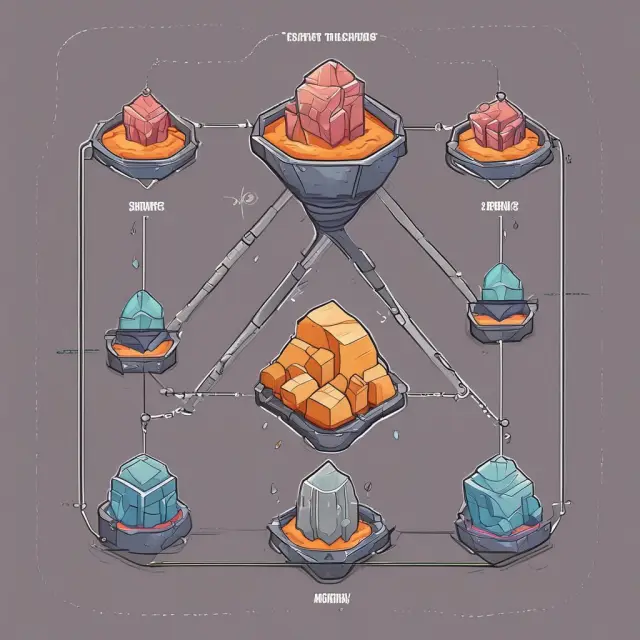
Mining Difficulty: A Measure of the Complexity of the PoW
Understanding the impact of mining difficulty on Bitcoin’s network, block generation rate, and miner competition is essential for grasping the intricacies of this decentralized digital currency. Mining difficulty refers to the level of complexity required to solve the proof-of-work (PoW) algorithm, a critical component of the Bitcoin network. Let’s delve deeper into how mining difficulty operates and its implications on the ecosystem as a whole.
Mining Difficulty: Its Role in Maintaining Network Security and Block Generation
As new blocks are added to the Bitcoin blockchain, miners compete to validate transactions and add new blocks through solving complex computational puzzles. This process ensures that each transaction is verified by multiple sources before being confirmed as a part of the blockchain, thereby maintaining its integrity. Mining difficulty comes into play by adjusting the level of complexity for these puzzles to ensure an average block generation time of ten minutes. By doing so, it maintains the network’s stability and security while also ensuring a consistent flow of new coins into circulation.
Impact on Miner Competition and Efficiency
A higher mining difficulty translates into a more challenging puzzle for miners to solve, requiring greater computational power and energy consumption. Consequently, it encourages competition among miners to invest in more efficient hardware and energy sources. The ever-evolving landscape of Bitcoin’s network demands constant upgrades, fostering innovation and advancement within the mining community.
How Mining Difficulty Evolves: Adjustments and Influencing Factors
Mining difficulty adjusts every 2016 blocks or approximately every two weeks depending on the network’s hashrate – the total computational power contributed by all miners. When more miners join the network, the overall hash rate increases, making it easier to find a valid solution to the PoW puzzle, and the mining difficulty is adjusted upwards. Conversely, when miners exit the network or reduce their hash rates, the mining difficulty decreases to compensate for the reduced competition.
The Future of Mining Difficulty: Trends and Challenges
As Bitcoin’s price continues to rise and more miners join the ecosystem, it is essential to consider how this will impact mining difficulty and the overall network. One trend that could influence the future of mining difficulty is the increasing use of renewable energy sources for mining operations. As countries and regions focus on reducing their carbon footprints, Bitcoin’s reliance on renewable energy may lead to a more sustainable mining ecosystem.
Another potential challenge for mining difficulty lies in the development and adoption of new technologies that could impact the Bitcoin network, such as Proof-of-Stake (PoS) consensus mechanisms or quantum computing. These advancements could significantly alter the way transactions are verified on the network and the role of miners within it.
Conclusion: A Balancing Act for a Decentralized Network
In conclusion, mining difficulty plays a crucial role in maintaining Bitcoin’s decentralized network by ensuring security, consistency, and fairness while encouraging competition among miners. By understanding this concept and its implications on the Bitcoin ecosystem, investors, users, and enthusiasts can appreciate the intricacies behind this groundbreaking digital currency.
Bitcoin Mining: An Economic Perspective
The economics of Bitcoin mining is a significant factor in understanding its production and distribution. Bitcoin mining is not just an activity to create new coins, but it also plays a critical role in securing the network by verifying transactions and generating blocks on the blockchain. As such, miners are incentivized by both the block reward and transaction fees.
A miner’s primary goal is to solve a complex mathematical puzzle, called Proof of Work (PoW), which requires significant computational power. The first miner to solve this puzzle earns new bitcoins as their reward, along with any associated transaction fees. This competition among miners ensures that the transactions are verified and added to the blockchain, making it more secure.
However, Bitcoin mining comes at a cost. The main expenses include electricity consumption for running the specialized mining equipment, which consumes massive amounts of energy, and the upfront investment in acquiring or building the hardware itself. With increasing competition, the mining difficulty continually adjusts to ensure that the average time between blocks is maintained at ten minutes. This increase in mining difficulty necessitates more powerful equipment and higher energy usage, which drives up costs for miners.
The economics of Bitcoin mining has become an interesting subject as the cryptocurrency gains more popularity and acceptance among various industries and investors. One significant factor that influences the profitability of mining is the price volatility of Bitcoin itself. The reward for mining a block is fixed, but the value of Bitcoin fluctuates continuously. This price instability can impact miners’ profits since their costs remain relatively constant.
Another essential aspect is the cost of electricity. Mining requires significant amounts of electrical energy. In areas where electricity is abundant and cheap, mining operations may be more profitable compared to regions with high energy costs. As a result, Bitcoin mining has become a major consumer of electricity in several countries, sparking concerns regarding its environmental impact.
In an attempt to mitigate the environmental concerns, some miners are turning towards renewable sources for their energy needs. Hydroelectric power, solar, and wind power are increasingly popular choices for Bitcoin miners due to their reduced carbon footprint compared to traditional electricity generation methods.
Moreover, mining pools have emerged as a common strategy among miners seeking higher chances of earning rewards. A mining pool is a collective group of miners who combine their computing power and resources to increase their chances of solving the PoW puzzle and receiving a reward. The distribution of rewards in mining pools is proportional to the miner’s contribution.
As we delve deeper into the economics of Bitcoin mining, it becomes evident that this process is not just about creating new coins but also about securing the network through a decentralized consensus mechanism. The economic incentives for miners, such as block rewards and transaction fees, ensure that the network remains secure and continues to function efficiently.
However, the ever-increasing competition, rising mining difficulty, electricity costs, and regulatory challenges make Bitcoin mining a complex and dynamic business. Miners must continually adapt and invest in new technologies and energy sources to remain competitive and profitable while mitigating environmental concerns. Stay tuned for our further exploration of this fascinating aspect of the world’s first decentralized digital currency.
Environmental Concerns Surrounding Bitcoin Mining
Bitcoin mining has recently become the focus of public debate due to its perceived environmental impact. While many recognize the potential benefits and transformative nature of this decentralized digital currency, there are growing concerns about its energy usage and carbon footprint. As a result, understanding how Bitcoin mining affects the environment and the measures taken to mitigate these impacts is essential.
Bitcoin Mining’s Energy Consumption: A Significant Factor
The process of mining Bitcoin requires significant computational power, which in turn translates into vast amounts of energy consumption. According to the Cambridge Bitcoin Electricity Consumption Index, Bitcoin miners globally consume roughly 120 Terawatt hours (TWh) annually, equivalent to the energy usage of countries like Austria or Poland. This massive energy demand stems from miners’ competition to solve complex mathematical problems and earn new coins, which in turn validates transactions on the network and maintains its security.
Impact on Climate Change: A Cause for Concern?
The environmental concerns surrounding Bitcoin mining are primarily centered around its carbon footprint, as many argue that the cryptocurrency’s energy usage contributes to greenhouse gas emissions and climate change. The primary sources of electricity for Bitcoin mining include fossil fuels such as coal and natural gas, which contribute significantly to these environmental issues. However, it is essential to note that this does not represent an inherent problem with Bitcoin itself but rather a consequence of the global energy mix that powers its network.
Addressing Environmental Concerns: Adoption of Renewable Energy Sources
To counteract the negative environmental impact of Bitcoin mining, many miners and organizations have been turning to renewable energy sources like wind, hydroelectric, and solar power. In fact, it is estimated that approximately 76% of Bitcoin’s electricity consumption comes from renewable sources, with this percentage continuing to grow. For instance, large-scale operations in regions with abundant renewable resources, such as Iceland and Svalbard, are increasingly popular choices for miners due to their low carbon footprint and sustainable energy production.
Moreover, Bitcoin miners can also make a positive contribution by selling excess energy generated from their mining operations back to the grid or using it to power their local communities, further reducing their overall carbon emissions. In this way, the environmental impact of Bitcoin mining can be minimized while still providing economic benefits and ensuring the security of the network.
Conclusion: A Balanced Perspective on Bitcoin Mining’s Environmental Impact
Although Bitcoin mining does indeed consume significant energy resources, it is essential to remember that its environmental impact is not inherently negative. By transitioning towards renewable energy sources and utilizing excess energy generated from these sources, the Bitcoin network can reduce its carbon footprint while maintaining its decentralized and secure infrastructure. As the world continues to explore the potential of cryptocurrencies, it is crucial to approach their environmental impact with a balanced perspective, acknowledging both challenges and solutions.
FAQs on Bitcoin Mining’s Environmental Impact:
What percentage of Bitcoin mining is powered by renewable energy?
According to the Cambridge Bitcoin Electricity Consumption Index, approximately 76% of Bitcoin’s electricity consumption comes from renewable sources.
Is it possible for Bitcoin miners to reduce their environmental impact significantly?
Yes, miners can transition towards renewable energy sources and utilize excess energy generated from these sources. This not only reduces the overall carbon footprint but also provides economic benefits and ensures network security.
What are some countries that have adopted Bitcoin mining due to their abundant renewable energy resources?
Iceland, Svalbard, and Norway are among the countries with significant renewable energy production, making them popular choices for Bitcoin miners looking to minimize their carbon footprint.
Mining Hardware: Specialization and Evolution of Mining Systems
The importance of mining hardware in the Bitcoin ecosystem cannot be overstated as it significantly impacts both the mining process and the overall performance of the network. Miners, who validate transactions and create new blocks, require powerful and efficient systems to solve mathematical puzzles and earn rewards. The evolution of mining hardware, from CPUs to GPUs, FPGAs, and now ASICs (Application-Specific Integrated Circuits), has been a pivotal factor in Bitcoin’s success.
Initially, Bitcoin was mined using regular CPUs on desktop computers. However, as the network grew, mining became increasingly difficult due to the increasing number of transactions and the need for computational power to maintain security. This led to the emergence of GPUs (Graphics Processing Units) in 2011 as a more efficient solution for mining Bitcoin.
In 2013, miners started using FPGAs (Field-Programmable Gate Arrays), which are programmable devices that can be tailored to perform specific tasks efficiently. They were the first hardware designed specifically for Bitcoin mining, offering significant advantages in terms of processing power and energy efficiency compared to CPUs and GPUs.
However, FPGAs soon became outdated by the advent of ASICs around 2014. These highly specialized chips were designed solely for Bitcoin mining and offered unprecedented performance improvements while consuming less electricity than their predecessors. This shift towards more efficient hardware allowed the network to maintain security and process transactions faster, making it possible to handle increased demand.
The importance of ASICs is underscored by their dominance in modern Bitcoin mining. Today, large mining pools and industrial operations use high-performance ASIC systems, making small-scale mining using CPUs or GPUs unprofitable for most individuals. The investment required to mine Bitcoin with powerful hardware has made it a capital-intensive business, contributing to the decentralization of mining as it is mostly concentrated in regions with low electricity costs and access to renewable energy sources.
The specialized nature of ASICs also brings challenges such as obsolescence and high upfront costs. The constant evolution of Bitcoin’s algorithm necessitates frequent hardware upgrades, requiring miners to invest significant resources to remain competitive. This has led to a cyclical market for mining hardware, with new generations of ASICs emerging every few years to replace older models.
In conclusion, the mining hardware landscape has continuously evolved over the past decade, influencing both the Bitcoin network’s performance and the economics of mining. From CPUs to GPUs, FPGAs, and now ASICs, each advancement played a crucial role in maintaining the security and scalability of the network while driving innovation and competition within the industry.
Major Players in Bitcoin Mining Industry
Bitcoin mining has grown exponentially since its inception, leading to the emergence of significant players in the industry. These companies employ vast resources and innovative techniques to mine Bitcoin efficiently and profitably. Here, we take a look at some of the major players in this sector:
1. Bitmain Technologies: Based in Beijing, China, Bitmain is considered one of the world’s leading bitcoin mining hardware manufacturers. They produce application-specific integrated circuits (ASICs), designed specifically for cryptocurrency mining. Their latest ASIC chips, Antminer S19 Pro and Antminer S19, offer high hashrate efficiency and are widely used by miners worldwide.
2. Binance: This global blockchain ecosystem was initially known for its cryptocurrency exchange platform but later expanded into mining operations. Binance Pool, the company’s mining division, offers flexible mining contracts and allows users to mine multiple cryptocurrencies using Bitcoin as collateral. Binance’s unique features include dynamic mining pool fees, low minimum payouts, and real-time mining profitability statistics.
3. Hive Blockchain Technologies: Canadian-based Hive Blockchain Technologies is a growth oriented, TSX.V-listed company building a bridge between the blockchain sector and traditional capital markets. It operates two Bitcoin production facilities in Sweden and Iceland with a combined capacity of over 1 Exahash. The company aims to generate bitcoin while minimizing environmental impact through renewable energy sources like hydroelectricity and geothermal power.
4. Bitfury: Founded in 2011, Bitfury is one of the oldest Bitcoin mining operations, with a proven track record in innovation. It offers custom-built mining hardware and operates its own mining pool with over 7% of the global hashrate. Additionally, Bitfury’s Exonum platform provides businesses with blockchain development services to build private and industrial applications on their networks.
5. Canaan Creative: Another major player in Bitcoin mining, Canaan Creative is a leading manufacturer of cryptocurrency mining hardware based in China. Their AvalancheMiner series, featuring the newest ASIC chips, offers high efficiency and competitive performance for Bitcoin miners.
These companies represent just a few examples of the significant players making a mark in the ever-evolving world of Bitcoin mining. Their innovative approaches to mining, resource allocation, and environmental impact have shaped the industry and set new standards for future competitors.

Regulation of Bitcoin Mining: Legal Frameworks Around the World
Bitcoin mining’s economic viability and environmental impact have led to debates and regulations concerning its legality in various jurisdictions worldwide. While some governments welcome Bitcoin as a potential economic boon, others are cautious about its energy usage and potential risks. Let us examine some regulatory frameworks for Bitcoin mining across different countries and regions.
Europe:
The European Union (EU) has adopted a cautious approach towards Bitcoin mining, focusing on taxation and environmental regulations. Some EU nations, like Iceland, have attracted miners due to their abundant renewable energy sources, favorable temperatures for cooling mining equipment, and minimal regulatory barriers. However, Norway, Russia, and Poland have implemented strict regulations on Bitcoin mining to prevent energy misappropriation or the potential damage to their power grids.
China:
China’s stance towards Bitcoin mining has been tumultuous, with a series of bans and restrictions in various regions between 2013 and 2021. In 2019, Chinese authorities began cracking down on Bitcoin mining due to energy concerns, leading miners to search for alternative locations. However, China remains the world’s largest source of Bitcoin production due to its abundant coal-fired power plants. Mining operations continue in some regions with tacit approval from local authorities.
United States
The U.S. has a diverse regulatory landscape for Bitcoin mining, as individual states determine their own regulations. Some states, like New York and Washington, have established licensing systems to regulate Bitcoin mining activities, while others, such as Texas and Minnesota, have embraced the industry due to their abundant energy sources. The U.S. Securities and Exchange Commission (SEC) has taken a more cautious approach, treating Bitcoin as a commodity subject to securities regulations.
Canada:
Canada has become a popular destination for Bitcoin miners due to its abundant hydroelectric power resources. However, the Canadian government’s stance towards Bitcoin mining is still evolving. In 2021, British Columbia proposed a moratorium on new Bitcoin mining operations due to environmental concerns. In response, several major mining companies signed a voluntary agreement to use renewable energy sources for their operations.
Russia:
Russian authorities have taken a cautious approach towards Bitcoin mining, with some regions embracing it as an economic opportunity while others crack down on illegal activities. In 2019, Russian President Vladimir Putin signed a law that classified Bitcoin as property, subject to income taxation. However, the Russian Ministry of Natural Resources and Environment has banned mining in certain sensitive ecological zones due to environmental concerns.
These regulatory frameworks illustrate the complex relationship between governments and Bitcoin mining. While some countries view it as an opportunity for economic growth, others are concerned about its impact on the environment and energy consumption. As Bitcoin continues to evolve, its regulatory landscape will likely change as well.

Future of Bitcoin Mining: Technological Advancements and Challenges
Bitcoin mining has been undergoing rapid changes since its inception over a decade ago. From humble beginnings on CPUs to massive operations run by specialized hardware called Application-Specific Integrated Circuits (ASICs), the landscape of Bitcoin mining continues to evolve. This section will discuss some technological advancements and challenges that impact Bitcoin mining’s future.
1. Technological Advancements:
a) ASICs and FPGA: The shift towards specialized hardware for mining Bitcoin has been a crucial factor in its success. Application-Specific Integrated Circuits (ASICs) are custom-designed chips used specifically for mining cryptocurrencies like Bitcoin. These systems have significantly outperformed general-purpose CPUs and GPUs in terms of efficiency and processing power, leading to the consolidation of mining into large-scale operations. Furthermore, Field-Programmable Gate Arrays (FPGAs)—which can be reprogrammed to perform different tasks—are another alternative for miners looking for a middle ground between CPUs and ASICs.
b) Cloud Mining: Cloud mining allows individuals to buy hash power from remote data centers, eliminating the need to own dedicated mining equipment or deal with the overhead costs of electricity, cooling, and maintenance. This approach democratizes Bitcoin mining by making it accessible to a wider audience while also providing more flexibility in terms of scale and location.
c) Renewable Energy: Environmental concerns surrounding the energy consumption of Bitcoin mining have led to a push for greener alternatives. Mining facilities powered by renewable sources like hydroelectric, wind, and solar power are becoming increasingly common, reducing carbon emissions while ensuring the long-term sustainability of the Bitcoin network.
2. Challenges:
a) Regulation: As the popularity and value of Bitcoin grow, governments around the world are considering implementing regulations that could impact mining operations. Some countries, like China, have imposed bans on Bitcoin mining, leading to a massive exodus of miners looking for more favorable jurisdictions.
b) Energy Consumption: Despite the efforts towards renewable energy sources, Bitcoin mining still consumes vast amounts of electricity, posing challenges for both miners and environmentalists. The continued growth in mining operations puts pressure on power grids, potentially leading to higher costs and regulatory restrictions.
c) Competition and Consolidation: As more players enter the market, competition among miners intensifies, driving up hardware costs and increasing the need for large-scale operations with access to cheaper electricity and advanced technology. This trend could lead to further consolidation within the industry, making it even more challenging for smaller mining operations to remain competitive.
d) Technological Innovations: As Bitcoin mining evolves, new technologies emerge that challenge the status quo. One such innovation is Proof of Stake (PoS), a consensus mechanism that does not require significant computational power. While PoS systems like Ethereum are yet to fully replace PoW-based cryptocurrencies, they could potentially impact Bitcoin mining’s future by offering more energy-efficient alternatives.
In conclusion, the landscape of Bitcoin mining is ever-changing as technological advancements and challenges continue to shape its evolution. From ASICs and renewable energy to regulations and competition, miners must adapt to these factors to remain competitive and sustainable in the long run.

Frequently Asked Questions About Bitcoin Mining
Q: What is Bitcoin mining?
A: Bitcoin mining refers to the process of creating new Bitcoins by solving complex mathematical puzzles using powerful computing systems. These puzzles are part of a larger, decentralized network called proof-of-work (PoW). Solving these puzzles not only rewards miners with newly minted Bitcoins but also adds valid transactions to the Bitcoin blockchain.
Q: Why is mining necessary?
A: Mining plays a crucial role in maintaining the integrity and security of the Bitcoin network. Through their computational efforts, miners ensure that all transactions on the network are legitimate and prevent double-spending. Additionally, they validate new blocks added to the blockchain and receive rewards for their work.
Q: How does Bitcoin mining work?
A: Mining involves solving complex mathematical puzzles to create new Bitcoins. Miners utilize specialized hardware called application-specific integrated chips (ASICs) to perform these calculations at incredible speeds. When a miner solves a puzzle, they are rewarded with newly minted Bitcoins as well as transaction fees from the verified transactions within that block.
Q: What is mining difficulty?
A: Mining difficulty refers to the level of complexity required to solve Bitcoin’s mathematical puzzles. The more miners joining the network, the higher the mining difficulty becomes, making it harder for individual miners to earn rewards. Conversely, if miners leave the network, the difficulty decreases, making mining easier.
Q: What are the costs of mining Bitcoin?
A: Mining Bitcoin comes with significant expenses including electricity costs, which can be substantial due to the constant operation of mining systems, as well as the upfront investment in specialized mining hardware. The price range for an ASIC miner ranges from $4,000 to $12,000. However, it’s important to note that miners also earn rewards in the form of newly minted Bitcoins and transaction fees.
Q: Is Bitcoin mining environmentally friendly?
A: There is ongoing debate around the environmental impact of Bitcoin mining due to the immense energy requirements. While some miners have turned to renewable energy sources such as hydroelectric, wind, or solar power to reduce their carbon footprint, others still rely on traditional energy sources with higher greenhouse gas emissions. This issue remains a topic of concern for many as Bitcoin’s environmental impact continues to grow.
 Next entry · No. 430Understanding the Bitcoin Misery Index (BMI): A Comprehensive Guide for Institutional Investors
See also
-
 No. 227
07 Apr 2024
22 min
Understanding Application-Specific Integrated Circuit (ASIC) Miners: A New Era in Cryptocurrency Mining
Crypto
No. 227
07 Apr 2024
22 min
Understanding Application-Specific Integrated Circuit (ASIC) Miners: A New Era in Cryptocurrency Mining
Crypto -
 No. 428
23 Apr 2024
24 min
Bitcoin Cash (BCH): A Faster Alternative to Bitcoin – A Comprehensive Overview
Crypto
No. 428
23 Apr 2024
24 min
Bitcoin Cash (BCH): A Faster Alternative to Bitcoin – A Comprehensive Overview
Crypto -
 No. 2,828
07 Feb 2025
21 min
Understanding Letters of Credit: A Comprehensive Guide for Institutional Investors
Business Finance
No. 2,828
07 Feb 2025
21 min
Understanding Letters of Credit: A Comprehensive Guide for Institutional Investors
Business Finance -
 No. 2,311
27 Dec 2024
19 min
Understanding Impaired Credit: A Comprehensive Guide for Institutional Investors
Business Finance
No. 2,311
27 Dec 2024
19 min
Understanding Impaired Credit: A Comprehensive Guide for Institutional Investors
Business Finance -
 No. 2,265
23 Dec 2024
19 min
Understanding Hydraulic Fracturing: Process, History, Benefits, and Controversies
Energy Finance
No. 2,265
23 Dec 2024
19 min
Understanding Hydraulic Fracturing: Process, History, Benefits, and Controversies
Energy Finance -
 No. 2,208
18 Dec 2024
19 min
Exploring Horizontal Wells: A Modern Approach to Oil and Gas Extraction
Energy Finance
No. 2,208
18 Dec 2024
19 min
Exploring Horizontal Wells: A Modern Approach to Oil and Gas Extraction
Energy Finance