Home Office Expenses: Deductions, Calculations, and Examples for Institutional Investors

Explore eligibility, calculation methods, real-world examples, and tax professional advice for Home Office Expenses in this comprehensive guide.
Understanding Home Office Expenses
Home office expenses refer to the costs incurred for operating a business or conducting employment activities within a primary residence. These expenses can result in significant tax savings, as explained below.
What are Home Office Expenses?
Home office expenses enable individuals to deduct certain housing expenses from their annual tax return, including utilities, mortgage interest, and property taxes, among others. The IRS provides the specific rules on home office deductions through Publication 587.
The eligibility of home office expenses hinges on the exclusive and regular use of a specific area within your primary residence for conducting business activities. The space does not necessarily need to be marked off by a permanent partition, but it must be used exclusively and regularly as a home office.
Home Office Deductions: Eligibility and Limitations
To qualify for home office deductions, the following conditions must be met:
- The area is used exclusively and regularly as your principal place of business or as a separate and identifiable place where you meet with clients, patients, or customers.
- It is used exclusively and regularly for administrative or management activities associated with your trade or business.
- A portion of your home is used to produce income.
The size of the deductible expenses will depend on various factors such as the filing status, the way you file your tax return (Schedule C versus Schedule A), and your annual income. Most individuals will be able to claim several items as expenses if they are incurred during the normal course of business.
Two Methods for Calculating Home Office Expenses
The IRS allows two methods for calculating home office expenses: regular method and simplified method. The regular method involves computing actual expenses based on direct and indirect costs, while the simplified method offers a faster option with reduced deductions.
1. Regular Method: This calculation begins by determining which business-related expenses are direct, indirect, or unrelated to your home office. Next, calculate the percentage of your home used for business purposes using the area method or room method. Direct expenses include those related solely to the home office, while indirect expenses apply to the entire home and need to be allocated accordingly.
2. Simplified Method: Introduced in 2013 as a more straightforward option, this method calculates deductions based on the allowable area used for business purposes and the related gross income. The simplified method does not require extensive record-keeping but may result in fewer deductions compared to the regular method.
Direct, Indirect, and Unrelated Expenses
When computing home office expenses, it is essential to understand the classification of business expenses as direct, indirect, or unrelated:
- Direct expenses are those that can be attributed solely to the home office, like painting or repairs limited to that space.
- Indirect expenses apply to the entire house but must be allocated appropriately for tax purposes. Examples include utilities, insurance, and mortgage interest.
- Unrelated expenses are those that do not benefit your business, such as entertainment expenses or clothing costs.
Exclusive Use vs. Regular and Shared Home Offices
The difference between exclusive use, regular use, and shared home offices influences tax deductions:
- Exclusive use means the space is used entirely for business purposes with no personal use.
- Regular use involves using a portion of your home regularly and exclusively for conducting business activities but also permits some personal use.
- Shared home offices allow multiple individuals to utilize the same area for their businesses, leading to potential complications in determining the allocation of expenses.
Real World Examples: Filing Taxes for Home Office Expenses
Using a freelance writer as an example, they can deduct expenses such as rent or mortgage interest, property taxes, utilities, office supplies, business equipment, and a portion of their home insurance based on the percentage of the house used exclusively for the business.
Home Office Equipment and Supplies: Deductible or Not?
Common office equipment like computers, printers, phones, and even software subscriptions can be considered deductible expenses when used solely for business purposes. In addition to tangible assets, services like internet, phone lines, and online subscriptions may also be tax-deductible under certain circumstances.
Impact of Tax Cuts and Jobs Act on Home Office Expenses
The passage of the Tax Cuts and Jobs Act in 2017 brought about significant changes to the rules governing home office deductions. It is essential for individuals filing taxes for home office expenses to consult IRS publications published after 2018 to ensure they comply with the latest tax laws.
Consulting a Tax Professional: Best Practices for Claiming Home Office Expenses
When filing taxes for home office expenses, it is highly recommended to seek advice from a certified tax professional or accountant. They can help maximize your deductions while ensuring compliance with IRS regulations and potential limitations on the use of simplified methods.
FAQs about Home Office Expenses
Can I claim a home office expense for a room that is shared by my spouse?
A. Yes, you may be able to claim a portion of the expenses if your spouse uses the space exclusively and regularly for business purposes.
Can I use the standard deduction if I have a home office?
A. It depends on the amount of your expenses: if they exceed the standard deduction threshold, itemizing home office expenses can lead to more significant savings.
What is considered a qualified expense for a home office?
A. Expenses related to the business use of your home, such as mortgage interest, real estate taxes, utilities, repairs, and depreciation or rental fees for a portion of your home used exclusively for business purposes qualify as qualified expenses.

Home Office Deductions: Eligibility and Limitations
Home office deductions allow business owners or self-employed individuals to claim certain housing expenses on their federal tax return, which can potentially reduce their taxable income. To be eligible for a home office deduction, the space in question must meet the following criteria as defined by the Internal Revenue Service (IRS):
- Exclusive and Regular Use: The area designated as a home office is used exclusively and regularly for business purposes. This means that no other personal use occurs within the area during regular business hours.
- Principal Place of Business: A home office serves as the primary location where significant administrative or managerial activities are carried out.
- Meeting with Clients, Customers, or Patients: The home office is used to meet with clients, customers, or patients on a frequent basis.
- Separate Structure: If the home office is not within the main residence but is instead located in a separate structure on the property, it can be considered eligible for a deduction under specific conditions.
- Home-Based Daycare Facility: A home used to provide daycare services qualifies as a home office if it is the primary location for this business and meets the aforementioned criteria.
- Storage Space: If the area in question is used exclusively for storing inventory or product samples, it can be considered eligible for a home office deduction under certain circumstances.
To calculate the expenses related to your home office deductions, you have two methods to choose from: the regular method and the simplified method. The regular method involves calculating actual expenses incurred while the simplified method is a more straightforward approach that relies on a standard rate per square foot of your home used for business purposes.
The IRS Publication 587 (Business Use of Your Home) provides further information on eligibility, calculations, and limitations regarding home office deductions. It is crucial to consult with a tax professional or accountant to ensure you fully understand the rules and regulations surrounding these deductions.
The Tax Cuts and Jobs Act of 2017 introduced changes to the tax code that may affect your ability to claim home office deductions. Be sure to review information published in 2018 or later for the most up-to-date guidelines.
In the following sections, we will dive deeper into understanding direct and indirect expenses, calculating home office expenses using both methods, and discussing real world examples that illustrate how businesses and self-employed individuals can effectively claim home office deductions.

Two Methods to Calculate Home Office Expenses
Calculating home office expenses is a crucial aspect of maximizing tax savings for institutional investors or self-employed individuals operating from their residences. The IRS provides two methods to determine eligible home office expenses: the regular method and the simplified method. Understanding these methods and how they differ can significantly impact your tax deductions.
The Regular Method: Calculating Actual Expenses
The regular method, also known as the “actual expense” or “real expense” method, involves calculating home office expenses by determining the actual costs incurred for business use within your primary residence. To utilize this method effectively, follow these steps:
- Identify direct and indirect expenses: Direct expenses refer to expenses that are solely related to your business’s home office, such as painting or repairs specifically made in the workspace. Indirect expenses include utilities like electricity, water, and property taxes that benefit both your personal residence and the home office.
- Calculate the percentage of your home used for business: To determine the percentage of your home allocated to the office space, you can either divide the area used (length multiplied by width) by the total area of your entire house or divide the number of rooms used for business by the total number of rooms in your home.
- Determine allowable business use: Only expenses related to the specific home office are deductible; other indirect expenses must be allocated based on the percentage of usage. For instance, a utility bill for a $100 monthly expense, with 20% of the house used for business purposes, would equate to $20 in allowable business-related expenses.
- Keep accurate records: Maintaining detailed records is essential when utilizing the regular method to ensure proper calculation and deductibility of home office expenses.
The Simplified Method: A Faster Alternative
Introduced in 2013, the simplified method allows taxpayers to calculate their home office expenses based on a predetermined rate per square foot, making it a faster alternative to the regular method. To use this approach, follow these steps:
- Identify allowable area of your home used for business: Determine the total square footage of your home office space, taking into consideration any changes or non-regular usage during the year.
- Multiply the allowable square footage by $5 per square foot: The IRS sets a standard deduction of $5 per square foot for up to 300 square feet of business use in a qualified location, such as your home.
- Subtract non-home office related expenses from gross income: Deduct any expenses unrelated to the home office use from the total gross income generated through the business operation within your residence.
- Apply the smaller amount between (1) and (2): The final deduction will be the lesser value obtained from the calculated allowable square footage expense or the actual income-producing expenses derived from the regular method, depending on which yields a lower tax savings.
In conclusion, both methods for calculating home office expenses serve unique purposes. By understanding your eligibility and choosing the most advantageous approach for your circumstances, you can effectively maximize your tax deductions as an institutional investor or self-employed individual. For more information on tax-related topics, consult Publication 587 provided by the IRS.

Direct, Indirect, and Unrelated Expenses
Understanding the Classification of Business Expenses in Relation to a Home Office Deduction
Home office expenses can include a wide range of costs associated with running a business from home. However, it is crucial to understand how these expenses are classified when it comes to tax deductions. The IRS recognizes three primary categories for expenses: direct expenses, indirect expenses, and unrelated expenses. In the context of a home office deduction, each category plays a unique role.
Direct Expenses
Direct expenses refer to costs that can be exclusively attributed to the business operation within your home. These expenses are fully tax-deductible since they directly benefit your home office. Examples include:
- Office supplies (pens, paper, toner cartridges)
- Business-specific equipment purchases (computers, printers, ergonomic chairs)
- Repairs and maintenance related to the designated workspace
- Telephone or internet service specifically used for business purposes
- Home security systems needed for the home office
Indirect Expenses
Indirect expenses are costs associated with maintaining your entire home, which indirectly benefit your home office. To calculate the deductible portion of these expenses, you will need to determine the percentage of your home that is used for business purposes. Some examples include:
- Mortgage interest
- Property taxes
- Rent
- Insurance
- Utilities (electricity, gas, water)
Unrelated Expenses
Unrelated expenses are costs incurred that do not have any correlation to your home office or business operation. These expenses cannot be claimed as a home office deduction, and they should be subtracted from your gross income when calculating the amount of potential tax savings from your home office deductions.
For example, if you spend $30 per month on internet service for both personal and business use, only the portion allocated to your home office (based on square footage or percentage of usage) would be considered a direct expense, while the remaining portion ($15 in this case) would be classified as an indirect or unrelated expense.
In conclusion, understanding the distinction between these three categories is essential for maximizing your potential tax savings with a home office deduction. Remember to consult tax professionals to help you navigate through the classification of various expenses and ensure compliance with IRS regulations. Stay tuned for our next article where we will explore different methods for calculating home office expenses, including the regular method and simplified method.
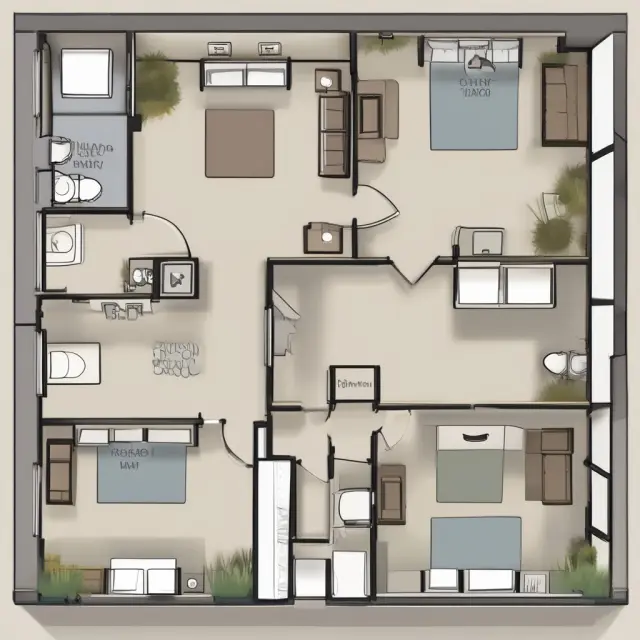
Exclusive Use vs. Regular and Shared Home Offices
One crucial consideration when it comes to home office expenses is understanding the differences between exclusive use, regular use, and shared home offices. These categories determine whether a taxpayer can claim business-related expenses for their home under IRS rules. Let’s examine each term and its implications:
1. Exclusive Use Home Office: To be considered an exclusive use home office, the space must be used solely for business purposes. The IRS requires that the area is both “regular” and “exclusively” used as a principal place of business or a place where clients or patients are met. For instance, if you have a separate room in your home dedicated to working as a freelance writer, it would qualify as an exclusive use home office since no personal activities occur there during work hours.
2. Regular Use Home Office: A regular use home office refers to a space that is used frequently and consistently for business purposes. However, unlike an exclusive use home office, this type of workspace can be shared with others or used for personal activities when not in use for business. For example, a family room converted into a home recording studio could function as a regular use home office if the individual uses it primarily for recording and producing music.
3. Shared Home Office: A shared home office is a space that is used simultaneously by two or more individuals for both personal and professional purposes. This arrangement complicates matters for tax filings, as each person can only deduct their proportionate share of the related expenses. In our earlier example, if two siblings worked together on a freelance writing project in the dining room, they would need to calculate their individual usage percentage to claim any home office expenses.
It’s essential to note that the IRS mandates that the area must meet certain criteria to be eligible for tax deductions. The exclusive or regular use of a space does not necessarily guarantee qualification since other factors like size and function come into play. In the next section, we will discuss how to calculate home office expenses using the regular and simplified methods.
Stay tuned for the following sections: Home Office Equipment and Supplies: Deductible or Not? The Impact of Tax Cuts and Jobs Act on Home Office Expenses Consulting a Tax Professional: Best Practices for Claiming Home Office Expenses FAQs about Home Office Expenses

Real World Examples: Filing Taxes for Home Office Expenses
Understanding how to file taxes for home office expenses can save businesses or self-employed individuals significant amounts on their tax bills. By illustrating real-world examples, we’ll explore how the IRS rules apply when calculating and deducting these expenses.
Consider a freelance graphic designer named Sarah who operates her business from her home office. She utilizes a 150-square-foot space exclusively for her clients and design work. By following the eligibility and limitation criteria, she can claim certain costs as deductions.
Direct Expenses
Sarah’s home office includes specific expenses such as painting the designated area, installing custom bookshelves, and purchasing a large drafting table for her workspace – all of which are considered direct expenses related to her business since they only benefit this particular area. These costs can be fully deducted from her taxable income when filing taxes.
Indirect Expenses
Along with the direct expenses, Sarah also incurs indirect costs that apply to her entire home. These include utilities (electricity, water, gas), property insurance, and maintenance fees for the house as a whole. Since her home office uses these shared resources, she can deduct a portion of these expenses based on the percentage of her home used solely for business purposes – 10% in this example.
Calculating Home Office Expenses
Sarah has two options when calculating and determining her allowable home office expenses: the regular method or simplified method. Let’s examine each method to see which one is more suitable for her situation.
The Regular Method
By following this method, Sarah needs to calculate her actual expenses related to both direct and indirect costs of her home office. This method provides more flexibility in terms of potential deductions but requires detailed record-keeping throughout the year.
The Simplified Method
Alternatively, Sarah could opt for a simplified method that calculates her home office expenses based on a standard rate per square foot ($5 per square foot as of 2021) and multiplying it by the allowable area used for business purposes (150 sq ft). This method may not yield as many deductions, but it is a faster and less complex alternative to the regular method.
When filing taxes, Sarah can claim her direct expenses in full, while indirect costs will be calculated based on either the regular or simplified method. She should consult with a tax professional for advice on which calculation method would benefit her most.
In conclusion, understanding and applying home office expense rules can provide considerable savings for businesses or self-employed individuals. By following eligibility criteria and utilizing the appropriate deduction methods, Sarah is able to maximize her potential tax reductions while maintaining compliance with IRS regulations.

Home Office Equipment and Supplies: Deductible or Not?
When it comes to running a business from home, one question that often arises is whether common office equipment, supplies, and subscriptions are tax-deductible as part of home office expenses. The answer lies in understanding the rules set forth by the Internal Revenue Service (IRS).
Home office expenses include items such as utilities, mortgage interest, and property taxes that are directly related to the business use of a portion of your primary residence. However, equipment and supplies used exclusively for your home business can also be deducted. This section aims to clarify which types of equipment, supplies, and subscriptions can be considered tax-deductible home office expenses.
1. Office Equipment
Office equipment like desks, chairs, printers, scanners, computers, or even a dedicated phone system for your business are all typically considered capital expenditures. The IRS allows you to either depreciate the cost over several years using the Modified Accelerated Cost Recovery System (MACRS) or claim a Section 179 deduction in the year of purchase, up to a certain limit.
2. Office Supplies
Office supplies such as paper, pens, printer ink, and toner cartridges are generally considered ordinary and necessary expenses, and they can be fully deducted in the year you purchase them, as long as they are used exclusively for your home business.
3. Subscriptions
Business subscriptions like software services or industry publications that directly contribute to the success of your home office are tax-deductible. Be sure to keep records of these expenses, such as receipts, invoices, or canceled checks.
4. Phone Lines and Internet Access
A dedicated phone line for your business or an internet connection exclusively used for your home office can be considered a business expense and are generally fully deductible. However, it’s important to note that if you use the same phone or internet service for both personal and business purposes, only the portion directly related to the business must be calculated as a deduction.
5. Insurance
Insurance policies protecting your home office equipment or providing liability coverage may be tax-deductible as business expenses. You should consult with a tax professional to determine if these insurance costs are fully deductible or if they are subject to certain limitations or conditions.
6. Office Improvements and Repairs
Office improvements, such as adding insulation, new floors, or painting your home office, might not be considered immediate tax-deductible expenses but can instead be capitalized and depreciated over time using MACRS. However, there are certain instances where the costs might be eligible for a Section 179 deduction.
When in doubt, it’s essential to consult with a tax professional or refer to the IRS Publication 587 for more information on home office expenses and eligibility criteria. Remember that tax laws change frequently, so always stay informed about the most recent updates to ensure you maximize your tax benefits and remain compliant with all regulations.

The Impact of Tax Cuts and Jobs Act on Home Office Expenses
Since the passage of the Tax Cuts and Jobs Act (TCJA) in 2017, home office expenses have undergone significant changes in terms of deductibility. Here’s a detailed look at how this landmark tax legislation affected home office expense rules and calculations:
Before the TCJA, individuals were allowed to deduct various housing expenses when filing taxes for a qualifying home office. These expenses included mortgage interest, property taxes, rent, repairs, and utilities. However, with the new law, several limitations were introduced to cap these deductions.
One major change was the elimination of miscellaneous itemized deductions, which previously allowed taxpayers to claim certain expenses not subject to the 2 percent of adjusted gross income (AGI) floor. Home office expenses and other costs related to producing or collecting income fell under this category and could no longer be claimed as a separate line item deduction.
However, home office expenses are still available for self-employed individuals and small business owners who meet the qualifications mentioned earlier in this article. These individuals can claim home office expenses on their Schedule C tax form instead of the now defunct miscellaneous itemized deductions.
The TCJA also introduced a new limitation on the state and local tax (SALT) deduction for individual filers, which further affected the deductibility of mortgage interest and property taxes. The new law caps these deductions at $10,000 per year ($5,000 for married filing separately). This means that homeowners can no longer deduct their full mortgage interest and property tax payments in one go if the combined total exceeds this cap.
In spite of these changes, there’s still a way to deduct home office expenses under Schedule C. To effectively calculate these deductions, it is essential for self-employed individuals and small business owners to understand two primary methods: Regular Method and Simplified Method.
The Regular Method calculates home office expenses by determining the total area used for business purposes and computing the percentage of the overall home that is utilized for the business. This calculation provides a more accurate representation of actual expenses related to the home office.
The Simplified Method, on the other hand, allows taxpayers to calculate their home office deductions based on $5 per square foot (or less than $5 for daycare facilities) up to a maximum of 300 square feet. This simplified option might not offer as extensive deductions as the Regular Method but can help in saving time and resources by avoiding detailed calculations.
It is important for self-employed individuals and small business owners to stay informed about these tax laws and consult with tax professionals to ensure they are maximizing their home office expenses while staying compliant with IRS guidelines. The rules and limitations set forth by the TCJA may continue to evolve, so it’s crucial to remain updated on any changes that could affect your deductions.
In conclusion, understanding the impact of the Tax Cuts and Jobs Act on home office expenses is essential for self-employed individuals and small business owners to effectively claim their allowed tax deductions in today’s dynamic tax environment. By knowing the different methods (Regular and Simplified), staying updated with the latest tax rules, and consulting a tax expert when needed, you can maximize your home office expense deductions while complying with IRS regulations.

Consulting a Tax Professional: Best Practices for Claiming Home Office Expenses
Home office expenses can be complex, especially when it comes to calculating and deducting them correctly. Engaging a tax professional with expertise in this area is an essential best practice to ensure you receive the maximum benefits from your home office deductions while remaining compliant with IRS rules. Here’s why:
1. Tax Codes and Regulations
The Internal Revenue Service (IRS) has intricate guidelines that determine if you’re eligible for a home office expense deduction, what percentage of the expenses can be claimed, and how to calculate these deductions. A tax professional familiar with these regulations will ensure your calculations are accurate and up-to-date, thanks to their expertise in home office deductions and recent changes in tax laws.
2. Expertise on Methods for Calculating Home Office Expenses
The IRS provides two methods for calculating home office expenses: the Regular Method and the Simplified Method. A tax professional can help you understand these methods, their differences, and the advantages/disadvantages of each to determine the best approach for your situation.
3. Advice on Deductions for Home Office Equipment and Supplies
When it comes to deducting office equipment, supplies, or subscriptions, a tax professional can help you understand the rules and ensure that only eligible expenses are claimed as home office expenses, saving you time, effort, and potential penalties from incorrect calculations.
4. Insights on Changes in Tax Laws
The tax landscape is constantly evolving, and understanding how these changes impact your deductions is crucial for maximizing benefits. A tax professional can help keep you informed of any new rules or modifications to existing ones, ensuring that you’re always taking full advantage of available deductions.
5. Professional Guidance on Record Keeping
Maintaining accurate records of home office expenses and related documentation is essential for successful claims. Tax professionals have experience in organizing records and ensuring proper documentation for tax purposes, making the process smoother and more effective.
In conclusion, consulting a tax professional for advice and guidance on claiming home office expenses can help you save time, avoid potential errors, and maximize your deductions while maintaining compliance with IRS regulations.

FAQs about Home Office Expenses
What qualifies as a home office expense?
A home office expense refers to any costs associated with the operation of a business conducted within a primary residence, such as utilities, mortgage interest payments, and property taxes. However, not all expenses can be deducted; eligibility depends on the exclusive use test and other criteria set by the IRS.
What is the exclusive use test?
The exclusive use test requires that the space used for business activities must be both exclusively and regularly used as a principal place of business or a place where you meet with clients, patients, or customers. It does not have to be an entire room but should be distinguishable from other areas of the home.
How do I calculate my home office expenses?
There are two methods to calculate your home office expenses: the regular method and the simplified method. The regular method entails calculating all direct, indirect, and unrelated expenses based on the percentage of your home used for business purposes. The simplified method uses a standard $5 rate per square foot for up to 300 square feet.
Which expenses can I deduct as home office expenses?
Deductible expenses include those directly related to the business use of your home, such as office supplies and utilities, along with indirect expenses allocated proportionally based on the percentage of your home dedicated to the business.
What changes have been made to home office deductions since 2017?
The Tax Cuts and Jobs Act (TCJA) has affected some aspects of home office deductions, including limitations on property tax deductions and the suspension of miscellaneous itemized deductions for employees.
When should I consult a tax professional for advice on home office expenses?
It is highly recommended to seek guidance from a tax expert when filing taxes involving home office expenses or any other tax-related matters to ensure accuracy, maximize potential deductions and comply with the ever-changing rules and regulations.
 Next entry · No. 2,184Understanding Homeowners Association (HOA) Fees: Coverage, Costs, and Consequences
See also
-
 No. 2,194
17 Dec 2024
16 min
Understanding Honoraria: What They Are, How They Work, and Their Tax Treatment
Business Finance
No. 2,194
17 Dec 2024
16 min
Understanding Honoraria: What They Are, How They Work, and Their Tax Treatment
Business Finance -
 No. 5,369
03 Sep 2025
19 min
Understanding the U.S. Treasury: Functions, History, and Key Players
Business Finance
No. 5,369
03 Sep 2025
19 min
Understanding the U.S. Treasury: Functions, History, and Key Players
Business Finance -
 No. 5,061
08 Aug 2025
19 min
Understanding Travel Expenses for Business and Tax Purposes
Business Finance
No. 5,061
08 Aug 2025
19 min
Understanding Travel Expenses for Business and Tax Purposes
Business Finance -
 No. 4,898
26 Jul 2025
17 min
Maximizing Your Tax Shield: A Comprehensive Guide for Investors
Business Finance
No. 4,898
26 Jul 2025
17 min
Maximizing Your Tax Shield: A Comprehensive Guide for Investors
Business Finance -
 No. 4,568
29 Jun 2025
20 min
Understanding the Complexities of Schedule K-1 for Financial Reporting
Business Finance
No. 4,568
29 Jun 2025
20 min
Understanding the Complexities of Schedule K-1 for Financial Reporting
Business Finance -
 No. 4,551
28 Jun 2025
20 min
Understanding Safe Harbors in Finance and Investment: Strategies, Types, and Examples
Business Finance
No. 4,551
28 Jun 2025
20 min
Understanding Safe Harbors in Finance and Investment: Strategies, Types, and Examples
Business Finance