The Illusion of Closed Economies: Understanding Self-Sufficiency in Today’s Global Market

Explore the concept of closed economies and understand why self-sufficiency is an illusion in today's global market. Learn about advantages, disadvantages…
Understanding Closed Economies
A closed economy is an economic system where a country produces all of its goods and services domestically without trading with other nations. This concept, while theoretically possible, holds little significance in today’s globalized world, as no country achieves complete self-sufficiency. In theory, closed economies offer advantages such as greater control over resources, protection for domestic industries, and potential economic security. However, the realities of modern economics necessitate interconnectedness between nations due to the scarcity of essential raw materials and the need to capitalize on comparative advantages in a global market.
The Conceptual Significance of Closed Economies
Closed economies can be traced back to mercantilist economic theory, which emphasizes the importance of acquiring wealth through the accumulation of precious metals and commodities within a country’s borders. This led some countries to pursue self-sufficiency in an attempt to maximize domestic production and limit imports, as they believed that a nation’s wealth would be directly linked to its stockpile of resources.
In contrast, modern economic theory focuses on the advantages of trade and specialization. By allocating labor and resources to their most productive use, countries can increase their wealth collectively, fostering greater global prosperity and opportunity.
Real-World Implications of Closed Economies
Given that no country is entirely self-sufficient in today’s world, the practical significance of closed economies lies in understanding their potential advantages and disadvantages as well as their role in international economic relations. In the following sections, we will explore the theoretical advantages of closed economies, the difficulties of implementing them, and historical and contemporary examples of attempts to create self-sufficient economies.
The Advantages of Closed Economies
Closed economies offer several potential benefits, including:
- Economic Security: A closed economy provides a level of insulation against external shocks such as global economic downturns, currency fluctuations, and geopolitical instability, making it an attractive alternative for countries with unstable political environments or weak economic foundations.
- Sovereignty: Closed economies offer greater control over resources and industries within a country’s borders, enabling governments to set their own policies on trade, tariffs, and subsidies without external interference from other nations or international organizations.
- Domestic Industries: By focusing on domestic production, countries can foster the development of local industries, creating jobs, promoting innovation, and reducing dependence on foreign imports. This is particularly important for resource-rich countries looking to diversify their economies beyond primary commodities.
The Disadvantages of Closed Economies
Despite these potential advantages, closed economies come with significant drawbacks:
- Missed Opportunities: By not engaging in international trade, a country may miss out on opportunities to access lower-priced goods and services from other nations, potentially leading to higher costs for consumers and businesses.
- Dependency: Relying solely on domestic production can create vulnerabilities. For example, if the economy relies heavily on a single industry or commodity, it may be susceptible to external shocks such as market fluctuations, natural disasters, or geopolitical events that could negatively impact its overall economic stability.
- Limited Resources: A closed economy may lack access to essential raw materials and other resources necessary for industrialization or the production of various goods and services. In a globalized world, this can make it difficult for countries to achieve self-sufficiency in all sectors without engaging in trade with other nations.
The Implications of Partially Closed Economies
In some instances, governments may pursue protectionist policies aimed at limiting imports or subsidizing domestic industries to promote economic development and shield them from international competition. This can result in a partially closed economy where certain sectors remain insulated from the global market. While these policies may offer short-term benefits, they can also lead to long-term economic distortions, such as inefficiencies and lower productivity, ultimately hindering overall economic growth.
Measuring the Openness of Economies
Governments and international organizations measure a country’s openness by examining its imports and exports relative to its Gross Domestic Product (GDP). By calculating the ratio of trade to GDP, economists can assess the degree to which a country relies on external markets for economic growth. This metric is particularly important in understanding how a country interacts with the global economy and its potential exposure to external shocks.
In conclusion, while closed economies may offer theoretical advantages, they are increasingly irrelevant in today’s interconnected world due to the need for access to essential raw materials, capital, and knowledge. Instead, countries strive to achieve a balance between self-sufficiency and economic integration, recognizing that global cooperation and openness foster greater prosperity and opportunity for all nations.
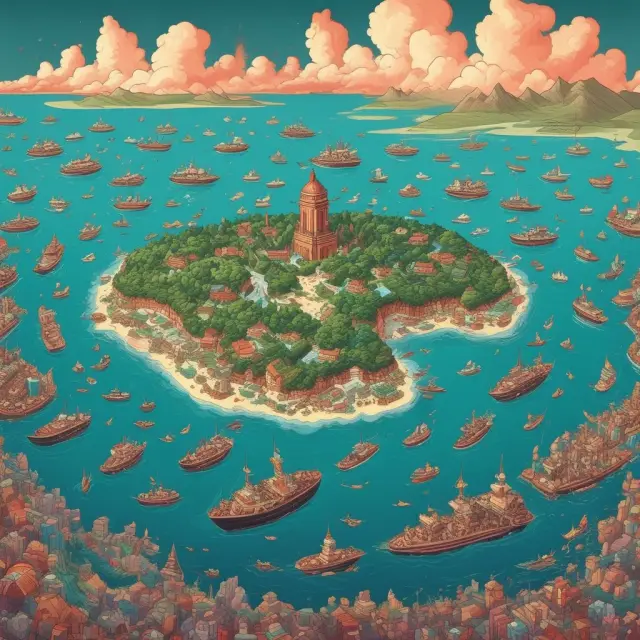
Why There Are No Real Closed Economies Today
A closed economy—one that does not trade with other countries or engage in international financial transactions—is a theoretical concept that has little relevance to modern economic realities. The trend toward globalization, whereby countries increasingly participate in cross-border trade and financial flows, makes it increasingly difficult for any economy to be completely self-sufficient. In fact, while some economies may seem more closed than others, there are no true examples of fully closed economies today.
The idea of a closed economy stands in contrast with the principles of modern economic theory, which emphasizes the benefits of international trade and the allocation of resources to their most productive uses. Opening domestic markets to international competition allows countries to capitalize on their comparative advantages, thereby increasing overall wealth and opportunities for citizens. In today’s interconnected world, many economies have embraced globalization by reducing barriers to imports and exports, promoting economic growth, and fostering greater stability and security for all.
However, self-sufficiency is not without its attractions. A closed economy may offer some advantages in terms of economic security and sovereignty, as well as the protection of domestic industries from international competition. In theory, a closed economy allows a country to control its own production and consumption patterns, insulate itself from external shocks, and maintain greater autonomy over its economic policies.
Despite these potential benefits, there are significant challenges to achieving self-sufficiency in the modern world. One of the most pressing issues is access to raw materials. Many countries rely heavily on imports to supply their industries with essential resources that they do not have in sufficient quantities domestically. This dependency can create a vulnerable position for countries in terms of economic security, as disruptions in international trade flows can significantly impact the availability and cost of these critical inputs.
Another challenge facing closed economies is the sheer complexity and interconnectedness of global supply chains. Today’s advanced technologies and production processes often require raw materials or components that may be sourced from multiple countries, making it difficult for a single country to produce all the goods and services its citizens need domestically. Moreover, many industries are global in nature and require collaboration between firms and workers in different countries to remain competitive.
Another factor that undermines the feasibility of closed economies is their potential impact on economic efficiency. Economists argue that comparative advantages enable countries to specialize in producing goods and services for which they have a relative advantage, resulting in increased productivity and lower costs. By trading with other countries, nations can expand their range of available resources, achieve greater economies of scale, and improve overall living standards for their citizens.
In conclusion, while the idea of a closed economy may have some appeal, it is increasingly difficult to implement in practice. Today’s globalized world presents significant challenges to self-sufficiency, including access to raw materials, complex supply chains, and the importance of international trade for promoting economic efficiency and growth. Despite these challenges, governments may still seek to protect domestic industries from foreign competition through protectionist measures like tariffs, quotas, and subsidies. Understanding the motivations behind these policies, as well as their potential implications for trade flows and economic welfare, is crucial for navigating the complexities of today’s global economy.

The Advantages of Closed Economies
A closed economy is an intriguing concept often associated with self-sufficiency and independence. Theoretically, it refers to a country that does not engage in trade or financial exchanges with other nations, producing all its goods and services internally. In a world characterized by globalization and interconnectedness, however, closed economies are more of a relic than a reality. While there may be some advantages to self-sufficiency, maintaining a truly closed economy is a significant challenge due to the necessity of essential raw materials and the benefits derived from international trade.
Economic Security: One potential advantage of a closed economy is increased economic security. By focusing on domestic industries and insulating them from foreign competition, governments can protect local employment opportunities and potentially shield their economies from external shocks, like fluctuating commodity prices or geopolitical instability. Moreover, having a diverse range of domestic industries can help mitigate the negative consequences of relying too heavily on any one sector, such as oil or agriculture.
Sovereignty: Another argument in favor of closed economies is sovereignty and self-reliance. By producing all necessary goods and services internally, a country retains greater control over its economic affairs and is less susceptible to external influences. This can be particularly appealing for countries with a strong national identity or those seeking to distance themselves from the international community for political reasons.
Domestic Industries: Closed economies also offer an opportunity to foster the growth of domestic industries and protect them from foreign competition. This approach can lead to increased innovation, as businesses are encouraged to develop new technologies and processes to remain competitive in a closed market. Additionally, protecting domestic industries may provide short-term economic benefits by creating jobs and stimulating demand.
Despite these potential advantages, the realities of a globalized economy make it nearly impossible for any country to maintain a truly closed economy. Raw materials play an essential role in everyday life and the production of finished goods. For instance, according to World’s Top Exports, the top five importers of crude oil in 2021 were China, the United States, India, South Korea, and Japan. Even countries with substantial reserves, such as the United States, import and export crude oil due to market fluctuations and to capitalize on comparative advantages.
Another example is lithium, a critical component in the batteries used for electric vehicles. According to McKinsey & Co., Australia, Latin America, and China collectively produced 98% of the world’s lithium in 2020, highlighting the limited availability of this essential resource within individual countries.
Protectionist Policies: While closed economies are a rarity in today’s interconnected world, governments may still choose to partially close off specific industries or sectors through protectionist policies like tariffs, quotas, and subsidies. These measures aim to shield domestic producers from international competition and prevent the negative consequences of overreliance on imports. For instance, the United States imposed a 25% tariff on steel imports and a 10% tariff on aluminum imports in 2018 to protect domestic producers from foreign competition, particularly from China.
In conclusion, while there may be potential advantages to self-sufficiency and closed economies, the realities of globalization and the necessity of essential raw materials make a genuinely closed economy an increasingly elusive concept. The benefits derived from international trade, including access to diverse resources and new markets, contribute significantly to economic growth and prosperity for countries around the world. Nevertheless, governments may still choose to employ protectionist policies to protect specific industries or sectors from foreign competition. Understanding this delicate balance between self-sufficiency and global integration is essential for navigating the complexities of today’s interconnected economy.

The Disadvantages of Closed Economies
While a closed economy is an intriguing notion, it poses significant challenges when put into practice. In this section, we discuss the drawbacks of a closed economy, including missed opportunities, higher costs, and dependency on external factors.
One major disadvantage of a closed economy lies in the missed opportunities for economic growth and prosperity through international trade. According to modern economic theory, countries should focus on capitalizing on their comparative advantages by producing goods and services that they can produce more efficiently than others and importing those that are less efficient to produce domestically (David Ricardo’s theory of comparative advantage). By engaging in trade, economies become interconnected and can benefit from each other’s strengths.
Another significant disadvantage is the increased cost of production due to a lack of access to essential raw materials found outside the country’s borders. For instance, despite being a global leader in technology and innovation, the United States is heavily reliant on foreign sources for vital raw materials such as lithium and crude oil. In 2020, Australia, Latin America, and China accounted for 98% of the world’s lithium production. This dependency can lead to a lack of domestic control over the supply chain and price volatility, posing potential risks to national security and economic stability.
Lastly, a closed economy is vulnerable to external shocks that can disrupt its production processes and impact its overall economic performance. For example, natural disasters or geopolitical events in other countries can lead to supply shortages of crucial imports, threatening the stability of the closed economy. The interconnectedness of global markets today means that even seemingly isolated economies can be affected by external factors beyond their control.
In conclusion, the advantages of a closed economy, such as economic security and sovereignty over domestic industries, must be weighed against its disadvantages, including missed opportunities for growth through international trade, increased production costs due to dependency on raw materials from abroad, and vulnerability to external shocks that can disrupt domestic supply chains. As the world becomes increasingly interconnected, the notion of a completely self-sufficient economy may become more of a relic in the annals of economic history rather than a viable contemporary economic model.

What Happens When Economies Are Partially Closed?
Theoretically, a closed economy is one in which a country does not engage in international trade; however, in today’s globalized world, this concept holds little relevance. Governments may opt for protectionist policies and partially close certain sectors of their economies to shield domestic industries from foreign competition. Protectionism includes the use of tariffs, quotas, subsidies, and other restrictions on imports and exports, which can significantly impact both domestic producers and consumers.
Protectionism can provide several advantages. By limiting imports, a country’s domestic industries may receive financial support through increased demand for their products, allowing them to maintain or even grow in the absence of foreign competition. Additionally, such measures can offer greater economic security by reducing dependency on foreign markets for critical resources. Protectionist policies may also be implemented in response to perceived unfair trade practices by foreign competitors.
However, the drawbacks of protectionism are substantial. By closing off an economy from international trade, a country may miss out on potential opportunities to access lower-priced goods and raw materials from other countries, leading to higher costs for domestic consumers. Furthermore, protectionist measures can create inefficiencies within industries by shielding them from the pressure of competition, which could hinder long-term growth and competitiveness.
The extent to which an economy is open or closed can be measured through its balance of trade. A country with a trade surplus exports more goods and services than it imports, while one with a trade deficit imports more than it exports. The difference between the value of imports and exports represents the balance of trade. A negative balance of trade indicates that a country is importing more than it is exporting, potentially leading to economic instability if not addressed over an extended period.
Governments can employ various tools to control their balance of trade. Tariffs, which are taxes imposed on imports, serve as a barrier against foreign competition and often result in higher prices for consumers. Quotas, another form of protectionist policy, limit the quantity of specific goods that can be imported into a country during a given period. Subsidies provide financial support to domestic industries, enabling them to remain competitive with foreign producers.
A historical example of a partially closed economy is Japan’s “MITI Miracle” from 1945 to 1973. During this period, the Japanese government employed protectionist measures such as import tariffs and export subsidies to promote rapid industrialization and economic growth. These policies significantly reduced imports in certain sectors while increasing exports in others, effectively creating a partially closed economy. As a result, Japan was able to transition from a war-torn nation into an industrial powerhouse, becoming a significant player on the global stage.
In conclusion, economies are increasingly interconnected through international trade, but governments may opt for protectionist policies to shield domestic industries from foreign competition. While such measures can offer short-term benefits, they can also lead to inefficiencies and missed opportunities for economic growth. By understanding the implications of partially closed economies and the various tools governments use to manage their trade balance, we can better appreciate the complexities of modern economic systems.
KEY TAKEAWAYS
- Protectionist policies involve the use of tariffs, quotas, and subsidies to shield domestic industries from foreign competition.
- Partial closures can result in missed opportunities for growth and increased costs for consumers.
- A country’s balance of trade is a crucial indicator of its level of openness or closure.
- Japan’s MITI Miracle is an example of a successful partially closed economy, but such practices often come with drawbacks.
Measuring the Degree of Openness in an Economy
A country’s level of economic openness can be assessed by examining its trade statistics, specifically imports and exports as a percentage of Gross Domestic Product (GDP). The extent to which a nation trades internationally indicates how integrated it is into the global economy. In the case of completely closed economies, neither imports nor exports contribute significantly to the country’s economic activity.
However, modern economies have shifted away from self-sufficiency towards interconnectedness and international trade. One way to measure this shift is by evaluating a country’s balance of trade, which compares its imports to its exports. A country with a trade deficit imports more than it exports, while one with a trade surplus exports more. The difference between these values can provide insights into the degree of openness in an economy.
Trade statistics alone, however, do not reveal the entire picture. Tariffs, quotas, and subsidies are instruments used by governments to control international trade flows, sometimes leading to a deceptive appearance of closed economies. A country might appear closed based on its trade statistics due to protectionist policies, while in reality, it remains connected to the global economy through other channels.
A tariff is an imposed tax on imported goods that aims to shield domestic industries from foreign competition. Tariffs can be used to protect local producers or to raise revenue for a government. Quotas, on the other hand, limit the quantity of imports or exports entering or leaving a country. By limiting the flow of goods, quotas can effectively create a partially closed economy within specific sectors.
Lastly, trade subsidies are financial incentives provided by governments to support domestic industries. Subsidies can take various forms, including direct payments, tax breaks, and low-interest loans. Their goal is to make domestic products more competitive in the global market while shielding them from foreign competition.
To better understand a country’s true level of openness, it is essential to consider all these factors when analyzing its trade statistics and balance of trade. A seemingly closed economy may still be significantly connected to the global market through other channels like foreign investment or labor migration.
Essential Raw Materials: No Country Is Truly Self-Sufficient
Raw materials play a crucial role in today’s modern society as they serve as the foundation of various industries and goods. The availability and accessibility of raw materials have significant implications for economies, particularly when considering self-sufficiency. While a closed economy is theoretically self-contained, producing all its own goods and services without any involvement in international trade, none truly exist in today’s interconnected global market.
A notable example of this reality lies within the essential raw materials sector. Many countries that are renowned for their manufacturing prowess lack the necessary raw materials locally to meet their domestic consumption requirements or for producing finished goods. Consequently, they must rely on international trade to acquire these vital resources. In fact, several prominent economies heavily depend on imports for key raw materials, such as crude oil and lithium, which are integral to energy production and electric vehicle manufacturing, respectively.
The importation of essential raw materials is further highlighted in the cases of the United States and Australia. The U.S., despite being a significant exporter and importer, still imports approximately 6.11 million barrels of crude oil daily from other countries while exporting around 2.90 million barrels daily to meet domestic demands. Meanwhile, Australia is one of the world’s leading lithium producers, but its production only accounts for 1% of global consumption. As a result, the remaining 99% must be sourced through international trade.
The dependence on foreign sources for raw materials can create potential risks and challenges for economies that rely heavily on imports. For example, fluctuations in global prices or supply disruptions could negatively impact these economies’ overall stability and growth. Therefore, maintaining a balance between self-sufficiency and international trade is crucial to ensure a stable and sustainable economic environment.
In an attempt to protect domestic industries and shield their economies from the potential pitfalls of overreliance on imports, governments may adopt protectionist measures such as tariffs, quotas, or subsidies. These policies aim to encourage local production, limit external competition, and maintain a certain level of economic self-sufficiency. While these measures can be effective in preserving domestic industries, they might also hinder overall economic growth and efficiency by limiting access to lower-priced imports and restricting market competition.
In conclusion, no country is truly self-sufficient when it comes to essential raw materials. The global economy is intricately interconnected, with various countries relying on each other for the exchange of goods, services, and raw materials. Understanding these dependencies is vital in navigating today’s complex economic landscape and making informed decisions about trade policies and strategies.
Examples of Closed Economies Past and Present
The concept of a closed economy – a country that produces all goods and services within its borders without engaging in international trade – may sound intriguing theoretically, but it is virtually nonexistent in today’s globalized world. While some economies may be more or less open than others, the idea of true self-sufficiency is increasingly a relic of economic history.
Let us examine a few historical and contemporary examples of countries attempting to maintain closed economies and consider the implications of their experiences.
Historically, one prominent example is the Soviet Union during the Cold War era. The command economy was centrally planned, with the government controlling all industries and setting production targets. In theory, this self-sufficient economic model would prevent external influence or dependency on foreign markets. However, it ultimately proved inefficient and unsustainable, leading to economic stagnation and a lack of innovation.
In more recent times, North Korea is often cited as an example of a closed economy. The country heavily relies on its domestic production to meet the needs of its population, with minimal engagement in international trade. Despite this self-sufficiency focus, the country’s economy remains one of the poorest and most isolated in the world.
Another illustration is the small Caribbean island nation of Cuba. Following the Cuban Revolution in 1959, Fidel Castro’s government implemented a socialist economic model that focused on domestic production to reduce dependency on foreign countries. Decades later, despite some improvements, the economy remains heavily reliant on tourism and agricultural exports, with limited domestic industries and significant challenges meeting the needs of its population.
These examples showcase the difficulties in maintaining a truly closed economy. The globalized world demands specialization and trade to efficiently allocate resources and capitalize on comparative advantages. Moreover, no country possesses all essential raw materials, making self-sufficiency an unrealistic goal for most economies.
In conclusion, understanding the theoretical concept of closed economies is important in today’s interconnected world, but their existence is largely a thing of the past. While some countries may close off specific industries or sectors to international competition through protectionist policies like quotas, tariffs, and subsidies, these measures are counterintuitive to modern economic theory that emphasizes open markets and mutual benefits for all participants in global trade.
The Role of Governments in Maintaining Closed Economies
While the concept of a closed economy—a country producing all its goods and services domestically without engaging in international trade—is theoretically interesting, it is an elusive reality in today’s global market. However, governments can still exert control over certain sectors or industries to protect them from foreign competition through protectionist policies such as tariffs, quotas, and subsidies. Let us dive deeper into these measures and their implications.
Tariffs: An Import Tax
Tariffs are a common protective measure used by governments to shield domestic producers from foreign competition. By imposing a tax on imported goods, they make them more expensive for consumers and less attractive compared to domestically produced alternatives. The ultimate goal is to boost local industries’ competitiveness and minimize their dependency on foreign imports.
Quotas: Limiting Quantity and Competition
Another tool in the protectionist arsenal is a quota, which restricts the amount of a particular product that can be imported from other countries. By limiting the quantity of competing imports, domestic industries gain a more significant market share, shielded from foreign competition and potentially securing higher prices for their goods or services.
Subsidies: Financial Support to Domestic Producers
Lastly, subsidies are another form of government intervention aimed at keeping domestic industries competitive. Governments provide financial assistance—often in the form of grants, loans, or tax breaks—to help producers reduce costs and increase their competitiveness against foreign alternatives. This can be crucial for industries that rely on significant resources or face high production costs, as they may struggle to remain viable without government support.
Protectionism: A Double-Edged Sword
While these protectionist measures seem to provide advantages in terms of economic security, sovereignty, and domestic industries, they can also lead to missed opportunities for innovation and growth. Higher costs due to tariffs, quotas, or subsidies may hinder consumer access to lower-priced goods from abroad and reduce overall competitiveness in the global market. Additionally, dependency on protectionist policies can result in inefficiencies within industries, as they become insulated from competitive pressures that could drive innovation and improvements in productivity.
In conclusion, while closed economies are a theoretical concept, governments do possess the power to influence trade through protective measures like tariffs, quotas, and subsidies. Understanding these policies’ implications is crucial for individuals seeking to navigate the complex world of finance and international trade. As global economic conditions continue to evolve, staying informed about protectionist policies can help investors make more knowledgeable decisions in the ever-changing landscape of international business and markets.
FAQ: Frequently Asked Questions About Closed Economies
What is a closed economy?
A closed economy is a theoretical concept of a country that produces all goods and services internally without any trade or financial exchanges with other countries. In reality, however, closed economies do not exist today as most nations rely on international trade to access vital resources and capital.
Why are there no real-life examples of closed economies?
The trend towards globalization has significantly diminished the likelihood of a country maintaining a genuinely closed economy. The benefits of opening up domestic markets to international trade, such as capitalizing on comparative advantages and fostering economic growth, outweigh the potential drawbacks. Additionally, many countries lack self-sufficiency in essential resources like raw materials, making it impossible for them to maintain a completely closed economy.
What are some advantages of having a closed economy?
While closed economies are uncommon today, they may provide certain benefits such as greater economic security and sovereignty, protection for domestic industries, and reduced dependency on external factors. However, these potential advantages often come at the cost of missed opportunities for growth and increased production costs due to the lack of access to foreign markets and resources.
What are some disadvantages of having a closed economy?
Disadvantages of a closed economy include limiting opportunities for economic growth by excluding foreign competition, higher production costs due to the lack of access to cheaper resources from other countries, and potential inefficiencies within domestic industries. These drawbacks often outweigh the benefits, which is why closed economies are not a viable option in today’s interconnected world.
What happens when economies are partially closed?
Partially closed economies employ protectionist measures like tariffs, quotas, and subsidies to protect domestic industries from foreign competition. While this strategy may provide temporary benefits to domestic producers, it can also result in increased costs for consumers, trade disputes with other countries, and potential retaliation through countermeasures from trading partners.
How do you measure the degree of openness in an economy?
Economic openness is typically measured using international trade statistics such as imports and exports as a percentage of a country’s Gross Domestic Product (GDP). The higher the ratio, the more open the economy is, while a lower ratio indicates greater self-sufficiency and closure.
What are some examples of essential raw materials that no country is truly self-sufficient in?
Essential raw materials like crude oil, lithium, and natural gas are not evenly distributed across countries. As such, most nations rely on imports to secure their access to these resources. For instance, the United States imports a significant amount of crude oil despite being a leading producer and exporter of this commodity. Similarly, China, Australia, and other countries dominate lithium production, making it almost impossible for self-sufficient economies to exist when it comes to essential raw materials.
In conclusion, the illusion of closed economies stems from the increasing global interconnectedness and the impracticability of complete self-sufficiency in today’s world economy. Understanding this concept is crucial to grasping the intricacies of international trade and economics.
 Next entry · No. 687Understanding Closed-End Funds: Differences, Advantages, Disadvantages, and Examples
See also
-
 No. 3,413
26 Mar 2025
18 min
Understanding Net Foreign Factor Income (NFFI) in Finance and Investment
Economics
No. 3,413
26 Mar 2025
18 min
Understanding Net Foreign Factor Income (NFFI) in Finance and Investment
Economics -
 No. 274
07 Apr 2024
20 min
Autarky: Understanding the Concept and Implications of Self-Sufficient Economies
Economics
No. 274
07 Apr 2024
20 min
Autarky: Understanding the Concept and Implications of Self-Sufficient Economies
Economics -
 No. 5,030
06 Aug 2025
22 min
Understanding the Role of Trading Houses: Intermediaries Facilitating International Trade
International Trade
No. 5,030
06 Aug 2025
22 min
Understanding the Role of Trading Houses: Intermediaries Facilitating International Trade
International Trade -
 No. 5,024
05 Aug 2025
21 min
Understanding the Power of Comparative Advantage in International Trade
International Trade
No. 5,024
05 Aug 2025
21 min
Understanding the Power of Comparative Advantage in International Trade
International Trade -
 No. 4,715
11 Jul 2025
19 min
Understanding the Spillover Effect: How Global Events Impact Investment Opportunities
Global Finance
No. 4,715
11 Jul 2025
19 min
Understanding the Spillover Effect: How Global Events Impact Investment Opportunities
Global Finance -
 No. 3,650
15 Apr 2025
19 min
A Comprehensive Guide to Understanding Offshoring: Tax Havens, Investments, and Banking
Business Finance
No. 3,650
15 Apr 2025
19 min
A Comprehensive Guide to Understanding Offshoring: Tax Havens, Investments, and Banking
Business Finance