Autarky: Understanding the Concept and Implications of Self-Sufficient Economies

Explore the concept of Autarky – self-sufficient economies – and learn from historical examples like Nazi Germany and modern cases such as North Korea's…
What is Autarky?
Autarky is a term that describes the state of self-sufficiency in a nation or economy. This concept refers to nations that aim for reducing their reliance on international trade and external support, striving instead for self-reliance. The word ‘autarky’ originates from ancient Greek – autos meaning ‘self,’ and arkein meaning ‘to be strong enough, to suffice.’ In modern times, no nation practices complete autarky; however, the degree of self-sufficiency varies significantly. Autarky can be viewed as a form of extreme economic nationalism and protectionism, with its primary motivation rooted in securing the supply of essential goods and minimizing reliance on other nations.
Autarkic policies have surfaced throughout history, capturing the attention of economists, politicians, and scholars alike. From mercantilist Europe to Nazi Germany and modern-day North Korea, this economic strategy has been employed by various political structures with differing intentions. While autarky’s appeal might seem enticing due to populist arguments like keeping money at home and reducing foreign influence, its implications can be economically detrimental in the long run.
Autarky: A Historical Overview
The term ‘autarky’ was first introduced into the economic discourse during the 19th century, but its roots stretch back to earlier periods. Adam Smith questioned autarkic policies in The Wealth of Nations (1776) and advocated for free trade based on comparative advantages. David Ricardo built upon Smith’s ideas by proposing that nations should specialize in producing goods where they have a comparative advantage. By engaging in trade, countries could create more wealth together than if each isolated itself.
This is not to say that autarky has never held sway over the economies of powerful nations. In Europe during the 16th through the 18th centuries, mercantilist policies drove many European powers to adopt autarkic practices. This period saw a strong emphasis on self-sufficiency and restrictions on international trade to protect domestic industries, as well as the hoarding of gold and silver.
During the first half of the 20th century, Nazi Germany attempted an ambitious autarkic project aimed at making the nation economically independent from other nations. By controlling all aspects of the economy, they sought to ensure the availability of essential goods for their war efforts.
Autarky: Contemporary Examples and Modern Debates
One contemporary example of autarkic policies is North Korea’s Juche philosophy, which emphasizes self-reliance as a means to minimize international influence. Despite its isolation from the global economy due to sanctions, North Korea maintains an autarkic economic system that is focused on military and strategic interests rather than market forces.
As the world becomes increasingly interconnected through global trade and technological advancements, debates about the benefits and drawbacks of self-sufficiency continue. Some argue that autarky can help countries reduce their dependence on potentially unstable global markets and geopolitical rivals. However, critics contend that such policies inevitably lead to economic inefficiencies, a loss of potential income through missed trade opportunities, and the suppression of innovation.
Understanding Autarky: Key Takeaways
Autarky refers to the state of self-sufficiency in nations or economies that seek to reduce their dependence on international trade and external support. The concept has a long historical background, with its most notable examples including mercantilist Europe and Nazi Germany. While there are arguments for autarky based on populist themes such as keeping money at home and reducing foreign influence, economic studies show that such policies carry significant downsides in terms of missed opportunities and inefficiencies. In the context of a global economy, true self-sufficiency is an elusive goal due to the interconnectedness of economies and their reliance on international trade.
The Origins and History of Autarkic Policies
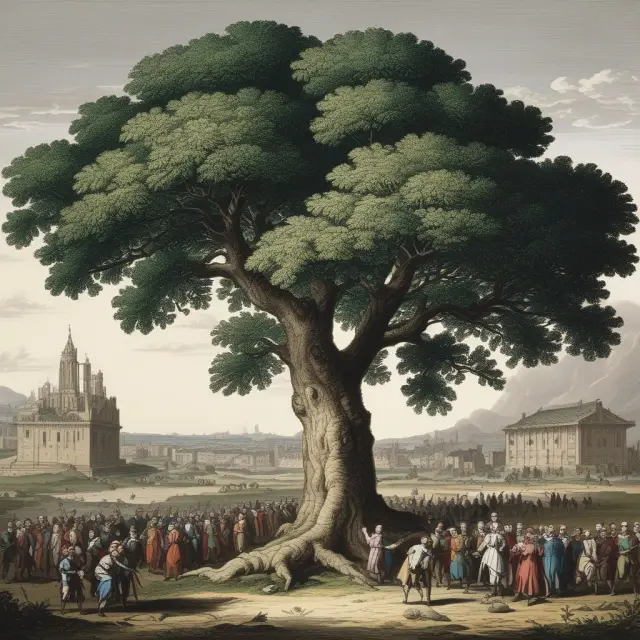
The term “autarky,” which translates to “self-reliance” in Greek, is used to describe the concept of a nation that aims for self-sufficiency and limited trade with external partners. The historical use of autarkic policies can be traced back to Europe during the mercantilist period (16th to 18th centuries), when nations focused on securing resources, maintaining a favorable balance of trade, and building economic power.
During this time, European states implemented various protectionist measures to limit imports in favor of domestic production. This created a closed economy environment, leading to autarkic policies that were the precursors to today’s concept. Adam Smith, the influential Scottish economist, was among the first to criticize these mercantilist practices.
In his seminal work “The Wealth of Nations,” published in 1776, Smith advocated for free trade and emphasized the importance of nations specializing in producing goods they have an absolute advantage in. By focusing on their comparative advantages, nations can create more wealth through international cooperation, rather than relying solely on their own resources and production capabilities.
David Ricardo, another renowned economist, expanded upon Smith’s ideas by introducing the concept of comparative advantages in his 1817 work “On the Principles of Political Economy and Taxation.” This theory further emphasized that nations should focus on producing goods they can produce more efficiently and trading with other nations for goods that are less efficient to produce domestically.
Frederic Bastiat, a French economist, also weighed in on autarky through his influential essay “What is Seen and What is Not Seen.” Bastiat argued that the costs of self-sufficiency were often overlooked, highlighting the importance of considering both seen and unseen consequences before implementing economic policies.
Despite these criticisms, autarkic policies persisted throughout history, with notable examples including Nazi Germany’s “autarky program” during World War II, aimed at reducing reliance on imports and increasing self-sufficiency for military purposes. Today, North Korea serves as a contemporary example of autarkic policies through its Juche ideology, which emphasizes self-reliance in all aspects of economic and social life.
In conclusion, understanding the historical context of autarky provides insight into its motivations and implications. The origins and history of autarkic policies demonstrate that it has been a contested concept among economists for centuries. However, by focusing on comparative advantages and international cooperation, free trade has proven to be more advantageous for nations in terms of creating wealth and fostering economic development.

Autarky in Practice: Nazi Germany
Autarky was most famously implemented on an unprecedented scale during World War II by Nazi Germany under Adolf Hitler’s regime. In a bid to ensure the Reich’s self-sufficiency, the government pursued autarkic policies with great determination and ruthlessness. By controlling domestic resources and reducing imports, they aimed to strengthen their war efforts while minimizing reliance on foreign powers.
The Four-Year Plan, introduced in 1936 by Hermann Göring, laid the groundwork for this ambitious endeavor. Its ultimate goal was to make Germany independent of all raw materials and foodstuffs that could be imported from abroad. The plan was structured into three main stages: the first focused on increasing agricultural production and stockpiling essential commodities, while the second emphasized securing domestic sources of minerals, oil, and synthetic rubber. The third stage involved manufacturing and rearmament, ensuring the country’s industries could produce weapons and military equipment in sufficient quantities for warfare.
In practice, autarkic policies under Nazi Germany led to several unintended consequences. Although initially successful in reducing imports, they ultimately resulted in a massive drain on resources and a severe shortage of critical raw materials. The diversion of labor and resources towards military production further exacerbated the problem, leading to significant reductions in consumer goods. Additionally, the policy created inefficiencies by driving up prices for domestically produced goods.
The pursuit of autarky also led to the exploitation of occupied territories, such as those in Eastern Europe and the Soviet Union. Nazi Germany’s expansionist policies and territorial conquests were fueled, in part, by a desire to obtain essential resources, including oil, coal, and grain from these areas.
Despite its ambitious goals, Nazi Germany’s autarkic policies ultimately failed to achieve true self-sufficiency. By the end of the war, the Reich was heavily dependent on imports for food, fuel, and raw materials – ironically sourced from the very countries it had sought to isolate. The devastating consequences of this reliance became apparent during the final months of the war when the Allied forces launched a blockade that severely hampered German logistical capabilities and contributed to their eventual surrender.

Modern Autarky: North Korea’s Juche Policy
The contemporary example of autarkic policies is evident in the isolated nation of North Korea. North Korea’s self-reliance strategy, popularly known as Juche, emphasizes national self-sufficiency and independence from foreign influence. The primary goal of Juche is to ensure food security, energy security, and military security. It was officially adopted as the country’s state policy in 1955, following a period of economic instability and international isolation.
North Korea’s self-reliance strategy has its roots in the historical context of the Korean War (1950–1953), which left the country devastated and largely destroyed its infrastructure. The war also led to a significant reduction in foreign trade, forcing North Korea to focus on domestic production.
To achieve this, Pyongyang implemented strict control over all economic activities, including agriculture, industry, and trade. The government took complete ownership of most industries and centralized the distribution system. Farmers were forced to work on state-owned farms, collectively managing their produce, while private markets and foreign investment were heavily restricted.
Juche has its political dimensions as well, which are deeply intertwined with nationalism and the ideology of self-reliance. It aims to reduce external reliance and promote a sense of pride in North Korean culture and identity. This is exemplified by the establishment of the Juche Idea, an official state philosophy that emphasizes the importance of relying on one’s own resources and abilities.
North Korea’s autarkic approach has significant implications for its economy. One of the most notable consequences is the high opportunity cost associated with self-reliance. By focusing solely on domestic production, the North Korean economy misses out on potential gains from trade and foreign investment. In other words, it limits its access to the global division of labor, which can lead to inefficiencies and a lower overall standard of living.
Moreover, autarkic policies can also result in economic distortions. For instance, North Korea’s government controls the price of essential commodities like rice, keeping prices artificially low. This results in underproduction and a shortage of food in some years, leading to famines.
Another challenge that arises from autarkic policies is the difficulty of maintaining an adequate standard of living, especially during times of economic hardship. North Korea’s economy has faced numerous challenges since the dissolution of the Soviet Union in 1991, including natural disasters and international sanctions. These difficulties have led to widespread poverty, malnutrition, and a massive brain drain as people seek better opportunities abroad.
Despite its economic drawbacks, Juche remains a powerful symbol of national pride and resilience for many North Koreans. The regime has used it to justify its tight control over the economy and to present itself as an independent and self-sufficient nation. However, the true costs of autarky are not immediately apparent in this narrative.
As North Korea continues to pursue a policy of autarky, it remains an intriguing case study for understanding the implications of economic isolation and the limits of self-reliance. It also serves as a reminder that while autarkic policies may offer short-term benefits, they ultimately come at a high opportunity cost in terms of long-term economic growth and prosperity.

Comparative Advantages and Free Trade vs. Autarky
The arguments in favor of free trade over autarkic policies have roots dating back to the 18th century with Adam Smith’s seminal work, The Wealth of Nations. Smith emphasized that nations should engage in free trade and specialize in goods they possess an absolute advantage in producing – a country can produce a good more efficiently than any other nation. This notion was further developed by David Ricardo in the concept of comparative advantages. In essence, countries should focus on creating products where their productivity is relatively higher, regardless of whether there’s an absolute advantage.
Comparative advantages encourage international cooperation and allow economies to engage in mutually beneficial trade exchanges. Conversely, autarkic policies limit a country’s access to cheaper foreign alternatives, potentially resulting in suboptimal outcomes. When nations adhere to autarkic policies, they forgo the economic benefits of engaging with other countries and producing goods in which they have a comparative advantage.
Consider an example where Country A can produce 120 apples per hour with 1 laborer while Country B can only produce 80 apples per hour. If each country focuses on its comparative advantage, Country A would specialize in apple production and sell the surplus to Country B. In return, Country B could focus on producing a product where it has an absolute or comparative advantage – say cotton textiles. Both countries can then enjoy more wealth from trade as they capitalize on their respective strengths.
In contrast, an autarkic approach would require each country to produce everything for themselves, resulting in both having less overall output compared to the situation of specialization and trade. This scenario highlights the economic opportunity cost that comes with pursuing autarky – an economy may sacrifice potential gains from foreign trade when it chooses to rely on domestic production only.
By engaging in free trade and utilizing comparative advantages, countries can create a more diverse range of goods and services, enhance efficiency, and enjoy the benefits of international cooperation. This approach fosters economic growth and leads to more prosperous societies. In summary, the arguments for autarkic policies have been refuted by classical economists like Smith and Ricardo through their emphasis on free trade and comparative advantages. By specializing in producing goods where they have a comparative advantage, countries can create more wealth within the global economic system rather than trying to be self-sufficient in every aspect.
Autarky Price: The Cost of Goods in an Autarkic State
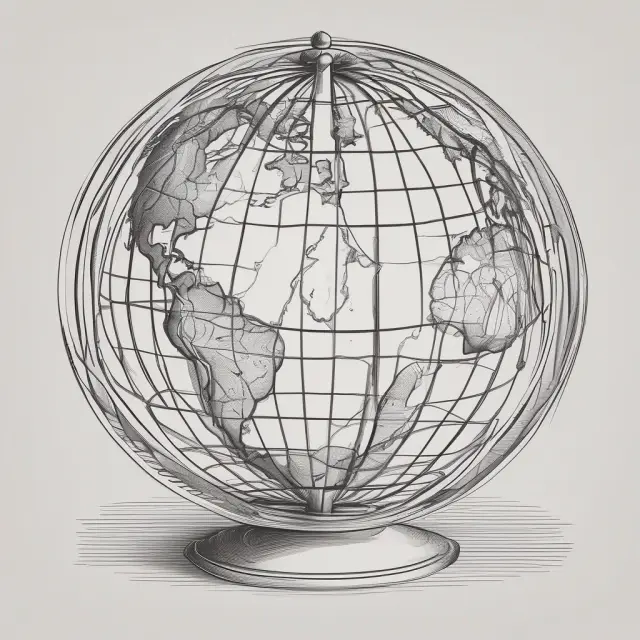
The concept of autarky price is an important consideration for nations aiming to achieve self-sufficiency. It refers to the cost of producing goods within a closed economy, where trade with other nations is limited or non-existent. Understanding autarky price can help a nation determine if they should focus their resources on domestic production or import from foreign countries.
The calculation of autarky price involves finding the total cost of producing goods in an isolated economy. This includes the costs associated with labor, raw materials, energy, and infrastructure. In other words, every resource and input used in the production process must be accounted for when determining the autarky price.
Comparing this cost to the market prices of goods imported from other nations can provide valuable insight into a nation’s comparative advantages. If the autarkic price is significantly higher than that of importing the same good, it may make more economic sense to focus on imports rather than domestic production.
For example, if a nation has an abundance of labor but limited natural resources for manufacturing steel, it may be more cost-effective to import steel from countries with ample supplies and lower production costs. Conversely, if the nation is rich in natural resources like oil or iron ore and has access to cheap labor, domestic production could lead to a competitive advantage in the global marketplace.
It’s important to note that autarkic prices do not account for indirect economic benefits like increased employment or political influence gained from self-reliance. These factors may be influential in a nation’s decision to pursue autarky, even if it results in higher costs for individual goods.
Economists have long debated the merits and disadvantages of autarkic policies. Adam Smith argued for free trade and specialization based on comparative advantages in his seminal work “The Wealth of Nations.” However, nations throughout history have occasionally embraced autarky as a means to secure their strategic resources or insulate themselves from global economic influences.
In summary, the concept of autarky price is an essential component when evaluating the potential benefits and costs of pursuing self-sufficiency in a nation’s economy. By examining this cost in relation to market prices, policymakers can make informed decisions about resource allocation, domestic production, and international trade.

The Downsides of Autarky for Nations
Autarky can be alluring to some politicians and voters, as it appears to keep money at home and reduce the influence of foreign nations on domestic affairs. However, a closer look at the economic implications shows that autarky has several downsides for nations. By examining historical examples and economic theory, we can understand why self-reliance does not always lead to prosperity.
First and foremost, autarkic policies can result in significant economic inefficiencies. When a nation decides to produce goods domestically instead of importing them, it may be allocating resources inefficiently. This is because other nations may have a comparative advantage in the production of these goods. Comparative advantage occurs when one country produces a good more efficiently than another, meaning that both countries can benefit from trade by exchanging goods at mutually beneficial prices. If a nation chooses to be autarkic and produce all its goods domestically, it may not be using its resources as effectively as possible. Instead, it could be trading with other nations to specialize in the production of goods where it has an absolute or comparative advantage, resulting in greater overall prosperity for everyone involved.
For instance, imagine a country with vast forests but little arable land. If this nation decides to focus on agriculture instead of logging, it would not be making the most of its resources. By producing lumber domestically instead of importing it and focusing on agriculture where it has an advantage, the country could end up losing out on potential economic gains. This is a simplified example, but it illustrates how autarky can lead to missed opportunities for improving overall efficiency and prosperity within a national economy.
Another disadvantage of autarky is the loss of economies of scale and division of labor. When nations trade with each other, they can benefit from economies of scale as factories produce goods on a large scale, and laborers specialize in their crafts due to the division of labor. However, when a nation decides to go it alone and become autarkic, it loses out on these advantages. Economies of scale and division of labor lead to lower costs for producers and higher quality products for consumers. By reducing trade and relying solely on domestic production, a country limits its access to these benefits.
Historically, the European mercantilist states attempted to employ autarkic policies, but economists like Adam Smith, David Ricardo, and Frederic Bastiat challenged their reasoning in favor of free trade and comparative advantages. Today’s most notable example of autarky is North Korea, which has adopted the concept of juche or self-reliance as a means to reduce international influence. However, North Korea’s isolation has resulted in significant economic hardships for its people. The downsides of autarky are evident in these historical and contemporary examples, making it clear that a nation’s pursuit of self-sufficiency is not always the best path to prosperity.

Populist Arguments for Autarky
The allure of autarky is often tied to populist sentiments that focus on self-sufficiency and protecting the nation’s resources and wealth from external influences. Proponents argue that by retaining control over their domestic production, countries can avoid the risk of dependency on foreign nations whose economic and political interests may not align with their own. Furthermore, they claim that such a policy will result in increased national income and employment opportunities for its citizens.
The rhetoric of autarky has been embraced by various groups across the political spectrum, with some appealing to nationalistic or protectionist ideologies. It is essential to critically evaluate these arguments to understand their implications fully.
One common argument for autarky is income retention. The idea is that a country can produce and keep all the revenue generated from its domestic production instead of having to share it with foreign partners as export payments or transfer payments in the form of aid. This argument may seem attractive at first glance, but the economic cost-benefit analysis reveals a more nuanced picture.
The loss from trade occurs when a country specializes in producing goods where it has a comparative disadvantage and imports those for which it has a comparative advantage. However, focusing on self-reliance implies that a country will produce all the goods domestically instead of trading with other countries. This results in an inefficient allocation of resources since domestic industries may not be able to produce certain goods as efficiently as foreign producers.
Another issue is the political influence factor. Some argue that by reducing reliance on external nations, a country can insulate itself from their perceived negative influences. However, this line of thought overlooks the potential benefits derived from engaging in international cooperation and dialogue.
In summary, while there may be some appeal to populist arguments for autarky due to income retention or political influence considerations, a thorough analysis shows that these arguments have significant economic costs. A country’s comparative advantages are essential for maximizing overall wealth within the global economy, making self-reliance an economically inefficient policy.
Therefore, it is crucial to understand that autarky, while appealing in some aspects due to populist sentiments, ultimately carries significant economic costs and reduces a nation’s ability to participate fully in the global economy. Instead of relying on extreme measures like autarky, nations should focus on specializing in their comparative advantages and engaging in fair and mutually beneficial trade partnerships. This approach not only leads to increased national wealth but also fosters peace and cooperation among nations.

The Effects on Global Economy and Trade
Autarkic policies have far-reaching implications beyond the borders of a single country. The global economy is shaped by intricate networks of trade that connect nations, fostering interdependence and shared prosperity. Autarkic policies disrupt this delicate balance, creating ripples in international markets that can negatively impact countries both within and outside their scope.
Historically, autarky was first challenged by the economic theories put forth by Adam Smith in “The Wealth of Nations” and David Ricardo’s “On the Principles of Political Economy and Taxation.” These influential thinkers argued that nations should engage in free trade and specialize in goods where they held a comparative advantage, resulting in increased productivity and prosperity for all participating countries.
A nation adopting autarkic policies limits its access to global markets, denying itself the benefits of engaging in international trade and cooperation. The opportunity cost of self-sufficiency is high: foregone opportunities to engage with other nations, expand trade relationships and diversify economies.
The effects on neighboring countries can be particularly detrimental when a large economy chooses an autarkic path. As the demand for certain goods or services decreases within its borders due to self-reliance, the suppliers in neighboring countries experience reduced exports and lower overall economic growth. Conversely, the country practicing autarky may face increased prices for certain goods as they become less readily available in global markets.
An extreme example of the repercussions of autarkic policies on the global economy is the case of Nazi Germany during World War II. In an effort to reduce dependency on foreign resources and ensure war efforts, Germany implemented a series of measures aimed at achieving self-sufficiency. The result was a significant shift away from international trade, with devastating consequences for both Germany and Europe as a whole.
The disruption of global supply chains led to shortages in various industries, forcing prices higher and causing inflation. Moreover, the diversion of resources towards military production further exacerbated this trend. As other European countries struggled to maintain their economies, trade volumes plummeted, and the foundations for post-war economic recovery were weakened.
In contemporary times, North Korea’s self-reliance strategy (juche) has isolated it from global markets, leading to a stagnant economy with limited growth opportunities. Sanctions imposed by other nations have only reinforced this trend, creating a vicious cycle of autarky that has hindered the nation’s economic development and further increased its reliance on international aid.
The autarkic price is another aspect where global interdependence becomes evident when considering autarkic policies. The cost of producing in an autarkic economy must be covered by the price charged for a good, making it more expensive than the same item produced through international trade and cooperation. This increase in cost results in a dead loss for the national economy, as resources are diverted away from industries with comparative advantages to cover these increased costs.
In conclusion, autarkic policies carry significant consequences for both the domestic economy and the global economy at large. By reducing interdependence and limiting access to global markets, nations risk stifling their economic growth potential and weakening the foundation for long-term prosperity. The historical examples of Nazi Germany and contemporary North Korea serve as reminders of the pitfalls that come with autarkic policies. Ultimately, the benefits of cooperation through international trade far outweigh the costs, making it essential for countries to embrace an open economic system if they are to thrive in today’s globalized world.

FAQ: Common Questions About Autarky
Autarky has been a topic of interest and debate for economists and policymakers throughout history. In this FAQ section, we aim to provide answers to common questions surrounding autarky, its goals, real-world applications, and criticisms.
What is the definition of Autarky?
Autarky refers to a state where a country or economy produces all goods and services domestically while minimizing dependence on international trade. The term comes from the Greek words “autos” (self) and “arkein” (to govern). In essence, autarky signifies being self-sufficient and not relying on external sources for essential resources or markets.
Can any modern country be considered fully autarkic?
No modern nation has achieved complete autarky in practice, as some degree of international trade is necessary to maintain a functioning economy and access essential goods or raw materials that may not be available domestically. However, various degrees of self-reliance can be pursued, depending on the political climate and economic priorities of a country.
What motivates nations to adopt autarkic policies?
Autarkic policies are driven by several factors, including a desire for greater control over economic resources, national security concerns, or a protectionist approach to shield domestic industries from foreign competition. Populist arguments for autarky can also tap into sentiments of reducing dependence on other nations and keeping wealth within the country’s borders.
What are some historical examples of autarkic policies?
Historically, mercantilist European countries practiced a degree of self-reliance from the 16th to the 18th centuries. More extreme examples include Nazi Germany during World War II and contemporary North Korea, which has pursued its juche policy as a form of economic isolation.
What are the arguments against autarky?
Critics of autarky argue that it imposes high opportunity costs on nations due to foregone benefits from international trade, leads to inefficient allocation of resources, and restricts access to cheaper goods and services from global markets. Adam Smith’s concept of comparative advantages is a compelling argument against autarky, as nations can generate more wealth by specializing in products they produce most efficiently and trading with others.
What happens when a country adopts an autarkic price?
Autarky price refers to the cost of producing goods or services in an entirely self-sufficient economy. When a country sets its prices based on this cost, it may result in higher prices for consumers if domestic production costs are higher than those in foreign markets. This can lead to reduced consumption and lower economic output.
How does autarky impact the global economy?
Autarkic policies can negatively affect the global economy by disrupting international trade, limiting access to diverse resources and markets, and creating potential political tensions between nations. However, they may also provide short-term benefits for domestic industries and economies undergoing structural adjustments.
 Next entry · No. 275Understanding Authorized Stock: A Comprehensive Guide for Institutional Investors
See also
-
 No. 728
28 May 2024
21 min
Understanding Comparative Advantage: A Key Concept in Economics
Economics
No. 728
28 May 2024
21 min
Understanding Comparative Advantage: A Key Concept in Economics
Economics -
 No. 686
21 May 2024
22 min
The Illusion of Closed Economies: Understanding Self-Sufficiency in Today’s Global Market
Economics
No. 686
21 May 2024
22 min
The Illusion of Closed Economies: Understanding Self-Sufficiency in Today’s Global Market
Economics -
 No. 12
28 Mar 2024
24 min
Understanding Absolute Advantage: The Key Concept for International Trade
Economics
No. 12
28 Mar 2024
24 min
Understanding Absolute Advantage: The Key Concept for International Trade
Economics -
 No. 5,542
17 Sep 2025
19 min
Understanding Voluntary Export Restraints (VERs): What They Are, How They Work, Advantages, Disadvantages and Notable Examples
International Trade
No. 5,542
17 Sep 2025
19 min
Understanding Voluntary Export Restraints (VERs): What They Are, How They Work, Advantages, Disadvantages and Notable Examples
International Trade -
 No. 5,023
05 Aug 2025
26 min
Understanding Trade Wars: A Modern Economic Battle
International Trade
No. 5,023
05 Aug 2025
26 min
Understanding Trade Wars: A Modern Economic Battle
International Trade -
 No. 4,857
22 Jul 2025
21 min
Understanding Tariffs: Definition, Reasons, Types, Pros, Cons, History
International Trade
No. 4,857
22 Jul 2025
21 min
Understanding Tariffs: Definition, Reasons, Types, Pros, Cons, History
International Trade