The Paradox of Thrift: Savings as a Net Drag on Economic Growth

Explore Keynes' theory of the paradox of thrift, how savings impact economic growth, and real-world examples.
Introduction and Background: The Paradox of Thrift in Economics
The paradox of thrift is an intriguing economic concept that suggests personal savings may negatively impact economic growth during a recession. This theory, initially proposed by John Maynard Keynes, asserts that consumption drives economic expansion. By reducing their spending, individuals unintentionally contribute to the economy’s downward spiral. Mandeville’s ‘Fable of the Bees’, published in 1714, provided an early conceptualization of this economic paradox. This section offers a background on the paradox of thrift, its origins from Mandeville and Keynes, and the profound implications it has had on economics theory.
Understanding the Paradox of Thrift: Consumption Drives Economic Growth
John Maynard Keynes is best known for his economic theories that challenged classical microeconomics, particularly the paradox of thrift. The paradox posits that individual savings can be detrimental to overall economic growth by decreasing consumption and production levels during an economic downturn. This theory assumes prices do not clear or adjust as expected in classical microeconomic models.
Keynes believed the key to economic recovery was more spending, investment, and less saving. He argued that recessions occur when factors of production, such as labor, land, and capital, are underutilized. Consumption is crucial for driving growth since it creates income for current producers who then spend their new earnings on goods and services. This circular flow of the economy, popularized by Keynes, states that increased consumption drives future spending and overall economic growth.
Circular Flow Model: A Key Concept in the Paradox of Thrift
Keynes played a significant role in reviving the circular flow model of the economy. This theory explains how an increase in current spending leads to future spending due to producers receiving income from sales, which they then spend on goods and services. Keynes advocated for lower interest rates during economic recessions to encourage higher levels of borrowing and spending, boosting aggregate demand and reducing savings rates. If interest rates alone fail to stimulate borrowing and spending, the government can engage in deficit spending to fill the gap.
Limitations of the Paradox of Thrift: The Role of Capital Goods and Inflation/Deflation
The circular flow model overlooks capital goods and their requirement for savings and investment. It only functions effectively if no capital machines are involved. Furthermore, the theory ignores the potential for inflation or deflation in prices, which can significantly impact future production and employment levels. If current spending causes future prices to rise concordantly with production costs, there is no net effect on overall economic growth. Conversely, if savings during a recession cause future prices to fall, the economy might not experience the declines in production and employment that Keynes predicted.
In the next sections, we will dive deeper into various aspects of the paradox of thrift, such as its limitations, real-world examples, and critiques from economists. By exploring these topics, we will gain a clearer understanding of this fascinating economic theory’s significance and implications for investors and policymakers alike.
Understanding the Paradox of Thrift: Consumption Drives Economic Growth
The paradox of thrift, or savings paradox, is a significant economic theory that suggests personal savings may be detrimental to overall economic growth (Keynes, 1936). This notion stems from Keynesian economics and is based on the assumption that prices do not clear or that producers fail to adjust adequately in response to changing market conditions.
At its core, the paradox of thrift argues for increased spending during economic downturns and lower savings rates as a means to stimulate growth. This concept contrasts with individual rationality as households may choose to save more during recessions. However, this behavior can lead to further production cuts if the decrease in aggregate consumer spending does not prompt businesses to expand.
The paradox of thrift theory was popularized by John Maynard Keynes, but its roots trace back to Bernard Mandeville’s “The Fable of the Bees” (1714). In this work, Mandeville argued for increased expenditure as a crucial factor in prosperity rather than savings. Keynes acknowledged Mandeville’s influence on his theories in “The General Theory of Employment, Interest, and Money” (1936).
One of the main tenets of the paradox of thrift is the circular flow of the economy. In this model, current spending drives future spending as it generates income for current producers. Producers then deploy their new income, potentially expanding businesses and hiring workers. Lowering interest rates can boost current spending to initiate this process (Keynes, 1936).
However, critics argue that the paradox of thrift overlooks several key factors, such as Say’s law, capital goods, inflation or deflation, and the role of savings in financing investment. These objections weaken the theory by limiting its applicability to specific economic conditions (Tobin, 1965).
The circular flow model of the economy assumes that goods must first be produced before they can be exchanged; otherwise, there is no production or income to generate future spending (Say, 1821). Additionally, savings and investment in capital machines are essential for higher levels of production. This perspective contradicts the paradox of thrift’s narrow focus on current spending and individual savings behavior.
Furthermore, inflation or deflation may negate the theory’s implications for employment and production. If future prices rise proportionally with increased current spending, no change in future production is required. Conversely, if current thrift causes future prices to fall, the paradox of thrift’s predicted decline in production and employment might not materialize (Tobin, 1965).
The paradox of thrift also ignores the possibility that savings can be lent out by banks and used for investment purposes. When some individuals save more, interest rates tend to fall, leading to increased borrowing and lending. This perspective challenges the notion that savings are a net drain on the economy during recessions (Friedman, 1956).
In conclusion, the paradox of thrift offers valuable insights into economic growth dynamics but lacks the depth to fully capture the complexities of consumer behavior, savings, and investment. Its limitations underscore the importance of considering multiple perspectives when analyzing macroeconomic phenomena and policymaking decisions.
References:
Friedman, M. (1956). A theory of the consumption function. Princeton University Press.
Keynes, J.M. (1936). The General Theory of Employment, Interest, and Money. Macmillan & Co., Ltd.
Say, A. (1821). A Treatise on Political Economy. John Murray.
Tobin, J. (1965). An Essay on Economic Growth. Oxford University Press.

Circular Flow Model of the Economy: A Key Concept in the Paradox of Thrift
The Circular Flow Model is a concept central to understanding Keynesian economics, particularly in relation to the paradox of thrift. According to this theory, spending drives economic growth through a continuous cycle of income and expenditure. Let’s explore how savings fit into this model.
John Maynard Keynes, in his influential book “The General Theory of Employment, Interest, and Money,” popularized the paradox of thrift, arguing that individual saving can negatively impact economic growth under certain circumstances. The paradox hinges on the interconnectedness between consumption and income within an economy, as depicted by the circular flow model.
In a healthy economy, current spending generates income for producers, who then use their earnings to spend on goods and services. This creates a continuous cycle of income and expenditure, with future spending being dependent on current spending levels. In turn, producers are incentivized to maintain or increase production to meet the growing demand.
The paradox comes into play when individuals decide to save more during an economic downturn. This decrease in spending can lead to lower income for producers, who consequently reduce their own spending, further decreasing overall economic activity. The paradox highlights that while it may be rational for an individual or household to increase savings, doing so could potentially harm the larger economy if current spending falls too drastically.
To counteract this, Keynes suggested lowering interest rates to encourage more borrowing and spending. Lower interest rates make it easier for individuals and businesses to access credit, which they can then use to finance investments and boost spending levels. This approach, known as monetary policy, is a primary tool used by central banks, such as the Federal Reserve in the United States, to manage economic fluctuations.
The circular flow model also illustrates how savings are essential for investment and long-term growth. Savings allow individuals and institutions to lend their funds to businesses seeking capital investments, like purchasing machinery or expanding operations. These investments create jobs, generate income, and ultimately stimulate further spending in the economy. Thus, saving is not a net drag on economic growth but rather a fuel that powers it through investment and production.
In conclusion, the paradox of thrift demonstrates the complex relationship between savings, consumption, and economic growth within a circular flow model. While individuals may choose to save during times of uncertainty or economic downturns, their actions could potentially hinder overall economic recovery if current spending declines too much. However, by maintaining a balance between savings, investment, and spending, an economy can thrive and grow in the long run.
This understanding of the paradox of thrift and circular flow model is crucial for investors and policymakers alike to navigate economic cycles effectively and make informed decisions based on the interconnected nature of income and expenditure within an economy.

Limitations of the Paradox of Thrift: The Role of Say’s Law and Inflation or Deflation
The paradox of thrift theory has been a subject of considerable debate among economists, with critics arguing that it overlooks essential aspects like capital goods, inflation/deflation, and their potential implications for future production and employment. One key limitation is the theory’s disregard for Say’s law, which posits that there is always a demand for goods equivalent to the supply of goods in an economy. This law suggests that savings are not a drain on overall economic growth but contribute to investment and production in the form of capital goods.
Capital goods, such as machinery or infrastructure, require significant upfront costs and long-term planning. Savings play a crucial role in funding these investments, making it essential for the circular flow model’s simplicity to extend beyond current spending. In reality, future spending depends on both current savings and investment in capital goods.
Another limitation is the paradox of thrift’s disregard for inflation or deflation, which can influence economic conditions during a recession. If higher current spending causes prices to rise in response, future production and employment might not be impacted negatively as Keynes predicted. Conversely, if current savings increase during a recession and push down prices, future production and employment may not decline as Keynes suggested.
For instance, the circular flow model assumes that there is always a shortage of goods during a recession, but this may not be true. In some cases, an economic downturn might lead to oversupply due to falling demand for goods. In such circumstances, prices would decrease, making future production and employment stable despite lower current spending.
Critics also argue that the paradox of thrift fails to consider the potential role of savings in lending activities by banks. When some individuals save more during a recession, interest rates tend to decline as banks make additional loans. This increased access to credit can help stimulate borrowing and spending, reducing the impact of lower current spending on future economic growth.
To counter Keynes’ argument that prices are rigid and fail to adjust efficiently, some economists argue that prices are more flexible than assumed in the paradox of thrift theory. They point out that prices respond to changing market conditions, allowing production and employment to remain stable even when savings rates fluctuate.
In conclusion, while the paradox of thrift is an essential concept in understanding economic behavior during a recession, it has its limitations. Critics argue that it oversimplifies economic processes by ignoring capital goods, inflation/deflation, and their role in future production and employment. By acknowledging these factors, we can develop a more nuanced understanding of economic cycles and the role of savings in driving growth.

Examples of the Paradox of Thrift: Ivan’s Factory and the Great Recession
The paradox of thrift is a compelling theory that challenges our assumptions about individual savings and their role in overall economic growth. This concept, popularized by British economist John Maynard Keynes, argues that personal savings can be detrimental to economic expansion, particularly during a recession. To illustrate this, let’s examine two examples: the hypothetical case of Ivan’s factory and the historical Great Recession.
Ivan’s Factory: An Illustrative Example
To grasp the paradox of thrift, consider Ivan, the owner of a successful factory producing component parts for computers in town XYZ. A savvy businessman, Ivan had ambitious plans to expand his operations by installing more machines and hiring new workers. However, a sudden economic downturn forced him to change course. In response, Ivan decided to save money instead. He cut production hours and laid off employees, reducing the workforce at his factory. Consequently, the unemployed workers in turn reduced their spending on goods produced by Ivan’s business due to their financial struggles. The decline in aggregate demand caused a ripple effect throughout the local economy, as other businesses experienced diminished sales. In the end, both Ivan and the town faced lower levels of production and employment as a result of his individual savings efforts.
The Great Recession: A Real-World Example
This hypothetical example closely mirrors the circumstances experienced during the Great Recession that followed the financial crisis in 2008. At its core, the paradox of thrift was exemplified by a significant increase in personal savings rates among American households. While individuals may believe that saving more money is a prudent decision during uncertain economic times, this action can be detrimental to overall economic growth when taken at the aggregate level. In this instance, between 2005 and 2011, the percentage of 25- to 29-year-olds living with their parents jumped from 14% to 19%. While such a shift helped families save on rent and other expenses, it imposed estimated damages of up to $25 billion annually on the economy.
The examples illustrate how individual savings can have negative implications for economic growth. In both cases, savings led to decreased consumption and production levels, making it essential to understand the paradox of thrift in greater depth. Stay tuned as we explore its underlying assumptions, limitations, and counterarguments in future sections.
Critics of the Paradox of Thrift: The Importance of Savings, Investment, and Say’s Law
While Keynesian economics has shed light on the potential detrimental effects of personal savings during a recession, it is essential to recognize that this theory overlooks several crucial aspects of economic growth. Critics argue that the paradox of thrift dismisses the significance of savings and investment and does not consider Say’s law and its implications for future production and employment.
Say’s law asserts that goods must be produced before they can be exchanged, implying that production is a prerequisite to consumption (Salter, 1962). Savings are vital in financing the investment required for capital goods production, which ultimately drives higher levels of production and creates employment opportunities. A paradoxical outcome arises when individuals save more during an economic downturn, as their additional savings may not result in increased spending on consumer goods but instead be channeled towards investments that lead to the creation of new businesses and industries, potentially boosting long-term growth (Hicks, 1932).
Moreover, the paradox of thrift disregards price flexibility. Prices may not adjust efficiently during economic downturns due to various factors like sticky wages or limited competition in certain markets. In such cases, lower interest rates and increased borrowing may not stimulate consumer spending as anticipated (Keynes, 1936). Instead, a shift towards saving may cause deflation if prices do not fall proportionately with decreased demand.
To further elaborate on this point, consider the example of Ivan’s factory mentioned earlier. If Ivan saves more during an economic downturn and reduces employment, the factory’s output declines. However, these savings can fund investments in new technologies that potentially increase future productivity and create more jobs. If prices do not fall proportionately, demand for goods from other industries may remain stable or even increase, preventing a larger economic contraction (Tobin, 1937).
In conclusion, the paradox of thrift provides valuable insights into the disconnect between individual and collective economic behavior during a recession. However, it is essential to acknowledge that savings are necessary for financing investments in capital goods production, which drives future economic growth. Moreover, understanding Say’s law and price flexibility allows us to appreciate how saving during an economic downturn can have unintended positive consequences.
FAQs:
Question 1: Is the paradox of thrift a new concept?
Answer: No, it can be traced back to Bernard Mandeville in “The Fable of the Bees” (1714).
Question 2: Does the paradox of thrift dismiss savings completely?
Answer: No, the paradox highlights how individual savings can negatively impact economic growth when people reduce consumption during a recession. However, savings are essential for financing investments in capital goods production that drive long-term economic growth.
Question 3: What role does Say’s law play in this debate?
Answer: Say’s law asserts that goods must be produced before they can be exchanged. It emphasizes the importance of production and investment to enable consumption, which is often overlooked by the paradox of thrift.
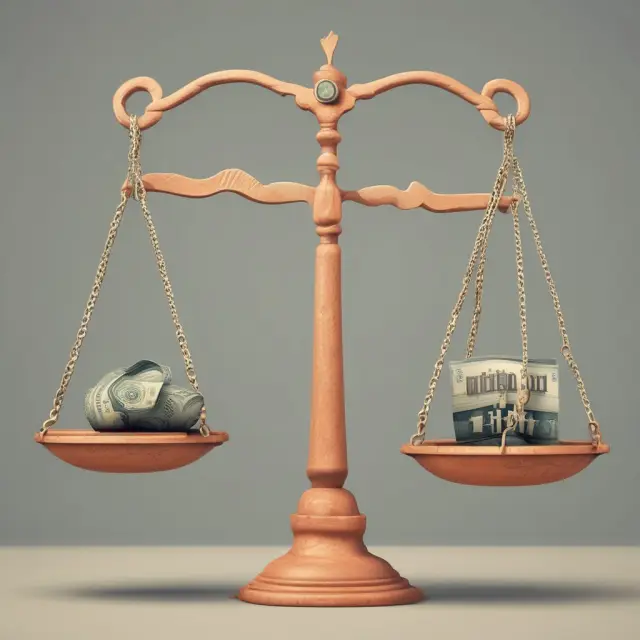
The Role of Interest Rates in Managing Savings
In understanding the paradox of thrift, a crucial aspect to consider is the relationship between interest rates, savings, and spending. According to the Keynesian theory, when consumers save more during an economic downturn, overall consumption decreases, potentially leading to further reductions in production. This situation can deepen the recession. In response, central banks attempt to stimulate spending through lowering interest rates to make borrowing cheaper for individuals and businesses.
The Role of Central Banks: Manipulating Interest Rates for Economic Growth
Central banks play a significant role in managing savings and spending by adjusting interest rates. By setting low interest rates, the central bank aims to increase current spending levels and decrease saving, in line with the Keynesian perspective. In an economic downturn, lower interest rates encourage borrowing for both consumption and investment purposes. As a result, consumers might be more inclined to spend on large purchases, such as cars or homes, and businesses may invest in new projects.
Interest Rates’ Impact on Saving and Spending: An Example
Let’s consider a simple example where John, an individual with a $50,000 income, saves 10% of it every year. With a 5% interest rate, he can save $5,000 annually. If the interest rate falls to 2%, his savings decrease by $3,000 each year. However, this reduction in John’s savings also implies that he now has an extra $3,000 available for spending in the economy, which might lead to increased demand and higher output.
Interest Rates: A Double-Edged Sword
Lowering interest rates is a double-edged sword as it comes with some risks, including inflation and moral hazard. Inflation could occur if low interest rates result in an oversupply of credit or excessive borrowing, causing prices to increase. Moral hazard refers to the potential for individuals or businesses to engage in riskier behaviors due to lower interest rates. While these risks need to be carefully managed, interest rate adjustments can prove an effective tool in stimulating economic growth during a recession.
Critics’ Perspective: The Importance of Savings and Investment in the Economy
However, critics argue that the paradox of thrift overlooks the importance of savings, investment, and Say’s law (the principle that supply creates its demand). A more balanced view acknowledges that savings are essential for future investments, which drive productivity growth. As a result, lowering interest rates may not be sufficient to encourage spending if there is no corresponding increase in investment opportunities or consumer confidence.
In conclusion, the role of interest rates in managing savings and spending during an economic recession is a critical component of the paradox of thrift theory. Central banks play a crucial role in adjusting interest rates to stimulate economic growth while mitigating potential risks. Understanding this relationship sheds light on the complexities of macroeconomic stabilization policies that aim to balance savings and spending for long-term economic prosperity.

Government Spending in an Economic Downturn: Deficit Spending
During an economic downturn, governments can help stimulate economic growth by implementing deficit spending policies. The paradox of thrift suggests that increased savings may negatively impact overall economic growth when some individuals or households choose to save more during a recession. However, government intervention through deficits could potentially offset this negative effect and boost aggregate demand, leading to increased production and employment opportunities.
The Great Recession, following the financial crisis of 2008, presented an excellent example of how deficit spending played a crucial role in mitigating the economic downturn’s consequences. The federal government employed expansionary fiscal policy by increasing spending on various programs, such as infrastructure projects and unemployment benefits, while reducing taxes to provide relief to households and businesses facing financial hardships.
Deficits can be financed through borrowing from both domestic and foreign sources or by creating new money through open market operations carried out by central banks. In the United States, the Federal Reserve used quantitative easing to increase the monetary base, lower long-term interest rates, and improve liquidity in financial markets. Lower interest rates encourage borrowing for investment purposes, spurring economic activity and boosting employment levels.
However, it is essential to note that deficit spending comes with potential consequences. Increased government spending can lead to higher taxes or inflation, depending on how the government finances the deficits. Higher taxes might dampen consumer spending, partially offsetting the initial stimulus effect. Meanwhile, inflation could potentially erode purchasing power and increase interest rates, making borrowing more expensive for both consumers and businesses.
Despite these challenges, governments employing deficit spending as a means to combat an economic downturn can help stabilize the economy by increasing aggregate demand during periods of reduced private sector activity. The impact on interest rates is also crucial in encouraging lending and investment to stimulate production and generate employment opportunities for a recovering economy.
In conclusion, the paradox of thrift highlights the importance of current spending as a driver of economic growth. When individuals choose to save more during an economic downturn, this could potentially negatively affect overall demand and lead to decreased production levels and employment opportunities. However, governments can counteract these negative effects by implementing deficit spending policies that help maintain aggregate demand, stabilize the economy, and pave the way for a stronger economic recovery.

Conclusion: The Paradox of Thrift and Its Enduring Impact on Modern Economics
In conclusion, the paradox of thrift, also known as the paradox of savings, is an economic theory that posits personal savings can negatively impact economic growth during a recession. This theory emerged from the assumptions that prices do not clear or producers fail to adjust to changing conditions, contrasting classical microeconomics. Introduced by British economist John Maynard Keynes in his book “The General Theory of Employment, Interest, and Money” (1936), the paradox of thrift became a cornerstone of modern macroeconomic theory.
According to this theory, consumption drives economic growth, as spending creates more income for producers, who then reinvest their earnings or spend them on goods and services. The paradox lies in the disconnect between individual savings behavior and overall economic conditions – while individuals may save more during a recession, reducing current demand for goods and services, this can ultimately stifle production and employment growth.
The paradox of thrift’s origins can be traced back to Bernard Mandeville’s “Fable of the Bees” (1714), where he argued increased expenditure was key to prosperity instead of savings. Keynes later credited Mandeville for the concept in his groundbreaking book.
Keynesians believe an economy experiencing a recession does not operate at full capacity, as factors of production – land, labor, and capital – remain unemployed. They argue that lower interest rates can help boost spending and stimulate economic growth by reducing savings rates. However, critics contend the paradox ignores Say’s law, which emphasizes goods must be produced before they can be exchanged or consumed; the importance of capital goods in driving higher production levels; and potential issues with inflation or deflation affecting price adjustments and future spending.
Understanding the circular flow model of the economy, introduced by Keynes, is crucial to grasping the paradox of thrift’s significance. This theory illustrates that an increase in current spending fuels future spending as new income generated from production drives further income growth. Lower interest rates serve to encourage more borrowing and spending. If lower interest rates fail to generate enough borrowing and lending, governments may engage in deficit spending to fill the gap.
However, the limitations of the paradox of thrift must be considered. Critics argue that savings are essential for investment and capital goods production, and Say’s law provides a counterpoint. Additionally, price adjustments play a significant role in future spending growth. Inflation or deflation can impact future production and employment levels differently, potentially undermining Keynes’ predictions.
Despite its limitations, the paradox of thrift has had an enduring impact on modern economics. It challenges classical economic thinking by emphasizing the importance of aggregate consumption in driving overall growth and the role governments can play in managing economic downturns through monetary and fiscal policies. The ongoing debates surrounding the theory continue to shape our understanding of economic theories, policies, and their implications for investors and policymakers alike.
FAQ: Commonly Asked Questions about the Paradox of Thrift
What is the paradox of thrift in economics?
The paradox of thrift is an economic theory suggesting personal savings can negatively impact overall economic growth during a recession, as it reduces current demand for goods and services, potentially stifling production and employment growth.
How does Keynes’ theory contrast with classical microeconomics?
Keynesian theory asserts that consumption drives economic growth, while classical microeconomic theory assumes that savings and investment are the primary drivers of economic activity.
What is the significance of Say’s law in relation to the paradox of thrift?
Say’s law states goods must be produced before they can be exchanged or consumed, emphasizing the importance of production and savings as prerequisites for consumption. Critics argue that the paradox of thrift overlooks this concept.
How does the paradox of thrift impact investment?
The paradox assumes lower interest rates can stimulate spending but overlooks that savings are necessary for capital goods investment, which drives higher production levels and future growth.
What role do governments play in managing economic downturns based on the paradox of thrift?
Governments may engage in deficit spending to fill the gap when lower interest rates fail to generate sufficient borrowing and lending for increased spending.

FAQs: Commonly Asked Questions About the Paradox of Thrift
The paradox of thrift is a widely discussed economic concept that has raised numerous questions from scholars, policymakers, and investors alike. In this section, we aim to answer some frequently asked questions about the theory, its limitations, and implications for modern economics.
1. What is the Paradox of Thrift? The paradox of thrift posits that personal savings can be detrimental to overall economic growth based on Keynesian theories. It assumes that prices do not clear or producers fail to adjust to changing conditions, contradicting classical microeconomics.
2. How does the paradox of thrift impact consumer spending? The theory suggests that an increase in personal savings during a recession might reduce overall consumer spending and negatively affect economic growth since current spending drives future spending in a circular economy model.
3. What is Say’s Law, and how does it relate to the paradox of thrift? Say’s law states that goods must be produced before they can be exchanged. It is often argued that the paradox of thrift ignores this law by focusing solely on consumption without acknowledging the importance of savings and investment in driving economic growth.
4. How does the circular flow model relate to the paradox of thrift? The circular flow model states that current spending drives future spending, but it overlooks capital goods and potential inflation or deflation. Lower interest rates are suggested as a solution for boosting current spending during an economic recession. However, critics argue that this model is too simplistic and does not account for all the factors at play in the economy.
5. What are some real-life examples of the paradox of thrift? One well-known example comes from Bernard Mandeville’s “The Fable of the Bees” (1714), where increased expenditure is emphasized over savings for prosperity. During the Great Recession, many young adults moved in with their parents, reducing household spending and having a negative impact on the economy.
6. How can governments deal with economic downturns according to the paradox of thrift? Governments can stimulate economic growth during a recession by engaging in deficit spending if lower interest rates do not result in increased borrowing and spending. However, this approach comes with potential risks, including inflation and long-term budgetary issues.
7. What are the criticisms of the paradox of thrift? Critics argue that it oversimplifies economic dynamics by disregarding Say’s law, capital goods, and the effects of inflation or deflation on prices in the economy. It is essential to understand these criticisms for a comprehensive understanding of the theory and its implications.
8. How does the paradox of thrift influence modern economics? The paradox of thrift continues to shape economic theories and debates, particularly in discussions surrounding consumer spending, savings, and fiscal policy. Its impact on investment decisions and monetary policy remains an essential topic for scholars and policymakers alike.
 Next entry · No. 3,898Understanding the Role and Impact of Parent Companies in Finance and Investment
See also
-
 No. 2,791
04 Feb 2025
18 min
Understanding Leakage in Economics: From National Income to Transnational Corporations and Data Security
Economics
No. 2,791
04 Feb 2025
18 min
Understanding Leakage in Economics: From National Income to Transnational Corporations and Data Security
Economics -
 No. 1,216
13 Aug 2024
25 min
Understanding Economic Stimulus: Monetary and Fiscal Policy Tools for Jumpstarting Private Sector Growth
Economics
No. 1,216
13 Aug 2024
25 min
Understanding Economic Stimulus: Monetary and Fiscal Policy Tools for Jumpstarting Private Sector Growth
Economics -
 No. 944
05 Jul 2024
17 min
Understanding Deficit Spending: Keynesian Economic Stimulus and the Multiplier Effect
Economics
No. 944
05 Jul 2024
17 min
Understanding Deficit Spending: Keynesian Economic Stimulus and the Multiplier Effect
Economics -
 No. 5,181
18 Aug 2025
18 min
Understanding Underfunded Pension Plans: Risks, Causes and Consequences
Business Finance
No. 5,181
18 Aug 2025
18 min
Understanding Underfunded Pension Plans: Risks, Causes and Consequences
Business Finance -
 No. 4,562
28 Jun 2025
21 min
Maximizing Your Savings: Understanding Savings Accounts
Personal Finance
No. 4,562
28 Jun 2025
21 min
Maximizing Your Savings: Understanding Savings Accounts
Personal Finance -
 No. 4,320
09 Jun 2025
20 min
Understanding Recessions: Causes, Predictions, and Impact on Economy
Business Finance
No. 4,320
09 Jun 2025
20 min
Understanding Recessions: Causes, Predictions, and Impact on Economy
Business Finance