Understanding the Parabolic SAR Indicator: Identifying Trends and Reversals in Finance
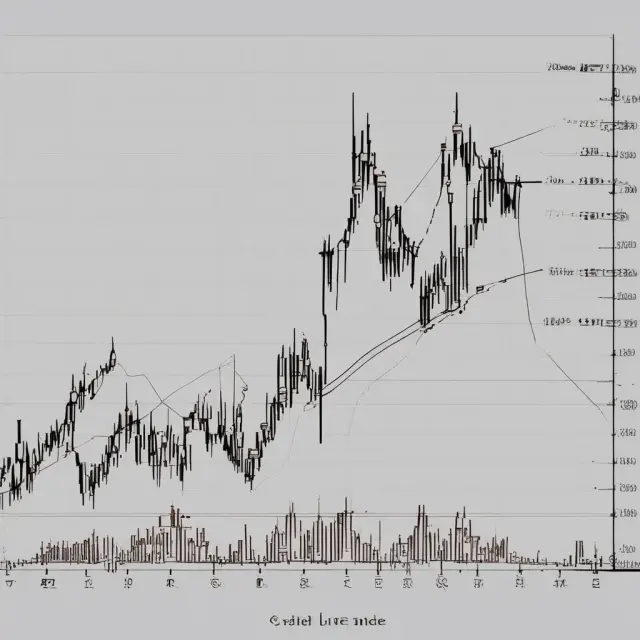
Understand the power of Parabolic SAR in identifying trends and reversals in finance, with practical examples and comparisons to moving averages.
Introduction to the Parabolic SAR Indicator
The Parabolic SAR (Stop and Reverse) indicator is a popular tool among technical traders in identifying trends and potential reversals in financial markets. Developed by J. Wells Wilder, this technical analysis indicator calculates a series of dots that move above or below the price based on trend direction. This section will discuss the background, calculation methodology, and usage of the Parabolic SAR Indicator.
Understanding the Parabolic SAR Indicator’s Background and Purpose:
The Parabolic SAR Indicator was introduced in Stocks & Commodities magazine back in 1978 and has since gained popularity due to its ability to help traders spot trend direction and potential reversals. The indicator is designed to follow a price trend as closely as possible while also providing buy and sell signals when the trend may be about to reverse.
The Parabolic SAR Indicator works by calculating a series of dots that trail behind the price action, indicating support or resistance levels depending on the direction of the trend. The dots move above the price during an uptrend and below the price for a downtrend. The indicator’s calculation is based on a trailing stop concept called “Stop and Reverse,” which adjusts to the current market conditions.
Calculating the Parabolic SAR Indicator:
The Parabolic SAR Indicator uses two different formulas, one for calculating a rising PSAR (Parabolic Stop And Reverse) and another for calculating a falling PSAR. The calculations for these indicators have slightly different formulas:
– Rising Parabolic SAR Formula:
RPSAR = Prior PSAR + [Prior AF(Prior EP – Prior PSAR)]
Where:
RPSAR = Rising Parabolic SAR
Prior PSAR = Previous Parabolic SAR value
Prior AF = The acceleration factor for the previous period, starting at 0.02 and increasing by 0.02 up to a maximum of 0.2 each time the extreme point makes a new high or low (falling SAR).
Prior EP = Previous Extreme Point, which represents the lowest low in the current downtrend for falling SAR or the highest high in the current uptrend for rising SAR.
– Falling Parabolic SAR Formula:
FPSAR = Prior PSAR – [Prior AF(Prior PSAR-Prior EP)]
Where:
FPSAR = Falling Parabolic SAR
Prior PSAR = Previous Parabolic SAR value
Prior AF = The acceleration factor for the previous period, starting at 0.02 and increasing by 0.02 up to a maximum of 0.2 each time the extreme point makes a new low or high (rising SAR).
Prior EP = Previous Extreme Point, which represents the lowest low in the current downtrend for falling SAR or the highest high in the current uptrend for rising SAR.
When calculating the Parabolic SAR Indicator, traders need to identify the direction of the trend and calculate accordingly based on the above formulas. The PSAR dots will move closer to the price as the trend becomes stronger while adjusting to the changing market conditions.
Stay tuned for Part 2, where we’ll discuss how to use the Parabolic SAR Indicator, its advantages and disadvantages, interpreting its signals, comparing it to moving averages (MA), practical applications, common mistakes, and misconceptions.
Calculating the Parabolic SAR Indicator
The Parabolic SAR (Stop and Reverse) indicator is a popular technical analysis tool used by traders to recognize trends and potential reversals in financial markets. Developed by J. Welles Wilder, it calculates trailing stop levels based on the price trend and generates buy or sell signals when the dots shift from one side of the asset’s price to another. In this section, we will explore how to calculate rising and falling PSAR values, as well as understanding the importance of adjusting acceleration factors (AF) and extreme points (EP).
Formulas for Calculating a Rising Parabolic SAR
Calculating the rising parabolic SAR involves determining a series of steps based on the latest high (EP) and the previous Parabolic SAR value. The formula is as follows:
RPSAR = Prior PSAR + [Prior AF(Prior EP – Prior PSAR)]
In this equation, RPSAR represents the rising Parabolic SAR value, while Prior PSAR refers to the previous Parabolic SAR value. AF, or the acceleration factor, starts at 0.02 and can be incremented by 0.02 up to a maximum of 0.2 whenever EP makes a new high.
Calculating the Falling Parabolic SAR
The formula for the falling parabolic SAR is almost identical to that of its rising counterpart, with the only difference being the sign used to calculate AF:
FPSAR = Prior PSAR – [Prior AF(Prior PSAR – Prior EP)]
In this equation, FPSAR represents the falling Parabolic SAR value. The main difference is the subtraction of the acceleration factor instead of addition as seen in a rising parabolic SAR calculation.
Determining the Initial Values for Parabolic SAR
To calculate the initial values for the PSAR, it’s essential to determine the prior extreme point (EP) and set an initial acceleration factor (AF) at 0.02. For a rising trend, use the lowest low of the first five periods as the initial EP value and the corresponding price as the initial PSAR value. Conversely, for a falling trend, take the highest high of the first five periods as the initial EP value and the corresponding price as the initial PSAR value.
Monitoring and Adjusting Parabolic SAR Values
As prices continue to move, it’s necessary to monitor and update Parabolic SAR values accordingly. When the price crosses above a rising Parabolic SAR or below a falling one, it indicates a potential trend reversal or entry/exit opportunity for traders. The AF value can be adjusted periodically based on new EP values. As long as there’s a clear trend in place, increasing AF will help the indicator adapt and maintain its effectiveness. The maximum AF value is 0.2.
The Parabolic SAR indicator offers valuable insights to technical traders by generating buy or sell signals when the position of dots moves from one side of an asset’s price to the opposite side. In the next section, we will discuss how to use these signals effectively and explore its advantages and disadvantages.
In conclusion, understanding how to calculate and interpret the Parabolic SAR indicator is crucial for traders looking to identify trends and reversals in financial markets. By following the steps outlined in this article, you’ll be well on your way to utilizing this powerful technical analysis tool effectively. Stay tuned as we dive deeper into using PSAR signals, the advantages of using it over moving averages (MA), and potential limitations.
Note: This content is intended for informational purposes only and should not be considered investment advice. Always consult a financial professional before making investment decisions.
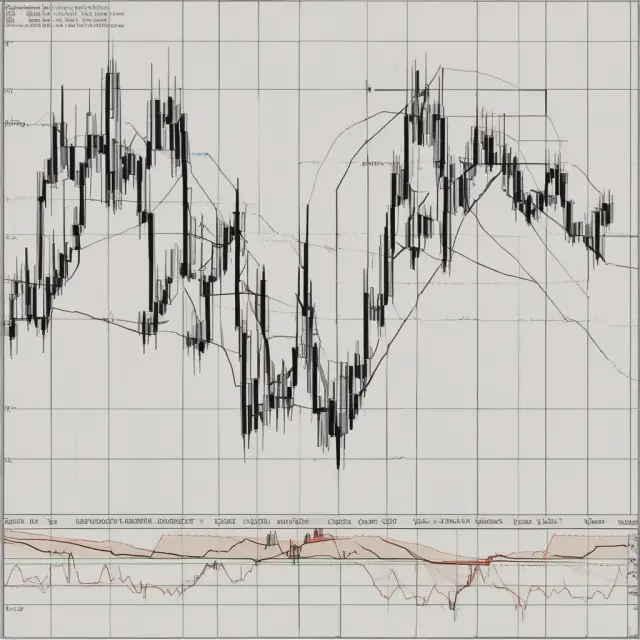
How to Use the Parabolic SAR Indicator
Understanding the parabolic SAR indicator’s application is vital for making informed trading decisions based on its signals. In this section, we’ll explore how to use the PSAR to identify buy and sell signals and set stop loss orders. We will also discuss the benefits of combining it with other technical indicators.
Buy/Sell Signals
The parabolic SAR indicator generates buy or sell signals when dots move from one side of a security’s price to the opposite side. For example, if the dots shift from above the price to below, a buy signal is triggered, while a sell signal is indicated when the dots change position from below to above the asset’s price. This shifting dynamics allows traders to maintain positions in the market, ensuring that they don’t miss significant price movements.
Setting Stop Loss Orders
Apart from generating signals, the PSAR can also be utilized to set stop loss orders. When a security’s price is trending upwards and the PSAR is following the price, it can serve as an exit point for long positions. Conversely, in a declining market, the PSAR can be used as an entry or exit signal for short positions. By setting stop loss orders at the current PSAR value, traders can protect their profits while allowing their trades to grow with the trend until a reversal occurs.
Utilizing Parabolic SAR Indicator in Combination with Other Technical Indicators
Although the parabolic SAR indicator provides valuable insights, it is not foolproof and should be used in conjunction with other technical analysis tools. Combining it with indicators like moving averages (MA) and trendlines can help confirm trends or identify potential reversals more effectively. For instance, an ADX reading above 30 and a long-term rising trendline could validate a PSAR buy signal for a trending security.
Key Takeaways
- Use the parabolic SAR indicator to detect buy/sell signals by monitoring dot position shifts.
- Set stop loss orders at the current PSAR value to protect profits and manage risk effectively.
- Enhance your analysis by combining the PSAR with other indicators like moving averages or trendlines.
By employing these techniques, traders can maximize their potential gains while minimizing losses when using the parabolic SAR indicator for investment decision making.
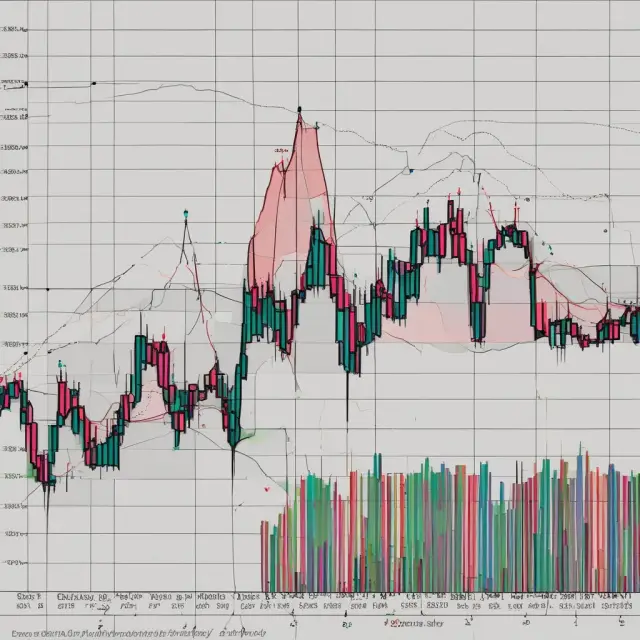
Advantages and Disadvantages of the Parabolic SAR Indicator
The Parabolic SAR (stop and reverse) indicator, a valuable tool in trend trading, offers several advantages that make it an essential part of many traders’ toolboxes. The primary advantage is its ability to provide potential entry and exit points for trades based on trend direction. However, like any other technical indicator, the Parabolic SAR has its limitations. Let’s explore both aspects.
Advantages of the Parabolic SAR Indicator
- Effective in Trending Markets: The Parabolic SAR is best suited for markets exhibiting strong trends and trend reversals. Its primary purpose is to identify when a trend has started or ended, making it an ideal tool for following market trends and capitalizing on potential price movements.
- Adaptability: As the Parabolic SAR adjusts to price movements, it can provide traders with dynamic stop-loss levels that adapt to market conditions. This feature allows traders to remain in a trade longer when the trend is strong while exiting when the trend begins to reverse.
- Multiple Applications: The Parabolic SAR indicator can be used to confirm other technical indicators, such as moving averages or oscillators, for more robust trading strategies. Additionally, it can serve as an entry signal in itself when the dots move from below the price to above it, indicating a potential buy opportunity.
- Customizability: The Parabolic SAR indicator can be adjusted by changing its parameters like the acceleration factor (AF) and the number of periods used in the calculation. This flexibility enables traders to fine-tune the indicator to their trading style or specific market conditions.
- Continuous Signals: As a continuous indicator, the Parabolic SAR provides traders with real-time information about potential trend reversals, enabling them to make informed decisions quickly and efficiently.
Disadvantages of the Parabolic SAR Indicator
- False Signals: The Parabolic SAR is not foolproof and can generate false signals in ranging markets or during periods of high volatility. These false signals may result in missed opportunities or unnecessary trades, potentially leading to losses.
- Overtrading: Traders might overtrade by acting on every Parabolic SAR signal generated, which could lead to excessive transaction costs and reduced profitability. It’s essential to use this indicator in conjunction with other technical tools and analysis methods.
- Complexity: Although the Parabolic SAR is a powerful tool for identifying trends and trend reversals, its calculation formula can be complex. Traders may find it challenging to calculate the indicator manually, requiring them to rely on trading platforms or software to generate the necessary data.
- Limited Use in Range-bound Markets: The Parabolic SAR performs best when used in trending markets and may not provide accurate signals or trade opportunities when price action is range-bound. In such cases, it’s recommended that traders consider using other indicators or methods to gauge potential trades.
- Misinterpretation of Signals: Some traders misinterpret the Parabolic SAR signals as being a definitive buy/sell signal, whereas the indicator only generates signals to identify potential trend reversals. It is crucial to understand that these signals must be used in conjunction with other analysis techniques and proper risk management strategies.
Interpreting the Parabolic SAR Indicator Signals
One of the most intriguing aspects of the parabolic SAR indicator is its ability to generate buy and sell signals. As a trend-following momentum indicator, it’s essential to understand these signals to maximize profit potential while minimizing losses. This section will dive into how to interpret the indicator’s buy and sell signals and when to enter or exit trades based on them.
Buy Signals
The first sign of an uptrend is indicated by a dot placement below the asset’s price. When these dots move from above the price to below it, a buy signal is triggered. A bullish investor may choose to enter a long position at this point, with the expectation that the price will continue its upward trend. Conversely, a trader might set a stop loss order just beneath the current price or even below the previous low, using the PSAR as an adjustable trailing stop.
Sell Signals
On the other hand, when the asset’s price is in a downtrend, the dots are placed above it. In this scenario, a sell signal is generated when these dots move from below the price to above it. A bearish trader may choose to exit their short position or open a new short position at this moment. Similar to buy signals, sell signals can also be used as trailing stop loss orders to protect profits while allowing the trend to run its course.
Timing Your Entry and Exit
It is essential to recognize that entry and exit points based on these signals should not be considered definitive, but rather guidelines for traders. Ultimately, market conditions are fluid, and technical indicators, including the parabolic SAR, must be used in conjunction with other analysis techniques and fundamental factors to determine the best time to enter or exit a trade.
Additionally, it is crucial to consider risk management strategies while employing these signals. Setting stop loss orders at appropriate levels can help minimize potential losses and protect profits while letting the trend run its course. A typical trailing stop loss order will automatically close a position when it reaches a certain distance below (for long positions) or above (for short positions) the current price.
Comparing PSAR with Moving Averages (MAs)
The parabolic SAR indicator and moving averages are two distinct tools used in technical analysis to determine market trends. While both indicators offer valuable insights into trend direction, their approaches and calculations differ significantly. As discussed earlier in this article, understanding these differences can help traders make more informed decisions when implementing the parabolic SAR and MAs within their investment strategies.
In conclusion, understanding how to interpret the Parabolic SAR indicator’s buy and sell signals is a crucial aspect of utilizing this tool effectively. By following these guidelines, investors can capitalize on trends while minimizing losses through effective risk management. As always, it is essential to remember that no single indicator or analysis technique can provide 100% accuracy, and traders should consider multiple sources of data when making investment decisions.
Comparing the Parabolic SAR Indicator vs. Moving Averages (MA)
The Parabolic SAR indicator and Moving Averages (MA) share some similarities when it comes to trend identification, but they differ significantly in their approach to calculating trends. Both indicators are valuable tools for technical traders; however, the choice between them often depends on an investor’s trading style, market conditions, and personal preferences.
The primary difference lies within the calculation methods of each indicator. The Parabolic SAR (Stop and Reverse) indicator utilizes a trailing stop and reverse method to determine trend direction and potential reversals using dots superimposed on the price chart. This approach is based on extreme points (EPs) and an acceleration factor (AF). In contrast, Moving Averages rely on averaging historical price data over a predefined period to form trends and generate buy or sell signals.
When examining the appearance of both indicators on a chart, we notice that PSAR is represented by dots above or below the asset’s price, while MA presents as lines of varying thicknesses based on the chosen timeframe.
The Parabolic SAR indicator generates buy and sell signals when the position of the dots moves from one side to the other, which can be used to enter and exit trades or set stop-loss orders. On the other hand, moving averages provide long-term trend direction by following price movement’s average over a specific timeframe.
The PSAR works best for traders looking to capitalize on strong trends or identify potential reversals while using stop loss orders. In contrast, MA is more suitable for identifying longer-term trends and confirming the overall market direction.
Understanding when to use each indicator can be crucial for maximizing profits and minimizing losses. For instance, when dealing with a trending market, where large price swings occur, the Parabolic SAR indicator may provide valuable insights by generating buy or sell signals that align with the market trend while also offering potential stop loss levels.
Meanwhile, moving averages can help traders determine the overall direction of the trend and potentially confirm a trend reversal signal, making them an essential tool in any technical trading arsenal.
When considering using these indicators, it’s important to remember that no single indicator should be relied upon solely when making investment decisions. Instead, combining multiple indicators like PSAR, MAs, and other technical tools can help traders make more informed decisions and enhance overall portfolio performance.

Practical Application: Real-World Trading Using Parabolic SAR Indicator
The Parabolic SAR indicator has proven to be a powerful tool in various real-world trading situations. This section discusses some examples and case studies that illustrate its successful application.
First, let’s examine the Apple Inc. (AAPL) stock price from January 2013 until March 2013. During this period, AAPL experienced a significant downtrend followed by an impressive uptrend. By utilizing a Parabolic SAR with an initial AF of 0.02 and tracking the PSAR values, investors could have identified multiple opportunities to buy in the downtrend when the dots moved below the price (sell signals). Conversely, they could have also set entry points during the uptrend by waiting for the dots to move above the price (buy signals) before purchasing.
Another example comes from the Bitcoin market’s performance between 2013 and 2014. During this period, Bitcoin experienced a trending phase followed by significant volatility and price swings. A trader employing the Parabolic SAR indicator could have taken advantage of the trending market to enter trades when the dots moved below the price for short positions (sell signals) or above the price for long positions (buy signals). However, as the volatility increased and the price became range-bound, the PSAR began generating constant reversal signals, which may not have been profitable.
Lastly, let’s take a look at Amazon.com, Inc. (AMZN) stock during the period from 2015 to 2016. This period exhibited a strong uptrend that allowed traders to capture substantial profits by using the Parabolic SAR indicator to enter long positions when the dots moved below the price and exiting their trades as soon as the dots crossed above the price (buy signals). In this scenario, the PSAR helped to manage risk by providing stop loss points while allowing traders to capitalize on a strong trending market.
It is essential to remember that no indicator can guarantee success in trading and that the Parabolic SAR is not an exception. Nevertheless, it remains a valuable tool for identifying trends and reversals when used in conjunction with other technical indicators and proper risk management practices.
Case Study 1: Using Parabolic SAR to Trade Amazon.com, Inc. (AMZN) from 2015-2016
Using the Parabolic SAR in conjunction with other indicators and a sound risk management strategy could have resulted in substantial profits for traders during this period.
Case Study 2: Identifying Opportunities with Parabolic SAR on Apple Inc. (AAPL) from 2013
Utilizing the Parabolic SAR to buy and sell signals during this downtrend could have been profitable for investors, but it is important to note that no strategy is foolproof.
Case Study 3: Navigating Volatility with Parabolic SAR on Bitcoin (BTC) from 2013-2014
While the Parabolic SAR may have generated numerous buy and sell signals, navigating the volatility in this period might not have yielded profitable trades. However, it provided valuable insight into the trending nature of the market.

Common Mistakes and Misconceptions of the Parabolic SAR Indicator
The parabolic SAR (stop and reverse) indicator, developed by J. Wells Wilder, is widely used for identifying trends and potential reversals in financial markets. Despite its popularity, misconceptions surrounding the use and interpretation of this technical tool abound. In this section, we will clarify some common misunderstandings to help traders get the most value from this powerful indicator.
1. Mistaking a Parabolic SAR Reversal for a Price Reversal
The Parabolic SAR generates signals when the position of dots moves from one side of an asset’s price to the other, leading some to believe that a price reversal has occurred whenever they see a reversal signal. However, this is not always the case. A PSAR reversal signifies only that the indicator’s dots and the price have crossed paths – it does not necessarily mean the price itself has reversed direction.
2. Misinterpreting Trend Reversals
A Parabolic SAR reversal in the indicator is typically viewed as a strong trend reversal signal. However, this is only an assumption and not guaranteed to be true. A price reversal may or may not follow the PSAR reversal, making it essential for traders to exercise caution when entering or exiting positions based on this signal alone.
3. Misapplying Stop Loss Orders with Parabolic SAR
The parabolic SAR can be used as a trailing stop loss order indicator, but it is important to note that the indicator does not provide infallible stop loss levels. The PSAR will always attempt to follow price action and generate a reversal signal whenever the dots and price cross. Therefore, traders should not solely rely on the Parabolic SAR for setting their stop losses but rather use multiple tools in conjunction with it for better risk management.
4. Incorrectly Setting Initial AF and EP Values
The acceleration factor (AF) and extreme point (EP) values are crucial components of calculating the Parabolic SAR. Traders should set these initial values carefully, especially when starting a new position. A lower initial AF value can lead to lagging signals, while a higher one may result in premature exits from positions. Similarly, setting an incorrect EP value may cause the PSAR dots to be placed incorrectly, potentially leading to confusion and suboptimal trade decisions.
5. Ignoring Market Conditions When Using Parabolic SAR
The parabolic indicator works most effectively when a security’s price is trending strongly. In range-bound markets or markets experiencing frequent whipsaws, the PSAR can generate numerous false signals or fail to provide useful information entirely. Traders should always consider the current market conditions and use additional indicators or analysis techniques to supplement their understanding of price action when employing the Parabolic SAR.
6. Overreliance on a Single Indicator for Decision Making
The parabolic indicator can provide valuable insights into trend direction and potential reversals, but it should not be the sole basis for making investment decisions. Traders are encouraged to use multiple indicators in conjunction with each other and to consider various market factors when entering or exiting positions. Diversification and thorough analysis can help mitigate risk and optimize potential profits.
In conclusion, understanding the common misconceptions of the Parabolic SAR indicator is crucial for traders looking to make informed decisions based on its signals. By clarifying these misunderstandings, traders can effectively incorporate this powerful technical tool into their investment strategies while minimizing potential pitfalls.

Integrating Parabolic SAR Indicator with Other Technical Tools
The parabolic SAR indicator offers valuable insights into trend direction and potential reversals, but it is not a standalone tool for successful trading. Incorporating other technical indicators alongside the PSAR can help traders make informed decisions and increase their chances of profiting from market movements. This section will explore three popular technical tools: moving averages (MA), Moving Average Convergence Divergence (MACD), and Relative Strength Index (RSI).
Moving Averages (MA) vs Parabolic SAR Indicator
While both the Parabolic SAR indicator and moving averages help traders determine trend direction, they differ significantly in their formulas and appearances on charts. The MA represents the average price over a specific time frame, plotted as a line on a chart. In contrast, the PSAR’s trailing stops adapt to price movements by calculating extreme points (EP) and acceleration factors (AF), providing dynamic buy/sell signals.
Combining Parabolic SAR Indicator with Moving Averages
Adding a moving average to a parabolic SAR chart can help traders better understand the trend’s strength and direction. For instance, if a rising PSAR is above an MA, it indicates that the uptrend is strong and persistent. Conversely, a falling PSAR below an MA signals a downtrend. This combination of indicators offers valuable information for entering or exiting trades based on trend confirmation.
Moving Average Convergence Divergence (MACD) vs Parabolic SAR Indicator
The MACD is a momentum indicator that identifies the relationship between two moving averages – the short-term and long-term moving averages. The histogram generated by the MACD line reveals the difference between these moving averages, offering insights into potential trend reversals.
When using both the Parabolic SAR Indicator and MACD together, traders can benefit from a more comprehensive understanding of price movements. For example, a buy signal generated by the PSAR can be confirmed with a bullish crossover in the MACD histogram, while a bearish crossover in the MACD histogram may serve as a sell confirmation when a sell signal is triggered by the PSAR indicator.
Relative Strength Index (RSI) vs Parabolic SAR Indicator
The Relative Strength Index (RSI) is another widely used technical tool that helps traders determine overbought or oversold conditions in an asset’s price. It measures the magnitude of recent gains and losses to assess the potential for trend reversals.
Adding the RSI indicator to a chart with the Parabolic SAR can help traders confirm trends and identify potential buy/sell opportunities. For example, if a PSAR generates a sell signal while the RSI indicates an oversold condition (below 30), traders might consider entering a short position. Conversely, a bullish buy signal from the Parabolic SAR and an RSI reading above 70 could indicate a potential long entry.
In conclusion, combining the Parabolic SAR Indicator with other technical tools can help traders make more informed decisions and improve their chances of success in financial markets. By using these indicators in harmony, traders can better understand trend direction, identify potential reversals, and confirm trade signals for profitable opportunities.
Frequently Asked Questions about the Parabolic SAR Indicator
What is the parabolic SAR indicator used for in trading?
The parabolic SAR (stop and reverse) indicator is a popular tool among technical traders to spot trends and reversals by generating buy or sell signals based on price movements. It uses a system of dots placed above or below the current market price, which changes position depending on the trend direction. Traders can also use the PSAR dots as trailing stop loss orders.
What are the differences between rising and falling Parabolic SAR calculations?
The primary difference lies in the formulas: a rising Parabolic SAR (RPSAR) uses the lowest low of five periods or more, while a falling Parabolic SAR (FPSAR) employs the highest high. Both RPSAR and FPSAR use an acceleration factor (AF), which starts at 0.02 and increases by 0.02 to a maximum of 0.2 each time a new extreme point is identified.
What happens when the price crosses the Parabolic SAR indicator?
A reversal signal occurs when the dots flip from one side of the market price to the other. However, this doesn’t necessarily mean that the price has reversed – it only indicates a shift in the trend direction identified by the indicator.
How can the Parabolic SAR indicator be used alongside other technical tools?
Traders often employ the PSAR with indicators such as moving averages (MAs), average directional index (ADX), and trendlines to confirm trends and identify potential reversals, enhancing the overall accuracy of their analysis.
What are advantages and disadvantages of using the Parabolic SAR indicator?
The strengths include its ability to generate buy and sell signals during trending markets and trailing stop loss orders that adjust automatically to price movements. The limitations include constant signaling, which may result in multiple low-profit or losing trades when price is range-bound. It’s essential to consider both advantages and disadvantages before incorporating the PSAR into your trading strategy.
How does the Parabolic SAR indicator differ from moving averages (MA)?
While both indicators help identify trends, the primary difference lies in their formulas – the PSAR looks at extreme highs and lows and applies an acceleration factor, while a MA simply takes an average price over a selected number of periods. Understanding these differences can provide valuable analytical insights for traders.
 Next entry · No. 3,897The Paradox of Thrift: Savings as a Net Drag on Economic Growth
See also
-
 No. 5,016
05 Aug 2025
20 min
Understanding Tracking Stocks: Benefits, Risks, and Real-life Examples
Business Finance
No. 5,016
05 Aug 2025
20 min
Understanding Tracking Stocks: Benefits, Risks, and Real-life Examples
Business Finance -
 No. 4,911
27 Jul 2025
20 min
A Comprehensive Guide to Technical Analysis: Understanding Chart Patterns, Indicators, and Strategies
Finance Policy
No. 4,911
27 Jul 2025
20 min
A Comprehensive Guide to Technical Analysis: Understanding Chart Patterns, Indicators, and Strategies
Finance Policy -
 No. 2,901
13 Feb 2025
20 min
Understanding Line Charts: A Visual Representation of Asset’s Historical Price Action
Financial Data Analysis
No. 2,901
13 Feb 2025
20 min
Understanding Line Charts: A Visual Representation of Asset’s Historical Price Action
Financial Data Analysis -
 No. 2,709
28 Jan 2025
17 min
Understanding the Kijun-Sen (Base Line) Indicator in Technical Analysis
Financial Education
No. 2,709
28 Jan 2025
17 min
Understanding the Kijun-Sen (Base Line) Indicator in Technical Analysis
Financial Education -
 No. 5,546
18 Sep 2025
19 min
Understanding the Vortex Indicator: A Powerful Tool for Identifying Trend Reversals
Financial Tools
No. 5,546
18 Sep 2025
19 min
Understanding the Vortex Indicator: A Powerful Tool for Identifying Trend Reversals
Financial Tools -
 No. 4,753
14 Jul 2025
18 min
Understanding the Stochastic RSI Indicator: A Powerful Tool for Technical Analysis
Financial Tools
No. 4,753
14 Jul 2025
18 min
Understanding the Stochastic RSI Indicator: A Powerful Tool for Technical Analysis
Financial Tools