Understanding and Implementing Effective Trend Trading Strategies in Finance and Investment

Explore effective trend trading strategies for finance and investment, from identifying trends using price action and indicators to managing risk with stop…
What is Trend Trading?
Trend trading is a popular investment strategy that focuses on identifying and capitalizing on the directional movement of financial instruments such as stocks, currencies, indices, or commodities. This approach assumes that market prices will continue to move in their current trend until significant changes occur. A trend can be identified by the consecutive highs or lows formed by price data points over a given period. In simple terms, a trend is an observable pattern of price movements that shows a definite direction.
Trend trading is based on the assumption that the market will continue to move in the same direction, creating opportunities for potential profits. This strategy is suitable for both long-term and short-term investors and can be applied to various markets and financial instruments. The main goal of trend trading is to maximize gains by entering trades when the trend is clearly defined and exiting before the market reverses.
Key Characteristics and Benefits
- Trends provide a clear direction for potential profits, making it easier for traders to predict future price movements.
- Trend trading strategies can be applied to various financial instruments, such as stocks, currencies, indices, or commodities.
- It is suitable for both long-term and short-term investors, allowing flexibility in holding periods.
- By identifying and riding a trend early, traders can potentially secure significant profits as the trend continues.
- Trend trading allows for risk management through the use of stop losses, which can help minimize potential losses during market reversals.
- Trend trading strategies often provide clear entry and exit points, making it easier to execute trades and manage positions.
In summary, trend trading is a powerful investment strategy that offers numerous benefits for traders seeking to capitalize on the directional movements of financial instruments. By understanding the basics of trend identification and utilizing effective trend trading strategies, investors can potentially secure significant profits while managing risk effectively. In the following sections, we will explore various aspects of trend trading, including indicators and chart patterns used to identify trends, moving averages, momentum indicators, and case studies that illustrate successful trend trades.

Identifying Trends: Price Action vs. Indicators
Price action analysis is an essential trend trading technique that involves interpreting the market’s price movements on a chart without relying heavily on technical indicators. Instead, traders observe the interaction between buyers and sellers as they form trends by analyzing candlestick patterns and support/resistance levels.
However, trend traders can also rely on specific technical indicators to help identify trends and provide trade signals. While no single indicator is foolproof, combining price action analysis with various indicators can significantly enhance the accuracy of trend identification and improve overall trading performance.
Price Action Analysis: Trends and Key Levels
Trend traders employing price action analysis primarily focus on chart patterns and price movements to determine the direction and strength of a trend. This approach allows for effective entry, exit, and management of trades by observing the interaction between buyers and sellers in the market.
For an uptrend, a trader looks for higher swing highs and higher swing lows as evidence of an upward trend. The price movement should form bullish chart patterns like hammer or doji candlesticks. In contrast, downtrend traders search for lower swing highs and lower swing lows, along with bearish chart patterns such as shooting star and hanging man candlesticks.
Technical Indicators: Moving Averages and Momentum
Moving averages are commonly used indicators that help smooth out the price data to reveal underlying trends. For example, a 50-day moving average can provide insight into the medium-term direction of an asset’s price trend, while a 200-day moving average can illustrate long-term trends.
Momentum indicators, like the Relative Strength Index (RSI) and Moving Average Convergence Divergence (MACD), help identify potential entry and exit points within an existing trend by showing overbought or oversold conditions. These indicators can provide confirmation of a trend’s continuation, reversal, or exhaustion.
Comparing Price Action Analysis and Technical Indicators
Price action analysis and technical indicators serve complementary roles in identifying trends, with each technique having its strengths and weaknesses. Combining these approaches provides a more comprehensive understanding of market conditions and helps improve overall trading performance by minimizing false signals and enhancing accuracy.
When used together, trend traders can effectively enter the market at optimal points while managing risk using stop losses based on swing highs/lows or moving averages. This integrated approach offers a higher probability of success in capturing gains during uptrends and downtrends.
Moving Average Strategies
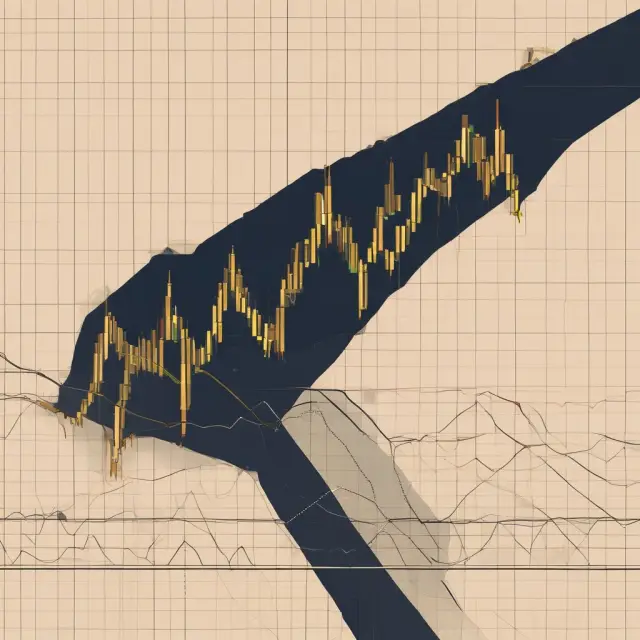
In addition to visual inspection of swing highs and lows, technical traders often use moving averages (MA) to identify trends and provide entry/exit signals. A moving average represents the average price of an asset over a set period. Traders can choose different timeframes for these averages, such as 50-day or 200-day moving averages.
When analyzing a trend, traders look to determine whether the short-term moving average lies above or below the long-term moving average (LMA). Generally, an uptrend exists if the short-term moving average is above the long-term one, and the opposite holds true for a downtrend.
Traders may implement two common strategies using moving averages:
1. Golden Cross: This strategy involves entering a long position when the shorter moving average crosses above the longer one. The golden cross is considered a bullish signal as it indicates that the short-term trend has turned upwards and crossed over the longer-term trend, potentially signaling a shift in market sentiment towards the asset.
2. Dead Cross: Conversely, a bearish signal arises when the shorter moving average crosses below the longer one. This situation is called a dead cross. The short-term trend has turned downwards and crossed under the long-term trend, indicating that the prevailing trend may be reversing.
Moving averages work well for identifying trends but can also act as potential entry and exit points. Traders looking to enter a position based on these signals often add confirmation indicators to strengthen their analysis. For example, they might use momentum indicators like Relative Strength Index (RSI) or Moving Average Convergence Divergence (MACD).
It’s important to note that moving averages are lagging indicators and can provide false signals during trendless markets or when trends shift rapidly. Traders need to be cautious and combine them with other technical analysis methods, such as support and resistance levels, chart patterns, and trendlines for more accurate signals.
Successful traders often employ a combination of trend trading strategies to maximize their chances of generating profits while minimizing losses. These strategies can help identify trend reversals and confirm entry and exit points. Incorporating moving averages into your analysis can be an effective tool in your arsenal for understanding market trends and making informed investment decisions.

Trend Trading: Uptrend vs. Downtrend
Understanding both uptrends and downtrends is essential in implementing successful trend trading strategies. An uptrend refers to a consistent and persistent upward price movement, while a downtrend describes the opposite – a persistently downward price trend. Identifying these trends is critical since they can provide crucial insight into market direction and potential entry or exit points for traders.
Uptrends, characterized by higher swing lows and higher swing highs, represent an overall positive market sentiment where buying pressure outweighs selling pressure. In contrast, downtrends are characterized by lower swing lows and lower swing highs, indicating a bearish market environment with more selling pressure than buying pressure.
Determining the current trend direction is vital for traders employing moving averages or other technical indicators to filter and validate trading signals. For instance, an uptrend might call for a long entry when the price crosses above a short-term moving average, while a downtrend may warrant a short position when the price falls below a short-term moving average.
Upon recognizing a trend, traders must be aware of trendline support and resistance levels to help manage risk with stop losses or exit points. Uptrends are typically associated with rising trendlines that serve as potential areas for buying dips or consolidations. In contrast, downtrends involve declining trendlines that act as resistance levels for shorting opportunities or selling rallies.
Recognizing and acting upon the different types of trends (uptrend vs. downtrend) is a crucial aspect of profitable trend trading strategies. By effectively identifying and capitalizing on trends, traders can maximize their potential gains while minimizing losses.
In summary, understanding both uptrends and downtrends is essential for implementing successful trend trading strategies. Uptrends offer opportunities to enter long positions by buying dips or consolidations, while downtrends provide short selling or exiting opportunities. By recognizing the current trend direction and employing appropriate tools like moving averages and trendlines, traders can maximize profits and minimize losses.
Commonly Used Trend Trading Strategies
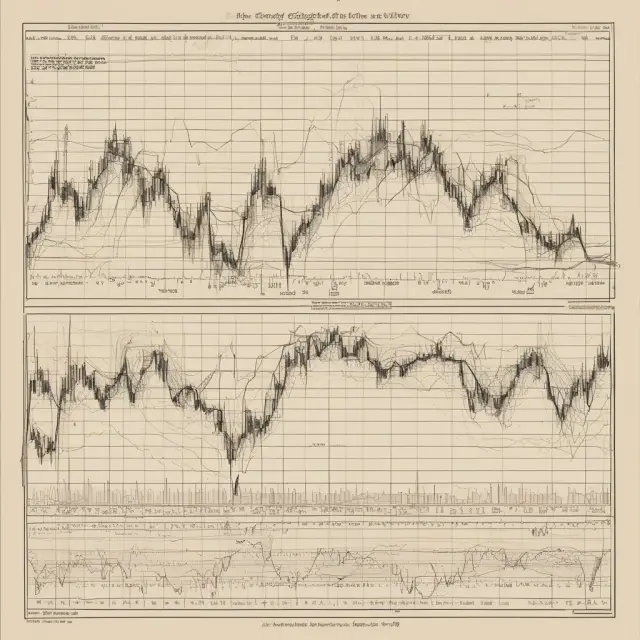
Trend trading strategies are designed to maximize gains by identifying the direction of a security’s price movement and capitalizing on it. Among various trend trading techniques, there are several popular methods that make use of indicators, moving averages, and price action to confirm trend directions.
1. Donchian Channels: Donchian Channels are among the simplest yet powerful trend indicators. The strategy involves calculating highs and lows over a given period (for example, 20 periods) and drawing upper and lower channels around these values. An uptrend exists when the price stays above the lower channel, while a downtrend occurs when it is below the upper one. This approach helps traders to spot potential trend reversals as soon as the price breaks out of the channel.
2. Bollinger Bands: Another widely-used strategy involves utilizing Bollinger Bands, which consist of three lines: the middle band (simple moving average), and the two standard deviations above and below it. These bands expand or contract depending on volatility, helping to pinpoint entry and exit points based on how far the price moves away from or returns to the middle band. When prices stay within these bands, a trend may continue; a breakout indicates a potential reversal.
3. Keltner Channels: Similar to Bollinger Bands, Keltner Channels use an average price (middle line) and two standard deviation lines but are calculated differently. Instead of moving averages, they incorporate volatility bands based on Average True Range (ATR). This strategy provides a more adaptive indicator to changing market conditions, making it suitable for capturing short-term trends.
4. Parabolic SAR: Parabolic Stop and Reverse (SAR) is an adaptive trend following system that calculates stop loss levels based on price behavior. It’s represented by dots that follow the price in a trending market and shift direction when the trend reverses. The indicator can be used to generate entry signals when the dot changes direction or as a trailing stop loss to lock in profits during an established trend.
5. Moving Average Crossovers: This strategy involves using multiple moving averages to determine the strength of a trend and possible entry points. Traders use short-term moving averages (such as 7-day) to identify short-term trends and long-term moving averages (20-day or 50-day) to detect longer-term ones. A bullish signal is generated when the short-term moving average crosses above a long-term one, while a bearish signal arises from the opposite crossover.
These are just a few of the commonly used trend trading strategies in finance and investment. By mastering these techniques, traders can better navigate market conditions, seize profitable opportunities, and manage risks more effectively.
Momentum Indicators: Relative Strength Index (RSI)
In the realm of trend trading, identifying potential entry and exit points plays a significant role in achieving successful trades. Momentum indicators, such as the Relative Strength Index (RSI), offer traders valuable insights into the price’s momentum and can help confirm trends or signal possible reversals. Let’s delve deeper into understanding RSI and its application in trend trading strategies.
What is the Relative Strength Index? The RSI, developed by J. Welles Wilder Jr., is a popular momentum indicator that compares the magnitude of recent gains to recent losses within an asset’s price action. It is primarily used for determining overbought and oversold conditions in an attempt to spot potential trend reversals or continuations.
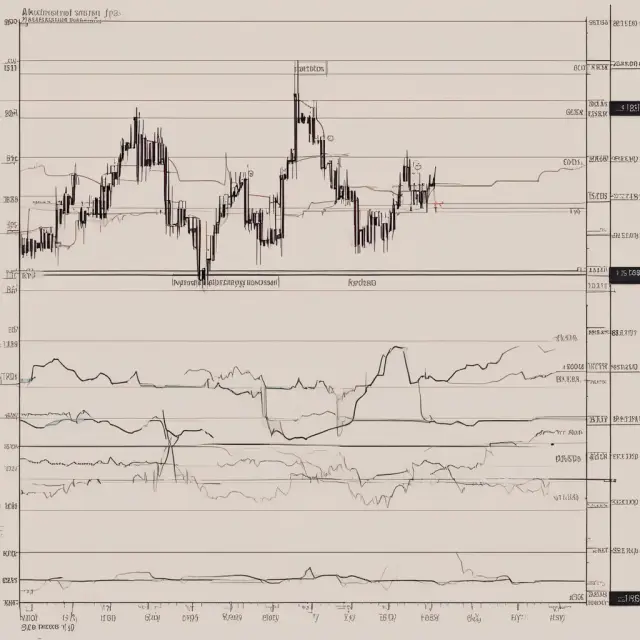
How Does RSI Work? The RSI oscillates between 0 and 100, with values below 30 considered oversold and values above 70 being overbought. Traders can utilize the RSI to enter a long position when the indicator dips into oversold territory (below 30) and then rises back above this level, signaling that the downtrend might be reversing or weakening. Conversely, a short position may be considered when the RSI moves above the overbought threshold (above 70), indicating that the uptrend is potentially weakening.
Let’s explore some strategies for employing RSI in trend trading:
Strategy 1 – Confirmation of a Trend Reversal
In this strategy, traders wait for the RSI to enter an overbought or oversold region before looking for potential entry points. For example, when the price is trending downward and the RSI drops below 30, traders may consider entering a long position once the RSI breaks above 30. This indicates that the downtrend might be reversing.
Strategy 2 – Mixed Signals and Filtering Out Noise
The RSI can generate false signals in a trendless market or during strong trends, producing whipsaw movements. To filter out such noise, traders may use other indicators like moving averages, trendlines, or support/resistance levels to confirm the RSI’s signals. For instance, a downtrend might still be present even if the RSI has given a false oversold signal; thus, it is crucial to consider additional confirmation from other technical tools before entering a trade.
Strategy 3 – Profit Taking and Setting Targets
Traders can also use the RSI to set profit targets or take profits once an asset reaches a predefined level. For instance, if a trader enters a long position when the RSI moves back above 30 and the price starts trending upward, they may consider setting a profit target at a specific resistance level based on historical price action or other technical indicators. Once the price hits this level, the trader can take profits or close their position if they wish to maintain their exposure.
In conclusion, understanding and utilizing momentum indicators, such as the RSI, is an essential component of trend trading strategies. By analyzing the RSI’s behavior, traders can identify potential entry and exit points based on overbought/oversold conditions, confirm trends or reversals, filter out noise, and set profit targets for optimal risk management.

Trend Trading with Trendlines and Chart Patterns
Trend trading in finance and investment is an effective strategy for capturing gains by taking advantage of the momentum in a specific direction. Once you’ve identified an uptrend or downtrend using various indicators, trendlines, and chart patterns can help confirm the trend direction and provide entry opportunities. In this section, we will discuss how to use trendlines and common chart patterns to optimize your trend trading strategy.
Trendlines: A trendline is a valuable tool that can be drawn along the swing highs or lows in an uptrend or downtrend respectively. These lines provide potential areas where price may pullback, offering opportunities for entry. Uptrend traders watch for bounces from the support provided by rising trendlines, while downtrend traders look for resistance at declining trendlines.
Chart Patterns: Chart patterns play a crucial role in confirming trends and signaling potential entry points. Some of the most commonly used chart patterns include flags, triangles, wedges, and head-and-shoulders. For example, during an uptrend, traders may look for flag or triangle patterns, as they often indicate continuation of the trend by providing an entry opportunity when the price breaks out above the pattern. Conversely, downtrend traders can spot reversal opportunities with the help of these patterns.
To effectively use trendlines and chart patterns in your trend trading strategy, follow these steps:
- Identify a clear uptrend or downtrend using various technical indicators such as moving averages and price action.
- Draw a trendline along swing highs for an uptrend or swing lows for a downtrend.
- Observe price behavior around the trendline. Look for bounces in an uptrend and resistance in a downtrend.
- Monitor for chart patterns that form within the trend, as they can indicate continuation or reversal.
- Utilize these signals to enter long or short positions at optimal entry points, while also managing risk with proper stop losses.
For instance, during an uptrend, a trader might wait for a pullback and a bounce from the rising trendline, providing a potential entry opportunity. The same concept applies to downtrends, where traders can look for resistance at declining trendlines or short entry opportunities when the price falls below a significant support level, such as a previous swing high.
When using trendlines and chart patterns in your trading strategy, it’s essential to be patient and disciplined. Be sure to give each signal enough time to develop, as false signals can occur before the valid trend resumes. Keep track of various indicators to ensure that the overall trend remains intact. As always, risk management is critical – use stop losses to protect profits and limit potential losses.
In conclusion, incorporating trendlines and chart patterns into your trend trading strategy can greatly enhance its effectiveness in capturing gains and managing risk. By observing price action around these key elements, you’ll be better equipped to identify optimal entry points and maximize your investment success.

Stop Losses in Trend Trading: Managing Risk
When it comes to trend trading, managing risk is an essential aspect that can make or break a strategy’s performance. By incorporating stop losses into your strategy, you can minimize potential losses and secure profits when the market shifts directions. In this section, we will discuss two primary methods for setting stop losses based on swing highs/lows and moving averages.
Swing Highs and Lows: A common practice among trend traders is to set a stop loss just below the previous swing low in an uptrend or above the most recent swing high in a downtrend. This approach ensures that your trade remains protected while allowing it to benefit from the ongoing trend. For instance, if you have entered a long position during a clear uptrend with higher swing highs and higher swing lows, setting a stop loss below the latest swing low will help preserve your capital in case of a short-term price reversal or correction.
Moving Averages: Another popular method for managing risk involves using moving averages as stop loss levels. This technique can be applied to both uptrends and downtrends. For instance, if you are trend trading an uptrend with a 50-day moving average as your reference line, setting your stop loss below the last intersection of the price and the 50-day MA will help mitigate potential losses. Similarly, in a downtrend, setting a stop loss above the most recent intersection of the price and the moving average can serve as an effective risk management strategy.
By integrating these stop loss techniques into your trend trading strategies, you’ll be well-positioned to manage risk effectively and ensure long-term profitability. As always, remember that no strategy is foolproof, so it’s important to remain vigilant about market conditions and adapt accordingly. Stay tuned for our next article where we dive deeper into various trend trading strategies and real-life examples of successful trades.
Section Title: Commonly Used Trend Trading Strategies
Description: Exploring popular strategies like Donchian Channels, Bollinger Bands, Keltner Channels, and more.
(Note: This content is not included in the requested section but provided as a reference for readers interested in further learning about trend trading)
Incorporating Donchian Channels, Bollinger Bands, Keltner Channels, or other advanced technical indicators can further enhance your trend trading strategies by adding additional layers of insight and confidence. These powerful tools help traders identify potential entry and exit points within a trend based on price volatility, support, and resistance levels.
Donchian Channels: First introduced by Richard Donchian, these channels are calculated by taking the highest high and lowest low over a specific time frame, creating upper and lower bands for prices to trade between. This indicator is particularly useful in trending markets as it can help define the support and resistance levels that may be instrumental in confirming trend direction.
Bollinger Bands: Another popular volatility indicator, Bollinger Bands consist of a moving average and two standard deviation lines plotted a fixed number of periods away from the moving average. These bands expand during volatile markets and contract when price action becomes less erratic. Price breaks above or below these bands can provide strong signals for trend reversals or potential continuations.
Keltner Channels: Similar to Bollinger Bands, Keltner Channels incorporate a moving average along with two standard deviation lines, but they also include a midline that is calculated using the median price. The result is a more responsive indicator that can help traders better capture trends and identify potential trade opportunities during periods of high volatility.
By combining these trend trading strategies with stop losses and other risk management techniques, you’ll be well on your way to maximizing profits while minimizing risks in the financial markets.
Section Title: Conclusion
Description: Recapping the importance of understanding trends, implementing effective strategies, and managing risk for successful trend trading.
As we wrap up this article on trend trading, it’s essential to reiterate the significance of recognizing trends and adopting a well-informed approach when employing trend trading strategies. By staying attuned to price action, utilizing various technical indicators such as moving averages and Donchian Channels, and implementing effective risk management techniques like stop losses, you’ll be better prepared to capitalize on market opportunities while minimizing potential losses.
In our subsequent articles, we will dive deeper into real-life examples of successful trend trades, providing valuable insights from expert traders as well as practical lessons learned from their experiences. Stay tuned for more informative content that is designed to help you enhance your trading skills and build long-term success in the financial markets!

Case Study: Successful Trend Trades and Lessons Learned
One effective example of successful trend trading can be seen in the remarkable performance of Tesla Inc. (TSLA) stock between March 2020 and January 2021. In this period, Tesla’s share price experienced a significant uptrend following a massive surge in demand for electric vehicles driven by the company’s innovative technologies and changing consumer preferences towards sustainability.
A trend trader closely monitoring TSLA would have recognized the emerging uptrend through various indicators such as moving averages, RSI, and price action analysis. For instance, the 50-day and 200-day moving averages consistently stayed above the stock price throughout this period, indicating a strong upward trend.
Moreover, the relative strength index (RSI) frequently rose above 70 during the uptrend, providing potential exit points for profitable trades, while subsequently dipping below 30, offering entry opportunities in line with the trend direction. As Tesla’s stock price continued its steady climb, a long position would have been maintained based on these signals, resulting in substantial gains.
However, it is crucial for traders to manage risk effectively through proper stop loss placement. In this case, a stop loss can be set below a swing low or any significant support level, offering protection against sudden price drops and potential losses. For example, if the stock price falls below its 50-day moving average, a long position should be closed to minimize potential losses and avoid further risk exposure.
Another essential aspect of successful trend trading is the ability to recognize when the trend is reversing or ending. This requires keen market awareness, a solid understanding of chart patterns, and a well-defined exit strategy. For instance, when the 50-day moving average crosses below the 200-day moving average, it can be an indicator that an uptrend may be coming to an end or reversing course, potentially triggering a short position.
In conclusion, Tesla’s successful trend trade between March 2020 and January 2021 highlights the potential rewards of employing well-informed trend trading strategies and effectively managing risk. By recognizing and capitalizing on clear trend directions using moving averages, RSI, and other technical tools, traders can secure significant gains while minimizing losses during market fluctuations.

FAQs on Trend Trading in Finance and Investment
What indicators do trend traders commonly use?
Trend traders use a combination of price action analysis, moving averages, and momentum indicators like the Relative Strength Index (RSI) to confirm trend direction. Price action is essential for recognizing swing highs and lows, while moving averages provide insight into potential trends. Momentum indicators help determine the strength of a trend and can be used for entry and exit signals.
Is trend trading only for experienced traders?
Trend trading is not exclusive to experienced traders. While it does require some understanding of technical analysis, many strategies are beginner-friendly and easily accessible through popular trading platforms. However, newcomers should always be cautious when entering trades and consider learning the basics before diving into more complex trend trading strategies.
What is a moving average crossover strategy?
A moving average crossover strategy involves using two or more moving averages to identify potential entries and exits in a trend. For example, a short-term moving average might cross above a longer-term moving average, signaling a long entry or trend reversal. Conversely, a short-term moving average crossing below a longer-term moving average may indicate a short position or downtrend.
Can trend trading be applied to any asset class?
Trend trading is not limited to a specific asset class and can be utilized in stocks, indices, currencies, commodities, and cryptocurrencies. However, different markets exhibit varying degrees of volatility and liquidity, making it essential for traders to adapt their strategies accordingly.
What are some common mistakes made by trend traders?
Common mistakes include setting overly aggressive stop losses, failing to let trends run their course, or attempting to capture every single price movement within the trend. Trend traders should be patient and disciplined, allowing the market to provide clear signals before entering trades. Additionally, they need to manage risk effectively through proper position sizing and careful risk management strategies.
Can trend trading be automated?
Automated trend trading systems, commonly known as Expert Advisors (EAs), are used by some traders to execute trend-following strategies based on predefined rules. However, it is essential to note that no automated system can perfectly capture every aspect of the market or account for external factors. Manual analysis remains a vital component of successful trend trading.
What is pyramiding in trend trading?
Pyramiding refers to adding more positions to an existing trade as the trend continues, increasing the overall potential profit. This strategy can be risky if not implemented properly and requires careful management of risk through proper position sizing and stop losses. Pyramiding should only be attempted by experienced traders with a solid understanding of their chosen market and trading system.
What is a swing high/low in trend trading?
A swing high or low refers to the highest (or lowest) price achieved during a specific time frame within an uptrend (downtrend). These points provide crucial insights into trend direction and potential entry and exit signals for trend traders. Swing highs and lows may be used alongside other technical analysis tools, such as moving averages or momentum indicators, to confirm the validity of a trend and identify potential trading opportunities.
What is the importance of risk management in trend trading?
Effective risk management is crucial for successful trend trading, as it helps protect capital and minimize potential losses. Proper position sizing, setting stop losses, and following strict money management rules are essential to maximize profits while minimizing risks. Trend traders should be aware that no strategy carries a 100% success rate and must be prepared to adjust their approach based on market conditions.
What is the role of volatility in trend trading?
Understanding volatility is vital for effective trend trading, as it impacts both potential profits and risk management strategies. Highly volatile markets can result in larger price swings, potentially leading to increased profit opportunities or significant losses if not managed properly. Trend traders must be prepared for increased market volatility by employing effective risk management tools like stop losses and adaptive position sizing strategies.
What is the difference between a trend and a range?
A trend refers to a persistent price movement in one direction, whereas a range represents a relatively stable price pattern characterized by a narrow trading range or oscillations between two prices. In a trend, price movements tend to be consistent and predictable, while in a range, they are less defined and more volatile. Trend traders typically focus on identifying and profiting from trends, while range traders attempt to profit from the volatility within a range by exploiting small price swings or using mean reversion strategies.
What is the role of fundamental analysis in trend trading?
Though primarily focused on technical analysis, some trend traders incorporate elements of fundamental analysis to better understand the underlying drivers of market trends. By analyzing economic data, company earnings, news events, and other fundamental factors, traders can gain insights into the potential impact on a particular asset’s price movements. Combining both technical and fundamental analysis may provide a more comprehensive perspective and help identify potential entry and exit points in trending markets.
What is the difference between trend following and mean reversion strategies?
Trend following involves capitalizing on persistent price trends by entering a long or short position based on the direction of the trend, while mean reversion strategies aim to profit from the tendency of prices to return to their historical average over time. Trend followers may utilize moving averages, momentum indicators, and price action analysis to identify emerging trends, while mean reversion traders typically rely on oscillators like the RSI or Bollinger Bands to identify potential entry points. Both strategies have their advantages and disadvantages, with trend following being more suitable for trending markets and mean reversion for ranging ones.
What is the role of sentiment in trend trading?
Sentiment analysis plays a significant role in trend trading as it helps traders gauge investor confidence levels and anticipate potential price movements. By monitoring market sentiment through various indicators like the CBOE Volatility Index (VIX), Twitter sentiment, or news articles, traders can make more informed decisions regarding entry and exit points in trending markets. Sentiment analysis may also help confirm trend direction and provide insights into potential reversals or continuations.
What is a pullback in a trend?
A pullback refers to a temporary price correction within an established trend. During uptrends, a pullback represents a decline in price below the recent swing low but does not result in lower swing lows. Pullbacks provide opportunities for traders to enter at more favorable prices or add to existing positions. Properly identifying and managing pullbacks can help maximize profits while minimizing risk in trending markets.
What is a counter-trend rally?
A counter-trend rally refers to a short-term price surge opposite to the prevailing trend, often seen as a temporary correction or consolidation before resuming the primary trend. Counter-trend rallies provide potential entry opportunities for traders looking to enter at lower prices, but they also present a risk of getting trapped in a trend reversal if not managed properly. Traders must be diligent about confirming the validity of the counter-trend rally through various technical and fundamental analysis tools to maximize their chances of success.
What is a false breakout in trend trading?
A false breakout refers to a situation where the price appears to break out above resistance or below support, only to reverse direction shortly afterward. False breakouts can result in significant losses for traders who enter positions based on the apparent breakout. Properly identifying false breakouts through multiple confirmation signals and analyzing historical price data can help mitigate the risk of falling victim to a false breakout.
What is a trendline?
A trendline is a line drawn along a series of swing highs or lows on a chart, used to identify trends and potential entry/exit points. Trendlines provide insights into the overall direction of a trend and can be utilized in conjunction with other technical analysis tools like moving averages and momentum indicators for enhanced accuracy and effectiveness.
What is a support level in trend trading?
A support level refers to a price level where buying demand is expected to prevent the price from falling further. In a downtrend, support levels act as potential entry points or areas of interest for traders looking to enter short positions. Properly identifying and managing support levels can help minimize risk and maximize profits in trending markets.
What is a resistance level in trend trading?
A resistance level refers to a price level where selling pressure is expected to prevent the price from rising further. In an uptrend, resistance levels act as potential exit points or areas of interest for traders looking to close out long positions. Properly identifying and managing resistance levels can help minimize risk and maximize profits in trending markets.
How do I choose a time frame when trading trends?
Selecting an appropriate time frame depends on the trader’s objectives, risk tolerance, and market conditions. Long-term traders may prefer daily or weekly charts to capture larger price movements, while short-term traders often focus on minute or hourly charts for quicker entries and exits. Properly understanding your chosen time frame and its implications can help maximize profits while minimizing risks in trend trading.
What is the role of patience in trend trading?
Patience is crucial for successful trend trading, as it requires traders to wait for clear signals and confirmations before entering trades. Impatient traders may rush into positions based on erroneous information or assumptions, resulting in unnecessary risk and potential losses. Properly managing patience and maintaining a disciplined approach can help maximize profits and minimize risks in trend trading.
What is the difference between an uptrend and a bull market?
An uptrend refers to a persistent price movement higher, while a bull market refers to a market environment where prices are generally increasing across various securities or asset classes. Though related, they are not identical concepts. An uptrend focuses specifically on individual assets or securities, while a bull market encompasses broader market conditions.
What is the difference between a downtrend and a bear market?
A downtrend refers to a persistent price movement lower, while a bear market refers to a market environment where prices are generally decreasing across various securities or asset classes. Though related, they are not identical concepts. A downtrend focuses specifically on individual assets or securities, while a bear market encompasses broader market conditions.
What is the difference between an uptrend and a sideways trend?
An uptrend refers to a persistent price movement higher, while a sideways trend indicates a relatively stable price pattern with no clear direction, characterized by narrow trading ranges or oscillations between two prices. Trend traders typically focus on identifying and profiting from trends, but understanding the difference between these trend types can help provide context for market conditions and potential opportunities.
 Next entry · No. 5,075Understanding the Treynor Ratio: A Comprehensive Guide for Institutional Investors
See also
-
 No. 5,475
12 Sep 2025
20 min
Understanding Vertical Line Charting: An Essential Tool for Technical Traders
Financial Data Analysis
No. 5,475
12 Sep 2025
20 min
Understanding Vertical Line Charting: An Essential Tool for Technical Traders
Financial Data Analysis -
 No. 5,774
06 Oct 2025
20 min
A Comprehensive Guide to Understanding and Utilizing Worden Stochastics in Finance and Investment
Business Finance
No. 5,774
06 Oct 2025
20 min
A Comprehensive Guide to Understanding and Utilizing Worden Stochastics in Finance and Investment
Business Finance -
 No. 5,032
06 Aug 2025
20 min
Understanding Trading Strategies: Technical, Fundamental and Quantitative Approaches
Business Finance
No. 5,032
06 Aug 2025
20 min
Understanding Trading Strategies: Technical, Fundamental and Quantitative Approaches
Business Finance -
 No. 5,665
27 Sep 2025
19 min
Understanding Weekly Charts: Long-Term Analysis for Institutional Investors
Finance Policy
No. 5,665
27 Sep 2025
19 min
Understanding Weekly Charts: Long-Term Analysis for Institutional Investors
Finance Policy -
 No. 5,661
27 Sep 2025
17 min
Understanding the Power of Wedge Patterns in Technical Analysis
Finance Policy
No. 5,661
27 Sep 2025
17 min
Understanding the Power of Wedge Patterns in Technical Analysis
Finance Policy -
 No. 5,086
10 Aug 2025
21 min
Understanding and Trading the Triple Bottom Chart Pattern: A Bullish Reversal Indicator for Institutional Investors
Financial Tools
No. 5,086
10 Aug 2025
21 min
Understanding and Trading the Triple Bottom Chart Pattern: A Bullish Reversal Indicator for Institutional Investors
Financial Tools