Understanding Trends in Finance: Uptrends, Downtrends, and Identification Techniques

Learn the ins and outs of finance trends, including uptrends, downtrends, identification techniques, and their significance for traders.
What Is a Trend in Finance?
In finance, a trend refers to the overall direction of an asset’s or market’s price movement, whether it is upward (uptrend) or downward (downtrend). Uptrends are characterized by successively higher swing highs and swing lows, while downtrends exhibit lower swing lows and swing highs. Understanding trends is crucial for traders and investors as they can help in making informed decisions and achieving profitable outcomes.
Uptrends and downtrends occur due to various factors such as economic indicators, market sentiment, company fundamentals, and regulatory changes. Traders and investors utilize trendlines, price action, and technical indicators to identify trends and predict potential reversals.
An uptrend is a bullish market condition characterized by rising prices or increasing value. Swing lows should be higher than the previous swing lows, and swing highs should be higher than prior swing highs. During an uptrend, traders focus on buying opportunities and aim to profit from the continuation of the upward price movement.
On the other hand, downtrends represent a bearish market condition with falling prices or decreasing value. Swing lows are lower than previous swing lows, and swing highs are lower than prior swing highs. Traders in downtrends focus on selling opportunities to minimize losses or profit from the ongoing price decline. However, most downtrends eventually reverse, as traders view the lower prices as a bargain and begin buying, leading to an uptrend reversal.
Trendlines are a popular tool for identifying trends by connecting a series of highs (downtrend) or lows (uptrend). Uptrend lines connect successive higher swing lows and act as support levels. Downtrend lines link lower swing highs, acting as resistance levels. Trendlines provide insight into overall market direction while also showing potential buying or selling opportunities.
While trendlines are effective for determining trends, they should not be the sole decision-making factor. Traders and investors typically combine trendlines with other technical indicators, such as moving averages or momentum oscillators, to confirm trends and identify reversals. For instance, a downward break of an uptrend line could indicate a potential trend reversal if confirmed by other indicators turning bearish.
To stay informed about market trends and capitalize on profitable opportunities, traders and investors need to remain vigilant and adapt their strategies accordingly. By understanding the basics of trends, you can become a more knowledgeable investor and make better-informed decisions.

Identifying Trends: Technical Analysis
When it comes to identifying trends in finance, technical analysis provides essential tools for traders and investors to recognize the overall direction of an asset’s price movement. This section discusses the significance of trendlines, price action, and technical indicators in discovering uptrends and downtrends.
Uptrends and downtrends are vital concepts in finance and investing, as they indicate the general direction of a market or an asset. Technical analysis is an essential tool used to identify trends by analyzing historical data and price patterns. The primary objective of technical analysis is to spot trends and predict future price movements based on these trends.
One popular method for discovering trends is through trendlines, which provide visual representation of the overall direction of a market or asset’s price action. Uptrends are characterized by higher swing lows and higher swing highs, while downtrends are marked by lower swing lows and lower swing highs. These patterns help investors and traders determine whether the market is trending upward or downward.
Price action refers to analyzing historical price data in a bid to understand current market conditions and trends. Swing highs and swing lows represent key turning points for markets, often marking significant support or resistance levels during an uptrend or downtrend. Additionally, candlestick patterns can provide valuable insights into the trend’s strength and potential reversals.
Technical indicators are another essential tool in identifying trends, as they quantify price movements based on historical data. An example of a popular technical indicator is the Relative Strength Index (RSI), which measures the strength of a market or asset’s trend based on its recent price action. The RSI ranges from 0 to 100 and typically oscillates between overbought (70 and above) and oversold (30 and below) levels. When an uptrend is strong, the RSI will usually remain in the overbought territory, while a downtrend will keep the RSI within the oversold region.
Upon identifying a trend using any of these methods, traders can employ various strategies to take advantage of the trend’s momentum or protect themselves from potential losses. For instance, during an uptrend, traders may buy with the hope that prices will continue to rise. In contrast, during a downtrend, they might sell or short to profit from declining prices.
However, it is important to remember that trends do not always last indefinitely and can change direction abruptly. Therefore, staying informed about trend changes is crucial for making profitable investment decisions. The next section will discuss how to identify trend reversals using price action and technical indicators.

Understanding Uptrends
An uptrend is characterized by an overall increase in asset or market prices over a period. The identification of this trend can be accomplished through various methods, including technical analysis and trendlines. In this section, we delve deeper into the intricacies of recognizing uptrends.
Swing Highs and Swing Lows: Uptrends are distinguished by higher swing highs and higher swing lows. Swing highs refer to the highest point a price reaches before it experiences a decline, while swing lows denote the lowest point a price reaches before an ascent. In an uptrend, these levels will consistently move upwards. For instance, a recent swing low should be above earlier swing lows, and the same applies to swing highs. This pattern can help traders identify and confirm that a trend is indeed upward.
Buying Opportunities: Uptrends offer unique buying opportunities for investors. By identifying an uptrend and following its progression, traders can anticipate potential price increases and buy at lower points in the trend to maximize gains. For example, if the price has been consistently forming higher swing lows and highs over a considerable period, it may indicate that the asset is likely to continue moving upwards. This presents an excellent opportunity for buying and holding the stock until the trend reverses or levels off.
Trendlines: A popular method of identifying trends is by using trendlines. Trendlines are essentially imaginary lines drawn on a chart that connect a series of highs (downtrend) or lows (uptrend). In an uptrend, these trendlines help define support levels for future price movements, indicating the minimum price a stock may fall to before potentially continuing its upward trajectory. Trendlines can provide valuable insights into the trend’s overall progression and can alert traders of potential reversals or breakthroughs. However, it is important to note that trendlines should not be relied on exclusively to determine a trend’s direction. Rather, they should be combined with other technical analysis tools, such as price action and indicators, for a more comprehensive understanding of the trend.
Risk Management: A crucial aspect of trading in an uptrend is managing risk. As a general rule, it is important to set stop-loss orders at key levels below the current swing low to limit potential losses. This approach ensures that gains are maximized while minimizing downside exposure, making it a prudent strategy for traders looking to capitalize on uptrends.
Trends in the Financial World: Uptrends can occur in various financial markets and sectors, from stocks to commodities and currencies. In the stock market, an uptrend may indicate strong investor confidence in a particular company or industry. Consequently, this trend could lead to increased buying pressure and higher share prices. Meanwhile, trends in other markets, such as gold or the US dollar index, can significantly impact an individual stock’s performance. Understanding broader market trends and their potential implications for specific investments is essential for investors looking to make informed decisions and maximize returns during uptrends.
In summary, identifying and capitalizing on uptrends offers numerous opportunities for traders and investors alike. By recognizing the key characteristics of this trend, such as higher swing highs and higher swing lows, and employing various analysis tools like trendlines and risk management strategies, traders can effectively navigate financial markets during periods of upward price movements. As always, it’s essential to stay informed about current market conditions and economic trends, ensuring a comprehensive understanding of the broader context in which an uptrend unfolds.

Understanding Downtrends
Downtrends, also known as bear markets or falling trends, are an essential concept in finance and investment that signifies the overall direction of a market or asset’s price is declining. While it may be challenging to identify when a downtrend emerges, understanding its characteristics and identifying techniques can help traders make informed decisions and potentially profit from selling or shorting securities.
Characteristics of Downtrends:
Swing Lows and Highs
One way to determine if an asset is in a downtrend is by observing its swing lows and highs, as illustrated below. In a downtrend, the asset’s price exhibits lower swing lows and lower swing highs compared to previous periods. Swing lows mark potential support levels, while swing highs represent resistance levels. As the asset continues to decline, it may create new lower swing lows, potentially attracting short-term buyers to enter the market at these levels.
Swing Low (Support): The lowest price point reached within a specified time frame before an uptick in price occurs. This level can serve as resistance when the trend reverses and becomes an uptrend.
Swing High (Resistance): The highest price point reached within a specified time frame before a downtick in price occurs. This level can serve as support when the trend reverts to an uptrend.
Selling Opportunities:
Aside from swing lows and highs, traders can also capitalize on downtrends by identifying selling opportunities. One popular strategy is selling short, which involves borrowing securities with the expectation of buying them back at a lower price to profit from the difference. Short sellers hope that the security’s price will continue declining or remain stagnant, allowing them to buy back at a lower price and return the borrowed shares to their lender.
Additionally, those who hold long positions in assets experiencing a downtrend may choose to sell their holdings if they believe the trend is not temporary. This can help minimize losses or potentially profit from the downturn by re-entering the market at a lower price point.
In conclusion, understanding downtrends in finance and investment is crucial for traders and investors alike. By identifying the characteristics of a downtrend through swing lows, highs, and selling opportunities, individuals can make informed decisions regarding their investments, potentially mitigating losses or even profiting from the downturn. In the following section, we will explore methods for identifying trends using technical analysis, including trendlines and price action.
Note: The information provided here is general in nature, and it’s important to remember that no strategy is foolproof. It’s always crucial to conduct thorough research before making any investment decisions.

Using Trendlines to Identify Trends
In finance, trends represent the overall direction of market prices or asset values, making it essential for investors and traders to recognize them to make informed decisions. Trends are determined by studying historical price data to identify uptrends or downtrends. Trendlines provide a visual representation of these trends, helping traders to determine the direction of price movements and make educated trading decisions.
An uptrend is characterized by rising swing highs and higher swing lows, while a downtrend has lower swing lows and declining swing highs. Traders can use various tools to identify trends, such as trendlines, price action, or technical indicators. In this article, we will focus on using trendlines to identify trends and their significance in financial markets.
Trendlines are lines drawn on a chart connecting two or more consecutive data points with a common trend. For example, an uptrend line connects the lower lows of a stock’s price history, forming a support level for future price movements. Conversely, a downtrend line is drawn through the upper highs of a stock’s price history and acts as resistance for future price movements.
When drawing trendlines, it’s important to consider the number of data points used for connecting them. Ideally, a minimum of three points should be considered to ensure a valid trendline. Also, trendlines should not be drawn too tightly or too loosely. They should have enough space between the data points and the line to account for normal price oscillations but not so much that they become irrelevant.
Uptrends connect a series of lower swing lows, providing a support level for future price movements. These lines act as a psychological reference point, giving traders confidence in their long positions. Downtrends, on the other hand, follow the sequence of higher swing highs, serving as resistance levels for short-term traders and potential entry points for contrarian investors seeking to buy when the market is oversold.
Trendlines can help investors understand the overall direction of a trend and determine potential entry and exit points. They are also useful in managing risk by identifying potential support and resistance levels and setting stop-loss orders accordingly.
It’s essential to remember that trends are not always linear, and their validity may change as market conditions evolve. A trendline may become invalid when the price breaks below it (during an uptrend) or above it (in a downtrend), signaling a potential reversal or continuation of the trend in the opposite direction. In such cases, traders must redraw their trendlines to reflect the new market conditions and adjust their trading strategies accordingly.
In conclusion, using trendlines to identify trends is an essential skill for investors and traders looking to make informed decisions regarding their financial assets. By understanding how trendlines are drawn and interpreted, traders can effectively manage risk, maximize profits, and stay ahead of market movements.
Identifying Reversals: Price Action and Technical Indicators
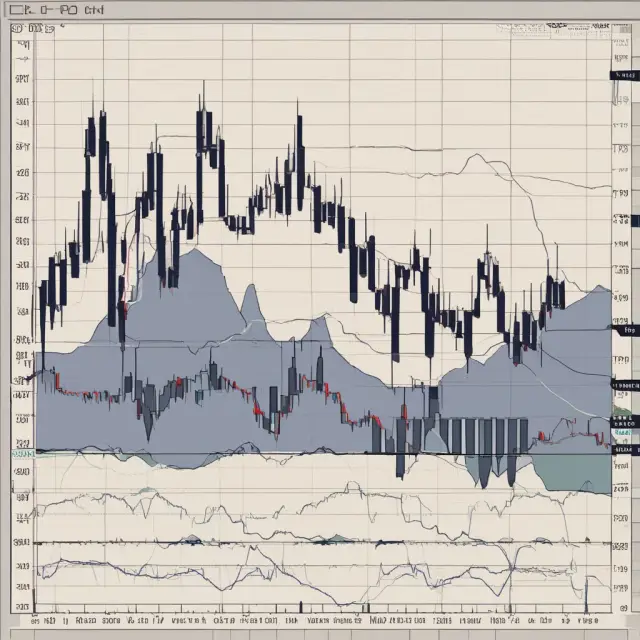
When it comes to identifying trends in financial markets, traders employ various techniques such as trendlines, price action, and technical indicators. In this section, we focus on using price action and technical indicators like the Relative Strength Index (RSI) to spot reversals.
Price Action
Price action is a form of analysis that relies on observing historical price movements, such as swing lows and highs, candlestick patterns, and other chartistic elements. Swing lows and highs provide essential information about the trend’s strength and direction. In an uptrend, swing lows are generally higher than those in previous periods, while swing highs remain lower than prior swing highs.
Swing highs and lows are important as they form natural levels of resistance and support, which can be used to predict future price movements. For example, if the price breaks below a recent swing low, it may indicate an emerging downtrend. Conversely, if the price rallies above a previous swing high, it could signal that the uptrend is gaining momentum.
Candlestick patterns are another essential aspect of price action analysis. These visual representations illustrate the open, close, high, and low values for each time period. Specific patterns like doji or hammer candles may indicate potential reversals or continuations.
Technical Indicators
The Relative Strength Index (RSI) is a popular momentum indicator that measures the strength of an asset’s price action. It ranges from 0 to 100, with readings above 70 considered overbought and below 30 as oversold. An RSI above 50 suggests an uptrend, while one below 50 indicates a downtrend.
RSI divergence can be used to detect potential reversals. When the price makes new highs but the RSI fails to do so or drops lower, it could indicate that the uptrend is losing momentum and a reversal may be imminent. Conversely, when the price forms lower lows while the RSI creates higher lows, this bullish divergence suggests that the downtrend might reverse.
By combining trendlines, price action, and technical indicators like the RSI, traders can effectively identify trends and anticipate potential reversals. However, it is crucial to remember that these tools should not be relied upon exclusively; instead, they should be used in conjunction with other fundamental or macroeconomic factors to make informed trading decisions.

Trends in Fundamental Analysis
Beyond technical analysis, trends can also be identified using fundamental analysis. In fundamental analysis, traders and investors examine financial statements to understand the health and future direction of a company. By analyzing revenue, earnings, and other financial data, investors can identify trends that might not always be reflected in chart patterns or price action.
One common way to analyze trends in fundamental analysis is through examining a company’s quarterly or annual reports. For example, an increase in revenue from quarter-to-quarter or year-to-year could indicate an uptrend, while declining revenue suggests a downtrend. Similarly, earnings per share (EPS) growth can also help identify trends in the profitability of a company.
Another way to assess trends using fundamental analysis is by evaluating economic data and broader market conditions. For instance, consistent economic growth or falling unemployment rates may indicate an overall uptrend for the economy, while declining GDP or rising inflation might suggest a downturn.
However, it’s important to note that not all trends will be linear. Markets can experience trends in cycles, with some assets or sectors outperforming others during certain periods. Additionally, economic and financial data can be influenced by external factors, making it crucial for investors to stay informed about geopolitical events, regulatory changes, and other news that could impact the market or specific securities.
Incorporating both technical and fundamental analysis can provide a more comprehensive understanding of trends and help traders make more informed decisions in their investments. As markets evolve, trends may shift, so it’s essential to remain adaptable and responsive to new information.
Key Takeaways
– Trends can be identified through financial statements and economic data using fundamental analysis.
– Revenue growth, earnings per share (EPS), and broader market conditions are all factors that can help assess trends in fundamental analysis.
– Not all trends follow a linear progression; understanding cycles and staying informed about external factors is crucial.
– Combining technical and fundamental analysis can provide a more complete picture of market trends and investment opportunities.

Advantages of Trading with Trends
Following a trend can lead to substantial profits in finance and investment markets. As an investor or trader, understanding the benefits of identifying trends and trading along with them is crucial for success. This section will discuss the advantages of trend trading, including herd mentality, risk management, and the psychological aspects that come into play when dealing with trends.
Profitability: One significant advantage of trading with trends is their profit potential. By recognizing a trend’s direction, traders can potentially make profits by entering positions in the same direction as the trend. This approach allows for the possibility of capturing price swings and rides that could lead to substantial returns. As more market participants jump on board, a trend’s momentum may accelerate, further enhancing potential profits.
Herd Mentality: Trend following also takes advantage of herd mentality. Herd mentality occurs when investors follow the crowd without thinking critically about their investment decisions. When a trend emerges, large groups of traders and investors tend to jump on board, driving prices further up or down as more and more people enter the market. This collective behavior can create powerful trends that can last for extended periods.
Risk Management: Following trends also offers potential advantages when it comes to risk management. By trading in the same direction as the trend, investors may minimize their losses by avoiding positions against the prevailing trend. Moreover, following a trend provides an opportunity to set stop-loss orders at key levels, such as trendlines or previous swing highs/lows, which can help mitigate potential losses if the market turns against the position.
Psychology: The psychological aspect of trading trends is another important factor. Trends can create strong emotions and biases that may influence market behavior, particularly in times of volatility or uncertainty. By understanding the psychology behind trend following, traders can capitalize on these emotional reactions and anticipate potential price movements more effectively. Furthermore, recognizing trends enables investors to maintain a disciplined approach, sticking with winning positions rather than jumping from one idea to another based on short-term market noise.
Understanding trends and their advantages can be a powerful tool for any investor or trader, whether they are just starting out or have extensive experience in the financial markets. By staying focused on longer-term trends and employing effective risk management techniques, investors may be able to generate consistent returns while minimizing losses.
Case Study: Identifying a Reversal in an Uptrend
In the world of finance, identifying trends is crucial for making informed investment decisions. In this case study, we’ll explore how to recognize a reversal in an uptrend using technical analysis and trendlines.
First, let’s clarify what we mean by a trend reversal. A trend reversal occurs when the price action shifts from an uptrend to a downtrend or vice versa. Spotting these shifts can help traders capitalize on potential profit opportunities as well as protect their existing positions from losses.
Our focus is on an uptrend, specifically in the context of a stock’s price movement over several months. An uptrend is characterized by higher swing highs and higher swing lows, which may indicate that the asset is generally rising in value. However, it’s important to remember that even during an uptrend, there will be fluctuations in the price.
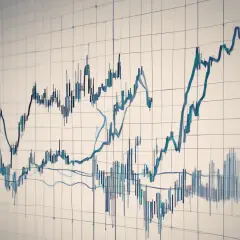
To illustrate this concept, consider a hypothetical stock, “Technology Innovations Inc. (TII),” whose share price has been following an uptrend for several months. The chart below displays TII’s price data over the past year:
In this example, we can see that the price has consistently formed higher swing highs and higher swing lows since the beginning of the uptrend. This is a clear indication of an uptrend. However, as the stock reaches its peak, it starts to form lower swing highs while maintaining the same or lower swing lows. These divergent price movements can serve as a potential warning sign for an upcoming reversal.
Now let’s dive deeper into using trendlines and technical indicators like the Relative Strength Index (RSI) to identify this trend reversal. Trendlines are lines drawn on a chart that connect a series of highs or lows. Uptrends are marked by an uptrend line connecting a sequence of higher swing lows, while downtrends are identified by a downtrend line connecting lower swing highs.
In the case of TII, as the price starts to show signs of weakness (forming lower swing highs), we can draw an uptrendline that connects the previous highs, which still maintains a positive slope. As mentioned earlier, the price may fluctuate within the trend, and in this case, it briefly falls below the line. However, it’s essential to remember that a single violation doesn’t necessarily mean the end of the uptrend.
At this point, we can also analyze the RSI (Relative Strength Index), a momentum indicator used to assess the strength of an asset’s price trend. The RSI ranges from 0 to 100, with values above 70 considered overbought and values below 30 considered oversold. A value of 50 indicates a neutral market condition.
As we approach the reversal point in our hypothetical TII example, the RSI starts to decline from an overbought state (above 70) towards a more neutral region. This can be another potential indicator that the uptrend may soon reverse.
To further confirm the trend reversal, we may observe candlestick patterns like “Doji” or “Hammer,” which are typically seen at the end of an uptrend and signal indecision in the market. In this scenario, a bullish Doji would appear as the price forms a long-tailed candle with essentially equal open and closing prices, demonstrating that neither buyers nor sellers were able to gain control over the market during that period.
In summary, understanding trends is vital for making informed investment decisions. In this case study, we’ve explored how to identify a reversal in an uptrend by analyzing trendlines and technical indicators like the RSI and candlestick patterns. While it’s essential to remember that no single indicator or method can guarantee accurate predictions, these tools can help provide valuable insights when making investment decisions.

Frequently Asked Questions about Trends
Q1: What is a financial trend?
A1: A financial trend refers to the overall direction in which asset prices, such as stocks or currencies, are moving. Traders identify trends using technical analysis tools, like trendlines and price action, or fundamental analysis methods, analyzing changes in economic data.
Q2: What is a bullish trend?
A2: A bullish trend occurs when an asset’s price is continually rising over time. This may be identified through the use of trendlines, price action analysis, or other technical indicators.
Q3: What is a bearish trend?
A3: A bearish trend happens when an asset’s price is continually falling over time. Bearish trends can also be identified using various technical analysis tools and methods, including trendlines and price action analysis.
Q4: How long does a financial trend last?
A4: The length of a financial trend varies significantly depending on the market conditions. Some trends may last for months or even years, while others may only last for a few days or weeks.
Q5: Can you profit from a downtrend?
A5: Yes, it is possible to profit from a downtrend by shorting the asset or trading put options. Traders who understand the trend and its potential reversal points can make significant profits when prices move in their favor.
Q6: How do I identify a trend reversal?
A6: Trend reversals can be identified using various technical analysis methods, such as price action patterns, trendlines, or technical indicators like RSI (Relative Strength Index), MACD (Moving Average Convergence Divergence) and Stochastic Oscillator. A clear break of a long-term uptrend line or downtrend line, or the formation of specific chart patterns such as double tops or bottoms, can also signal a trend reversal.
Q7: How do trends affect trading strategies?
A7: Trends influence trading strategies by providing direction for potential profits and losses. Traders following the trend may buy assets when prices are rising (long positions) and sell when prices are falling (short positions). Some traders choose to ride long-term trends, while others seek to profit from short-term price movements using various technical analysis tools and methods.
Q8: What is the importance of recognizing trends in finance?
A8: Recognizing trends is essential for successful trading and investment decisions as they help investors understand market dynamics and identify potential opportunities. By understanding the trend and its underlying causes, traders can make informed decisions on entry and exit points, risk management, and portfolio diversification.
 Next entry · No. 5,072Understanding the Power and Limitations of Trend Analysis in Finance and Investment
See also
-
 No. 5,546
18 Sep 2025
19 min
Understanding the Vortex Indicator: A Powerful Tool for Identifying Trend Reversals
Financial Tools
No. 5,546
18 Sep 2025
19 min
Understanding the Vortex Indicator: A Powerful Tool for Identifying Trend Reversals
Financial Tools -
 No. 5,074
09 Aug 2025
26 min
Understanding and Implementing Effective Trend Trading Strategies in Finance and Investment
Business Finance
No. 5,074
09 Aug 2025
26 min
Understanding and Implementing Effective Trend Trading Strategies in Finance and Investment
Business Finance -
 No. 5,661
27 Sep 2025
17 min
Understanding the Power of Wedge Patterns in Technical Analysis
Finance Policy
No. 5,661
27 Sep 2025
17 min
Understanding the Power of Wedge Patterns in Technical Analysis
Finance Policy -
 No. 5,643
26 Sep 2025
20 min
Understanding Weak Form Efficiency in Finance: Implications for Investors
Business Finance
No. 5,643
26 Sep 2025
20 min
Understanding Weak Form Efficiency in Finance: Implications for Investors
Business Finance -
 No. 5,518
15 Sep 2025
22 min
Understanding Volatility Ratios: A Technical Measure to Identify Price Patterns and Breakouts
Financial Tools
No. 5,518
15 Sep 2025
22 min
Understanding Volatility Ratios: A Technical Measure to Identify Price Patterns and Breakouts
Financial Tools -
 No. 5,348
01 Sep 2025
19 min
Understanding Uptick Volume: A Technical Analysis Tool for Institutional Investors
Finance Policy
No. 5,348
01 Sep 2025
19 min
Understanding Uptick Volume: A Technical Analysis Tool for Institutional Investors
Finance Policy