Understanding Altcoins: Types, Pros and Cons, and Future Outlook

Explore the world of altcoins with this comprehensive guide. Learn about types, pros & cons, and the future outlook.
Introduction to Altcoins
Altcoins are cryptocurrencies and digital tokens that operate on alternative blockchains, different from Bitcoin (BTC), the first decentralized digital currency. The term “altcoin” is a portmanteau of “alternative coin,” emphasizing the difference between the original digital currency and its alternatives. Since Bitcoin’s inception in 2009, numerous altcoins have emerged to address various challenges or offer unique features. While some attempt to improve upon Bitcoin’s limitations, others aim to serve distinct purposes within the evolving digital economy.
Origins of Altcoins
Altcoins came into existence as a natural progression in the cryptocurrency landscape. With the success of Bitcoin and its decentralized blockchain technology, developers saw opportunities for innovation and improvement in various aspects. This led to the creation of alternative coins or tokens that could address specific use cases or offer unique features. Some altcoins are created via hard forks from existing blockchains, while others are launched as completely new projects.
Understanding Altcoin Classification
Altcoins can be categorized based on their intended purpose within the cryptocurrency ecosystem. The primary types include payment tokens, stablecoins, security tokens, utility tokens, and meme coins. Each type serves a different function and attracts various investor demographics with unique investment objectives.
Payment Tokens
These digital currencies are designed as alternatives to Bitcoin for value transfer purposes. Payment tokens can offer faster transaction speeds or lower fees than Bitcoin while providing anonymity, increased security, and other features that cater to users seeking a better payment experience.
Stablecoins:
Stablecoins aim to maintain stable values by pegging their price to a reserve asset, such as a fiat currency, precious metals, or other cryptocurrencies. This helps reduce the volatility associated with cryptocurrency markets and offers investors a more predictable investment vehicle.
Security Tokens
Security tokens are blockchain-based digital securities that represent ownership of tangible or intangible assets such as real estate, stocks, or other commodities. They offer the benefits of tokenization, including increased liquidity, fractional ownership, and enhanced security through the use of smart contracts.
Utility Tokens
Utility tokens provide access to services within a specific network, such as computing power, storage space, or other digital resources. These tokens can be used for various purposes, including paying transaction fees, participating in governance decisions, and accessing exclusive content or functionality.
Meme Coins
Meme coins are a unique category of altcoins that often gain popularity based on internet memes or cultural trends. These digital currencies may not have any inherent value or practical use but can generate significant attention and hype among the online community due to their novelty and perceived potential for quick returns.
Upcoming Sections
In subsequent sections, we will further explore each altcoin category in detail, discussing their advantages, disadvantages, notable examples, and future prospects. Stay tuned as we dive deeper into the exciting world of altcoins!
Altcoin Classification: Payment Tokens
Payment tokens are one type of altcoins that operate as digital currencies for value exchange between two parties. These cryptocurrencies are often designed to function as direct competitors or alternatives to Bitcoin and Ethereum, offering different consensus mechanisms, transaction speeds, or additional features.
One example is Litecoin (LTC), which was the first altcoin created in 2011. While sharing many similarities with Bitcoin, Litecoin introduced a faster and less energy-intensive proof-of-work consensus mechanism called Scrypt. This enabled quicker transaction processing compared to Bitcoin’s SHA-256 algorithm.
Another well-known payment token is Ether (ETH), which powers the Ethereum network. Instead of forking from an existing blockchain, Ether was designed and released by Vitalik Buterin and others in 2014 to support smart contracts and decentralized applications on the Ethereum platform.
Payment tokens serve as currency within their respective networks to facilitate transactions. They can be used to pay for goods or services, as well as to transfer value between users, making them popular choices for peer-to-peer transactions and cross-border payments.
Many altcoins aim to improve upon the perceived limitations of Bitcoin and Ethereum, offering different features, transaction speeds, or use cases that appeal to various communities and niches within the cryptocurrency market. Some payment tokens focus on specific industries, such as gaming, social media, or virtual worlds, while others target niche markets like privacy, security, or anonymity.
The potential value of payment tokens is determined by factors such as network usage, adoption rate, and market demand for their services. The success stories of Bitcoin and Ethereum highlight the enormous potential rewards that come with creating a widely adopted and successful payment token. However, these rewards often come with significant risks, as the volatility of cryptocurrency markets can lead to rapid price swings and unpredictable market trends.
To understand the importance of payment tokens in the altcoin ecosystem, it’s crucial to examine their impact on users and developers, as well as their role within the broader financial landscape. By delving deeper into specific use cases, market trends, and real-world applications, we can gain a better appreciation for the transformative potential that these digital currencies hold for the future of finance and commerce.

Altcoin Classification: Stablecoins
In the dynamic and ever-evolving world of cryptocurrencies, altcoins have emerged as diverse derivatives from Bitcoin (BTC) and Ethereum (ETH). Among this vast array of alternatives, stablecoins hold a unique niche. These digital assets aim to provide investors with price stability by pegging their value to a stable asset, such as fiat currencies or precious metals. The following discussion explores the basics of stablecoins and their significance in the altcoin realm.
Stablecoins: Definition and Functionality
The term “stablecoin” is self-explanatory; it refers to any cryptocurrency with a fixed value relative to an external reference point, ensuring price stability amidst market volatility. This attribute distinguishes them from other altcoins, which are subject to wild price swings.
Stablecoins have gained increasing popularity as investors and traders seek shelter from the inherent volatility of cryptocurrencies. Cryptocurrency trading and usage have been characterized by extreme price fluctuations since their inception. Stablecoins attempt to reduce overall volatility by maintaining a consistent value through various mechanisms.
Examples of successful stablecoins include Tether (USDT), MakerDAO’s DAI, and the USD Coin (USDC). In March 2021, payment processing giant Visa Inc. announced it would begin settling some transactions on its network in USDC over the Ethereum blockchain, signaling further stablecoin adoption and expansion beyond their use as digital currencies.
The Role of Stablecoins: Reducing Market Volatility and Expanding Use Cases
Stablecoins offer significant advantages to investors, traders, and users, making them an essential component of the altcoin landscape. They enable greater financial stability, improve liquidity, and expand the range of applications for cryptocurrencies, which is particularly crucial in volatile markets.
By maintaining a stable value, stablecoins make it easier for investors to manage their assets and plan their investments without worrying about the day-to-day price fluctuations of other cryptocurrencies. Moreover, they increase the overall market liquidity by providing an alternative to traditional fiat currencies in trading activities.
Additionally, stablecoins’ ability to maintain a consistent value opens new possibilities for various use cases beyond simple transactions and investments. They can be employed as collateral for decentralized finance (DeFi) applications, facilitating lending, borrowing, and margin trading while reducing the risk of price fluctuations negatively impacting positions.
In conclusion, stablecoins serve a crucial role in the altcoin ecosystem by offering a more stable alternative to the inherently volatile nature of cryptocurrencies. As market volatility continues to be a factor for investors, stablecoins will likely remain an integral component of the altcoin landscape.

Altcoin Classification: Security Tokens
Security tokens are digital representations of real-world assets that operate on blockchains. Tokenization refers to the process of converting an asset’s ownership and trading rights into a token, enabling it to be bought, sold, or traded on various platforms. Unlike utility tokens, which do not represent any particular underlying asset, security tokens function as tradable securities.
Security tokens are regulated by financial authorities since they provide investors with equity-like benefits such as dividend payments, voting rights, and interest. The regulatory framework for security tokens can vary from country to country, but in the United States, these tokens fall under the jurisdiction of the Securities and Exchange Commission (SEC).
The issuance of security tokens involves a complex process that involves both the SEC and investors’ verification. Security token offerings (STOs) are the primary method of raising capital for security tokens, with companies selling their tokens to investors in exchange for fiat currency or cryptocurrencies like Bitcoin or Ethereum.
Security tokens have gained significant attention due to their potential to bridge the gap between traditional finance and decentralized finance (DeFi). They enable fractional ownership of assets such as real estate, art, and commodities, making them an attractive investment option for a broader range of investors.
One notable example of a successful security token offering is that of Exodus, which raised $75 million in 2021 through a Reg A+ token offering on the Algorand blockchain. This was a historic event as it marked the first digital asset securities to offer equity in a U.S.-based issuer.
Security tokens can be purchased and traded on various decentralized and centralized exchanges, with popular platforms like Binance, Uniswap, and Coinbase offering trading pairs for major security tokens. Their value is determined by the market forces of supply and demand, similar to traditional securities. However, it’s essential to note that investing in security tokens involves risks, including regulatory uncertainty, market volatility, and cybersecurity concerns.
In conclusion, security tokens represent a new wave of financial innovation that merges the benefits of traditional securities with the decentralized nature of cryptocurrencies. As this asset class continues to evolve, it’s crucial for investors to stay informed about regulatory developments, market trends, and investment risks.

Altcoin Classification: Utility Tokens
Utility tokens are a type of altcoin that is specifically designed to provide services within the network they belong to. Unlike payment tokens like Bitcoin, utility tokens have an inherent use case and purpose beyond just being a medium of exchange. Many popular blockchain platforms utilize utility tokens to incentivize and facilitate their ecosystems’ growth and functioning.
The most prominent example is Ethereum’s native token Ether (ETH), which powers the Ethereum network. Ether acts as the fuel for smart contract execution, enabling developers to build decentralized applications and create new functionality on the platform. Moreover, utility tokens can provide access to certain services or exclusive memberships within their respective ecosystems.
Filecoin is another example of a utility token that allows users to buy storage space in the Filecoin network by using its native token, Filecoin (FIL). The token’s purpose is to facilitate the storage and retrieval of data within the decentralized network. By providing users with a token-based incentive, Filecoin aims to create an efficient and secure peer-to-peer marketplace for data storage services.
It’s important to note that utility tokens can also be traded on cryptocurrency exchanges and held as investments, but their primary value comes from the functions they perform within their networks.
Utility tokens have gained significant traction due to their role in facilitating the growth and development of various blockchain ecosystems. However, this growing trend comes with both advantages and disadvantages for investors and users alike:
Pros:
– Utility tokens can offer a more substantial connection to their respective networks and projects compared to other types of altcoins.
– They often have a clear use case and purpose within their ecosystems.
– The growth potential of utility tokens may be higher due to the increasing demand for decentralized services and applications.
Cons:
– The value of utility tokens can be influenced by the success and adoption rate of their respective networks.
– They might face increased regulatory scrutiny due to their functional role within their ecosystems.
In conclusion, understanding the utility token classification is crucial for anyone interested in altcoins and cryptocurrencies as a whole. The potential of these tokens lies in their ability to enable new functionality and incentivize growth within their networks, making them an essential aspect of the decentralized future that many are envisioning.
As the blockchain space continues to evolve, utility tokens will likely play a significant role in driving innovation, development, and adoption across various industries and applications.

Altcoin Classification: Meme Coins
Meme coins are an intriguing and fascinating part of the cryptocurrency world. These digital currencies emerged based on their names or online influence, often gaining popularity rapidly due to hype and speculation. The term ‘meme coin’ is derived from the concept of internet memes – viral concepts, behaviors, or images that spread quickly and widely, often through social media platforms.
The roots of meme coins can be traced back to 2013 when Dogecoin was first introduced as a lighthearted alternative to Bitcoin. Dogecoin forked from Litecoin and gained popularity due to its fun Shiba Inu dog logo and the belief that it could serve as a digital currency for tipping content creators on various platforms. Since then, many meme coins have emerged, with some achieving substantial market capitalization and others fading away quickly.
One significant event in the meme coin space was the “meme coin season” of 2021 when hundreds of these currencies saw extraordinary gains in a short time frame. These rapid price increases were primarily due to speculation, with prominent influencers or investors attempting to capitalize on the hype surrounding various meme coins.
However, investing in meme coins carries unique risks and challenges. Since their value is based mostly on hype and public sentiment, they can be highly volatile and unpredictable. Additionally, many meme coins have little or no underlying utility or purpose beyond their names or logos. As a result, they may not hold long-term investment appeal or value once the hype subsides.
It’s essential to approach investing in meme coins with caution and thorough research. Before making any investment decisions, carefully consider your financial situation, risk tolerance, and investment objectives. It is also recommended that you consult a financial advisor for personalized advice tailored to your unique circumstances.
In conclusion, meme coins represent an exciting and ever-evolving aspect of the cryptocurrency market. While some have achieved remarkable success and others have fallen by the wayside, they continue to capture the attention of investors and enthusiasts alike. By understanding the nature of meme coins, their risks, and potential rewards, you can make informed decisions and navigate the meme coin landscape with confidence.
Pros and Cons of Investing in Altcoins
Investing in altcoins can seem both exciting and daunting due to the vast array of options available. While they offer numerous opportunities, it’s crucial to consider the advantages and disadvantages before diving into this rapidly evolving market.
Advantages:
- Diversification: Altcoins provide a chance for investors to diversify their portfolio beyond Bitcoin. Each altcoin offers unique features and potential benefits that might not be present in Bitcoin.
- Innovation: Many altcoins aim to address specific limitations or enhancements of the cryptocurrency ecosystem. They offer new approaches, technologies, and solutions, allowing for constant progression within the space.
- Investment Opportunities: Altcoin investments can provide significant returns if the underlying blockchain project shows promise and gains widespread adoption.
- Market Differentiation: Some altcoins cater to niche markets or serve specific industries, enabling investors to tap into these emerging sectors.
- Continuous Development: The altcoin market is continually evolving, meaning new projects are consistently being introduced, offering various investment opportunities.
Disadvantages:
- Risk and Uncertainty: Given the volatility and speculative nature of the crypto market, investing in altcoins involves a high degree of risk, particularly since many lack proven long-term value or use cases.
- Market Complexity: Altcoin markets can be complex due to their diverse offerings, making it difficult for investors to fully understand each project and make informed decisions.
- Limited Liquidity: Compared to Bitcoin, altcoins have smaller market caps and lower trading volumes, leading to less liquidity and potentially larger price swings.
- Regulatory Uncertainty: Altcoin markets are subject to regulatory changes that can significantly impact their value and investor sentiment. Staying informed about regulatory developments is essential for successfully navigating the altcoin landscape.
- Scams and Fraud: Unfortunately, not all altcoins are legitimate or worthwhile investments. Some may be outright scams or unviable projects. Research and due diligence are crucial when considering investing in an altcoin.
It’s important to note that these pros and cons apply generally to altcoins as a whole; individual projects within the category may have unique characteristics that alter their investment appeal. As always, conducting thorough research and seeking professional advice is essential before making any investment decisions.

Future Outlook on Altcoins
Altcoins have been an integral part of the crypto market since the emergence of Bitcoin and Ethereum. These digital assets represent various improvements or new functionalities when compared to their forerunners, making them attractive to investors looking for alternatives, niche opportunities, or competitive advantages. In this section, we will discuss the possible future developments for altcoins by exploring predictions, consolidation trends, and key milestones in the altcoin market.
Predictions
The cryptocurrency landscape is dynamic and ever-evolving, making it challenging to predict the future of altcoins. However, some analysts believe that several factors could significantly impact the altcoin sector:
- Market consolidation: The ongoing trend suggests that the number of altcoins will continue shrinking as projects with weak fundamentals fade away, and more promising ones gain traction and attract investors.
- Increased institutional adoption: As more institutions embrace Bitcoin, we may witness a growing interest in other altcoins offering unique solutions, higher yields, or increased security.
- Regulatory clarity: Clearer regulations from governments worldwide could lead to further growth within the sector as investors gain confidence in these digital assets.
- Technological advancements: New technologies like DeFi (Decentralized Finance) and NFTs (Non-Fungible Tokens) could fuel demand for specific altcoins and create new investment opportunities.
- Partnerships and collaborations: Strategic partnerships between blockchain projects, corporations, or other key players in the industry can significantly impact the value and adoption of altcoins.
Consolidation Trends
The cryptocurrency market has seen a continuous trend towards consolidation, with several factors contributing to it:
- Market maturation: As more investors enter the market, the demand for established projects is growing, leading to increased market capitalization and a shrinking number of altcoins.
- Investor education: With increasing awareness and understanding of cryptocurrencies and their potential use cases, investors are becoming more discerning and focusing on projects with solid fundamentals and long-term viability.
- Competition: The fierce competition in the market is making it increasingly challenging for new altcoins to gain traction, leading to a natural selection process where only the strongest projects survive.
Key Milestones in Altcoin Markets
- Ethereum (ETH): With its smart contracts functionality and ERC-20 standard, Ethereum has been instrumental in driving the growth of numerous altcoins through ICOs and dApps (Decentralized Applications). Its recent shift towards a proof-of-stake consensus mechanism (Ethereum 2.0) is expected to bring even more development opportunities for altcoins.
- Stablecoins: As the volatility of cryptocurrencies can be intimidating for some investors, stablecoins like Tether (USDT) and USD Coin (USDC) have gained significant popularity. They provide a more stable value and make it easier to enter and exit the crypto market.
- Security tokens: The tokenization of securities is a growing trend that could lead to new opportunities for altcoins, as they can represent ownership in various assets like real estate or stocks. This new asset class might attract institutional investors and increase overall market adoption.
- Decentralized finance (DeFi): DeFi has gained traction in 2021, offering decentralized alternatives to traditional financial services. As this sector continues to grow, altcoins designed for specific use cases within these platforms may gain popularity and value.
- Non-Fungible Tokens (NFTs): NFTs have captured the attention of collectors and artists worldwide, with high-profile sales reaching millions of dollars. The success of NFTs could create a new wave of interest in altcoins designed for this niche market.
In conclusion, the future outlook for altcoins remains uncertain but promising as they continue to evolve alongside technological advancements and market trends. As the crypto ecosystem matures, we can expect increased consolidation, institutional adoption, and regulatory clarity, which may lead to significant growth opportunities for selective altcoin projects.
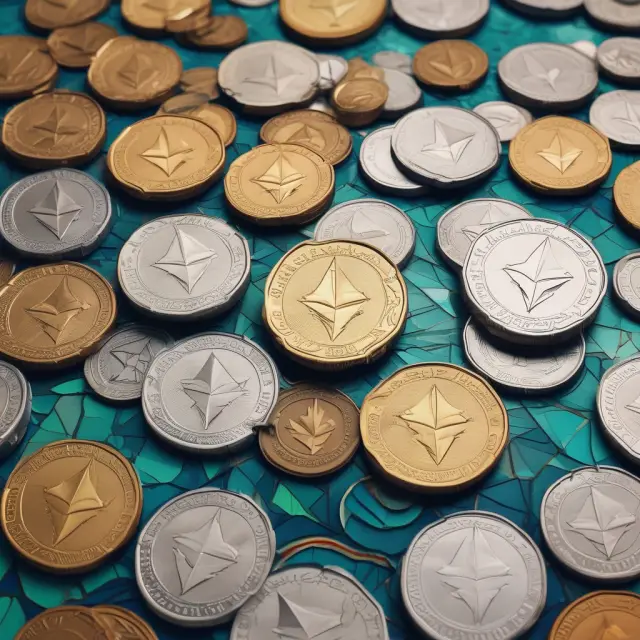
Examples of Successful Altcoins: Ethereum, USDC, Tether (USDT)
As the market for cryptocurrencies continues to evolve, altcoins have emerged as a significant segment within this diverse ecosystem. Among the plethora of options available, three stand out as successful and influential: Ethereum, US Dollar Coin (USDC), and Tether (USDT).
1. Ethereum:
Ethereum, often referred to as ether, is a decentralized software platform that enables the creation and execution of smart contracts and decentralized applications (dApps) through its native token, ETH. Unlike Bitcoin, which focuses primarily on facilitating peer-to-peer transactions, Ethereum’s potential lies in providing a blockchain infrastructure for building various applications, creating decentralized financial solutions (DeFi), and powering non-fungible tokens (NFTs). The platform’s adaptability and versatility have been instrumental in attracting developers and users alike.
2. US Dollar Coin (USDC):
Launched in September 2018 by Circle, a Boston-based fintech company, USDC is a stablecoin pegged to the U.S. dollar. Stablecoins are cryptocurrencies designed to reduce the volatility of digital assets by maintaining a fixed price relative to an external reference. In USDC’s case, that reference is the United States dollar. The token’s stability provides a crucial bridge between traditional financial systems and decentralized finance (DeFi). With its partnership with Visa, USDC has gained widespread adoption for transactions, making it a compelling alternative to fiat currencies and other stablecoins like Tether.
3. Tether (USDT):
Tether is another stablecoin pegged to the U.S. dollar. It was launched in 2014 by a company called Tether Limited, which is based in the British Virgin Islands. Tether’s initial success can be attributed to its early entry into the market and the perceived need for a stable alternative to Bitcoin. However, controversy surrounding Tether’s reserves and their transparency have cast doubt on its stability and long-term viability. Despite these concerns, Tether remains one of the most widely traded and valuable stablecoins.
In summary, Ethereum, USDC, and Tether represent successful altcoins with unique strengths that have contributed to their widespread adoption. Each coin offers a distinct value proposition: Ethereum as a decentralized platform for building applications and facilitating transactions; USDC as a stablecoin backed by the U.S. dollar and gaining momentum through partnerships; and Tether as an early entrant into the stablecoin market with significant trading volume despite lingering concerns about its reserves. These altcoins demonstrate that innovation, stability, and adoption are essential factors in creating successful cryptocurrencies.
In conclusion, understanding the world of altcoins involves exploring their various classifications, advantages, and disadvantages. As we’ve seen with Ethereum, USDC, and Tether, successful altcoins offer unique value propositions that set them apart from Bitcoin and each other. While predicting the future of altcoins is challenging, it’s clear that they will continue to shape and influence the cryptocurrency landscape for years to come.

FAQ
What exactly are altcoins? This term refers to digital currencies that do not include Bitcoin and for some, Ethereum. The origin of altcoins can be traced back to the emergence of Litecoin in 2011, which was a fork from Bitcoin’s blockchain. Altcoins differ from Bitcoin due to their consensus mechanisms, new features or purposes.
Let us explore some common types of altcoins based on their primary usage:
- Payment tokens: These altcoins are designed for value exchange between users, with examples such as Litecoin and Dogecoin.
- Stablecoins: This category of altcoins aims to reduce market volatility by pegging their values to fiat currencies or precious metals. Notable stablecoins include Tether (USDT), MakerDAO’s DAI, and USD Coin (USDC).
- Security tokens: Tokenization turns assets into digital form, which can be bought and sold like traditional securities. Examples of security tokens include Exodus’ equity token offering in 2021 and the Algorand blockchain.
- Utility tokens: These altcoins are used to access services or goods within a particular network. Ethereum’s Ether (ETH) and Filecoin are examples of utility tokens.
- Meme coins: Inspired by humor or internet memes, these altcoins quickly gain popularity through social media hype and speculation, with Dogecoin being an early example.
When considering investing in altcoins, it’s crucial to evaluate their pros and cons. The benefits include improving upon Bitcoin’s limitations and a diverse range of investment options. However, risks include less liquidity, smaller market capitalization, and the challenge of distinguishing between different use cases. As the cryptocurrency market continues to evolve, many altcoins may not survive, but a select few with strong utility, use cases, and solid blockchain purpose are expected to dominate the markets.
It’s important to approach investing in cryptocurrencies cautiously, considering your financial situation, goals, risk tolerance, and the market conditions. Speak to a financial advisor for guidance before making any investment decisions.
 Next entry · No. 143Understanding Alternative Depreciation System (ADS): A Comprehensive Guide
See also
-
 No. 4,948
30 Jul 2025
22 min
Understanding Tezos: A Comprehensive Overview of the Energy-Efficient Blockchain Network
Crypto
No. 4,948
30 Jul 2025
22 min
Understanding Tezos: A Comprehensive Overview of the Energy-Efficient Blockchain Network
Crypto -
 No. 1,344
02 Sep 2024
20 min
Understanding Ether (ETH): The Fuel Powering the Ethereum Blockchain
Crypto
No. 1,344
02 Sep 2024
20 min
Understanding Ether (ETH): The Fuel Powering the Ethereum Blockchain
Crypto -
 No. 836
17 Jun 2024
24 min
Understanding Crypto Tokens: History, Types, and Differences from Cryptocurrencies
Crypto
No. 836
17 Jun 2024
24 min
Understanding Crypto Tokens: History, Types, and Differences from Cryptocurrencies
Crypto -
 No. 432
23 Apr 2024
21 min
Bitcoin: Understanding the Digital Gold Rush
Crypto
No. 432
23 Apr 2024
21 min
Bitcoin: Understanding the Digital Gold Rush
Crypto -
 No. 1,068
23 Jul 2024
19 min
Understanding Disruptive Technology: Implications for Institutional Investors
Business Strategy
No. 1,068
23 Jul 2024
19 min
Understanding Disruptive Technology: Implications for Institutional Investors
Business Strategy -
 No. 5,883
15 Oct 2025
17 min
Understanding ZCash (ZEC): A Decentralized Cryptocurrency with Enhanced Security and Anonymity
Crypto
No. 5,883
15 Oct 2025
17 min
Understanding ZCash (ZEC): A Decentralized Cryptocurrency with Enhanced Security and Anonymity
Crypto