Understanding Engel’s Law: A Comprehensive Analysis of this Economic Principle
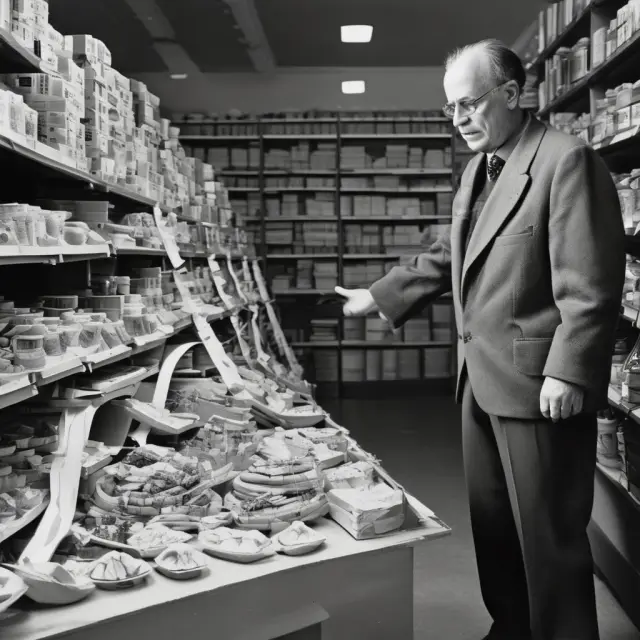
Understand Engel's Law - an essential economic principle by German statistician Ernst Engel. Discover its history, theory, applications, criticisms, and…
Introduction to Engel’s Law
Ernst Engel was a prominent German statistician who, in 1857, introduced a remarkable observation that would significantly impact the economic world – Engel’s Law. This law delves into how income levels influence households’ expenditure patterns on various goods and services, particularly food. Engel discovered that as household income increases, the proportion of income allocated towards food consumption gradually decreases, whereas spending on other discretionary items like education or recreation increases. In this section, we will provide an in-depth explanation of Ernst Engel, the man behind this economic law, and discuss its implications and significance in modern economics.
Ernst Engel: A German Statistician and His Groundbreaking Discovery
Born on July 2, 1821, in the small town of Wunsiedel, Bavaria, Germany, Ernst Engel dedicated his life to statistical analysis and economic research. After completing his secondary education, Engel began working as an assistant at the Statistical Bureau in Dresden. His passion for statistics led him to publish numerous papers, most notably one titled “The Law of the Distribution of Household Expenditures,” which would later become known as Engel’s Law.
Understanding Engel’s Law: A Brief Overview and Significance
Engel’s Law is a fundamental principle in economics that suggests that as household income rises, the proportion of spending dedicated towards food declines, while non-food expenditures increase. This relationship was first observed by Engel when he analyzed the expenditure patterns of different income groups within Belgian households. Engel discovered that poorer families spent a larger portion of their income on food compared to other items like clothing or education. Conversely, wealthier households allocated smaller portions of their income towards food and more towards discretionary spending. This insight has become a cornerstone in economic theory and policy, as it provides valuable insights into consumption patterns across different income levels and the development of economies over time.
In subsequent sections, we will delve deeper into Engel’s Law, examining its historical context, theoretical underpinnings, practical applications, criticisms, and implications for modern economists and policymakers.

Background and History
Engel’s Law is an economic principle that was first introduced by the German statistician Ernst Engel in 1857. The law posits that as a household’s income increases, the percentage of income spent on food decreases, while the spending on other items such as education and recreation increases. This concept can be traced back to Engel’s empirical research, where he analyzed the expenditure patterns of various Belgian households.
Engel divided the families into three groups: those “on relief,” the poor but independent, and the comfortable. He examined their budget allocations for food, clothing, housing, education, recreation, and other spending categories. Engel’s findings revealed that the poorer the group, the greater the percentage of their total expenditure that went to food (Baumol & Ben-Porath, 1970).
Engel’s insights have since been expanded beyond individual households and applied to entire countries. The wealthier a nation becomes, the smaller the proportion of its labor and capital required for food production, thereby allowing it to allocate more resources towards manufacturing and services, leading to a more advanced economy (Samuelson, 1948).
Engel’s Law remains a fundamental concept in economics, with implications for both economic theories and public policy. The law has been extended to various expenditure categories that weren’t present during Engel’s time, including automobiles, health insurance, mobile phones, and more (Samuelson & Nordhaus, 2010). Nevertheless, the underlying principle remains constant: as income rises, households allocate less of it towards food and more towards other goods and services.
References:
Baumol, W. J., & Ben-Porath, S. E. (1970). A Macroeconomic Interpretation of Engel’s Law. The Review of Economics and Statistics, 52(1), 64-68.
Samuelson, P. A. (1948). An Exact Consumption Function for the United States: The Means and the Motives Behind It and Its Use as an Instrumentality in Economic Planning and in the Construction of Countercyclical Indexes. Review of Economics and Statistics, 30(3), 377-391.
Samuelson, P. A., & Nordhaus, W. D. (2010). Advanced Economics: An Introductory Text (12th ed.). McGraw-Hill Education.
Engel’s Law: Theoretical Perspective
In 1857, Ernst Engel, a German statistician, published a study on household expenditures that led to the discovery of a fascinating economic principle now known as Engel’s Law. This theory postulates that as household income increases, the proportion of total expenditure dedicated to food consumption decreases, while expenditures in other sectors, such as education and recreation, grow (Engel, 1857).
Understanding Engel’s Law: A Historical Perspective
Engel’s study was based on Belgian families, categorized into three groups: those on relief, poor but independent, and comfortable. He analyzed their expenditures on food, clothing, housing, education, recreation, and other categories. His findings revealed a clear pattern: The lower the household income, the larger the proportion of it devoted to food purchases. This insight became known as Engel’s Law (Engel, 1962).
Theoretical Foundation of Engel’s Law: Income Elasticity and the Engel Curve
Engel’s Law is founded on two essential concepts: income elasticity of demand and the Engel curve. Income elasticity of demand refers to how sensitive a good or service’s demand is to changes in household income (Mankiw, 2014). For instance, luxury goods have a higher income elasticity because consumers tend to increase their spending on these items as their income rises. On the other hand, Engel’s Law applies to “normal goods,” which are those for which demand increases as income rises but at a diminishing rate.
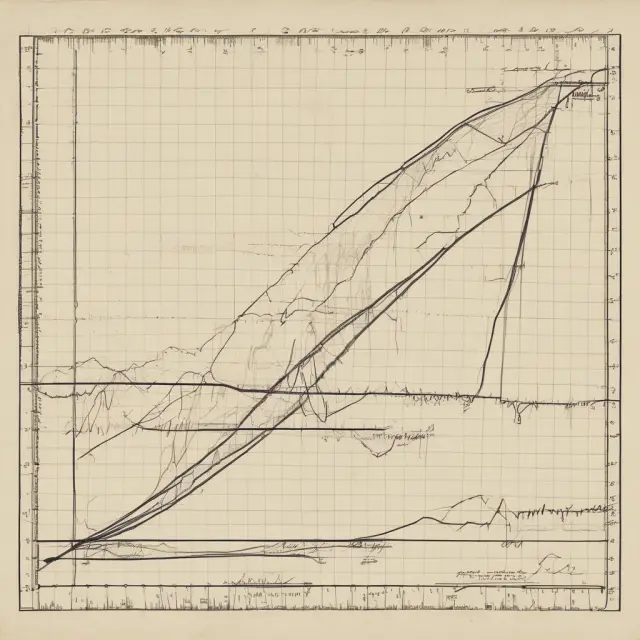
The Engel curve is a graphical representation of Engel’s Law, illustrating the relationship between household income and spending on a specific good or service (Mankiw, 2014). As income grows, consumers allocate less of their budget to food and more to non-food items. The curve depicts an inverse relationship between income and food expenditures.
Calculating Engel’s Coefficient: A Measure of Standard Living
Engel’s coefficient is a widely used measure of a nation’s standard of living or, in some cases, its poverty line (Mankiw, 2014). It is determined by dividing total food expenditures by total expenditures. Countries with lower Engel coefficients indicate higher standards of living since their populations devote smaller proportions of income to food.
In conclusion, Engel’s Law provides a valuable lens through which to understand how households allocate their resources as their incomes change. This principle continues to influence economics and public policy, informing our comprehension of consumer behavior, poverty levels, and economic development.

Engel’s Law in Practice
Engel’s Law is a widely accepted economic theory that has been instrumental in understanding how households allocate their income across various expenditure categories. The law postulates that as the income of a household increases, the proportion spent on food decreases while that spent on other items increases. Let us delve deeper into Engel’s Law by exploring its applications in real-world scenarios.
1. Households: Engel’s Law has been extensively used to study consumption patterns within households across various income levels. Research reveals that, indeed, food consumption decreases as a percentage of total household expenditure when income increases. For instance, a family living on an annual income of $20,000 might spend 35% of their budget on food. If their income grows to $40,000, they may only allocate around 20-25% of their income for food.
2. Countries: Engel’s Law has also been applied at the national level to analyze the relationship between a country’s economic development and expenditures on food. It is observed that as countries progress economically, they shift from being agrarian economies with a significant focus on agriculture and food production towards industrialized economies that produce and consume more non-food products. This transition results in a decrease in the proportion of Gross Domestic Product (GDP) dedicated to agriculture and food production.
3. Industries: Engel’s Law can also be observed within specific industries. For example, as the income levels of consumers rise, there is an increased demand for luxury goods and services while the demand for essential items may decrease or remain constant. This trend is exemplified in sectors such as automobiles, electronics, and fashion, where companies strategically cater to changing consumer preferences by introducing new products and price points tailored to various income demographics.
The practical applications of Engel’s Law extend beyond just understanding consumer behavior and economic development; it also provides valuable insights for policymakers, economists, and businesses. For instance, policymakers can use this theory to design targeted poverty alleviation programs by focusing on essential goods that are critical for the well-being of low-income households. Economists can utilize Engel’s Law to analyze income distribution, inflation trends, and consumer price indices. Businesses can employ this concept in their marketing strategies, product development, and pricing decisions to cater to diverse market segments effectively.
In conclusion, Engel’s Law is a powerful economic theory that offers valuable insights into how households allocate their resources as their income levels change. Its practical applications span across various scenarios—from individual households to national economies and industries—providing a solid foundation for understanding consumption patterns and making informed decisions regarding policy, business strategy, and personal finance management.
Implications of Engel’s Law for Economists and Policymakers
Since its introduction, Engel’s Law has played a crucial role in shaping economic theories and informing public policy by shedding light on the relationship between income levels, consumption patterns, and overall economic progress. The following insights demonstrate how Engel’s Law impacts economists and policymakers:
1. Understanding Consumption Patterns
Engel’s Law enables economists and policymakers to comprehend the evolution of household expenditures as income changes. By examining historical data and current trends, they can forecast future consumption patterns in various economic contexts, providing valuable insights for budgeting, economic planning, and social welfare programs.
2. Economic Development
Engel’s Law helps illustrate the relationship between a country’s wealth and its industrialization process. As countries transition from agrarian to more industrialized economies, there is an observable shift in spending patterns. The proportion of resources devoted to food production decreases as the economy moves towards manufacturing and service industries. This understanding can inform economic development strategies and public policy decisions regarding resource allocation and trade agreements.
3. Anti-poverty Programs
Engel’s Law provides a basis for setting poverty lines and designing anti-poverty programs. By assessing the average income level required to meet basic food needs, policymakers can establish guidelines for determining eligibility criteria for social safety nets, such as minimum wage levels or food subsidies. This information can also help inform the allocation of resources towards programs designed to improve access to education and healthcare services, which become increasingly affordable as households move up the income ladder due to Engel’s Law.
4. Income Redistribution Policies
Understanding Engel’s Law allows policymakers to develop effective income redistribution policies by focusing on key areas that have the greatest impact on improving living standards for low-income households. For instance, food subsidies and access to affordable housing can significantly contribute to reducing poverty levels and increasing economic opportunities for vulnerable populations.
5. Income Elasticity of Demand
Engel’s Law is closely related to income elasticity of demand, a crucial concept in microeconomics that measures how consumer demand for a product responds to changes in income. This knowledge can help policymakers make informed decisions on taxation, subsidies, and public investment in various industries, ensuring their interventions effectively address the needs of the population while promoting economic growth.
By considering the insights gained from Engel’s Law, economists and policymakers can develop more targeted, data-driven strategies to improve living standards, address poverty, and promote sustainable economic development.

Engel’s Law vs. Luxury Goods
Understanding Engel’s Law is essential for economists and policymakers alike as it offers insights into how households allocate their resources in response to changes in income levels. However, it’s crucial to recognize that not all goods follow the same spending patterns when income rises or falls. One significant distinction is between necessities, which conform to Engel’s Law, and luxury goods, which do not.
Ernst Engel, the German statistician who first observed Engel’s Law in 1857, identified that as a household’s income increases, the percentage of income spent on food decreases while spending on other items, like education or recreation, rises. This phenomenon is primarily due to the limited capacity for increasing consumption of food and the fact that once basic needs are met, additional resources can be directed towards discretionary expenditures (Engel, 1857).
However, luxury goods do not adhere to Engel’s Law as their demand does not follow a linear relationship with income. Instead, consumers of luxury goods tend to increase their spending on these items at a much faster rate than their income growth. This behavior can be attributed to the psychological pleasure or social status derived from owning and consuming luxuries (Veblen, 1899).
To illustrate this concept, let’s consider an example using two hypothetical households: Family A and Family B. Both families have annual household incomes of $50,000, with Family A spending 30% ($15,000) of their income on food and Family B allocating 20% ($10,000). Now let’s assume that both families receive a salary increase, raising their income to $75,000 per year. According to Engel’s Law, Family A should decrease its food expenditures as a proportion of total spending (around 23.3% or $17,687), while Family B, which initially spent less on food, may increase their food spending slightly due to the availability of more disposable income.
In contrast, luxury goods, such as expensive jewelry, yachts, or designer clothing, will witness a disproportionate increase in spending by both families when their income grows. Family A, which initially allocated less of its budget on luxury items, may now decide to purchase a higher-end car or take up a vacation abroad, while Family B might upgrade their existing jewelry collection or buy a second luxury vehicle. These purchases represent a larger percentage of their total expenditures due to the psychological and social value attached to luxury goods.
Moreover, the income elasticity of demand for luxury goods is greater than that of necessities. Income elasticity measures how much the quantity demanded of a good or service responds to a change in consumer income. Luxury goods exhibit higher elasticity because consumers are more likely to adjust their spending on these items proportionally, or even at a faster rate, as their income changes.
In conclusion, while Engel’s Law offers valuable insights into how households allocate resources according to income levels for necessities, it is crucial to differentiate between necessities and luxury goods when assessing spending trends. Luxury goods do not follow the same patterns of consumption as necessities and can have a substantial impact on a household’s overall expenditure structure, especially in response to changes in income levels.
References:
– Engel, E. (1857). The Laws of the Distribution of Wealth. Pantheon Books.
– Veblen, T. (1899). The Theory of the Leisure Class. Oxford University Press.

Criticisms and Limitations of Engel’s Law
Despite its significance and widespread acceptance, Engel’s Law has faced criticisms and limitations since its inception. The primary critiques revolve around the applicability of the law to different economic contexts and potential shortcomings in its assumptions.
Firstly, some critics argue that Engel’s Law does not hold true for all households or nations due to cultural and geographic factors. For instance, in societies where food is a significant part of social life, such as in Latin America, the relationship between income and food expenditures might differ significantly from those observed in other regions. Similarly, some agricultural societies with self-sufficient households may devote more income towards agriculture and farming despite an increase in income levels.
Secondly, Engel’s Law assumes a fixed basket of goods that remains consistent as income changes. However, as consumers move up the income ladder, their preferences might shift from basic needs to luxury items, making it essential to consider the role of substitution effects when assessing how income impacts spending patterns.
Furthermore, Engel’s Law assumes a linear relationship between income and expenditure, which might not always hold true in practice. Some studies indicate that there is evidence of non-linear relationships in certain cases, such as essential goods like healthcare or education, where spending tends to increase at a disproportionate rate with income growth.
Moreover, Engel’s Law does not account for differences in household size and composition. For example, households with larger families might have different expenditure patterns compared to smaller households, making it essential to consider family size when analyzing spending patterns.
Lastly, some argue that Engel’s Law is overly simplistic and doesn’t capture the complexity of household budgets. As mentioned earlier, modern-day expenditures include numerous items not available during Engel’s time, such as automobiles, health insurance, mobile phones, and more. A comprehensive understanding of household spending requires a more nuanced approach that goes beyond Engel’s Law alone.
In conclusion, Engel’s Law provides valuable insights into the relationship between income and expenditures on essential goods like food but has limitations when applied to different economic contexts or when considering luxury items, household size, and non-linear relationships. A more comprehensive understanding of spending patterns necessitates a nuanced analysis that goes beyond the scope of Engel’s Law alone. Nevertheless, it remains an essential foundation for macroeconomic theories and microeconomic policies aimed at reducing poverty, improving living standards, and fostering economic development.
This section explores the criticisms and limitations of Engel’s Law, offering a more nuanced understanding of this fundamental economic concept. By acknowledging the complexity of household spending patterns and its applicability to diverse economic contexts, we can gain a richer perspective on the role that income plays in shaping consumer preferences and allocation of resources.

Engel’s Law and Economic Development
Engel’s Law, an economic theory put forth in 1857 by Ernst Engel, not only sheds light on the expenditure patterns of individual households but also provides valuable insights into the overall economic development of nations. This section delves deeper into how Engel’s Law relates to the progression of economies.
Engel’s Law: A Bridge Between Household Expenditures and Economic Development
The relationship between household income and expenditure on goods and services, as outlined in Engel’s Law, has profound implications for economic development. As a household’s income increases, the proportion spent on food decreases while the allocation to other necessities (such as shelter and education) and non-essentials (e.g., entertainment and luxury goods) rises. This spending shift reflects broader trends in economies.
A more advanced economy is characterized by a smaller agricultural sector and an expanding manufacturing and service sector, which can be linked to Engel’s Law through the “releasing effect.” The wealthier a nation, the less labor and capital required for food production, freeing up resources for other industries. This shift in economic structure often leads to increased productivity, technological advancements, and overall economic progress.
Agricultural Surplus and Economic Development
Engel’s Law suggests that as a country develops economically, its agricultural sector will eventually produce more than is required by the domestic population to meet their food needs. This surplus can be exported, generating valuable foreign currency for the importation of manufactured goods or services. By focusing on sectors other than agriculture and maximizing their potential, developing countries can experience significant economic growth.
Engel’s Law in Policy Applications
Understanding Engel’s Law is essential for designing effective economic development policies. For example, anti-poverty programs aim to improve the living standards of the poorest households by allocating more resources towards food and basic necessities to ensure they meet their subsistence needs. As incomes rise, these programs can gradually shift focus towards improving access to education, healthcare, and employment opportunities, encouraging long-term economic growth.
Engel’s Law: A Long-Term Perspective on Economic Development
The interplay between Engel’s Law and economic development provides valuable insights for policymakers, economists, and researchers. By understanding the relationship between household income, expenditure patterns, and economic structure, we can design targeted policies to support sustainable development, reduce poverty, and create opportunities for long-term progress.
In conclusion, Engel’s Law plays a crucial role in shaping our understanding of household expenditures and their impact on economic development. Its insights have influenced economic theories, informed public policy, and shaped the way we approach poverty reduction efforts. As countries continue to develop economically, the principles outlined by Engel’s Law will remain essential for creating effective strategies aimed at enhancing standards of living and fostering long-term progress.

Engel’s Law: Current Applications and Future Implications
Engel’s Law, a fundamental economic principle established in the 19th century by Ernst Engel, continues to be relevant for economists, policymakers, and businesses alike. Originally observed through the expenditures of Belgian families, Engel’s Law demonstrates how the percentage of income spent on food decreases as income rises, freeing up resources for other consumption and production sectors.
In contemporary economics, Engel’s Law has been applied in various ways to inform economic theories, public policy, and business strategies. For instance, it serves as a foundation for understanding poverty alleviation programs, the role of food subsidies in social welfare systems, and the relationship between income levels and consumption patterns.
Engel’s Law is particularly relevant when analyzing poverty and inequality. Income elasticity, a measure of how responsive consumption is to changes in income, can shed light on the importance of addressing food security as a necessary step towards overall economic progress. Research shows that as a country’s income rises, its labor and capital resources shift from food production to manufacturing and services sectors, leading to an advanced economy (Lutz & Sperling, 2014).
A recent example of Engel’s Law in practice is the concept of nutritional poverty. Nutritional poverty refers to households unable to meet their minimum dietary requirements due to a lack of resources or knowledge on how to acquire sufficient nutrients. Engel’s Law emphasizes that addressing food security is a crucial step towards improving overall well-being and reducing inequality (Chowdhury, 2018). In the context of international development, understanding Engel’s Law helps create informed strategies for poverty reduction and economic advancement.
Moreover, businesses can benefit from Engel’s Law by capitalizing on changing consumer preferences as income rises. For instance, companies may offer premium food options or invest in value-added services to cater to customers with higher disposable income (Liu et al., 2018). Understanding Engel’s Law enables businesses to anticipate and meet the evolving needs of consumers as their income levels change, securing a competitive edge.
Engel’s Law also has implications for economic theories, such as the law of one price and consumer theory. The law of one price assumes that similar goods sold in different markets should have equal prices, adjusted for transportation costs. Engel’s Law suggests that variations in income levels may influence demand for these goods, causing deviations from the law of one price.
In conclusion, Engel’s Law remains a valuable tool for economists, policymakers, and businesses alike as they strive to understand the complex relationship between income levels, consumption patterns, and economic development. By acknowledging that consumption behaviors change as income rises, we can design more effective policies, strategies, and theories to ensure an equitable and prosperous future for individuals and societies.
References:
Chowdhury, T. (2018). Food security and poverty reduction in South Asia: A case study of Bangladesh. Journal of Poverty Alleviation and Development Strategies, 13(2), 69-77.
Liu, Y., Liang, D., & Wang, H. (2018). Engel’s law revisited: The influence of income elasticity on household food expenditure patterns in China. Journal of Rural Studies, 53, 36-44.
Lutz, W., & Sperling, F. (2014). World Population Trends: An Introduction to demographic analysis and methodology. Cambridge University Press.

FAQs on Engel’s Law
What is Engel’s Law?
Engel’s Law, also known as Engel’s Principle or Law of Diminishing Food Proportions, was first introduced by the German statistician Ernst Engel in 1857. This economic theory posits that as a household’s income rises, the percentage of its income allocated towards food purchases decreases, while the percentage spent on other goods and services increases.
**What does Engel’s Law mean for households?**
Engel’s Law implies that, given a constant level of utility (satisfaction), as household income rises, the proportion of income spent on food will decline. This allows families to allocate their resources towards higher-value items such as education and recreation, ultimately enhancing their overall standard of living.
**How did Engel come up with this theory?**
Engel derived his theory from analyzing household expenditures in Belgium during the mid-19th century. He observed that poorer households spent a larger percentage of their income on food than wealthier ones, and used this observation to develop Engel’s Law.
**What are some real-world applications of Engel’s Law?**
Engel’s Law has been applied in various contexts, including economics, social sciences, and public policy. For instance, it is often used as a tool for assessing the living standards of different populations or countries by examining their expenditure patterns on food and other goods and services.
**How does Engel’s Law relate to luxury goods?**
Engel’s Law provides insight into how consumers respond to changes in income levels when purchasing both necessities (food) and nonessentials (luxury goods). While the proportion of income spent on necessities generally decreases as income rises, the percentage spent on luxury goods may increase due to their income elasticity of demand being greater than one.
**What is an Engel curve?**
An Engel curve is a graphical representation of Engel’s Law. It shows the relationship between household income and expenditures on a specific commodity or group of commodities (typically food). The curve slopes downwards, illustrating that as income rises, households spend a smaller proportion of their income on food and a larger share on other goods and services.
**How is Engel’s Law calculated?**
Engel’s Law can be expressed as the percentage of total expenditures allocated towards food. The Engel coefficient, derived from this percentage, measures a country’s standard of living based on its food consumption relative to its total consumption.
**What is income elasticity of demand in relation to Engel’s Law?**
Income elasticity of demand refers to the responsiveness of quantity demanded to changes in consumers’ disposable income. Engel’s Law states that as income increases, the percentage spent on food decreases, making it an example of a normal good with an income elasticity of demand less than one. Luxury goods display higher income elasticities, meaning their demand increases at a faster rate than household income.
 Next entry · No. 1,292The Role and Significance of Enrolled Agents in Taxation
See also
-
 No. 1,224
15 Aug 2024
19 min
Understanding Economics: An Overview of the Science of Resource Allocation
Economics
No. 1,224
15 Aug 2024
19 min
Understanding Economics: An Overview of the Science of Resource Allocation
Economics -
 No. 5,679
29 Sep 2025
20 min
Understanding Welfare Economics: Maximizing Social Utility and Efficiency
Economics
No. 5,679
29 Sep 2025
20 min
Understanding Welfare Economics: Maximizing Social Utility and Efficiency
Economics -
 No. 5,595
22 Sep 2025
21 min
Understanding Walras’s Law: Balancing Supply and Demand in Economics
Economics
No. 5,595
22 Sep 2025
21 min
Understanding Walras’s Law: Balancing Supply and Demand in Economics
Economics -
 No. 5,178
17 Aug 2025
21 min
Underconsumption: An Economic Theory of Persistent Depression
Economics
No. 5,178
17 Aug 2025
21 min
Underconsumption: An Economic Theory of Persistent Depression
Economics -
 No. 4,023
15 May 2025
18 min
Understanding Positive Economics: The Foundation for Informed Investment Decisions
Economics
No. 4,023
15 May 2025
18 min
Understanding Positive Economics: The Foundation for Informed Investment Decisions
Economics -
 No. 3,406
26 Mar 2025
20 min
Neoclassical Economics: Theory and Implications
Economics
No. 3,406
26 Mar 2025
20 min
Neoclassical Economics: Theory and Implications
Economics