Understanding Force Majeure: Unforeseeable, External and Unavoidable Catastrophes

Force majeure is a contract provision that excuses a party from performing when an extraordinary event beyond its control, such as a natural disaster, war, epidemic or government action, prevents performance. In the US its reach depends on the clause's wording; some courts read it narrowly, and economic downturns are generally not covered.
What is Force Majeure?
Force majeure is a term used in contract law to refer to an unforeseeable and unavoidable circumstance that prevents one or both parties from fulfilling their obligations under a contract. This concept, originating from French civil law, encompasses events such as natural disasters (hurricanes, earthquakes) and human actions (armed conflict, strikes).
Force Majeure: Key Concepts and Significance
Understanding the Basics of Force Majeure
The term “force majeure” translates to ‘greater force’ or ‘superior force.’ It refers to unforeseeable and external circumstances that prevent parties from fulfilling their contractual obligations. The purpose of force majeure clauses is to remove liability for those affected by the event, ensuring a degree of flexibility for both parties.
The Force Majeure Concept: Historical Origin and Legal Significance
Force majeure dates back to French civil law as part of the Napoleonic Code. Its origins can be traced to the concept of an ‘act of God,’ which refers to events outside human control, such as natural disasters or extreme weather conditions. The idea behind force majeure was to provide relief for contracting parties when faced with unforeseeable and unavoidable circumstances.
Conflict Between Force Majeure and Pacta Sunt Servanda
The principle of ‘pacta sunt servanda,’ or “agreements must be kept,” is a fundamental principle in both civil and international law. It emphasizes the importance of honoring contractual agreements, even in the face of unforeseen circumstances. This concept conflicts with force majeure as it can potentially excuse parties from fulfilling their obligations.
Understanding the Intersection of Force Majeure and Pacta Sunt Servanda
While there is a potential conflict between these two principles, they are not mutually exclusive. Courts generally consider whether the unforeseeable event was truly beyond the control of both parties when determining whether to grant relief under force majeure. A force majeure defense may be granted if the circumstances were indeed beyond the parties’ control and rendered performance impossible.
Exploring Modern Challenges for Force Majeure: Shifting Perceptions and New Threats
Modern times have brought about new challenges for force majeure, including increased awareness of human agency in events that used to be considered ‘acts of God,’ as well as new threats like cyber warfare, pandemics, and man-made disasters. These developments have raised questions regarding what constitutes an unforeseeable event in the context of force majeure.
Understanding the Implications of Force Majeure: Examples and Case Studies
To illustrate how force majeure operates in practice, consider a few examples of situations where this principle may be invoked:
- Natural disasters: When an earthquake or hurricane damages a factory, the supplier might use a force majeure defense to avoid liability for shipment delays and associated damages.
- Human conflicts: If a war breaks out in a region where a company operates, it can invoke force majeure to protect itself from contractual obligations during the conflict.
- Global pandemics: In the context of COVID-19, if a party cannot perform its obligations due to government restrictions or other pandemic-related reasons, they may be able to claim force majeure.
- Cyber attacks: A company that experiences a significant cyber attack resulting in data breaches and system damage could potentially invoke force majeure for contractual relief.
As the world continues to evolve, understanding the nuances of force majeure will remain crucial for businesses and individuals alike. By staying informed about this legal principle and its implications, you’ll be better prepared to navigate the complexities of modern contract law.

Key Takeaways on Force Majeure
Force majeure is a term that appears in contracts to absolve parties of liability for unforeseeable and insurmountable circumstances, which prevent them from fulfilling their obligations. This concept typically includes natural disasters, such as hurricanes or earthquakes, and human-caused events, including wars and strikes. Three essential principles must be met for a force majeure defense to apply: unforeseeability, externality, and irresistibility.
Unforeseeability refers to the inability of parties to predict an event at the time of contracting. Externality means that the event is beyond human control. Lastly, irresistibility implies that the affected party has taken all reasonable measures to mitigate the consequences but cannot avoid them entirely. In recent times, discussions have arisen regarding whether new and unforeseen events, such as pandemics, asteroid impacts, or cyber attacks, can be considered force majeure.
The force majeure principle intersects with another legal concept: pacta sunt servanda, which requires contractual commitments to be honored unless breached by circumstances beyond a party’s control. This intersection can lead to legal complications when determining whether to apply the force majeure defense or hold parties liable for their obligations.
An example of a force majeure event is an earthquake that damages a factory, leading to delays and potential contract breaches. In such cases, the affected party could use the force majeure clause as a defense, arguing that the earthquake was unforeseeable, external, and irresistible. However, the application of this principle can vary based on jurisdictions and specific contract terms.
Modern times present challenges to traditional interpretations of force majeure due to advancements in technology, globalization, and shifting risk factors. For instance, it is now more challenging to distinguish between what is considered foreseeable or unforeseeable since the world is increasingly aware of new threats and hazards. As a result, legal experts continue to refine their understanding of force majeure and its application in various contexts.

Understanding the Concepts Underpinning Force Majeure
Force majeure is a term derived from French law meaning “greater force.” It refers to an event or circumstance beyond the control of parties involved in a contract, which prevents them from fulfilling their obligations. This clause absolves both parties from liability due to unforeseen circumstances that disrupt normal business operations. The concept of force majeure is essential to understanding how contracts are impacted during catastrophic events.
The principle of ‘pacta sunt servanda’ – “agreements must be kept” – forms the foundation for contractual relationships in civil and international law. Force majeure, on the other hand, offers an escape from the strict adherence to pacta sunt servanda, but it is not an easy way out. This section explores how force majeure intersects with the principle of ‘pacta sunt servanda,’ and what it takes for an event to be considered a force majeure defense.
The concept of force majeure has been evolving in response to changing circumstances, with its original focus on natural disasters expanding to include human-caused catastrophes. The unpredictability of these events calls for a delicate balance between holding parties accountable and offering them relief when faced with extraordinary circumstances beyond their control.
Force Majeure vs. Pacta Sunt Servanda: Legal Dilemma
Underlying the relationship between force majeure and pacta sunt servanda is an inherent tension. While pacta sunt servanda emphasizes the importance of contractual obligations, force majeure recognizes that unforeseen circumstances can make it impossible for a party to fulfill their duties. The potential conflict between these two principles necessitates careful consideration when determining whether a force majeure defense is applicable.
The principle of ‘pacta sunt servanda’ holds that agreements must be kept and not wriggled out of easily. It encourages contractual stability and predictability in commercial relationships, ensuring that both parties are held accountable for their commitments. However, this principle can create legal challenges when unforeseen circumstances arise, which is where force majeure comes into play.
Force majeure acts as a safety net, allowing relief from the strict adherence to pacta sunt servanda when the unexpected occurs. To invoke force majeure, parties must prove that an event was unforeseeable, external, and irresistible. This three-part test allows courts to determine whether a party’s inability to meet contractual obligations stems from an act beyond their control or an issue within their sphere of influence.
The tension between force majeure and pacta sunt servanda highlights the importance of clear communication, detailed contracts, and a thorough understanding of applicable laws when entering into business agreements. By acknowledging the possibility of unforeseen circumstances, parties can create more robust contracts that address potential contingencies and help mitigate risk.
In conclusion, force majeure is an essential concept in contract law that allows relief from the strict adherence to pacta sunt servanda when faced with extraordinary events beyond the control of the parties involved. By understanding the underpinnings of these principles and their interplay, businesses can better navigate unforeseen circumstances and protect themselves from potential financial loss.

Force Majeure vs. Pacta Sunt Servanda: A Legal Dilemma
The tension between contractual obligations and unforeseeable events is a fundamental dilemma addressed by force majeure clauses. These provisions aim to protect parties from liability when circumstances beyond their control disrupt the expected course of an agreement. However, they raise legal complications in relation to pacta sunt servanda (Latin for “agreements must be kept”).
Force Majeure: Overview and Origins
Force majeure is a term rooted in French law that refers to an unforeseeable, external event or circumstance that prevents the performance of a contractual obligation. It originated from the Napoleonic Code’s principle that absolves parties from contractual liability when faced with circumstances beyond their control. Force majeure typically encompasses natural disasters and human actions like warfare.
The Principle of Pacta Sunt Servanda
Pacta sunt servanda is a legal concept that underpins the importance of keeping agreements, which has been a cornerstone principle in civil, international, and common law systems. Its significance lies in ensuring that contracts are honored and not easily renegotiated or retracted based on shifting circumstances.
The Intersection of Force Majeure and Pacta Sunt Servanda
Force majeure clauses introduce a potential conflict with pacta sunt servanda as they allow parties to escape contractual obligations when faced with unforeseeable, external events. However, it is essential to understand that the concept of force majeure does not negate the principle of pacta sunt servanda entirely; instead, it provides a limited exception under specific circumstances.
Conflict and Resolution
The tension between force majeure and pacta sunt servanda can be resolved by interpreting these concepts in a manner that allows for flexibility while maintaining the integrity of contractual agreements. This balance ensures that parties are not unduly burdened by events beyond their control, yet remain committed to fulfilling their obligations whenever possible.
In conclusion, force majeure and pacta sunt servanda serve distinct but complementary purposes in the realm of contract law. Force majeure provides a means of escaping liability for unforeseeable, external circumstances, while pacta sunt servanda reinforces the importance of honoring contractual obligations. By striking this balance, parties can navigate the challenges presented by unpredictable events and maintain a commitment to fair and mutually beneficial agreements.
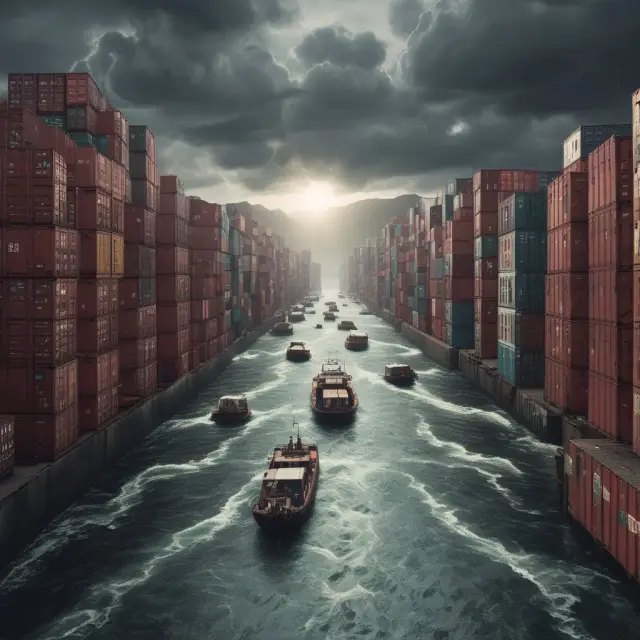
Example of a Force Majeure Event
A force majeure event is a significant disruption or catastrophe, external and unforeseeable, that prevents a party from performing its obligations as outlined in a contract. These events can be natural, such as an earthquake, hurricane, or tornado, or human-made, like a strike, riot, or war. A force majeure event is typically defined as an act of God, which cannot be anticipated or controlled by the parties involved.
The application of force majeure clauses can become complex when considering the fundamental principle of ‘pacta sunt servanda’ (Latin for ‘agreements must be kept’). Force majeure defenses conflict with this concept but are necessary to provide relief from unforeseen circumstances. In contractual relationships, it is crucial to understand the specifics of force majeure events and their implications on contractual obligations.
Consider an illustrative scenario: A supplier has a contract to deliver critical parts to a manufacturing company located in another region. The shipping route is through a narrow canal that can only accommodate large vessels under favorable weather conditions. Suddenly, an unprecedented storm causes the canal to close down for several weeks, delaying the shipment and causing potential financial losses to both parties.
In this situation, the supplier may attempt to invoke a force majeure clause in their contract to mitigate damages and relieve themselves from liability. To do so, they must prove that the storm was an unforeseeable, external, and irresistible event beyond their control. This example illustrates how a force majeure clause can provide relief for unexpected circumstances beyond the parties’ influence.
However, it is important to note that not all events will qualify as force majeure under different jurisdictions or contractual agreements. The definition and application of force majeure can vary based on legal systems and specific clauses, leading to potential ambiguity and controversy in its interpretation.
As global events continue to evolve and new challenges arise, understanding the intricacies of force majeure and its implications on contract law is essential for businesses and individuals alike.

Special Considerations for Force Majeure in Modern Times
As the world becomes increasingly interconnected and our understanding of risk evolves, traditional interpretations of force majeure are facing challenges. This section delves into some of these modern considerations for force majeure, shedding light on contemporary challenges and shifts.
Force Majeure and the Changing World
The world is constantly evolving, and the events that once seemed unforeseeable or external may no longer be so. Advances in technology, climate change, and globalization have brought new complexities to the table, blurring the lines between what can and cannot be considered force majeure. The question of what is foreseeable has become increasingly significant in this context. With a growing awareness of various threats, such as cyber attacks, pandemics, supervolcanoes, and asteroid impacts, there are ongoing debates regarding whether these events should be regarded as force majeure.
Intersection with the Principle of ‘Pacta Sunt Servanda’
The principle of ‘pacta sunt servanda’, or agreements must be kept, is a fundamental concept in civil and international law that is often at odds with the force majeure clause. This tension arises from the fact that contracts are meant to be binding commitments. However, force majeure clauses exist precisely to absolve parties from their obligations under certain circumstances. The challenge lies in striking the right balance between upholding contractual duties and recognizing the validity of unforeseeable, external, and unavoidable events.
The Importance of Specific Force Majeure Definitions
In the face of these shifting landscapes and challenges, having specific force majeure definitions in contracts has become crucial. Contracts that include detailed and explicit definitions of what constitutes a force majeure event can help ensure that both parties are on the same page when it comes to potential disruptions. These definitions should ideally respond to local threats and be flexible enough to accommodate new risks as they emerge.
Case Study: COVID-19 and Force Majeure
The ongoing COVID-19 pandemic serves as a powerful illustration of these modern considerations for force majeure. The pandemic has caused widespread disruptions, affecting everything from global trade and supply chains to employment and travel. As a result, there have been numerous debates regarding whether COVID-19 is considered force majeure and how it should be treated in legal contexts.
One of the primary issues at hand revolves around the unforeseeability of the pandemic. While it’s true that the virus was initially discovered in late 2019, its rapid spread and far-reaching consequences were largely unanticipated. This uncertainty has led to numerous legal battles and conflicting interpretations of force majeure clauses.
Another critical point is the potential impact on contractual obligations. If COVID-19 made it impossible for a party to perform its contractual obligations, then it could potentially qualify as force majeure. However, it’s essential to emphasize the word “impossible.” If the party was still able to fulfill their obligations, regardless of how difficult or costly it became in a COVID-19 environment, the event would not constitute force majeure.
A Note on Proving Force Majeure Claims
It’s also important to mention that proving a successful force majeure defense can be challenging. Courts have historically favored upholding contractual duties and may scrutinize force majeure claims closely. To increase the chances of success, parties should document all relevant events thoroughly and make every effort to mitigate the impact of the force majeure event.
In conclusion, understanding modern considerations for force majeure is crucial in today’s increasingly complex world. The challenges surrounding unforeseeability, external factors, and contractual obligations continue to evolve, making it essential for parties to be aware of these trends and adapt their contracts accordingly. By being proactive, clear, and flexible, they can minimize risk and navigate the nuances of force majeure in a rapidly changing landscape.

Understanding the Tests for Force Majeure Applicability
In order for a force majeure defense to be valid, the event causing the disruption must meet three tests. These tests aim to determine whether the event was unforeseeable, external, and irresistible. Understanding these concepts is crucial to determining whether a force majeure defense can effectively absolve contractual parties from their obligations in the event of an extraordinary occurrence.
1. Unforeseeability: An event is considered unforeseeable when it cannot be reasonably anticipated or expected by the parties involved in the contract. This means that if the event could have been foreseen, the party should have taken steps to mitigate its impact on their obligations under the agreement. In recent times, new challenges such as pandemics and man-made disasters like cyber threats and nuclear warfare have brought up questions regarding what is and isn’t foreseeable in a legal sense.
2. External: An external event refers to one that originates outside the control or sphere of influence of the parties involved in the contract. In other words, it cannot be attributed to any action taken by either party. For instance, natural disasters like hurricanes, tornadoes, and earthquakes are typically considered external events when considering force majeure defenses.
3. Irresistible: An irresistible event is one that could not have been avoided despite the parties’ best efforts to mitigate its impact or prevent it from occurring. For example, if a volcanic eruption makes it impossible for a company to fulfill its contractual obligations due to ash covering the airport runway and grounding all flights, this could potentially constitute an irresistible event.
The application of these tests can vary depending on jurisdiction and specific circumstances. Some courts may consider an event foreseeable if it has occurred in the same location previously, even if it had been many years ago. Additionally, a war in a conflict-ridden zone might not be unforeseeable or external anymore if there is a history of instability in that region.
These tests serve to strike a balance between enforcing contractual obligations and providing relief for parties affected by extraordinary events beyond their control. However, proving that an event satisfies these conditions can be challenging. Therefore, it’s essential to have clear and explicit definitions of what constitutes force majeure in the contract itself.
In conclusion, understanding the tests for force majeure applicability is vital for any party entering into a contract. By being aware of these tests and how they apply in various situations, businesses can protect themselves from potential disruptions caused by unforeseeable, external, and irresistible events.

COVID-19: A Contemporary Example of Force Majeure
The recent global COVID-19 pandemic has highlighted the importance of understanding force majeure clauses, as they may be crucial in managing contractual obligations and liability during crises. Generally defined as an external, unforeseeable, and unavoidable event that interrupts the normal course of business, force majeure can include a wide range of catastrophes, from natural disasters like hurricanes and earthquakes to human actions, such as warfare and terrorism.
In today’s interconnected world, it is essential to examine how COVID-19 fits into the realm of force majeure. As an unprecedented, global event impacting millions, COVID-19 has tested both individual and corporate contractual obligations, with implications for business continuity and liability.
Under the traditional tests for a valid force majeure claim, three conditions must be met: unforeseeability, external causation, and irresistibility. Let’s explore each of these aspects in relation to COVID-19:
1. Unforeseeability: Given that cases of COVID-19 were first reported at the end of 2019, it is debatable whether its impact on businesses could have been reasonably foreseen. While some may argue that the risks associated with a global pandemic should be anticipated in our increasingly interconnected world, others claim that such an event was beyond the scope of reasonable foresight.
2. External causation: As COVID-19 is an external event that originated from natural causes (i.e., a virus), it fits within the definition of external causation. However, determining whether force majeure applies requires examining if the specific obligations in question could have been reasonably avoided or prevented by the affected party.
3. Irresistibility: The irresistibility condition is met when no reasonable steps can prevent the occurrence of an event or mitigate its consequences. In the case of COVID-19, governments and individuals around the world have implemented numerous measures to contain the virus’ spread. These efforts may not have halted it entirely but have certainly impacted the degree of disruption experienced by businesses across various industries.
In summary, while debates surrounding whether COVID-19 constitutes a force majeure event will depend on specific circumstances and jurisdictions, it highlights the importance of understanding how contractual clauses should be interpreted to account for modern challenges and risks. As the business landscape evolves, so too must our approach to managing risk and liability in uncertain times.

Is COVID-19 Considered a Force Majeure?
In today’s rapidly changing world, understanding force majeure and its application is increasingly important, especially in light of the ongoing global health crisis – COVID-19. This section will explore whether COVID-19 can be classified as a force majeure event under contract law.
COVID-19, an unforeseen and uncontrollable pandemic, has significantly impacted our daily lives and challenged the business world, causing widespread disruption to supply chains, economic activity, and workforces alike. This raises the question: can a force majeure event be invoked when contractual obligations cannot be met due to this global crisis?
To answer this question, it is essential first to understand the fundamental nature of force majeure. Force majeure is a clause included in contracts that excuses one or both parties from liability for breach should an unforeseeable, external, and irresistible event occur, preventing them from fulfilling their obligations under the contract.
The key elements of a force majeure event include:
1. Unforeseeability: An event must be unforeseeable at the time of entering into a contract for it to qualify as force majeure. The question arises, was COVID-19 foreseeable? It is important to note that while there were warnings about potential pandemics in recent years, no one could have predicted the scale and impact of the current crisis.
2. External: Force majeure events must be external, meaning they originate outside the control of the parties involved in a contract. The COVID-19 pandemic is undoubtedly an external event, affecting numerous industries worldwide.
3. Irresistible: Parties cannot resist or prevent the consequences of a force majeure event once it occurs. Governments and businesses have taken various measures to combat the spread of COVID-19, but they have not been able to entirely stop its impact.
Given these criteria, it can be argued that COVID-19 meets the definition of a force majeure event under contract law. However, determining whether a specific force majeure clause in a contract applies depends on the contract’s terms and conditions. Some contracts may explicitly list pandemics as a covered event, while others might not.
In summary, COVID-19 can be considered a force majeure event due to its unforeseeability, external nature, and irresistible impact on businesses and individuals. However, the applicability of this defense depends on the terms and conditions outlined in each contract. It is essential for parties involved in contracts to carefully review their agreements and consult legal professionals for guidance when dealing with force majeure events.
As we continue navigating this uncertain time, understanding the concept of force majeure and its application will be crucial for businesses and individuals alike in managing risk and protecting themselves from unforeseen circumstances.

Frequently Asked Questions about Force Majeure
What is the definition of force majeure?
Force majeure refers to an unforeseeable and external event or circumstance that prevents a party from fulfilling its contractual obligations, rendering the performance impossible. It can encompass natural disasters, such as hurricanes, tornadoes, earthquakes, and human actions like armed conflicts.
What are some examples of events typically covered under force majeure clauses?
Force majeure clauses commonly cover acts of God, such as storms, floods, landslides, volcanic eruptions, and earthquakes, as well as man-made occurrences like wars, terrorist attacks, strikes, and government actions.
How can force majeure affect contracts?
Force majeure can relieve a party from liability if an unforeseeable event beyond their control disrupts the contract’s performance. The clause helps protect both parties by recognizing that unpredictable events may impact the execution of business agreements and preventing one side from bearing undue harm due to circumstances beyond their influence.
What jurisdictions recognize force majeure?
Many civil law jurisdictions, including France, Germany, Italy, Spain, and Poland, recognize the force majeure concept by default. In common law jurisdictions like the United States and the United Kingdom, force majeure clauses are more explicitly stated in contracts.
What are the three tests for a force majeure defense?
To establish a force majeure defense, an event must be unforeseeable, external to the parties involved, and unavoidable. The first test evaluates whether the event was predictable or could have been anticipated, while the second looks at whether it stemmed from either party or their actions. The third examines whether the event rendered contractual performance impossible for either side.
What happens if both parties agree to a specific event being considered force majeure?
If the contract explicitly includes a list of events that will be treated as force majeure, such as the occurrence of war or a pandemic, then the clause applies. In this case, both parties are bound by the terms of the agreement and the relief granted to each side if an event occurs.
Can COVID-19 serve as a force majeure event?
COVID-19 can potentially qualify as a force majeure event if it makes performance impossible for one or both parties. The key factor is determining whether the pandemic has made fulfilling contractual obligations objectively unachievable. If it has, then COVID-19 may serve as a valid defense under force majeure provisions.
Is force majeure an excuse to wriggle out of contracts?
Force majeure is not intended to be an easy way for parties to escape contractual obligations. Instead, it serves as a mechanism to address unforeseen and uncontrollable events that impact the ability to meet commitments under a contract. It is designed to protect both sides from the consequences of extraordinary circumstances beyond their control.
What are some alternative terms used for force majeure?
Force majeure is sometimes referred to as “act of God,” “vis major,” or “superior force.” These terms all generally convey the same meaning: an uncontrollable event that prevents a party from fulfilling its obligations under a contract.
 Next entry · No. 1,587Understanding Forecasting Techniques for Professional Investors
See also
-
 No. 2,317
27 Dec 2024
21 min
Understanding Implied Authority: A Crucial Concept for Professional and Institutional Investors
Business Finance
No. 2,317
27 Dec 2024
21 min
Understanding Implied Authority: A Crucial Concept for Professional and Institutional Investors
Business Finance -
 No. 1,999
01 Dec 2024
18 min
The Half-Year Convention for Depreciation: Aligning Expenses with Revenues
Accounting
No. 1,999
01 Dec 2024
18 min
The Half-Year Convention for Depreciation: Aligning Expenses with Revenues
Accounting -
 No. 2,644
23 Jan 2025
23 min
Understanding Judgments: Types, Collections, and Legal Consequences
Legal & Contracts
No. 2,644
23 Jan 2025
23 min
Understanding Judgments: Types, Collections, and Legal Consequences
Legal & Contracts -
 No. 2,319
27 Dec 2024
19 min
Understanding Implied Contracts: Legal Obligations Derived from Circumstances
Legal & Contracts
No. 2,319
27 Dec 2024
19 min
Understanding Implied Contracts: Legal Obligations Derived from Circumstances
Legal & Contracts -
 No. 2,165
15 Dec 2024
19 min
Understanding Holographic Wills: A Legal Alternative to Traditional Wills
Legal & Contracts
No. 2,165
15 Dec 2024
19 min
Understanding Holographic Wills: A Legal Alternative to Traditional Wills
Legal & Contracts -
 No. 2,150
14 Dec 2024
19 min
Hold Harmless Agreements: Protecting Parties from Liability in Business Contracts
Legal & Contracts
No. 2,150
14 Dec 2024
19 min
Hold Harmless Agreements: Protecting Parties from Liability in Business Contracts
Legal & Contracts