Understanding Full Retirement Age: A Comprehensive Guide for Institutional Investors

A comprehensive guide explaining what Full Retirement Age is, its impact on Social Security benefits and pension plans for Institutional Investors.
What Is Full Retirement Age?
Full retirement age, also known as normal retirement age or FRA, represents the age when individuals in the United States can claim their full Social Security retirement benefits without reductions. The concept of FRA is not limited to Social Security; it can also refer to pension plans and retirement systems around the world.
In the context of U.S. Social Security, FRA varies based on an individual’s birth year. For those born between 1943 and 1954, the FRA is 66 years old; for those born after 1960, it gradually increases up to 67 years. Claiming benefits before reaching FRA reduces their amount permanently.
FRA can be a crucial consideration in retirement planning, as delaying Social Security benefits beyond FRA results in increased monthly payments until the age of 70, while claiming them early will lower your overall benefits. However, it’s important to note that other factors like life expectancy and personal financial situation should also factor into the decision to claim retirement benefits at a specific age.
Historically, the FRA was set at 65 when Social Security began in 1935; however, it was increased to account for extended life expectancies in legislation enacted in 1983. With concerns about the solvency of the Social Security Trust Fund, discussions regarding increasing the FRA have reemerged as a potential solution.
Full retirement age is not only significant in the context of Social Security. For pension plans like employer-sponsored plans and government pensions, FRA refers to the age at which an employee becomes eligible for full benefits. In these cases, eligibility criteria can differ from the FRA for Social Security.
Understanding how FRA affects you as an individual or institutional investor requires a thorough understanding of the specific retirement system in question and your personal situation. By considering various factors such as life expectancy, income needs during retirement, and potential changes to retirement plans, you can make informed decisions regarding when to claim retirement benefits and maximize your financial well-being.
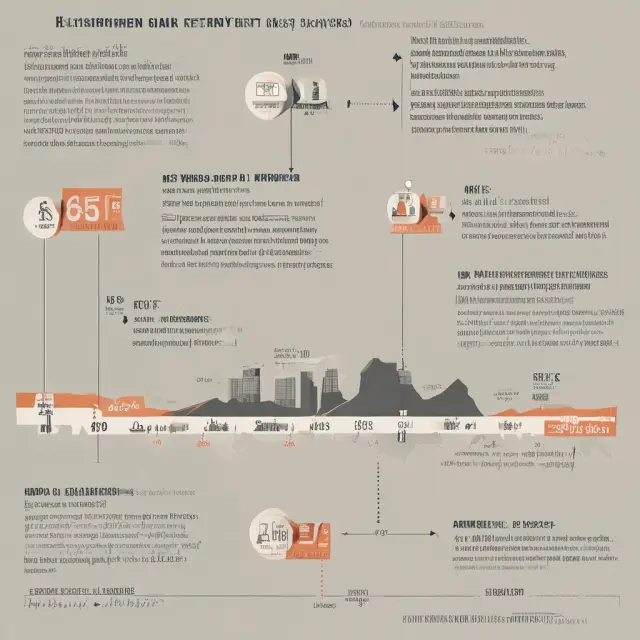
Full Retirement Age for U.S. Social Security Benefits
The concept of Full Retirement Age (FRA) refers to the age at which individuals in the United States can receive unreduced retirement benefits from both Social Security and certain pension plans. It is crucial for institutional investors, financial planners, and retirees to understand how this age impacts their planning strategies and future income streams.
In the U.S., full retirement age for Social Security benefits varies depending on the year a person was born. For those born between 1943 and 1954, FRA is 66 years and two months. Those born in 1955 or later will see their FRA gradually increase to 67 years. Claiming Social Security benefits before reaching full retirement age results in a permanent reduction of the monthly benefit amount.
For instance, if an individual’s FRA is 67 and they start claiming benefits at 62, the monthly benefit would be 70% of what it would have been if they had waited until their full retirement age. Conversely, delaying benefits beyond the FRA results in a larger monthly income (8% increase for each year past FRA). The maximum Social Security benefit can be reached at age 70.
FRA also applies to pension plans like employer-sponsored plans. For example, police officers and military personnel often receive full pension benefits after reaching a certain number of service years instead of a specific age. In the case of Social Security, eligibility for full retirement benefits is determined by the individual’s birth year.
The history of FRA can be traced back to 1935 when the Social Security program began with an initial FRA of 65. In the late 1980s, the retirement age was raised from 65 to 67 for individuals born in 1938 or later due to increased life expectancy. However, concerns about the solvency of Social Security’s trust fund have been brought up as a potential reason for further FRA increases in the future.
By using the online calculator provided by the Social Security Administration, you can easily determine your personal full retirement age and explore various retirement scenarios based on different start dates. Understanding this crucial concept is essential for planning an effective retirement strategy and ensuring adequate income throughout one’s golden years.

Impact of Full Retirement Age on Social Security Trust Fund
The solvency of the Social Security Trust Fund has been a concern for several decades due to the growing number of retirees and increasing life expectancy. According to the Social Security Administration’s Trustees Report, the combined Old-Age and Survivors Insurance (OASI) trust fund and Disability Insurance (DI) Trust Fund are projected to be depleted by 2034. Once these reserves are exhausted, payroll taxes collected will only cover about three-quarters of scheduled benefits. This deficit raises questions about the impact on the full retirement age and potential solutions for maintaining the solvency of the Social Security Trust Fund.
The Full Retirement Age (FRA) in the U.S., which is currently 67 for those born after 1960, can be adjusted to address the looming trust fund deficit. One solution suggested by some conservatives is increasing the FRA, as it has been done previously when legislation was passed in 1983, raising the FRA for those born in 1938 or later to a maximum of 67.
Another approach to addressing the Social Security Trust Fund solvency issue includes benefit cuts, payroll tax increases, or a combination of both. While these measures might not be popular among beneficiaries and workers alike, they could help ensure the longevity of the program. Moreover, raising the FRA can have implications for retirement planning strategies and income security for individuals in their later years.
To learn more about the historical context, benefits, and various aspects of full retirement age, consult our comprehensive guide on understanding full retirement age. If you are curious about how to determine your personal FRA or need further information on this topic, please visit the Social Security Administration’s website or use their online calculator for an accurate estimate.
FAQ: Full Retirement Age and Social Security Trust Fund Solvency
What is the projected deficit of the Social Security Trust Fund?
The combined reserves of Social Security’s Old-Age and Survivors Insurance (OASI) trust fund and the Disability Insurance (DI) Trust Fund are projected to be depleted by 2034.
What happens when the Social Security Trust Fund is depleted?
Once the reserves are exhausted, payroll taxes collected will only cover about three-quarters of scheduled benefits.
Is there a possibility to increase the full retirement age in response to the solvency concerns?
Yes, increasing the FRA has been proposed as a potential solution for maintaining the program’s solvency. However, it may have implications for individual retirement planning strategies and income security.
What are other ways to address the Social Security Trust Fund deficit?
Other solutions include benefit cuts, payroll tax increases, or a combination of both to help ensure the longevity of the program.
How will increasing the full retirement age impact individual financial planning strategies?
Raising the FRA can require retirees to adjust their retirement income plans and savings strategies accordingly, potentially delaying retirement or finding alternative sources of income in later years.

FAQ: Full Retirement Age for U.S. Citizens
Full Retirement Age (FRA) refers to the age when individuals born in different years can receive their full retirement benefits from the Social Security Administration without reductions. In the United States, FRA varies depending on your birth year. It is 66 and two months for those born between 1955 and 1959, with an increase to 67 for individuals born in 1960 or later.
Q: What is Full Retirement Age?
A: Full retirement age (FRA) is the age at which you can receive your full Social Security retirement benefits without reductions in the United States. The FRA varies depending on the year you were born and has been increasing to account for increased life expectancy. Currently, the FRA ranges from 66 and two months for those born between 1955 and 1959, with a gradual increase to 67 for individuals born in 1960 or later.
Q: What is the impact of Full Retirement Age on Social Security Trust Fund?
A: The Social Security Administration projects growing deficits for its trust fund, with combined reserves expected to be depleted by 2034. Some conservatives have advocated raising the FRA as a solution to address these deficits. However, other approaches, such as benefit cuts or payroll tax increases, could also be used.
Q: How does Full Retirement Age affect pension benefits?
A: The concept of full retirement age also applies to pension plans, where it refers to the age when employees can collect their full pension benefits without reductions. Employers may set different retirement ages and service requirements for their pension plans.
Q: What is the average retirement age in the U.S., and how does it compare to the Full Retirement Age?
A: The average retirement age in the United States has increased over the past few decades, but it is still lower than the full retirement age for most people born after 1959. On average, American men retire at age 64.6, and women retire at 62.3. To maximize benefits and ensure a comfortable retirement, many financial experts recommend waiting until you reach your full retirement age to start collecting Social Security retirement benefits.
Q: Can I work after Full Retirement Age?
A: Yes, individuals can continue to work while collecting their full Social Security retirement benefits after reaching the FRA. There are no restrictions on earnings for those who have reached full retirement age. However, if you begin collecting benefits before your full retirement age and earn over a certain amount, your benefits may be temporarily reduced.
Q: What happens if I retire before Full Retirement Age?
A: If you choose to retire before your full retirement age, your Social Security retirement benefit will be reduced depending on the number of months you start collecting benefits before reaching FRA. For every month you start receiving benefits before your FRA, your monthly benefit amount is reduced by approximately 0.5%.
Q: Can I delay collecting my Social Security retirement benefits after Full Retirement Age?
A: Yes, individuals can delay collecting their Social Security retirement benefits beyond their full retirement age to receive a higher monthly benefit amount. Your benefits increase by about 8% for every year you delay taking them between your FRA and the age of 70.
Q: What is the minimum retirement age in the U.S.?
A: The minimum retirement age for Social Security retirement benefits in the United States is currently 62. However, if you start collecting benefits before reaching full retirement age, your monthly benefit amount will be reduced depending on how early you begin taking it.
Q: What happens when Social Security reaches its Trust Fund’s depletion?
A: When the Social Security Trust Fund’s combined reserves are depleted, which is projected to occur in 2034, the program will only collect enough revenue from payroll taxes to pay for 80% of benefits owed. Beneficiaries would receive an 80% payment or a smaller reduction in their monthly benefits until Congress addresses the issue and implements a solution.
FAQ: Full Retirement Age for Other Countries
The concept and age of full retirement vary significantly between countries. In some countries, such as Germany and France, the FRA is gradually increasing to 67. In other countries like China, India, and Indonesia, it is as low as 58 or 60 years old. To learn more about how Full Retirement Age varies around the world and its implications for individual retirement planning, see our article on Full Retirement Age: A Comprehensive Guide for Institutional Investors.

Full Retirement Age Around the World
Full retirement age (FRA) is not only significant in the context of Social Security and pension plans within the United States but also internationally. Understanding FRA’s implications for citizens worldwide requires examining how it varies across different countries.
Across various nations, full retirement ages can range significantly – from as young as 58 to a maximum of 67 years old. In some instances, there are gender differences in FRA, with women often retiring earlier than men.
Let’s explore several examples:
Australia: At 65, Australians approach full retirement age, but it is gradually increasing to 67 by 2023.
Brazil: Men have an FRA of 65, while women retire two years earlier at 62. However, there was a recent increase in the female FRA from 60 to 62 in October 2019.
Canada: Canadians reach full retirement age at 65.
China: The Chinese FRA differs between men and women. Men reach full retirement age at 60, while blue-collar women retire at 50 and white-collar women retire at 55.
France: In France, the FRA for men and women is 62, which will increase to 67 for those born in 1953 or later.
Germany: With a full retirement age of 65 and nine or 10 months (depending on birth year), Germany has one of the higher FRA ages. This is gradually increasing to 67 for those born in 1964 or after.
India: In India, men retire at the relatively young full retirement age of 60, with women retiring slightly earlier at 58 years old. However, both are expected to increase to 62 by 2028 and 65 by 2033, respectively.
Japan: Japanese residents reach full retirement age at the standard rate of 65.
Mexico: Mexico has a consistent FRA for all citizens of 65 years old.
Philippines: Filipinos retire at an early FRA of 60.
Russia: Russia’s FRA is set at 61.5 for men and 56.5 for women, gradually increasing to 65 by 2028 for men and 60 by 2028 for women.
South Korea: South Korean citizens reach full retirement age at 62, with an expectation of this increasing to 65 by 2033.
United Kingdom: The United Kingdom’s FRA is set at 66, which will increase to 67 in 2028.
Understanding the variations in full retirement age across countries can help individuals make informed decisions regarding their retirement plans and investments. With this knowledge, they can evaluate how their current or projected income sources compare to the local FRA and assess strategies for ensuring a comfortable post-retirement lifestyle.

FAQ: Full Retirement Age for Other Countries
One common inquiry regarding the concept of full retirement age (FRA) relates to its application outside the U.S. social security system. Like the United States, many countries have a full retirement age at which individuals can claim their maximum pension benefits. However, this age may vary depending on the specific retirement plan or country. In the following discussion, we explore how FRA is defined and calculated in various international contexts.
First, let us clarify that the term “full retirement age” may refer to different concepts depending on the context. For instance, it can indicate the age at which an individual is eligible to receive their full Social Security benefits in countries like the United States and Canada. Alternatively, it could represent the age when pension plans offer maximum monthly benefit payments.
Now, let’s explore some examples of how this age varies across different countries:
1. Australia: The Australian retirement system offers a full or “preservation age,” which ranges from 60 to 65 years, depending on the birth year. Once you reach your preservation age, you can access your superannuation, which is similar to an individual savings account for retirement, without penalties. However, if you choose to retire before this age, you will need to meet certain conditions to access your benefits without penalty.
2. Brazil: In Brazil, the full retirement age varies by gender. For men, it is 65 years; women, on the other hand, can retire at 62 years of age (as of October 2019). Note that this age may change due to ongoing legislative modifications.
3. Canada: The Canadian retirement system operates similarly to the United States, with a full retirement age of 65 for receiving maximum Social Security benefits and pension payments. However, individuals can claim their Old Age Security (OAS) pension as early as age 60, but their benefits would be reduced if their income exceeds specific thresholds.
4. China: The full retirement age in China is typically 60 years for men and varies for women. Blue-collar women can retire at 50, whereas white-collar women have a full retirement age of 55.
5. France: In France, the full retirement age for the statutory pension scheme (Regime Général) is 62 years. However, this may change as the French government has proposed raising the retirement age to 64 or even 67 by 2030.
6. Germany: Germany’s retirement system features a full retirement age that varies based on birth year and gender. For individuals born between 1953 and 1964, the full retirement age is currently 65 years and nine months or ten months, respectively. However, it is gradually increasing to reach 67 years for those born in 1964 or later.
These examples illustrate how differently countries define and apply their concepts of full retirement age. Understanding the intricacies of your target country’s retirement system will help you make informed decisions regarding your financial planning, particularly when it comes to claiming benefits and determining optimal retirement ages.

Impact of Full Retirement Age on Individual Investors and Retirees
Understanding the concept of full retirement age (FRA) is a crucial aspect of financial planning for investors approaching their golden years. FRA, also known as normal retirement age, refers to the age at which an individual can receive 100% of their Social Security or pension benefits. In the United States, the FRA varies depending on the year of birth. This section will focus on how full retirement age affects individual investors and retirees’ financial plans and provide strategies for navigating these complexities.
In the U.S., the FRA for Social Security benefits ranges from 65 to 67 years, with a gradual increase depending on when an individual was born. For example, those born in 1943 or earlier have an FRA of 66, while individuals born from 1960 and later must wait until they are 67 years old to receive their full benefits. Choosing to claim Social Security before reaching your full retirement age results in reduced monthly benefits.
FRA plays a similar role in pension plans as well, with eligibility often determined by a specific number of service years or reaching a specific age. Understanding the FRA for each type of benefit is essential since it impacts an individual’s overall retirement income strategy and planning horizon.
The decision to claim Social Security benefits before or after full retirement age can significantly impact an investor’s long-term financial security, necessitating careful consideration. For example, a retiree who claims benefits at 62 instead of waiting until 70 will receive approximately 30% less monthly income for the rest of their life. Conversely, delaying retirement benefits until age 70 offers a higher monthly payout compared to taking them at full retirement age.
One strategy used by individuals aiming to optimize their Social Security benefits is to calculate their breakeven age – the point in time when the total benefit amount they would receive from claiming earlier or later reaches an equivalent value. This calculation can help retirees determine the optimal age for claiming Social Security based on their individual circumstances and financial goals.
FRA also plays a critical role in pension planning, especially as it pertains to retirement income replacement rates. Ensuring a sustainable retirement income stream is vital for maintaining financial stability throughout retirement years, and the FRA can significantly impact an investor’s overall retirement income planning strategy.
In summary, understanding full retirement age is an essential aspect of individual investors’ and retirees’ financial planning processes. The concept of FRA is crucial when evaluating Social Security benefits, pension plans, and overall retirement income strategies, and can offer insight into the optimal time to begin collecting these vital sources of income. By carefully considering factors like their FRA, breakeven age, and retirement income goals, individuals can make informed decisions about claiming Social Security benefits and planning for a secure financial future in their golden years.

How to Determine Your Full Retirement Age
One critical aspect of planning for retirement involves understanding the concept of a Full Retirement Age (FRA), as it significantly impacts the benefits that retirees receive from Social Security and pension plans. To determine your personal FRA, follow these steps:
First, establish your birth year. For U.S.-born individuals, the FRA varies depending on their birth year. If you were born between 1943 and 1954, your FRA is 66 years and two months. If you were born between 1955 and 1959, add two months for each year beyond 1955. For example, those born in 1957 have an FRA of 66 years and four months, while people born in 1960 or later must wait until age 67 to receive full benefits.
Nowadays, with increased life expectancy, understanding the implications of your FRA on retirement planning is more important than ever before. It’s also essential to recognize that the concept of FRA extends beyond Social Security and applies to pension plans as well. For public servants like police officers and military service members, full benefits are typically granted upon reaching a specific number of years of service rather than a particular age.
In the United States, the average retirement age has risen by about three years over the past few decades, with most Americans retiring before they reach their FRA. According to research from Boston College, men retire at an average age of 64.6 years, while women average 62.3 years old. It’s crucial to consider your personal circumstances when deciding on the optimal time to claim retirement benefits.
To make informed decisions regarding your FRA and its impact on your retirement planning, utilize the Social Security Administration’s online calculator at ssa.gov/retire. This resource will help you determine your full retirement age, estimate your potential monthly benefits, and assess the advantages of delaying retirement beyond your FRA.
In conclusion, understanding the concept of Full Retirement Age is an essential piece of knowledge for individuals planning their retirement. By following the steps outlined in this section, you’ll be well-equipped to determine your personal FRA and make informed decisions regarding the timing of your retirement benefits.

Historical Context of Full Retirement Age
The concept of full retirement age (FRA) can be traced back to when Social Security first began in the United States in 1935, with the FRA initially set at 65 years old for all workers. However, as life expectancy increased and concerns about the solvency of the Social Security Trust Fund emerged, legislation in 1983 raised the FRA to a maximum of 67 years old for people born after 1954 (SSA, n.d.).
Prior to this change, workers could claim their full retirement benefits starting at age 62, but waiting until they reached the FRA would provide them with larger monthly checks due to delayed retirement credits. To account for the financial implications of an increase in the FRA, it is essential for institutional investors and retirees to understand its historical context and how it has evolved over time.
The Social Security Administration (SSA) projected that the combined reserves of the Old-Age and Survivors Insurance (OASI) trust fund and the Disability Insurance (DI) Trust Fund would be depleted by 2034 if no action was taken to address the program’s solvency concerns (SSA, n.d.). This has led some conservatives to advocate for a further increase in the FRA as a potential solution. However, other options, such as benefit cuts or payroll tax increases, could also be considered.
Before 1983, the FRA remained unchanged at 65 years old, but beginning with those born in 1943, it started to increase incrementally each year for subsequent birth years until it reached 67 for individuals born in 1960 or later (SSA, n.d.). This gradual rise in the FRA aimed to account for the gains in life expectancy and ensure that benefits were sustainable for future generations.
Understanding the historical context of full retirement age is crucial as it sheds light on the evolving nature of retirement systems and their implications for institutional investors, retirees, and policymakers alike. By recognizing the significance of the FRA in both Social Security and pension plans, individuals can make more informed decisions about their long-term financial planning strategies.
To calculate your full retirement age using historical data, you can consult the SSA website and use their online calculator to determine the specific FRA based on your birth year. This information is vital for creating a comprehensive retirement plan that maximizes benefits and ensures financial security during your golden years.

FAQ: Misconceptions About Full Retirement Age
Full retirement age (FRA) is a crucial concept for individuals planning their financial future, especially those relying on Social Security or pension benefits. However, misconceptions and misunderstandings surrounding the FRA can lead to inaccurate assumptions and suboptimal financial choices. In this section, we aim to dispel common myths related to full retirement age.
One frequent misconception is that Social Security’s full retirement age is a fixed number. However, this number varies depending on the year you were born. For those born before 1955, FRA ranges from 65 to 66 years and two months, while for people born in 1960 or later, the FRA is 67.
Another widespread belief is that Social Security benefits can be claimed at any age. While it’s true that you can start collecting your retirement benefits as early as age 62, doing so will result in a permanent reduction of your monthly benefit compared to what you would receive if you waited until your full retirement age.
It’s essential to remember that your FRA doesn’t only apply to Social Security benefits; it also determines the eligibility age for pension plans, including employer-sponsored plans and those provided by governments. For instance, public servants like police officers or military personnel may receive full pension benefits after a certain number of years rather than at a specific age.
The concept of FRA is not unique to the United States, as it varies in other countries’ retirement systems as well. Generally, it ranges from 65 to 67 years old and can differ for men and women.
A common misconception about FRA is that there’s no benefit to waiting past full retirement age to claim your benefits. However, delaying the start of your Social Security benefits until after your full retirement age (up until age 70) will result in increased monthly payments for as long as you live. This increase can be significant for those with longer life expectancies and is an essential consideration when planning for retirement.
Another misconception revolves around the solvency of Social Security’s trust fund, which has led some to advocate for increasing the FRA in response to the projected deficits. While addressing these deficits is crucial, raising the FRA alone might not be a sustainable or fair solution, as it could negatively impact lower-income individuals who rely on their Social Security benefits earlier in life. Instead, comprehensive solutions that address both revenue and benefit changes are required to ensure the long-term viability of Social Security.
In conclusion, understanding the concept of full retirement age is vital for making informed decisions about your retirement planning. By debunking common myths surrounding this topic, we can help individuals make more effective financial choices and better prepare for their future.

FAQ: Impact of Changing Full Retirement Age on Retirement Planning
Full Retirement Age (FRA) is a significant factor in planning for retirement. Its impact extends beyond the Social Security context to pension systems as well. This FAQ explores how changes in FRA influence long-term financial strategies for institutional investors and retirees.
Question 1: What happens if FRA changes?
Answer: If the FRA is altered, it can significantly affect retirement planning for both individuals and institutions. A shift in the FRA might prompt adjustments to retirement savings targets or retirement dates.
Question 2: How does changing FRA impact Social Security benefits?
Answer: Changes to FRA could lead to modifications in Social Security benefit calculations. For example, if FRA increases, retirees who start collecting benefits early would receive reduced payouts compared to those who wait until their new full retirement age. Conversely, a decrease in FRA might result in higher benefits for those who start receiving payments earlier.
Question 3: What’s the impact of changing FRA on pension plans?
Answer: Changes to FRA can also affect the eligibility criteria for pension benefits. Depending on the specific pension plan, adjustments may be necessary regarding retirement age or years of service required to receive full benefits.
Question 4: Can I still retire before FRA if it changes?
Answer: Yes, even if the FRA is altered, individuals can still opt for early retirement. However, they should be aware of any adjustments to their Social Security or pension benefits as a result.
Question 5: Should I wait until FRA to collect my pension and Social Security benefits?
Answer: The decision to retire at full retirement age depends on various factors such as personal financial circumstances, health condition, and alternative income sources. In some cases, waiting until FRA may maximize overall retirement income; in others, it might make more sense to start collecting benefits earlier. It’s crucial for individuals to evaluate their specific situation and retirement goals when considering this decision.
Question 6: What are the potential causes of changing FRA?
Answer: Changes to FRA could stem from various factors such as increases in life expectancy, shifts in demographic trends, or legislative decisions. In the context of Social Security, FRA adjustments might be driven by solvency concerns and the need to address projected deficits in the Trust Fund.
Question 7: How can I plan for a possible change in FRA?
Answer: To prepare for potential changes to the FRA, institutional investors should assess their long-term retirement strategies regularly. This includes evaluating retirement goals, savings targets, and asset allocation in light of various scenarios, such as FRA adjustments or other changes affecting retirement benefits.
Question 8: What are alternative sources of retirement income if FRA increases?
Answer: If the FRA is raised, retirees might need to explore alternative sources of income to supplement their Social Security and pension benefits. This could include part-time employment, investments, or annuities.
Question 9: How can I make the most of my retirement savings given changing FRA?
Answer: To optimize your retirement savings in the face of potential FRA changes, consider working with a financial advisor to develop a customized retirement strategy that takes into account various scenarios and income sources. This can help you maximize your overall retirement income while ensuring that you have adequate resources to meet your expenses throughout your golden years.
In conclusion, understanding the impact of changing Full Retirement Age is vital for institutional investors and retirees alike. By considering potential adjustments to FRA in their long-term financial plans, they can be better prepared to navigate the complexities of retirement income sources and secure their financial futures.
 Next entry · No. 3,562Understanding the Normal Distribution in Finance and Investment
See also
-
 No. 2,623
22 Jan 2025
20 min
Joint and Survivor Annuity: Securing Retirement Income for Couples
Retirement
No. 2,623
22 Jan 2025
20 min
Joint and Survivor Annuity: Securing Retirement Income for Couples
Retirement -
 No. 5,944
14 Sep 2026
18 min
When to Claim Social Security: Break-Even at 62, 67 and 70
Retirement
No. 5,944
14 Sep 2026
18 min
When to Claim Social Security: Break-Even at 62, 67 and 70
Retirement -
 No. 5,092
11 Aug 2025
21 min
Understanding the Teacher Retirement System (TRS): A Comprehensive Guide for Institutional Investors
Retirement
No. 5,092
11 Aug 2025
21 min
Understanding the Teacher Retirement System (TRS): A Comprehensive Guide for Institutional Investors
Retirement -
 No. 4,433
18 Jun 2025
22 min
Retirement Planning: Essential Tips for Achieving a Secure Financial Future
Retirement
No. 4,433
18 Jun 2025
22 min
Retirement Planning: Essential Tips for Achieving a Secure Financial Future
Retirement -
 No. 4,431
18 Jun 2025
17 min
Retirement Income Certified Professional (RICP): Your Go-To Expert in Retirement Planning
Retirement
No. 4,431
18 Jun 2025
17 min
Retirement Income Certified Professional (RICP): Your Go-To Expert in Retirement Planning
Retirement -
 No. 5,487
13 Sep 2025
20 min
Understanding Veterans Group Life Insurance (VGLI) – Continuing Your Military Coverage
Insurance
No. 5,487
13 Sep 2025
20 min
Understanding Veterans Group Life Insurance (VGLI) – Continuing Your Military Coverage
Insurance