Understanding Uncle Sam: The Personification of the United States Government in Finance and Investment
Learn about 'Uncle Sam', the personification of the U.S. government in finance and investment, from its origins to its impact on popular culture.
Origins of Uncle Sam: Samuel Wilson’s Meatpacking Enterprise
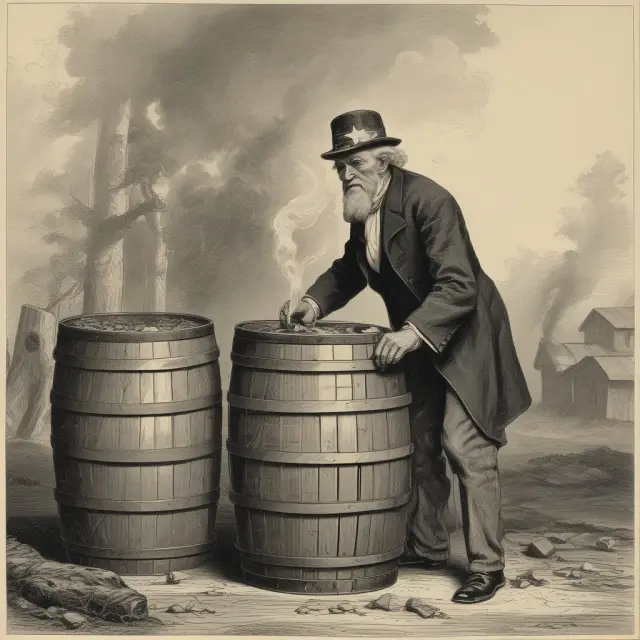
The origins of the term “Uncle Sam” can be traced back to Samuel Wilson, a meatpacker whose company supplied the United States Army during the War of 1812. The name “Uncle Sam” is derived from Wilson’s initials—U.S., which stood for the United States. While Samuel Wilson was not the first personification of the U.S. government, he laid the foundation for this popular representation.
Before the rise of Uncle Sam, the American identity was often personified through figures like Brother Jonathan and Columbia. However, Samuel Wilson’s meatpacking enterprise in Troy, New York, earned him the nickname as his barrels were stamped with “U.S.” initials. The name gradually evolved into a symbol for the national government.
Samuel Wilson’s contributions to the military during the War of 1812 were significant; he supplied troops in New York and New Jersey with meat, ensuring their sustenance during battles against British invaders. After serving as an officer in the Continental Army during the American Revolution, Wilson returned home to establish a meatpacking business that would later become synonymous with his nickname.
The term “Uncle Sam” can also be attributed to political cartoons and popular etymology, which often depict Samuel Wilson as an older gentleman, with a star-spangled top hat, red bow tie, or even a goatee beard. This iconic figure of Uncle Sam would later influence the design of the famous World War I military recruiting poster that is still widely recognized today.
As time passed, Uncle Sam became more than just a meatpacker’s nickname; he evolved into a symbol representing the U.S. government and its various functions, including income taxes and financial regulation. This transformation was solidified during the 20th century when Uncle Sam became synonymous with the Internal Revenue Service (IRS).
The popularity of the Uncle Sam persona in American culture has endured to this day, leaving a lasting impact on finance and investment sectors as it represents the regulatory authority that collects taxes and enforces financial regulations. In essence, Uncle Sam is more than just a nickname; he serves as a tangible reminder of the U.S. government’s presence in our lives.
Evolution of Uncle Sam: From Brother Jonathan to a Symbol of the U.S. Government
The origins of Uncle Sam date back to early American history, where it was initially used as a colloquial term for Samuel Wilson, an officer during the American Revolution who later established a meatpacking business in Troy, New York. Wilson supplied troops with meat, and his barrels were marked with “U.S.” Initialed, Uncle Sam became synonymous with the United States national government. However, before the 19th century, Uncle Sam was preceded by Brother Jonathan, a term rooted in English Civil War history, representing Puritans.
Uncle Sam’s symbolic representation evolved during the early 19th century, eventually becoming synonymous with the U.S. government itself. The figure of Uncle Sam is most commonly depicted as an older gentleman donning a star-spangled top hat and red bow tie. In popular culture, Uncle Sam is often identified with the Internal Revenue Service (IRS) due to its taxation authority. However, Uncle Sam represents more than just the IRS; it symbolizes the U.S. government in various contexts, including financial ones.
Historically, female representations of the U.S., such as Columbia and Lady Liberty, have also played essential roles. While Brother Jonathan, Samuel Wilson, and Uncle Sam represent distinct aspects of American history, their common thread is the personification of the United States in different eras.
The evolution of Uncle Sam as a symbol is marked by its association with various U.S. military initiatives, from the Revolutionary War to World War I, and beyond. Throughout the years, Uncle Sam has been used in propaganda posters, speeches, and media to encourage support for government policies, including financing war efforts. The iconic “I Want YOU” poster featuring an older White man with a goatee and red bow tie became a symbol of military recruitment during World War I, leaving a lasting impact on American culture.
In contemporary society, Uncle Sam is often invoked in financial contexts to refer to the U.S. government’s role as a regulator, particularly when discussing taxation or financial regulations such as those enforced by the Federal Trade Commission (FTC). The concept of ‘off-limits to Uncle Sam’ refers to various financial products and transactions that are exempt from federal taxation.
The enduring appeal of Uncle Sam lies in its versatility as a symbol, representing the U.S. government’s authority while maintaining an accessible and relatable image. Uncle Sam serves as a reminder of the government’s presence in our lives, encouraging us to stay informed about financial matters that affect us all.
Uncle Sam: The Personification of U.S. Government in Financial Contexts
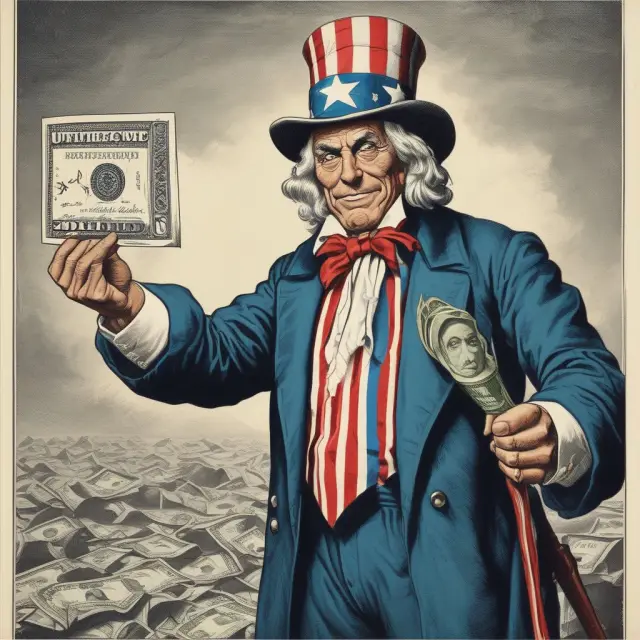
The term “Uncle Sam” is often used colloquially to refer to the United States federal government or a specific tax or regulatory authority, particularly the Internal Revenue Service (IRS. This personified representation of the U.S. government has its roots in American military history and dates back to the 19th century.
Origins of Uncle Sam: The Real Uncle Sam
Uncle Sam’s origins trace back to Samuel Wilson, a meatpacker from Troy, New York, who supplied troops with meat during the War of 1812. Wilson was known for stamping his barrels with the letters “U.S,” which led to him being referred to as “Uncle Sam.” However, the popular belief that Uncle Sam started a meatpacking company after the American Revolution and became the namesake of the government symbol is not entirely accurate.
Evolution into a Symbol: From Brother Jonathan to Uncle Sam
Before the 19th century, “Brother Jonathan” was used as a personification of the United States. However, Uncle Sam gradually took over this role due to his association with the U.S. government. By the early 20th century, Uncle Sam had become the symbol that Americans recognized when they thought of their government.
Uncle Sam’s Role in Finances: Taxation and Regulation
The personification of Uncle Sam is often used in discussions surrounding taxes and financial regulation. This usage can be seen in references to “off-limits to Uncle Sam” transactions or products, which are not subject to federal taxation. Additionally, regulatory agencies like the Federal Trade Commission (FTC) oversee various financial activities on behalf of Uncle Sam, ensuring fair business practices and protecting consumers.
Impact on the Economy: Military Spending and War Bonds
Uncle Sam’s presence has significantly influenced the American economy, particularly through military spending and war bonds. For instance, during World War I, Uncle Sam encouraged citizens to buy liberty bonds for financing the war effort by employing propaganda posters such as James Montgomery Flagg’s famous “I Want YOU” poster featuring Uncle Sam pointing directly at the viewer.
Uncle Sam in Popular Culture: Beyond Meatpacking and Recruitment
Popular culture has embraced Uncle Sam as a symbol of American pride and resilience, extending beyond his military recruitment origins. This can be seen in various financial products and services, including tax-exempt municipal bonds, 529 college savings plans, and even cryptocurrencies like Uncle Slam Coin.
In conclusion, Uncle Sam is more than just a meatpacker; he is the personification of the U.S. federal government in finance and investment contexts. His impact on American culture and economy can be traced back to his military origins but extends far beyond them, shaping how Americans view their government’s role in their financial lives.

The ‘Off-Limits to Uncle Sam’ Concept: Exemptions from Federal Taxes
Understanding various financial products or transactions that are considered ‘off-limits to Uncle Sam’ is essential for investors seeking tax efficiency and minimizing their overall tax burden. These exemptions can significantly impact an individual’s after-tax returns, making it crucial to understand this concept in depth.
One common misconception surrounding the term ‘off-limits to Uncle Sam’ stems from the idea that these financial products or transactions are completely immune from federal taxation. However, it is important to note that these exemptions merely mean they are not subject to certain types of federal taxes – usually income tax.
Exemptions from federal taxation can be found in various forms, such as municipal bonds and tax-exempt mutual funds. Municipal bonds are issued by state or local governments to finance public projects, like schools or infrastructure improvements. The interest earned on these investments is generally exempt from federal income taxes for individuals living in the issuing state, making them a popular choice for investors seeking tax efficiency.
Another example of an ‘off-limits to Uncle Sam’ financial instrument is tax-exempt mutual funds. These investment vehicles pool money from various investors and invest primarily in municipal bonds or other exempt securities. As a result, the capital gains generated from these funds are usually exempted from federal income taxes.
However, it’s essential to recognize that while some federal taxes may be avoided through ‘off-limits to Uncle Sam’ investments, not all taxes are eliminated entirely. For instance, investors still need to pay state and local taxes on the interest earned from municipal bonds, depending on their residence. Additionally, there might be certain restrictions or limitations associated with these investment types that can impact their overall appeal.
Understanding which financial products fall under the ‘off-limits to Uncle Sam’ umbrella can help investors make more informed decisions about their portfolios and potentially enhance their after-tax returns. By exploring various exemptions, investors may be able to optimize their tax strategies, minimizing their overall tax burden while maximizing their investment potential.
In conclusion, the ‘off-limits to Uncle Sam’ concept refers to specific financial products or transactions that are exempt from certain federal taxes, primarily income taxes. By familiarizing yourself with these exemptions and understanding their implications, you can better navigate the complex world of investing and potentially optimize your after-tax returns.
Uncle Sam’s Role in Financial Regulation: The Federal Trade Commission (FTC)
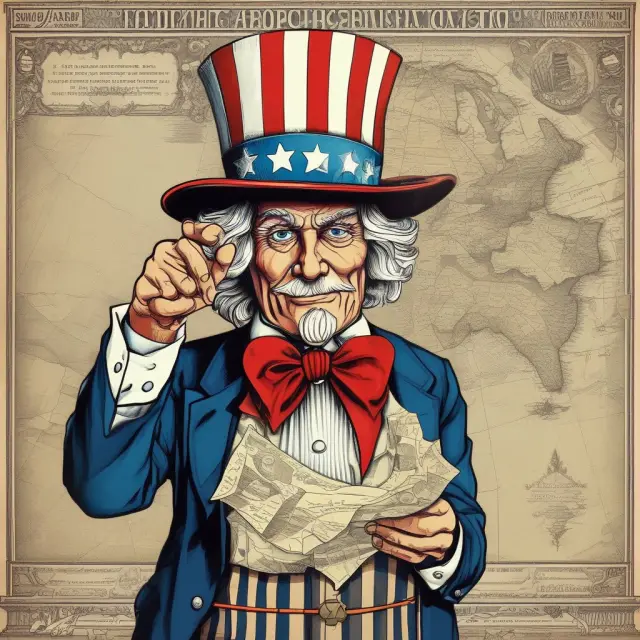
One crucial aspect of Uncle Sam’s presence in finance and investments is his role as a regulator, most notably through the Federal Trade Commission (FTC). The FTC, an independent agency under the U.S. government, was established on August 27, 1914, under the Federal Trade Commission Act. Its primary mission is to protect consumers from deceptive and unfair business practices. This regulation can significantly impact financial activities and transactions, making Uncle Sam’s presence felt in various markets.
The FTC’s role extends beyond consumer protection. It also has jurisdiction over mergers and acquisitions (M&A). In this capacity, it ensures that proposed deals do not result in substantial lessening of competition or a monopoly. The agency closely examines the potential implications of such transactions on markets, prices, and consumers. When the FTC “gives its stamp of approval” on a merger, it’s a significant indication to the market that Uncle Sam has had his say and the deal is likely to proceed without interference.
One example of the FTC’s role in financial regulation can be seen in the 2015 merger between Staples Inc. and Office Depot Inc. This $6.3 billion deal was initially approved by both companies’ shareholders, but it raised significant concerns from competitors, including Amazon, Microsoft, and Hewlett-Packard. The FTC sued to block the merger in 2015, arguing that it would substantially lessen competition and lead to higher prices for consumers. After a protracted legal battle, Staples and Office Depot abandoned their plans to merge, with Staples purchasing Office Depot’s retail assets instead. In this scenario, the FTC effectively blocked a deal that could have given Uncle Sam less influence over market competition.
Another way in which Uncle Sam’s presence is felt through financial regulation involves taxes. Certain financial products and transactions are considered ‘off-limits to Uncle Sam,’ meaning they are exempted from federal taxation. For example, municipal bonds, also known as muni bonds, are issued by state or local governments to finance public projects like schools, hospitals, and infrastructure. Since the income generated by these bonds is often exempt from federal taxes, they can offer investors attractive tax advantages. This exemption effectively gives Uncle Sam a say in financing public projects that benefit communities without having a direct hand in their management.
In summary, Uncle Sam’s role as a regulator is significant in finance and investment, particularly through the FTC. By enforcing antitrust laws and protecting consumers from deceptive business practices, Uncle Sam can influence market competition, pricing, and overall economic conditions. Additionally, the presence of ‘off-limits to Uncle Sam’ financial products adds depth to his role as a regulator in shaping the U.S. economy.

Impact of Uncle Sam on the Economy
One of the most tangible ways ‘Uncle Sam’ shapes our financial landscape is through economic initiatives and investments. From military spending to tax incentives, various policies associated with the U.S. government have significant consequences on the economy.
Military Spending: An Economic Engine
The influence of Uncle Sam’s role in military spending cannot be overstated. Militarily-related activities serve as a crucial economic engine and contribute to various industries, including manufacturing, technology, and logistics.
During World War I, the U.S. government implemented a liberty bond program to finance its military efforts. This initiative had a profound impact on the American economy. The U.S. Treasury’s financing of the war helped drive financialization in the United States, as documented by economist Michael Bordo (2019).
War Bonds: An Economic Incentive
Beyond direct military spending, Uncle Sam’s impact on the economy extends to financial incentives. War bonds are a classic example of this phenomenon. During times of war, the government issues bonds as a means to raise capital for its military efforts. War bonds often serve as an attractive investment opportunity for citizens seeking to contribute to their country and secure a return on their investment at a later date.
War bonds also have broader implications for the economy. In times of war, these financial instruments can help stabilize the economy by increasing demand for savings vehicles like government securities during periods of uncertainty.
Regulatory Role: The Federal Trade Commission (FTC)
Beyond economic stimulus measures, Uncle Sam exerts regulatory control over various aspects of the U.S. economy through entities like the FTC. Through its oversight of mergers and acquisitions (M&A), the FTC ensures that market competition remains robust and consumers’ interests are protected. By enforcing antitrust laws and scrutinizing large corporate deals, the FTC plays a critical role in shaping the competitive landscape of American business.
In conclusion, Uncle Sam’s presence is felt across various sectors and dimensions of the U.S. economy. From military spending to financial incentives like war bonds, as well as regulatory initiatives, such as the Federal Trade Commission’s oversight, his influence is multifaceted and far-reaching.
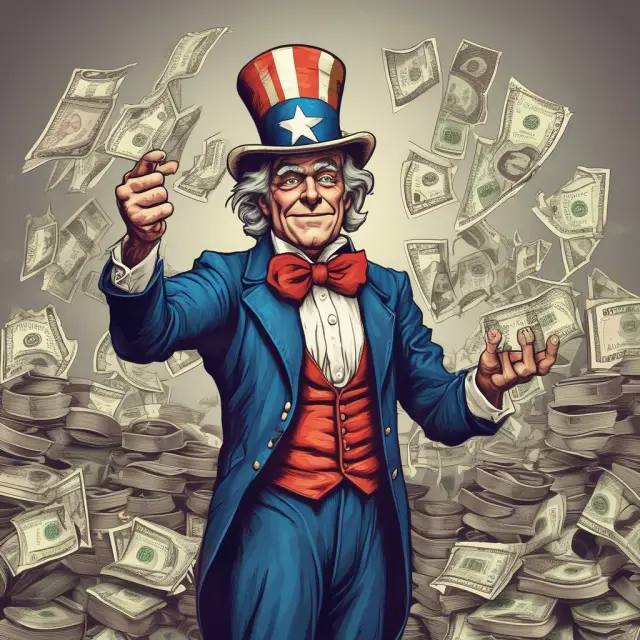
Uncle Sam in Popular Culture: From Recruiting Posters to Financial Products
The personification of Uncle Sam as the United States federal government has not only remained relevant in the realm of financial transactions and taxes but has also become an integral part of popular culture, especially when it comes to promoting various policies and initiatives.
Uncle Sam’s most iconic image is that of a stern, older gentleman pointing directly at the viewer, accompanied by the phrase “I Want YOU.” This famous recruitment poster became widely known during World War I. The poster has since been used to represent Uncle Sam in popular culture, often symbolizing the government’s involvement in various initiatives and its influence on everyday life.
One way Uncle Sam is frequently referenced in financial contexts is as a synonym for taxation or regulatory authorities like the Internal Revenue Service (IRS). For instance, someone might say, “I have to pay Uncle Sam his fair share of my income.” In this context, Uncle Sam represents the authority that collects taxes from American citizens and corporations.
Additionally, certain financial products or transactions are considered ‘off-limits to Uncle Sam,’ meaning they’re not subject to federal taxation. Examples include municipal bonds and qualified retirement accounts such as 401(k)s. These tax-exempt investments are often referred to as being ‘Uncle Sam proof.’
Furthermore, the Federal Trade Commission (FTC), a government regulatory body, plays a crucial role in Uncle Sam’s financial sphere. The FTC’s oversight of mergers and acquisitions ensures that ‘Uncle Sam has his say’ or ‘gives his stamp of approval’ in various financial transactions.
Uncle Sam’s presence in popular culture is not limited to the financial realm. He’s often used in government propaganda, including recruitment campaigns for military service and encouragement to support U.S. policies. For example, Uncle Sam posters were used during World War I to promote the Treasury’s liberty bond program, which financed military spending and contributed to the financialization of the U.S. economy (Bartov, 1993).
The famous image of Uncle Sam pointing at the viewer with an index finger is often attributed to a World War I recruiting poster designed by James Montgomery Flagg. The iconic portrait shows an older White man wearing a star-spangled top hat and red bow tie. This image has been replicated countless times since its inception, making Uncle Sam one of the most recognizable symbols of the United States government.
To further understand the origins of Uncle Sam, it’s essential to examine Samuel Wilson, the meatpacker whose name the symbol is based on (Wilson & Garrison, 1956). Wilson’s company supplied meat to American troops during the War of 1812, earning him the nickname ‘Uncle Sam.’ The U.S. government’s reliance on Uncle Sam for meat supplies contributed to his personification as a symbol of the United States federal government (Rosenberg, 1965).
In conclusion, Uncle Sam has become an intrinsic part of American culture and finance, representing various aspects of the U.S. government and its involvement in financial transactions. His presence can be seen in popular culture through iconic images like the recruiting poster and in the financial sphere through taxation, investment products, and regulatory bodies. By understanding the history of Uncle Sam’s origins and evolution, one can appreciate his significance in both historical and modern contexts.
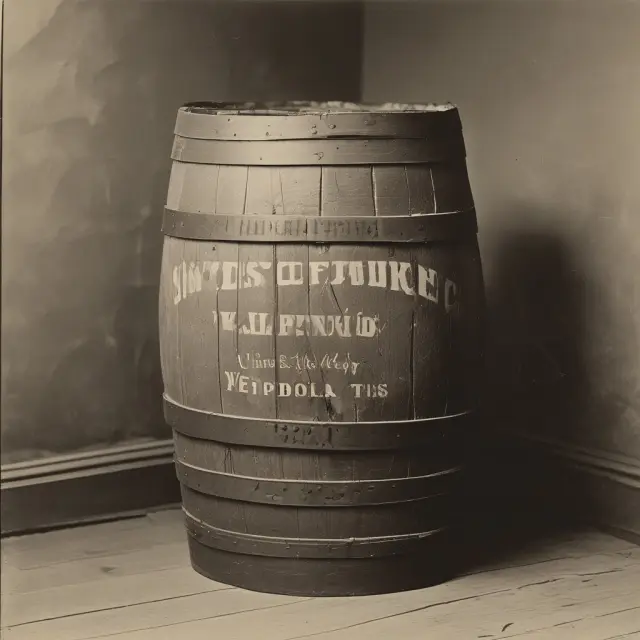
The Real Uncle Sam: Samuel Wilson’s Meatpacking Company
Samuel Wilson, an enterprising figure in early American history, is the man behind the name ‘Uncle Sam.’ Long before his nickname became synonymous with the U.S. government, he was a meatpacker who supplied troops during the War of 1812. The story of Uncle Sam’s true origins offers an intriguing glimpse into America’s past.
Born in Massachusetts around 1766, Wilson served as a captain in the Continental Army during the Revolutionary War, procuring meat supplies for the troops. After his military tenure, he and his brother set up a meatpacking business in Troy, New York. Their company soon became a trusted supplier of meat to U.S. soldiers stationed in New York and New Jersey, where they fought against British invaders during the War of 1812.
The meat barrels from Wilson’s business were branded with “U.S.” – an abbreviation for the United States – which is believed to have contributed to the popularization of the nickname ‘Uncle Sam’ as a personification of the national government. Before this period, the U.S. had been known by various names, such as ‘Brother Jonathan,’ which originated from an English insult towards Puritans during the English Civil War. Female representations like Columbia and Lady Liberty also emerged later in history.
Samuel Wilson’s association with Uncle Sam predates the common usage of this personification for the U.S. government. However, as the reputation of his meatpacking company grew, so did the popularity of the moniker ‘Uncle Sam.’ The nickname eventually stuck and became synonymous with the U.S. federal government.
Although Wilson’s impact on American history may have started humbly with a barrel of meat, his legacy transcended the scope of his business. His name lives on not only in popular culture but also as a symbol of the nation’s commitment to providing for its citizens and protecting their interests.
In today’s world, Uncle Sam is often used colloquially to refer to the IRS or specific taxation policies. However, it is crucial to remember that beneath the political connotation lies an intriguing historical tale of a meatpacker who played a role in shaping America’s identity.
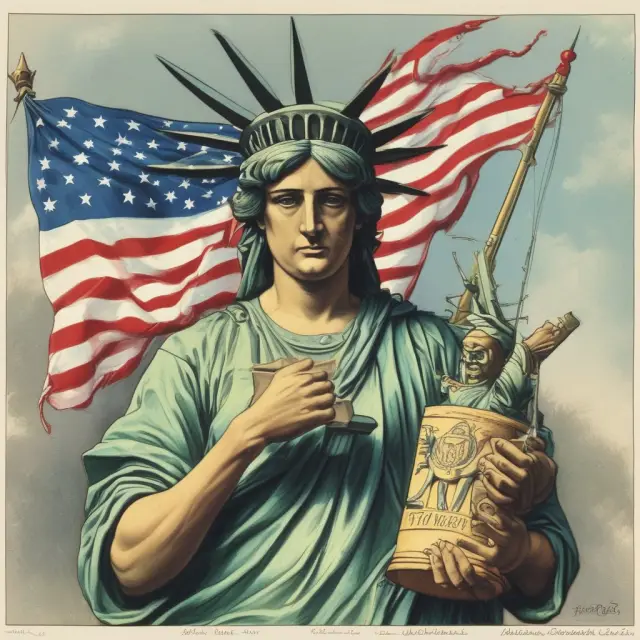
The Statue of Liberty vs. Uncle Sam: What They Represent
Understanding the Differences in Symbolism between Lady Liberty and ‘Uncle Sam’
In the United States, there are several prominent symbols that represent various aspects of the nation’s history, values, and government. Among these symbols, two stand out as particularly significant: Uncle Sam and the Statue of Liberty. While both figures have become synonymous with the U.S., it’s important to recognize their unique meanings and what they symbolize in the context of finance and investment.
Uncle Sam, a personified representation of the United States federal government, is often depicted as an older gentleman donning a star-spangled top hat and red bow tie. He became widely known during the 19th century but gained iconic status following his association with the U.S. government’s meat supply program for the military during the War of 1812. Originally, Uncle Sam referred to Samuel Wilson, a meatpacker who supplied troops in New York and New Jersey during this conflict. The term “Uncle Sam” eventually came to symbolize the U.S. federal government itself.
On the other hand, Lady Liberty, or the Statue of Liberty, is an iconic representation of freedom and democracy. Originally a gift from France, this statue has stood at the entrance to New York Harbor since 1886. It’s most commonly recognized for its torch held aloft in one hand and a tablet in the other, inscribed with the date “July 4, 1776” and the inscription, “Give me your tired, your poor, your huddled masses yearning to breathe free.”
Both Uncle Sam and Lady Liberty have become integral parts of U.S. culture, but it’s crucial to differentiate between them when discussing their significance in finance and investment contexts. While Uncle Sam represents the U.S. government, its policies, regulations, and taxes, Lady Liberty symbolizes freedom, liberty, and the American values that have shaped the nation’s financial system.
In popular culture, Uncle Sam is often used to refer to the Internal Revenue Service (IRS) or federal tax authorities, as Americans are required to pay their ‘dues’ to Uncle Sam when filing taxes each year. Conversely, Lady Liberty symbolizes the ideals and values that underpin the U.S. economy and financial system—innovation, entrepreneurship, and opportunity.
Another essential distinction between Uncle Sam and Lady Liberty is their historical context. Uncle Sam evolved from a real person, Samuel Wilson, who supplied meat to the U.S. military during various conflicts throughout history. Meanwhile, Lady Liberty was inspired by the French Revolution, which advocated for freedom, liberty, and equality.
In summary, Uncle Sam and Lady Liberty are two powerful symbols that represent different aspects of the United States. While Uncle Sam personifies the U.S. government, its policies, and taxes, Lady Liberty embodies the nation’s values, such as freedom, democracy, and opportunity. Understanding these differences is essential to appreciating the rich symbolism behind these enduring figures in American history.
In conclusion, exploring the origins of Uncle Sam, his transformation into a symbol for the U.S. government, and how he differs from Lady Liberty’s representation of freedom and democracy enriches our understanding of America’s financial and investment landscape. By delving deeper into these topics, readers can develop a more profound appreciation for the history and significance behind the figures that have shaped the United States both economically and culturally.

FAQs about Uncle Sam’s Meaning and Significance
Uncle Sam, often portrayed as an older gentleman donning a star-spangled top hat and red bow tie, is a popular and enduring symbol of the United States federal government or the U.S. in general. This section answers some frequently asked questions about Uncle Sam’s origins, meaning, and significance within the context of U.S. finance and investment.
Origins of Uncle Sam: What is the truth behind the nickname “Uncle Sam”?
The etymology of the term “Uncle Sam” can be traced to Samuel Wilson, a meat packer from New York who supplied troops during the American Revolutionary War and later the War of 1812. Wilson’s company was renowned for stamping “U.S.” on its barrels, which inspired the popular nickname.
Meaning of Uncle Sam: What does ‘Uncle Sam’ represent in finance and investment?
In financial contexts, Uncle Sam can refer to specific tax or regulatory authorities within the United States government, most notably the Internal Revenue Service (IRS). It can also symbolize various financial products that are exempt from federal taxes, often called “off-limits to Uncle Sam.”
Significance of Uncle Sam: What role does Uncle Sam play in U.S. history and culture?
The character of Uncle Sam has been widely used in U.S. government propaganda to encourage support for various policies and military efforts over the years. Uncle Sam is also a symbol of the federal government’s regulatory influence over financial activities and transactions, such as the Federal Trade Commission (FTC)’s oversight of mergers and acquisitions.
Is there a real Uncle Sam?
Yes, Uncle Sam originated from a real person named Samuel Wilson, who started a meatpacking company after the American Revolution. His company supplied troops in the War of 1812 with meat, earning him the nickname “Uncle Sam.”
What does the Uncle Sam poster represent?
The famous Uncle Sam poster that points at the viewer stating “I Want YOU” is meant to encourage enlistment in the U.S. military and represents support for government actions and policies. It emphasizes ideas such as taxation, military enlistment, and various other initiatives taken by the federal government.
What is the difference between Uncle Sam and Lady Liberty?
Uncle Sam represents the U.S. federal government and encourages support for its activities, while Lady Liberty symbolizes the ideals of freedom, liberty, equality, and the American Dream as a nation. Both figures have significant meaning in American history and culture, with unique roles in finance and investment contexts.
 Next entry · No. 5,163Understanding Uncollected Funds: What They Are, How They Protect Banks and Customers, and Their Criticisms
See also
-
 No. 2,694
27 Jan 2025
19 min
Key Money: Understanding Its Meaning and Implications for Investors
Business Finance
No. 2,694
27 Jan 2025
19 min
Key Money: Understanding Its Meaning and Implications for Investors
Business Finance -
 No. 1,807
09 Nov 2024
26 min
Understanding the Gig Economy: Benefits, Criticisms and Future Implications for Investors
Business Finance
No. 1,807
09 Nov 2024
26 min
Understanding the Gig Economy: Benefits, Criticisms and Future Implications for Investors
Business Finance -
 No. 1,515
26 Sep 2024
23 min
Optimizing Financial Structure: Balancing Debt and Equity in Private and Public Companies
Business Finance
No. 1,515
26 Sep 2024
23 min
Optimizing Financial Structure: Balancing Debt and Equity in Private and Public Companies
Business Finance -
 No. 5,279
26 Aug 2025
23 min
Universal Healthcare Coverage: Understanding the Different Types and Implications for Institutional Investors
Healthcare Finance
No. 5,279
26 Aug 2025
23 min
Universal Healthcare Coverage: Understanding the Different Types and Implications for Institutional Investors
Healthcare Finance -
 No. 5,250
23 Aug 2025
23 min
Understanding the Uniform Transfer Tax: Merging Estate and Gift Taxes
Taxation
No. 5,250
23 Aug 2025
23 min
Understanding the Uniform Transfer Tax: Merging Estate and Gift Taxes
Taxation -
 No. 5,053
08 Aug 2025
18 min
Transfer Taxes: Understanding Real Estate, Inheritance, Estate, Gift, and Generation-Skipping Transfer Taxes
Taxation
No. 5,053
08 Aug 2025
18 min
Transfer Taxes: Understanding Real Estate, Inheritance, Estate, Gift, and Generation-Skipping Transfer Taxes
Taxation