Understanding Ommer Blocks in Ethereum: Functionality and Implications

Understand Ommer Blocks' role within Ethereum, their creation process, and implications for network efficiency.
Introduction to Ommer Blocks in Ethereum
Ommer blocks represent an intriguing aspect of the Ethereum blockchain. These blocks come into existence when two valid transactions are submitted almost simultaneously and compete for inclusion in the Ethereum network. The term “ommer” is derived from the concept of ‘aunt’ or ‘uncle,’ referring to their familial relationship within the blockchain. Previously, they were referred to as uncle blocks; however, gender-neutral terminology was adopted due to the increasing trend towards inclusivity in technology and language use.
In Ethereum, ommer blocks are integral components of its consensus mechanism—Casper the Friendly GHOST (Greedy Heaviest Object Sub Tree). These blocks play a crucial role in supplementing the primary blockchain by allowing network validators to process transactions included in the ommer blocks as part of the main chain.
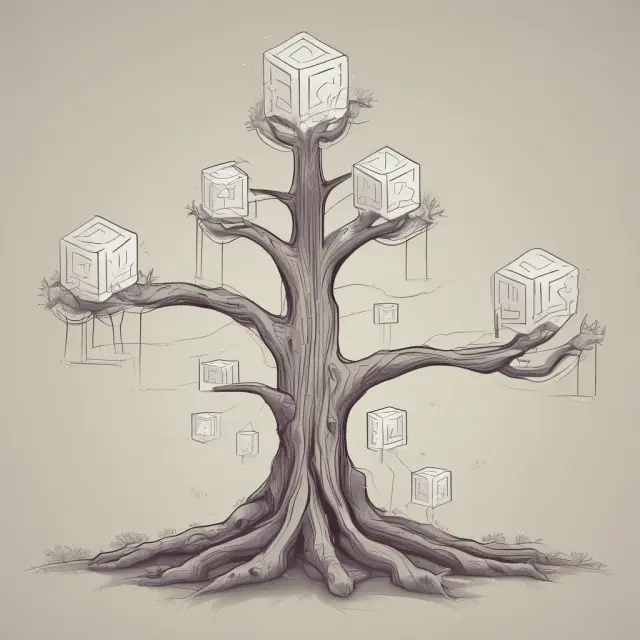
Understanding the background of Merkle trees and their role in consensus mechanisms provides valuable context for grasping the significance of ommer blocks. Merkle trees are essential data structures used in distributed systems like Ethereum to ensure consensus, validate transactions, and maintain network security. They establish familial relationships between blocks using a tree-like structure—with each subsequent block deriving information from its predecessor.
Now let’s delve into the creation process for ommer blocks:
The Creation of Ommer Blocks
When two valid transactions are submitted concurrently, one will eventually be incorporated into the Ethereum blockchain while the other is left out and becomes an ommer block. This phenomenon can occur due to varying latencies in network propagation and processing times for different nodes, resulting in competing blocks that must undergo consensus validation.
Consider a scenario where two new blocks (Cab and Cab2) are generated from Ba—the parent block. Both contain valid transactions. However, only one can be added to the Ethereum blockchain due to the network’s consensus rules. The network selects the block that receives the majority of confirmation votes from validators, becoming the accepted block. In this case, let’s assume Cab is chosen.
Once Cab is confirmed, another valid block (Dcab) is added to the Ethereum blockchain. Now, Cab2—the ommered block—becomes an integral part of Ethereum’s network as an ommer block. The next section explores the special considerations behind the creation and significance of ommer blocks in Ethereum.
Continued in the following sections: Special Considerations: The Need for Ommer Blocks, The Ommer Rate: Producing More Ommer Blocks, Ommer Rewards: Compensating Miners and Validators, Ethereum’s Transition from Proof-of-Work to Proof-of-Stake, and Conclusion: The Future of Ommer Blocks.

Background: Merkle Trees and Block Validation
Merkle trees are a crucial component in blockchain consensus mechanisms like those used by Ethereum. These data structures create a family tree of blocks through a process called proof-of-work, which ensures the security and immutability of the network. When two valid blocks (let’s call them A and B) are mined almost simultaneously, only one can be added to the blockchain as its parent. The other block becomes an ommer block.
Understanding Merkle Trees
A Merkle tree is a data structure that enables secure verification of large data sets by creating a hierarchical representation of the data’s hashes. Each leaf node in the tree represents a single transaction, while each non-leaf node represents a hash of its child nodes. The tree’s root hash serves as a summary of the entire dataset. Merkle trees allow for efficient verification because only a few hashes need to be checked instead of every individual transaction.
Merkle Trees and Consensus Mechanisms
In blockchain consensus mechanisms, Merkle trees ensure that blocks are validated by the network through a process called proof-of-work. This validation involves miners solving complex mathematical puzzles (or “proofs”) to add new blocks to the blockchain. Mining requires significant computational power and energy consumption. When two blocks are created simultaneously, only one can enter the blockchain, while the other becomes an ommer block.
In Ethereum’s proof-of-work consensus mechanism, blocks are added to a tree called Casper the Friendly GHOST (Greedy Heaviest Object Sub Tree). This tree keeps track of all potential ommer blocks. When a fork occurs due to two blocks being mined simultaneously, the network selects which block will become the parent based on a two-thirds consensus rule by validators. The selected block’s ommer blocks are then included in the next block, thus creating a new layer in the tree.
The Importance of Ommer Blocks
Ommer blocks provide several benefits to the Ethereum network. They act as safety nets for the main blockchain by ensuring that the work done on them is not lost or wasted. This prevents double-spending attacks and keeps the network secure. Additionally, they contribute to a more decentralized mining ecosystem as smaller miners can potentially create ommer blocks. Furthermore, they provide transaction fees, incentivizing miners and validators to include them in their efforts. As Ethereum transitions to proof-of-stake, ommer blocks will continue to be valuable for network security and efficiency.
Conclusion:
Ommer blocks play a vital role in Ethereum’s consensus mechanism through the use of Merkle trees. They ensure that the network remains secure and efficient while incentivizing miners and validators to contribute their resources. Understanding ommer blocks provides insight into the complex workings of a blockchain, ultimately contributing to its overall success and growth.
The Creation of Ommer Blocks
In a public blockchain like Ethereum, consensus mechanisms play a crucial role in verifying and adding data to the ledger while ensuring its immutability. Merkle trees are commonly used for this purpose due to their ability to establish ancestral relationships between blocks. When two blocks are created simultaneously within the Etherean network, one will be selected and added to the blockchain, leaving the other as an ommer block. This phenomenon is not an error but rather a strategic integration that offers benefits to the network’s efficiency, security, and decentralization.
Before discussing the creation of ommer blocks in Ethereum, it’s essential first to understand Merkle trees and their role within block validation. A Merkle tree establishes ancestral relationships between blocks by incorporating information from previous blocks into new ones. This process forms a family tree-like structure where each subsequent block inherits information from its parent, creating a chain of blocks.
Consider the case of two valid blocks, Cab and Cab2, that are created from the same parent, Ba. Both blocks can be thought of as siblings in this scenario. Since only one of these sibling blocks can enter the Ethereum blockchain, it is crucial for the network to choose which block will become the main chain. The selection process is based on a two-thirds consensus rule by validating nodes within the Ethereum network.
The selected sibling block, Cab, becomes part of the Ethereum blockchain, while Cab2 is no longer validated and becomes an ommer block. It is important to note that ommer blocks are not orphaned as they were previously referred to in the Bitcoin network. Instead, they are purposefully integrated into Ethereum’s consensus mechanism through its validation protocol, Casper the Friendly GHOST (Greedy Heaviest Object Sub Tree).
When two blocks are created simultaneously, ommer blocks increase the network’s efficiency by allowing for more opportunities to validate transactions. By producing and validating ommer blocks, miners or validators can supplement their earnings from the main blockchain. Additionally, ommer blocks help improve the decentralization of the Ethereum network, as they offer smaller mining pools a chance at rewards that might otherwise be dominated by larger, more centralized mining entities.
In summary, understanding the creation process of ommer blocks in Ethereum is crucial for grasping the importance of its consensus mechanism and how it enables increased security, decentralization, and network efficiency through the validation of sibling blocks.

Special Considerations: The Need for Ommer Blocks
In a public blockchain like Ethereum and Bitcoin, maintaining consensus and securing data are crucial aspects of the network’s functionality. Merkle trees are employed to establish ancestral relationships between blocks, allowing information from previous blocks to be included in new ones. This creates a family tree-like structure, with each block having a parent, siblings, children, and ancestors.
However, there is a possibility for two blocks to be created and submitted simultaneously within the Ethereum network. Only one can be added to the ledger; the other becomes an ommer block. This is where the importance of these leftover blocks comes into play.
Before understanding why ommer blocks are essential, it’s crucial first to grasp what Merkle trees and consensus mechanisms are in the Ethereum network. In Ethereum, consensus is achieved through Casper the Friendly GHOST (Greedy Heaviest Object Sub Tree)—a protocol that validates new blocks based on their proof of work and determines which fork should be added to the blockchain.
When two blocks are created almost simultaneously, they become siblings within the Merkle tree, with one being selected for inclusion in the main branch. The other sibling, or ommer block, is not included in the primary chain but remains an essential part of the Ethereum network.
The reasons for incentivizing miners to create and validate ommer blocks stem from the following considerations:
1) Increasing Network Efficiency
Under the proof-of-work consensus mechanism, a short block time can result in multiple blocks being created within that period. The network must process only one of these blocks. Ommer blocks help solve this issue by providing a method for processing transactions from the excluded block and including them in future blocks. This not only speeds up the network but also decreases orphaned blocks, leading to greater overall efficiency.
2) Decentralization
Ethereum’s proof-of-work consensus mechanism incentivizes large mining pools due to their ability to employ vast resources and claim a majority of the rewards for creating new blocks. Ommer block rewards help distribute these incentives more evenly, making it easier for individual miners to participate in the network while also increasing network security.
3) Network Security
Ommer blocks serve as a vital supplement to the main chain by validating transactions from the ommer block and providing additional proof of work. This not only increases network security but also allows smaller mining pools to contribute to the overall security of the Ethereum network. As such, ommer blocks help maintain consensus by ensuring that the longest chain remains the most secure one.
Understanding the significance of ommer blocks in Ethereum’s network provides valuable insights into their role and function within this leading blockchain platform. With their importance to network efficiency, decentralization, and security, ommer blocks continue to play a crucial role as Ethereum evolves and transitions to its proof-of-stake consensus mechanism.

The Ommer Rate: Producing More Ommer Blocks
An ommer block is created when two blocks are submitted to a blockchain like Ethereum at nearly the same time, resulting in only one block being accepted into the chain while the other is discarded. This phenomenon was originally referred to as uncle blocks due to their familial relationship within the blockchain’s family tree. However, this terminology has recently been updated to ommer blocks to remove any gender bias, reflecting Ethereum’s commitment to inclusivity and fairness. The rate at which these ommer blocks are produced varies daily and depends on network activity, specifically the number of transactions taking place.
Understanding Merkle Trees and Block Validation
Before diving deeper into the ommer block concept, it is essential to grasp the basics of Merkle trees and their role in consensus mechanisms like proof-of-work (PoW). A Merkle tree is a data structure used to verify information within a blockchain. It establishes ancestral relationships among blocks, allowing for efficient validation through inheritance. Information from previous blocks is included in new blocks, forming a parent-child hierarchy that creates the term “ommer” or “uncle” blocks, siblings of their parent blocks.
The Creation of Ommer Blocks and Their Importance
In the context of Ethereum, when two valid blocks are submitted to the network, only one can be included in the blockchain. The ommer block, also known as the uncle block, is the discarded sibling that may still contribute to the network by being validated through the Casper the Friendly GHOST consensus mechanism. This process allows for creating more ommer blocks, improving network efficiency and security.
The Need for Ommer Blocks in Ethereum’s Consensus Mechanism
Ommer blocks play a significant role in Ethereum’s transition from proof-of-work (PoW) to proof-of-stake (PoS). Under PoW, miners were rewarded with a small percentage of the block reward and transaction fees for producing ommer blocks. In contrast, under PoS, validators will be incentivized through transaction fees as rewards for their contribution in creating these blocks. This mechanism allows for more network efficiency by utilizing resources from both the primary and ommer branches.
In conclusion, the creation and validation of ommer blocks contribute to Ethereum’s overall security, efficiency, and fairness. Understanding these blocks, their origin, and how they fit into the consensus mechanism is essential for investors and stakeholders looking to navigate the ever-evolving landscape of blockchain technology and cryptocurrencies.

Ommer Rewards: Compensating Miners and Validators
Incentivizing miners and validators to create ommer blocks is an integral part of Ethereum’s network consensus mechanism. Ommer blocks are similar to the Bitcoin orphans but differ in their purposeful inclusion within Ethereum’s blockchain, ensuring that they contribute to the system’s overall efficiency and security.
Under Ethereum’s proof-of-work consensus mechanism, ommer block rewards consist of a small percentage of the block reward, along with transaction fees. These incentives encourage miners and validators to maintain their efforts and resources in producing ommer blocks, which can be considered an integral part of the network despite not being included in the main blockchain.
Transitioning from proof-of-work to proof-of-stake, Ethereum’s consensus mechanism changes, but the importance of incentivizing ommer blocks remains. In this new system, ommer blocks will continue to receive transaction fees as their primary reward, providing compensation for their efforts in supporting the network.
Increasing network efficiency is a significant advantage of incorporating ommer blocks. Simultaneous creation of two valid blocks can occur frequently due to Ethereum’s shorter block times and high transaction volumes. By incentivizing both blocks, the network ensures that resources are not wasted on creating blocks that may be orphaned and not included in the main chain.
Decentralization is another essential aspect that ommer blocks play a role in maintaining within Ethereum’s consensus mechanism. The proof-of-work consensus mechanism often leads to centralization of cryptocurrency mining rewards among large mining pools, leaving individual miners with limited opportunities for compensation. Ommer blocks provide smaller miners and validators with an alternative avenue to earn transaction fees, promoting a more balanced network.
Lastly, ommer blocks contribute significantly to the network’s security by supplementing the work done on the main blockchain. The Casper the Friendly GHOST (Greedy Heaviest Object Sub Tree) consensus rule ensures that validators prioritize blocks with the most computational effort and transaction fees. This not only increases overall security but also decreases the likelihood of 51% attacks on the Ethereum network.
In conclusion, ommer blocks are an essential part of Ethereum’s blockchain infrastructure, ensuring increased network efficiency, decentralization, and security. These incentives provide miners and validators with motivation to contribute their resources towards producing these blocks that may not be included in the main blockchain. Transitioning from proof-of-work to proof-of-stake further solidifies the importance of ommer blocks within Ethereum’s consensus mechanism, providing transaction fees as a primary reward.
Ethereum’s Transition from Proof-of-Work to Proof-of-Stake
With the upcoming transition from proof-of-work (PoW) to proof-of-stake (PoS), Ethereum’s consensus mechanism is undergoing a significant change. This shift has significant implications on the creation, validation, and rewards for ommer blocks. Understanding these changes is essential to staying informed about the future of Ethereum and its blockchain ecosystem.
Proof-of-Work: A Historical Perspective
In PoW consensus mechanisms, miners compete to validate transactions by solving complex mathematical problems. The first miner to solve the problem secures a new block in the blockchain and is rewarded with newly minted cryptocurrency. This process incentivizes miners to invest significant resources, such as computational power and electricity usage, to secure blocks.
Within this environment, ommer blocks are produced when two blocks are created roughly at the same time by different miners. The Ethereum network only accepts one block to be added to the canonical chain, while the other is discarded or labeled as an ommer block. This system incentivizes miners to validate and include transactions from both blocks, with a portion of the transaction fees going to the miner who created the ommer block.
Proof-of-Stake: A New Era
As Ethereum evolves toward PoS consensus, the network is expected to transition away from reliance on computational power to secure its blockchain. Instead, validators stake their Ether (ETH) as collateral to propose and validate new blocks. The more ETH a validator stakes, the higher their chances of proposing and securing the next block, thus receiving the block reward.
In this context, ommer blocks still play an essential role in Ethereum’s network efficiency, particularly with regard to transaction processing times. PoS allows for faster finality by enabling parallel processing within a consensus layer, which helps reduce the time it takes for transactions to be validated and confirmed. Ommer blocks continue to contribute to this process by allowing transactions from orphaned blocks to be included in the canonical chain through the GHOST (Greedy Heaviest Object Subtree) protocol.
The Changing Rewards Landscape
Under PoW, miners are rewarded with newly minted cryptocurrency for securing a block and transaction fees for validating transactions within that block. Ommer blocks receive a smaller percentage of the block reward in addition to the transaction fees from both the canonical and ommer blocks.
With Ethereum’s transition to PoS, rewards for validators will come exclusively from transaction fees rather than newly minted cryptocurrency. However, as long as the network maintains a high enough ommer rate, miners and validators can continue to benefit from the creation and validation of ommer blocks.
In conclusion, the transition from proof-of-work to proof-of-stake brings new challenges and opportunities for Ethereum’s blockchain ecosystem, particularly when it comes to ommer blocks and their role in network efficiency and security. As the network evolves, understanding these implications is essential for investors, developers, and stakeholders alike.
FAQ: Frequently Asked Questions about Ommer Blocks
What Is the Difference Between Ommer Blocks and Orphan Blocks?
Ommer blocks are a specific type of orphaned block, as they contain valid transactions that can be included in the canonical chain through the GHOST protocol. Orphan blocks, on the other hand, have invalid transactions and cannot be integrated into the main blockchain.
Why Was the Name Changed from Uncle to Ommer?
The name was changed from uncle to ommer due to a desire for gender-neutral terminology within Ethereum’s community.
What Happens When Ethereum Transitions Completely Away From PoW?
As Ethereum continues to transition away from proof-of-work, the focus on transaction fees as a source of rewards and network security will become increasingly important for validators and miners. Ommer blocks will continue to play a role in maintaining network efficiency by allowing parallel processing and transaction inclusion.

Ommer Blocks in a Nutshell: Key Takeaways
In the world of Ethereum blockchain, it’s essential to understand how data verification and addition are accomplished through consensus mechanisms while maintaining network security. Ethereum uses Merkle trees and ommer blocks to manage these tasks.
Key Takeaway 1: Ommer Blocks in Ethereum
Ommer blocks, previously known as uncle blocks, occur when two valid blocks are created nearly simultaneously. These blocks share a common parent but can only be added to the ledger one at a time. Ethereum’s consensus mechanism, Casper the Friendly GHOST, determines which block is chosen based on network validation.
Key Takeaway 2: Merkle Trees and Block Validation
Merkle trees are integral to data verification and addition in Ethereum. They establish ancestral relationships for blocks through a process similar to DNA inheritance. When two valid blocks are created at roughly the same time, one will be chosen as the parent block for future generations, while the other becomes an ommer block.
Key Takeaway 3: Incentivizing Ommer Blocks
Ommer blocks were initially considered unintentional byproducts of the mining process; however, Ethereum incentivizes their creation through rewards, which include transaction fees and network security benefits. This encourages more miners to participate in the blockchain, increasing decentralization and overall network efficiency.
Key Takeaway 4: Ommer Blocks and Consensus Mechanisms
Ommer blocks are intentionally incorporated into Ethereum’s consensus mechanism through validations from network participants. The two-thirds consensus rule is used to determine which block will be added to the main blockchain, while others become ommer blocks. This process ensures that both the main blockchain and ommer blocks contribute to the network’s security and efficiency.
Key Takeaway 5: Transitioning from Proof-of-Work to Proof-of-Stake
As Ethereum transitions away from proof-of-work to proof-of-stake, ommer blocks will continue to be produced, but their incentives change. Miners and validators will no longer receive a percentage of the block reward; instead, they’ll only receive transaction fees. This shift in rewards highlights Ethereum’s commitment to maintaining network security and efficiency while adapting to evolving consensus mechanisms.
By understanding these key takeaways, you’ll gain valuable insights into the role ommer blocks play within Ethereum’s blockchain and their importance to the overall network’s functionality and security.
FAQ: Frequently Asked Questions about Ommer Blocks
What is an ommer block?
An ommer block refers to a validated Ethereum block that wasn’t added to the mainchain due to the network producing another block with a higher priority at roughly the same time. These blocks follow the proof-of-work consensus mechanism and have transaction fees rewarded under Casper the Friendly GHOST.
Why were ommer blocks previously called uncle blocks?
The name “uncle blocks” originated due to their familial relationship within the blockchain’s consensus process, not because they were inherently problematic or inferior. The Ethereum community decided to change the name to ‘ommer’ for gender-neutrality reasons.
What is Ethereum’s ommer rate?
The ommer rate refers to the percentage of blocks produced within the network that become ommer blocks. This rate fluctuates daily and depends on factors such as transaction volume and block generation times.
Can miners or validators earn rewards for creating ommer blocks?
Yes, they can under Ethereum’s proof-of-work consensus mechanism. Miners or validators who create an ommer block receive a portion of the transaction fees from that block as reward. When Ethereum transitions to proof-of-stake, these blocks will still be eligible for transaction fee rewards.
What is Casper the Friendly GHOST?
Casper the Friendly GHOST is a consensus protocol used by Ethereum and other cryptocurrencies that allows network validators to select which blockchain fork will be added to the mainchain. This protocol determines which of two competing blocks—created at roughly the same time—will be integrated into the Ethereum blockchain as the valid one, while the other is considered an ommer block.
What causes a fork in the Ethereum blockchain?
A fork occurs when two or more miners or validators create competing blocks within the network with near-simultaneous confirmations. The Casper the Friendly GHOST consensus protocol then determines which block will be added to the mainchain as the valid one, and the other becomes an ommer block.
Why is it essential for Ethereum to have ommer blocks?
Ommer blocks serve several purposes in the Ethereum network:
- They add value to the network by providing supplemental validation through transaction fees.
- They encourage decentralization by distributing rewards and opportunities among a larger pool of miners and validators.
- They improve overall network security and efficiency by allowing more transactions to be processed.
- They support Ethereum’s consensus mechanism, ensuring the reliability and continuity of the blockchain.

Conclusion: The Future of Ommer Blocks
As Ethereum continues its transition from proof-of-work to proof-of-stake consensus mechanism, it’s essential to consider how ommer blocks will continue to play a role in the network. While their creation was initially seen as an unintended byproduct of mining, they now have a defined purpose within the Ethereum ecosystem.
In the context of the proof-of-stake consensus mechanism, Casper the Friendly GHOST (Greedy Heaviest Object Sub Tree) determines which blockchain fork will be added to the Ethereum network based on its weight. The weight is calculated by evaluating the total transaction value in each chain and selecting the heavier one. This approach ensures that ommer blocks can continue contributing to the network’s security and efficiency without disrupting or slowing down the main blockchain.
As of now, Ethereum’s ommer rate varies daily based on the number of transactions being processed. With proof-of-work, miners were rewarded a small percentage of the block reward plus transaction fees for their work. However, under proof-of-stake, validators will only receive transaction fees as their incentive for creating and validating ommer blocks.
The potential increase in the number of ommer blocks produced daily could have significant implications on Ethereum’s network efficiency and overall performance. It might also impact the decentralization of mining or staking power, potentially leading to a shift towards larger mining pools or stakeholders aiming to produce more ommer blocks.
However, it is important to remember that the ommer block concept originated as an accidental byproduct within the proof-of-work consensus mechanism. As Ethereum continues its evolution, it’s essential to remain open and adaptable to potential changes in the network’s structure and incentives. This flexibility ensures the platform remains innovative and responsive to the ever-changing landscape of decentralized finance and blockchain technology.
In conclusion, ommer blocks have come a long way from their humble beginnings as orphaned siblings within Ethereum’s family tree. Their role in the network’s consensus mechanism has evolved significantly and will continue to shape the future of Ethereum as it embraces proof-of-stake. Understanding the past, present, and potential implications of ommer blocks is vital for any investor or participant in Ethereum’s growing ecosystem.
 Next entry · No. 5,162Understanding Uncle Sam: The Personification of the United States Government in Finance and Investment
See also
-
 No. 4,125
24 May 2025
21 min
Understanding Proof-of-Stake: A New Era in Consensus Mechanisms
Crypto
No. 4,125
24 May 2025
21 min
Understanding Proof-of-Stake: A New Era in Consensus Mechanisms
Crypto -
 No. 3,608
12 Apr 2025
21 min
Understanding Obelisk Consensus Algorithm: Distributing Influence Over a Network in Skycoin Ecosystem
Crypto
No. 3,608
12 Apr 2025
21 min
Understanding Obelisk Consensus Algorithm: Distributing Influence Over a Network in Skycoin Ecosystem
Crypto -
 No. 2,273
24 Dec 2024
19 min
Understanding Hyperledger Sawtooth: An Enterprise Blockchain Solution for Smart Contracts
Fintech
No. 2,273
24 Dec 2024
19 min
Understanding Hyperledger Sawtooth: An Enterprise Blockchain Solution for Smart Contracts
Fintech -
 No. 5,666
27 Sep 2025
18 min
Understanding Weis: The Smallest Unit of Ether on Ethereum Blockchain
Crypto
No. 5,666
27 Sep 2025
18 min
Understanding Weis: The Smallest Unit of Ether on Ethereum Blockchain
Crypto -
 No. 4,191
29 May 2025
18 min
Understanding Qtum: Combining Bitcoin’s Security with Ethereum’s Flexibility for Businesses
Crypto
No. 4,191
29 May 2025
18 min
Understanding Qtum: Combining Bitcoin’s Security with Ethereum’s Flexibility for Businesses
Crypto -
 No. 3,633
14 Apr 2025
22 min
Off-Chain Transactions in Cryptocurrency: Advantages, Methods, and Importance
Crypto
No. 3,633
14 Apr 2025
22 min
Off-Chain Transactions in Cryptocurrency: Advantages, Methods, and Importance
Crypto