Understanding Underemployment Equilibrium: The Persistent State of Unemployment Above Full Employment
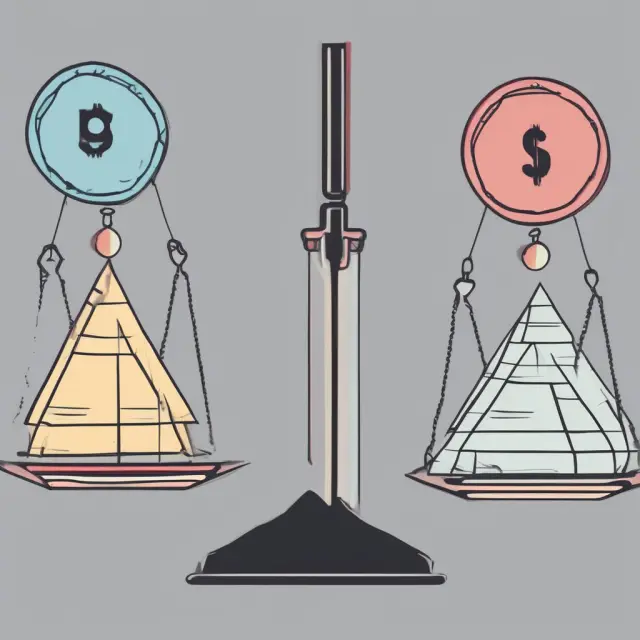
Understanding the concept of underemployment equilibrium and its implications for labor markets, policy interventions, and the global economy.
Introduction to Underemployment Equilibrium
Underemployment equilibrium refers to a persistent state in which an economy experiences unemployment above the natural rate, despite an apparent balance between aggregate supply and demand at a level below full potential output. This concept, deeply rooted within Keynesian economic theory, is a result of underemployment – a situation where employment levels are below what is considered ideal. It’s essential to distinguish between the two concepts: underemployment (where workers are employed but working fewer hours or in jobs that don’t fully utilize their skills) and underemployment equilibrium (a macroeconomic condition with persistent unemployment above the natural rate).
Underemployment Equilibrium Origins and Keynesian Perspective
The concept of underemployment equilibrium emerged from Keynes’ observations during the Great Depression. He believed that in times of recession, businesses and investors could become excessively cautious and reduce their investment activities. This reduction in investment spending results in lower aggregate demand, leading to decreased output and employment levels. In contrast, other economic theories like Walrasian general equilibrium posit that prices and markets adjust naturally to reach a new equilibrium at full employment, even after negative shocks pass. Keynes challenged this notion, proposing an underemployment equilibrium state as the likely outcome of a persistent recession or depression.
Underemployment Equilibrium vs Full Employment: The Gap Between Potential and Actual Output
The gap between potential output (what an economy could produce at full employment) and actual output (current production levels in the economy) is referred to as the output gap. When an economy settles into underemployment equilibrium, it does so with a larger-than-desired output gap that results in persistent unemployment.
Causes of Underemployment Equilibrium: A Deeper Look
Underemployment equilibrium can arise due to various factors. Keynes believed the uncertainty and fear induced by recessions could lead businesses to reduce investment, leading to lower aggregate demand and supply simultaneously. Other explanations include structural issues like skill mismatches, labor force overgrowth or shifts in economic sectors. Regardless of the cause, the result is a situation where employment remains below full potential despite an apparent balance between supply and demand.
Underemployment Equilibrium: Global Implications
The persistence of underemployment equilibrium isn’t exclusive to individual economies; it can also affect entire regions or the global economy as a whole. In such cases, international cooperation and coordinated policy responses are crucial for addressing this challenge.
Underemployment Equilibrium: Policy Interventions
Addressing underemployment equilibrium requires targeted policy interventions. Fiscal policy through deficit spending can boost aggregate demand and help return the economy to full employment. Monetary policy, though less effective in this context, can provide some relief by lowering interest rates and increasing liquidity.
In conclusion, understanding underemployment equilibrium is crucial for comprehending Keynesian economic theory and the potential persistence of unemployment during recessions. It represents a macroeconomic state where employment remains below full employment despite an apparent balance between supply and demand at a lower level of output. This condition can have significant implications for labor markets, fiscal policies, and overall economic development.

The Concept of Full Employment
Full employment is a critical term in understanding macroeconomic performance as it defines the maximum level of employment that can be achieved within an economy, given its existing productive capacity. In a fully employed economy, all available labor resources are utilized to their full potential to produce goods and services at the current state of technology and efficiency levels. Theoretically, this means all those seeking employment have jobs and everyone who is employed is working to the best of their abilities, producing at or near their productivity potential.
However, a situation where an economy fails to reach this condition can result in underemployment equilibrium – a persistent state with unemployment higher than desired. In simple terms, underemployment equilibrium occurs when the economy reaches an equilibrium point that is below full potential output, which results in sustained unemployment. This concept is central to Keynesian economic theory and sheds light on how a temporary recession can lead to long-term depression.
Underemployment, as mentioned earlier, refers to employed workers who work fewer hours than desired or possess skills and qualifications that are not fully utilized in their current jobs. While underemployment shares some similarities with unemployment, it is distinct from the concept of an underemployment equilibrium. Understanding this difference is crucial for comprehending the economic implications of these conditions and the potential policy responses required.
In an underemployment equilibrium state, businesses and investors are not significantly investing in new projects or expanding their existing operations to meet demand due to uncertainty, fear, or pessimism about the future. Consequently, aggregate demand falls below its potential level, leading to a reduction in employment opportunities. Simultaneously, available workers may face fewer job options than before, causing them to accept lower-skilled positions and fewer hours worked.
The underemployment equilibrium concept contradicts some classical economic theories, such as Walrasian general equilibrium, that suggest prices would adjust to bring the economy back to full employment following a recession or temporary negative shock. However, Keynesian economists argue that markets may not self-adjust fully due to factors like price stickiness and persistent pessimism among businesses and investors.
Policy interventions can potentially help address underemployment equilibrium situations, with fiscal policy playing a more significant role than monetary policy in stimulating demand and employment growth. Governments may implement deficit spending initiatives or invest in infrastructure projects to increase economic activity and generate new jobs, providing a critical push to move the economy closer to full potential output.
In conclusion, understanding the concept of underemployment equilibrium is vital for comprehending why an economy can persistently remain in a sub-optimal state of employment and production below its full capacity. By recognizing this condition, policymakers can design targeted interventions to boost demand, create jobs, and improve overall economic performance.

Underemployment: A Gap Between Actual and Potential Output
Underemployment refers to a situation where an economy’s employment falls short of its full capacity, resulting in a gap between actual and potential output. Underemployment is not the same as unemployment but is rather a distinct concept that sheds light on labor underutilization in an economy. In an underemployment equilibrium state, this gap persists despite the economy being technically at an equilibrium, as both sides of the market – supply and demand – balance out.
Underemployment Equilibrium vs. Unemployment
Unlike unemployment, underemployment does not denote a lack of employment but rather refers to working below full capacity. The terms are often mistakenly used interchangeably; however, they have distinct meanings and implications for the economy. In the context of labor markets, underemployment is characterized by employees being in part-time work when they desire full-time employment or working in jobs that do not fully utilize their skills and knowledge. It is essential to differentiate between these two concepts to grasp the nuances of economic theory and policy implications.
Underemployment Equilibrium: A Keynesian Perspective
The concept of underemployment equilibrium can be traced back to John Maynard Keynes’ seminal work “The General Theory of Employment, Interest and Money.” In this framework, an economy can settle into a long-term state where employment and output are below their potential levels despite the economy technically being at an equilibrium.
According to the Keynesian theory, persistent underemployment arises when the economy experiences a significant negative shock, such as a recession, which leads businesses and investors to reduce investment and demand for labor. This reduction in spending adversely impacts both aggregate supply (production) and aggregate demand (consumption), resulting in a sustained period of underemployment equilibrium. In this state, workers remain unemployed or underemployed while the economy continues producing below its potential output.
Underemployment Equilibrium’s Implications
An underemployment equilibrium poses several challenges for governments and policymakers:
1. Wage pressures: Underemployment can lead to wage pressure as the labor market experiences a surplus of workers, potentially leading to downward wages and eroding living standards for the affected workforce.
2. Distributional effects: The distribution of income is unequal in an underemployment equilibrium state as the benefits of growth are not evenly shared among all population groups.
3. Inefficiency: Underemployment implies a significant loss of potential output, making it essential to address the root causes and implement appropriate policies to raise employment levels and bring the economy closer to its full potential.
Underemployment Equilibrium’s Policy Interventions
Governments can employ several policy tools to tackle underemployment equilibrium:
1. Fiscal Policy: Increasing public expenditure can boost aggregate demand by increasing government spending on goods and services, thus providing an impetus for businesses to hire more labor and increase production.
2. Monetary Policy: Central banks can stimulate the economy through lower interest rates, making borrowing cheaper for businesses and households, encouraging investment and consumption, respectively.
3. Structural Policies: Governments can invest in education and training programs to match workers’ skills with available jobs or create new industries that employ underemployed workers.
Conclusion:
Understanding the concept of underemployment equilibrium is crucial for grasping the complex dynamics of labor markets, particularly when dealing with persistent unemployment and labor underutilization in an economy. By recognizing this phenomenon, policymakers can better formulate effective strategies to address its root causes and bring their economies closer to full employment.
Causes of Underemployment Equilibrium
Underemployment equilibrium occurs when an economy settles into a state where employment remains below full employment despite reaching a balance between aggregate supply and aggregate demand. This persistent condition is crucial to understanding Keynesian economic theory, particularly in the context of recession and its potential long-term effects on unemployment. While underemployment refers to workers being employed but not at their desired hours or skills level, it is distinct from underemployment equilibrium.
Underemployment Equilibrium: A Deviation from Full Employment
An economy reaching full employment implies that it is producing at its potential output. Conversely, an underemployment equilibrium exists when the economy fails to reach this optimal state and remains persistently below its productive capacity. This discrepancy between actual and potential output gives rise to a gap in labor markets – the gap between employed and unemployed workers, or more precisely, those who are underemployed and those who remain jobless.
What Causes Underemployment Equilibrium?
Underemployment equilibrium may occur due to various reasons. Keynesian economists attribute this phenomenon to the reduction in aggregate demand following a recession, which leads to decreased investment spending. This reduction can result from increased uncertainty and fear among businesses and investors, causing them to hold cash rather than invest in capital goods.
The decline in investment spending is followed by lower employment levels and output. Businesses scale down their operations to match the reduced demand, leading to a lower volume of production. As a consequence, the economy finds a new equilibrium at a lower level of output and employment, where aggregate supply and demand are balanced below full potential.
A Keynesian Solution: Fiscal Policy
To address this dilemma, fiscal policy, particularly deficit spending, is advocated to stimulate demand and boost employment. By increasing government spending or reducing taxes, the goal is to raise demand, which can lead to an expansion of production, employment, and income. This strategy can help nudge the economy back towards full employment by closing the gap between actual and potential output.
Monetary Policy’s Role
In addition, monetary policy may play a secondary role in addressing underemployment equilibrium by controlling interest rates, which can influence borrowing costs for businesses and individuals. Lower interest rates make it easier to acquire financing and increase investment spending. However, the impact of monetary policy on unemployment reduction is generally considered less effective than fiscal policy’s deficit spending approach.
Underemployment Equilibrium vs Walrasian General Equilibrium
Walrasian general equilibrium theory suggests that markets will naturally adjust prices and supply to restore equilibrium at full employment. In contrast, Keynesian economists argue that markets do not always self-correct, especially in times of recession, due to factors like price stickiness or inertia. Underemployment equilibrium highlights this disagreement between these two schools of thought on how an economy reacts when facing a persistent labor market imbalance.
In conclusion, understanding underemployment equilibrium is crucial for comprehending the Keynesian perspective on economic recessions and their long-term implications. The concept emphasizes that the economy can get stuck in a state below full employment where unemployment remains persistently high due to factors like decreased aggregate demand and price stickiness. Through appropriate fiscal and monetary policy interventions, economists argue that it is possible to bring the economy back towards full employment and close the gap between actual and potential output.

Underemployment Equilibrium vs. Other Economic Theories
Underemployment equilibrium is a state where an economy remains below full employment, with persistent unemployment above the natural rate. This concept is unique to Keynesian economics and contrasts with other economic theories like Walrasian general equilibrium. Let’s explore the differences between these two schools of thought concerning underemployment equilibrium.
Underemployment Equilibrium and Walrasian General Equilibrium
Walrasian general equilibrium theory assumes that markets efficiently clear, and prices adjust to reach an equilibrium point at full employment. Prices play a crucial role in this process; they align supply and demand to achieve the optimal allocation of resources. In the face of a recession, this theory predicts that the economy would naturally adjust by decreasing wages and increasing interest rates until markets clear, leading the economy back to full employment.
However, Keynesian economists argue that prices do not always adjust quickly enough during economic downturns to restore full employment. Instead, underemployment equilibrium may persist due to factors like wage stickiness or other forms of rigidities in labor and product markets.
Underemployment Equilibrium: The Role of Prices
To better understand Keynesian economics’ perspective on underemployment equilibrium, it is important to consider the role of prices in this context. While Keynesians acknowledge that price adjustments can help restore full employment eventually, they believe that these adjustments are not always sufficient or immediate enough during a recession. In an economy where businesses and workers face uncertainty and hesitance to invest, spending on capital goods decreases as does aggregate demand. As a result, aggregate supply also falls due to lower employment and overall output levels. In such circumstances, prices alone cannot restore full employment because the root cause of the problem lies in the decrease in investment spending rather than in price rigidities.
Conclusion
Underemployment equilibrium and other economic theories like Walrasian general equilibrium offer contrasting perspectives on how an economy adjusts to a recession. While Walrasian theory relies on the flexibility of prices to clear markets and restore full employment, Keynesian economics posits that price adjustments may not be sufficient during economic downturns, and underemployment equilibrium could result. Understanding these distinctions is crucial for evaluating various economic theories and assessing their implications for policy-making.
By acknowledging the existence of underemployment equilibrium, policymakers can consider fiscal interventions like deficit spending to stimulate demand in the economy and address persistent unemployment beyond the natural rate. In the next section, we will examine the potential causes and consequences of this state in more detail.

Underemployment Equilibrium: Keynesian Perspective
Underemployment equilibrium, a critical aspect of Keynesian theory, refers to a persistent economic condition where employment in an economy remains below full employment levels, and the economy settles at a new equilibrium point with elevated unemployment. In this state, aggregate demand and supply find balance at a lower level of total output than potential output. The concept has its roots in John Maynard Keynes’ explanation for how economies can slip into prolonged periods of depression or stagnation following a recession.
Before diving deeper into the implications of underemployment equilibrium, it is essential to clarify that the term ‘underemployment’ itself is distinct from this concept. Underemployment represents a situation where employees are working fewer hours than desired or possess skills and qualifications beyond the requirements of their current jobs. It may be included as part of the broader unemployment rate but is unrelated to underemployment equilibrium, which focuses on a macroeconomic condition where full employment is not attained.
According to Keynesian theory, during a recession, uncertainty and fear can lead businesses and investors to reduce their investment spending in favor of holding cash or liquid assets. This reduction in investment, in turn, leads to both a decrease in aggregate demand due to lower investment spending on capital goods and a decline in aggregate supply as employment levels and overall output fall. When the economy fails to bounce back from this recession, it can enter a state of underemployment equilibrium where the economy reaches a new balance between aggregate demand and aggregate supply at a reduced level of total volume of output and employment.
Keynesian theory challenges other economic models, such as Walrasian general equilibrium, which suggest that markets will eventually adjust back toward full employment once the recession’s negative real and financial shocks have passed. Keynes argued that markets may not automatically correct themselves, pointing to factors like price stickiness and wage rigidity, which prevent a swift return to the equilibrium at full employment levels.
Economists advocating for Keynesian economics propose solutions to tackle underemployment equilibrium through fiscal policy, primarily deficit spending, and monetary policy aimed at stimulating the economy. Fiscal deficits are intentionally incurred by governments to increase aggregate demand, which can help bridge the gap between actual output and potential output in a depressed economy. Monetary policy plays a secondary role but can support fiscal expansion through lower interest rates or quantitative easing. By implementing these measures, policymakers aim to boost employment levels and bring the economy closer to full employment, thereby alleviating underemployment equilibrium.

Impact of Underemployment Equilibrium on Labor Markets
Underemployment equilibrium has significant implications for labor markets and the broader economy. In this state, the labor market experiences both quantity and quality issues related to employment. Let us explore these challenges in detail.
Firstly, the number of unemployed workers is higher than usual due to underemployment equilibrium. This increase in unemployment leads to a larger pool of job seekers competing for fewer jobs. As a result, it might be difficult for newly unemployed individuals to find employment as soon as they lose their previous one. Moreover, underemployment equilibrium can lead to an extended period of unemployment for those who lose their jobs, with potential long-term consequences like eroding human capital and loss of skills that can make it even harder for them to rejoin the labor force.
Secondly, underemployment equilibrium also affects the quality of employment opportunities available in the labor market. Workers may end up being employed in positions with lower wages and fewer benefits, which not only hampers their personal income but also leads to a decrease in overall consumption levels. Furthermore, the lack of skills development in these jobs can lead to a vicious cycle where workers are unable to transition into better jobs due to the absence of suitable opportunities or qualifications.
Thirdly, underemployment equilibrium can result in a mismatch between labor supply and labor demand, particularly when it comes to skill requirements. With an oversupply of workers relative to job vacancies in certain industries, there may be significant competition for jobs that call for specialized skills or experience. This situation might lead to increased pressure on wages and employment conditions in those sectors. Conversely, other industries with labor shortages could face challenges in finding suitably skilled candidates, leading to unfilled positions.
The distributional consequences of underemployment equilibrium are not only limited to the labor market but can also impact different demographic groups differently. For example, youth and less-educated individuals often bear a disproportionate burden from underemployment equilibrium due to the prevalence of low-skilled jobs that cater to this population segment. Women may also be more adversely affected as they are overrepresented in occupations with lower wages and part-time employment, which can further exacerbate income inequality within families.
Given these challenges, it is crucial for policymakers to address the root causes of underemployment equilibrium and consider measures that can help mitigate its impact on labor markets. This may include interventions like education and training programs aimed at enhancing skills and providing workers with the necessary tools to transition into better jobs, as well as policies that incentivize businesses to invest in human capital development and create quality employment opportunities for a diverse workforce. By adopting these measures, policymakers can help reduce the incidence of underemployment equilibrium and promote more inclusive and sustainable labor markets for all.

Addressing Underemployment Equilibrium: Policy Interventions
Once an economy enters into a state of underemployment equilibrium, it can remain in this persistent situation for an extended period, as aggregate supply and aggregate demand reach a balance point below full potential output. Economists who subscribe to Keynesian theories argue that the government can employ fiscal and monetary policies to stimulate economic growth and help the economy recover from an underemployment equilibrium state.
Fiscal Policy
To tackle underemployment equilibrium, governments can use fiscal policy as a tool by increasing public spending on goods and services or reducing taxes to boost aggregate demand in the economy. By doing so, policymakers aim to push the economy towards higher levels of employment, output, and production. The Keynesian perspective holds that if households and businesses are uncertain and reluctant to spend during an economic downturn, then public sector spending can act as a substitute for private sector demand, leading to increased employment opportunities and potential growth.
Monetary Policy
Monetary policy is another potential tool to address underemployment equilibrium. Central banks can use interest rates, open market operations, or quantitative easing to influence the supply of money in the economy and thereby affect short-term interest rates. By lowering interest rates, monetary policymakers aim to encourage borrowing and investment, which can help boost aggregate demand and eventually lead to higher employment levels as economic activity expands. The idea behind using monetary policy to address underemployment equilibrium is that by making it cheaper to borrow, businesses may be more likely to invest in new projects or expand their current operations. This could, in turn, stimulate additional jobs and output as demand for labor increases.
Comparing Underemployment Equilibrium with Other Economic Theories
It’s essential to distinguish underemployment equilibrium from other economic theories like the Walrasian general equilibrium theory. According to Walrasian economics, an economy will automatically adjust toward full employment once negative shocks have passed by means of price changes in both labor and product markets. In contrast, Keynesian economists argue that prices may be sticky or slow to change, leading to persistently high unemployment even after an economic downturn has ended. Underemployment equilibrium is the result of this disagreement on market adjustment mechanisms, with underemployment equilibrium proponents suggesting that fiscal and monetary policy interventions are necessary for restoring full employment in the economy.
Implications and Conclusion
Underemployment equilibrium is a long-term economic phenomenon where unemployment remains persistently above the natural rate due to a lack of aggregate demand. Keynesian economists argue that the government can use fiscal and monetary policies, such as increasing public spending or reducing interest rates, to help stimulate aggregate demand and pull an economy out of this state. This section explored how underemployment equilibrium differs from other economic theories like Walrasian general equilibrium and discussed potential policy interventions for addressing it. As we move forward in understanding the intricacies of modern macroeconomics, the role of policy responses to persistent unemployment becomes increasingly significant as a means of maintaining both short-term and long-term economic stability.

Underemployment Equilibrium in the Global Economy
The persistence of unemployment above full employment is a significant concern for economists, policymakers, and workers alike. Underemployment equilibrium, also known as under-employment or below full employment equilibrium, refers to a state where employment in an economy persistently falls short of full employment. This concept, first introduced within the framework of Keynesian economics, describes how an economy can get stuck at a level of output and employment below its potential, leading to an elevated rate of unemployment above the natural or NAIRU rate.
Underemployment equilibrium is crucial because it sheds light on why some economies may struggle with persistent high unemployment despite favorable economic conditions. It also emphasizes the importance of considering unemployment as a multifaceted concept and recognizing that underemployed workers are part of the labor force.
In contrast to underemployment, which describes a worker’s situation where they are employed but not fully utilizing their skills or working their desired hours, the underemployment equilibrium refers to an overall macroeconomic condition in which employment remains below full employment and unemployment is above the natural rate. The two concepts should not be conflated, though there may be some overlap, as underemployed workers can contribute to the overall rate of labor underutilization within an economy that is experiencing underemployment equilibrium.
The Keynesian explanation for underemployment equilibrium centers around the idea that a reduction in investment spending and business confidence after a recession results in a mismatch between aggregate supply and aggregate demand. As a result, the economy does not bounce back as expected but settles into an equilibrium with lower output, employment, and wages than what would be observed under normal circumstances.
In the context of the global economy, understanding the prevalence and implications of underemployment equilibrium is crucial due to its potential long-term effects on labor markets, income distribution, economic growth, and social welfare. Moreover, it highlights the importance of employing appropriate policy interventions that aim to address labor market distortions, skill mismatches, and overall demand deficiencies in order to help economies return to a state closer to full employment.
In this section, we will discuss the significance of underemployment equilibrium within the global economy, its potential causes, and implications for the labor market. Additionally, we will explore various policy interventions aimed at addressing the issue and returning economies to a more desirable state of full employment.
Stay tuned for further exploration into this essential concept in macroeconomics.

FAQs about Underemployment Equilibrium
What exactly is underemployment equilibrium?
Underemployment equilibrium refers to a state in which an economy persistently remains below its full employment level despite an equilibrium between aggregate supply and aggregate demand. This condition results in sustained unemployment, as the economy’s output falls short of what it could produce if operating at full capacity.
How is underemployment equilibrium different from underemployment?
Underemployment refers to a situation where employed workers are not fully utilizing their skills or working the desired number of hours, whereas underemployment equilibrium describes an economy-wide condition in which aggregate demand and aggregate supply have balanced at a level below full employment. Although they share some similarities, these concepts should be distinguished from one another.
Why does Keynesian theory emphasize underemployment equilibrium?
Keynesian economics explains that when an economy enters a recession from a state of full employment, it can get stuck in an underemployment equilibrium if businesses and investors become overly cautious due to uncertainty or fear. This reduced investment spending in turn weakens both aggregate demand and aggregate supply, causing the economy to settle at a lower level of output and employment.
Why is underemployment equilibrium a concern?
Underemployment equilibrium poses concerns as it indicates that an economy is not producing at its full potential, which can lead to negative consequences such as economic stagnation, reduced productivity, and increased inequality. Moreover, the persistent unemployment that arises in this condition may be more challenging for policymakers to address compared to temporary cyclical downturns.
Can underemployment equilibrium occur due to structural factors?
Yes, underemployment equilibrium can result from various structural factors such as technological change, demographic shifts, and labor market distortions, which make it difficult for the economy to return to full employment. In these cases, policy interventions like fiscal stimulus or education and training programs may be necessary to help bridge the gap between actual and potential output.
How does underemployment equilibrium affect income distribution?
Underemployment equilibrium can have significant distributional consequences since it often leads to a mismatch between skills and jobs, with certain sectors experiencing higher rates of underemployment than others. This uneven distribution of employment opportunities can exacerbate income inequality, making it essential for policymakers to address these challenges and ensure that the benefits of economic growth are shared among all workers.
What are potential solutions to underemployment equilibrium?
Some potential solutions to underemployment equilibrium include fiscal policy through government spending or taxation, monetary policy via interest rates or quantitative easing, and targeted labor market policies such as education and training programs. These interventions aim to stimulate economic activity and bridge the gap between actual and potential output.
What are some criticisms of underemployment equilibrium theory?
One criticism of underemployment equilibrium theory is that it may overlook the role of technological change, which could be driving structural changes in labor markets rather than a sustained period of underproduction. Additionally, critics argue that the theory might not fully capture the complexities of global economic interactions and the potential for interdependencies between countries.
How does underemployment equilibrium relate to other economic theories?
Underemployment equilibrium differs from theories such as Walrasian general equilibrium in that it suggests an economy may fail to reach full employment even when aggregate supply and demand are balanced due to persistent uncertainty or fear, while other theories emphasize the role of price adjustments to restore market balance. Keynesians argue that underemployment equilibrium can result from a combination of both cyclical and structural factors.
 Next entry · No. 5,180Understanding Underemployment: Causes and Consequences
See also
-
No. 5,180
18 Aug 2025
17 min
Understanding Underemployment: Causes and Consequences
Economics
-
 No. 3,358
21 Mar 2025
18 min
Understanding Natural Unemployment: Definition, Causes, Effects and the Significance for Investors
Economics
No. 3,358
21 Mar 2025
18 min
Understanding Natural Unemployment: Definition, Causes, Effects and the Significance for Investors
Economics -
 No. 5,122
13 Aug 2025
22 min
Understanding the U-6 (Unemployment) Rate: A Deeper Dive into American Employment
Economics
No. 5,122
13 Aug 2025
22 min
Understanding the U-6 (Unemployment) Rate: A Deeper Dive into American Employment
Economics -
 No. 3,495
02 Apr 2025
18 min
Understanding Non-Accelerating Inflation Rate of Unemployment (NAIRU) and Its Role in Economy
Economics
No. 3,495
02 Apr 2025
18 min
Understanding Non-Accelerating Inflation Rate of Unemployment (NAIRU) and Its Role in Economy
Economics -
 No. 3,234
12 Mar 2025
24 min
Monetarism: The Economic Theory of Money Supply and Its Key Figures
Economics
No. 3,234
12 Mar 2025
24 min
Monetarism: The Economic Theory of Money Supply and Its Key Figures
Economics -
 No. 2,698
27 Jan 2025
20 min
Understanding Keynesian Economics: Origins and Key Concepts
Economics
No. 2,698
27 Jan 2025
20 min
Understanding Keynesian Economics: Origins and Key Concepts
Economics