Understanding Very Small Aperture Terminals (VSAT) for Finance and Investment
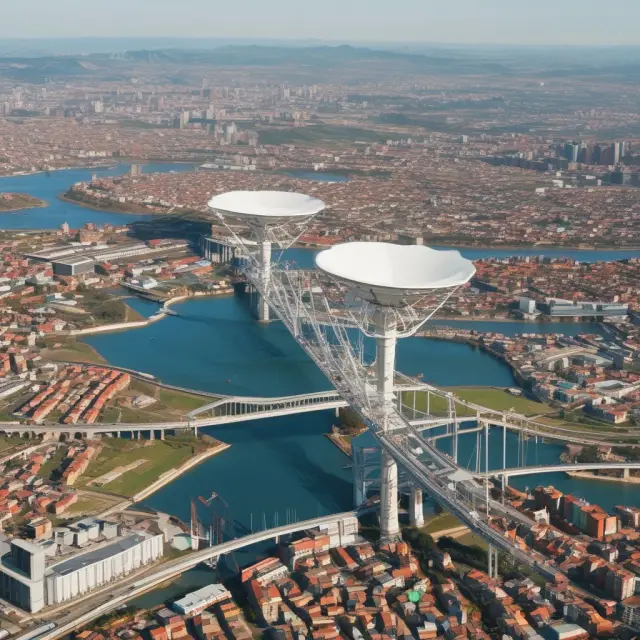
Understanding the role of Very Small Aperture Terminals (VSAT) in Finance and Investment, including applications, history, advantages, disadvantages…
Introduction to VSAT
A Very Small Aperture Terminal (VSAT) is a vital component of satellite communications, enabling real-time data transmission between earth-based terminals and satellites. Measuring less than three meters tall, a VSAT functions as both a transmitter and receiver for narrow to broadband data. This flexibility offers significant advantages for various applications in finance and investment sectors.
VSAT: A Revolutionary Technology
VSAT technology has revolutionized the way businesses manage data, particularly in high-frequency trading environments. Its unique capability to transmit information through satellite networks instead of physical connections like ethernet is a game-changer, especially for organizations operating in remote locations. However, this transmission method introduces latency as signals take time to bounce between the satellite and ground station, a tradeoff many consider acceptable for the added benefits of remote access and minimal infrastructure requirements.
History of VSAT: Walmart’s Use Case
The use of VSAT networks in finance can be traced back to pioneering retailers like Walmart, which implemented this technology to optimize enterprise resource planning (ERP) systems in real-time. By tracking inventory levels more precisely and reducing the need for frequent product movement between locations, VSAT significantly reduced delivery costs and increased efficiency.
VSAT at National Stock Exchange (NSE)
The National Stock Exchange of India (NSE) is an excellent example of a large-scale VSAT network application in finance. With over 750 VSATs across the country, NSE offers remote access to real-time market data from various trading venues, enabling seamless transactions and expanding financial inclusion in areas with limited wired connectivity.
Advantages of Using VSAT
One major advantage of VSAT networks is their ability to deploy infrastructure quickly and cost-effectively for businesses requiring remote access or backups. VSAT’s independence from local telecommunications networks adds a layer of redundancy, reducing business recovery risk in the event of network failures. However, it’s essential to understand that while VSAT offers numerous advantages, it does come with some limitations.
Stay tuned for the next section where we explore the disadvantages of using VSAT and how weather can impact its performance.

The Role of VSAT in Finance and Investment
A Very Small Aperture Terminal (VSAT) plays a significant role in finance and investment, particularly in financial transactions and high-frequency trading. Instead of relying on traditional wired networks for data transmission, VSAT systems use satellite communications for real-time data exchange. The use of VSAT offers several advantages, such as increased deployment flexibility, reduced infrastructure requirements, and disaster recovery capabilities.
In finance, VSAT networks have become essential in high-frequency trading, which relies on rapid response times to capitalize on market opportunities. Traders need real-time access to data feeds from various markets and financial instruments. VSAT enables this connectivity in remote locations where wired infrastructure may not be available or reliable.
One of the most prominent applications of VSAT technology in finance is with enterprise resource planning (ERP), a business process that manages and integrates information from all aspects of an organization, including inventory management and order processing. A well-known example of VSAT’s impact on finance comes from Walmart, which used this technology to revolutionize its ERP system. By implementing VSAT networks, Walmart was able to effectively manage its vast inventory in real-time and reduce delivery costs between the warehouse and stores.
Moreover, the National Stock Exchange (NSE) of India operates a massive VSAT network with over 400 terminals across the country. NSE offers this as one of its connectivity options for investors in remote locations where traditional telecommunications infrastructure is limited or nonexistent. The exchange has reported minimal issues with its satellite network, with only occasional disruptions due to weather conditions or solar radiation impacting signal quality.
Despite the benefits, there are challenges associated with using VSAT networks. One of the primary concerns is latency, as data transmission through satellites takes longer compared to wired networks. While many users consider this a fair trade-off for remote access and less infrastructure, latency can impact high-frequency trading strategies that require fast response times.
In conclusion, VSAT plays a crucial role in finance and investment by enabling real-time data transmission in remote locations and reducing infrastructure requirements. High-frequency traders, financial institutions, and organizations like the National Stock Exchange have successfully implemented this technology to capitalize on market opportunities and streamline business processes. While latency remains an issue, ongoing advancements in satellite technology are continually improving performance and expanding the potential applications of VSAT networks in finance.
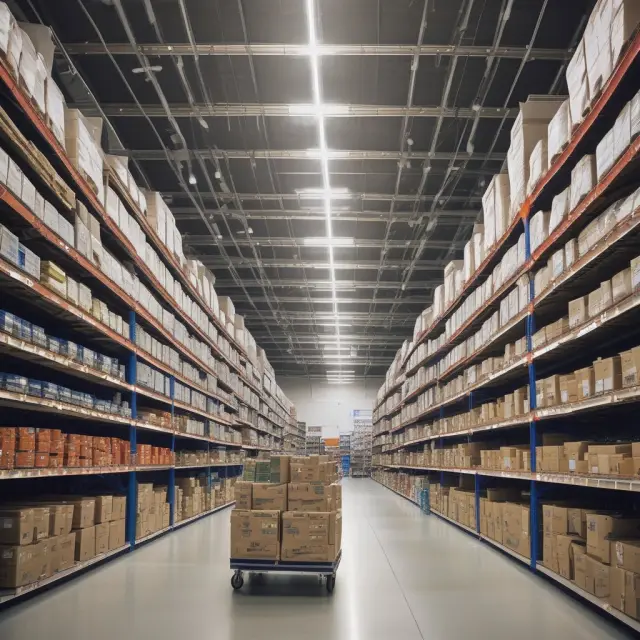
History of VSAT: Walmart’s Use Case
A very small aperture terminal (VSAT) has been making waves in various industries, particularly finance and investment, due to its impressive data transmission capabilities. One of the most compelling success stories behind this technology comes from retail giant, Walmart. In the late 1990s, Walmart recognized the potential of VSAT for revolutionizing enterprise resource planning (ERP).
At that time, the retail industry was grappling with managing vast inventories across numerous locations. The traditional method of using physical networks for data transfer faced limitations in terms of cost and efficiency. Walmart saw an opportunity to streamline its inventory management process by implementing a VSAT network. By doing so, they could reduce delivery costs between warehouses and stores while providing real-time tracking of stock levels.
Walmart’s pioneering use of VSAT for ERP involved setting up a network that would transmit data through satellites instead of relying on physical connections like Ethernet. This innovation allowed Walmart to implement an effective inventory management system, which was crucial in a sector where efficient stock control is vital.
As the hub system for inventory storage became integrated with VSAT networks, it enabled precise stocking and reduced the number of product transfers between locations before reaching the sales floor. Furthermore, this innovation led to significant improvements in reducing delivery times and enhancing overall operational efficiency. Other manufacturers have since followed Walmart’s lead in employing VSAT for order relaying, real-time production checking, and various functions typically managed over a wired network.
One of the most impressive examples of large-scale VSAT deployment can be found at the National Stock Exchange (NSE) in India. With one of the largest VSAT networks globally, NSE offers it as an option for connectivity to its clients. The implementation of this extensive network was instrumental in providing access to markets in areas where wired options are scarce or unavailable. Despite occasional sun outages caused by solar radiation disrupting signals from satellites, the VSAT system has held up impressively well.
By embracing VSAT technology, Walmart paved the way for a new era of connectivity and real-time data management in industries like finance, retail, and beyond. As we explore the advantages and disadvantages of VSAT networks further, it’s important to appreciate how this groundbreaking use case set the stage for their widespread adoption.
Stay tuned for the next section where we’ll dive deeper into the advantages of using a Very Small Aperture Terminal (VSAT) in finance and investment.
VSAT and National Stock Exchange (NSE)
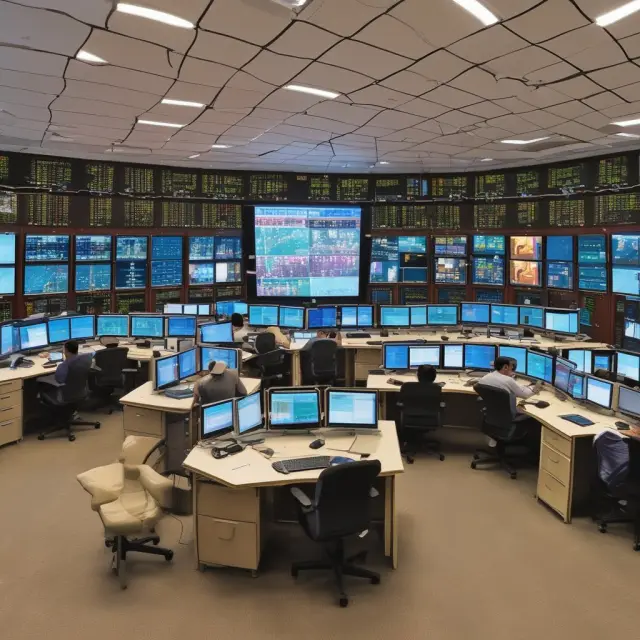
The National Stock Exchange (NSE), located in Mumbai, India, boasts one of the largest VSAT networks globally with over 500 terminals connecting various stock exchanges, trading floors, and data centers across India. The extensive VSAT network is crucial for NSE as it provides access to remote locations where traditional wired infrastructure might be inadequate or non-existent.
This massive VSAT network plays a pivotal role in facilitating high-frequency trading and real-time market data dissemination, offering numerous advantages to stock traders operating in the country. By providing seamless connectivity, NSE’s VSAT network enables traders to execute trades with minimal latency and maximum efficiency, ensuring they stay informed of the latest market developments and remain competitive.
The robustness of NSE’s VSAT network has proven to be resilient against external factors that might hinder other wired networks, including weather conditions, power outages, and network congestion. This reliability is vital for stock trading as even a momentary disruption could result in significant financial losses or missed opportunities.
The VSAT network’s flexibility also allows NSE to easily scale its operations as the market grows, ensuring that it caters to an ever-increasing number of participants without compromising on the quality of service provided. Moreover, this scalability enables NSE to expand its reach and penetrate markets in remote areas where wired networks are unavailable or unreliable.
However, despite its numerous benefits, the VSAT network does face certain challenges. One such challenge is latency due to the time it takes for data to travel from the satellite to the ground terminal and vice versa. Although this delay might be acceptable for some applications, high-frequency trading requires real-time, low-latency responses. To mitigate this issue, NSE has implemented measures like deploying multiple hubs strategically located across the country, ensuring that data does not have to travel as far between various locations.
Another challenge faced by VSAT networks is their susceptibility to weather conditions that might hinder signal transmission. Rain, fog, and heavy winds can degrade or even block the satellite signals, leading to potential data losses or connectivity issues. To address this problem, NSE has integrated advanced weather monitoring systems that continuously assess atmospheric conditions and automatically adjust system settings as needed. These adjustments include altering beam tilt angles, changing modulation schemes, and selecting backup beams when necessary to ensure minimal impact on the overall performance of the VSAT network.
In conclusion, NSE’s extensive VSAT network plays a significant role in connecting various stakeholders within the Indian stock market ecosystem while providing them with uninterrupted access to real-time market data and high-frequency trading capabilities. By addressing the challenges associated with latency and weather conditions, the exchange has managed to maintain its position as a leading player in the financial sector despite the geographical limitations of wired networks.

Advantages of Using VSAT
A very small aperture terminal (VSAT) offers numerous benefits for finance and investment industries, particularly when it comes to data transmission. One of the primary advantages is its deployment capabilities, which require less infrastructure as compared to traditional wired networks. This makes VSAT an excellent choice for providing connectivity to remote locations, where setting up a physical network would be cost-prohibitive or impractical. The ability to set up VSAT networks quickly and easily has made them an ideal solution for industries like finance and investment, which often have to deal with remote work sites such as drilling sites or trading floors in different time zones.
Another significant advantage of using a VSAT network is its backup capabilities. VSAT operates independently of local telecommunications networks, ensuring business continuity even when the wired infrastructure goes down due to maintenance, power outages, or other unforeseen circumstances. This redundancy is particularly valuable in financial services, where downtime could result in significant losses and reputational damage.
A VSAT network also offers flexibility and scalability for businesses that need to expand their operations quickly. Adding more VSATs to the network is a relatively straightforward process, allowing businesses to easily increase their bandwidth and capacity as needed. This is especially important for finance and investment companies, which often need to respond rapidly to market conditions or handle large volumes of data.
Additionally, VSAT networks are ideal for applications that require real-time access to critical information. For instance, high-frequency traders rely on VSAT networks to transmit and receive data from various financial markets worldwide, enabling them to make split-second decisions based on market conditions. With latency typically measured in milliseconds, VSAT can provide a significant edge over competitors relying on traditional wired networks or satellite services with higher latency.
Despite its numerous advantages, VSAT does have some limitations. One of the most notable is latency, which can be problematic for applications that require real-time interaction or rapid response times. However, many users consider this a fair trade-off given the benefits of remote access and less infrastructure required. Another challenge is potential signal degradation due to weather conditions or obstructions like buildings. Proper antenna placement and maintenance are crucial to mitigating these issues and ensuring optimal network performance.
In conclusion, VSAT’s deployment capabilities, backup functionality, flexibility, and ability to handle real-time data make it an attractive option for finance and investment industries. The technology has proven valuable in various applications, from inventory management for retail giants like Walmart to high-frequency trading on financial markets worldwide. Despite some limitations, VSAT offers a compelling solution for businesses seeking to expand their connectivity options and maintain business continuity in remote or challenging environments.

Disadvantages of Using VSAT
While the advantages of utilizing Very Small Aperture Terminals (VSATs) for financial transactions and investment are well-documented, there are challenges associated with this technology that require examination. Two primary disadvantages of using VSAT include latency and weather conditions.
Latency is a significant concern when it comes to high-frequency trading and other financially sensitive applications. Due to the distance the signal travels between Earth and a geostationary satellite, there can be an inherent delay of around 250 milliseconds. This might not seem substantial, but for traders seeking to capitalize on market fluctuations at nanosecond intervals, it could mean missing out on lucrative opportunities. Despite this challenge, many users consider the trade-off worthwhile due to the benefits VSAT provides in terms of remote access and less infrastructure requirements.
Another disadvantage of using VSAT is its susceptibility to weather conditions. Heavy rain, snow, or fog can interfere with satellite signals, leading to data loss, packet errors, or even complete signal loss. As a result, VSAT systems are often designed with redundancies and backup plans, including the use of multiple satellites or terrestrial alternatives, to mitigate the risks associated with weather conditions.
To overcome latency issues, some financial institutions have turned to lower Earth orbit (LEO) satellites, which offer faster transmission times. These LEO constellations, such as SpaceX’s Starlink project, are expected to revolutionize satellite communications in various industries by providing low-latency connections. The increased focus on LEO technologies could potentially make VSAT a less desirable option for high-frequency trading and other latency-sensitive applications in the future. However, it is important to note that VSAT remains an attractive choice for numerous financial institutions due to its advantages, particularly when it comes to remote connectivity and deployment flexibility.
In conclusion, while there are challenges associated with using VSAT, such as latency and weather conditions, many financial organizations still find the technology valuable due to its flexibility in providing connectivity to remote locations and its ability to serve as a backup solution for wired networks. As advancements continue to be made in satellite communications technology, it is likely that VSAT will maintain its relevance within the finance and investment sectors while addressing the challenges that currently exist.

VSAT and Weather
Weather plays a crucial role in determining the effectiveness of VSAT networks, which could lead to interruptions or degradation in data transmission for financial transactions and high-frequency trading. Understanding how weather impacts VSAT performance is vital for investors, traders, and other finance professionals who rely on this technology to conduct business operations remotely or in regions with limited wired network coverage.
The primary weather conditions that can negatively affect a VSAT network include rain, fog, snow, and ice. Rain causes the greatest impact because it scatters the radio signals as they travel between the satellite and the ground station. This scattering leads to signal loss, which in turn results in decreased bandwidth, slower transmission speeds, or even complete disconnection from the VSAT network for an extended period.
Fog can also disrupt the VSAT signal due to its water droplets’ ability to absorb and scatter electromagnetic radiation. This issue is more prevalent in mountainous regions or coastal areas with heavy fog. In such cases, users may experience packet loss or weakened signals, leading to a suboptimal user experience.
Snow and ice can create additional challenges for VSAT networks by accumulating on the satellite dish or antenna. This build-up results in reduced signal quality due to the blockage of incoming signals. Furthermore, heavy snowfall could potentially damage the physical components of the ground station, such as cables and connectors.
To mitigate these weather-related issues, VSAT networks typically employ adaptive modulation techniques like Automatic Gain Control (AGC), Adaptive Coding and Modulation (ACM), and Automatic Link Establishment (ALE) to maintain a stable connection. These technologies can detect changes in signal quality and adjust the transmission parameters accordingly to improve overall system performance.
Additionally, satellite operators may employ geostationary satellites in polar regions or at higher altitudes to minimize the impact of weather on VSAT networks. This strategy allows users to maintain a more consistent connection, as these satellites are less susceptible to adverse weather conditions compared to lower-orbiting satellites.
Despite advancements in technology and adaptive techniques, weather will continue to pose a challenge for VSAT networks. Therefore, it is crucial for businesses and financial institutions that rely on this technology for critical operations to factor in potential disruptions due to weather conditions and implement contingency plans accordingly.

VSAT Applications in Finance and Investment
A Very Small Aperture Terminal (VSAT) has found extensive applications within various sectors, most notably in finance and investment industries where quick data transmission is crucial. VSAT has emerged as a powerful alternative to traditional wired networks, providing real-time access to high-frequency trading platforms, financial news, and remote work sites.
In the context of finance, one of the most significant applications of VSAT is high-frequency trading (HFT), which involves making multiple trades per day by leveraging data and analytics for profit. HFT firms use VSAT to access real-time market data from numerous sources, enabling them to execute trades in milliseconds. The low latency associated with satellite transmissions plays a vital role in HFT strategies, as quick decision-making is paramount in this competitive field.
Another application of VSAT in finance includes remote work sites. Financial institutions and investment firms often have offices in various locations around the world. For those situated in regions with limited or unreliable terrestrial infrastructure, VSAT provides a robust alternative for secure and high-speed data transmission. This enables employees to access critical financial data, trade platforms, and internal systems from virtually anywhere, allowing them to stay connected and productive regardless of their physical location.
One remarkable example of VSAT’s impact on the finance sector can be traced back to Walmart’s implementation of VSAT for enterprise resource planning (ERP) purposes in the late 1980s. The company employed a vast VSAT network to manage its inventory and streamline operations, effectively replacing the need for extensive physical infrastructure. This technological advancement allowed Walmart to achieve significant cost savings while increasing operational efficiency and accuracy.
Moreover, the National Stock Exchange of India (NSE) has adopted VSAT extensively. With over 120 satellite dishes spread across the country, NSE provides connectivity to its members in remote locations where terrestrial infrastructure is limited or non-existent. This enables these members to access real-time market data, news, and trading platforms from anywhere in India, contributing to the growth of the Indian securities market.
Despite the numerous advantages, VSAT systems come with certain challenges. Latency can be a significant concern for financial applications as it may result in delayed or inaccurate data transmission. Weather conditions, particularly heavy rainfall and storms, can also impact signal quality, leading to potential interruptions. However, advancements in technology have led to improvements in VSAT’s performance and resilience, making it an increasingly attractive option for finance professionals seeking reliable and flexible communication solutions.
In conclusion, Very Small Aperture Terminals (VSAT) have revolutionized the way data is transmitted in various industries, particularly finance and investment. With their ability to provide real-time access to high-frequency trading platforms, secure remote connectivity, and support for extensive geographic coverage, VSAT systems are a powerful tool for businesses seeking to improve operational efficiency and maintain a competitive edge in today’s fast-paced global economy.

VSAT Security and Encryption
A Very Small Aperture Terminal (VSAT) network’s robustness is a significant advantage for financial institutions looking for secure, reliable connections to transmit sensitive data. VSAT’s inherent security features make it an attractive choice for financial transactions and high-frequency trading applications.
One of the most important aspects of a VSAT network is its encryption capabilities. Encryption ensures that all data transmitted between terminals and hubs remains confidential, preventing unauthorized access. The encryption process scrambles the data using complex algorithms to make it unreadable to any potential interlopers. Once the encrypted data reaches the intended recipient, it can be decrypted, ensuring secure communication.
Moreover, VSAT networks provide a level of physical security that is not found in traditional wired networks. With VSAT, the signal travels through the atmosphere and is transmitted to the satellite. This means that there is no physical infrastructure susceptible to tampering or breaches on the ground. The absence of terrestrial connections minimizes the risk of data theft or interception.
In the context of finance and investment, the security provided by VSAT networks is essential for maintaining confidentiality and safeguarding financial information. High-frequency traders rely on real-time market data to make profitable trades. A breach in security could result in significant losses. VSAT’s encryption and secure transmission capabilities enable these firms to maintain their competitive edge while keeping sensitive data protected.
It is important to note that not all VSAT networks are created equal when it comes to security. Financial institutions should ensure they choose a reputable VSAT provider with robust encryption protocols and strong cybersecurity measures in place. This will help protect against potential threats, such as hacking attempts or malware infections.
The future of finance and investment relies heavily on data management, real-time analysis, and connectivity. VSAT networks offer a reliable, secure, and scalable solution for financial institutions seeking to stay ahead of the competition and protect their clients’ sensitive information. By understanding the unique features and advantages of VSAT security and encryption, businesses can make informed decisions on implementing this technology to strengthen their operations and safeguard their future.
Future Outlook for VSAT in Finance and Investment
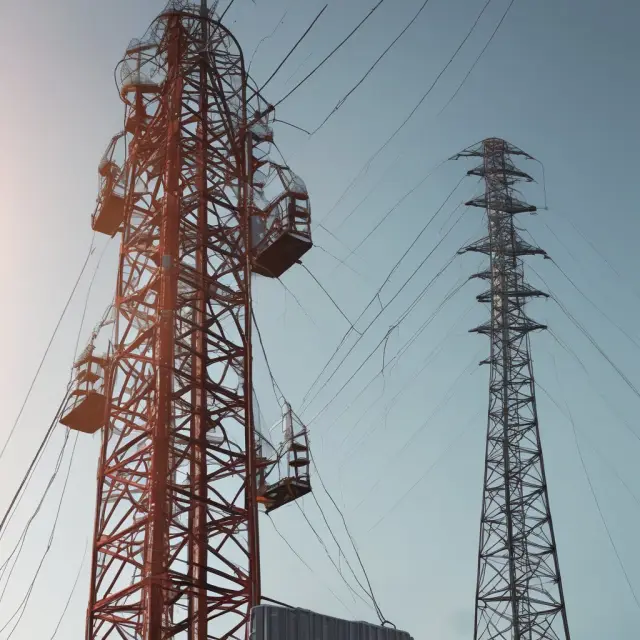
The future of VSAT networks is bright, with continuous innovation and advancements driving their adoption across various sectors, including finance and investment. As more companies explore decentralized operations and digital transformation, the need for reliable remote connectivity becomes increasingly essential.
VSAT’s role in finance and investment has been evident through high-frequency trading platforms and remote work sites. These applications require real-time data access to maintain competitive advantages. With VSAT networks providing the ability to transmit and receive information directly from satellites, they offer a significant edge over traditional wired networks in terms of deployment flexibility, back-up capabilities, and reduced infrastructure requirements.
Walmart’s success story with VSAT is an excellent example of the technology’s transformative impact on enterprise resource planning (ERP) and inventory management. By implementing VSAT, Walmart was able to achieve real-time monitoring and streamlined communication between warehouses, distribution centers, and retail stores—an innovation that revolutionized their supply chain management and contributed to significant cost savings.
The National Stock Exchange (NSE) of India is another prominent adopter of VSAT technology. With one of the largest VSAT networks in the world, NSE has successfully offered connectivity options in areas with limited or no wired network infrastructure. Although solar radiation and other weather conditions can occasionally impact signal quality, advancements in satellite technology have led to improved reliability and performance.
Future prospects for VSAT networks in finance and investment include expanded applications such as:
- Secure, high-speed trading platforms: VSAT networks can provide a competitive edge by offering low latency and secure data transmission for real-time trading decisions.
- Enhanced communication between remote work sites: As more companies move towards decentralized operations in various industries, reliable VSAT connectivity becomes crucial for effective collaboration and information sharing between remote teams.
- Remote monitoring and control systems: The use of satellite networks can provide real-time data access to monitor critical infrastructure or assets located in remote locations, such as oil rigs, power plants, and mining sites.
- Disaster recovery and business continuity planning: With VSAT’s ability to serve as a back-up network for wired systems, businesses can significantly reduce their risk of downtime during emergencies or unexpected disruptions.
- IoT integration and data collection: Satellite networks can be instrumental in collecting, processing, and transmitting data from Internet of Things (IoT) devices located in remote or hard-to-reach areas.
- Global connectivity for emerging markets: VSAT networks can bridge the digital divide by providing affordable, reliable internet access to populations in developing countries where infrastructure is limited or non-existent.
- Enhanced security and encryption: As more financial transactions take place online, VSAT’s encrypted data transmission capabilities become increasingly essential for safeguarding sensitive information and combating cyber threats.
In conclusion, the future of VSAT networks in finance and investment is promising, with their ability to provide reliable, high-speed connectivity to remote locations playing a significant role in driving business growth and innovation in an ever-changing global marketplace.

FAQs About VSAT
Q: What is a Very Small Aperture Terminal (VSAT)?
A: A very small aperture terminal (VSAT) is a versatile data transmission technology that functions as both a transmitter and receiver. Standing less than three meters tall, it transmits data to satellites in orbit and can be used for narrow or broadband applications. VSAT’s unique capability allows it to be employed in various industries for data management tasks, particularly high-frequency trading.
Q: What are the advantages of using a Very Small Aperture Terminal (VSAT)?
A: One major advantage of using a VSAT network is its ability to deploy easily to remote locations where infrastructure for wired networks may be limited or nonexistent. This makes it ideal for applications such as enterprise resource planning (ERP), oil and gas exploration, and other industries with dispersed operations. Additionally, a VSAT system provides a backup option for companies seeking to protect against potential service interruptions caused by local network failures.
Q: How does a Very Small Aperture Terminal (VSAT) work?
A: VSAT networks consist of ground stations that communicate with satellites in orbit, transmitting and receiving data in real-time. Data is then redirected to hubs or other terminals around the world for processing and further transmission. An example of VSAT’s impact can be seen in Walmart’s use of this technology to manage inventory and reduce delivery costs between warehouses and stores.
Q: What are some disadvantages of using a Very Small Aperture Terminal (VSAT)?
A: Although VSAT offers many advantages, it does come with certain challenges. One significant issue is latency, which arises due to the time it takes for data to travel between Earth and geostationary orbit. This latency can make real-time applications that require quick back-and-forth communication more difficult to implement effectively. Weather conditions and interference from other structures can also impact signal quality.
Q: How does weather affect a Very Small Aperture Terminal (VSAT)?
A: Adverse weather conditions, particularly heavy precipitation or high winds, can disrupt the performance of a VSAT network by blocking the line-of-sight between the ground station and satellite. This disruption results in signal loss, which can impact data transmission and result in reduced connectivity for users. To mitigate this issue, some VSAT operators employ techniques such as link budget optimization to maintain connectivity even during adverse weather conditions.
Q: What are common applications of a Very Small Aperture Terminal (VSAT) in finance?
A: In the finance industry, VSAT is used extensively for high-frequency trading platforms and remote work sites. The technology’s ability to quickly transmit large volumes of data to and from satellite makes it an ideal solution for businesses seeking to implement efficient and responsive financial operations. Additionally, its deployment capabilities make it a valuable tool for managing and monitoring complex financial transactions in real-time.
Q: How has the National Stock Exchange (NSE) utilized Very Small Aperture Terminals (VSATs)?
A: The National Stock Exchange (NSE) of India is a leading example of an organization that has harnessed the power of VSAT technology to expand its reach beyond traditional wired networks. By implementing a massive VSAT network, the NSE has been able to offer connectivity in remote and underdeveloped areas, making it easier for investors and traders to access critical financial information regardless of their location.
Q: What is geostationary orbit?
A: Geostationary orbit refers to an orbit in which a satellite remains directly above a specific point on Earth’s surface. This positioning makes it possible for VSAT ground stations to maintain a constant line-of-sight connection with the satellite, allowing for continuous data transmission and reception. This stability is crucial for applications requiring real-time data communication, such as finance and trading platforms.
 Next entry · No. 5,556Understanding Vulture Capitalists: The Prey on Distressed Companies for Profit
See also
-
 No. 5,547
18 Sep 2025
21 min
Vostro Accounts in Correspondent Banking: Understanding Your Account as an Agent or Intermediary
Business Finance
No. 5,547
18 Sep 2025
21 min
Vostro Accounts in Correspondent Banking: Understanding Your Account as an Agent or Intermediary
Business Finance -
 No. 5,513
15 Sep 2025
18 min
VoIP: Understanding the Revolutionary Technology Transforming Communication in Finance and Investment
Business Finance
No. 5,513
15 Sep 2025
18 min
VoIP: Understanding the Revolutionary Technology Transforming Communication in Finance and Investment
Business Finance -
 No. 5,492
13 Sep 2025
20 min
Video Conferencing: A New Era of Business Communication
Business Strategy
No. 5,492
13 Sep 2025
20 min
Video Conferencing: A New Era of Business Communication
Business Strategy -
 No. 2,749
01 Feb 2025
21 min
Understanding Labor-Intensive Industries: Definitions, Characteristics, and Implications for Investors
Business Strategy
No. 2,749
01 Feb 2025
21 min
Understanding Labor-Intensive Industries: Definitions, Characteristics, and Implications for Investors
Business Strategy -
 No. 5,896
17 Oct 2025
18 min
Understanding Zero-Floor Limits: Protecting Against Fraud and Processing Every Transaction
Business Finance
No. 5,896
17 Oct 2025
18 min
Understanding Zero-Floor Limits: Protecting Against Fraud and Processing Every Transaction
Business Finance -
 No. 5,882
15 Oct 2025
19 min
Zero-Based Budgeting: Understanding the Advantages, Disadvantages, and Process
Business Finance
No. 5,882
15 Oct 2025
19 min
Zero-Based Budgeting: Understanding the Advantages, Disadvantages, and Process
Business Finance