Understanding Voidable Contracts: An Essential Guide for Institutional Investors

Learn about voidable contracts, their types, and implications for institutional investors. Understand legal precedents and best practices.
Introduction to Voidable Contracts
A crucial concept for institutional investors, especially those involved in commercial transactions, is understanding voidable contracts. In essence, a voidable contract is an agreement that may be contested, canceled, or altered under specific legal conditions. These circumstances can include but are not limited to misrepresentation, mistake, fraud, duress, incapacity, and unconscionability. The ability for one party to challenge the validity of a contract and seek disaffirmance is crucial, as it safeguards investors against entering into unfair or fraudulent contracts. In this section, we will explore various aspects of voidable contracts, including their distinction from void contracts, the types of situations that may cause a contract to be considered voidable, the legal implications for both parties, and real-life examples.
Definition and Overview
A voidable contract is one that is initially considered legal and enforceable but can potentially be rendered unenforceable if one or more specific conditions are met. When one party challenges a contract’s validity due to legal reasons like misrepresentation, mistake, fraud, duress, incapacity, or unconscionability, the contract may become voidable. This means that the aggrieved party has the option to reject the agreement, preventing it from being enforced. The power to reject a potentially voidable contract lies with the injured party; this power is known as disaffirmance.
Distinction Between Void and Voidable Contracts
Void contracts are inherently unenforceable due to illegal terms or circumstances, while voidable contracts may initially be enforceable but can be challenged and potentially overturned based on specific legal grounds. In the case of a void contract, neither party is obligated to perform their obligations under the agreement. For example, an agreement entered into for gambling purposes would typically be considered a void contract.
In contrast, a voidable contract, such as one with a hidden clause or fraudulent representation, may initially seem valid but can be contested if either party discovers the issue after signing. The key difference is that a contract can only be declared voidable upon legal challenge, while a contract is considered void from its inception.
In conclusion, understanding voidable contracts and their implications is essential for institutional investors and other professionals involved in commercial transactions. By recognizing the types of situations that may lead to a contract being voidable, along with the potential consequences and remedies, investors can safeguard themselves against entering into potentially unfair or fraudulent agreements. In the following sections, we will dive deeper into various aspects of voidable contracts, including real-life examples and best practices for avoiding them.
Stay tuned for the next section on the types of voidable contracts!

Types of Voidable Contracts
A contract becomes voidable when it is initially legal but may be rejected due to certain circumstances. These scenarios include misrepresentation, mistake, fraud, duress, legal incapacity, or unconscionable terms. Let’s explore these types of voidable contracts in detail:
1. Misrepresentation
A contract based on false statements is considered voidable when one party intentionally misrepresents a material fact to the other party. In such cases, the defrauded party may be able to disaffirm the agreement if they discover the deception prior to performing their obligations.
2. Mistake
An error or misunderstanding regarding contract terms can result in a voidable contract. If both parties unknowingly agree to different terms, a mistake has occurred, and one of them may have the right to disaffirm the agreement upon discovery.
3. Fraud
A contract resulting from fraudulent behavior is considered voidable when one party knowingly deceives or misrepresents critical information to induce another party into entering an agreement. The aggrieved party can seek to invalidate the contract and reclaim any damages suffered as a result.
4. Duress
When one party coerces the other into signing a contract through threats, intimidation, or other forms of undue pressure, the contract is considered voidable. Once the threat has been removed, the aggrieved party may choose to disaffirm the agreement.
5. Legal incapacity
A contract entered between parties who lack the legal capacity to enter into an agreement is voidable. For example, a minor or someone of unsound mind cannot legally agree to a contract, and any agreements made during that time are generally not enforceable.
6. Unconscionable terms
When one party takes advantage of another’s vulnerability in a contract, the agreement may be considered voidable due to unconscionable terms. Unconscionable contracts often involve significant disparities in bargaining power between parties or exploit the other party’s ignorance or desperation.
Understanding the various types of voidable contracts can help protect your interests as an institutional investor, ensuring that you enter into fair and enforceable agreements. Stay tuned for our next article section where we will discuss the legal implications of voidable contracts and how they affect your rights and obligations.
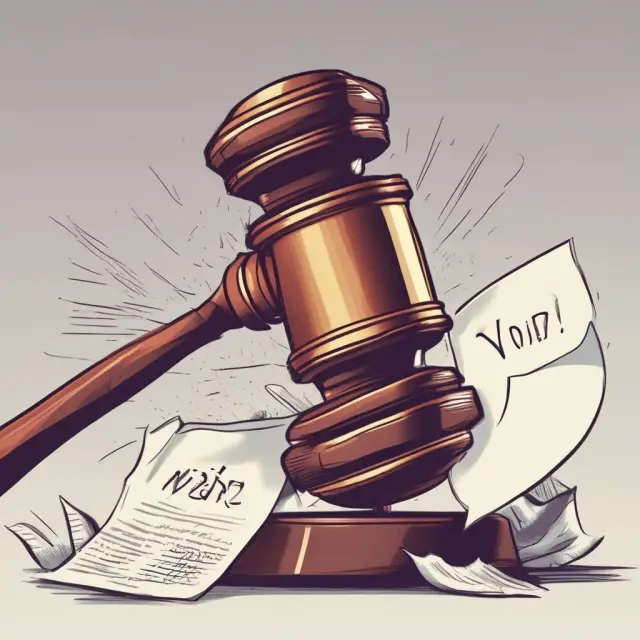
The Legal Implications of Voidable Contracts
When it comes to handling a potential voidable contract, parties may have the power to challenge the validity of the agreement under specific circumstances. The legal recourse that allows one party to reject an unfavorable agreement is known as disaffirmance, and the following sections discuss the implications of invoking this option.
Disaffirming a Voidable Contract
When discovering that a contract contains misrepresentations, mistakes, fraud, duress, or other voidable elements, one party may have the right to reject its terms under disaffirmance. By doing so, the party essentially rescinds their agreement and relieves themselves of any legal obligations stemming from it.
It’s important to note that not all contracts are voidable. Only those agreements with a legally valid foundation that subsequently develop defects qualify for disaffirmance. For instance, if both parties willingly agree on a contract without any coercion or misrepresentation, and later decide they wish to terminate it for any reason, the contract remains enforceable.
However, should one party find evidence of fraudulent behavior, such as a misrepresentation of material facts, the other party may have grounds for disaffirmance. In this scenario, if the affected party acted reasonably promptly upon discovering the deception and did not significantly benefit from the contract’s enforcement, they are likely to have their agreement rescinded.
The Role of Contract Ratification
In cases where a voidable contract is discovered after both parties have entered into new agreements with each other or third parties based on the original contract, contract ratification may be necessary. This process involves all involved parties agreeing to amend the original contract’s terms and conditions, thereby removing any objectionable elements that rendered it voidable in the first place.
Once ratified, the contract is considered valid and enforceable moving forward. However, it’s essential that both parties engage in this process with a clear understanding of its implications as failure to do so could lead to unintended consequences or future disputes.
Examples of Voidable Contracts
Two recent legal cases involving freemium apps and solar power installers illustrate the importance of understanding voidable contracts for institutional investors. In 2012, Apple (AAPL) faced a lawsuit regarding its handling of in-app purchases made by minors using freemium apps. The argument was that these transactions constituted voidable contracts, as the young users did not have the legal capacity to consent to the terms and conditions associated with in-game purchases at the time of downloading the apps.
More recently, Vivint Solar became embroiled in a 2018 New Mexico lawsuit for allegedly defrauding customers by binding them to lengthy contracts with escalating electricity rates. The lawsuit sought to void all previous agreements made between Vivint and homeowners, but the settlement did not include this provision.
In both cases, the presence of voidable contracts impacted institutional investors due to their potential financial implications. Understanding such risks is essential for large-scale investors in order to make informed investment decisions and minimize the likelihood of entering into unfavorable agreements.

Contract Ratification: Making a Voidable Contract Valid
A contract ratification is the legal process by which parties, having initially entered into a voidable contract, collectively agree to uphold its terms despite initial issues or defects. This concept is essential for institutional investors and their legal teams to understand, as it can significantly impact portfolio management and risk assessment. The power to ratify a voidable contract lies with the affected parties; the decision to do so is not mandatory but can offer crucial advantages.
The scenario where contract ratification applies most frequently arises when one party discovers that they were not aware of significant defects within the agreement, while the other party was fully cognizant of these issues. In such cases, the uninformed party may have grounds to challenge the validity of the entire contract or negotiate for a more favorable arrangement. However, by choosing to ratify the contract, they accept the original terms and waive their right to claim defects.
The process of contract ratification generally follows these steps:
- Discovery: One party learns about the alleged voidability issue in the contract.
- Notification: The affected party informs the other party of the voidability concern, giving them an opportunity to respond or contest the claim.
- Agreement: Both parties agree to ratify the original contract by acknowledging its validity and committing to abide by its terms, effectively waiving their rights to disaffirmance.
- Documentation: The agreement to ratify must be documented in writing and signed by both parties to provide a clear record of consent.
This procedure offers several benefits for all involved parties:
- Clarity and finality: Contract ratification can bring a sense of closure to disputes or uncertainties, providing the certainty and predictability that investors require in their portfolio management strategies.
- Avoidance of lengthy litigation: The process often proves more efficient than engaging in time-consuming and costly legal proceedings.
- Strategic advantage: Ratifying a contract can be an essential element of an investor’s risk mitigation strategy, especially in situations where the voidability issue may not have been easily discoverable or understood at the time of signing.
It is important to note that ratification does not automatically apply to every situation involving a potentially voidable contract. For example, contracts entered into by minors or parties lacking legal capacity cannot be validly ratified until they reach the required age or regain their competency. In such cases, it’s crucial for investors and legal teams to consider alternative options for addressing the original agreement’s defects or renegotiating more favorable terms.
In conclusion, contract ratification offers an essential means of resolving disputes arising from potentially voidable contracts while allowing both parties to benefit from the continued adherence to the original terms. Understanding this process is vital for institutional investors and their legal teams to protect their assets and minimize risks in their investment portfolios.

Real-life Examples of Voidable Contracts
Understanding the concept of voidable contracts is crucial for institutional investors, as these agreements can carry significant financial implications. Let’s explore some real-life examples that illustrate this legal principle in action.
1. Apple’s Freemium Apps Controversy
In 2012, a class-action lawsuit was initiated against tech giant Apple (AAPL) alleging its “freemium” apps constituted voidable contracts due to the unintended purchases made by children using these apps without parental consent. The complaint claimed that these transactions violated consumer protection laws, as children agreed to terms and conditions allowing for in-app purchases. The case highlighted how contracts may be deemed voidable if they contain hidden or misrepresented clauses that manipulate unsuspecting users, particularly minors, into accepting unfavorable terms.
2. Vivint Solar Lawsuits
Another instance of a potentially voidable contract involved solar power installer Vivint Solar in 2018. The company was sued by the New Mexico Attorney General for allegedly defrauding customers by requiring them to sign contracts with terms that were deceptive and misleading. These long-term contracts, which bound consumers to buy electricity generated by solar systems installed on their homes at increasing rates over time, were viewed as unfair and potentially voidable due to the lack of transparency regarding these price hikes. Although a settlement agreement was reached between Vivint Solar and the New Mexico Attorney General in May 2021, it did not include an explicit clause for contract cancellation or voiding for affected customers.
These instances highlight the importance of understanding the concept of voidable contracts and their potential impact on institutional investors. As seen from these examples, a voidable contract may pose substantial financial risks if left unaddressed. By being aware of this legal principle and its real-life applications, institutional investors can make informed decisions that protect their interests while mitigating unnecessary risk.
In the next section, we will discuss the role of law in voidable contracts and explore the legal precedents, case law, and statutes that influence how courts determine whether a contract is indeed voidable or not. Stay tuned for valuable insights on this intriguing topic!

Impact on Institutional Investors
Voidable contracts can significantly impact institutional investors due to their sizeable financial commitment to contracts and the potential risks they face when entering into agreements that may be voided at a later stage. Institutional investors must conduct extensive due diligence before entering into any contract to ensure that the terms are legally sound, enforceable, and align with their investment strategy.
Investment firms and asset managers can encounter various situations where a contract is voidable or in danger of being challenged for legal reasons. For instance, one common scenario involves misrepresentations, which occur when a party knowingly conceals material facts from the other party during negotiations, inducing the unsuspecting investor to enter into an agreement that would not have been entered otherwise.
Another situation arises when contracts contain unconscionable terms. Unconscionability is a legal doctrine that focuses on the fairness and reasonableness of contract terms, particularly those that could potentially harm one party disproportionately. In some cases, institutional investors might enter into contracts with counterparties who hold a significant bargaining power advantage and have the ability to impose unfavorable terms that are considered unconscionable.
To mitigate this risk, it is crucial for institutional investors to work closely with experienced legal counsel during the contract negotiation process. Lawyers can help identify and address potential issues before entering into the agreement or suggest modifications that ensure fairness and balance between parties.
Moreover, institutional investors can establish clear communication channels and documentation practices to prevent misunderstandings that may result in misrepresentations or mistakes. This proactive approach enables them to maintain a strong negotiating position and avoid future disputes over contract terms.
Real-life examples of voidable contracts have highlighted the importance of this vigilance for institutional investors. In the 2012 lawsuit against Apple, alleging that freemium apps contained hidden in-app purchases aimed at children, a significant issue was the lack of transparency regarding disclosures related to contract terms. This situation underlined the need for institutional investors to closely examine contracts and ensure that they provide clear terms and conditions for all parties involved.
The Vivint Solar lawsuit illustrates another instance where institutional investors may face voidable contract risks. By agreeing to long-term contracts with escalating energy costs, some investors could be exposed to substantial financial losses if the contracts are deemed unenforceable.
In conclusion, understanding the implications of voidable contracts for institutional investors is crucial in managing risk and maintaining a strong negotiating position when entering into agreements. By being well-informed, proactive, and collaborative with legal counsel, institutional investors can mitigate the risks associated with these contracts and safeguard their investment portfolios.

Avoiding Voidable Contracts: Best Practices for Institutional Investors
As an institutional investor, engaging with voidable contracts can significantly impact your organization’s financial health, reputation, and regulatory compliance. To minimize the risks associated with these types of agreements, it is crucial to employ thorough due diligence practices and carefully crafted contractual clauses when entering into new business arrangements.
1. Effective Due Diligence:
Avoiding voidable contracts starts with a rigorous investigation of the counterparty’s background and track record. This includes examining their past litigation, regulatory actions, and public filings to identify potential red flags. Ensuring both parties are reputable and reliable can minimize the likelihood of encountering misrepresentation or fraudulent behavior.
2. Transparency in Contract Drafting:
Clearly defining the terms and conditions of a contract is essential when dealing with institutional investments. By making contractual clauses as transparent as possible, potential ambiguities are minimized, reducing the likelihood that one party will claim misrepresentation or mistake later on. Additionally, include provisions for addressing contingencies to help prevent disputes from arising due to unexpected circumstances.
3. Legal Review and Counsel:
Partnering with a skilled legal team is critical when entering into complex business deals. A professional advisor can provide valuable insights, ensuring that the contract complies with all relevant regulations and laws while mitigating any potential risks or pitfalls.
4. Regular Contractual Reviews:
Regularly reviewing contracts helps to identify potential issues before they become significant problems. This practice not only enables institutional investors to maintain control over their agreements but also positions them to act promptly should the need for contract termination arise due to unforeseen circumstances or voidable conditions.
5. Ethical Business Practices:
Adhering to ethical business practices is a cornerstone of risk management. Ensuring that your organization’s interactions with counterparties are fair, transparent, and honest reduces the likelihood that a contract will be deemed voidable due to fraudulent or deceptive behavior.
6. Communication and Transparency:
Clear communication is essential for preventing misunderstandings that could lead to disputes. Ensuring both parties have a thorough understanding of their respective roles and responsibilities minimizes the chances that either party might claim misrepresentation or mistake later on. Additionally, maintaining open lines of communication throughout the contract life cycle allows you to address any concerns as they arise.
By implementing these best practices, institutional investors can minimize the risks associated with voidable contracts, secure their financial investments, and maintain a strong reputation in the industry.

The Role of Law in Voidable Contracts
A critical aspect of understanding voidable contracts is acknowledging their legal implications. This section will discuss how contract law influences courts’ determination of whether a contract can be considered voidable and the significance of this concept for institutional investors.
Legal Precedent: To establish whether a contract is voidable, one must look to precedents set by previous court rulings. Legal precedent plays an essential role in determining the validity of various types of contracts. For example, in the context of misrepresentation, the party making the false statement (the misrepresentor) may be held liable for damages incurred as a result of their deception.
Case Law: In addition to legal precedent, case law is crucial when it comes to analyzing voidable contracts. Case law refers to judicial decisions based on past litigation. These decisions can serve as guidance for interpreting similar situations and contract clauses in the future. For instance, a court may find that a particular misrepresentation was so significant that it rendered the entire contract unenforceable.
Statutes: Statutes are another legal tool used to determine whether a contract is voidable or not. For example, some states have statutory provisions allowing parties to terminate contracts due to mutual mistake. In California, Civil Code 1572 allows for relief from a contract when both parties agreed upon an erroneous assumption as to a matter of fact and neither party was at fault in the mistaken belief.
Contract Ratification: In some cases, it may be possible to turn a voidable contract into a valid one through ratification. Contract ratification occurs when all parties involved agree to uphold the initial terms despite any underlying issues. This process is most commonly used when one of the parties was incapacitated at the time of contract execution and later regains capacity. However, it’s essential to note that not every voidable contract can be ratified.
Impact on Institutional Investors: The legal complexities surrounding voidable contracts can significantly impact institutional investors in several ways. For instance, investors may need to consider the potential for claims of misrepresentation when assessing contractual obligations and negotiating terms with counterparties. Furthermore, understanding how case law and statutes influence courts’ decisions on voidability can be crucial in crafting robust investment contracts that minimize the risk of disputes arising from ambiguous or unclear terms.
In conclusion, familiarizing oneself with the various aspects of voidable contracts is essential for institutional investors. By staying informed about legal precedents, case law, and statutes, investors can protect their interests and mitigate potential risks that may arise during contract negotiations and execution.

Conclusion: The Importance of Understanding Voidable Contracts
In conclusion, the concept of voidable contracts holds significant importance for institutional investors looking to protect their interests and safeguard their assets against potential legal challenges. Familiarizing yourself with the nuances of voidable contracts can empower you as an investor by enabling you to proactively navigate the risks associated with entering into potentially questionable agreements.
A contract classified as voidable can be cancelled or altered if one of the parties can prove that there were significant legal reasons for doing so, such as misrepresentation, fraud, mistake, duress, or unconscionability. When a party discovers the defect in a contract, they have the opportunity to reject it and renegotiate new terms that remove the initial point of contention, known as contract ratification.
Understanding voidable contracts can help protect institutional investors from engaging in agreements that may later be deemed unenforceable or against their interests. By adopting best practices such as rigorous due diligence and carefully drafted contracts, investors can significantly reduce the risk of encountering a potential voidable contract.
Moreover, being informed about the various scenarios that lead to voidable contracts and the resulting legal implications enables you to make more informed decisions when negotiating or entering into investment agreements. Additionally, being aware of the differences between void and voidable contracts can help avoid confusion and misinterpretations in future dealings.
In summary, mastering the ins and outs of voidable contracts is crucial for institutional investors seeking to protect their interests and minimize risk, both from a legal and financial perspective. As you delve deeper into this topic, familiarize yourself with key cases, statutes, and legal precedents that shape the landscape of voidable contracts in various industries and jurisdictions. Stay informed about emerging trends and legal decisions that may impact your investment strategies, ensuring you remain at the forefront of knowledge within the investment community.

FAQs on Voidable Contracts
What is the difference between a voidable contract and a void contract?
A key distinction exists between a voidable contract and a void contract. While both contracts may be unenforceable, they differ in their origins and reasons for being challenged. A voidable contract starts as a valid agreement that can be canceled due to specific circumstances, such as misrepresentation or legal incapacity. In contrast, a void contract never held validity from its onset due to inherently illegal terms or parties’ incapability to meet contractual obligations.
What happens if one party is unaware of a material fact when entering into a contract?
If one party is unaware of a critical fact at the time of signing a contract, the agreement can potentially be considered voidable. If this information comes to light and the affected party wishes to challenge the contract, they must do so within a reasonable period. If successful, the contract may be rescinded or renegotiated to reflect the accurate circumstances.
What are some common reasons for challenging a contract as voidable?
A number of situations may lead to a contract being considered voidable, including: misrepresentation (lack of truthfulness), mistake (mutual misunderstanding), fraud (deception), duress (coercion), or unconscionability (unreasonably favoring one party). It’s essential for each party to thoroughly evaluate the terms and circumstances of their agreement to ensure validity.
Can a contract be ratified after being deemed voidable?
Yes, a voidable contract can be ratified if all parties agree to new terms that effectively remove the initial point of contention. This process involves both sides acknowledging the revised conditions and accepting the updated agreement. Ratification is most commonly applied when one party was legally incapable of entering into a valid contract at the time it was executed but later regains competence.
What are some examples of voidable contracts?
Examples of potentially voidable contracts include:
- Freemium apps offering in-app purchases to minors without explicit parental consent.
- Solar power installer agreements that misrepresent the cost and terms associated with solar systems.
- Contracts entered into under duress or coercion.
- Agreements containing terms that are unconscionable, favoring one party excessively.
- Contracts involving illegal activities or unenforceable obligations.
As an institutional investor, how can I protect myself against voidable contracts?
To safeguard yourself as an institutional investor from potential voidable contracts:
- Thoroughly research and understand the terms of each agreement before signing.
- Involve legal counsel for complex or high-risk contracts.
- Ensure all parties involved provide accurate information regarding their identities, intentions, and capabilities.
- Regularly assess ongoing contractual obligations to identify any potential discrepancies.
- Maintain documentation of all contracts and related communications as proof of due diligence.
 Next entry · No. 5,517Volatility Arbitrage: Profiting from the Difference Between Forecasted and Implied Volatility
See also
-
 No. 3,809
28 Apr 2025
19 min
Understanding OTC Pink: A Guide for Institutional Investors
Business Finance
No. 3,809
28 Apr 2025
19 min
Understanding OTC Pink: A Guide for Institutional Investors
Business Finance -
 No. 415
22 Apr 2024
17 min
Understanding Bilateral Contracts: Definition, Differences from Unilateral Agreements, and Examples
Business Strategy
No. 415
22 Apr 2024
17 min
Understanding Bilateral Contracts: Definition, Differences from Unilateral Agreements, and Examples
Business Strategy -
 No. 5,514
15 Sep 2025
17 min
Understanding Void Contracts: What They Are and How They Differ from Voidable Contracts
Legal & Contracts
No. 5,514
15 Sep 2025
17 min
Understanding Void Contracts: What They Are and How They Differ from Voidable Contracts
Legal & Contracts -
 No. 4,122
24 May 2025
20 min
Understanding Promissory Estoppel: Enforcing Unkept Promises and Damages
Legal & Contracts
No. 4,122
24 May 2025
20 min
Understanding Promissory Estoppel: Enforcing Unkept Promises and Damages
Legal & Contracts -
 No. 2,910
13 Feb 2025
18 min
Understanding Liquidated Damages in Contract Law: A Comprehensive Guide
Legal & Contracts
No. 2,910
13 Feb 2025
18 min
Understanding Liquidated Damages in Contract Law: A Comprehensive Guide
Legal & Contracts -
 No. 2,319
27 Dec 2024
19 min
Understanding Implied Contracts: Legal Obligations Derived from Circumstances
Legal & Contracts
No. 2,319
27 Dec 2024
19 min
Understanding Implied Contracts: Legal Obligations Derived from Circumstances
Legal & Contracts