Understanding Volatility Skew – A Key Indicator in Option Trading

Understand the importance of volatility skew in option trading. Learn what it is, its history, and how to use it for successful strategies.
Introduction to Volatility Skew
Volatility skew refers to the difference in implied volatility (IV) between various options on the same underlying asset, based on their strike prices. The term “skew” originates from the shape of the graph when plotting implied volatilities against strike prices for a given option expiration. This indicator is crucial in understanding option pricing and the dynamics of investor sentiment in the markets. In this section, we will delve deeper into the concept of volatility skew, including its origin and its role in trading strategies.
Understanding Implied Volatility
Implied volatility (IV) represents the market’s forecasted expectation of the future volatility of an asset’s price. IV plays a significant role in options pricing and can be influenced by factors like interest rates, time until expiration, and underlying stock prices. For a better grasp of this concept, it is essential to first understand historical volatility and its differences from implied volatility.
Historical Volatility vs. Implied Volatility
Historical volatility is a measure of the standard deviation of price changes for an underlying asset over a defined period. It provides context on past market movements, giving us insight into what investors might expect in terms of future volatility. In contrast, implied volatility takes into account the current market sentiment and expectations, making it a forward-looking indicator of potential price movements.
The Role of Black-Scholes Model
The Black-Scholes model is a widely used tool for pricing options based on underlying assets. It assumes equal implied volatility for all options with identical expiration dates and strike prices. However, as mentioned earlier, real-world markets often exhibit volatility skews, which deviate from this assumption. The observation of different implied volatilities for various options can be attributed to the Black-Scholes model’s limitations in accurately capturing the complexities of market sentiment and real-life situations.
Volatility Skew Discovered in the 1980s
In the late 1980s, traders started noticing a difference in implied volatility between options with different strike prices for the same underlying asset. This discrepancy indicated that investors were willing to pay more for downside protection than upside potential. The discovery of this phenomenon led to the realization that option pricing models did not accurately capture the relationship between stock prices and implied volatility.
The Meaning of a Volatility Smile or Smirk
Volatility skews can result in either a “volatility smile” or a “volatility smirk.” The shape of this graph is determined by the relationship between in-the-money (ITM), at-the-money (ATM), and out-of-the-money (OTM) options. A balanced volatility smile exhibits equal implied volatility for both puts and calls when plotted against strike prices. Conversely, a smirk is observed when there’s a clear bias towards either puts or calls.
Interpreting Volatility Skews for Trading Strategies
Traders can use the information provided by volatility skews to inform their trading decisions. By understanding how the implied volatility of various options changes based on strike prices and market conditions, they can identify potential opportunities for profit and adjust their strategies accordingly. This strategy can be particularly valuable during periods of high market volatility or when significant news events are expected to impact underlying assets.
Examples of Volatility Skews in Various Markets
Volatility skews have been observed across various markets, from stocks to commodities and indices. For instance, options on individual stocks can reveal a strong bias towards specific strike prices due to the company’s intrinsic value or market sentiment. In commodity markets like oil or gold, volatility skews can indicate expectations of price movements based on supply-demand dynamics.
Conclusion and Future Implications
In conclusion, understanding volatility skew is crucial for any investor involved in option trading. By examining the differences in implied volatilities between options with varying strike prices, traders gain valuable insights into market sentiment and can make informed decisions based on these observations. As markets continue to evolve, the significance of volatility skews will likely remain an essential aspect of option pricing and trading strategies.
FAQs on Understanding Volatility Skew
What is a volatility smile or smirk?
A: A volatility smile (balanced curve) or smirk (weighted curve) refers to the shape of the graph when plotting implied volatilities against strike prices for a given option expiration. It illustrates the differences in implied volatility between various options on the same underlying asset.
How is volatility skew used for trading strategies?
A: Traders use volatility skews to inform their trading decisions by identifying potential opportunities based on changes in implied volatilities across various strike prices and market conditions. This strategy can be particularly valuable during periods of high market volatility or significant news events.
What causes a volatility smile or smirk?
A: A volatility smile or smirk is caused by differences in investor sentiment towards various options on the same underlying asset, resulting from factors like supply and demand dynamics, market expectations, and intrinsic value of the underlying stock.
How can I determine the volatility skew for a given option contract?
A: To calculate the volatility skew for a specific option contract, you will need access to historical and implied volatility data for options with various strike prices and the same expiration date. You can then plot implied volatilities against these strike prices to observe any differences in their values.

What is Volatility Skew?
Volatility skew is an intriguing phenomenon in options trading that reveals the difference in implied volatility (IV) between various options on a given underlying asset, based on their strike prices. The concept of volatility skew signifies that options with different strike prices do not necessarily have identical IV, despite sharing the same expiration date. In essence, volatility skew provides insights into market sentiment and supply and demand dynamics in relation to specific options.
In the context of stock options, volatility skew is characterized by downside strikes featuring greater implied volatility relative to upside strikes. This observation is a notable exception to the assumptions made by option pricing models, which presume equal IV for all options on the same underlying and expiration.
The unequal distribution of volatility between call and put options arises from the preferences of option traders and market participants. Money managers tend to write more calls than puts. As such, a situation where at-the-money (ATM) options possess lower IV compared to out-of-the-money (OTM) or in-the-money (ITM) options can be referred to as a volatility “smile.” When the curve is more balanced, this visualization is called a “volatility smile,” while an asymmetrical representation is termed a “volatility smirk.”
The volatility smile or smirk illustrates that demand for options varies based on their position relative to the current stock price. The graphical representation of IV across different strike prices creates this shape, with both puts and calls experiencing increasing implied volatility as their strikes move further away from the current stock price.
Implied volatility is an essential component in option pricing, but it can’t be directly analyzed. Instead, its value is calculated as part of a formula that predicts future movements of the underlying asset. The IV increases when the perceived risk related to the underlying asset rises. It is usually expressed through percentages and standard deviations within a given time horizon.
Understanding volatility skew is vital because it reveals important market information about option traders’ preferences, sentiment, and supply and demand dynamics. This knowledge can be harnessed as part of an options trading strategy. In the next section, we will explore how historical volatility compares to implied volatility and learn more about the role of the Black-Scholes model in understanding these concepts.
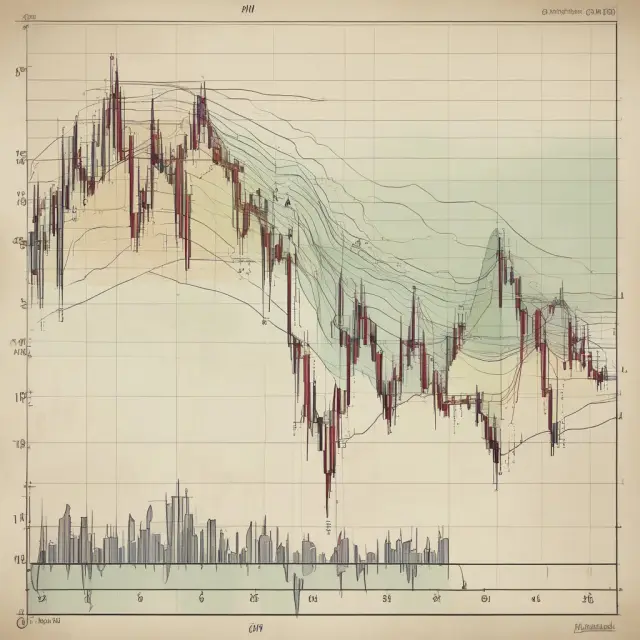
Understanding Historical Volatility
Historical volatility, also known as realized volatility or statistical volatility, is derived from the standard deviation of past price movements in an underlying security. It serves as a measure to assess how much the asset’s price has fluctuated over a certain period. In contrast, implied volatility, which represents the market’s expectation of future volatility for an option, is calculated differently and may not always align with historical volatility.
The Black-Scholes model, commonly used to price options, assumes equal implied volatility for all options with the same underlying asset and expiration date. However, market participants discovered in the 1980s that the market does not always adhere to this assumption. The revelation that people were willing to pay a premium for downside protection (out-of-the-money puts) led to the concept of volatility skew. This phenomenon indicates that implied volatility varies across different strike prices, leading to differences in the cost of options.
The distinction between historical and implied volatility is crucial because it sheds light on how markets perceive risk and the potential for price movements. A difference between historical and implied volatility can provide valuable information for option traders and investors to make informed decisions. For example, a lower historical volatility compared to implied volatility could imply that current market sentiment may be overestimating potential future moves in a security’s price. Conversely, a higher historical volatility than implied volatility might indicate that the market has underestimated past price movements and, thus, potential future fluctuations.
The relationship between historical and implied volatility can help traders assess option pricing and make more informed decisions regarding their positions. A deeper understanding of this concept also allows them to identify trends and patterns in the options market, which could be beneficial for speculation and hedging strategies.
As mentioned earlier, volatility skew is a phenomenon that manifests as unequal implied volatility between different strike prices on an underlying asset. It can take various forms, including volatility smiles or smirks. In the context of options, a smile occurs when implied volatility increases for both calls and puts as the strike price moves further from the current spot price. Conversely, a smirk appears when there is a more significant increase in implied volatility for either put or call options depending on market sentiment and demand. The volatility skew can provide valuable insights into market expectations and preferences, helping traders make more informed decisions in their trading strategies.

The Role of the Black-Scholes Model
The Black-Scholes option pricing model, introduced in 1973 by Fischer Black, Myron Scholes, and Robert Merton, is a powerful financial tool used to evaluate European call and put options. The model assumes that the underlying asset follows a geometric Brownian motion with constant volatility and makes no distinction between implied volatility for different strike prices. However, this assumption does not always align with real-world trading situations.
In the late 1980s, traders began to notice inconsistencies in implied volatilities between out-of-the-money, at-the-money, and in-the-money options for stocks. These discrepancies could not be explained by the Black-Scholes model since it assumes equal implied volatility for all options sharing the same underlying and expiration date. This observation led to the concept of volatility skew.
Volatility skew refers to the phenomenon whereby implied volatilities vary between call and put options with different strike prices, even when these options share identical maturity and underlyings. The difference in implied volatility across various strikes results from market demand for specific option types and investor sentiment towards risk. In this context, understanding volatility skew is essential for analyzing the pricing of options effectively and making informed investment decisions.
For instance, when comparing an at-the-money (ATM) call to its corresponding put option, traders often observe that the put option has a higher implied volatility than the call. This difference in IV arises due to several factors, including investor appetite for downside protection and hedging strategies. In some underlying assets, there is a convex volatility “smile” or “smirk,” where demand for options is greater when they are in-the-money (ITM) or out-of-the-money (OTM), instead of being at-the-money.
In summary, the Black-Scholes model offers a theoretical framework for evaluating European call and put options. However, it fails to account for differences in implied volatility across various strike prices – an essential factor in real-world trading situations. This oversight has led traders to explore the concept of volatility skew, which sheds light on the discrepancies between theoretical pricing and actual market conditions.

Discovering Volatility Skew in the 1980s
In the late 1970s and early 1980s, traders began to notice an intriguing phenomenon: out-of-the-money (OTM) and in-the-money (ITM) options of the same underlying asset and expiration had distinctly different implied volatilities. This disparity was not accounted for by standard option pricing models such as the Black-Scholes model, which assumes equal implied volatility across all options. As market participants delved deeper into this observation, they discovered that fund managers were willing to “overpay” for OTM and ITM options, indicating a greater perceived risk associated with these options. This situation became known as the ‘volatility skew.’
Volatility Skew in Action: A Market Perspective
This revelation had significant implications on option markets and pricing. In equity markets, downside protection was perceived to be more valuable than upside speculation, leading to a preference among money managers for writing calls instead of puts. Consequently, the implied volatility for OTM put options was typically higher than that of corresponding call options. The relationship between these two option types created what is referred to as a ‘volatility smile.’ In such cases, the implied volatility for both put and call options increased as the strike price moved further away from the current stock price.
Understanding the Impact of Volatility Skew on Options Markets
The volatility skew has been instrumental in helping traders understand market sentiment and assess the demand and supply dynamics of various options contracts. By comparing implied volatilities between OTM, ITM, and at-the-money (ATM) options, traders can make informed decisions about position sizing, entry/exit points, and overall portfolio management. Furthermore, understanding how implied volatility responds to changing market conditions allows traders to adapt their strategies accordingly and capitalize on opportunities for profit.
Visualizing Volatility Skew: A Graphical Representation
The concept of a ‘volatility smile’ or ‘volatility skew’ can be visualized by plotting the implied volatilities against strike prices for a given underlying asset and expiration date. In a balanced curve, this graph resembles a ‘smile,’ reflecting the relationship between the demand for options and their respective IVs. In contrast, an imbalanced or skewed curve—referred to as a ‘volatility smirk’—is characterized by a noticeable asymmetry around the peak of the smile. The shape of this curve is influenced by factors like market sentiment, supply and demand dynamics, and overall volatility expectations for the underlying asset.
The Role of Implied Volatility in Pricing Options: The Black-Scholes Model Revisited
To better understand the significance of volatility skew and its impact on option pricing, it is essential to revisit the Black-Scholes model. This popular option pricing formula assumes equal implied volatility for all options with the same underlying asset and expiration date. However, as discovered in the late 1970s and early 1980s, real-world markets do not adhere to this assumption. The presence of volatility skew can lead to substantial mispricings under Black-Scholes, highlighting the need for alternative option pricing models that account for this phenomenon.
In conclusion, uncovering volatility skew in the 1980s marked a significant turning point in the world of options trading. The discovery of unequal implied volatilities for OTM and ITM options opened new opportunities for market analysis and risk management strategies. By understanding the nuances behind volatility skew, traders can effectively navigate complex markets and optimize their investment decisions.

Interpreting a Volatility Smile vs. Smirk
A volatility smile or smirk refers to the phenomenon that different options on the same underlying asset have varying levels of implied volatility, even though they share the same expiration date. The terms “volatility smile” and “volatility smirk” are used interchangeably but differ slightly in their curve shapes. In this section, we will explain these concepts and discuss their importance to option traders.
Volatility Smile vs. Volatility Smirk: Definitions and Comparison
A volatility smile occurs when the implied volatility for both puts and calls increases as the strike price moves away from the current stock price (Figure 1). This creates a curve that resembles a “smile” when plotted on a graph. A balanced volatility smile indicates that the market is pricing options fairly, as investors demand similar levels of protection on both upside and downside risks. Conversely, a skewed or imbalanced volatility smile can indicate market sentiment and the supply/demand relationship for particular options.
Figure 1: Balanced Volatility Smile
In contrast, a volatility smirk occurs when the implied volatility is higher on lower strike prices (Figure 2). This curve resembles a “smirk” when plotted on a graph and is more prevalent in certain markets such as index options or commodity futures. A forward skew, which is related to volatility smirk, describes the situation where implied volatility goes up at higher strike prices in correlation with the underlying asset’s price movement.
Figure 2: Volatility Smirk
Understanding a Balanced vs. Imbalanced Volatility Smile or Smirk
A balanced volatility smile is usually indicative of fair market conditions where investors are evenly purchasing call and put options to manage their overall risk exposure. However, an imbalanced volatility smile or smirk can occur when there is a significant demand for either calls or puts. For example, during periods of heightened market volatility or fear, investors may seek downside protection through buying more puts than calls, resulting in an increased implied volatility for downside options (in-the-money and out-of-the-money) compared to at-the-money options.
Trading Strategies Based on Volatility Skew
Volatility skew information can be valuable for option traders as it provides insights into the market’s expectations for price movements in both directions. Traders may use volatility skews to identify opportunities or assess potential risk exposure. For instance, a trader could take advantage of an imbalanced volatility smile by selling options with low implied volatility and buying options with higher implied volatility. This strategy, known as a condor spread, can potentially profit from the expected convergence of the implied volatilities.
However, it is essential to note that trading strategies based on volatility skews carry inherent risks, as market conditions can change rapidly, and implied volatility levels are not always accurate indicators of future price movements. Additionally, traders must carefully consider transaction costs and market liquidity when implementing such strategies.
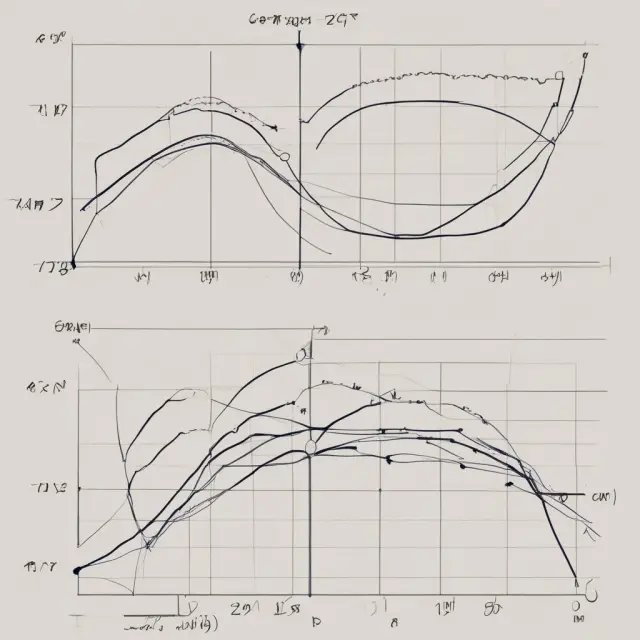
Understanding Reverse Skews and Forward Skews
Volatility skew refers to the discrepancy in implied volatility (IV) for options at different strike prices for the same underlying asset and expiration date. Two common types of skews are reverse skews and forward skews, which have significant implications for option traders.
A reverse skew occurs when implied volatility is higher on lower strike prices than higher ones. This phenomenon is more common in index options or long-term contracts, as it often arises from investor concerns regarding market risks. In a reverse skew, the graph of implied volatility against strike prices forms an upside-down “V” shape, hence the name.
On the other hand, forward skews occur when implied volatility increases at higher strike prices. This phenomenon is prevalent in commodity markets like oil and agriculture, where potential supply shortages can lead to price spikes. In a forward skew, the graph of implied volatility against strike prices shows an upward slope.
The difference between these two types of skews lies in the direction of the IV discrepancy: reverse skews have higher IV for lower strikes, while forward skews have higher IV for higher strikes. Understanding how to identify and utilize reverse skews and forward skews can help option traders make more informed decisions on trades and hedging strategies.
Let’s delve deeper into the reasons behind reverse skews and forward skews:
Reverse Skews
Investor sentiment plays a crucial role in the emergence of reverse skews. When market uncertainty is high, investors often seek downside protection by purchasing puts, leading to increased demand for lower strike prices. This higher demand drives up implied volatility for these options and creates a reverse skew. Reverse skews can be beneficial for option sellers or writers, as they offer an opportunity to profit from this demand imbalance. However, it’s essential to consider the potential risks associated with selling options during periods of heightened market uncertainty.
Forward Skews
In commodity markets, forward skews are typically driven by supply and demand dynamics. When there is a perceived potential shortage in supply, investors may buy calls at higher strike prices to protect themselves against price increases. This increased demand pushes up implied volatility for these options and forms a forward skew. In the context of commodity markets, understanding forward skews can help traders evaluate hedging strategies and manage risk more effectively.
In conclusion, reverse skews and forward skews are essential concepts to master when it comes to trading options. These types of volatility skews provide valuable insights into investor sentiment and market dynamics that can inform your trading decisions. By recognizing the implications of these skews, you’ll be well-equipped to capitalize on opportunities in various markets.
Remember, staying updated on current market trends and conditions is crucial for understanding and profiting from volatility skews. As a responsible option trader, always consider your risk tolerance and overall investment strategy before engaging in any trades based on these skews. With the right knowledge and approach, you can effectively navigate the complex world of options trading and reap the rewards.

Utilizing Volatility Skew for Trading
The volatility skew is a powerful tool for option traders that can provide valuable insights into market sentiment, as it reveals the difference in implied volatility between various options on the same underlying asset and expiration. By analyzing these differences, traders can potentially profit from market discrepancies and adjust their trading strategies accordingly.
The primary use of the volatility skew lies in identifying the relative demand for call and put options based on investors’ risk appetite and perceptions of potential future price movements. In the context of a volatility smile, the implied volatility for both puts and calls increases as the strike price moves away from the current underlying stock price. This can be seen as an indicator that traders are willing to pay more for downside protection compared to upside speculation.
For instance, in a bearish market scenario, investors may seek put options as a form of hedging or risk mitigation against potential losses in their portfolio. Conversely, during bullish markets, call options could be favored due to the potential for increased gains. By comparing the volatility skew across various underlying assets and time frames, traders can capitalize on these trends and adjust their positions accordingly.
Apart from providing insight into overall market sentiment, the volatility skew can also help determine optimal strike prices for option trades. For example, if the implied volatility for out-of-the-money put options is higher than in-the-money or at-the-money options, it may indicate that there are more potential gains to be had by buying a further OTM put rather than an ITM option.
The volatility skew is not without risks, however. It can be influenced by various factors such as market sentiment, liquidity conditions, and regulatory changes, making accurate predictions challenging. Furthermore, the volatility skew is based on historical data and cannot account for unexpected events or news that could significantly impact the underlying asset’s price. As with all trading strategies, it is essential to perform thorough research and risk analysis before implementing a strategy based on the volatility skew.
In summary, understanding volatility skew is crucial in option trading as it provides valuable insights into market sentiment and allows traders to adjust their strategies accordingly to potentially capitalize on discrepancies in implied volatility between various options on the same underlying asset and expiration. By analyzing this information, traders can make informed decisions about their trades and optimize their positions for potential profits.

Examples of Volatility Skews in the Financial Markets
Volatility skew provides valuable insights into the underlying dynamics of the financial markets. Let’s explore some real-life examples of volatility skews across various markets, shedding light on how this crucial concept influences option pricing and trading strategies.
Stocks: Volatility Skews in Equity Markets
In the stock market, volatility skew is often depicted as a “volatility smile” or “smirk.” This phenomenon arises due to the preference of money managers to write calls rather than puts (1). Consequently, implied volatility for downside strikes tends to be greater than that of upside strikes. The difference in implied volatility between similar options becomes more pronounced as the stock price moves further away from the strike price.
Consider a hypothetical stock with an underlying price of $50 and various call and put options at different strike prices, all expiring within the same time frame. An analysis of their respective implied volatilities will reveal that the downside options have higher IV than their upside counterparts. This phenomenon is particularly noticeable during periods of heightened market uncertainty or fear (2).
Commodities: Volatility Skews in Commodity Markets
In the commodity markets, forward skews can be observed when underlying assets lack sufficient supply, causing prices to surge and IV to increase with higher strike prices. This is most common among oil and agricultural products. Forward skew occurs as a result of investors’ concern regarding potential scarcities in these commodities, leading them to pay more for protection against price increases (3).
Fixed Income: Volatility Skews in Bond Markets
Although less frequent, volatility skews can also manifest themselves in fixed income markets. The interaction between interest rates and volatility plays a significant role here (4). For example, when interest rates are low, the implied volatility for put options tends to be higher than that of call options due to investors’ demand for protection against rising yields. Conversely, when interest rates rise, the situation reverses, with call options exhibiting higher IV compared to puts.
Implications: Understanding the Impact of Volatility Skews
Volatility skew is a valuable tool in understanding market dynamics and making informed investment decisions. For option traders, recognizing volatility skews can help gauge the demand for protection against potential price movements or identify trading opportunities (5). Furthermore, it can provide insights into the overall sentiment of the market, allowing investors to make more strategic choices when implementing their investment strategies.
In conclusion, understanding volatility skew is essential for anyone engaged in financial markets, particularly options trading. Its presence influences option pricing, risk management, and hedging strategies, making it a vital concept that every investor should be aware of. By analyzing real-life examples, we gain a deeper appreciation for the role of volatility skews in various markets and their implications for investors.
References:
- Lee, J., & Lee, S. (2020). Options Trading Strategies: Mastering Volatility Smile and Butterflies. John Wiley & Sons.
- Hull, J. C. (2014). Options, Futures, and Other Derivatives (8th ed.). Prentice Hall.
- Lee, M., & Tang, K. F. (2005). Volatility smile and skew models: A review. The Journal of Derivatives, 12(6), 54-70.
- Hull, J. C. (2018). Options, Futures, and Other Derivatives (10th ed.). Prentice Hall.
- Shefrin, E., & Statman, M. L. (2019). Behavioral Finance for Investment Professionals: Tools and Applications. McGraw-Hill Education.
Conclusion and Future Implications
The volatility skew, which refers to the difference in implied volatility between various options, provides valuable insights into option trading markets. By recognizing the unequal IV between out-of-the-money, at-the-money, and in-the-money options, traders can make informed decisions based on market sentiment and demand for downside or upside protection.
Originally, options pricing models assumed equal implied volatility for all options, but the discovery of volatility skew in the late 1980s challenged this notion. It was found that people were willing to “overpay” for downside strike options, indicating a preference for risk mitigation over speculation. This observation led to the concept of volatility “smiles,” or balanced curves, and “smirks,” which are weighted curves.
A volatility smile occurs when implied volatility for both puts and calls increases as the strike price moves away from the current stock price. In contrast, a volatility smirk occurs when one side of the curve is more pronounced than the other. For equities, money managers commonly prefer to write calls over puts, which affects the overall shape of the graph.
Understanding the volatility skew is crucial for investors and traders involved in options markets as it offers insight into market sentiment and potential future price movements. Moreover, this knowledge can be used to anticipate changes in option prices and adjust trading strategies accordingly.
Moving forward, advancements in technology and data analysis may lead to more sophisticated tools and models for interpreting volatility skews. Additionally, the increasing popularity of exchange-traded options (ETOs) could impact the way volatility skew is measured and applied. By staying informed about these developments, traders can stay ahead of the curve and maximize their potential profits in option trading markets.
FAQs on Understanding Volatility Skew
What is a volatility smile?
A volatility smile is a term used to describe the observation that not all options on the same underlying and expiration have the same implied volatility assigned to them in the market. It’s referred to as a ‘smile’ because of the shape it forms when plotting implied volatilities against strike prices on a chart.
What causes a volatility smile?
The main cause of a volatility smile is the differing demand for call and put options. Money managers tend to prefer writing calls over puts, which can result in higher implied volatility for out-of-the-money and in-the-money options compared to at-the-money options.
How do you interpret a volatility smile?
Interpreting a volatility smile involves recognizing the shape of the curve and its relationship to different strike prices. A balanced curve, or ‘volatility smile,’ shows that implied volatility increases for both puts and calls as the strike price moves away from the current stock price. On the other hand, a ‘volatility smirk’ is characterized by a more pronounced curve on one side of the graph.
What is a reverse skew?
A reverse skew occurs when the implied volatility is higher on lower options strikes. It is most commonly seen in index options or other longer-term options and represents an increase in demand for put options, which can lead to heightened implied volatility at lower strike prices compared to higher ones.
FAQs on Understanding Volatility Skew
What is volatility skew in options trading?
Volatility skew, also referred to as a volatility smile or smirk, represents the phenomenon where implied volatility differs between options with identical underlying assets and expirations but varying strike prices. The term “skew” comes from the observation that downside strikes typically have higher implied volatility than upside strikes.
What causes a volatility skew?
Volatility skews are driven by investor sentiment, supply and demand dynamics, and market perceptions regarding potential price movements for underlying assets. In general, out-of-the-money (OTM) options have greater implied volatility compared to at-the-money (ATM) or in-the-money (ITM) options due to the perceived need for downside protection.
How is a volatility skew different from historical volatility?
Historical volatility measures past price movements, whereas volatility skew represents market expectations about future price volatility. Historical volatility provides information on actual price swings over a specific time horizon, while volatility skew shows how these expectations differ for various strike prices.
How is the Black-Scholes model related to volatility skew?
The Black-Scholes option pricing model assumes that all options have equal implied volatility. However, in reality, investors may assign varying levels of volatility based on strike price and market conditions, leading to a volatility skew. This discrepancy between theoretical and real-world assumptions highlights the importance of considering both historical and implied volatility when making investment decisions.
Can you explain a volatility “smile” or “smirk”?
A volatility smile is a graphical representation of implied volatilities for various options strike prices, plotted against their respective implied volatility levels. The resulting curve may exhibit an asymmetric shape like a “smile” (when the curve is more balanced) or “smirk” (when it is weighted towards one side). A smile occurs when both puts and calls have increasing implied volatility as the strike price moves away from the current market price, while a smirk emerges when only puts or calls display this behavior.
Why does a reversed skew occur in index options?
A reverse skew is characterized by higher implied volatility on lower strike prices. This phenomenon can be observed mainly in index options and long-term contracts due to market concerns or a perceived lack of liquidity at lower strike prices, which drives investors to buy puts for protective purposes.
What are forward skews in options markets?
Forward skews emerge when implied volatility increases as the strike price advances further away from the current stock price. This situation can be observed predominantly in commodities markets due to supply and demand dynamics, as a lack of supply can cause prices to rise and push up the implied volatility for higher strikes.
How can traders use volatility skew information?
Volatility skews provide valuable insights for option traders looking to make informed decisions about potential investments. By understanding how implied volatility differs across various strike prices, investors can identify trends and adjust their strategies accordingly, capitalizing on market inefficiencies or hedging risks effectively.
 Next entry · No. 5,520Understanding Volatility: Measuring and Utilizing Risk in Finance and Investment
See also
-
No. 5,520
15 Sep 2025
18 min
Understanding Volatility: Measuring and Utilizing Risk in Finance and Investment
Finance Policy
-
 No. 3,759
24 Apr 2025
21 min
Understanding Option Premium: Components and Factors for Investors
Finance Policy
No. 3,759
24 Apr 2025
21 min
Understanding Option Premium: Components and Factors for Investors
Finance Policy -
 No. 5,646
26 Sep 2025
21 min
Understanding Weak Shorts in Finance: Risks, Benefits, Strategies, and Trading Tactics
Finance Policy
No. 5,646
26 Sep 2025
21 min
Understanding Weak Shorts in Finance: Risks, Benefits, Strategies, and Trading Tactics
Finance Policy -
 No. 5,517
15 Sep 2025
20 min
Volatility Arbitrage: Profiting from the Difference Between Forecasted and Implied Volatility
Finance Policy
No. 5,517
15 Sep 2025
20 min
Volatility Arbitrage: Profiting from the Difference Between Forecasted and Implied Volatility
Finance Policy -
 No. 5,324
30 Aug 2025
25 min
Understanding Up-and-In Options: Exotic Barrier Options with Strike and Barrier Levels
Finance Policy
No. 5,324
30 Aug 2025
25 min
Understanding Up-and-In Options: Exotic Barrier Options with Strike and Barrier Levels
Finance Policy -
 No. 3,766
25 Apr 2025
22 min
Understanding Option Pricing Theory: Key Components and Models
Finance Policy
No. 3,766
25 Apr 2025
22 min
Understanding Option Pricing Theory: Key Components and Models
Finance Policy