Annuity Table: A Comprehensive Guide for Calculating Present Value and Understanding Annuity Types
Explore the significance of an annuity table in determining present values, learn how it works for ordinary vs. annuity due calculations, and understand its…
What Is an Annuity Table?
An annuity table is a powerful tool that helps determine the present value of an annuity – a series of future payments. It calculates this value using interest rates and the number of periods for which the payments will be made. Understanding how an annuity table works is crucial to making informed financial decisions, especially when dealing with retirement income or managing large sums of money from lottery winnings.
The concept behind an annuity table lies in the time value of money – a principle that holds having money today is worth more than receiving the same sum in the future due to its potential earning capacity. Annuity tables are commonly used by financial professionals, such as actuaries and accountants, to determine the present value of an annuity stream, offering insights into which investment option yields a higher net worth.
To use an annuity table effectively, one must first grasp how it calculates the present value of an annuity using specific formulas based on interest rates (discount rates) and the number of payment periods. Annuity tables can be used for various types of annuities, including ordinary annuities with payments made at the end of each period, as well as annuities due, where payments are made at the beginning of each period.
In the following sections, we’ll explore how an annuity table works, its advantages and disadvantages, and how it can help individuals make informed decisions regarding retirement income and lottery winnings. So, let’s dive in!
Section Title: How Does an Annuity Table Work?
Description: Learn about the factors, formulas, and calculations used to determine the present value of an annuity through an annuity table. (500 words)
Stay tuned for more insights on annuity tables, including their importance in retirement planning and lottery winnings, as well as a comparison between using an annuity table versus financial calculators.

How Does an Annuity Table Work?
An annuity table is an indispensable tool utilized by financial professionals and investors alike when determining the present value of an annuity. The table calculates this value using specific factors, formulas, and calculations based on a discount rate and the number of payment periods.
To understand how an annuity table works, it’s essential to first comprehend the concept of the time value of money. Essentially, receiving a lump sum payment in present-day currency is worth more than receiving the same sum at a later date due to its potential earning capacity through investments. Annuity tables simplify the calculation process by providing pre-determined factors that are multiplied with the annuity’s dollar amount to obtain its present value.
Formulas and Calculations
To calculate the present value of an ordinary annuity, use the following formula:
P = PMT × r 1 – (1 + r)n
Where:
P = Present Value of the annuity
r = Discount rate (interest rate)
n = Number of payment periods
For example, if you receive a $50,000 annual payment for 25 years with a discount rate (or interest rate) of 6%, the present value of this annuity would be:
P = $50,000 × 0.06 1 – (1 + 0.06)25
Using an Annuity Table
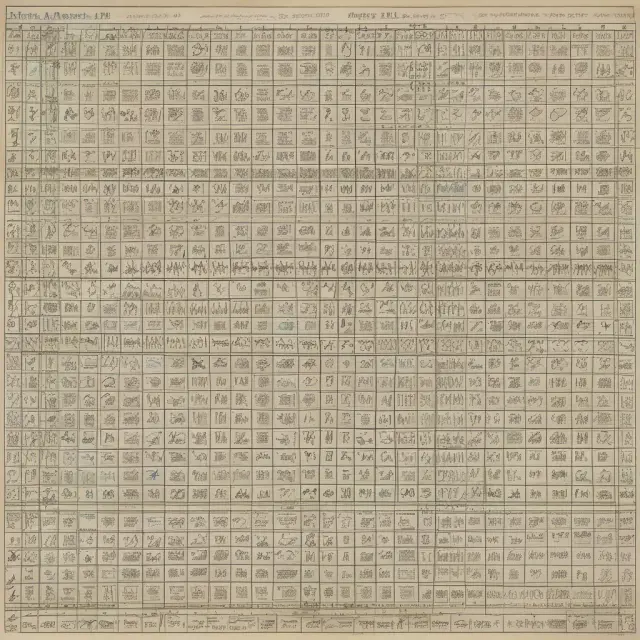
Instead of manually working through these complex calculations, you can use an annuity table to quickly determine the present value of an ordinary annuity by finding the appropriate factor based on the interest rate and number of payment periods. These tables are available in various formats or online resources for easy access.
For instance, if we have a 6% discount rate and need to determine the present value of an annuity paying out $50,000 per year for 25 years, we would look up the factor corresponding to these values in the annuity table: n = 25 and r = 0.06. The intersecting cell between these two values provides us with a factor of approximately 12.7834. Multiplying this factor by $50,000 gives us an approximate present value of $639,170 for the annuity.
In conclusion, an annuity table is a powerful tool that simplifies the calculation process of determining the present value of an annuity, allowing for more accurate and efficient financial analysis. Understanding its functionality enables individuals to make informed decisions regarding various types of annuities and investment strategies.

Ordinary vs. Annuity Due: Understanding Annuity Types
An annuity table is an essential tool for determining the present value of different types of annuities, including ordinary annuities and annuity dues. In this section, we will explain the differences between these two annuity types and their respective payment structures and present values.
Ordinary Annuity
An ordinary annuity is a series of equal payments made at regular intervals over a specified period. The payments are typically made at the end of each interval. This type of annuity follows the standard formula for determining present value, where future payments are discounted back to their present value using a discount rate.
Annuity Due
Unlike ordinary annuities, an annuity due has its payments starting at the beginning of the payment period instead of the end. Therefore, calculating its present value requires applying the discount factor (1 + r) to the first payment. This adjustment increases the present value of the annuity due compared to that of an ordinary annuity with the same payment amount and discount rate.
Understanding the Differences
Both ordinary and annuity due have their unique advantages, depending on your financial situation and investment goals. While ordinary annuities offer a steady income stream over time, annuity dues enable you to receive cash upfront while guaranteeing future payments. By using an annuity table, you can easily compare the present values of both types and make informed decisions about which one suits your needs best.
To calculate the present value of an ordinary annuity or an annuity due, you can use an annuity table instead of manual calculations. These tables provide pre-calculated factors that simplify the process and enable you to quickly determine the present values for various interest rates and periods. With these factors, you simply multiply the annuity payment amount by the corresponding factor to find its present value.
Next, we’ll explore how to use an annuity table to calculate the present value of an annuity for lottery winnings, providing insights into making the most informed choice when deciding between a lump-sum payment or installment payments.

Annuity Table Calculations
An annuity table is an indispensable tool for calculating the present value of an annuity by applying a discount rate to future payments. This valuable resource simplifies complex calculations for financial professionals and individuals alike, allowing them to determine the worth of an annuity under different interest rates and payment periods.
The concept of time value of money is fundamental to understanding the role of annuity tables in determining the present value of an annuity. Essentially, receiving a lump sum today is worth more than receiving the same amount spread out over several years due to potential investment growth opportunities. Annuity tables provide factors that make it easier to calculate the present value of future cash flows by multiplying the dollar amount of each payment by the respective factor determined by the interest rate and the number of payment periods.
The formula for calculating the present value of an ordinary annuity is:
P = PMT × (r 1 − (1 + r)−n )
Here, P represents the present value of the annuity stream, PMT denotes the dollar amount of each annuity payment, r refers to the interest rate or discount rate, and n stands for the total number of periods in which payments will be made. To calculate the present value of an ordinary annuity using an annuity table, simply locate the factor corresponding to the interest rate and the payment period in the table and multiply it by the dollar amount of each payment.
It’s important to note that annuity tables provide factors for both ordinary annuities and annuity due. The primary difference between these two types is the timing of payments: An ordinary annuity provides payments at the end of each period, whereas an annuity due offers payments at the beginning of each period. To calculate the present value of an annuity due using an annuity table, multiply the factor for an ordinary annuity by (1 + r).
Annuity tables are especially useful when evaluating complex financial decisions, such as deciding between a lump-sum lottery winnings or receiving installment payments. By comparing the present values of different payment structures under various interest rates and time horizons, individuals can make more informed decisions about their financial future.
In conclusion, an annuity table is an essential tool for anyone dealing with structured cash flows, particularly annuities. Its ability to simplify complex calculations and provide accurate factors makes it an indispensable resource for accountants, actuaries, and financial professionals in various industries, helping them make informed decisions about present value and retirement income planning.
Using Annuity Tables for Lottery Winnings
An annuity table is not only beneficial when considering retirement income planning but also proves to be an essential tool for lottery winners deciding between a lump-sum payment or installment payments. When you unexpectedly come into a significant amount of money, such as winning the lottery, the decision to choose a single payment or a series of payments can have lasting consequences on your financial future.
Annuity tables provide factors that simplify calculations for determining the present value of an annuity, which is vital in evaluating various payment options. When considering lottery winnings, knowing the present value of potential installment payments enables you to make an informed decision regarding the optimal way to manage your newfound wealth.
Let’s explore how an annuity table can be used for lottery winnings:
1. Determine the present value of annuity payments:
Using the factors from an annuity table, calculate the present value of potential installment payments. This will help you compare the time-adjusted values of different payment options (lump sum versus annuity) and make a rational decision based on your financial goals and objectives.
For example, if you win $1 million in the lottery and are offered two choices: either receive the entire $1 million today or take annual installments of $60,000 for 17 years, an annuity table can help you determine which option has a greater time-adjusted value.
2. Analyze the impact of interest rate and payment frequency:
Annuity tables provide factors based on different interest rates and payment periods. By examining these factors, you can analyze how changes in the interest rate or payment frequency will affect your decision regarding the annuity versus lump sum choice.
For instance, if the interest rate increases, the present value of an annuity payment stream may become more attractive compared to a lump sum payment. Conversely, if the interest rate decreases, you might favor the lump sum option since it preserves the time value of money better than receiving smaller installments over an extended period.
3. Compare potential investment opportunities:
Annuity tables can also be used to compare different investment opportunities and their impact on your financial situation. By calculating the present value of various investments, you can determine which one best aligns with your long-term goals and objectives. This information can then be used as a foundation for making an informed decision about whether to take a lump sum or annuity payment for your lottery winnings.
4. Ensure financial security:
Leveraging an annuity table helps you weigh the pros and cons of different financial options, allowing you to make rational decisions that cater to your unique circumstances. This can provide a sense of security knowing that your choices are informed by accurate data and expert advice rather than emotional or impulsive reactions.
In summary, using an annuity table for lottery winnings can offer valuable insights when deciding between a lump sum payment and installment payments. By calculating the present value of potential annuity payments, analyzing interest rates and payment frequency, and comparing investment opportunities, you’ll be able to make an informed decision that aligns with your long-term financial objectives.

Advantages of Using an Annuity Table
An annuity table is a valuable tool for calculating the present value of an annuity or other structured series of payments, offering several advantages for individuals and financial professionals alike. By understanding how to use an annuity table effectively, you can make informed decisions regarding your retirement income, manage investment risk, and optimize your overall financial planning strategy.
Annuity tables simplify the process of determining the present value of an annuity by providing pre-calculated factors that streamline the complex mathematical formulas involved. The table’s factors are determined by a discount rate (interest rate) and the number of periods for payments, enabling users to easily multiply these factors with the dollar amount of the annuity payment to arrive at the present value.
One significant advantage of using an annuity table is its ability to help individuals and financial advisors compare various investment options, such as lump-sum payments versus regular installment payments, by determining their respective present values. This comparison can be particularly important when deciding on lottery winnings or managing retirement income.
For example, suppose an individual has the opportunity to receive a $1 million annuity that pays out $50,000 per year for 20 years. To determine which option is more financially advantageous, they could use an annuity table with an interest rate of 4% and compare the present value of this annuity against a lump-sum payment of $1 million. The annuity table would provide the factor that can be multiplied by both the annuity payment ($50,000) and the lump sum ($1 million) to determine their respective present values.
In addition to its financial calculation benefits, an annuity table also offers convenience and ease of use compared to manually calculating complex formulas or using a financial calculator. With a comprehensive annuity table readily available, individuals and financial professionals can quickly and accurately calculate the present value of an annuity with confidence, ensuring they make informed decisions regarding their investments.
Moreover, annuity tables provide a versatile solution for various annuity types, including ordinary annuities and annuities due. An ordinary annuity is characterized by payments made at the end of each payment period, whereas an annuity due offers payments at the beginning of each payment period. By providing separate factors for both ordinary annuities and annuity dues in the table, users can determine the present value of various annuity types based on their individual circumstances and investment objectives.
In conclusion, using an annuity table is an essential tool for understanding the present value of an annuity or series of payments. Its ability to simplify complex mathematical formulas, offer versatility in handling various annuity types, and provide a convenient solution for quick and accurate calculations makes it an indispensable resource for individuals and financial professionals alike.

Disadvantages of Using an Annuity Table
An annuity table is an essential tool for financial professionals and investors looking to determine the present value of annuities or other structured payment streams. However, it’s important to consider its limitations before relying solely on this method for managing investments. In this section, we will discuss some potential disadvantages of using an annuity table.
First, it is essential to understand that an annuity table is based on fixed interest rates and pre-calculated factors. While these tables provide a convenient way to calculate present values quickly, they may not accurately reflect the current market conditions or changing interest rates. As a result, using an annuity table might lead to inaccurate calculations if the interest rate at the time of the calculation significantly differs from the prevailing interest rate during the annuity’s term.
Second, annuity tables are static and do not account for potential changes in the economy or personal circumstances. For instance, inflation, taxes, or unexpected expenses can impact the value and usefulness of an annuity. Annuity tables assume a constant interest rate, while real-life scenarios involve dynamic economic conditions and individual financial situations. Therefore, relying solely on an annuity table to manage retirement income might not adequately address these evolving factors.
Third, annuity tables do not factor in the complexities of specific annuity types and riders. Annuities can come with various features like guaranteed minimum death benefits or cost-of-living adjustments. These additional provisions can significantly impact the present value calculation. Annuity tables only provide factors for standard annuities, making it necessary to consult other resources or tools to understand the effect of additional riders and features on present values.
Fourth, using an annuity table requires a strong understanding of its underlying formulas and assumptions. While this tool simplifies calculations for financial professionals, it may not be accessible or easy to use for individuals without a solid foundation in finance concepts. In such cases, relying solely on an annuity table could lead to misinterpretation or incorrect application of the information presented.
Lastly, annuity tables do not provide real-time data or customizable options based on individual preferences and goals. While they offer pre-calculated factors for various interest rates and payment periods, they cannot consider unique scenarios, such as specific retirement plans or personal financial situations. This limitation makes it crucial to consult with a financial advisor or use alternative tools that can be tailored to an individual’s needs.
In conclusion, while annuity tables offer convenience and accuracy in determining present values for structured payment streams, they are not without limitations. It is essential to understand the context in which an annuity table is used, along with its assumptions and potential shortcomings, to make well-informed financial decisions.

Annuity Tables vs. Financial Calculators
When determining the present value of an annuity or other structured series of payments, professionals often rely on tools like annuity tables and financial calculators. While both serve this purpose, they differ in terms of efficiency, accuracy, and ease of use. In this section, we’ll compare annuity tables and financial calculators to help you understand which tool is best suited for your needs.
Annuity Table: What Is It?
An annuity table is a comprehensive resource that provides factors to calculate the present value of an annuity, given a particular interest rate and period of payment. Developed by actuaries and statisticians, these tables are widely used in the financial sector for determining the worth of annuity investments.
Using an Annuity Table
Annuity tables simplify the calculation process by providing pre-calculated factors that can be multiplied against the dollar amount of the annuity payment to determine its present value. For instance, if you have a 10-year annuity with $5,000 annual payments and an interest rate of 6%, you can easily find the present value by looking up the appropriate factor in the table.
Comparing Annuity Tables and Financial Calculators
While both tools are designed to calculate the present value of an annuity or structured series of payments, they differ significantly in how they do so.
Annuity Tables: Pros and Cons
Pros:
– Provide quick and accurate calculations with minimal user input
– Offer a visual representation of the relationship between interest rates and periods
– Are widely accepted by financial professionals and regulators
– Available as physical copies or online resources
Cons:
– Limited to specific interest rates and periods available in the table
– May not account for complex scenarios or unique payment structures
Financial Calculators: Pros and Cons
Pros:
– Offer flexibility to input a wide range of interest rates, payment schedules, and compounding frequencies
– Allow calculation of various financial metrics, such as future value and monthly payments
– Can be customized for different payment structures (ordinary annuity vs. annuity due)
Cons:
– Require accurate user input to ensure calculation accuracy
– May not provide a clear visual representation of the relationship between interest rates and periods
– Can be more time-consuming for users unfamiliar with financial calculations
Choosing Between Annuity Tables and Financial Calculators
When deciding whether to use an annuity table or a financial calculator, consider the specifics of your calculation needs. If you’re dealing with standard annuities with predefined payment structures, interest rates, and periods, an annuity table might be the most convenient and efficient choice. However, if your scenario involves complex calculations or unique payment structures, a financial calculator offers more flexibility to accommodate these variables.
In conclusion, both annuity tables and financial calculators serve essential functions in determining the present value of annuities or structured series of payments. By understanding their respective advantages and limitations, you can effectively choose the tool that best suits your calculation needs.
Frequently Asked Questions about Annuity Tables
Annuity tables play a significant role in calculating the present value of an annuity—a series of future cash flows. These tables help determine the amount of money you need today to receive a specified payment at a future date or a sequence of payments for a given time period, considering a specific interest rate. In this section, we answer some frequently asked questions about annuity tables and their applications.
What is an annuity table?
Annuity tables serve as tools for determining the present value of an annuity. They factor in the amount of money invested in an annuity and the length of time it has been accumulating to calculate the value that would be due to an annuitant or a buyer today.
How do annuity tables work?
Annuity tables employ formulas to find the present value of an annuity using factors based on the interest rate and number of payment periods. These factors simplify calculations by providing pre-calculated values that can be multiplied by the dollar amount of each annuity payment to determine the present value.
What are the types of annuity tables?
The two common types of annuity tables are those for ordinary annuities and annuity dues. An ordinary annuity calculates the present value considering payments made at the end of each period, while an annuity due accounts for payments received at the beginning of each period.
How can I use an annuity table?
To use an annuity table, simply locate your interest rate and the number of payment periods in the table, then find the corresponding factor. Multiply this factor by the dollar amount of each annuity payment to obtain its present value.
What are the advantages of using an annuity table?
Annuity tables offer various benefits such as simplifying calculations, providing accurate results, and allowing for quick comparisons between different interest rates and payment structures. They are especially useful for financial professionals, insurers, and individuals planning their retirement income.
Are there any disadvantages of using an annuity table?
Annuity tables do have limitations, including the assumption that a fixed discount rate will be used throughout the entire investment period, which might not always be the case in real-world scenarios. Additionally, they may not account for taxes, inflation, or other factors affecting retirement income planning.
Can I use an annuity table for lottery winnings?
Yes, you can use an annuity table to evaluate whether receiving a lump-sum lottery payment today or opting for annual installments over a given time period would yield more financial value based on the interest rate and number of payment periods.
How does an annuity table differ from a financial calculator?
While both tools can determine present values, annuity tables offer pre-calculated factors to simplify complex calculations for different combinations of interest rates and payment periods. Financial calculators, on the other hand, require manual input of the variables and perform the calculation based on user-provided data.

Expert Insights and Best Practices on Using Annuity Tables
Annuity tables have become an essential tool for determining the present value of an annuity or other structured series of payments. Accountants, actuaries, and other finance professionals widely use these tools to assess investments, manage retirement income, and ensure financial stability. In this section, we discuss expert insights and best practices on using annuity tables effectively.
First and foremost, it’s crucial to understand the concept of an annuity table. Annuity tables provide factors based on interest rates and payment periods to help calculate the present value of an annuity. These factors simplify calculations by eliminating the need for complex formulas.
When using an annuity table, it is important to distinguish between ordinary annuities and annuity dues. Ordinary annuities refer to annuities where payments are made at the end of each period. In contrast, annuity due refers to annuities where payments are made at the beginning of each period. Understanding these differences can significantly impact your investment strategies and retirement income planning.
Annuity tables can also be useful for lottery winners when deciding between a lump-sum payment or installment payments. By calculating the present value of an annuity using the table, winners can make more informed decisions regarding their winnings’ future financial implications.
One significant advantage of using an annuity table is its ability to simplify complex calculations and provide accurate results quickly. Additionally, annuity tables offer a flexible way to test various interest rates and periods, enabling you to make well-informed financial decisions based on different scenarios.
However, there are also some limitations and challenges when relying solely on annuity tables for calculating present values. For instance, these tools may not consider individual circumstances or specific investment situations, which can result in less precise calculations. Furthermore, they may require users to manually input various factors, increasing the potential for errors.
To get the most out of your annuity table, it’s recommended to consult financial professionals and industry experts when making critical financial decisions based on these calculations. Their expertise and experience can help ensure that you’re considering all relevant factors and making the best possible choices for your unique situation.
Moreover, remember that annuity tables are just tools, and their accuracy depends on the user’s ability to input accurate data and understand their implications. To maximize the benefits of an annuity table, take the time to learn how to use it effectively and consult various resources for additional insights and guidance.
 Next entry · No. 180Annuities 101: Understanding Your Retirement Income Options
See also
-
 No. 181
07 Apr 2024
21 min
Annuity Due vs. Ordinary Annuity: Understanding the Differences in Payment Structures and Calculations
Personal Finance
No. 181
07 Apr 2024
21 min
Annuity Due vs. Ordinary Annuity: Understanding the Differences in Payment Structures and Calculations
Personal Finance -
 No. 175
07 Apr 2024
21 min
Understanding Annualized Total Return: A Comprehensive Guide for Institutional Investors
Investments
No. 175
07 Apr 2024
21 min
Understanding Annualized Total Return: A Comprehensive Guide for Institutional Investors
Investments -
 No. 3,786
27 Apr 2025
22 min
Understanding Ordinary Annuities: What They Are and How They Work
Personal Finance
No. 3,786
27 Apr 2025
22 min
Understanding Ordinary Annuities: What They Are and How They Work
Personal Finance -
 No. 631
11 May 2024
20 min
Understanding Cash Value Life Insurance: Pros, Cons, and How It Works
Insurance
No. 631
11 May 2024
20 min
Understanding Cash Value Life Insurance: Pros, Cons, and How It Works
Insurance -
 No. 5,989
23 Oct 2026
17 min
Brokerage Account vs Roth IRA: Where Should You Invest?
Investments
No. 5,989
23 Oct 2026
17 min
Brokerage Account vs Roth IRA: Where Should You Invest?
Investments -
 No. 5,983
17 Oct 2026
18 min
Target-Date Fund vs Index Funds: Which Should You Hold?
Investments
No. 5,983
17 Oct 2026
18 min
Target-Date Fund vs Index Funds: Which Should You Hold?
Investments