Business Ecosystem: Understanding the Interconnected Web of Organizations and Surviving in Today’s Rapidly Changing Business Landscape
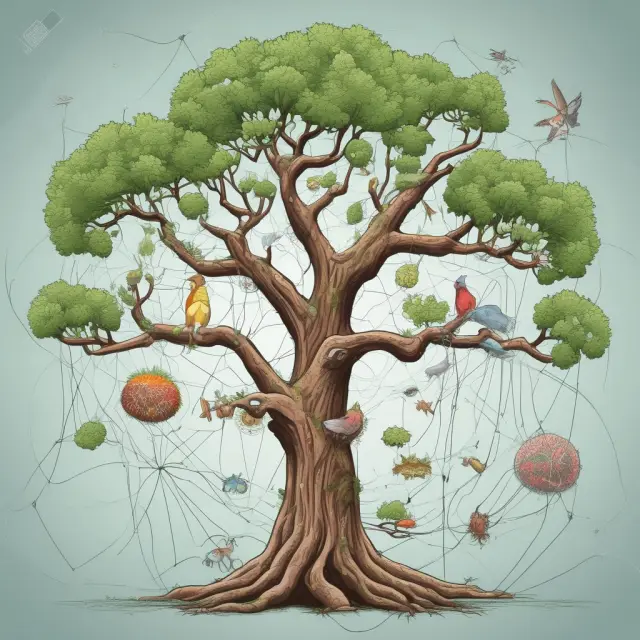
Explore the interconnected world of businesses and understand how to build, adapt, and thrive within a business ecosystem. Learn from industry leaders and…
Introduction to Business Ecosystems
Business ecosystems are intricate webs of organizations and entities that collaborate and compete to deliver value through the production and distribution of goods or services. This concept, borrowed from the natural world by business strategist James Moore in 1993, views a company not as an isolated entity, but as part of an interconnected network of stakeholders spanning various industries. In this section, we delve into understanding what business ecosystems are and how they have evolved over time.
Origins of Business Ecosystems: The business ecosystem theory was inspired by the biological concept of an ecosystem developed by British botanist Arthur Tansley in 1935. A natural ecosystem comprises a community of organisms interacting with each other and their environment. Organisms within a natural ecosystem compete for resources, evolve together, and form symbiotic relationships that lead to mutual growth.
Moore’s adaptation of the ecosystem concept in business strategy recognizes companies as members of an economic community producing goods and services, collaborating, and competing with other organizations. A business ecosystem includes suppliers, distributors, consumers, government agencies, and competitors, among others, all co-evolving to survive and thrive.
Business Ecosystems: An Interconnected Network: Moore defined a business ecosystem as an economic community supported by a network of interacting organizations and individuals. The businesses in this ecosystem contribute to the production of valuable goods or services for customers, while also being influenced by them and other stakeholders. Over time, these entities develop patterns of behavior that streamline the exchange of ideas, talent, capital, and knowledge.
In this ever-changing business landscape, ecosystems create formidable barriers to entry for new competitors as potential entrants must not only duplicate or improve the core product but also compete against the entire system of complementary businesses and suppliers forming the network. Joining an existing ecosystem or creating a new one offers mechanisms to leverage technology, achieve excellence in research and business competence, and effectively compete with other companies.
In the following sections, we will explore the components of a business ecosystem, its benefits, strategies for building successful ecosystems, adapting to change within these networks, and their role in driving social and environmental impact. By understanding the business ecosystem concept, organizations can thrive in today’s rapidly evolving and interconnected world.

The Concept of Business Ecosystems: A Biological Analogy
In the realm of finance and investments, understanding the intricacies of business ecosystems is essential for any organization seeking to thrive in today’s interconnected global economy. The concept of a business ecosystem was introduced by business strategist James Moore in his groundbreaking 1993 Harvard Business Review article “Predators and Prey: A New Ecology of Competition.” Moore drew parallels between the workings of natural ecosystems, where organisms interact with one another and their environments to survive, and the increasingly interconnected commercial landscape.
A business ecosystem is a complex network of organizations and individuals, including suppliers, distributors, customers, competitors, government entities, and other stakeholders, that collaborate and compete to deliver products or services of value to customers. Each participant in a business ecosystem influences and is influenced by the others, creating a dynamic web of relationships that evolves continuously.
Arthur Tansley, a British botanist, first used the term “ecosystem” in the 1930s to describe a community of organisms interacting with each other and their surroundings. These organisms compete for resources while also cooperating to co-evolve and adapt to external disruptions. Business ecosystems follow a similar pattern: companies exist not as isolated entities within industries but as members of a larger system that includes participants from various sectors.
In this rapidly evolving business environment, the ideas about effective business strategies are constantly changing. By viewing a company as part of a broader ecosystem, organizations can better understand how to adapt and thrive amidst competition and cooperation.
Moore defined a business ecosystem as an economic community supported by a foundation of interacting organizations and individuals. The community produces valuable goods and services for customers who are members of the ecosystem. Additionally, the member organizations include suppliers, lead producers, competitors, and other stakeholders. Over time, these entities co-evolve their capabilities and roles to align with the vision set by one or more central companies.
Ecosystems provide several benefits, such as:
- Leveraging technology to drive innovation
- Achieving excellence in research and business competencies
- Competing effectively against other firms
- Driving collaborations to address rising social and environmental challenges
- Harnessing creativity and innovation to lower production costs or reach new customers
- Accelerating the learning process through shared insights, skills, expertise, and knowledge
- Creating new ways to address fundamental human needs and desires
Being a part of a business ecosystem can significantly impact a company’s ability to grow sales and survive in today’s competitive marketplace. In essence, an ecosystem comprises a network of interconnected firms that dynamically interact through competition and cooperation to create value for their customers and stakeholders. As businesses strive to remain competitive in this rapidly changing environment, forming or joining an existing business ecosystem is essential for long-term success.

Components of a Business Ecosystem
Business strategist James Moore introduced the concept of a business ecosystem in his 1993 Harvard Business Review article “Predators and Prey: A New Ecology of Competition.” In this groundbreaking piece, he drew parallels between biological ecosystems and commercial organizations to describe a network of interconnected entities that mutually influence each other for the delivery of a specific product or service. In this section, we delve into the various components of a business ecosystem.
- Suppliers: The foundation of any business ecosystem is its suppliers. They provide essential goods and services required for the core product or service to be produced. In turn, they benefit from the revenue generated by the businesses in the ecosystem.
- Distributors: These entities are responsible for delivering products to customers, often adding value through logistics, marketing, and sales services. Their role is crucial as they help businesses reach broader markets and expand their customer base.
- Consumers: The most critical component of a business ecosystem, consumers, purchase the goods or services offered by the businesses in the ecosystem. Their preferences and demands shape the offerings and strategies of the businesses, making them an integral part of the system’s evolution.
- Competitors: Competitors within a business ecosystem challenge the incumbents through innovation and price wars, pushing them to improve their offerings and adapt to changing market conditions.
- Government: Governmental agencies play a role in setting regulations and providing infrastructure that impacts the businesses in the ecosystem. Their involvement can create both opportunities and challenges for the entities within the system.
- Processes: Processes enable the smooth functioning of the ecosystem, connecting various components through well-defined procedures. This includes production processes, financial transactions, and communication channels.
- Products: The core offering of a business ecosystem is its product or service. Each entity in the system contributes to the production and delivery of this offering, creating interdependence and cooperation among them.
- Technology: Technology plays a significant role in enabling businesses to innovate and collaborate within their ecosystems. It can create new opportunities for collaboration and competition while also posing challenges to existing business models.
When all these components work together harmoniously, the business ecosystem thrives, leading to increased innovation, competitiveness, and growth. However, it is essential to remember that a business ecosystem is not static; it evolves continuously as its members adapt to changes in market conditions, customer preferences, and technological advancements.
By understanding the interconnected nature of these components, businesses can effectively navigate their competitive landscape and harness the collective potential of their ecosystems to drive long-term success.

Benefits of Being Part of a Business Ecosystem
The concept of a business ecosystem offers numerous advantages for companies looking to thrive amidst the ever-changing landscape of technology and globalization. By understanding their role within this intricate web of organizations, businesses can better position themselves to leverage valuable partnerships, drive innovation, and ultimately survive in today’s competitive marketplace. Let us explore some key benefits that come with being an active participant in a business ecosystem.
1. Leveraging Technology
In the era of rapid technological advancements, being part of a well-connected ecosystem can significantly boost a company’s ability to access cutting-edge technology and integrate it into their operations. By forming strategic alliances with tech leaders, businesses can harness the power of emerging technologies to streamline processes, improve efficiency, and gain a competitive edge.
2. Fostering Innovation
Innovation is at the heart of every successful business ecosystem. The interconnected nature of these networks enables constant collaboration and idea exchange between various stakeholders, leading to breakthroughs that might not have been possible within a single organization. By engaging in this symbiotic relationship, companies can foster a culture of creativity, take advantage of shared expertise, and jointly invest in groundbreaking technologies and research initiatives.
3. Competitive Advantage
Joining an established business ecosystem allows companies to tap into the collective strengths of the network, enhancing their competitiveness and resilience against competitors. By aligning themselves with complementary businesses, suppliers, distributors, and other stakeholders, businesses can combine resources, share best practices, and create mutually beneficial relationships that help them stay one step ahead in their industry.
4. Addressing Social and Environmental Challenges
In today’s world, companies are increasingly expected to address social and environmental challenges alongside delivering strong financial performance. Being part of a business ecosystem enables firms to collaborate on initiatives aimed at driving positive change, whether that be through reducing waste, addressing climate change, or improving access to essential services for underprivileged communities. By joining forces with like-minded organizations, businesses can amplify their impact and contribute to the collective growth of the ecosystem.
5. Learning and Collaboration
An active presence in a business ecosystem facilitates continuous learning and collaboration between organizations. By sharing knowledge, expertise, and resources, companies can accelerate the adoption of new practices and strategies, ultimately improving overall performance and staying agile in response to market changes. Additionally, engagement within an ecosystem offers opportunities for businesses to identify potential partners and build long-term relationships that contribute to shared success.
In conclusion, the benefits of being part of a business ecosystem are numerous and essential for companies looking to thrive in today’s rapidly evolving landscape. By understanding how to effectively engage with other organizations and leverage the collective strengths of the network, businesses can create new opportunities for growth, innovation, and collaboration that ultimately lead to long-term success.

Creating a Business Ecosystem: Strategies for Building Successful Ecosystems
Building a thriving business ecosystem requires careful planning, collaboration, and flexibility in the face of constant change. By examining successful strategies employed by industry titans like Apple, Google, and Microsoft, we can gain valuable insights into creating effective ecosystems that foster growth and adaptability.
Apple, with its iconic “walled garden” approach, created a tightly controlled business ecosystem around its hardware and software platforms, allowing it to maintain a consistent user experience while providing incentives for developers to create innovative applications that catered to its dedicated customer base. Google, on the other hand, adopted an open approach by building a vast network of partnerships with various companies through its search engine, Android operating system, and Google Cloud Platform. These collaborative relationships enabled Google to provide a wide range of services and attract new users while maintaining its dominant market position.
Microsoft has also made significant strides in creating successful business ecosystems by focusing on open collaboration and interoperability. For example, Microsoft’s Office Suite became a de facto standard for productivity applications through its early embrace of the personal computer and consistent updates that ensured compatibility with other software and hardware platforms. This not only helped Microsoft to expand its user base but also fostered a vibrant ecosystem of third-party developers creating add-ons and extensions for Office, further increasing user value.
Key takeaways for creating a successful business ecosystem include:
- Establishing clear leadership and direction
- Creating an open or closed network depending on the market context
- Embracing partnerships and collaborations to enhance offerings and reach new users
- Ensuring compatibility and interoperability with external systems and platforms
- Fostering a culture of innovation, adaptability, and continuous improvement
In today’s rapidly evolving business landscape, understanding the strategies for creating and leveraging powerful ecosystems is crucial for businesses looking to thrive in the face of competition and disruption. By emulating successful examples from industry leaders like Apple, Google, and Microsoft, businesses can build strong foundations for long-term growth and adaptability.

Adapting to Change within a Business Ecosystem
In the dynamic world of business ecosystems, change is inevitable. As companies interact and co-evolve within these complex networks, they must be flexible and adaptable to not only compete but also cooperate with their fellow ecosystem members. This section explores the importance of agility in the face of change through real-life examples and best practices.
Arthur Tansley’s concept of an ecosystem as a community of organisms interacting with each other and their environments has been adopted by business strategist James Moore to explain the intricacies of the business world (Moore, 1993). Business ecosystems are characterized by their interconnectedness and mutual dependence. Each entity in the ecosystem affects and is affected by the others, creating a constantly evolving relationship in which survival depends on adaptability.
A prime example of this can be seen in the tech industry. Apple’s iPhone revolutionized the market with its innovative design and user experience. The ecosystem that formed around it included hardware manufacturers like Foxconn, software developers, app creators, carriers, and consumers. Each participant contributed to the ecosystem’s growth by providing complementary products and services. Apple, as an ecosystem leader, set the standards for design and performance, while others followed suit.
However, this competitive landscape is not without its challenges. As new technologies and business models emerge, companies must adapt or risk extinction. For example, with the rise of Android and other smartphone platforms, Apple faced competition that forced it to continuously innovate and improve. This competition ultimately led to advancements in hardware design, user experience, and even business models like the App Store.
Another prime example is Google’s ecosystem strategy, which revolves around its search engine and various services like Gmail, Google Drive, and YouTube. Google provides these services for free and monetizes them through targeted advertising, generating massive revenue from its user base. By creating a seamless user experience and offering valuable tools to its customers, Google has become an indispensable part of the digital ecosystem.
To thrive in this environment, companies need to focus on three key areas: embracing new technologies, fostering collaboration, and investing in innovation. This includes developing an adaptive culture that is open to change, experimenting with emerging technologies, and actively seeking partnerships to expand capabilities.
Microsoft is a prime example of how a business can successfully navigate the ever-changing landscape of a business ecosystem. With its shift from a proprietary software model to a more open one embracing cloud services and partnerships, Microsoft has transformed itself into a significant player in today’s digital age. This transition involved not only changes within the organization but also collaboration with other companies and shifting customer needs.
In conclusion, business ecosystems require flexibility and adaptability in order to thrive. Companies must be open to change, embrace new technologies, collaborate effectively, and invest in innovation to remain competitive. By focusing on these areas, they can not only survive but also grow within their ecosystems. As the business landscape continues to evolve, adaptability will be a crucial factor for success.

Business Ecosystems: Driving Social and Environmental Impact
In the ever-evolving landscape of businesses, adapting to change has become an essential survival skill for organizations. One effective strategy that companies are employing to address social and environmental challenges while thriving in their industries is through business ecosystems. Business ecosystems go beyond the traditional concept of a simple industry or value chain; they encompass a complex network of interconnected entities collaborating, competing, and co-evolving to create sustainable solutions and drive positive impacts.
Business strategist James Moore first introduced the term “business ecosystem” in 1993, borrowing inspiration from the biological ecosystem concept developed by British botanist Arthur Tansley in the 1930s. Tansley’s definition of an ecosystem as a community of organisms interacting with each other and their environment served as the foundation for Moore’s idea of a business ecosystem.
A business ecosystem consists of various participants, including suppliers, distributors, consumers, competitors, government entities, processes, products, and more (Moore, 1993). These organizations interact through competition and cooperation to create synergies, overcome challenges, and adapt to changes. This interconnected web of relationships fosters an environment where innovation, learning, and collaboration can flourish.
One crucial aspect of business ecosystems is their potential to address social and environmental challenges. By collaborating with other entities, businesses can pool resources and expertise to create innovative solutions that benefit the entire ecosystem and, ultimately, society at large. For instance, companies such as Apple and Google are leading the way in creating sustainable manufacturing practices, investing in renewable energy, and designing eco-friendly products.
Another advantage of business ecosystems is their ability to lower production costs through technology collaboration and knowledge sharing. By pooling resources and expertise, businesses can collectively invest in research and development projects, resulting in cost savings for all participants. Moreover, they can create a competitive edge by offering customers innovative solutions that cater to evolving needs and desires.
Furthermore, business ecosystems provide an opportunity for members to learn from one another and build stronger relationships. Through collaboration and information sharing, businesses can develop better strategies, enhance their competencies, and improve operational efficiencies.
To illustrate the potential impact of business ecosystems on social and environmental issues, consider the case of the Fairtrade Foundation. Established in 1994, the Fairtrade label is a certification system that aims to promote fair trade and better living conditions for farmers and workers in developing countries. Through collaborations with various organizations, consumers, and businesses, the Fairtrade Foundation has created a powerful ecosystem dedicated to addressing social and environmental concerns while promoting sustainable economic development.
Another example of a successful business ecosystem is the Linux community. Originally developed by Linus Torvalds in 1991 as an open-source operating system, Linux has since grown into a thriving ecosystem that includes developers, hardware manufacturers, and software companies. This collaboration allows for continuous improvements and innovations to be made, resulting in a robust and adaptive platform.
In conclusion, business ecosystems offer a powerful strategy for organizations looking to address social and environmental challenges while staying competitive in their industries. By collaborating with other entities, businesses can create innovative solutions, lower production costs, and develop stronger relationships that contribute to positive change within the ecosystem. Ultimately, successful business ecosystems foster an environment where all participants thrive and grow together, ensuring a sustainable future for both businesses and society as a whole.

The Future of Business Ecosystems
Business ecosystems have evolved significantly since their introduction by James Moore over two decades ago, and the future potential and growth opportunities for these complex networks are immense. The business landscape is becoming more interconnected than ever before due to rapid advances in technology and increasing globalization, making it vital that organizations understand how to thrive in this constantly changing environment.
In his seminal 1993 Harvard Business Review article “Predators and Prey: A New Ecology of Competition,” Moore argued that companies should be viewed not as isolated entities but as part of an intricate network of interdependent organizations, each exerting both competition and cooperation to create value. As businesses adapt to this new reality, they must recognize the importance of being part of a thriving ecosystem.
Business ecosystems provide numerous benefits for their members:
- Collaboration: Members can collaborate on research and development projects, sharing knowledge, skills, expertise, and insights to create innovative solutions that improve products, services, and processes.
- Competition: Ecosystems foster healthy competition, driving companies to continuously innovate and improve in order to stay competitive within the ecosystem.
- Adaptability: In a business ecosystem, members can quickly adapt to external disruptions or changes by leveraging the network for resources, knowledge, and support.
- Sustainability: By addressing social and environmental challenges together, ecosystems can create long-term value for their stakeholders while contributing positively to society as a whole.
- Scalability: Ecosystems enable members to reach new customers through partnerships, strategic alliances, and other collaborative arrangements.
As the world becomes more interconnected, companies must adapt by embracing business ecosystems as a means of staying competitive and creating value for their stakeholders.
To illustrate the power of business ecosystems, consider the following examples:
- Apple: Apple has built a powerful ecosystem around its products by developing strong relationships with key partners in various industries. This includes software developers, hardware manufacturers, and service providers. By creating an open platform for developers to create apps for its devices, Apple has expanded its reach beyond just selling hardware.
- Google: Google’s business model is based on providing free services that generate revenue through targeted advertising. To deliver these services, the company relies on a vast network of partners, including hardware manufacturers, software developers, and content providers. Google’s ecosystem has enabled it to become one of the most valuable companies in the world.
- Microsoft: Microsoft has evolved from being an isolated software company into an ecosystem that includes hardware, services, and partnerships with other technology giants like Amazon and IBM. This transformation has helped Microsoft stay competitive in a market dominated by more agile competitors.
The future of business ecosystems is bright as they continue to adapt to the ever-evolving needs of their members and the changing business landscape. By focusing on collaboration, competition, sustainability, and scalability, companies can create value for themselves and their stakeholders in a world where interconnectedness is key to success.

Business Ecosystems: Thriving Amidst Competition
A key facet of a business ecosystem is the intricate relationships between entities, enabling both competition and cooperation. In this section, we’ll delve deeper into understanding how businesses can not only survive but thrive in this complex interplay of competition and collaboration.
Business ecosystems create a robust barrier to entry for new competition due to their established network of independent complementing businesses and suppliers. To join or build an effective business ecosystem, companies must offer a unique advantage that is currently absent in the existing one. By doing so, they can tap into the collective strengths of the ecosystem and effectively compete against other organizations.
A well-functioning business ecosystem enables its participants to:
- Leverage technology to drive innovation: A strong business ecosystem fosters collaboration between entities that can lead to technological breakthroughs and innovations. Companies benefit from access to advanced technologies, knowledge exchange, and shared resources.
- Achieve excellence in research and business competence: Collaboration within an ecosystem allows organizations to pool their expertise and knowledge to improve research efforts and overall business capabilities.
- Compete effectively against other companies: By joining forces with complementary businesses within the ecosystem, participants can strengthen their competitive positioning through economies of scale, shared resources, and increased market reach.
- Address rising social and environmental challenges: Business ecosystems provide an opportunity for members to collaborate on initiatives addressing pressing social and environmental issues, enhancing their brand reputation and contributing positively to society.
- Lower the cost of production or reach new customers: Partnerships within business ecosystems can lead to significant savings in areas like research and development, marketing, logistics, and more. Members may also gain access to new customer bases through strategic collaborations, enabling them to expand their market share.
By embracing the competition and collaboration dynamics inherent in a business ecosystem, companies can thrive amidst the constant disruptions and changes that define today’s business landscape. The success stories of industry titans like Apple, Google, and Microsoft serve as compelling examples of how being part of a well-functioning business ecosystem has contributed significantly to their growth and continued relevance in the marketplace.

FAQ About Business Ecosystems
What exactly is a business ecosystem?
A business ecosystem is a network of organizations—including suppliers, distributors, customers, competitors, government agencies, and so on—involved in the delivery of a specific product or service through both competition and cooperation. The idea is that each entity in the ecosystem affects and is affected by the others, creating a constantly evolving relationship where each entity must be flexible and adaptable to survive.
Who originated the concept of business ecosystems?
The idea of business ecosystems was first introduced by business strategist James Moore in his 1993 Harvard Business Review article “Predators and Prey: A New Ecology of Competition.” He paralleled companies operating in today’s interconnected commerce world to a community of organisms adapting and evolving to survive.
Why is it essential for businesses to understand business ecosystems?
Business ecosystems help firms thrive in the rapidly changing environment by understanding how they fit into the broader network of organizations. This perspective provides advantages such as leveraging technology, achieving excellence in research and competence, driving collaborations, and creating new ways to address human needs and desires.
What are the key components of a business ecosystem?
A business ecosystem includes various entities: suppliers, distributors, consumers, competitors, government agencies, processes, products, and more. These entities interact with each other through competition and cooperation, evolving together in an ever-changing relationship.
How does being part of a business ecosystem provide benefits to companies?
Being part of a business ecosystem enables companies to:
– Leverage technology to improve operations
– Achieve excellence in research and competence
– Collaborate with partners to innovate and reduce production costs
– Reach new customers through shared networks and resources
What are some goals of a business ecosystem?
Some goals of a business ecosystem include:
– Driving new collaborations to address rising social and environmental challenges
– Harnessing creativity and innovation to lower the cost of production or reach new markets
– Accelerating the learning process to effectively collaborate and share insights, skills, expertise, and knowledge
– Creating new ways to address fundamental human needs and desires
What creates strong barriers to entry for new competition in a business ecosystem?
Business ecosystems create strong barriers to entry for new competition because potential entrants must not only duplicate or improve the core product but also compete against an entire system of interconnected businesses. This interdependence makes it challenging for newcomers to successfully penetrate the market without offering substantial value that is currently lacking within the ecosystem.
How does a company create its own business ecosystem?
A company can create its own business ecosystem by providing an advantage that is currently lacking in existing ecosystems or developing partnerships and collaborations with key players to enhance the collective value proposition of the network. By creating mutually beneficial relationships, companies can unlock new opportunities for growth and innovation within their industry.
 Next entry · No. 556Understanding Business Ethics: Principles, Importance, and Types for Professional and Institutional Investors
See also
-
 No. 813
13 Jun 2024
22 min
Understanding Creative Destruction: The Disruptive Force of Innovation
Business Strategy
No. 813
13 Jun 2024
22 min
Understanding Creative Destruction: The Disruptive Force of Innovation
Business Strategy -
 No. 452
24 Apr 2024
28 min
Navigating Blue Oceans: Strategies and Success Stories
Business Strategy
No. 452
24 Apr 2024
28 min
Navigating Blue Oceans: Strategies and Success Stories
Business Strategy -
 No. 1,442
16 Sep 2024
22 min
Understanding Factor Markets: A Key Element in a Market Economy
Markets
No. 1,442
16 Sep 2024
22 min
Understanding Factor Markets: A Key Element in a Market Economy
Markets -
 No. 5,873
15 Oct 2025
18 min
Understanding the History and Significance of a Yugen Kaisha (YK) in Japan’s Corporate Landscape
Business Strategy
No. 5,873
15 Oct 2025
18 min
Understanding the History and Significance of a Yugen Kaisha (YK) in Japan’s Corporate Landscape
Business Strategy -
 No. 5,674
28 Sep 2025
19 min
The Weightless Economy: Intangible Products and Services in the Digital Age
Business Strategy
No. 5,674
28 Sep 2025
19 min
The Weightless Economy: Intangible Products and Services in the Digital Age
Business Strategy -
 No. 5,334
31 Aug 2025
23 min
Understanding the Role and Importance of Upper Management in Corporate Strategy
Business Strategy
No. 5,334
31 Aug 2025
23 min
Understanding the Role and Importance of Upper Management in Corporate Strategy
Business Strategy