David Ricardo: The Pioneering Economist Behind Labor Theory of Value and Comparative Advantage
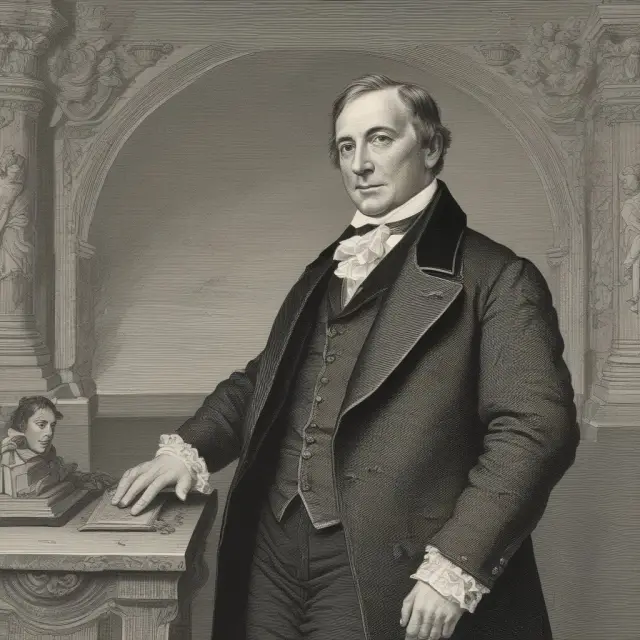
Explore the life and groundbreaking economic theories of David Ricardo, including labor theory of value, comparative advantage, and the influential role he…
Introduction to David Ricardo’s Life and Background
David Ricardo (1772–1823) was an influential British economist, best known for his groundbreaking theories on wages, labor value, comparative advantage, and rents that have shaped classical economics. Born in England, the 17th of 17 children, Ricardo began working as a stockbroker at the tender age of 14 under his father’s tutelage. Despite initial success, he was disowned by his father for marrying a woman outside of their religion. Ricardo later founded and prospered in a business dealing with government securities, eventually retiring at the young age of 41 having amassed an estimated £1 million fortune from speculating on the outcome of the Battle of Waterloo.
Post-retirement, Ricardo bought a seat in Parliament for £4,000 and served as a member. His intellectual curiosity was piqued by Adam Smith’s “The Wealth of Nations,” which led him to engage with leading economic thinkers such as James Mill, Jeremy Bentham, and Thomas Malthus.
Ricardo’s Economic Contributions: Labor Theory of Value and Comparative Advantage
One of Ricardo’s most significant contributions to economics was the labor theory of value. This theory posits that the value of a good is determined by the total labor hours required for its production, not by the compensation paid for such labor. Another influential idea was his comparative advantage theory, which suggests that nations can benefit from international trade by focusing on producing goods with lower opportunity costs compared to other nations. This principle led to the widespread acceptance of free trade and the detriment of protectionist policies.
Ricardo’s Economic Legacy: Rents and Ricardian Equivalence
Additionally, Ricardo was the first economist to discuss economic rents, which are benefits gained from ownership rather than productive contribution. His theory has been applied to various fields, including agricultural economics and political economics, where it led to the concept of rent-seeking. Furthermore, in public finance, Ricardo introduced the principle of Ricardian equivalence, stating that a government’s choice between taxation and borrowing has no impact on the economy as long as people save or borrow equivalent amounts.
David Ricardo’s Influential Works
Ricardo published his first economics article at the age of 37 in The Morning Chronicle, advocating for reducing the Bank of England’s note-issuing activity. His most well-known work, “Principles of Political Economy and Taxation,” was released in 1817 and contains his theories on wages, labor value, comparative advantage, and rents.
Influential Economists and Early Economic Thought
David Ricardo was a towering figure in classical economics who developed groundbreaking theories that have shaped economic thought to this day. Born in England in 1772, Ricardo’s formative years were influenced by the intellectual milieu of the time, particularly the ideas of Adam Smith and other leading economists.
Adam Smith (1723-1790), the “father of modern economics,” published his landmark book, The Wealth of Nations, in 1776 – a decade before Ricardo’s birth. Nevertheless, Smith’s ideas had a profound impact on Ricardo’s thinking and laid the foundation for his future contributions to economic theory.
Adam Smith’s most famous work introduced the concept of the “invisible hand,” which described the self-regulating mechanism that arises in free markets when individuals pursue their own interests. This idea, along with Smith’s emphasis on productivity and division of labor, would be instrumental in shaping Ricardo’s thinking on trade theory and labor values.
Ricardo was not only an avid reader but also a keen observer of economic phenomena. He held company with other leading economists of the time, such as James Mill, Jeremy Bentham, and Thomas Malthus. Through their interactions and debates, Ricardo developed a deep understanding of the economic theories that would inspire his own contributions to classical economics.
One crucial concept Ricardo absorbed from these intellectual exchanges was the labor theory of value. Proposed by Smith in The Wealth of Nations, this idea holds that the value of a good or service is determined by the amount of labor required to produce it. Ricardo would later build upon this foundation and apply the theory in new ways, contributing significantly to our understanding of economic value.
Another essential concept that influenced Ricardo’s thinking was comparative advantage. This idea suggests that countries can benefit from international trade when they focus on producing goods with lower opportunity costs compared to their trading partners, even if they do not have an absolute advantage in production. The theory would become a cornerstone of Ricardo’s economic theories and has shaped modern economic policies regarding free trade and protectionist measures.
In the next section, we will explore the labor theory of value in more detail, examining its origins, applications, and implications. By understanding this foundational concept, we can gain valuable insights into the intellectual world that inspired David Ricardo’s groundbreaking contributions to economics.
Labor Theory of Value: A Foundation for Modern Economic Thinking
David Ricardo is renowned in economic circles for his seminal contributions to classical economic theory. Among these groundbreaking ideas are the labor theory of value and the theory of comparative advantage, which remain influential in modern economics. However, it’s essential to understand the origins and applications of the labor theory of value before delving into its implications on international trade.
The Labor Theory of Value: An Overview
Ricardo introduced the labor theory of value as a way to measure the intrinsic worth of goods or services in economic terms. This theory argues that a good’s value is directly related to the labor hours required to produce it. The concept can be traced back to Adam Smith, who first proposed it in his “The Wealth of Nations.” Ricardo’s application of this theory is vital because it offered a foundation for understanding the underlying principles governing production and distribution within an economy.
The Labor Theory of Value in Practice
Ricardo believed that a good’s value should not be determined by market prices, but rather by the total labor hours invested in producing it. He emphasized that wages and profits were merely a portion of the total labor embodied in a product or service. For example, if it takes 10 hours to produce a table and 5 hours to produce a chair, the table is considered worth twice as much as a chair under the labor theory of value. This concept was significant because it helped establish a theoretical framework for understanding the relationship between production processes, labor inputs, and the value of goods and services.
Labor Theory of Value: Implications and Criticisms
The labor theory of value has its detractors and supporters, with many economists pointing to its limitations as a basis for modern economic theories. One criticism is that it assumes a world where all production processes are labor-intensive, which is no longer the case in today’s economy. Additionally, some argue that the labor theory of value does not account for technological advances and changes in production techniques.
Despite these criticisms, the labor theory of value has its merits, as it offers valuable insights into the historical origins of economic thought. It helped form the basis for Marxist economics and influenced subsequent theories on value and price determination in markets. By understanding the labor theory of value’s roots and applications, we can gain a deeper appreciation for the foundations of modern economic theories.
Comparative Advantage: The Key to Global Trade Success
David Ricardo’s groundbreaking theory on comparative advantage has fundamentally shaped our understanding of international trade. In the late 18th century, as economies started embracing free markets and globalization, this economic concept became a cornerstone for successful international trade negotiations and policy decisions.
The significance of comparative advantage lies in its basic premise: countries can gain an advantage when focusing on producing goods with lower opportunity costs compared to their trading partners. For instance, let us consider the example of China and the United States specializing in tea production and machine parts respectively. Both nations can profitably engage in international trade by focusing on goods where they have a comparative advantage—lower opportunity costs—in their production process.
Comparative Advantage vs. Absolute Advantage
To fully grasp the importance of comparative advantage, it’s crucial to distinguish it from another concept that might seem similar: absolute advantage. In an absolutely advantaged situation, one country produces a good more efficiently than another in terms of resources consumed per unit produced. Comparative advantage, however, refers to the ability to produce a good with lower opportunity costs compared to another good or another country.
The Mutual Benefits of Free Trade
David Ricardo’s theory on comparative advantage highlights the potential mutual gains from free trade. According to his theory, both trading partners can benefit by focusing on their areas of production where they have a comparative advantage and engaging in international trade to acquire other goods.
Comparative Advantage vs. Protectionist Policies
Ricardo’s theory emphasizes the importance of specialization and free trade for economic growth. In contrast, protectionist policies can hinder economic progress by discouraging specialization and restricting access to lower-cost imports. By focusing on producing goods with a comparative advantage, countries can generate cost savings that translate into increased productivity and higher living standards.
The Evolution of Comparative Advantage
Although the concept of comparative advantage was first introduced in the late 18th century, it has undergone various refinements and criticisms over time. Modern economic thought continues to build upon Ricardo’s insights while addressing new challenges such as technological advancements and changing trade relationships.
Comparative Advantage Theory’s Lasting Impact
David Ricardo’s groundbreaking theory on comparative advantage has influenced our understanding of international trade, shaping modern economic policies and decisions. By focusing on the comparative advantages of countries, trade negotiations can be more effective, ensuring mutual benefits for all parties involved. Additionally, this theory serves as a crucial foundation for the World Trade Organization (WTO) and other international organizations that promote free trade and globalization.
The Theory of Rents and Land Ownership
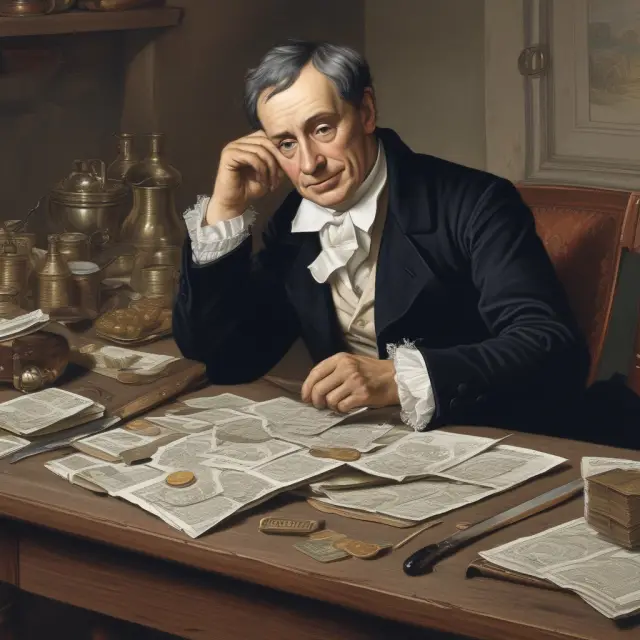
David Ricardo’s insights on rents are crucial to understanding the intricacies of economic theory and their implications for property owners, tenants, and government policy decisions. Ricardo was one of the first economists to discuss the idea of rents as benefits that accrue solely due to ownership rather than productive contribution. This section will delve into Ricardo’s perspective on rents and explore its applications in both agricultural and political economics.
Ricardo’s original application of rents was within agricultural economics, where he showed that the benefits of a rise in grain prices would tend to accrue to landowners in the form of rents paid by tenant farmers. The concept of economic rents, as distinct from natural or locational rents, can be defined as the difference between the total revenue earned and the minimum compensation necessary for an efficient production process to take place. In this context, a rise in grain prices leads to increased revenues for landowners, surpassing the production costs, resulting in a profit that is considered economic rent.
Ricardo’s idea of rents was later applied to political economics, particularly in the concept of rent-seeking. Rent-seeking refers to individuals or organizations seeking benefits from public policies, which increase rents towards themselves. The owners of assets that stand to benefit significantly from such policies have an incentive to lobby for these policies and even manipulate them for their own gain. This behavior can lead to inefficient allocation of resources and economic distortions.
Ricardo’s insights on rents provide valuable context for understanding the relationship between property ownership, market dynamics, and government policy decisions. By recognizing and addressing the presence and distribution of economic rents, economists and policymakers can work towards creating more efficient and equitable economic structures.
Furthermore, Ricardo’s theory of rents is essential for analyzing the role of property rights in economic development and growth. Understanding how economic rents are generated and distributed within different sectors and industries can help inform policy decisions aimed at promoting innovation, productivity, and fair distribution of wealth. In the following sections, we will further explore Ricardo’s ideas on wages, profit, and comparative advantage, shedding light on his broader contributions to classical economics.
Controversies, Criticisms, and Evolution of Ricardian Economics
David Ricardo’s revolutionary economic theories, including labor theory of value and comparative advantage, challenged conventional wisdom and inspired significant debate among his contemporaries and future economists. Although widely accepted today, these ideas faced criticisms and controversies when first proposed.
One prominent challenge to Ricardo’s labor theory of value was the notion that value is determined by utility, or satisfaction gained from a good. This perspective, advanced by economists like William Stanley Jevons and Leon Walras, argued that consumers ultimately determine goods’ worth based on their personal preferences rather than the labor invested in production. While some believe this perspective was an improvement upon labor theory of value, others argue that it led to a shift away from the focus on the actual production process and its implications for workers.
Another controversy surrounding Ricardo’s comparative advantage theory stemmed from concerns regarding the potential negative impact of free trade on domestic industries and employment. Critics claimed that importing goods from countries with lower labor costs could lead to unemployment, particularly in sectors with high wages, and questioned whether the benefits of international trade would be shared equitably among all members of society.
Moreover, Ricardo’s theories were not without their internal inconsistencies, such as the apparent contradiction between his labor theory of value and rents. This issue arose from the fact that Ricardo acknowledged that rents are separate from wages but maintained that they could still be considered a form of compensation for the landowner’s contribution to production – a view that was controversial among some economists.
Despite these criticisms, Ricardian economics continued to evolve and develop through the work of later economists like Karl Marx and Paul Samuelson. Marx built upon Ricardo’s labor theory of value to create a more comprehensive economic framework, emphasizing class struggle and labor exploitation as key drivers of capitalism. Meanwhile, Samuelson’s neoclassical synthesis integrated elements of both classical and marginalist theories, resulting in a more balanced approach that remains influential today.
As we explore Ricardo’s contributions to economics further, it is essential to understand the challenges and controversies that accompanied his groundbreaking ideas. By examining these debates, we can better appreciate the depth and breadth of Ricardo’s economic thought and its enduring impact on modern economic theory.
Ricardo’s Published Works and Influence in Economic Theory
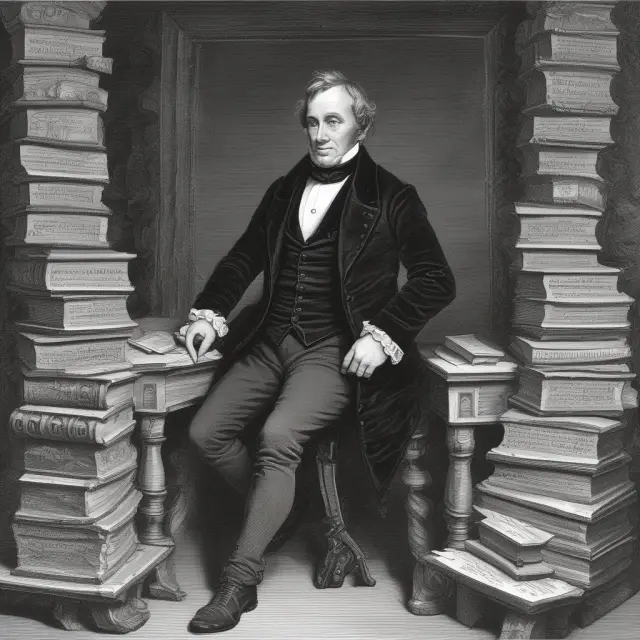
David Ricardo is most remembered for his theories of comparative advantage and labor theory of value; however, his published works significantly influenced economic thought beyond these well-known contributions. Ricardo was a prolific writer whose ideas challenged contemporary economic orthodoxy and laid the groundwork for future developments in economics.
Ricardo’s first published work on economics came at the age of 37 with an article advocating for the reduction in the Bank of England’s note-issuing activity, which was published in The Morning Chronicle. This early foray into economic discourse highlighted Ricardo’s concern about monetary policy and its impact on economic stability.
One of his most significant works, “Principles of Political Economy and Taxation,” published in 1817, contains his most well-known ideas on labor theory of value, comparative advantage, rent, and the law of diminishing returns. This publication was pivotal for classical economics as it provided a comprehensive framework for understanding economic principles.
Ricardo’s “Essay on the Influence of a Low Price of Corn on the Profits of Stock,” published in 1815, introduced the concept of the law of diminishing returns with respect to labor and capital. This theory suggests that beyond an optimal point in production, adding another unit will result in smaller increases in output. Ricardo’s exploration of this concept challenged Adam Smith’s notion of the division of labor and contributed to a more nuanced understanding of productivity and efficiency.
Another significant contribution from “Principles of Political Economy and Taxation” was Ricardo’s discussion on rents, which he asserted were accrued benefits solely due to ownership rights. His idea of rents would later be expanded upon in political economics as the concept of rent-seeking. This theory suggests that those with assets influenced public policy to reap additional rents from government actions.
Ricardo’s work also had an impact on economic debates of his time, such as the Bullionist Controversy, which questioned the Bank of England’s ability to control the value of its currency. Ricardo provided a detailed analysis of this issue, arguing that the real source of the problem was the increased money supply due to the bank’s note-issuing practices.
In summary, David Ricardo’s published works significantly influenced economic thought by challenging contemporary orthodoxy and providing a more nuanced understanding of key concepts like labor theory of value, comparative advantage, rent, and monetary policy. His ideas set the foundation for future developments in economics and continue to be relevant in modern economic debates.
In the next section, we will delve into Ricardo’s contributions to economic policy through his political career.
David Ricardo’s Political Impact: A Member of Parliament
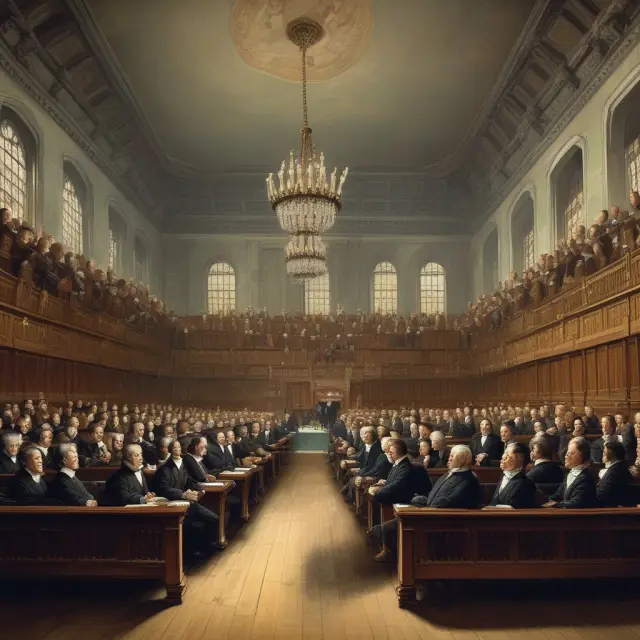
In addition to his significant contributions to classical economics through theories like comparative advantage, labor theory of value, and rents, David Ricardo left an indelible mark on British politics as a member of Parliament. Born in 1772, the English economist had already made a name for himself as a successful stockbroker, investor, and a self-taught economist influenced by Adam Smith.
Ricardo’s political career began when he purchased a seat in the House of Commons in 1812. His time in Parliament provided him with firsthand knowledge of the country’s economic policies and a platform to voice his opinions on various issues, including taxation and free trade.
Ricardo was a proponent of free trade, believing that it would benefit all countries involved by facilitating mutually beneficial international trade arrangements based on comparative advantage. In contrast, protectionist policies would lead to inefficiencies and higher costs for consumers. This perspective placed him at odds with some of his contemporaries who held protectionist views.
One of Ricardo’s most significant political contributions was his advocacy for tax reform, particularly the Corn Laws, which imposed tariffs on imported grain. He believed that these laws artificially raised the price of corn and negatively impacted wages, profits, and overall economic growth. In 1815, he published an influential article in The Times advocating for the repeal of the Corn Laws. Although the laws were eventually repealed in 1846, Ricardo’s influence on the debate was crucial.
Ricardo’s political stances influenced his economic theories and vice versa, blurring the lines between economics and politics. His ideas regarding rents, for instance, had implications not only for the economy but also for public policy decisions. Ricardo believed that landlords reaped unearned income from their assets in the form of economic rents, which could potentially lead to significant redistribution of wealth if addressed through taxation or other policies.
Although David Ricardo is best known for his contributions to economics, his political impact was also profound. His advocacy for free trade, tax reform, and a focus on mutually beneficial international trade agreements continue to influence economic policy discussions today.
Legacy and Continued Relevance of David Ricardo’s Economic Contributions
David Ricardo’s impact on economic theory and policy is undeniable, as his theories have shaped the foundations of modern economics and influenced contemporary debates. His contributions to classical economics include labor theory of value, comparative advantage, and rents, which are still studied and discussed in academic circles today.
Ricardo’s Labor Theory of Value continues to be a topic of interest, as it forms the basis for Marxist theories on the relationship between labor, capital, and production. It suggests that the value of a good is determined by the amount of labor required to produce it, an idea that has influenced our understanding of labor-intensive versus capital-intensive industries.
Comparative Advantage Theory is another influential concept that remains relevant today. The idea that countries benefit from international trade by focusing on producing goods with lower opportunity costs has shaped modern economic policy and trade agreements. It also demonstrates the potential gains from free trade and the detrimental effects of protectionist policies.
Lastly, Ricardo’s Theory of Rents has relevance in various fields, including agriculture and real estate. The idea that benefits accrue to asset owners due to their ownership rights continues to influence economic analysis and policy decisions related to taxation, property rights, and public goods.
Furthermore, Ricardo’s work extended beyond economics into the political arena as a member of Parliament. He advocated for free trade policies and opposed protectionist measures that limited international trade. His views on taxation, specifically his opposition to the Corn Laws, have influenced modern debates on government spending and revenue generation.
David Ricardo’s theories remain relevant in today’s economic landscape. As globalization increases and the world becomes more interconnected, understanding the principles of comparative advantage, labor theory of value, and rents is essential for individuals, businesses, and governments alike. Additionally, as debates on taxation, trade policies, and public goods continue, Ricardo’s contributions provide valuable insights and frameworks for analysis and decision-making.
In conclusion, David Ricardo’s theories have had a significant impact on economic theory and policy, shaping our understanding of labor markets, international trade, and property rights. His ideas remain relevant today as we navigate the complexities of modern economics and globalization, making it essential to explore his contributions further.
FAQs: Commonly Asked Questions about David Ricardo and His Contributions
Who was David Ricardo, and what were his significant contributions to classical economics?
David Ricardo (1772–1823) was a British economist who significantly influenced the development of classical economic thought through theories like comparative advantage, labor theory of value, and rents. A successful businessman turned politician, Ricardo wrote influential books such as Principles of Political Economy and Taxation (1817).
What is David Ricardo’s background before his involvement in economics?
Born into a large Jewish family, Ricardo began working at the age of 14 with his father as a stockbroker. He left home at 21 for marrying outside his religion and made a fortune dealing with government securities. After retiring in his early forties, he entered politics by purchasing a seat in Parliament.
How did influential economists’ ideas shape David Ricardo’s thinking?
David Ricardo was influenced by Adam Smith, James Mill, Jeremy Bentham, and Thomas Malthus, whose theories intersected with his ideas on labor, profit, and value.
What is the Labor Theory of Value, and how does it apply to David Ricardo’s economic thought?
The Labor Theory of Value states that a good’s worth can be measured by the labor hours required for its production. Ricardo built upon this concept, viewing costs as the total cost of production, rather than compensation paid for labor. This idea laid the foundation for Marxist economic theory.
What is Comparative Advantage and how did David Ricardo contribute to this theory?
The Comparative Advantage theory suggests that countries gain from international trade by focusing on producing goods with lower opportunity costs compared to their trading partners. Ricardo’s ideas on comparative advantage produced offshoots and critiques, still debated in modern economic policy.
What is the significance of David Ricardo’s Theory of Rents?
The Theory of Rents refers to the benefits accruing to owners of assets due to their ownership rather than productive activity. In its original application to agriculture, it showed that landowners gained from grain price rises in the form of rents paid by tenants. The idea later evolved into rent-seeking, where asset owners sought policy changes favorable to them.
What is Ricardian Equivalence and how did David Ricardo contribute to it?
Ricardian Equivalence proposes that the net effect on an economy from government financing through either taxation or deficit spending is equal. If taxpayers are rational, they will save enough to cover future tax increases resulting from deficits. Ricardo’s ideas laid the foundation for this concept in public finance.
What were some of David Ricardo’s most influential published works?
Ricardo wrote his first article on economics at age 37 and, in 1815, published Principles of Political Economy and Taxation, which contained his most well-known ideas. His earlier work Essay on the Influence of a Low Price of Corn on the Profits of Stock introduced the law of diminishing returns with respect to labor and capital.
What was David Ricardo’s stance on wages in his Iron Law of Wages Theory?
Ricardo believed that wage attempts to increase or improve would always return to, or remain close to, the subsistence level.
How did David Ricardo contribute to economics and its current policies?
David Ricardo is best known for developing theories like comparative advantage, labor theory of value, and rents, which have influenced schools of thought and modern economic policies. His political influence extended into his service as a member of Parliament.
 Next entry · No. 875David Tepper: The Renowned Hedge Fund Manager and Investor Behind Appaloosa Management
See also
-
 No. 731
29 May 2024
19 min
Understanding Competitive Advantage: Comparative vs. Differential
Business Strategy
No. 731
29 May 2024
19 min
Understanding Competitive Advantage: Comparative vs. Differential
Business Strategy -
 No. 5,628
24 Sep 2025
18 min
Understanding Wassily Leontief: An Economist Pioneer in Input-Output Analysis and the Leontief Paradox
Economics
No. 5,628
24 Sep 2025
18 min
Understanding Wassily Leontief: An Economist Pioneer in Input-Output Analysis and the Leontief Paradox
Economics -
 No. 848
19 Jun 2024
18 min
Understanding Current Accounts: Balance, Factors, & Significance
Economics
No. 848
19 Jun 2024
18 min
Understanding Current Accounts: Balance, Factors, & Significance
Economics -
 No. 753
02 Jun 2024
24 min
Understanding John Maynard Keynes’ Consumption Function: A Macroeconomic Tool for Investors
Economics
No. 753
02 Jun 2024
24 min
Understanding John Maynard Keynes’ Consumption Function: A Macroeconomic Tool for Investors
Economics -
 No. 752
02 Jun 2024
25 min
Understanding Consumer Surplus: Definition, Calculation and Significance in Economics
Economics
No. 752
02 Jun 2024
25 min
Understanding Consumer Surplus: Definition, Calculation and Significance in Economics
Economics -
 No. 728
28 May 2024
21 min
Understanding Comparative Advantage: A Key Concept in Economics
Economics
No. 728
28 May 2024
21 min
Understanding Comparative Advantage: A Key Concept in Economics
Economics