Exploring Exchanges: Understanding the Role and Importance of Stock Markets in Raising Capital

Explore the vital role of stock markets in raising capital through IPOs, understanding exchange functions, comparing physical vs. electronic platforms, and…
Understanding Exchanges and Their Functions
An exchange is an essential component of financial markets where securities, commodities, derivatives, and other financial instruments are bought and sold. The primary role of exchanges is to facilitate fair, orderly trading and provide efficient price information for any security listed on the exchange. Exchanges act as a platform for companies to access capital, allowing them to raise funds to expand their operations by issuing stocks through Initial Public Offerings (IPOs).
What makes an exchange? It can be either a physical location where traders come together or an electronic platform that connects buyers and sellers worldwide. While the trading process has mostly moved towards fully electronic exchanges, some orders are still processed in a physical location for specific securities. In recent decades, exchanges have seen significant advancements with the rise of algorithmic price matching, high-frequency trading programs, and complex algorithms used by traders to optimize their trades.
To be listed on an exchange, companies must meet specific requirements, such as submitting regular financial reports, audited earning reports, and maintaining a minimum capital requirement. For example, the New York Stock Exchange (NYSE) requires a company to have at least $4 million in shareholder’s equity before it can list its securities for trading.
A primary function of exchanges is to provide companies with access to capital as they embark on their growth journey by offering stocks through IPOs. Listed companies have increased visibility and autonomy, making them an attractive proposition for investors, customers, employees, and suppliers. In contrast to relying solely on venture capitalists for investment, these companies retain more control over their operations and decision-making as they maintain a larger stake in their company.
A prominent example of an exchange is the New York Stock Exchange (NYSE), which has been a cornerstone of the US financial system since 1792. Initially, trades were conducted through open outcry auctions on the trading floor. The NYSE underwent significant changes in the late 1990s, with most stocks transitioning to electronic markets by 2007, except for a few high-priced stocks that still require manual processing. Previously, only exchange members could trade directly from the floor; however, ownership of these seats is now leased on one-year terms.
In conclusion, exchanges play an essential role in providing a platform for trading, raising capital, and maintaining fair and orderly markets. As technology continues to evolve, so too will exchanges and their methods of operation.
Physical vs. Electronic Exchanges
Understanding the two primary types of exchanges – physical and electronic – is crucial to grasping their role in the financial markets. Exchanges provide a platform for companies, governments, and other entities to sell securities to the public and raise capital. They can be likened to bustling marketplaces where buyers and sellers meet to negotiate terms and execute trades.
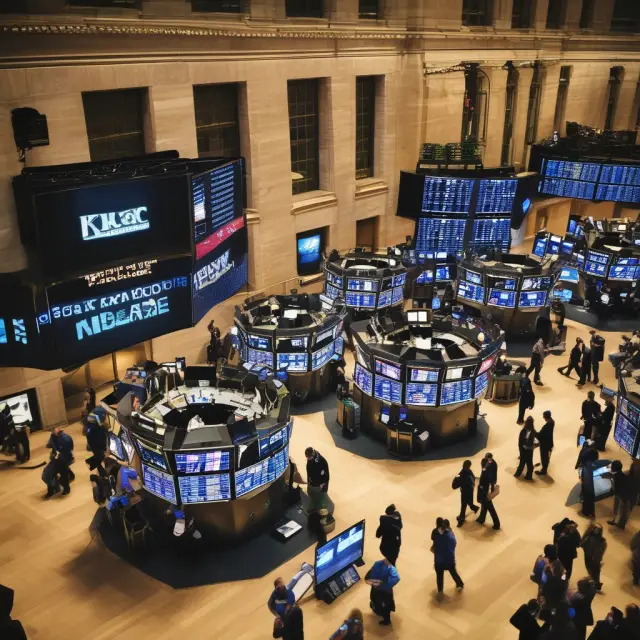
Physical exchanges are traditional marketplaces where traders engage in face-to-face trading. The New York Stock Exchange (NYSE) is a renowned example of a physical exchange, with its iconic trading floor on Wall Street hosting numerous transactions since 1792. Despite their historical significance, physical exchanges have seen a decline in popularity due to the emergence and dominance of electronic exchanges.
Electronic exchanges, on the other hand, facilitate trading through computerized networks. These systems enable real-time price information dissemination and high-frequency trading programs to operate more efficiently. More than 80% of trades on the NYSE are now conducted electronically. This shift from physical to electronic exchanges has resulted in increased accessibility, speed, and flexibility for investors and traders worldwide.
The transformation of exchange trading systems brings several benefits:
- Increased efficiency and reduced transaction costs.
- Instant execution of trades and real-time price information.
- Improved risk management through algorithmic trading techniques.
- Enhanced market transparency and access to a broader range of securities.
- Global connectivity and accessibility from anywhere, at any time.
While the shift towards electronic exchanges has revolutionized trading practices and provided numerous benefits, it is important to note that these developments have not entirely replaced physical exchanges. Many investors still prefer the traditional approach for specific assets or situations, such as large trades or unique securities that may require more customized negotiations.
In conclusion, understanding the differences between physical and electronic exchanges is essential for anyone interested in finance and investment. Both types of exchanges serve important roles within the financial ecosystem, offering various advantages to buyers, sellers, and investors. As technology continues to evolve, it is expected that exchanges will further adapt and innovate to meet the changing demands of the financial markets.

Listing Requirements for Companies on Exchanges
When it comes to listing their securities on a stock exchange, companies must meet specific requirements. Each exchange has its unique rules and regulations that determine whether a company is eligible to list or not. Here, we delve deeper into the financial, reporting, and other requirements that companies need to fulfill to make it onto a reputable exchange.
Financial Requirements
A fundamental prerequisite for companies looking to list on an exchange is demonstrating sufficient financial stability and liquidity. Generally speaking, exchanges require listed companies to meet minimum capital requirements. For instance, the New York Stock Exchange (NYSE) sets a $4 million minimum in shareholder’s equity as a condition for companies seeking admission. This requirement ensures that listed companies have a solid financial foundation capable of sustaining their business operations and weathering economic downturns.
Reporting Requirements
In order to maintain transparency and investor confidence, exchanges mandate strict reporting requirements from their listed companies. Companies must submit regular, audited financial reports to the exchange as well as regulatory agencies such as the Securities and Exchange Commission (SEC). These reports include quarterly and annual financial statements, as well as other relevant documents, allowing investors to make informed decisions about potential investments.
Other Requirements
There are additional requirements that companies must fulfill before being admitted to a stock exchange. For example, they might need to comply with specific corporate governance rules and maintain a sufficient number of shareholders or market capitalization to meet the exchange’s eligibility criteria. Moreover, companies must also establish a transfer agent to manage the process of issuing and trading their securities.
The Role of Exchanges in Accessing Capital
Stock exchanges serve as critical platforms for raising capital through Initial Public Offerings (IPOs). By selling shares on an exchange, companies can secure much-needed funds to finance their growth strategies or expand operations. Companies listed on a stock exchange gain more control and autonomy since investors purchasing shares hold limited voting rights. This is in contrast to private financing methods, such as venture capital, which often come with loss of operational control.
Conclusion:
Understanding the intricacies of exchanges is essential for both businesses seeking capital and investors eager to make informed decisions. By exploring the various functions and requirements of stock exchanges, we gain a deeper appreciation for their role in driving economic growth and fostering financial innovation. Companies that successfully navigate the listing process can reap numerous benefits, including increased visibility, access to a wider pool of potential investors, and greater control over their business operations.

Accessing Capital through Stock Exchanges: The Role of Initial Public Offerings (IPOs)
Stock exchanges play a vital role in raising capital for companies, especially when it comes to going public through an initial public offering (IPO). An IPO refers to the first sale of stock by a private company to the investing public. Exchanges provide access to a large pool of potential investors and facilitate the process of selling securities.
IPOs can be crucial for companies aiming to expand their operations, attract new customers, or gain increased visibility in their respective industries. By listing on a reputable exchange, these firms become part of an esteemed community of publicly-traded businesses, potentially leading to further opportunities and partnerships.
The process of launching an IPO is a complex one that involves rigorous preparation and meeting specific requirements set by the stock exchange. To be eligible for listing on major exchanges like the New York Stock Exchange (NYSE) or Nasdaq, companies must meet stringent financial criteria. For instance, the NYSE mandates that a company must have a minimum of $4 million in shareholder’s equity. These requirements ensure that only financially stable and well-managed companies gain access to capital through exchanges, providing investors with confidence in their investment decisions.
An IPO is more than just a one-time event; it marks the beginning of an ongoing relationship between the company and its shareholders. Companies listed on stock exchanges have a greater degree of control over their operations compared to those that rely solely on venture capital or private equity funding. This autonomy can lead to more strategic decision-making and long-term growth opportunities for these firms.
A successful IPO not only provides the company with much-needed capital but also opens up new avenues for future fundraising through secondary offerings, such as follow-on offerings or convertible securities. These financing methods enable companies to raise additional funds without diluting ownership stakes significantly.
The New York Stock Exchange (NYSE), the world’s largest stock exchange by market capitalization, has a rich history of facilitating successful IPOs for numerous prominent firms like Google, Microsoft, and Facebook. By providing access to a broad pool of investors and setting a transparent, standardized process, exchanges have become indispensable tools in the modern business landscape, helping companies grow, innovate, and thrive.

The NYSE: A Real-World Example of a Prominent Exchange
Established in 1792, the New York Stock Exchange (NYSE) is the oldest and arguably the most renowned stock exchange globally. With its rich history rooted on Wall Street, Manhattan, this prestigious marketplace has served as the go-to platform for securities trading and raising capital since the late 18th century.
Founded by 24 brokers and merchants, the NYSE initially operated through an open outcry system – a method where traders shouted their bids and offers to the trading floor. Over time, this system evolved into a continuous auction format, with traders submitting orders electronically. Today, around 80% of all trading on the NYSE is conducted using electronic means.
The exchange’s primary role has always been to ensure fair and orderly trading while efficiently disseminating price information for securities listed on the exchange. Companies seeking capital have long relied on the NYSE as an avenue to raise funds through Initial Public Offerings (IPOs). By listing their shares on the NYSE, businesses gain increased visibility and attract potential investors, customers, employees, and partners alike.
The NYSE sets a minimum listing requirement for companies seeking to join its ranks – a shareholder’s equity of at least $4 million is essential. This rule ensures that only financially sound organizations are considered eligible for the prestigious status of trading on the renowned exchange.
As technology evolved, so did the NYSE. The exchange transitioned from a physical location to a mostly electronic platform, with advanced algorithmic price matching systems ensuring fair trading and high-frequency transactions. This shift in operations has led to an influx of complex algorithms used by traders and the rise of automated trading programs, ultimately enhancing overall efficiency and productivity within the financial industry.
The New York Stock Exchange continues to remain a cornerstone of the global financial world. Its resilient reputation as a trusted platform for securities trading and capital raising has endured since its inception, making it an essential topic of study for investors and finance enthusiasts alike.

Exchanges vs. Alternative Funding Methods: Comparing Control, Rights, and Autonomy
When it comes to raising capital for businesses, stock exchanges aren’t the only game in town. Venture capitalists, private equity firms, angel investors, and even crowdfunding platforms offer alternative methods for companies to secure funding. In this section, we compare and contrast these options, focusing on control, rights, and autonomy granted to the businesses involved.
1. Control:
Exchanges provide businesses with a significant amount of control compared to other funding methods. When a company goes public through an exchange, it retains ownership of its shares while issuing them for sale. Shareholders purchasing these securities have limited rights and influence over company operations. This arrangement is in stark contrast to venture capital, where investors may seek board seats or even operational control in return for their investment.
2. Rights:
Rights are an essential consideration when evaluating funding methods. Stock exchange listings grant companies more freedom regarding operational decision-making. In comparison, venture capitalists often require equity stakes and seats on the company’s board. Angel investors may demand repayment or equity in exchange for their investment. The degree of control and rights vary depending on the agreement reached between the parties involved.
3. Autonomy:
Businesses listed on stock exchanges enjoy a high level of autonomy. While shareholders have some influence, the company’s management retains ultimate authority over its strategic direction and day-to-day operations. Venture capitalists may demand board representation and operational control as part of their investment deal, which can impact a company’s strategic decisions and lead to potential conflicts with the executive team.
Real-World Example: Facebook’s IPO vs. Google’s Early Funding Rounds
Facebook and Google are two prominent tech companies that illustrate the differences between funding through stock exchanges and alternative methods. Facebook went public in 2012, raising over $16 billion through an initial public offering (IPO) on Nasdaq. Google, on the other hand, relied heavily on venture capitalists in its early years, with funding rounds totaling around $4 billion before going public in 2004. In this example, Facebook retained more control and autonomy throughout its growth process compared to Google, whose venture capital investors demanded equity stakes and operational influence.
In conclusion, stock exchanges offer businesses a unique opportunity to access capital while retaining significant control and autonomy. Understanding the differences between funding methods can help companies make informed decisions about their capital-raising strategies.

The Importance of Transparency on Exchanges
Exchanges play a pivotal role in ensuring trust and fairness within financial markets by prioritizing transparency. A transparent trading environment facilitates informed investment decisions and promotes accountability. In turn, transparency contributes to increased efficiency and stability within exchange markets.
Transparency refers to the availability and accuracy of information regarding securities traded on an exchange. When trading is transparent, investors can make well-informed decisions based on accurate information about prices, volumes, and other relevant market data. Additionally, transparency fosters accountability and trust among market participants.
To maintain transparency, exchanges implement rules and regulations that require listed companies to regularly disclose financial and operational information. This helps keep investors informed about the health of the businesses they invest in. For instance, public companies must file quarterly and annual reports with regulatory bodies such as the Securities and Exchange Commission (SEC). These filings contain valuable information about a company’s financial performance, future outlook, and management team.
Exchanges also employ various measures to ensure transparency in trading activities. For example, real-time price quotes are publicly available to all market participants, enabling everyone to see current market conditions and adjust their investment strategies accordingly. Additionally, exchanges establish strict rules regarding the disclosure of insider information. Insiders, including company directors and officers, must adhere to specific guidelines when trading securities in their companies to prevent market manipulation and maintain a level playing field for all investors.
Transparency is also essential to ensuring regulatory compliance. Regulatory bodies like the Securities and Exchange Commission (SEC) and Financial Industry Regulatory Authority (FINRA) have the authority to enforce rules regarding trading practices, disclosures, and market manipulation. These organizations play a crucial role in maintaining the integrity of financial markets by enforcing regulations designed to protect investors and promote fair and transparent trading practices.
Moreover, exchanges invest in technology that supports transparency initiatives. For example, advanced trade reporting systems allow for real-time monitoring of trading activities, while automated market surveillance tools help identify potential violations of exchange rules. These technologies contribute to a more efficient and trustworthy environment, allowing investors to make informed decisions with confidence.
In summary, transparency is an essential component of the financial markets that exchanges work tirelessly to maintain. By ensuring a transparent trading environment, exchanges facilitate informed investment decisions, promote accountability, and foster market stability. Through regulatory compliance, technology investments, and information disclosure requirements, exchanges prioritize transparency to ensure trust among market participants and enable well-informed investment choices for all investors.

Recent Developments and Trends in Stock Exchange Trading
Stock exchanges have continually adapted to technological advancements over the past few decades, giving rise to significant developments and trends that have shaped the trading landscape. Two major trends have been the shift towards electronic trading systems and the emergence of high-frequency trading (HFT).
Electronic Exchanges: The Transition to Fully Electronic Platforms
In recent times, trading has increasingly transitioned from physical exchanges to fully electronic platforms. Modern algorithmic price matching ensures fair trading without requiring traders to physically meet in a centralized location. Instead, trades are executed electronically through multiple exchange networks. While some orders may still be processed in a physical location like the NYSE, a significant portion of transactions takes place digitally, irrespective of their geographical origins.
This shift has resulted in several advantages. For instance, electronic exchanges offer increased efficiency and lower transaction costs. Additionally, they enable real-time market access, allowing investors to react quickly to market events. Moreover, the use of complex algorithms by traders on electronic platforms has facilitated more informed decision-making and heightened liquidity.
High-Frequency Trading: Algorithmic Trading at Lightning Speed
The advent of high-frequency trading (HFT) represents another significant trend in stock exchange trading. HFT is a type of automated, algorithmic trading characterized by extremely short holding periods – typically measured in fractions of seconds to minutes. These sophisticated systems use complex algorithms and vast processing power to analyze markets and execute trades at lightning speed.
While HFT has its benefits – such as reducing spreads and providing liquidity – it also raises concerns around market fairness and potential manipulation. Critics argue that HFT can give large financial institutions an unfair advantage due to their ability to execute trades faster than retail investors. Moreover, some believe that the high-volume nature of HFT may contribute to heightened volatility in markets.
Exchanges Addressing Challenges and Embracing Innovation
In response to these challenges, stock exchanges have continued to adapt. For instance, they’ve implemented regulations aimed at ensuring a level playing field for all market participants. The European Union’s Market Abuse Regulation (MAR) is one such example. It imposes strict rules on insider trading and market manipulation. Similarly, in the United States, regulatory bodies like the Securities and Exchange Commission (SEC) have introduced measures to address HFT-related concerns while maintaining market efficiency.
Exchanges have also embraced emerging technologies to enhance their offerings. For instance, some exchanges are exploring the use of blockchain technology to improve transaction settlement times and reduce counterparty risk. Others have launched initiatives focused on sustainability reporting and green bonds. These developments demonstrate the ongoing commitment of stock exchanges to remain innovative while addressing the evolving needs of the financial markets and their customers.
In conclusion, recent developments in stock exchange trading reflect a dynamic market landscape shaped by technological advancements and evolving regulatory requirements. As stock exchanges continue to innovate, they will play an essential role in shaping the future of global finance.

Impact of Exchanges on the Global Economy
The importance of stock exchanges in modern economies cannot be overstated. They serve as powerful catalysts for economic growth and globalization, enabling companies to raise capital while providing investors with a wide range of investment opportunities.
Stock exchanges have been instrumental in transforming the way businesses grow and expand their operations. An initial public offering (IPO) – the first sale of shares by a private company to the public on an exchange – provides companies with significant financial resources to fuel their growth, create jobs, and innovate, thereby contributing to economic development.
Moreover, exchanges help countries attract foreign investment by showcasing their economies’ strengths and potential. By listing their stocks on international exchanges, emerging markets can gain a global profile and establish themselves as attractive destinations for both local and foreign investors. This leads to increased trade, improved infrastructure, and overall economic progress.
Exchanges also promote financial transparency, which is crucial in creating an efficient marketplace. By requiring listed companies to disclose their financial information regularly, exchanges ensure that investors are well-informed about the performance of the companies they invest in. This transparency builds trust and confidence among investors and encourages long-term investment commitments, ultimately contributing to economic stability.
Recent developments in exchange technology have further enhanced their role in the global economy. Electronic trading platforms have enabled faster, more secure, and cost-effective transactions, allowing traders from all corners of the world to participate in real-time global markets. This has led to increased competition and innovation, creating new opportunities for investors and companies alike.
Additionally, stock exchanges are increasingly embracing technological advancements such as blockchain, which offers secure, decentralized record-keeping, and smart contracts that automate various trading processes. These innovations promise to make markets more efficient, transparent, and accessible than ever before.
In conclusion, stock exchanges play a vital role in driving economic growth and globalization by providing companies with access to capital, encouraging financial transparency, and promoting international trade and investment opportunities. Their transformative impact is evident in the countless success stories of businesses that have grown and thrived thanks to their presence on these powerful marketplaces.

FAQs About Stock Exchanges
What is an exchange? An exchange is a marketplace where securities, commodities, derivatives, and other financial instruments are traded. Its primary role is to ensure fair and orderly trading while efficiently disseminating price information for any securities trading on that particular exchange. Companies can use exchanges as platforms to sell their securities to the investing public.
What functions do stock exchanges serve? Exchanges provide a platform for companies, governments, and other entities to raise capital by selling securities to investors through an initial public offering (IPO). They offer transparency, fairness, and efficiency in financial transactions while connecting buyers and sellers.
How have trading methods evolved at exchanges? Once conducted physically between traders, the majority of exchange trades now take place electronically. This change has led to a significant increase in high-frequency trading programs and complex algorithms used by traders. Though some orders may be processed through physical locations, most transactions are completed digitally, making location irrelevant.
What are listing requirements for companies seeking to trade on exchanges? Exchanges have specific requirements to ensure the financial stability of companies wanting to list their securities. These requirements include regular financial reports, audited earning reports, and a minimum capital requirement. For instance, the New York Stock Exchange (NYSE) mandates that companies must have at least $4 million in shareholder’s equity (SE).
Why is transparency crucial for exchanges? Transparency is essential to build trust and ensure fairness among investors. Exchanges provide real-time information on securities, trading volume, market trends, and other relevant data. This information allows investors to make informed decisions based on accurate, up-to-date information.
What are the benefits of listing on a stock exchange versus relying on venture capital? Companies listed on a stock exchange retain more control and autonomy over their operations since they have fewer obligations to external investors. While venture capital firms can offer financial support, they may also require significant ownership stakes and board representation. Listing on an exchange allows companies to access a larger pool of potential investors with minimal loss of operational control.
What is the history of the New York Stock Exchange? The New York Stock Exchange (NYSE) was established in 1792, making it one of the oldest exchanges in the U.S. It started as an informal gathering where brokers traded stocks and has since grown into a prominent financial institution with over $4 trillion in market capitalization. Initially, transactions occurred through open outcry auctions on the exchange floor, but they have gradually transitioned to electronic trading since the 1990s.
What is an IPO? An Initial Public Offering (IPO) refers to a company’s first sale of stock to the public. It provides companies with access to capital for growth and expansion while giving them increased visibility, attracting new customers, talented employees, and suppliers. An IPO typically involves underwriting services from investment banks that help manage the offering, pricing, and distribution of securities.
 Next entry · No. 1,384Exploring Exchange Controls: Understanding Government-Imposed Restrictions on Currency Transactions
See also
-
 No. 1,317
29 Aug 2024
21 min
Understanding the Equity Capital Market: A Comprehensive Guide
Business Finance
No. 1,317
29 Aug 2024
21 min
Understanding the Equity Capital Market: A Comprehensive Guide
Business Finance -
 No. 3,874
03 May 2025
20 min
Understanding Oversubscription Privileges in Rights Issuances: A Comprehensive Guide for Institutional Investors
Business Finance
No. 3,874
03 May 2025
20 min
Understanding Oversubscription Privileges in Rights Issuances: A Comprehensive Guide for Institutional Investors
Business Finance -
 No. 3,808
28 Apr 2025
21 min
Understanding OTC Markets Group Inc.: A Comprehensive Guide to Trading, Market Data, and Corporate Services
Business Finance
No. 3,808
28 Apr 2025
21 min
Understanding OTC Markets Group Inc.: A Comprehensive Guide to Trading, Market Data, and Corporate Services
Business Finance -
 No. 2,934
15 Feb 2025
21 min
Understanding Listing Requirements for Professional Investors
Business Finance
No. 2,934
15 Feb 2025
21 min
Understanding Listing Requirements for Professional Investors
Business Finance -
 No. 1,581
07 Oct 2024
20 min
Follow-On Offerings: Understanding Diluted and Non-Diluted IPOs Aftermarket Capital Raising
Business Finance
No. 1,581
07 Oct 2024
20 min
Follow-On Offerings: Understanding Diluted and Non-Diluted IPOs Aftermarket Capital Raising
Business Finance -
 No. 1,319
29 Aug 2024
22 min
Equity Financing: Understanding the Sale of Ownership Shares in Companies for Capital
Business Finance
No. 1,319
29 Aug 2024
22 min
Equity Financing: Understanding the Sale of Ownership Shares in Companies for Capital
Business Finance