George Soros: The Man Who Broke the Banks – A Billionaire Investor and Philanthropist
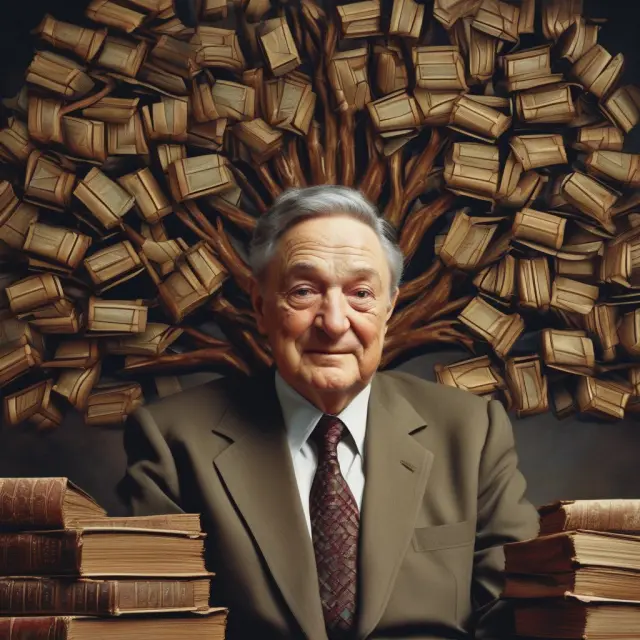
George Soros is a Hungarian-born American investor and philanthropist, born in 1930, who lived through the Nazi occupation of Hungary, launched his own hedge fund in 1970 and became one of America's most successful investors. He has given more than $32 billion to his Open Society Foundations since 1984, according to the foundations.
Early Life and Education
Born on August 12, 1930, in Budapest, George Soros experienced firsthand the devastation of war and anti-Semitism during his childhood. When Nazi forces occupied Hungary in 1944, he survived by concealing his Jewish identity and assuming a Christian name. After the war, he went to England and earned a bachelor’s degree in philosophy from the University of London in 1950. He later returned to Budapest to work as a purchasing agent for a British trading firm but decided to leave communist Hungary in 1947. With financial assistance from the Jewish Agency, Soros moved to England again and began his education at the London School of Economics (LSE), where he earned a Ph.D. in philosophy and economics.
While at LSE, George Soros discovered his passion for investing. He started putting money into the stock market using borrowed funds from friends and colleagues. His experiences during World War II had instilled in him an understanding of the importance of financial security and independence. By 1954, he had amassed enough capital to open a small investment firm with the help of some fellow Hungarian immigrants.
Soros continued his academic pursuits, earning a teaching position at LSE while also running his investment business. In 1969, he founded Double Eagle Partners, his first hedge fund. By 1970, Soros had achieved impressive results with the Double Eagle Fund and was managing over $12 million in assets. The fund’s success paved the way for George Soros to manage some of the world’s most successful investment vehicles, such as the Quantum Fund.
In conclusion, George Soros’s formative experiences during World War II shaped his determination to gain financial security and independence through investing. His education at LSE provided him with a solid foundation in economics and philosophy, which proved valuable in his career as a hedge fund manager and philanthropist.

A Career in Finance: From Double Eagle to Quantum Fund
George Soros’s journey into finance began humbly as a refugee who survived the Nazi occupation of Hungary during World War II. Born in Budapest on August 12, 1930, he arrived in England after the war and earned a doctorate in economics from the London School of Economics (LSE). Upon finishing his education, Soros joined S.G. Warburg & Co., a British investment bank, as a securities trader in 1956.
In the late 1960s, Soros embarked on an entrepreneurial endeavor by establishing his first hedge fund, Double Eagle, which was renamed the Quantum Fund in the early 1970s. With a strong foundation in economics and finance, coupled with his innate ability to capitalize on market inefficiencies, Soros’ career in finance began its meteoric rise.
The Quantum Fund became renowned for achieving impressive returns, with an average annual rate of 30% between 1970 and 2000. This success is attributed to Soros’ keen understanding of economic trends at both regional and global levels and his willingness to take large, highly leveraged bets—a strategy that few can match, even among the most accomplished investors.
One such instance of George Soros’ remarkable foresight came on September 16, 1992, when he made a $1 billion profit by short selling the British pound. This significant event earned him the nickname “the man who broke the Bank of England.” The British pound was part of the European exchange rate mechanism (ERM), an agreement among several European countries that maintained fixed currency exchange rates. As other countries pressured England to devalue its currency or leave the ERM, Soros saw a golden opportunity.
Using leverage to amplify his bets, he took a $10 billion short position on the British pound, which paid off handsomely when England floated its currency and the value of the pound dropped drastically. This trade is considered one of the most profitable in financial history.
George Soros’ investment style is characterized by deep knowledge of global markets, a high-risk tolerance, and an instinctive approach to decision making. He has the capital and fortitude to ride out market volatility and has influenced national governments with his perseverance and substantial wealth. The Asian financial crisis saw Soros earn another moniker—”the man who broke the Bank of Thailand”—after he bet almost $1 billion against the Thai currency, the baht.
Soros’s success in finance allowed him to build an impressive net worth, currently standing at over $8.6 billion as of May 2022. A significant portion of this wealth is donated to various charitable causes through his philanthropic organization, the Open Society Foundations, which supports justice, democratic governance, and human rights initiatives around the world.
Notable Accomplishments: Breaking ‘The Banks’
George Soros, the legendary hedge fund manager, is most renowned for his monumental success with the British pound on September 16, 1992. During that fateful day, Soros made a historic £1 billion profit through a bold move that would come to be known as “The Day George Soros Broke the Bank of England.” This event marked one of the greatest accomplishments in finance history, not only for its significant financial gains but also for altering the course of economic policy.
Before delving into this iconic trade, it’s crucial to understand the backdrop of that time. In 1992, the United Kingdom was part of the European Exchange Rate Mechanism (ERM), an agreement among several European countries to maintain fixed exchange rates. However, England faced immense pressure to devalue its currency or leave the ERM due to economic instability. With speculation growing that the pound would be devalued or that England would exit the mechanism, Soros saw an opportunity.
George Soros, a well-informed investor with deep knowledge of international economic trends and a considerable risk tolerance, took a calculated and strategic position. He initiated a £10 billion short position on the British pound using substantial leverage, making a bet that the value would drop if England were to leave the ERM or devalue its currency.
The momentous day arrived when England, unable to support its currency, decided to float the pound. Its value plummeted significantly against other currencies, and Soros’s investment paid off handsomely. He earned a profit of approximately £1 billion from this single-day trade. This event, often referred to as “Black Wednesday,” became a turning point in global finance. It marked the end of fixed exchange rates in Europe and ushered in a new era of flexible exchange rates.
Soros’s extraordinary success during this period established him as “the man who broke the Bank of England.” The significance of his actions reverberated beyond the financial world, as he became a symbol of economic power and a harbinger of change. This achievement catapulted Soros to worldwide fame and cemented his reputation as one of the greatest investors in history.
More recently, Soros has continued to make waves with his prescient investment strategies, philanthropy, and activism, particularly regarding Europe’s future and the ongoing refugee crisis. His insights into global economics have once again proven valuable, making him an influential figure in finance and beyond.
George Soros’s Investment Style
George Soros, often referred to as “the man who broke the Bank of England,” is renowned for his extraordinary success in finance and investment. With an impressive career spanning decades, Soros has left an indelible mark on global financial markets by making large-scale bets based on his extensive knowledge of economic trends. This section delves deeper into Soros’s investment strategy and the factors that have contributed to his remarkable success.
Soros’s Investment Approach: A Marriage of Knowledge and Instinct
While George Soros’s investment style is unique in many ways, it can be broadly characterized as a blend of deep knowledge, intuition, and calculated risk-taking. The Hungarian-born investor is known for his meticulous research on economic trends and regional developments that often allow him to anticipate market inefficiencies and profit handsomely.
Soros has emphasized the importance of both knowledge and instinct in his investment decisions. He famously admitted that, at times, he relied more on gut feelings than market analysis when deciding whether to close a position. This approach, however controversial it may be to some, has served Soros well throughout his career and sets him apart from many other investors.
The Power of Knowledge: An Informed Investor
George Soros’s success as an investor is rooted in his deep understanding of the global economy. His knowledge of macroeconomic trends and their potential impact on various markets has allowed him to make informed decisions that often result in significant profits. This level of expertise is crucial for managing large-scale bets, which is a hallmark of Soros’s investment approach.
The Significance of Large-Scale Bets: Riding the Market Waves
One of George Soros’ most notable investments was his £1 billion short position on the British pound in 1992. This bet, often referred to as “the man who broke the Bank of England,” brought him a profit of over $1 billion in just one day. Soros’ ability to make large-scale bets and ride out market volatility has been a key factor in his success. His deep pockets and risk tolerance enable him to withstand the inevitable market fluctuations, making him a formidable presence in financial markets.
The Importance of Timing: Knowing When to Enter and Exit
George Soros’s investment style also involves knowing when to enter and exit positions. While his deep knowledge of economic trends is crucial for identifying opportunities, the timing of his trades is equally important. Instinct plays a role in this aspect of his strategy, but it is often informed by his extensive understanding of markets and their underlying dynamics.
In conclusion, George Soros’s investment style is defined by his deep knowledge of economic trends, large-scale bets, and the ability to ride out market volatility. His unique approach has earned him a place among the most successful investors in history and continues to shape financial markets today.

Philanthropy: The Open Society Foundations
George Soros, one of the world’s most successful investors, is not only renowned for his financial prowess but also for his vast philanthropic contributions. Established in 1979, The Open Society Foundations (OSF) has become a significant vehicle for George Soros to distribute billions towards education, health programs, human rights efforts, and the furtherance of democracy.
George Soros’s commitment to philanthropy began early in his career. After earning a doctorate from the London School of Economics, he moved to New York City to start a hedge fund, Double Eagle, which he founded in 1969. Success followed swiftly, and Soros used a portion of his profits to begin supporting organizations that aligned with his values. In 1979, he established the Open Society Foundations as a private operating and grant-making foundation.
The OSF has become an essential force in driving social change around the world. Its initiatives focus on four core areas: Education, Human Rights, Public Health, and Evidence-Based Policy. Soros’s philosophy is rooted in supporting individuals, organizations, and communities to challenge injustices, engage in public debate, and promote the values of an open society.
Some of the most notable achievements of the OSF include:
- Advancing democratic reforms: The Open Society Foundations have supported democracy movements across the globe, including the Arab Spring, Eastern Europe’s transition from communism, and the promotion of human rights in Russia and China.
- Supporting education initiatives: Soros has donated over $500 million to Bard College, establishing the Annandale-on-Hudson campus as a center for liberal arts education. The Open Society Foundations also support educational initiatives that promote access and equal opportunities for students in the US and around the world.
- Human Rights: OSF focuses on promoting human rights by supporting grassroots organizations that work to protect freedom of expression, access to justice, and civil liberties.
- Public Health: The foundation’s public health initiatives focus on addressing issues such as infectious diseases, mental health, and substance abuse. In recent years, it has focused on the COVID-19 pandemic, providing support for research, vaccine distribution, and other essential services.
- Evidence-Based Policy: The Open Society Foundations believe that data-driven policies and evidence can lead to more effective change. They fund organizations and initiatives that focus on using data to inform policymaking in various sectors, including education, criminal justice, and public health.
Soros’s philanthropic endeavors have been a critical source of support for individuals, communities, and organizations striving to create positive change. His commitment to an open society, democratic values, and social justice continues to inspire many. The Open Society Foundations have become a powerful force in shaping a more equitable and just world.
Despite Soros’s immense wealth and influence, he remains a target of controversy, particularly from right-wing political groups who accuse him of manipulating markets or using his resources for nefarious purposes. However, his dedication to philanthropy and social change demonstrates a profound commitment to making the world a better place.
In summary, George Soros’s legacy extends far beyond his successful investment career. His philanthropic contributions, particularly through The Open Society Foundations, have had a significant impact on people’s lives around the globe. By supporting education, human rights, public health, and evidence-based policy initiatives, Soros has left an indelible mark on the world that will long outlive his investment successes.
George Soros in the News: Controversies and Conspiracy Theories
Beyond his successful investment career, George Soros is a public figure whose personal life and philanthropic work have generated significant media attention. Unfortunately, much of this coverage has been characterized by controversy and conspiracy theories, fueled largely by political ideologies and right-wing groups. In recent years, these false narratives have intensified, requiring a closer look at the facts to separate myth from reality.
One persistent rumor suggests that Soros is anarchic or destructive in his investment strategies, responsible for crises such as the Asian financial crisis and the European refugee crisis. However, a careful examination of historical events reveals otherwise. During the Asian financial crisis, Soros was indeed involved in short selling the Thai currency, the baht, but this move did not initiate the crisis. Instead, it was an attempt to capitalize on the instability resulting from the IMF’s ill-advised intervention. Similarly, his recent concerns about Europe’s future have been misconstrued as a desire for chaos rather than an effort to address pressing issues like territorial breakups and the refugee crisis.
Another common conspiracy theory alleges that Soros is behind various protests and social unrest around the world. For example, he has been falsely accused of funding the 2014 protests in Ferguson, Missouri, the Occupy Wall Street movement, and even the anti-Trump protests during the 2016 election. These rumors are baseless; there is no evidence that Soros finances or controls these movements.
Conspiracy theories about Soros often intersect with his political activism and philanthropy, which have earned him both praise and criticism. He has long been a supporter of liberal and progressive causes, donating billions of dollars to various organizations through the Open Society Foundations. This support has led some to label him a “puppet master” orchestrating global events for his own gain. However, Soros’s influence is not as omnipotent as these theories suggest. Instead, his philanthropy reflects personal values and a commitment to addressing social issues on a global scale.
These controversies and conspiracy theories highlight the importance of factual reporting and critical thinking when it comes to understanding George Soros and his role in finance, politics, and society. While it is crucial to acknowledge his controversial public image, it is equally essential to separate truth from fiction and focus on the facts behind the headlines.
In the end, it is clear that George Soros’s legacy will continue to be a subject of debate and discussion, with many perspectives shaping the narrative. Yet, by looking beyond the controversy and focusing on his investment accomplishments, philanthropy, and contributions to economic thought, we can gain a deeper understanding of this complex and influential figure.
Soros in Recent Years: Europe and Brexit
In recent years, George Soros, the legendary hedge fund manager, has been vocal about the potential crises that threaten the future of Europe. Following Britain’s decision to leave the European Union (EU) in 2016, popularly known as Brexit, Soros issued a warning about an existential crisis facing Europe. He proposed a three-pronged plan to address the issues threatening the continent: the refugee crisis, territorial breakups like Brexit, and the austerity crisis affecting countries such as Italy and Spain.
The refugee crisis, according to Soros, has been an ongoing problem for years. Europe’s response, he believed, was not only ineffective but also morally inadequate. He called for the EU to increase its support for refugees and to create a fairer distribution system to alleviate the burden on countries like Germany and Italy that have taken in the most refugees.
The second issue Soros addressed was territorial breakups, with Brexit being the most significant example. The departure of a founding member state from the EU, he argued, could set a dangerous precedent for other states to follow, potentially leading to further fragmentation and instability. Soros suggested that this issue could be addressed through stronger economic integration, including the issuance of perpetual bonds, which would allow countries to finance their budgets without the need for bond markets or the European Central Bank. This, in turn, would make it more difficult for countries to leave the union as they would not want to lose access to this financing mechanism.
The third issue Soros tackled was the austerity crisis plaguing several European countries. He believed that austerity measures imposed by the EU and the International Monetary Fund (IMF) had worsened economic conditions in many parts of Europe, particularly in Southern Europe. To address this problem, he suggested that the EU provide more financial support to countries in need and implement growth-oriented policies instead of austerity.
In summary, Soros has been an active participant in European affairs in recent years, advocating for solutions to the challenges facing the continent. His proposals emphasize the importance of economic integration, fairer distribution of resources, and a shift from austerity toward growth. The success of these initiatives remains to be seen, but George Soros’s continued engagement with Europe demonstrates his commitment to shaping its future.

George Soros’s Net Worth
George Soros is a highly influential figure in the financial world, renowned for both his exceptional investment skills and significant philanthropic endeavors. One question that often arises regarding this billionaire investor is, “How much is George Soros worth?” This section will delve into the details of George Soros’s net worth and how he amassed such a substantial fortune.
As of May 2022, George Soros’s net worth stands at an impressive $8.6 billion. However, this number is not constant – it changes with market fluctuations. Throughout his career, Soros has demonstrated an impressive ability to generate significant returns on investment, which has contributed significantly to his wealth.
Soros began his professional journey in finance by founding his first hedge fund, Double Eagle, in 1969. With profits from this successful venture, he established Soros Fund Management in 1973. Later, the Double Eagle Fund was renamed the Quantum Fund and became Soros’s primary investment vehicle, achieving an average annual return of 30% between 1970 and 2000.
Soros is well-known for his deep understanding of economic trends on both regional and global scales. This knowledge allows him to identify market inefficiencies and execute large, highly leveraged bets – a strategy that has yielded substantial profits for Soros and contributed significantly to his net worth. One of his most famous trades is the £1 billion short position he took against the British pound on September 16, 1992, known as “Black Wednesday.” This single-day gain made him the man who broke the Bank of England.
In addition to his successful investment career, Soros has been a prolific philanthropist. He has donated more than $30 billion to charitable causes through The Open Society Foundations. His generosity extends to various fields including education and health programs, human rights efforts, and the furtherance of democracy. In recent years, he has advocated for the European Union (EU) to tackle its crises by addressing the refugee crisis, territorial breakups like Brexit, and the austerity crisis plaguing countries such as Italy and Spain.
Soros’s investment style is characterized by his deep knowledge of global markets and willingness to take bold risks. Despite being well-informed about economic trends, Soros’ decision to exit an investment remains largely based on gut instinct rather than a market signal. This approach has earned him both success and controversy throughout his career.
In summary, George Soros’s net worth of $8.6 billion is the result of a lifetime dedicated to mastering global economics, identifying market inefficiencies, and taking bold risks. His impressive investment returns and philanthropic endeavors have cemented his place as one of the most influential figures in finance and business.
FAQ: Commonly Asked Questions about George Soros
Who is George Soros and what is his investment success rate?
George Soros, born in Budapest in August 1930, has become synonymous with successful investing. He earned a doctorate from the London School of Economics before embarking on a career in finance. In 1969, he founded Double Eagle, his first hedge fund, which later became Quantum Fund. Soros managed this fund from 1970 to 2000, achieving an average annual return of 30%. He continues his investment activities as the chair of Soros Fund Management LLC. George Soros is also renowned for his extensive philanthropic work, giving billions to various causes through the Open Society Foundations. He supports liberal and progressive causes, making him a target of conspiracy theories.
How did George Soros gain the title “the man who broke the Bank of England”?
In 1992, George Soros made one of the greatest trades in history by short selling the British pound when it was part of the European exchange rate mechanism (ERM). When England decided to float its currency instead of devaluing or leaving the system, the value of the pound dropped. Using leverage, Soros took a $10 billion short position on the pound and earned a profit of £1 billion, a sum equivalent to about $1.6 billion today. This event has become known as “Black Wednesday” and solidified Soros’s reputation in finance.
What is George Soros’s stance on Europe?
George Soros has been vocal about the precarious future of Europe, particularly regarding the 2016 Brexit vote and the ongoing refugee crisis. He has called for addressing three major issues: the refugee crisis, territorial breakups like Brexit, and the austerity crisis affecting countries such as Italy and Spain. Soros has advocated for the European Union to issue perpetual bonds as a means of financing, which some have referred to as “Soros bonds.”
How does George Soros approach investing?
George Soros is known for his deep knowledge of economic trends on regional and global scales, taking large, highly leveraged bets on markets. He has the capital and risk tolerance to ride out these bets for extended periods. His investment style involves a combination of intuition and thorough analysis, making him one of the world’s most successful investors.
What is George Soros’s net worth?
George Soros’s net worth as of May 2022 is $8.6 billion.
Does George Soros contribute to philanthropic causes?
Yes, George Soros has donated billions to charitable causes through the Open Society Foundations, which focuses on justice, democratic governance, and human rights. He also supports education and has given significant contributions, such as a $500 million endowment in 2021 to Bard College.
How did George Soros make his fortune?
George Soros gained his wealth through a successful hedge fund career, starting with Double Eagle in 1969 and eventually managing the Quantum Fund from 1970 to 2000, achieving an average annual return of 30%. He continues to chair Soros Fund Management LLC.
Legacy and Impact of George Soros
The investment world will forever remember George Soros as one of its most successful hedge fund managers, who, alongside Warren Buffett, stands atop the list of all-time great investors. George Soros’s Quantum Fund boasted an average annual return of 30% between 1970 and 2000, demonstrating his remarkable ability to generate wealth for himself and his clients. Beyond finance, Soros is also renowned for his extensive philanthropic efforts, having donated billions of dollars through the Open Society Foundations.
Soros’s reputation as a financial titan was cemented with his historic bet against the British pound on September 16, 1992. Dubbed “The Man Who Broke the Bank of England,” Soros earned an estimated $1 billion that day by short-selling the pound when it was part of the European Exchange Rate Mechanism (ERM). This single trade marked a turning point in Soros’s career and showcased his ability to capitalize on economic instability, making him a legend in finance.
More recently, George Soros has focused his attention on addressing the challenges facing Europe in the wake of Brexit and the refugee crisis. He believes that Europe is grappling with an existential crisis, which can be addressed by tackling three critical issues: the refugee crisis, territorial breakups like Brexit, and the austerity crisis afflicting countries such as Italy and Spain. Soros has proposed a solution that involves European Union issuing perpetual bonds to finance its recovery.
George Soros’s investment style is characterized by his deep understanding of economic trends on both a regional and global scale, which he uses to make large-leveraged bets. His risk tolerance allows him to hold onto these positions for extended periods. Despite his vast knowledge of markets and exceptional sources of information, the decision to close an investment is more based on gut instinct than market signals.
As of May 2022, George Soros’ net worth stands at $8.6 billion, with most of his fortune dedicated to philanthropy through the Open Society Foundations. He has given a total of $32 billion to the organization, which supports groups advocating for justice, democratic governance, and human rights worldwide.
Soros’ impact on finance is undeniable, as he broke records with his extraordinary success in managing the Quantum Fund. His investment strategies have inspired countless investors and served as a testament to the power of knowledge, risk tolerance, and perseverance. Moreover, his philanthropic endeavors have positively influenced society, especially in the realms of education, health, human rights, and democratic governance.
In conclusion, George Soros’ legacy is a testament to his prowess as an investor, his commitment to philanthropy, and his insight into global economic trends. His influence extends far beyond finance, shaping the lives of millions through his charitable contributions. The story of “The Man Who Broke the Banks” continues to inspire awe and admiration in the business world and beyond.
 Next entry · No. 4,703Understanding the Sortino Ratio: A Better Way to Measure Investment Performance
See also
-
 No. 5,506
14 Sep 2025
17 min
Understanding Company Visibility: Estimating Future Performance for Institutional Investors
Business Strategy
No. 5,506
14 Sep 2025
17 min
Understanding Company Visibility: Estimating Future Performance for Institutional Investors
Business Strategy -
 No. 5,888
16 Oct 2025
19 min
Zero Bound and Negative Rates: Central Banking Beyond the Interest Rate
Business Finance
No. 5,888
16 Oct 2025
19 min
Zero Bound and Negative Rates: Central Banking Beyond the Interest Rate
Business Finance -
 No. 5,874
15 Oct 2025
18 min
Understanding the Modern Day Yuppie: Characteristics and Evolution
Business Finance
No. 5,874
15 Oct 2025
18 min
Understanding the Modern Day Yuppie: Characteristics and Evolution
Business Finance -
 No. 5,872
15 Oct 2025
20 min
Understanding Year to Date (YTD): Analyzing Business Trends and Investment Performance
Business Finance
No. 5,872
15 Oct 2025
20 min
Understanding Year to Date (YTD): Analyzing Business Trends and Investment Performance
Business Finance -
 No. 5,818
10 Oct 2025
20 min
Understanding Business Write-Offs: Expenses, Taxes, and Accounting
Business Finance
No. 5,818
10 Oct 2025
20 min
Understanding Business Write-Offs: Expenses, Taxes, and Accounting
Business Finance -
 No. 5,710
01 Oct 2025
19 min
Wholesale Insurance: Understanding Coverage for Small Employer Groups
Business Finance
No. 5,710
01 Oct 2025
19 min
Wholesale Insurance: Understanding Coverage for Small Employer Groups
Business Finance