Hong Kong Exchanges and Clearing Limited (HKEx): A Global Platform for Capital Raising

Hong Kong Exchanges and Clearing Limited (HKEx) - A leading global platform for capital raising, offering listing, trading, clearing, market data, and…
Background of HKEx
Hong Kong Exchanges and Clearing Limited (HKEx) is a globally significant market operator with a rich history that dates back to the formation of its constituent entities in the late 1980s and early 1990s. In 2000, HKEx was officially established when the Hong Kong Stock Exchange (HKSE), the Hong Kong Futures Exchange (HKFE), and the Hong Kong Securities Clearing Company (HKSCC) merged to create a powerful holding company. The merger aimed to capitalize on the advantages of Hong Kong and London’s leading financial hubs, allowing HKEx to become a platform for raising capital for issuers from around the world. With over 2,500 listed companies as of October 2020, HKEx has proven its ability to cater to a diverse range of businesses seeking an entry into international markets.
Key Functions of HKEx
The primary functions of Hong Kong Exchanges and Clearing Limited include operating a multifaceted business encompassing listing, trading, clearing, market data, reference prices, and connectivity services. Its four subsidiaries – the Stock Exchange of Hong Kong (SEHK), the Hong Kong Futures Exchange (HKFE), Hong Kong Securities Clearing Company Limited (HKSCC), and HKFE Clearing Corporation Limited (HKCC) – serve a critical role in enabling efficient trading activities across various markets.
Role as a Regulating Body
As a leading market operator, HKEx plays a crucial role in maintaining order within its markets by overseeing the trading activities of listed companies and participants within its venue. Its stringent regulations provide investors with confidence that their investments are safeguarded within a well-organized and tightly-regulated marketplace.
Market Overview: The Stock Exchange of Hong Kong
The Stock Exchange of Hong Kong is the primary venue for trading equities, bonds, warrants, REITs, mutual funds, ETFs, and equity-linked instruments for issuers based in Hong Kong and throughout China. As of October 2020, the exchange boasts a market capitalization of over $43 trillion with a diverse range of listed companies across various industries. The largest listed company on HKEx is Tencent Holdings, with a market capitalization of HK$9.5 trillion.
Market Overview: The Hong Kong Futures Exchange
The Hong Kong Futures Exchange offers futures contracts on various indices and commodities through its partnership with the London Metal Exchange (LME). This collaboration enables HKEx to provide a comprehensive market solution for traders seeking exposure to precious metals, energy, agricultural products, base metals, and other global commodities.
Benefits of Listing on HKEx
The advantages of listing on Hong Kong Exchanges and Clearing Limited include access to a vast investor base and a strong regulatory framework that offers transparency and accountability. Additionally, HKEx’s competitive listing fees make it an attractive option for issuers seeking to raise capital in the international market.
FAQs (Optional)
What is Hong Kong Exchanges and Clearing Limited?
Hong Kong Exchanges and Clearing Limited is a leading global market operator that was established through the merger of the Hong Kong Stock Exchange, the Hong Kong Futures Exchange, and the Hong Kong Securities Clearing Company in 2000. HKEx provides listing, trading, clearing, market data, reference prices, and connectivity services.
Who are HKEx’s main competitors?
HKEx’s primary competitors include the New York Stock Exchange (NYSE), NASDAQ, Tokyo Stock Exchange, Shanghai Stock Exchange, Euronext, and the London Stock Exchange Group.
What assets can be traded on Hong Kong Exchanges and Clearing Limited?
Assets that can be traded on HKEx include stocks, bonds, warrants, REITs, mutual funds, ETFs, and equity-linked instruments. Additionally, HKEx offers futures contracts on various indices and commodities through its partnership with the London Metal Exchange (LME).

Key Functions of HKEx
Hong Kong Exchanges and Clearing Limited (HKEx) plays an essential role in the global financial sector as a leading market operator, offering various services to issuers based in Hong Kong, China, and across the world. The company’s primary functions include listing, trading, clearing, market data, reference prices, and connectivity. By offering these services, HKEx has positioned itself as a comprehensive platform for companies looking to raise capital.
HKEx operates four distinct yet interconnected businesses: the Stock Exchange of Hong Kong, the Hong Kong Futures Exchange, the London Metal Exchange (LME), and four clearing houses in Hong Kong – SEHK Options Clearing House Limited (SEOCH), OTC Clearing Hong Kong Limited (OTC Clear), Hong Kong Securities Clearing Company (HKSCC), and HKFE Clearing Corporation Limited (HKCC). These entities enable HKEx to create a tightly regulated marketplace that caters to a wide range of financial instruments.
The company’s role extends beyond offering services, as it also acts as a regulatory body overseeing the trading activities within its venue. HKEx prides itself on maintaining an orderly and well-organized market environment for investors.
By providing these functions, Hong Kong Exchanges and Clearing Limited (HKEx) has become one of the most influential institutions in the financial industry, with a market capitalization of $43.3 trillion as of October 2020. Its extensive reach accommodates over 2,500 listed companies across various sectors.
The range of services offered by HKEx allows it to cater to diverse financial instruments and markets: stocks, bonds, warrants, REITs, mutual funds, ETFs, and equity-linked instruments can all be traded on its platforms. Additionally, the Hong Kong Futures Exchange offers futures contracts on various indices and commodities, with HKEx partnering with the London Metal Exchange for precious metals trading.
Having established its significant role in the global financial landscape, HKEx continues to attract foreign investors to Hong Kong while increasing China’s competitiveness in the world market.

HKEx’s Role as a Regulating Body
As part of its mission to foster a robust and efficient marketplace, HKEx plays an essential role in regulating the trading activities of listed companies and participants within its venue. With its reputation for maintaining a well-organized and tightly-regulated environment, investors are assured they operate within a secure and transparent framework that is designed to protect their interests and maintain market integrity.
HKEx’s regulatory function encompasses several essential areas, including:
- Monitoring Listed Companies – HKEx maintains a continuous oversight of listed companies on its exchange, ensuring they comply with all relevant rules and regulations. The exchange has a dedicated team of professionals who assess the financial information submitted by the companies to ensure transparency and accuracy in their reporting. HKEx also works closely with regulatory bodies like the Securities and Futures Commission (SFC) to maintain a cooperative and coordinated approach in enforcing market rules and regulations.
- Market Surveillance – HKEx employs advanced technology and skilled personnel to monitor trading activities on its exchange. The exchange’s market surveillance team uses sophisticated algorithms to detect unusual trading patterns, insider trading, and market manipulation attempts. When suspicious activity is detected, the team conducts a thorough investigation into the matter and takes appropriate action against those found in violation of exchange rules and regulations.
- Dispute Resolution – HKEx offers a comprehensive dispute resolution mechanism for addressing disputes between parties involved in its marketplace. This system includes both internal and external dispute resolution mechanisms, allowing investors to choose the one that best suits their needs. The internal process involves an independent and impartial investigation carried out by experienced professionals at HKEx. If the matter is not resolved through this method, investors can escalate it to external arbitration for a binding decision.
- Market Education – HKEx is committed to educating its participants about market rules and regulations, as well as best practices. The exchange provides various resources, including seminars, workshops, and webinars, to help investors stay informed and make more informed decisions. This approach fosters a better understanding of the market among investors and helps promote a more level playing field for all parties involved.
With its extensive regulatory capabilities, HKEx is able to provide investors with an unparalleled trading experience that is built on trust, transparency, and fairness. Its rigorous oversight ensures that market activities are conducted in accordance with established rules and regulations, allowing all participants to operate within a secure and reliable environment.
Market Overview: The Stock Exchange of Hong Kong
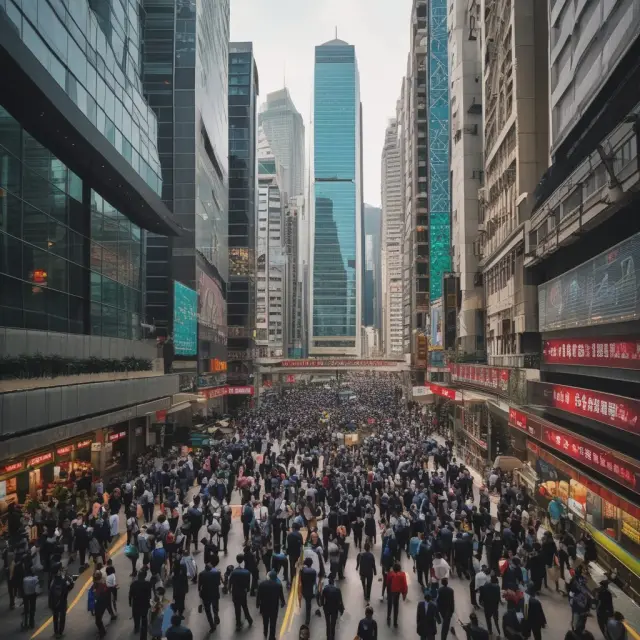
The Stock Exchange of Hong Kong (SEHK), managed by HKEx, is one of the largest stock exchanges in the world with over 2,500 listed companies as of October 2020. This global platform offers an extensive range of services for various financial instruments: stocks, bonds, warrants, real estate investment trusts (REITs), mutual funds, exchange-traded funds (ETFs), and equity-linked instruments.
The vibrant market activity at SEHK attracts a diverse group of investors from all corners of the globe. Companies based in Hong Kong, China, and other parts of the world choose to list on the exchange due to its strong regulatory framework and access to an extensive global investor base. This multifaceted financial hub plays a crucial role in increasing China’s competitiveness in the global market and attracting foreign investors to Hong Kong.
SEHK offers numerous benefits for issuers seeking to raise capital. The exchange provides a platform that caters to various types of companies, from large-cap corporations to small and medium enterprises (SMEs). By listing on SEHK, these businesses can benefit from increased liquidity, access to diverse investor bases, and transparent trading activities.
The success of the Stock Exchange of Hong Kong is evident in its impressive market capitalization and revenue figures. As of October 2020, HKEx’s total market capitalization was an impressive $43.3 trillion. This represents a significant portion of the global financial markets, further highlighting the importance of the platform for both local and international companies.
One of SEHK’s most notable listed companies is Tencent Holdings, which holds a substantial market capitalization of HK$9.5 trillion. With an extensive portfolio of businesses in sectors such as internet technology, social media, and e-commerce, Tencent continues to dominate the global tech landscape and contribute significantly to Hong Kong’s financial prowess.
Market Overview: The Hong Kong Futures Exchange
Hong Kong Exchanges and Clearing Limited (HKEx) also manages the Hong Kong Futures Exchange (HKFE), which offers a diverse range of futures contracts on various indices and commodities. This component of HKEx plays an essential role in risk management, enabling market participants to hedge against price volatility for underlying assets such as currencies, metals, energies, and agriculture products.
Moreover, HKFE’s strategic partnership with the London Metal Exchange (LME) expands its offerings and enhances its reputation as a global leader in precious metals trading. This collaboration enables HKEx to cater to a broader investor base and maintain its position at the forefront of international financial markets.
In summary, Hong Kong Exchanges and Clearing Limited (HKEx) plays a significant role in the global financial world through its management of the Stock Exchange of Hong Kong and the Hong Kong Futures Exchange. By offering an extensive range of services for various financial instruments and maintaining strong regulatory oversight, HKEx continues to attract issuers from around the globe and contribute to Hong Kong’s financial success.

Market Overview: The Hong Kong Futures Exchange
The Hong Kong Exchanges and Clearing Limited (HKEx) not only serves as the leading platform for stocks trading but also offers extensive services in futures contracts through its subsidiary, the Hong Kong Futures Exchange. This division of HKEx enables investors to trade on a diverse range of indices and commodities, including precious metals, agricultural products, and various financial instruments.
Partnering with the London Metal Exchange (LME), HKEx has expanded its influence in the global market significantly. The partnership allows the exchange to offer futures contracts based on LME’s benchmark prices for precious metals, such as gold and silver. As of 2019, approximately 37% of the world’s gold and 82% of the world’s silver were traded through contracts linked to these benchmarks.
The Hong Kong Futures Exchange also offers trading in a broad range of agricultural commodities, such as rubber, sugar, cotton, and various others. By providing access to these futures markets, HKEx allows investors to manage risks associated with price volatility in these commodities while potentially generating profit opportunities.
The importance of the Hong Kong Futures Exchange extends beyond its role in offering trading services for investors. It acts as a significant tool for issuers seeking capital raising opportunities. For instance, agricultural producers can issue futures contracts to lock in prices for their future production and generate cash flow. Additionally, the exchange provides hedging opportunities for companies with commodity-linked revenues or costs.
The Hong Kong Futures Exchange contributes significantly to HKEx’s overall market capitalization of $43.3 trillion (as of October 2020). The importance of this subsidiary is evident in the exchange’s impressive statistics, which include over 1,800 listed futures contracts and an average daily trading volume of approximately 5 million contracts as of 2019.
HKEx’s strategic partnership with the London Metal Exchange has proved fruitful for both organizations. By offering a diverse range of precious metal futures, HKEx has attracted global investor interest while expanding its customer base. Additionally, LME benefits from the collaboration by gaining increased market presence and access to a broader investor community in Asia. Overall, the Hong Kong Futures Exchange plays an essential role in HKEx’s success as a leading global marketplace for capital raising and trading.
Listing Requirements for HKEx’s Main Board
To become eligible for listing on Hong Kong Exchanges and Clearing Limited (HKEx)’s main board, companies must meet specific criteria outlined by the exchange in order to ensure their financial stability and long-term success. HKEx sets three primary tests that a company can choose from to qualify for listing: a profit test, a market cap and revenue test, or a market cap, revenue, and cash flow test. These conditions aim to attract well-established and financially sound entities while maintaining the integrity of the exchange.
1. Profit Test
A company that applies for listing on HKEx’s main board through this test must have a three-year aggregate profit of HK$50 million or more and a market capitalization of HK$500 million or more. This test emphasizes the importance of demonstrating a strong financial foundation as well as an established presence in the market, making it suitable for companies with stable earnings and solid financial structures.
2. Market Cap and Revenue Test
This alternative test requires applicants to meet the following conditions: their latest revenue figures must exceed HK$500 million, and they must have a market capitalization of HK$4 billion or more. This approach allows larger companies with significant financial resources and a substantial market presence to join the exchange, potentially attracting a diverse range of investors to the platform.
3. Market Cap, Revenue, and Cash Flow Test
The third test encompasses additional requirements for applicants beyond just their market capitalization and revenue figures. Companies must also have positive three-year aggregate cash flow of HK$100 million or more. This stricter criterion ensures that only financially robust entities are granted the opportunity to list on HKEx’s main board, thus strengthening the exchange’s reputation as a hub for reliable and well-capitalized companies.
In summary, Hong Kong Exchanges and Clearing Limited (HKEx) maintains rigorous listing requirements for its main board, ensuring that it remains a reputable platform for financially sound entities to raise capital and attract investors from around the world. The three tests available – profit test, market cap and revenue test, and market cap, revenue, and cash flow test – provide flexibility for various types of companies to meet the eligibility criteria.

Benefits of Listing on HKEx
Hong Kong Exchanges and Clearing Limited (HKEx) is not just a well-capitalized market operator but also a valuable platform for issuers seeking to expand their reach and connect with potential investors from around the world. The Stock Exchange of Hong Kong and the London Metal Exchange, managed by HKEx, serve as two integral components of the group, allowing issuers to take advantage of Hong Kong and London’s leading financial hubs.
One primary benefit of listing on HKEx is the access to a global investor base. As of October 2020, the total market capitalization for companies listed on the Stock Exchange of Hong Kong was $43.3 trillion, with over 2,500 listed companies across various sectors (Hong Kong Exchanges & Clearing Ltd., 2020). This extensive reach attracts a diverse pool of investors from around the world to the HKEx platform.
Investors appreciate HKEx’s strong regulatory framework, which maintains a well-organized and tightly-regulated marketplace (Hong Kong Exchanges & Clearing Ltd., 2018). The rigorous listing requirements for HKEx’s main board provide investors with a sense of security and confidence when making investment decisions. Companies must pass one of three tests: a profit test, a market cap and revenue test, or a market cap, revenue, and cash flow test (Hong Kong Exchanges & Clearing Ltd., 2018).
Furthermore, HKEx’s competitive listing fees compared to other markets offer another advantage for issuers. According to a report by the South China Morning Post in August 2020, Hong Kong is now one of the most affordable markets in the world for companies looking to list (Cheung, 2020). This cost-effective option allows companies to save resources that can be allocated towards their core business operations or future growth plans.
In summary, HKEx provides a unique combination of advantages for issuers and investors alike: access to a global investor base, stringent regulatory requirements, and competitive listing fees. These factors make Hong Kong Exchanges and Clearing Limited an attractive platform for issuers looking to raise capital and expand their presence in the international marketplace.

Market Capitalization and Revenue
Hong Kong Exchanges and Clearing Limited (HKEx) is one of the largest market operators in the world, with a market capitalization that exceeds $43 trillion as of October 2020. This impressive figure places HKEx among the most valuable financial institutions globally. Among its list of impressive figures, the Hong Kong-based exchange houses the largest listed company, Tencent Holdings, which boasts a market capitalization of over HK$9.5 trillion (approximately $1.2 trillion USD).
The significance of HKEx’s market capitalization lies in its role as a critical gateway to the global financial markets. With subsidiaries such as the Stock Exchange of Hong Kong and the Hong Kong Futures Exchange, HKEx provides extensive services for trading various assets like stocks, bonds, warrants, REITs, mutual funds, exchange-traded funds (ETFs), and equity-linked instruments. Additionally, HKEx operates four clearing houses – SEOCH, OTC Clear, HKSCC, and HKCC – offering essential services in settlement and risk management.
Having established a strong presence in the financial industry, HKEx sets the stage for issuers based in Hong Kong, China, and around the world to raise substantial capital. Its stringent listing requirements ensure the integrity of its marketplace while attracting investors with a well-regulated platform that offers access to a global investor base.
Passing one of three tests is necessary for companies seeking a listing on HKEx’s main board: a profit test, market cap and revenue test, or a market cap, revenue, and cash flow test. The profit test mandates an interested company to achieve a three-year aggregate profit of HK$50 million or more along with a market capitalization of at least HK$500 million. Alternatively, the market cap and revenue test requires an applicant’s latest revenue figures to exceed HK$500 million while maintaining a market capitalization of HK$4 billion or higher. Lastly, the market cap, revenue, and cash flow test calls for a company to meet the following requirements: a latest revenue figure of HK$500 million or more, a market capitalization of HK$2 billion or more, and positive three-year aggregate cash flow of HK$100 million or more.
In summary, Hong Kong Exchanges and Clearing Limited’s market capitalization is not only impressive but also essential in attracting foreign investors to Hong Kong while increasing China’s competitiveness in the global market. With stringent listing requirements that ensure a well-regulated platform, HKEx stands as a vital financial hub for issuers seeking to raise substantial capital and investors in search of a reliable marketplace.

HKEx’s Impact on the Financial World
Hong Kong Exchanges and Clearing Limited (HKEx) has played a significant role in increasing China’s competitiveness in the global market. With its strategic location, HKEx has attracted foreign investors to Hong Kong, making it an essential hub for international financial activities. This section delves into the impact of HKEx on the financial world, highlighting its significance as a leading market operator.
Hong Kong Exchanges and Clearing Limited (HKEx) has had a profound influence in shaping the global financial landscape since its formation in 2000. The merger of three entities – the Hong Kong Stock Exchange, the Hong Kong Futures Exchange, and the Hong Kong Securities Clearing Company – created a powerful platform for raising capital for issuers worldwide. This comprehensive marketplace, complemented by two leading financial hubs, Hong Kong and London, has made HKEx an indispensable entity in global finance.
One of the most significant accomplishments of HKEx is its contribution to increasing China’s competitiveness on a global scale. The merger of these entities set out to reform stock and futures markets in Hong Kong, making it an attractive destination for foreign investors. Today, HKEx serves as the home base for over 2,500 listed companies as of October 2020, offering services such as stocks, bonds, warrants, REITs, mutual funds, ETFs, and equity-linked instruments.
Moreover, HKEx has managed to create a well-regulated marketplace that is accessible to investors from all corners of the globe. Its strong regulatory framework attracts companies seeking a stable and secure environment for their investments. The stringent listing requirements also ensure a high level of transparency and accountability among listed entities.
Another way HKEx has impacted the financial world is through its partnership with the London Metal Exchange (LME). This strategic alliance allows HKEx to offer futures contracts on various indices and commodities, providing investors with diverse opportunities for investment and hedging risk.
The influence of Hong Kong Exchanges and Clearing Limited extends beyond its services; it also plays a crucial role in regulating the trading activities of listed companies within its venue. This oversight ensures a fair and orderly market, further instilling confidence among investors.
In conclusion, Hong Kong Exchanges and Clearing Limited (HKEx) has left an indelible mark on the financial world by increasing China’s competitiveness, attracting foreign investors to Hong Kong, and creating a well-regulated platform for trading various financial instruments. The importance of this global market operator in shaping the future of international finance is undeniable.
FAQ:
- What is HKEx? – Hong Kong Exchanges and Clearing Limited (HKEx) is a publicly-traded holding company that operates some of the largest markets in the world, including the Stock Exchange of Hong Kong, the Hong Kong Futures Exchange, and the London Metal Exchange (LME). It also manages four clearing houses in Hong Kong.
- Who are its main competitors? – Some of HKEx’s primary competitors include the New York Stock Exchange, NASDAQ, and the Tokyo Stock Exchange.
- What assets can be traded on HKEx? – HKEx offers a diverse range of financial instruments for trading, including stocks, bonds, warrants, REITs, mutual funds, ETFs, equity-linked instruments, and futures contracts on various indices and commodities.

FAQ
What is Hong Kong Exchanges and Clearing Limited (HKEx)?
Hong Kong Exchanges and Clearing Limited (HKEx) is a global market operator with a significant presence in two of the world’s leading financial hubs, Hong Kong and London. The company was formed in 2000 from the merger of three entities: the Hong Kong Stock Exchange, the Hong Kong Futures Exchange, and the Hong Kong Securities Clearing Company. HKEx serves as a platform for raising capital for issuers based in Hong Kong, China, and around the world. Its primary services include listing, trading, clearing, market data, reference prices, and connectivity.
**Who are its main competitors?**
The primary competitors of HKEx include other global exchange operators like the New York Stock Exchange (NYSE), Nasdaq, Deutsche Börse, SIX Swiss Exchange, and the Japan Exchange Group. These exchanges offer similar services, including trading, clearing, and market data. However, each exchange has its unique strengths and markets it serves.
**What assets can be traded on HKEx?**
Hong Kong Exchanges and Clearing Limited (HKEx) operates various markets that trade different financial instruments: the Stock Exchange of Hong Kong, the Hong Kong Futures Exchange, and the London Metal Exchange (LME). The Stock Exchange of Hong Kong lists stocks, bonds, warrants, REITs, mutual funds, ETFs, and equity-linked instruments. Meanwhile, the Hong Kong Futures Exchange offers futures contracts on various indices and commodities. Additionally, HKEx operates four clearing houses: SEHK Options Clearing House Limited (SEOCH), OTC Clearing Hong Kong Limited (OTC Clear), Hong Kong Securities Clearing Company (HKSCC), and HKFE Clearing Corporation Limited (HKCC). These clearing houses provide services for the exchange’s listed securities and other markets.
As a regulating body, HKEx oversees the trading activities of companies listed in Hong Kong and those participating in its venue. It maintains a well-organized and tightly-regulated marketplace for investors. To be listed on HKEx’s main board, interested companies must pass one of three tests: a profit test, a market cap and revenue test, or a market cap, revenue, and cash flow test. Companies must have a proven track record of profitability, maintain a certain market capitalization and revenue level, and demonstrate positive cash flows to qualify for listing.
With its global reach, strong regulatory framework, and competitive listing fees compared to other markets, HKEx has attracted numerous issuers from Hong Kong, China, and around the world. It has played an essential role in increasing China’s competitiveness in the global market while attracting foreign investors to Hong Kong.
 Next entry · No. 2,141Understanding HM Revenue and Customs (HMRC): Functions, History, and Significance
See also
-
 No. 2,193
17 Dec 2024
19 min
Understanding the Hong Kong Stock Exchange (HKG) .HK: A Powerhouse of Capital Raising and Growth
Business Finance
No. 2,193
17 Dec 2024
19 min
Understanding the Hong Kong Stock Exchange (HKG) .HK: A Powerhouse of Capital Raising and Growth
Business Finance -
 No. 5,618
24 Sep 2025
19 min
Understanding Warrant Premiums: A Comprehensive Guide
Business Finance
No. 5,618
24 Sep 2025
19 min
Understanding Warrant Premiums: A Comprehensive Guide
Business Finance -
 No. 5,202
19 Aug 2025
22 min
Understanding Underwriter Syndicates: A Temporary Group of Investment Banks and Broker-Dealers
Business Finance
No. 5,202
19 Aug 2025
22 min
Understanding Underwriter Syndicates: A Temporary Group of Investment Banks and Broker-Dealers
Business Finance -
 No. 4,993
03 Aug 2025
17 min
Understanding Tombstones: The Role, Importance and Process of this Financial Advertisement
Business Finance
No. 4,993
03 Aug 2025
17 min
Understanding Tombstones: The Role, Importance and Process of this Financial Advertisement
Business Finance -
 No. 4,708
10 Jul 2025
21 min
Special Purpose Acquisition Companies (SPACs): An In-Depth Look at Blank Check Companies and Their Advantages, Risks, and Future Prospects
Business Finance
No. 4,708
10 Jul 2025
21 min
Special Purpose Acquisition Companies (SPACs): An In-Depth Look at Blank Check Companies and Their Advantages, Risks, and Future Prospects
Business Finance -
 No. 4,695
09 Jul 2025
20 min
Understanding the Société Anonyme: History, Requirements, and Examples of This Popular Business Structure
Business Finance
No. 4,695
09 Jul 2025
20 min
Understanding the Société Anonyme: History, Requirements, and Examples of This Popular Business Structure
Business Finance