Jack Welch: The Manager of the Century and the Transformation of General Electric
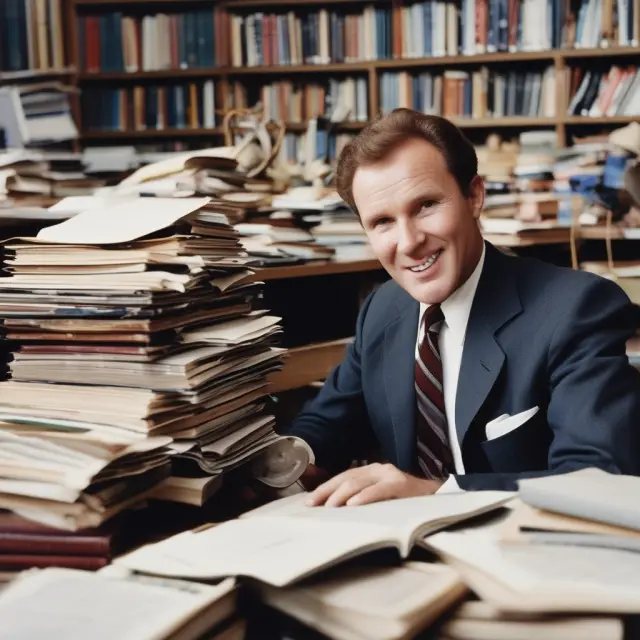
Explore the life and career of Jack Welch, the visionary manager who transformed General Electric into a global powerhouse.
Early Life and Education
Jack Welch was born on Nov. 19, 1935, in Peabody, Massachusetts. He earned a bachelor’s degree in chemical engineering from the University of Massachusetts, Amherst, and a doctorate in materials science from the University of Illinois, Urbana-Champaign. Welch began his career at General Electric (GE) as a junior engineer in 1960. During his early years at GE, he often considered leaving due to bureaucratic inefficiencies but ultimately stayed on, eventually rising through the ranks to become chair and CEO from 1981 to 2001.
The challenges Welch faced in his early career at GE were not uncommon for the time. The company, which had grown through acquisition and was known as a conglomerate, was bloated with bureaucracy. Welch believed that high-performing managers could turn around almost any business and set out to eliminate wasteful divisions and underproductive management personnel. This approach would become a defining characteristic of his leadership style when he later took the helm of GE.
Welch’s career at GE spanned more than two decades before he was named chair and CEO in 1981. His motivation for staying with the company during those early years, despite the challenges, likely stemmed from his belief in its potential to grow and thrive. This belief would eventually come to fruition under Welch’s leadership.
Throughout his career at GE, Jack Welch proved himself an able leader. As he rose through the ranks, he developed a reputation for his vision of quick growth during times of economic slowdown. He was known for eliminating wasteful divisions and unproductive personnel, making structural changes, and implementing aggressive tactics to achieve short-term results. These strategies would become synonymous with Welch’s leadership as chair and CEO of GE from 1981 to 2001.
Despite the challenges he faced in his early career at GE, Jack Welch remained committed to the company and eventually transformed it into a powerful conglomerate. His legacy at GE remains one of his greatest achievements, as his leadership brought about a significant increase in market value for shareholders. The impact of Welch’s management style is still felt today, with many companies adopting similar approaches to streamlining operations and increasing profitability.
In the next section, we will explore the specific steps Jack Welch took to streamline GE during his tenure as chair and CEO from 1981 to 2001.
Joining GE and Early Threats to Leave
Jack Welch’s journey with General Electric (GE) began in 1960 when he joined the company as a junior engineer. Throughout his career, he faced challenges that threatened to drive him away from the conglomerate. One of the most significant issues was the company’s bureaucracy and lack of informality. The organization felt slow-moving and overly formal, which clashed with Welch’s belief in a more agile, growth-oriented approach.
Despite these early challenges, Jack Welch chose to stay with GE and eventually rose through the ranks to become its chair and CEO between 1981 and 2001. In his early years at GE, he threatened to leave several times due to these frustrations. However, after recognizing the potential within the company, he decided to commit himself to turning around struggling businesses under the GE umbrella.
As Jack Welch took the reins of General Electric, he found a sprawling business with numerous divisions and layers of management that needed streamlining. His vision for growing fast in a slow-growth economy called for dramatic changes. Welch’s determination to eliminate bureaucracy and increase growth was evident in his speech, “Growing Fast in a Slow-Growth Economy,” which he delivered in 1981.
To achieve this goal, Jack Welch implemented significant changes within GE. He closed factories, laid off workers, and merged or sold unproductive divisions. This transformation earned him the nickname “Neutron Jack” due to his aggressive approach of taking out people while leaving buildings standing. His management beliefs and methods became synonymous with the turnaround of struggling businesses, making him a leading figure in corporate America.
These early experiences at GE shaped Jack Welch’s leadership style and commitment to growth. The challenges he faced during his early career taught him the importance of focusing on high-performing managers and eliminating bureaucracy to streamline businesses. This set the stage for the remarkable transformation that would follow, making Jack Welch one of the most influential business leaders in history.

Streamlining General Electric under Jack Welch
Jack Welch’s tenure as the chair and CEO of General Electric (GE) from 1981 to 2001 was marked by significant transformations that increased the company’s market value exponentially. One crucial aspect of his leadership involved streamlining the sprawling businesses under GE’s umbrella.
When Welch joined GE in 1960 as a junior engineer, he faced various challenges and even considered leaving the company due to bureaucratic inefficiency. However, his motivation to eliminate these inefficiencies stayed with him, eventually leading him to become one of the most influential business leaders in history.
Upon becoming GE’s CEO, Welch focused on streamlining the company by closing factories and laying off employees. He famously coined the phrase “growing fast in a slow-growth economy,” which served as a vision for restructuring General Electric. By cutting costs and reducing layers of management, Welch aimed to make GE more agile and competitive within the corporate landscape.
Another critical aspect of Welch’s streamlining process was acquisitions. He identified underperforming divisions and acquired other companies that could benefit from adopting GE’s best management practices. For example, he implemented Motorola’s Six Sigma program across the company to enhance productivity and eliminate waste in manufacturing processes.
Moreover, Welch took a hard stance on underperforming businesses and employees. His rank-and-yank method involved evaluating employees based on their performance against others within the organization and making difficult decisions about personnel. This approach contributed significantly to the improvement of overall company performance, making it a hallmark of his leadership style.
The transformative changes Welch implemented during his tenure at GE led to an impressive increase in market value, from $14 billion to $410 billion. These accomplishments earned him the title “Manager of the Century” by Fortune magazine and set a standard for future corporate leaders to follow. While some critics have argued that Welch’s focus on short-term performance may have negatively impacted GE’s long-term sustainability, there is no denying the significant influence he had on both General Electric and the broader business world.
In conclusion, Jack Welch’s leadership at General Electric revolutionized the way corporations were managed by emphasizing growth, eliminating wasteful divisions, and streamlining processes. His bold approach to management, including layoffs, acquisitions, and a focus on shareholder value, transformed GE into a powerful conglomerate that continues to shape corporate America.
Management Beliefs and Methodologies
Jack Welch’s transformative approach to leading General Electric (GE) was a departure from traditional business practices and paved the way for a new era in corporate America. During his tenure as chair and chief executive officer from 1981 to 2001, he revolutionized the company by focusing on short-term performance and making tough decisions.
Welch believed that high-performing managers were essential for turning around businesses, regardless of their size or industry. This conviction led him to implement a “win or die” culture throughout GE. The company’s management hierarchy was streamlined, with a focus on eliminating unproductive divisions and layers.
One of Welch’s most significant contributions to business management was the Six Sigma process, which he adopted from Motorola in 1987. This data-driven methodology focused on improving quality and reducing defects by removing waste and inefficiencies. GE implemented Six Sigma across its operations, resulting in substantial cost savings and increased productivity.
Welch’s leadership style was characterized by a combination of vision, toughness, and decisiveness. He embraced change wholeheartedly, making significant cuts to underperforming divisions and businesses that did not fit GE’s strategic priorities. This approach earned him the nickname “Neutron Jack,” as he was known for leaving people but keeping the structures behind.
Despite the controversy surrounding his aggressive tactics, Welch’s methods produced impressive results. Under his leadership, GE experienced remarkable growth and increased market value, transforming from a $14 billion company to a $410 billion behemoth by the time he retired in 2001.
Welch’s impact on corporate America was significant. His focus on short-term performance and shareholder value influenced a generation of business leaders, with many adopting his “stock market society” approach to managing their companies. However, the consequences of this singular focus have been debated, as some argue that it can hinder long-term sustainability and innovation.
In retirement, Welch continued to influence business thought through public speaking engagements and co-authoring books with his wife, Suzy Welch. Their bestselling book, “Winning,” offered insights into Jack’s management philosophies and became a staple in the business community. The husband-and-wife duo also collaborated on another title, “The Real Life MBA,” which further solidified their legacies as influential figures in American business.
Notable Accomplishments at General Electric
Jack Welch’s tenure as the chair and chief executive of General Electric (GE) from 1981 to 2001 brought about significant achievements for the company. During his time at GE, he transformed it from a $14 billion market value into a $410 billion corporation. Fortune magazine recognized Welch as “Manager of the Century” in 1999 due to his impressive impact on GE’s growth and financial success.
Welch embarked on an ambitious restructuring mission that involved closing factories, laying off employees, and streamlining the company’s businesses. The goal was to create a more efficient organization that could grow faster in a slow-growth economy. One of his most notable accomplishments during this time was eliminating nine layers of management, creating an informal atmosphere, and making GE seem like a small business instead of a large corporation.
The core belief behind Welch’s management philosophy was that high-performing managers could turn around even the most struggling businesses. As such, he implemented an expansionary phase in which GE experimented with various industries, from television to synthetic diamonds. Despite these acquisitions, the company remained focused on its primary profit centers.
Jack Welch’s impact on GE’s success was significant, but it also came with controversy. His leadership style, which emphasized short-term performance and shareholder value, has been criticized for having negative long-term consequences on the company. Moreover, his departure from GE coincided with the dotcom bubble burst, causing some of its expanding business lines to suffer.
In retirement, Welch continued his work in the public sphere as a writer and speaker. He co-authored two books with his wife Suzy: Winning (2005), which focuses on management and business, and The Real Life MBA (2015). Welch passed away on March 1, 2020, at the age of 84 due to renal failure.
Despite controversies surrounding his leadership methods, Jack Welch’s accomplishments at GE remain a significant milestone in business history. His vision for quick growth during times of economic slowdown and focus on reducing inefficiencies made him an influential figure in the corporate world.
Public Life and Published Works
After an illustrious career as General Electric’s (GE) chair and chief executive officer from 1981 to 2001, Jack Welch continued making waves in the business world through speaking engagements, publications, and advisory roles.
Welch authored two books with his wife Suzy Welch: “Winning” (2005) and “The Real Life MBA” (2015). In “Winning,” they explored management and business concepts, while “The Real Life MBA” focused on leadership, management, career development, and business. Both books achieved considerable success, with over 10 million copies sold worldwide as of a 2020 report in The New York Times.
Jack Welch also joined Donald Trump’s Strategic and Policy Forum to provide strategic advice on economic issues post-retirement from GE.
Despite his achievements, Jack Welch’s legacy remains complex due to the challenges faced by GE following his departure. He left the company at a time when the dotcom bubble was bursting, causing damage to some of its expanding business lines. Jeffrey Immelt, who succeeded him as CEO, had to exit several businesses that were considered a distraction from GE’s primary profit centers. The model Jack Welch left behind was effective in squeezing profits from top businesses but left the company vulnerable to external shocks and unable to grow new businesses or innovations. This focus on short-term performance can have long-term detrimental effects if taken to an extreme.
Personal Life
Jack Welch married three times. He wedded Carolyn B. Osburn in 1959, with whom he had four children. The couple divorced in 1987. Jack married Jane Beasley in 1989 and divorced her in 2003. In 2004, he married his third wife, Suzy Wetlaufer. Welch passed away from renal failure in 2020 at the age of 84.
Why Was Jack Welch a Good Leader?
Jack Welch’s leadership was characterized by his vision of fostering growth during periods of economic slowdown. As GE’s chair and CEO, he looked for inconsistencies and streamlined the company, eliminating wasteful divisions and unproductive management personnel to increase profitability and productivity. Additionally, he aimed to create an informal business environment by removing formalities.
How Did Jack Welch Transform GE?
Jack Welch joined GE in 1960 as a junior engineer. He rose through the ranks, becoming the company’s chair and CEO in 1981. As its leader, he made significant changes to the company using aggressive tactics. He made structural changes by streamlining businesses and removing entire divisions, finding and fixing inefficiencies, and closing factories while laying off workers to increase profitability and productivity.
Post-GE Career
After retiring from GE in 2001, Jack Welch continued making an impact on the business world through speaking engagements, publications, and advisory roles. He authored two books with his wife Suzy Welch and joined Donald Trump’s Strategic and Policy Forum to provide strategic advice on economic issues. Despite a complex legacy due to GE’s challenges following his departure, Jack Welch remains renowned for his transformative role at the company.

Legacy of Jack Welch at General Electric
Jack Welch is widely regarded as one of the most successful CEOs in history due to his transformative impact on General Electric (GE) from 1981 to 2001. This period saw a dramatic increase in GE’s market value, growing from $14 billion to $410 billion. Beyond the impressive financial figures, Welch left a lasting mark on corporate America by promoting a focus on high-performing managers and short-term performance. However, his legacy is complex, as GE faced significant challenges after his departure.
A major component of Welch’s tenure at GE was streamlining the sprawling business portfolio. He closed factories, laid off workers, and implemented a “grow fast in a slow-growth economy” strategy. This included cutting layers of management from nine to three, creating an informal environment, and experimenting with various industries, such as television and synthetic diamonds. The results were impressive; GE became known for its aggressive restructuring efforts, earning Welch the nickname “Neutron Jack.”
One of Welch’s core beliefs was that high-performing managers could turn around struggling businesses. This led to a focus on rankings and performance evaluations, with underperforming employees and divisions being terminated. This approach, while effective in the short term, proved more complicated for GE’s long-term sustainability.
Welch’s impact on corporate America extended beyond GE’s walls. He championed the idea that companies should lead their industries or leave them completely, leading to a wave of consolidation and restructuring in various sectors. His leadership also paved the way for an increased focus on shareholder value.
In retirement, Welch continued to influence the business world as a public speaker and author. Co-authoring two books with his wife Suzy, including “Winning” and “The Real Life MBA,” he shared his insights on management and leadership. Jack Welch died of renal failure in 2020 at the age of 84.
Despite the long-term challenges faced by GE post-Welch, his legacy continues to shape corporate America’s focus on performance and profitability. Welch remains a model for CEOs seeking to transform their companies and leave a lasting impact on their industries.
Why Jack Welch was a Good Leader?
Jack Welch is hailed as one of the most influential business leaders in history, particularly for his transformative role as chair and chief executive officer (CEO) of General Electric (GE) between 1981 and 2001. During this time, he boosted GE’s market value from $14 billion to a staggering $410 billion, making him a household name in the business world. In this section, we delve into what made Jack Welch an exceptional leader.
Welch was known for his vision of driving growth in a slow-growth economy. His ability to recognize and seize opportunities set GE on a trajectory that far outpaced its competitors. As he famously stated during his 1981 speech, “growing fast in a slow-growth economy.” Welch’s vision was not only about growth but also about making the company more agile and adaptive to changing markets. This mindset enabled GE to navigate economic downturns better than most corporations.
Jack Welch’s leadership style was characterized by his decisiveness. He didn’t shy away from making tough calls, even when it meant eliminating entire businesses or laying off employees. These actions were often unpopular but necessary for the company’s long-term survival and growth. One such decision was closing factories that had become inefficient and underperforming, a move that was met with resistance but ultimately proved crucial to GE’s success.
Welch was also committed to fostering innovation within the organization. He challenged his team to question the status quo and seek out new opportunities. This mindset led to the adoption of Motorola’s Six Sigma program, which significantly increased productivity in manufacturing operations across GE. Additionally, Welch encouraged acquisitions and partnerships with companies that brought fresh perspectives and capabilities to GE, further fueling its growth.
Moreover, Jack Welch believed that a company’s success hinged on the performance of its leaders. He implemented a rank-and-yank system to address underperforming employees and managers, ensuring that the most effective individuals remained in key positions to drive growth and innovation. This approach helped GE maintain a high-performing workforce, which was essential for sustaining its competitive advantage in an ever-changing business landscape.
In summary, Jack Welch’s leadership style was defined by his vision of growth, decisiveness, and commitment to fostering innovation and talent within the organization. His transformative role at General Electric remains a benchmark for successful corporate restructuring and growth strategies.
How Jack Welch Transformed General Electric?
When Jack Welch took control of General Electric (GE) in 1981, the company’s sprawling businesses were in need of transformation. Known for his vision and determination to grow fast during an economic slowdown, Welch set out to streamline GE and make it a profitable conglomerate.
One of Welch’s first moves was eliminating wasteful divisions and unproductive management personnel. He made structural changes by closing factories and laying off workers in order to increase profitability and productivity. These decisions earned him the nickname “Neutron Jack” for taking out people while leaving buildings standing, like a neutron bomb.
Welch’s commitment to growth led him to adopt Motorola’s Six Sigma program for increasing productivity in manufacturing, which he implemented across GE as a whole. He also introduced a rank-and-yank style of dealing with underperforming employees and managers by making clear cuts based on their performance rankings against other employees and divisions.
Moreover, Welch worked to remove the formalities of business by creating an informal environment that made GE seem like a small company rather than a large conglomerate. He believed in the potential of high-performing managers to turn around almost any business, which led GE to experiment with various industries from television to synthetic diamonds.
Despite some controversy surrounding his methods and the long-term sustainability of his model, Jack Welch’s impact on General Electric cannot be denied. He transformed a $14 billion company into a profitable conglomerate worth $410 billion by the time he retired in 2001. His tenure as CEO earned him recognition as one of the top business leaders of all time, with Fortune dubbing him “Manager of the Century.”
While Welch’s legacy is a significant achievement for GE, it also raises questions about the long-term consequences of focusing solely on short-term performance. The focus on maximizing shareholder value under his leadership might have left the company ill-equipped to innovate and adapt during unexpected challenges. Ultimately, Jack Welch’s impact on General Electric remains a testament to his vision, determination, and ability to transform a business in need of change.

Impact on Corporate America
The impact Jack Welch had on corporate America was significant, with many executives adopting his philosophy of short-term performance and shareholder value. His transformation of General Electric (GE) set the stage for a new era in business management.
Jack Welch’s tenure as GE’s leader saw him employ controversial tactics that prioritized short-term gains over long-term sustainability. He implemented aggressive cost-cutting measures, eliminated entire business divisions, and pursued a culture of mergers and acquisitions. These actions, while initially successful in boosting shareholder value, eventually left some critics questioning the long-term implications for the company’s future growth.
Welch’s focus on shareholder value became the new standard for corporate America, with many executives following his lead. However, this emphasis on short-term performance could have detrimental consequences for companies in the long run. By prioritizing profits over innovation and strategic planning, organizations may struggle to adapt to changing market conditions or emerging trends.
One of Welch’s most significant contributions to corporate America was his adoption of Six Sigma, a data-driven approach to business process improvement. This methodology, originally developed by Motorola, helped companies like GE streamline their operations and reduce waste. However, some critics argue that the rigid focus on Six Sigma and other efficiency initiatives came at the expense of creativity and innovation within organizations.
Jack Welch’s leadership style also influenced corporate America in terms of management practices. His ‘rank-and-yank’ approach to underperforming employees and divisions became a trend among businesses, leading to increased competition and a more ruthless business environment. While this focus on performance helped improve efficiency and drive productivity, it also created a culture of fear and instability within organizations.
Despite the criticisms, Jack Welch’s impact on corporate America cannot be denied. His leadership transformed GE into a powerhouse conglomerate, and his focus on shareholder value paved the way for future business practices. However, as the business landscape continues to evolve, it remains to be seen whether this emphasis on short-term gains will remain the primary objective for organizations or if companies will once again prioritize long-term strategic planning and growth.
FAQs
1. **Who is Jack Welch?**
Jack Welch was the chair and chief executive officer (CEO) of General Electric (GE) from 1981 to 2001. He dramatically increased the market value of GE from $14 billion to $410 billion and is recognized as one of the top CEOs of all time.
2. **What was Jack Welch’s impact on General Electric?**
Under Jack Welch’s leadership, he streamlined GE’s sprawling businesses by firing unproductive managers, closing factories, laying-off workers, and acquiring other companies. He presented a vision of “growing fast in a slow-growth economy.” His core management belief was that high-performing managers could turn around almost any business.
3. **What are some of Jack Welch’s notable accomplishments at General Electric?**
Jack Welch is most famous for transforming GE through significant restructuring during the 1980s. He cut down layers of management, presented a vision of “growing fast in a slow-growth economy,” and led the adoption of Motorola’s Six Sigma program to increase productivity in manufacturing.
4. **What did Jack Welch do after leaving General Electric?**
In retirement, Jack Welch was an active public speaker and writer. He co-authored two books with his wife Suzy Welch, titled “Winning” and “The Real Life MBA,” which focused on management and business.
5. **What is Jack Welch’s legacy?**
Jack Welch’s leadership remains his greatest legacy. He promoted the idea that a company should lead its industry or leave it, leading to the adoption of Motorola’s Six Sigma program for increasing productivity in manufacturing. However, GE’s success under his leadership was largely due to great timing and left the company ill-equipped to survive outside shocks and grow new businesses.
6. **Why is Jack Welch considered a good leader?**
Jack Welch was considered a good leader because of his vision of quick growth during times of economic slowdown, his ability to make tough decisions, and his commitment to growth and change within GE.
7. **How did Jack Welch transform General Electric?**
Jack Welch transformed General Electric through major structural changes, including streamlining its businesses, getting rid of entire divisions, finding and fixing inefficiencies, and promoting a culture of informality to make the company feel more like a small business.
 Next entry · No. 2,572Jackpots in Finance: Understanding the Challenges of Sudden Wealth
See also
-
 No. 771
05 Jun 2024
18 min
Understanding the Role and Importance of a Chief Operating Officer (COO) in Finance and Investment
Business Strategy
No. 771
05 Jun 2024
18 min
Understanding the Role and Importance of a Chief Operating Officer (COO) in Finance and Investment
Business Strategy -
 No. 655
15 May 2024
20 min
The Multifaceted Role of a Chief Executive Officer (CEO): A Comprehensive Guide
Business Strategy
No. 655
15 May 2024
20 min
The Multifaceted Role of a Chief Executive Officer (CEO): A Comprehensive Guide
Business Strategy -
 No. 5,334
31 Aug 2025
23 min
Understanding the Role and Importance of Upper Management in Corporate Strategy
Business Strategy
No. 5,334
31 Aug 2025
23 min
Understanding the Role and Importance of Upper Management in Corporate Strategy
Business Strategy -
 No. 3,887
04 May 2025
19 min
The Pac-Man Defense in M&A: Fighting Back Against Hostile Takeovers
Business Strategy
No. 3,887
04 May 2025
19 min
The Pac-Man Defense in M&A: Fighting Back Against Hostile Takeovers
Business Strategy -
 No. 2,608
20 Jan 2025
19 min
John Elkann: The Agnelli Heir and the Force Behind Fiat, Ferrari, and Stellantis
Business Strategy
No. 2,608
20 Jan 2025
19 min
John Elkann: The Agnelli Heir and the Force Behind Fiat, Ferrari, and Stellantis
Business Strategy -
 No. 2,595
19 Jan 2025
19 min
Understanding Just in Case (JIC): A Costly Inventory Strategy
Business Strategy
No. 2,595
19 Jan 2025
19 min
Understanding Just in Case (JIC): A Costly Inventory Strategy
Business Strategy