Julian Robertson: The Wizard of Wall Street – A Billionaire Investor’s Journey from Tiger Management to Philanthropy

Explore Julian Robertson's life from humble beginnings to billionaire status as a Wall Street hedge fund manager, mentor, and philanthropist.
Early Life and Education of Julian Robertson
Julian Robertson, the renowned American investor and former hedge fund manager, was born on June 25, 1932, in Salisbury, North Carolina. He grew up with his father, an executive at a textile company, and his mother, a homemaker. After attending Episcopal High School in his hometown, Robertson matriculated to the University of North Carolina, where he earned his bachelor’s degree in 1955.
Following his graduation, Robertson joined the New York office of Kidder, Peabody, & Co. as a retail broker in 1957. He rose through the ranks and eventually took charge of its asset management division, known as Webster Securities. In 1979, Robertson embarked on a year-long sabbatical to New Zealand, where he would come up with an idea for a new fund that would later become Tiger Management in 1980. The initial assets amounted to approximately $8 million.
Robertson’s unparalleled ability to identify investment opportunities within the framework of a global macro trading strategy earned him recognition as one of the first major hedge funders and the “Father of Hedge Funds.” He frequently employed a long-short strategy, which involved loading up on the best stocks he believed in while shorting those he considered underperforming.
During the 1980s and 1990s, Robertson was known for his avoidance of tech investments, particularly during the buildup of internet stocks in the late 1990s. While Tiger Management suffered from a significant investment loss in U.S. Airways, which filed for bankruptcy protection twice, the fund also performed well when the tech bubble eventually collapsed, leading to a drain of capital as investors shifted their focus towards Silicon Valley.
After closing Tiger Management in 2000, Robertson devoted his efforts to mentoring and investing with a group of emerging hedge fund managers known as the “Tiger Cubs.” Notable figures within this cohort include John Griffin of Blue Ridge Capital, Ole Andreas Halvorsen of Viking Global, Chase Coleman of Tiger Global Management, and Steve Mandel, formerly of Lone Pine Capital.
In his later years, Robertson became an active philanthropist. He established scholarships at both his alma mater and Duke University, as well as committed to The Giving Pledge, a campaign initiated by Bill Gates and Warren Buffet. Additionally, Robertson purchased several luxury lodges throughout New Zealand to preserve the natural beauty of the land and generate revenue for conservation efforts.
As of April 5, 2022, Robertson’s net worth was reportedly $4.8 billion. He passed away on August 23, 2022, at his home in New York City, leaving behind a remarkable legacy as one of the most influential figures in hedge fund history.

Formation of Tiger Management
After a sabbatical year in New Zealand in the late 1970s, Julian Robertson returned to the United States with a new vision for investment management. The idea for his own fund began to take shape during his time in New Zealand, where he observed global markets and evaluated potential investment opportunities from an international perspective.
Upon returning to New York, Robertson founded Tiger Management in 1980. With an initial capital base of approximately $8 million, the hedge fund would go on to become one of the most prominent funds of its generation. Employing a global macro trading strategy and a long-short approach, Robertson’s team identified investment opportunities based on their assessment of broader economic trends and market conditions.
The Tiger Management team employed a unique, systematic process for selecting investments. They analyzed various data points and market indicators to identify potential winners and losers within their portfolio. This disciplined approach to investing set the foundation for Robertson’s success in the financial industry.
Robertson’s long-short strategy aimed to profit from the performance gap between his best and worst stock picks. The fund’s success was based on a rational, data-driven investment approach that proved successful during various market conditions. This strategy led to significant growth for Tiger Management, which managed over $22 billion in assets at its peak.
Robertson was also known for his ability to identify and mentor the next generation of successful hedge fund managers. Many of those who worked under him went on to form their own funds, collectively known as the ‘Tiger Cubs.’ These young investors, including John Griffin of Blue Ridge Capital, Ole Andreas Halvorsen of Viking Global, Chase Coleman of Tiger Global Management, and Steve Mandel of Lone Pine Capital, carried on Robertson’s legacy in the financial world.
Throughout his career, Robertson was a trailblazer in the hedge fund industry, credited with being the first major hedge fund manager to employ a long-short approach and global macro strategy. His success paved the way for numerous successful hedge funds that followed his lead.
However, the late 1990s posed significant challenges for Tiger Management. Robertson avoided tech investments during the internet stock bubble, missing out on significant gains. The fund’s performance suffered as other investors moved their capital to Silicon Valley. Additionally, a large investment in U.S. Airways did not yield favorable results when the airline filed for bankruptcy protection in 2002 and again in 2004. These factors, combined with the overall decline of the tech bubble, contributed to Tiger Management’s eventual closure in 2000.
Despite the challenges he faced in his final years as a hedge fund manager, Robertson continued to make an impact on the financial industry by mentoring and investing in the next generation of investors. His legacy is marked by significant philanthropic contributions, including scholarships at his alma mater, Duke University, and commitments to various charitable causes through The Giving Pledge.
As of April 5, 2022, Julian Robertson’s net worth was reportedly over $4 billion. His career as a hedge fund manager, philanthropist, and mentor solidified his place in financial history.

Julian Robertson’s Trading Style and Success at Tiger Management
Julian Robertson is widely regarded as a pioneering figure in the world of hedge funds. After returning from New Zealand with an idea for a new fund, he founded Tiger Management in 1980. Robertson’s unique global macro trading strategy and long-short approach played a significant role in Tiger Management’s success.
The global macro strategy relies on analyzing economic, political, and market trends at a broad level to identify opportunities for investment across various asset classes. Conversely, the long-short strategy involves taking positions on both the winning and losing sides of a bet within the same sector or industry to hedge against risk. This approach proved successful for Tiger Management as it capitalized on the performance gap between top and underperforming stocks.
Robertson’s investment philosophy was based on a rational, value-driven approach to investing, which set him apart from other investors during the irrational growth of internet stocks in the late 1990s. While this strategy served Tiger Management well during the eventual collapse of the tech bubble, it led to significant capital outflows as investors moved their money towards Silicon Valley. Furthermore, Robertson’s $1 billion investment in US Airways ultimately proved unsuccessful when the airline filed for bankruptcy protection twice between 2002 and 2004.
Despite these challenges, Tiger Management grew to have over $22 billion in assets under management at its peak, making it one of the most prominent hedge funds of its generation. Robertson was known for his ability to identify opportunities within a global macro context and employing a long-short strategy to minimize risk. His success inspired a new generation of hedge fund managers, many of whom worked under him at Tiger Management and went on to form successful firms – collectively referred to as the “Tiger Cubs.”
John Griffin of Blue Ridge Capital, Ole Andreas Halvorsen of Viking Global, Chase Coleman of Tiger Global Management, and Steve Mandel, formerly of Lone Pine Capital, are all notable members of this group. The legacy of Julian Robertson’s investment philosophy continues to influence hedge fund managers today.
In conclusion, Julian Robertson was a trailblazer in the world of hedge funds with his innovative global macro trading strategy and long-short approach. His success at Tiger Management paved the way for numerous young investors to follow in his footsteps and establish their own firms. Despite challenges like the avoidance of tech investments during the late 1990s and a significant loss on US Airways, Robertson’s impact on the financial industry remains evident today.

The Tiger Cubs: The Next Generation of Hedge Fund Managers
Julian Robertson’s influence extended far beyond the success of Tiger Management, with many of his proteges going on to establish their own successful hedge funds. Known as the “Tiger Cubs,” these young managers were handpicked by Robertson and mentored during their time at Tiger Management. Some of the most notable members of this next generation include John Griffin of Blue Ridge Capital, Ole Andreas Halvorsen of Viking Global, Chase Coleman of Tiger Global Management, and Steve Mandel, formerly of Lone Pine Capital.
John Griffin, a former bond trader at Salomon Brothers, joined Tiger Management in 1987. Over the course of his tenure, he managed Tiger’s international long-short equity portfolio before leaving to start Blue Ridge Capital in 1999. Blue Ridge Capital has since grown into a prominent macro hedge fund.
Ole Andreas Halvorsen, who worked at Tiger Management from 1987 until 1994, also left to found Viking Global Investors in 1993. Halvorsen’s firm followed a similar long-short equity strategy to Tiger Management and has achieved remarkable success since its inception.
Chase Coleman joined Robertson’s fund in 1995, working closely with him for nearly a decade before leaving to start Tiger Global Management in 2001. This firm also utilizes the long-short equity strategy that characterized Robertson’s investment approach. Coleman and his team have experienced considerable success at Tiger Global Management.
Lastly, Steve Mandel joined Tiger Management in 1984, eventually becoming head of U.S. Equities for the fund. In 1994, Mandel left to form Lone Pine Capital. This New York-based hedge fund focuses on event-driven opportunities and has generated impressive returns since its founding.
The Tiger Cubs’ success is a testament to Robertson’s ability as a mentor and the influence of his investment strategy. These managers took the knowledge they gained under Robertson’s guidance and used it to build their own firms, creating a lasting impact on the hedge fund industry.
Julian Robertson’s Philanthropic Endeavors
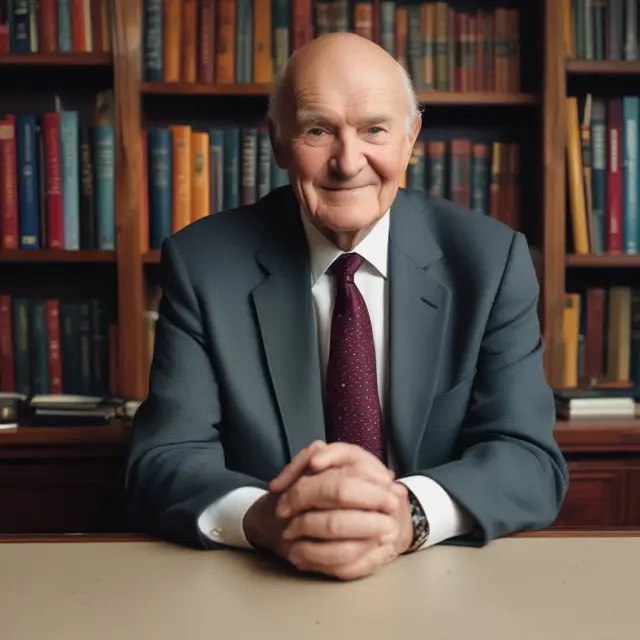
After a long and successful career as a hedge fund manager, Julian Robertson turned his attention to philanthropy. Using his extensive wealth and influential network, he became an active and significant donor in various sectors, including education and medical research. Robertson, who had already established scholarships at his alma mater and Duke University during his tenure at Tiger Management, committed to The Giving Pledge, a campaign launched by Bill Gates and Warren Buffett in 2010.
The Giving Pledge is an initiative that encourages the world’s wealthiest individuals to dedicate half of their fortunes to charitable causes throughout their lifetime or after their death. Robertson’s pledge marked a significant addition to his already substantial philanthropic efforts, which further solidified his legacy in both finance and philanthropy.
Robertson’s generosity extended beyond the United States. In New Zealand, where he spent a year during his sabbatical and purchased several luxury lodges, he donated significant sums to environmental protection, education, and medical research initiatives. The country held a special place in Robertson’s heart, and his philanthropic endeavors in New Zealand were an expression of gratitude for the inspiration he received while living there during that transformative year.
Robertson’s net worth was reportedly over $4 billion as of 2022, a testament to the success he achieved throughout his career. Despite his significant wealth and influence, he remained humble and dedicated to making a difference in the lives of others through philanthropy. Robertson passed away on August 23, 2022, at the age of 90, leaving behind an impressive legacy that transcended the finance industry and touched the lives of many individuals and organizations around the world.
In summary, Julian Robertson’s philanthropic endeavors showcased his generosity and commitment to making a positive impact on various communities in both the United States and New Zealand. His dedication to education and medical research, along with his contributions to The Giving Pledge, solidified his role as not only a successful hedge fund manager but also a philanthropist who touched countless lives beyond finance.

The Decline of Tiger Management
Despite an impressive run of success during the 1980s and early 1990s, Tiger Management faced several significant challenges that ultimately led to its decline and eventual closure in 2000. One of these challenges was Robertson’s reluctance to invest heavily in technology stocks as they began to gain popularity towards the end of the twentieth century.
Robertson had always employed a long-short trading strategy, which involved loading up on the best stocks and shorting the worst ones. However, this approach proved less effective when faced with the irrational growth of internet stocks during the late 1990s. Many investors were pouring money into tech companies, hoping to cash in on their rapid growth. Robertson’s decision not to follow suit led to a significant drain of capital from Tiger Management as some investors took their funds to Silicon Valley.
However, avoiding tech investments wasn’t the only issue that plagued Tiger Management during this period. A substantial investment in U.S. Airways also contributed to the fund’s poor performance. The airline filed for bankruptcy protection twice in 2002 and 2004, resulting in significant losses for Robertson.
As the tech bubble burst and Tiger Management began to struggle, Robertson wrote an open letter to his investors explaining that his investment approach had been based on a rational approach to valuation and trading. However, he acknowledged that this strategy was no longer effective in the current market environment. In 2000, Robertson announced that he would be liquidating Tiger Management due to its poor performance.
Robertson’s decision to retire from hedge fund management did not mark the end of his career. Instead, he focused his efforts on mentoring and investing in a new generation of hedge fund managers, affectionately known as the “Tiger Cubs.” Some of these young investors went on to establish successful funds of their own, including John Griffin’s Blue Ridge Capital, Ole Andreas Halvorsen’s Viking Global, Chase Coleman’s Tiger Global Management, and Steve Mandel’s Lone Pine Capital.
Despite the challenges faced by Tiger Management in its final years, Robertson’s influence on the hedge fund industry remained significant. His innovative approach to long-short trading and his mentorship of some of the industry’s most successful figures cemented his place as a pioneer in hedge fund management.
In the years that followed Tiger Management’s closure, Robertson continued to make headlines for his philanthropic efforts. He donated over $1 billion to charitable causes and focused much of his attention on education and medical research. The Wizard of Wall Street had left a lasting impact on both the financial world and the broader community.
By diving deeper into the challenges faced by Tiger Management in its final years, this section offers an insightful look at Robertson’s approach to investing during a particularly volatile period in the stock market. It also highlights the impact of his decision to mentor the next generation of hedge fund managers and his enduring influence on the industry.

Julian Robertson’s Legacy and Net Worth
After leaving Tiger Management in 2000 following years of poor performance, Julian Robertson’s net worth was still a significant figure. Reports indicated that he had amassed a fortune estimated to be over $4 billion. This wealth came from the success of Tiger Management during its peak and the investments he made beyond it.
The impact of Julian Robertson extended far beyond his personal fortune. His innovative investment strategies, such as long-short approaches and global macro trading, shaped hedge funds in the 1980s and 1990s. Robertson’s influence continued even after Tiger Management closed its doors when several proteges he mentored went on to create successful hedge funds known as the “Tiger Cubs.”
Despite stepping away from active management, Robertson remained an influential figure in finance. He focused his time on philanthropic endeavors, committing over $1 billion to charitable causes throughout his lifetime. This included scholarships at Duke and the University of North Carolina, as well as contributions to medical research and environmental protection initiatives.
Robertson’s dedication to giving back was not limited to financial support. He served on several boards for various educational and medical institutions, allowing him to contribute his expertise and knowledge to these organizations. His philanthropic work continued even in his later years until his passing at the age of 90 on August 23, 2022.
Robertson’s net worth was a testament to his successful investment career. The Tiger Management fund he founded grew from its humble beginnings with $8 million in assets to a behemoth boasting over $22 billion at its peak. This success can be attributed to Robertson’s ability to identify investment opportunities within the framework of a global macro trading strategy. He frequently employed a long-short strategy, loading up on the best stocks and shorting those considered the worst.
The success of Tiger Management inspired a new generation of investors, leading many of his proteges to form their own hedge funds. This group, known as the “Tiger Cubs,” included prominent figures like John Griffin of Blue Ridge Capital, Ole Andreas Halvorsen of Viking Global, Chase Coleman of Tiger Global Management, and Steve Mandel of Lone Pine Capital. The impact of these hedge funds was significant and helped shape the financial landscape for years to come.
Robertson’s net worth not only reflected his investment career but also his dedication to philanthropy and mentoring young investors. He left a lasting legacy that extended beyond the world of finance, inspiring future generations with his innovative strategies, business acumen, and philanthropic endeavors.

Julian Robertson: The Mentor to Billionaire Hedge Fund Managers
After the dissolution of Tiger Management in 2000, Julian Robertson did not leave the financial world behind entirely. Instead, he devoted his time and resources to mentoring a new generation of hedge fund managers, many of whom would become billionaires in their own right. These proteges are collectively known as the ‘Tiger Cubs.’
The term “Tiger Cubs” originated from Robertson’s use of a long-short strategy at Tiger Management. He would buy stocks he believed to be undervalued and short sell those he thought were overvalued, aiming for returns from both the long and short positions. Similarly, Robertson aimed to provide a solid foundation for young investors and help them build successful hedge funds while learning from his own experiences.
One of Julian Robertson’s most notable proteges was John Griffin, who founded Blue Ridge Capital in 1996. At Tiger Management, Griffin had served as the co-manager of the European fund alongside Robertson. When Tiger closed its doors, Griffin seized the opportunity to start his own firm with the financial backing and guidance of Robertson. In a recent interview, Griffin shared that Robertson provided him with invaluable insights on trading and risk management. These lessons played a significant role in Blue Ridge Capital’s success.
Another prominent Tiger Cub was Ole Andreas Halvorsen, who founded Viking Global Investors in 1994. Like Griffin, Halvorsen started working with Robertson at Tiger Management in the late 1980s and eventually left to start his own fund. Halvorsen’s investment philosophy was heavily influenced by Robertson’s approach. He adopted a global macro strategy and applied the long-short methodology that proved successful for Tiger Management. Viking Global Investors has been among the top performing hedge funds since its inception, amassing over $50 billion in assets under management.
Chase Coleman of Tiger Global Management is another ‘Tiger Cub’ who benefited from Robertson’s guidance and support. Coleman joined Tiger Management in 1997 after graduating from Yale University with a degree in mathematics. Under Robertson’s tutelage, Coleman developed his analytical skills and investment acumen. In 2001, he launched his own fund, Tiger Global Management, which has since grown into a global investment firm managing over $70 billion in assets.
Steve Mandel, the former head of Lone Pine Capital, was another protégé of Julian Robertson. Mandel worked alongside him at Tiger Management from 1984 to 1994. He took the lessons he learned during that period and put them into practice at his own firm. Mandel’s investment strategy focused on long-term value investing, which proved successful as Lone Pine Capital grew into a $12 billion hedge fund with a solid track record of returns for its investors.
The ‘Tiger Cubs’ are just a few examples of the many talented individuals who learned from Julian Robertson and went on to build their own successful hedge funds. By providing mentorship, resources, and opportunities, Robertson played an essential role in shaping the modern hedge fund industry. As these proteges grew and flourished, they carried on his legacy by continuing to invest wisely while providing employment and training for a new generation of investors.

Julian Robertson’s Personal Life and Hobbies
Beyond Julian Robertson’s professional success as a hedge fund manager and the founder of Tiger Management, his personal life is also noteworthy. After years of working on Wall Street, Robertson took a sabbatical in 1979 to New Zealand, where he spent a year traveling, hiking, and contemplating the future. This sabbatical proved pivotal as it allowed him to develop ideas for his next venture—a hedge fund.
Robertson’s experiences in New Zealand left an indelible mark on him. He returned home with renewed energy and a newfound appreciation for the natural world. Robertson purchased several luxury lodges throughout New Zealand as personal investments, turning them into lucrative tourist destinations. These properties continue to attract visitors from around the globe seeking to experience the country’s breathtaking landscapes.
Robertson was also passionate about education. After leaving Tiger Management in 2000, he focused on philanthropic ventures, using his wealth and influence to support organizations devoted to higher learning. He established scholarships at both his alma mater, the University of North Carolina, and Duke University, ensuring that future generations would have access to quality education.
Robertson’s commitment to charitable giving extended beyond education. He supported numerous causes, including environmental protection and medical research. Among the most significant contributions was his pledge to The Giving Pledge, a campaign launched by Bill Gates and Warren Buffett that encourages the world’s wealthiest individuals to dedicate at least half of their fortunes to philanthropic endeavors.
As of April 5, 2022, Julian Robertson was reportedly worth $4.8 billion. While much of his fortune came from his successful hedge fund career, Robertson’s personal investments and charitable contributions also added significant value to his net worth. Despite his immense wealth, he remained humble and dedicated to giving back to the community.
In conclusion, Julian Robertson was more than just a billionaire hedge fund manager; he was an individual with a deep passion for life and a commitment to using his resources to make a positive impact on the world. His sabbatical in New Zealand provided him with newfound inspiration, leading him to form one of the most successful hedge funds in history while also leaving a lasting legacy through philanthropy.
By embracing both his professional success and personal interests, Robertson served as an example that wealth can be harnessed for good—both financially and personally. His life is a testament to the power of resilience, determination, and the importance of living life on your terms.

Frequently Asked Questions about Julian Robertson
Julian Robertson, an American investor and former hedge fund manager, is best known for founding Tiger Management in 1980, one of the most prominent hedge funds during its time. After leaving Tiger Management in 2000, Robertson became a mentor to successful hedge fund managers and dedicated his wealth and influence to philanthropy. In this section, we answer common questions about Julian Robertson’s net worth, philanthropic efforts, notable investments, and the Tiger Cubs.
**What is Julian Robertson’s current net worth?**
As of April 5, 2022, Julian Robertson had a reported net worth of $4.8 billion according to Forbes.
**Who were some of Robertson’s most successful philanthropic endeavors?**
Robertson was an active philanthropist after leaving Tiger Management. He established scholarships at his alma mater and Duke University, and committed to The Giving Pledge, a campaign launched by Bill Gates and Warren Buffet. Robertson’s charitable giving totaled over $1 billion.
**What was Julian Robertson’s investment approach at Tiger Management?**
Robertson employed a long-short strategy, which aimed to profit from the performance gap between his picks for the best and worst stocks. He identified investment opportunities within the framework of a global macro trading strategy.
**Which young hedge fund managers were trained under Julian Robertson at Tiger Management?**
Prominent members of this group include John Griffin of Blue Ridge Capital, Ole Andreas Halvorsen of Viking Global, Chase Coleman of Tiger Global Management, and Steve Mandel, formerly of Lone Pine Capital. They are referred to as the “Tiger Cubs.”
**Why was Julian Robertson known for his avoidance of tech investments?**
During the late 1990s, Robertson avoided tech investments despite their growth in value, as he believed they were overvalued. This strategy proved beneficial when the tech bubble eventually burst, but Tiger Management suffered from a significant drain of capital due to investors moving to Silicon Valley.
**What was Julian Robertson’s involvement with U.S. Airways?**
Robertson made a significant investment in U.S. Airways, which did not go well for him when the airline filed for bankruptcy protection in 2002 and again in 2004. This was another factor contributing to Tiger Management’s poor performance leading to its closure in 2000.
**What is Julian Robertson’s legacy in the hedge fund industry?**
Robertson is credited with being one of the first major hedge funders, and his success spawned numerous successful hedge fund investors. He mentored young investors interested in operating hedge funds, known as the “Tiger Cubs.” Robertson was also instrumental in avoiding tech investments during the late 1990s’ internet stock bubble and subsequent collapse.
**Is Julian Robertson still alive?**
Julian Robertson passed away on August 23, 2022 at the age of 90, at his home in New York.
 Next entry · No. 2,651Jumbo Pools: An In-Depth Look at the Safer Form of Mortgage-Backed Securities
See also
-
 No. 2,596
19 Jan 2025
17 min
Jim Walton: From Walmart to Arvest Bank and Beyond – An In-Depth Look at the Career of the Youngest Walton Heir
Business Finance
No. 2,596
19 Jan 2025
17 min
Jim Walton: From Walmart to Arvest Bank and Beyond – An In-Depth Look at the Career of the Youngest Walton Heir
Business Finance -
 No. 5,137
14 Aug 2025
19 min
Understanding Ultra-High-Net-Worth Individuals (UHNWIs): An In-depth Analysis of the Richest People in the World
Business Finance
No. 5,137
14 Aug 2025
19 min
Understanding Ultra-High-Net-Worth Individuals (UHNWIs): An In-depth Analysis of the Richest People in the World
Business Finance -
 No. 4,759
14 Jul 2025
22 min
Understanding the Role and Functioning of Stockbrokers: From Discount to Full-Service
Business Finance
No. 4,759
14 Jul 2025
22 min
Understanding the Role and Functioning of Stockbrokers: From Discount to Full-Service
Business Finance -
 No. 4,508
24 Jun 2025
21 min
Robber Barons: Understanding the Controversial Industrialists of America’s Gilded Age
Business Finance
No. 4,508
24 Jun 2025
21 min
Robber Barons: Understanding the Controversial Industrialists of America’s Gilded Age
Business Finance -
 No. 4,453
20 Jun 2025
18 min
Understanding the Role of Revenue Officers: Collection vs. Audit
Business Finance
No. 4,453
20 Jun 2025
18 min
Understanding the Role of Revenue Officers: Collection vs. Audit
Business Finance -
 No. 4,401
16 Jun 2025
20 min
Understanding the Role and Responsibilities of a Research Associate in Finance
Business Finance
No. 4,401
16 Jun 2025
20 min
Understanding the Role and Responsibilities of a Research Associate in Finance
Business Finance