Maximizing Business Efficiency with Queuing Theory: An Operations Management Technique

Maximize business efficiency with queuing theory - a powerful operations management technique. Discover its origins, principles, applications, and real-life…
Introduction to Queuing Theory
Queuing theory, an essential branch of mathematics, delves into the intricacies of waiting lines—from their formation and functioning to the reasons behind their potential malfunctions. The field studies every facet of queuing, from the arrival process to the service process, number of servers, capacity, and clientele. Queuing theory has profound applications across a myriad of industries, enabling businesses to streamline customer service, increase traffic flow, optimize warehouse operations, and design data networks. In essence, queuing theory serves as an indispensable operations management tool, empowering businesses to make informed decisions on workflow systems’ efficiency and affordability.
Origins and Significance of Queuing Theory
Tracing its origins back to the early 1900s, the study of queuing theory can be attributed to a groundbreaking analysis of Copenhagen’s telephone exchange by Agner Krarup Erlang, a Danish engineer, statistician, and mathematician. His work on queuing theory not only gave birth to efficient network analysis but laid the foundation for the field itself. As an integral branch of operations research, it continues to provide invaluable insights into managing congestion and improving processes.
The Fundamentals of Queuing Theory: Erlang’s Contribution
Central to queuing theory is the study of waiting lines, which can be traced back to a pivotal analysis of the Copenhagen telephone exchange by Agner Krarup Erlang in the early 1900s. His work resulted in the Erlang theory of efficient networks and remains influential to this day. The unit of telecommunications traffic is called an “erlang,” honoring his pioneering contributions.
Understanding the Parameters of a Queue
In queuing theory, waiting lines are defined by six fundamental parameters: arrival process, service and departure process, number of servers, queuing discipline, queue capacity, and client population. Analyzing these elements enables businesses to identify and address congestion points, ensuring efficient systems that cater to both customers and budgets.
The Benefits of Queuing Theory
Queuing theory’s applications extend beyond simply determining staffing needs, scheduling, and inventory control—it also provides valuable insights into the psychology of queuing. By anticipating customer impatience and frustration, businesses can offer alternative solutions like call-backs or numbered tickets to improve overall customer experience.
Real-Life Applications: From Call Centers to Delivery Services
Queuing theory has proven successful in a variety of industries, from optimizing call center operations to managing delivery services. By applying these principles, businesses can create more efficient systems that reduce wait times and serve more customers—ultimately contributing to increased customer satisfaction and business growth.
Exploring Advanced Queuing Theory Models
Advanced queuing theory models, such as the M/M/1 queue, M/M/k queue, and Jackson network model, provide insight into intricate systems with multiple servers and queues. These complex models enable businesses to analyze more sophisticated processes and implement tailored optimization strategies.
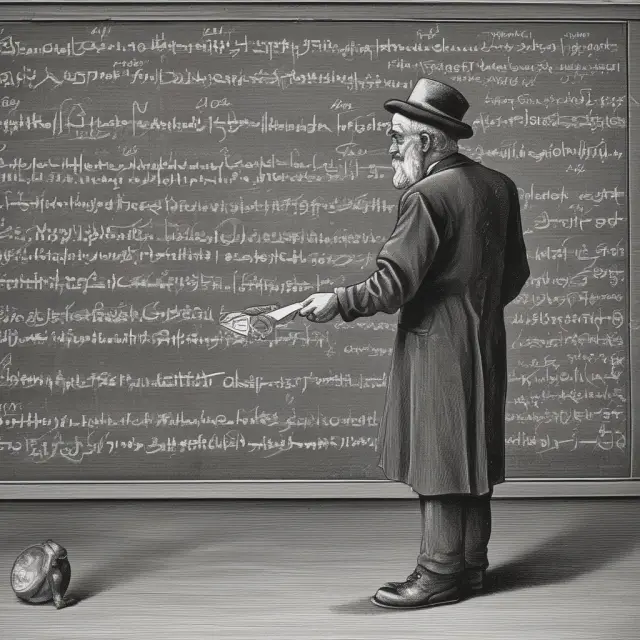
The Fundamentals of Queuing Theory: Erlang’s Contribution
Queuing theory, as a branch of mathematics that studies waiting lines, owes its foundation to Danish engineer Agner Krarup Erlang. His pioneering work on queuing theory dates back to the early 1900s, focusing on the Copenhagen telephone exchange. Erlang’s groundbreaking theories formed the basis for the field of telephone network analysis and the fundamental unit of telecommunications traffic: an erlang.
Erlang’s Theory of Efficient Networks
Born in 1878, Erlang combined his background in statistics and mathematics to create queuing theory, which aimed to analyze and optimize waiting lines. His work focused on the parameters of queues, including arrivals, service processes, number of servers, queuing discipline, capacity, and client population.
Arrival Process: The manner in which customers or entities enter a queue is known as the arrival process. Erlang’s model considered how long customers waited between arrivals and the frequency at which they arrived.
Service Process: The service process examines the time taken to serve each customer or entity within the queue. It also accounts for factors like server availability, capacity, and efficiency.
Number of Servers: The number of servers, or agents, determines how many entities can be served concurrently. Erlang’s theory considered the impact of varying server numbers on queue length and wait times.
Queuing Discipline: Queuing discipline is the order in which entities are served. Examples include first-in, first-out (FIFO), first-come, first-served (FCFS), and priority queues. Erlang’s research covered various disciplines and their effects on queue efficiency.
Queue Capacity: The capacity of a queue refers to its maximum size or holding area for entities before they are served. Erlang’s studies addressed the impact of varying queue capacities on wait times and service levels.
Client Population: Erlang’s queuing theory also considered the size and characteristics of the client population, including their arrival patterns and service requirements. This information was vital in designing efficient queues and managing resource allocation.
Erlang’s theories have significantly impacted business operations, particularly in call centers and logistics systems. By analyzing and optimizing waiting lines, businesses can improve customer satisfaction, streamline processes, and minimize unnecessary wait times. Erlang’s work laid the foundation for modern queuing theory applications in various industries.

Parameters of a Queue in Queuing Theory
Queuing theory, as an essential branch of mathematics, delves deep into the intricacies of waiting lines and their functioning. The primary focus of this branch lies in understanding why queues form and how they can be optimized for efficiency in various business contexts. Six key parameters define any queue system under queuing theory: Arrival Process, Service/Departure Process, Number of Servers, Queuing Discipline, Queue Capacity, and Client Population (Little, 1961).
Arrival Process refers to the pattern at which customers or requests enter a queue. This could be described by various statistical distributions, such as Poisson distribution or exponential distribution. A Poisson arrival process indicates that the number of arrivals within a given interval follows a Poisson distribution with a specific rate (λ). An exponential distribution, in turn, models inter-arrival times between successive events. Understanding the nature of the arrival process is vital as it determines how many customers or requests arrive and when.
Service/Departure Process describes how long it takes for a server to handle one customer or request (also known as Service Rate). This can be analyzed using statistical distributions like exponential distribution, normal distribution, or Erlang distribution. The service process determines the rate at which customers are being served and leaves an essential impact on queue performance.
The Number of Servers represents the number of individuals or resources available to serve the incoming requests in a queue system. This parameter can be fixed (deterministic) or random (stochastic). For example, a fast-food restaurant might have multiple cashiers serving customers simultaneously. The number of servers plays a pivotal role in determining the capacity and efficiency of the queue system.
Queuing Discipline refers to the method employed to decide the order in which requests are served within a queue. This can vary from First-Come, First-Served (FCFS), Last-Come, First-Served (LCFS), or Shortest Job Next (SJN), among others. Queuing discipline impacts how customers perceive fairness and waiting times in the system.
Queue Capacity indicates the maximum number of requests that can be accommodated within a queue before it overflows or reaches its limit. Exceeding this limit may lead to poor customer experience, longer wait times, or potential loss of business opportunities. An effective understanding of queue capacity can help businesses optimize their resources and prepare for unexpected spikes in demand.
Client Population is the total number of customers or requests that a queue system must serve. Client population dynamics include arrival rates, service rates, and queuing discipline. This parameter plays a crucial role in determining the overall performance of the queue system, such as average waiting time, throughput, and utilization rate (Cox & Smith, 1961).
A comprehensive analysis of these six parameters allows businesses to design more efficient queue systems that minimize wait times, improve customer satisfaction, and optimize resource allocation. By gaining a deeper understanding of queuing theory, organizations can develop strategies for managing their workflows, staffing needs, inventory control, scheduling, and customer service effectively.
References:
Cox, D. R., & Smith, P. H. (1961). A theory of queueing processes. New York: McGraw-Hill Book Company.
Little, J. D. C. (1961). Probability distributions for queueing systems: I. General queues. Journal of the American Statistical Association, 56(348), 274-304.
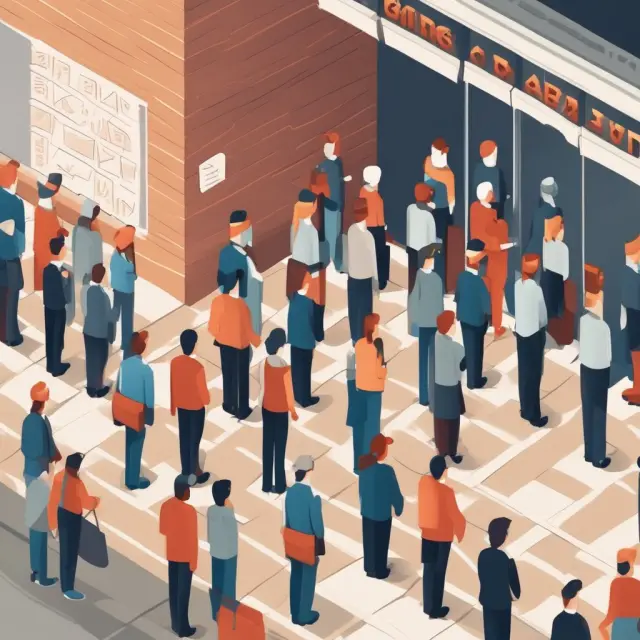
Benefits of Queuing Theory
Queuing theory, an essential tool for operations management, can significantly benefit businesses by optimizing staffing needs, scheduling, inventory control, and customer service. By analyzing queues and understanding their dynamics, managers gain insights into how to improve overall efficiency and reduce costs. Some common ways queuing theory is applied include the following:
1) Staffing optimization: Queuing theory can help organizations determine the optimal number of employees required during peak hours to minimize waiting times and improve customer satisfaction. By analyzing historical data and using queuing models, businesses can allocate resources effectively and ensure adequate staffing levels based on demand.
2) Scheduling improvements: Queuing theory helps organizations schedule their operations in a way that maximizes productivity while minimizing wait times for customers. For instance, call centers use queuing models to determine the optimal number of agents needed during different hours and efficiently distribute incoming calls among them.
3) Inventory control: Queuing theory can also be used to optimize inventory levels and manage stock effectively, reducing holding costs and improving order fulfillment times. By analyzing arrival rates and service rates, businesses can ensure that they maintain the right balance between stock levels and customer demand.
4) Improved customer service: Queuing theory plays a significant role in enhancing customer experience by reducing wait times and improving response rates. By studying queues and their behavior, organizations can identify bottlenecks and adjust processes accordingly, resulting in faster resolution times for customer issues.
Queuing theory has proven to be an indispensable tool for various industries, from manufacturing and logistics to healthcare and finance. For instance, a call center employing queuing theory principles can optimize its operations to serve more customers efficiently with fewer agents, saving costs while maintaining high levels of customer satisfaction. A factory, on the other hand, might use queuing theory to improve production scheduling and reduce downtime between jobs, ultimately increasing productivity and profitability.
In summary, queuing theory is a powerful tool for optimizing business operations by addressing issues related to staffing, scheduling, inventory control, and customer service. By analyzing queues and understanding their dynamics, businesses can make informed decisions, allocate resources effectively, and improve overall efficiency, leading to cost savings and increased profitability.

Applications of Queuing Theory
Queuing theory, as an operations management technique, plays a significant role in identifying and streamlining staffing needs, scheduling, and inventory control to improve overall customer service. It is often employed by Six Sigma practitioners to optimize processes (Wein et al., 2013). This section explores some real-life examples where queuing theory has been successfully utilized in various industries and situations.
The earliest application of queuing theory dates back to the early 1900s with Danish engineer Agner Krarup Erlang’s analysis of Copenhagen’s telephone exchange, leading to the creation of the Erlang theory of efficient networks (Erlang, 1957). Today, queuing theory is extensively used in telecommunications, manufacturing, transportation, and service industries.
In the realm of call centers, queuing theory has become a critical component in managing the flow of calls, reducing wait times, and optimizing staffing (Shapiro & Townsend, 2016). By analyzing the arrival process, service and departure processes, and queue capacity, businesses can effectively manage their resources to provide superior customer service while minimizing costs.
The transportation industry is another area where queuing theory has had a substantial impact on improving efficiency. For instance, air traffic control systems utilize queuing theory concepts to optimize flight routes, minimize delays, and reduce congestion (Papageorgiou & Fakotakis, 2016).
Manufacturing industries also benefit from queuing theory principles in designing and optimizing production lines. By analyzing the arrival rate of raw materials or components, service rates, queue capacity, and server capacity, manufacturers can minimize downtime, reduce waste, and enhance overall productivity (Lasserre & Muckstadt, 2013).
One practical application of queuing theory is in designing and optimizing websites. By analyzing user behavior and traffic patterns, web developers can use queuing theory to ensure swift load times, minimize server overload, and provide a superior user experience (Rosales & Ramakrishna, 2013).
In conclusion, queuing theory offers valuable insights for businesses looking to optimize their operations and customer service by improving efficiency and reducing wait times. By analyzing real-life applications in industries such as call centers, transportation, manufacturing, and web development, it becomes apparent that the potential benefits of implementing queuing theory principles are substantial.

Queuing Theory vs. The Psychology of Waiting
While queuing theory focuses on analyzing the structure, dynamics, and optimization of waiting lines, it is essential to understand the human factors that come into play when individuals encounter long wait times. This section will discuss the intersection between queuing theory and the psychology of waiting, as both topics have a significant impact on the overall efficiency and customer satisfaction within various industries.
Understanding the Psychology of Waiting
The psychology of waiting refers to the emotional response people exhibit when confronted with long wait times or standing in lines. Research conducted by psychologists reveals that waiting can induce feelings of frustration, impatience, stress, and even anger, leading to negative perceptions about a business or organization. This phenomenon is particularly relevant for service industries such as retail stores, banks, airports, hospitals, and call centers, where wait times are often a significant pain point for customers.
The Impact on Customer Experience and Satisfaction
Negative emotions associated with waiting can significantly impact customer experience and satisfaction, potentially leading to:
– Reduced loyalty: Customers may choose to take their business elsewhere if they perceive long wait times as unacceptable or unnecessary.
– Increased turnover: The frustration and dissatisfaction caused by extended waits can lead to a higher staff turnover rate.
– Negative word of mouth: Unsatisfied customers are more likely to share their negative experiences with others, damaging the reputation of the business.
Queuing Theory’s Approach to Addressing Human Factors in Queues
Queuing theory acknowledges that human factors are essential when dealing with wait lines. Although it primarily focuses on mathematical modeling and optimization, it also incorporates various strategies to minimize the adverse psychological effects of waiting:
- Providing information: Clear signage, real-time updates, and transparent communication about wait times can help alleviate anxiety and improve customer satisfaction.
- Offering alternatives: Alternative services or channels (such as self-service kiosks or online services) can help reduce the overall queue length and wait time for customers.
- Implementing fairness: Queuing discipline and policies should prioritize fairness, ensuring that everyone is treated equally and transparently, which leads to higher customer satisfaction.
- Adjusting expectations: By setting realistic wait time expectations, businesses can help manage their customers’ emotions and improve overall perceptions.
- Offering rewards: Rewarding customers for waiting (such as loyalty points or discounts) can create a positive association with the wait experience and enhance their perceived value.
Examples of Queuing Theory in Practice: Handling Human Factors
Numerous businesses have successfully implemented queuing theory to minimize wait times, optimize resources, and address psychological factors that can negatively impact customer satisfaction. For instance, Disney theme parks use queuing systems that offer a combination of virtual lines, FastPasses, and entertainment to keep visitors engaged while waiting in line. Similarly, retailers like Sephora employ interactive displays and educational materials at their makeup counters to create an immersive shopping experience, making the wait time for assistance seem shorter.
In conclusion, queuing theory plays a vital role in understanding and optimizing waiting lines’ structure and dynamics. However, it is equally important to consider the psychological factors that influence how people perceive and react to wait times. By combining both perspectives, businesses can create more efficient systems, improve overall customer satisfaction, and build long-term loyalty among their clients.

Advanced Queuing Theory Models
Queuing theory provides a solid foundation for understanding basic waiting line scenarios. However, as systems become more complex with multiple servers, queues, or service classes, advanced models are required to analyze these situations effectively. Three such models—M/M/1 queue, M/M/k queue, and Jackson network model—have proven particularly useful in handling intricate workflow systems.
M/M/1 Queue Model
The Markov Modelling (M) M/M/1 queue is a queuing theory model that assumes both the arrival process and the service process follow Poisson distribution, characterized by a constant average rate of arrivals and service completions. The ‘M’ stands for Markovian, meaning the process conforms to the Markov property.
The M/M/1 queue model is also known as an “single server” model since it deals with a single server handling requests. It provides important insights into how queues behave when there are constant rates of arrivals and service processes. The main performance measures for an M/M/1 system include:
– Average waiting time in the queue (W)
– Average number of customers in the system (L)
– Probability that the server is busy or idle
– Probability of finding x or fewer customers in the system
M/M/k Queue Model
The M/M/k queue model extends the single server approach to multiple servers, where k represents the number of servers. This model considers the arrival and service processes as Poisson processes but allows for parallel processing by multiple servers, leading to shorter wait times. The primary performance measures for an M/M/k system include:
– Average waiting time in the queue (W)
– Average number of customers in the system (L)
– Average number of customers in the queue (Lq)
– Probability that all servers are busy or idle
– Probability of finding x or fewer customers in the system
Jackson Network Model
The Jackson network model is a queuing theory approach to analyzing more complex systems composed of multiple interconnected queues. It is particularly useful for understanding the performance of parallel and sequential service channels, making it applicable to various industries and applications, from manufacturing and transportation to call centers and IT services. This advanced queuing model considers the following components:
– Arrival process (usually a Poisson process)
– Service processes at each queue
– Connection discipline that defines how customers move between queues (e.g., parallel or sequential service)
– Capacities of each queue
The Jackson network model provides an in-depth understanding of the behavior and performance of complex systems. By calculating key performance indicators such as average waiting times, average response times, and utilization levels for individual queues, it enables businesses to optimize their operations and improve overall efficiency and customer satisfaction.

Queuing Theory in Real Life: Case Studies
Queuing theory’s significance in the business world has been evident since its inception in the early 1900s when Danish engineer Agner Krarup Erlang pioneered this branch of mathematics to study waiting lines. Queuing theory is a valuable tool that can be employed to optimize various aspects of a business, including staffing needs, scheduling, inventory control, and customer service. This section will focus on real-life case studies where queuing theory principles have been successfully applied.
One well-known example comes from the aviation industry. A study by Stanford Graduate School of Business professors Lawrence Wein et al., titled “Optimal Response to an Airborne Biological Attack,” used queuing theory to analyze potential emergency responses to a bioterrorism attack on a public place like an airport or a mall. By modeling the arrival and service processes, the researchers identified specific actions that could reduce wait times for emergency care, potentially saving lives.
In the logistics sector, a delivery company can employ queuing theory to streamline its systems for moving packages from a warehouse to customers. By analyzing the number of servers, arrivals, and queue capacity, the company can identify bottlenecks in its process and implement strategies to reduce customer wait times. This, in turn, results in increased efficiency, cost savings, and an improved customer experience.
Another application of queuing theory is found in call centers. By analyzing the arrival and service processes, as well as queue discipline, call center managers can optimize their operations. For instance, they might implement a strategy like predictive dialing to minimize the time spent waiting for a live agent, or offer call-backs to reduce customer impatience and frustration while waiting on hold.
These are just a few examples of how queuing theory is put into practice in various industries to improve efficiency and enhance the overall customer experience. By applying this mathematical approach to real-life business scenarios, organizations can gain valuable insights into their operations and address any areas of congestion or inefficiencies.

Queuing Theory in Call Centers
Call centers are essential components of many modern businesses, providing customer support, sales, and other services through phone or chat interactions. The ability to manage these interactions efficiently is crucial for maintaining high levels of customer satisfaction and minimizing costs. Queuing theory plays a significant role in call center operations management, allowing organizations to optimize staffing levels, reduce wait times, and improve overall service delivery.
Originating from the early 1900s through Danish engineer Agner Krarup Erlang’s studies on telephone exchange efficiency, queuing theory focuses on understanding the dynamics of waiting lines and how they can be used to enhance processes and systems. Call centers apply several fundamental principles of queuing theory to their daily operations.
One of the essential parameters in call center queuing theory is analyzing the arrival process, or how customers contact the call center, and the service process, which involves resolving their queries. Understanding these elements allows organizations to assess staffing requirements, optimize schedules, and predict wait times. Call centers use a range of metrics, such as average handling time (AHT) and Service Level Agreements (SLAs), to quantify the performance of both arrival and service processes.
Moreover, queuing theory can help determine the number of servers needed to manage the call center’s workload effectively. This includes both human agents and automated systems, such as Interactive Voice Response (IVR) or chatbots. The optimal configuration of these resources is critical for minimizing wait times while maintaining an acceptable level of service quality.
In addition, queuing theory concepts like the First-Come, First-Served (FCFS), Last-Come, First-Served (LCFS), and Weighted Fair Queueing Discipline (WFQ) are used to manage customer interactions in call centers. These disciplines define the order in which customers are served and ensure a fair distribution of resources, thereby reducing perceived wait times and enhancing overall satisfaction.
Implementing queuing theory in call centers also enables continuous improvement efforts through identifying bottlenecks, analyzing performance trends, and implementing countermeasures to mitigate issues such as queue overflow or agent idleness. This proactive approach to managing call center operations can lead to reduced wait times, increased customer satisfaction, and improved productivity.
Real-life examples of call centers effectively employing queuing theory principles include companies like Amazon and Zappos. Both organizations have gained a reputation for their commitment to providing excellent customer service through careful optimization of their call center operations using queuing theory concepts. These innovative approaches to managing wait times, staffing, and overall efficiency have set the industry standard for call center performance.
In conclusion, queuing theory plays an essential role in call centers by enabling organizations to optimize staffing levels, reduce wait times, and provide superior customer service. Its principles help analyze arrival and service processes, determine the optimal number of servers, and manage interactions efficiently. Real-life examples like Amazon and Zappos showcase the significant impact queuing theory can have on call center performance and customer satisfaction.

FAQ: Queuing Theory Commonly Asked Questions
Queuing theory, which studies how lines form, function, and malfunction, is a valuable tool for optimizing business operations and improving customer service. With its origins dating back to Agner Krarup Erlang’s groundbreaking work in the early 1900s, queuing theory offers insights into managing the dynamics of limited resources and waiting lines. Let us address some common questions about queuing theory, including its history, principles, and applications.
What is queuing theory?
Queuing theory is a mathematical framework for analyzing waiting lines and understanding how systems handle congestion. It offers valuable insights into the dynamics of limited resources, helping businesses to optimize staffing needs, scheduling, inventory control, and customer service.
Who invented queuing theory?
Danish engineer, statistician, and mathematician Agner Krarup Erlang is credited with creating queuing theory in the early 1900s. His pioneering work on telephone traffic engineering led to a field that continues to shape operations research and management practices today.
What are the fundamental elements of a queue?
A queue, as studied through queuing theory, is characterized by six primary parameters: arrival process, service and departure process, number of servers, queuing discipline (such as first-in, first-out), queue capacity, and client population. These elements allow for a comprehensive understanding and improvement of the entire system from start to finish.
Why do businesses use queuing theory?
Queuing theory is used to identify and correct points of congestion in business processes, ensuring efficient operations, reduced costs, and improved customer satisfaction. It helps organizations to optimize resources, streamline workflows, and enhance overall performance.
How does the psychology of queuing relate to queuing theory?
The psychology of queuing is an essential aspect of understanding waiting lines, as it addresses the impact of customer impatience and frustration on the queueing experience. Queuing theory offers solutions like call-back systems or numbered tickets to mitigate these challenges and improve overall customer satisfaction.
What are some real-life applications of queuing theory?
Queuing theory is used in various industries to optimize processes, including call centers, transportation networks, warehouses, and manufacturing plants. It plays a crucial role in ensuring that resources are utilized efficiently and effectively to meet the demands of customers and businesses alike.
 Next entry · No. 4,245The Importance of Quick Liquidity Ratio for Insurance Companies: Measuring Capacity to Meet Short-Term Obligations
See also
-
 No. 5,005
04 Aug 2025
20 min
Total Quality Management (TQM): Understanding the History, Principles, and Benefits
Business Strategy
No. 5,005
04 Aug 2025
20 min
Total Quality Management (TQM): Understanding the History, Principles, and Benefits
Business Strategy -
 No. 4,966
31 Jul 2025
17 min
Maximizing Throughput: Strategies for Improving Business Efficiency
Business Strategy
No. 4,966
31 Jul 2025
17 min
Maximizing Throughput: Strategies for Improving Business Efficiency
Business Strategy -
 No. 4,564
29 Jun 2025
24 min
Scalability: Understanding the Ability of Organizations and Companies to Grow Without Being Hampered by Structure or Resources
Business Strategy
No. 4,564
29 Jun 2025
24 min
Scalability: Understanding the Ability of Organizations and Companies to Grow Without Being Hampered by Structure or Resources
Business Strategy -
 No. 3,748
23 Apr 2025
20 min
Maximizing Profitability through Effective Operations Management in Finance and Investment
Business Strategy
No. 3,748
23 Apr 2025
20 min
Maximizing Profitability through Effective Operations Management in Finance and Investment
Business Strategy -
 No. 2,485
10 Jan 2025
20 min
Inventory Management: Balancing the Risks of Gluts and Shortages through JIT, MRP, EOQ, and DSI
Business Strategy
No. 2,485
10 Jan 2025
20 min
Inventory Management: Balancing the Risks of Gluts and Shortages through JIT, MRP, EOQ, and DSI
Business Strategy -
 No. 5,889
16 Oct 2025
18 min
Understanding Zero-Cost Strategies in Finance and Investment: Saving Money Through Efficiency
Business Finance
No. 5,889
16 Oct 2025
18 min
Understanding Zero-Cost Strategies in Finance and Investment: Saving Money Through Efficiency
Business Finance