Maximizing Throughput: Strategies for Improving Business Efficiency
Maximizing Throughput: Uncover strategies for improving your business's efficiency and productivity with expert insights.
Understanding Throughput: An Essential Concept in Business Management
Throughput, a crucial business term, denotes the rate at which a company generates revenue by producing or processing goods or services within a specified time frame. A high throughput signifies increased efficiency and competitiveness. To grasp this concept fully, we need to examine its relationship with constraints, capacity, and the supply chain.
Definition and Theory of Constraints
Throughput is an integral part of the theory of constraints (TOC), which states that a production process’s overall performance is only as strong as its weakest link or bottleneck. Throughput maximization aims to identify and address these weaknesses, ensuring seamless workflow, increased efficiency, and revenue optimization.
Capacity: Theoretical vs. Practical
When evaluating throughput, it’s important to differentiate between theoretical capacity (continuous production) and practical capacity (real-world constraints). Although businesses may aim for constant production, real-world factors such as machine maintenance and worker vacations mean that sustained high output is unattainable. Practical capacity accounts for these limitations and offers a more accurate representation of a company’s capabilities.
Managing the Supply Chain
Effective throughput management depends on a well-functioning supply chain, which involves interactions between businesses and their suppliers. Disruptions in this crucial relationship can negatively impact production efficiency and overall throughput. Open communication and adaptability are essential for mitigating potential issues and maintaining optimal performance.
Bottleneck Identification
To maximize throughput, it’s vital to identify and address bottlenecks within a production process. These constraints slow down the workflow and can significantly impact overall efficiency. Tools like technology and standardization can help companies quickly resolve bottlenecks and maintain optimal performance.
Formula and Calculation
Calculate throughput by dividing inventory (the number of units in production) by production time. This formula helps businesses monitor their progress, identify inefficiencies, and optimize processes for increased efficiency and profitability.
Benefits of Maximizing Throughput
Maximizing throughput offers numerous benefits, including increased ROI, improved operational efficiency, and better decision-making when evaluating potential projects through capital budgeting analysis. By focusing on this critical performance measure, businesses can achieve a competitive edge in their respective industries.

Assessing Production Capacity: Theoretical, Practical, and Utilization
Understanding Throughput is essential for businesses aiming to optimize their operations, increase productivity, and maximize revenues. Throughput represents the rate at which a company produces or processes its goods and services. However, throughput can vary significantly between theoretical and practical capacities.
Theoretical Capacity: The Ideal Production Rate
Theoretical capacity refers to the maximum production level a business could achieve under ideal conditions, such as continuous operation without interruptions for maintenance, repairs, or employee vacations. This concept assumes that all resources are available at their full potential continuously. However, this ideal scenario is unrealistic in most industries and can lead to a false sense of achievable output levels.
Practical Capacity: Accounting for Real-World Constraints
In contrast, practical capacity acknowledges the constraints imposed by real-world production conditions. Practical capacity accounts for machine downtime, worker availability, inventory fluctuations, and other factors that influence actual production rates. The primary focus on practical capacity helps businesses set realistic goals, understand their operational limitations, and identify areas for improvement.
Inventory’s Role in Throughput Calculations
Throughput is influenced by the amount of inventory available within a production process. Inventory acts as a buffer that allows a business to maintain consistent production levels even when demand fluctuates or when unexpected disruptions occur. This buffer capacity can also impact overall throughput, with higher inventory levels potentially reducing the need for additional resources, such as raw materials or labor.
Measuring Practical Capacity: A Crucial Step in Throughput Analysis
Measuring practical capacity is an essential step to determine a company’s actual production capacity and identify bottlenecks that could be hindering throughput. By analyzing how well resources are being utilized, businesses can optimize their processes and improve overall efficiency. This analysis can lead to increased competitiveness by enabling companies to offer higher output levels or quicker turnaround times for customers while keeping costs under control.
In the next section, we will explore how managing the supply chain plays a crucial role in maximizing throughput and maintaining operational efficiency.
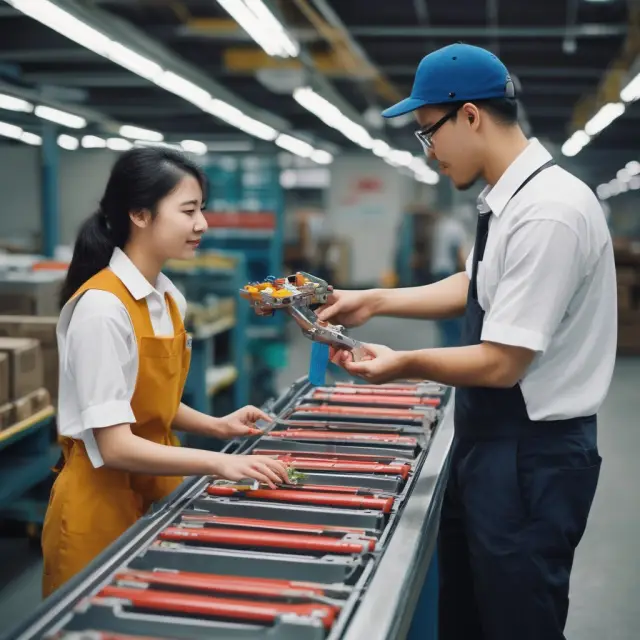
Managing the Supply Chain: The Interaction Between Businesses and Suppliers
The efficiency of a company’s supply chain significantly impacts its throughput levels. Throughput represents the rate at which a business creates value for its customers by delivering products or services. However, the ability to produce efficiently can be hindered when suppliers fail to deliver their goods or services promptly. This section explores how businesses can manage potential disruptions in their supply chain and maintain effective communication with suppliers to maximize throughput.
Understanding Supply Chain Disruptions
A well-functioning supply chain is essential for achieving high throughput levels. The interdependence between businesses and their suppliers means that any disruption at a supplier’s end can have cascading effects on the entire production process. For example, late delivery of raw materials or components can result in delayed product assembly and shipment, negatively impacting customer satisfaction and overall throughput.
Identifying and Mitigating Supply Chain Risks
To minimize supply chain disruptions, it is crucial for businesses to identify potential risks and develop contingency plans. Some common risks include:
- Supplier bankruptcy or insolvency
- Natural disasters, such as earthquakes or hurricanes
- Geopolitical instability and conflicts
- Transportation issues, such as strikes, port congestion, or shipping disruptions
- Quality issues with incoming goods
To mitigate these risks, businesses can:
- Maintain multiple supplier relationships to ensure a backup supply of essential components and raw materials.
- Implement contingency plans for critical supply chain operations during natural disasters or other emergencies.
- Establish alternative transportation methods or providers to avoid relying on a single mode, such as trucks, ships, or air freight.
- Implement quality assurance measures to ensure incoming goods meet the required specifications and reduce the risk of rejects.
- Monitor global events that could impact the supply chain and adjust strategies accordingly.
Effective Communication with Suppliers
Clear communication is essential for maintaining a healthy business relationship with suppliers. Regular, open communication helps both parties to:
- Share information on lead times, production schedules, and inventory levels.
- Identify potential issues before they escalate into major problems.
- Coordinate efforts to improve overall supply chain performance.
- Develop contingency plans for handling unforeseen disruptions.
- Maintain a positive relationship that fosters collaboration and continuous improvement.
Some best practices for maintaining effective communication with suppliers include:
- Regularly scheduled meetings, such as weekly or monthly calls.
- Using a collaborative platform, like shared databases, to facilitate real-time updates and information exchange.
- Providing clear instructions on specifications and quality expectations.
- Establishing service level agreements (SLAs) that outline performance targets, consequences of missed deadlines, and escalation paths.
- Encouraging a culture of continuous improvement through regular feedback and suggestions for process improvements.

Identifying Bottlenecks: Monitoring and Resolving Production Inefficiencies
In business, identifying bottlenecks is crucial for maintaining high throughput levels and maximizing operational efficiency. Throughput is defined as the amount of a product or service that a company can produce or deliver to its customers within a specific period of time. By pinpointing and addressing bottlenecks in the production process, businesses can eliminate inefficiencies and improve their overall productivity.
Strategies for Identifying Bottlenecks
To identify bottlenecks effectively, it’s essential first to understand what constitutes a bottleneck. A bottleneck is a point within a production process where the flow of materials or services is slowed down due to limited capacity or other constraints, making the entire system less productive than it could be. Once identified, bottlenecks can be addressed using various methods to improve overall throughput.
Tools for Addressing Bottlenecks
Technology plays a significant role in identifying and resolving bottlenecks in modern production systems. Advanced software applications and real-time data analysis tools enable businesses to monitor the entire production process, identify slowdowns or anomalies, and quickly address them. This continuous monitoring makes it easier for management to make informed decisions about resource allocation and capacity planning.
Standardization is another effective tool for addressing bottlenecks in the production process. Implementing standardized workflows and procedures can help reduce errors, minimize wait times, and streamline processes overall. By following a set of predefined steps, workers are able to produce goods or services more efficiently, ultimately leading to an increase in throughput.
Competition: Boosting Worker Efficiency
Incorporating competition among workers can also help boost efficiency and identify bottlenecks within the production process. Implementing a scorecard system that rewards speed, quality, and productivity while penalizing inefficiencies creates a sense of healthy rivalry, encouraging employees to work harder and strive for continuous improvement. This incentive-driven approach not only helps maintain high levels of throughput but can also improve morale and overall employee engagement.
In conclusion, understanding bottlenecks and implementing strategies to address them is crucial for businesses looking to maximize their throughput and maintain a competitive edge in the market. By identifying and resolving these production inefficiencies using technology, standardization, and competition, companies can improve their operational efficiency, enhance profitability, and ensure customer satisfaction.
Formula and Calculation of Throughput
Throughput is a crucial concept for any business aiming to maximize its operational efficiency. By understanding how to calculate throughput, businesses can better manage their production processes, reduce waste, and increase productivity.
Throughput refers to the rate at which a company produces or processes its products or services over a specific period. It is calculated by dividing the inventory (the number of units in the production process) by the production time (the time it takes for those units to move from raw materials to finished goods).
Formula: T = I/F
Where: T = Throughput, I = Inventory, F = Production Time
To calculate throughput, businesses need to break down their production processes into two distinct components – processing time and wait time. Processing time refers to the actual duration of converting raw materials or resources into a finished product. Wait time represents the time units spend waiting in queues before they enter the processing stage.
Processing Time: The sum total of all the time spent on all activities required to add value to the product, such as machining, assembly, painting, and inspection.
Wait Time: The time a unit spends waiting in line for its turn to be processed. This includes inventory holding time, idle time between jobs, or delays due to machine failure.
Understanding the components of throughput provides valuable insights into identifying bottlenecks within production processes. By minimizing wait times and maximizing processing efficiencies, businesses can significantly increase their overall throughput and improve their bottom line.
Moreover, the ability to calculate throughput helps in making strategic business decisions, such as assessing capacity utilization, evaluating process improvement initiatives, and setting performance benchmarks. It also aids in identifying areas with high waste or inefficiencies that can be addressed, ensuring the entire production system operates at its full potential.
In conclusion, throughput calculation is an essential tool for any business seeking to optimize its production processes. By accurately measuring and analyzing throughput, businesses can streamline their operations, reduce costs, and enhance overall performance, ultimately leading to increased revenue and improved customer satisfaction.

Benefits of Maximizing Throughput
Maximizing throughput is a crucial objective for businesses aiming to stay competitive in today’s fast-paced market. Throughput refers to the rate at which a company generates revenue by producing and delivering its goods or services. By focusing on improving throughput, businesses can increase their return on investment (ROI) and profitability while enhancing operational efficiency. In addition, throughput analysis plays an essential role in capital budgeting decisions, enabling companies to optimize their resource allocation and project selection.
When a company maximizes its throughput, it not only achieves revenue maximization but also creates a positive ripple effect on various aspects of its business operations. In the following sections, we will discuss how maximizing throughput translates into increased profitability and operational efficiency for businesses.
Increased Profitability
Maximizing throughput leads to increased profitability as it enables a company to generate more revenue in a given period while maintaining or even reducing its costs. By efficiently managing the production process, minimizing downtime, and optimizing resources, companies can produce more goods or services with minimal additional investment in fixed costs like labor, infrastructure, or raw materials. As a result, businesses can increase their profit margins and improve their financial performance, making them more attractive to investors and stakeholders.
Improved Operational Efficiency
Maximizing throughput also leads to improved operational efficiency as it helps identify bottlenecks in the production process and allows for continuous improvement efforts. Throughput analysis provides valuable insights into the flow of materials and information within a company, allowing management to make informed decisions about where to invest resources to eliminate inefficiencies and streamline operations. By optimizing workflows, reducing lead times, and minimizing waiting periods between production stages, businesses can produce goods or services more quickly and cost-effectively, ultimately leading to higher throughput levels.
Using Throughput Analysis in Capital Budgeting
Throughput analysis is a valuable tool for capital budgeting, enabling companies to evaluate potential projects based on the impact they have on overall business performance. By analyzing the throughput of various projects and assessing their contribution margin (revenue minus variable costs), businesses can make informed decisions about which projects will generate the highest returns and maximize the use of limited resources. This approach helps companies prioritize investments in areas that are most likely to deliver significant financial benefits while minimizing risks associated with large capital expenditures.
In conclusion, maximizing throughput is essential for businesses seeking to stay competitive in today’s marketplace. By focusing on increasing production efficiency, reducing downtime, and eliminating bottlenecks, companies can generate higher revenues, improve operational efficiency, and make informed investment decisions using throughput analysis in their capital budgeting process. As a result, businesses that effectively manage their throughput are more likely to outperform their competitors and create long-term value for their stakeholders.

Throughput vs. Lead Time: Understanding the Difference
Two crucial performance measures in the business world are throughput and lead time. Both indicators play essential roles in optimizing operational efficiency, although they serve distinct purposes. Understanding their differences is vital to achieving a well-oiled production process that maximizes productivity and minimizes waste.
Throughput: A Flow of Products or Services
Throughput, as previously discussed, represents the rate at which a company produces or processes its products or services. It is often calculated by dividing the number of units in inventory by the time it takes for those units to move through production. In essence, it measures the speed of your production system, demonstrating how effectively it converts inputs into outputs.
Lead Time: The Entire Journey from Order to Delivery
Lead time, on the other hand, refers to the total elapsed time between a customer order and the actual delivery of the product or service. It consists of several stages, including order processing, production, inspection, and shipping or delivery. Lead time is an essential metric for businesses that want to meet their customers’ demands while minimizing inventory levels and maximizing responsiveness.
The Difference: Throughput vs. Lead Time
Throughput measures the speed at which your production process generates outputs, while lead time represents the total duration of the entire production and delivery process from start to finish for a specific order. The primary focus of throughput is on improving the internal efficiency within a company, whereas lead time aims to optimize the external customer experience.
Calculating Throughput vs. Lead Time
Throughput can be calculated as: Throughput = (Number of Units in Inventory) / (Production Time)
Lead time, however, is computed by adding up all the different stages involved in producing and delivering a product or service: Lead time = Order processing time + Production time + Inspection time + Shipping or delivery time
Utilizing Throughput and Lead Time for Improving Operational Efficiency
To optimize your production process, it’s necessary to understand both throughput and lead time and how they can be used together. By focusing on increasing throughput and reducing lead time, you can achieve higher productivity and better customer service.
Improvements in throughput can help you generate more revenue for your business by allowing the production of a larger quantity of goods or services within the same period. On the other hand, minimizing lead time ensures that your customers receive their orders faster while maintaining inventory levels and reducing waiting times.
By analyzing your production process using both throughput and lead time metrics, you can identify bottlenecks and inefficiencies to streamline your workflows and make data-driven decisions that help maximize operational efficiency.

Examples of Throughput in Action: Case Studies
Understanding the power of throughput is best illustrated through real-life examples. In this section, we explore how businesses from various industries have effectively managed their throughput and gained a competitive edge by maximizing production efficiency.
Case Study 1: Toyota Motors
Toyota Motor Corporation’s story is an excellent example of implementing the principles of throughput management to revolutionize manufacturing processes. In the 1950s, Toyota was a small and struggling automobile manufacturer. With the goal of producing cars at a lower cost than its competitors, Taiichi Ohno, an engineer at Toyota, developed the concept of lean production. Lean manufacturing focuses on minimizing waste and continuously improving processes to maximize throughput. Through this approach, Toyota was able to reduce costs and streamline production, ultimately leading to higher profits and global market dominance.
Key Takeaways
– Focusing on reducing waste leads to increased efficiency and productivity.
– Continuous improvement is essential for maintaining a competitive advantage.
– The Toyota Production System has been adopted by numerous industries as a successful business strategy.
Case Study 2: Amazon’s Warehouse Operations
Another notable example of throughput management can be found in the operations of Amazon, the world’s largest e-commerce retailer. When it comes to delivering goods to customers quickly, Amazon sets the industry standard. The company’s massive warehouses are designed with a focus on maximizing throughput and minimizing delivery times. By analyzing inventory levels, optimizing workflows, and employing automation technologies, Amazon has raised the bar for customer expectations, setting new standards in e-commerce and logistics.
Key Takeaways
– The efficient use of technology can lead to significant improvements in throughput.
– Continuously analyzing and optimizing processes is essential for maintaining a competitive edge.
– Customer satisfaction is directly linked to quick turnaround times, which are achieved by maximizing throughput.
Case Study 3: Intel’s Manufacturing Processes
Intel Corporation, a leading semiconductor manufacturer, has long been known for its innovative approach to manufacturing processes. The company’s focus on minimizing waste and increasing throughput has allowed it to maintain its position as the largest producer of microprocessors in the world. Intel’s fabrication plants are designed with meticulous precision to ensure that each production step is optimized for maximum efficiency. By closely monitoring inventory levels, minimizing defects, and utilizing automation, Intel has been able to stay ahead of competitors and consistently deliver high-quality products at a competitive price point.
Key Takeaways
– Innovative manufacturing processes lead to increased throughput and improved competitiveness.
– Continuous improvement is a crucial element for maintaining market leadership in a rapidly changing industry.
– The ability to minimize defects is essential for maximizing throughput and producing high-quality products.
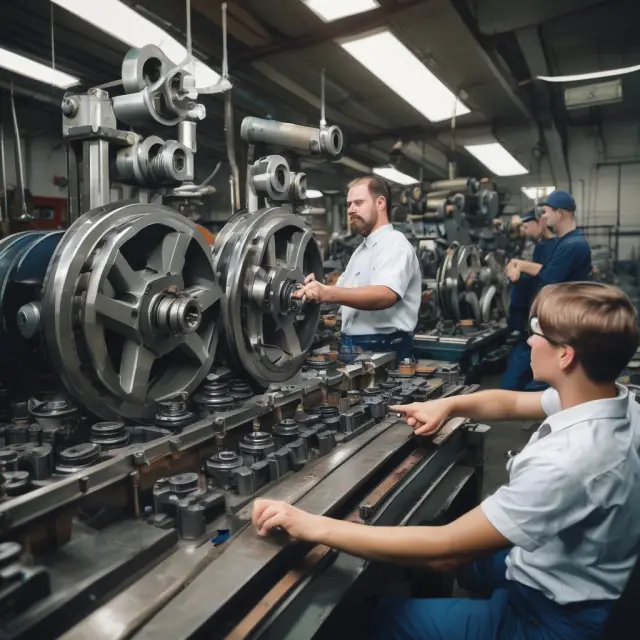
Strategies for Increasing Throughput: Best Practices
One of the primary objectives for businesses is maximizing their throughput, which is the rate at which they produce or process their goods or services. By improving throughput, companies can increase revenues and remain competitive in their industries. In this section, we’ll discuss best practices to enhance a company’s throughput.
1. Lean Manufacturing: A popular method for increasing throughput is implementing lean manufacturing principles. This approach focuses on eliminating non-value added activities within the production process, streamlining workflows, and minimizing waste. By making processes more efficient, companies can reduce their cycle times and improve overall productivity.
2. Continuous Improvement: Another effective strategy for enhancing throughput is to adopt a culture of continuous improvement. This involves regularly evaluating processes, identifying inefficiencies, and implementing changes to address them. By continually refining operations, businesses can maintain a high level of performance and adapt to evolving market conditions.
3. Six Sigma: Six Sigma is a data-driven methodology for improving quality and reducing defects within a production process. This approach focuses on identifying and eliminating the root causes of errors and variability, enabling companies to produce goods or services with greater consistency and efficiency.
4. Technology Implementation: Employing technology solutions can help businesses monitor and optimize their production processes in real-time. From automated systems that track inventory levels to predictive analytics tools, technology investments can enable more efficient operations and minimize downtime.
5. Standardization: Another strategy for increasing throughput is to ensure standardized workflows across all stages of the production process. By establishing clear guidelines and procedures, companies can reduce variability, improve consistency, and increase overall productivity.
6. Employee Training: Investing in employee training is essential for maintaining a highly productive workforce. Ensuring that workers are knowledgeable about best practices, up-to-date on the latest technologies, and equipped with the necessary skills can help businesses maximize their throughput potential.
7. Competition Among Workers: Creating a competitive environment within an organization can motivate employees to improve their performance and contribute to higher throughput levels. Implementing scorecards that track efficiency metrics and incentivizing workers based on productivity can be effective ways of fostering a culture of continuous improvement.
In conclusion, maximizing throughput is crucial for businesses seeking to remain competitive in their industries and achieve operational excellence. By implementing strategies like lean manufacturing, continuous improvement, Six Sigma, technology adoption, standardization, and employee training, companies can optimize their production processes and reap the rewards of increased productivity and profitability.

FAQs: Commonly Asked Questions About Throughput
Throughput is a crucial concept in business management, which refers to the rate at which a company produces or processes its products or services without interruptions (Goldratt, 1984). Understanding throughput and how it relates to capacity, efficiency, productivity, and inventory can help businesses optimize their operations, reduce costs, and improve overall performance.
What is the difference between throughput and capacity?
Throughput refers to the actual rate at which a business can produce its products or services, while capacity represents the maximum potential output under ideal conditions (Drumm & Denton, 2009). Although they are related concepts, it’s essential to understand the distinction between them. Throughput is what happens in the real world, whereas capacity is an abstract concept based on assumptions about production processes and resources.
How does inventory impact throughput?
Inventory plays a significant role in throughput calculation as it represents the number of units in the production process (Buzacott & Reimer, 2017). Throughput is computed by dividing the total inventory by the average time the inventory spends in production. Consequently, effective inventory management is vital for maximizing throughput and maintaining operational efficiency.
How can businesses apply throughput analysis across various industries?
Throughput analysis is applicable to a wide range of industries, as it provides insights into optimizing operational performance by focusing on eliminating bottlenecks and improving the flow of production (Goldratt & Cox, 2013). From manufacturing and logistics to services and healthcare, understanding throughput can help organizations better manage their processes, reduce waste, and improve customer satisfaction.
What are common methods to increase throughput?
To enhance throughput, businesses can employ several strategies, including implementing real-time monitoring of production processes using technology, introducing standardized workflows, or fostering competition among employees. By addressing bottlenecks, streamlining processes, and minimizing waste, companies can achieve higher throughput levels and improve overall efficiency.
Understanding these frequently asked questions about throughput will help businesses make more informed decisions regarding their operations, increase profitability, and ultimately maximize revenue by focusing on eliminating inefficiencies and improving production flows.
 Next entry · No. 4,967A Comprehensive Guide to TIAA: Understanding the History, Products, and Eligibility of Teachers Insurance and Annuity Association
See also
-
 No. 2,670
25 Jan 2025
19 min
Maximizing Productivity and Efficiency: A Deep Dive into Kaizen
Business Strategy
No. 2,670
25 Jan 2025
19 min
Maximizing Productivity and Efficiency: A Deep Dive into Kaizen
Business Strategy -
 No. 2,597
19 Jan 2025
19 min
Understanding Just-in-Time Inventory System: Advantages, Disadvantages, and Examples
Business Strategy
No. 2,597
19 Jan 2025
19 min
Understanding Just-in-Time Inventory System: Advantages, Disadvantages, and Examples
Business Strategy -
 No. 606
06 May 2024
21 min
Capital Budgeting: Techniques for Maximizing Shareholder Value in Finance and Investment
Business Strategy
No. 606
06 May 2024
21 min
Capital Budgeting: Techniques for Maximizing Shareholder Value in Finance and Investment
Business Strategy -
 No. 492
26 Apr 2024
19 min
Understanding Bottlenecks in Production: Types, Impact, and Solutions
Business Strategy
No. 492
26 Apr 2024
19 min
Understanding Bottlenecks in Production: Types, Impact, and Solutions
Business Strategy -
 No. 5,782
07 Oct 2025
18 min
Workflow Management: Optimizing Business Processes with Six Sigma, TQM, Big Data, and Workflow Technologies
Business Strategy
No. 5,782
07 Oct 2025
18 min
Workflow Management: Optimizing Business Processes with Six Sigma, TQM, Big Data, and Workflow Technologies
Business Strategy -
 No. 5,476
12 Sep 2025
26 min
Understanding Vertical Integration: Advantages, Disadvantages, and How It Works in Finance and Investment
Business Strategy
No. 5,476
12 Sep 2025
26 min
Understanding Vertical Integration: Advantages, Disadvantages, and How It Works in Finance and Investment
Business Strategy