Navigating Landlocked Real Estate: Understanding Access, Advantages, Disadvantages, and Obtaining Easements

Navigating the complex world of landlocked properties - understanding origins, advantages/disadvantages, valuation, & obtaining easements.
Understanding Landlocked Properties
Landlocked properties, in real estate terminology, are parcels or lots that cannot be accessed via public thoroughfare except through an adjacent lot. Such properties may be entirely surrounded by other land or only accessible from one side. For instance, a vacant lot situated behind a shopping mall can only be reached by traversing the shopping center; this is considered a landlocked property. The term “landlocked” refers to a piece of real estate that is inaccessible except through an adjacent parcel.
The origin of landlocked properties often stems from subdivisions or the division of large parcels into smaller ones for sale. Ideally, these parcels would each have access to a public right-of-way; however, due to various circumstances such as natural barriers or development constraints, not all parcels may be granted direct access.
Landlocked properties can also result from long-standing family ownerships where the land is eventually partitioned among heirs. Accessing these landlocked properties may become problematic when new property owners assume control of neighboring lands, making it essential for the landowner to secure an easement to maintain access to a public road or thoroughfare.
Advantages and Disadvantages of Landlocked Real Estate
Landlocked real estate properties often possess lower values than their surrounding counterparts due to their lack of direct access. However, this doesn’t devalue the landlocked property entirely. On the contrary, the reduced value may make it a more affordable option for investors or buyers looking to enter expensive communities. It is important to note that obtaining loans or mortgages for landlocked properties can be difficult due to their limited accessibility.
Despite these challenges, landlocked properties provide opportunities. For instance, if a business or development project expands near a landlocked property, its value may increase significantly. In such cases, holding onto the landlocked property and selling it at a higher price once the expansion occurs can prove profitable for the investor.
Accessing Landlocked Properties: The Role of Easements
Access to a landlocked property or parcel can be challenging, but state and federal laws allow access based on the “productive use” of the land. An easement is the most common method used to grant access to such properties. An easement grants the holder the right to cross over neighboring land to reach a public road or thoroughfare. The benefits of acquiring an easement include:
- Legal basis for access: Easements offer a legal framework for access, ensuring that landowners are not trespassing when crossing another’s property.
- Flexibility in negotiations: An easement can be negotiated with neighboring landowners, and the terms of the agreement can be flexible depending on both parties’ needs and circumstances.
- Written documentation: A written easement provides proof of access rights and eliminates potential future conflicts or misunderstandings regarding land usage.
- Various types available: Several types of easements exist, each with unique characteristics that cater to specific situations.
Obtaining an easement through negotiation is the simplest and most straightforward method for landowners looking to gain access to their landlocked property. In cases where negotiations fail or are not feasible, a legal process known as “easement by necessity” can be pursued to secure access. This option requires proving that both the landlocked and neighboring properties were once owned by the same person.
Conclusion:
Landlocked properties present unique challenges and opportunities for real estate investors and owners. Understanding these properties’ characteristics, advantages, and methods to secure access can help investors make informed decisions regarding acquisition, development, or holding onto a landlocked parcel. With the right knowledge, patience, and resources, a landlocked property can prove to be a valuable investment.
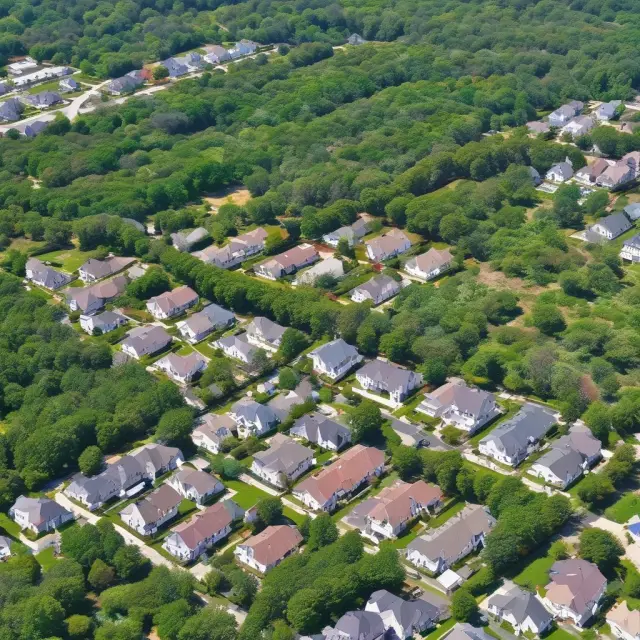
Determining the Value of Landlocked Real Estate
Landlocked real estate properties can often be undervalued due to their lack of direct access to public thoroughfares. However, this does not mean that such properties are worthless or devoid of potential value. In fact, many investors find landlocked parcels appealing for various reasons, including their lower value in expensive communities and the opportunity they present as potential future investments.
The lower value of landlocked properties can make them an attractive investment option for buyers looking to enter a desirable neighborhood without paying top dollar. For instance, if a buyer is interested in purchasing property within a well-established or high-demand area, but cannot afford the prices for accessible parcels, they might find that a landlocked lot offers an entry point into the community at a more affordable price.
Moreover, a landlocked parcel could potentially become valuable if it is situated near a business or development project that has the potential to expand in the future. Investors who hold onto these properties and sell them when the expansion occurs may be able to realize significant returns on their investment.
It’s essential to note, however, that obtaining financing for a landlocked property can be challenging. Many banks are reluctant to issue loans or mortgages for such parcels due to concerns about access, potential lack of public services, and the difficulty of proving ownership rights through legal means if needed. However, with careful planning and the assistance of experienced professionals, it’s possible to navigate these challenges and make informed decisions when investing in landlocked real estate.
One common solution for granting access to a landlocked property is by obtaining an easement. This legal agreement grants the right to cross over neighboring land to reach a public road or thoroughfare, thus providing access to the property. Negotiating an easement with a neighboring property owner can be the most straightforward and cost-effective approach; however, it’s crucial to ensure that all terms and conditions are clearly outlined in writing.
In cases where a neighbor is unwilling to grant an easement or demands unreasonable compensation, a landowner may need to seek an easement by necessity through legal channels. This process involves proving, through a deed and title search, that both the landlocked property and the neighboring property were once owned by the same individual. The court will then issue an order granting access to the landlocked property as necessary for “productive use.” However, obtaining an easement by necessity can be time-consuming, costly, and potentially confrontational; therefore, buyers are encouraged to explore alternative solutions before resorting to this legal recourse.
In summary, while landlocked real estate properties might initially appear to present unique challenges due to their lack of direct access, they also offer opportunities for savvy investors looking for a foothold in desirable neighborhoods or potential future investments. By understanding the value of these properties, exploring various methods for granting access, and navigating legal considerations, investors can make informed decisions and maximize their returns in the world of landlocked real estate.

Accessing a Landlocked Property: The Importance of an Easement
Landlocked properties, or real estate parcels that are inaccessible through public thoroughfares except by passing over adjacent lots, can pose unique challenges for their owners. One critical aspect of owning such property is understanding how to access it – and this is where the concept of easements comes into play. In this section, we’ll delve deeper into the significance of easements in granting access to landlocked properties and examine various types of easements that can help overcome this issue.
An easement refers to a legal agreement between two property owners, enabling the grantee (the property owner seeking access) to use a specific portion of the grantor’s land for a particular purpose. In the context of landlocked properties, easements serve as essential tools that provide access to the public road or other essential services. The following types of easements are commonly used in situations where land is locked up:
1. Prescriptive Easement: This type of easement arises when a person continuously and openly uses another’s property for a statutory period (usually five to twenty years), under the reasonable belief that they have the owner’s permission, or the owner has acquiesced in their actions. A prescriptive easement can be established even if the landowner did not grant explicit permission for its use.
2. Express Easement: An express easement is a type of easement that is granted explicitly by agreement between the parties involved. It may be documented through written agreements, deeds, or contracts.
3. Easement by Necessity: In situations where access to a landlocked property cannot be obtained through an express or prescriptive easement, a landowner might have the option of seeking an easement by necessity. This type of easement is typically granted when it can be proven that both the landlocked and neighboring properties were once owned by the same person and the division was done improperly or without providing proper access to the landlocked property.
Negotiating Easements with Neighbors
Securing an easement through negotiation is often the most straightforward approach. By discussing the terms of the agreement with the neighboring property owner, both parties can benefit from a mutually acceptable arrangement. It is crucial for landowners to have a clear understanding of their rights and responsibilities under the easement. In cases where verbal agreements are made, it is highly recommended that these be documented in writing by a real estate lawyer to ensure that the terms remain binding.
When negotiating with neighbors, it’s important to remember that the arrangement will impact both parties for years to come. Clear communication, flexibility, and a spirit of compromise can go a long way towards creating a successful outcome for all involved.
Stay tuned for our next section where we’ll discuss the process of acquiring an easement by necessity, as well as its benefits, costs, potential conflicts, and exceptions.

Acquiring Easements: Negotiating with Neighbors
Landlocked property can be a unique challenge for investors and homeowners alike, as these properties often come with limited access. However, in most cases, landlocked parcels can still be accessed through neighboring properties with the help of an easement. In this section, we will discuss how to negotiate for an easement with your neighbors and why a written agreement is crucial.
First and foremost, it’s essential to understand that easements are legal agreements that grant access to land owned by another party. Easements can be temporary or permanent and can provide various types of access, such as a right-of-way for vehicles, pedestrians, utilities, or even agricultural purposes.
The most common way to obtain an easement is through friendly negotiations with your neighbors. When approaching your neighbors to discuss easement possibilities, it’s important to be transparent and respectful about your intentions. Be open to discussing the potential benefits for both parties involved, as well as any concerns or potential compromises. This approach can lead to a mutually beneficial agreement that strengthens community relationships while granting access to your landlocked property.
However, it’s crucial to remember that verbal agreements are not always the most secure option when dealing with easements. Although neighborly intentions may be genuine at the time of discussions, circumstances and ownership can change over time. That’s why having a written agreement drafted by a real estate attorney is highly recommended.
A written easement provides legal security and reduces potential future disagreements or misunderstandings between parties. Furthermore, it ensures that your property rights are clearly defined and enforceable in the event of any disputes.
The process of obtaining an easement can be complex and requires a solid understanding of real estate laws and regulations. It’s essential to work with experienced professionals who can guide you through the legal aspects of easement negotiations, drafting, and recordings. In addition, seeking advice from a land surveyor is crucial for establishing accurate property boundaries and ensuring that the agreed-upon easement areas are clearly defined.
In the following sections, we will discuss other methods of obtaining easements, as well as the legal implications and potential challenges involved with accessing and investing in landlocked properties. Stay tuned to learn more!

Obtaining an Easement by Necessity
An easement by necessity is a legal concept that allows access to landlocked real estate when there is no other reasonable way to reach it. In some instances, a landowner may be unable to access their property due to its geographic location or lack of public roads. When this occurs, an easement by necessity can provide a solution. Let’s explore the requirements, potential conflicts, and exceptions involved in obtaining an easement by necessity.
Requirements for Easement by Necessity
To successfully obtain an easement by necessity, certain conditions must be met. The first requirement is proving that the landlocked property was once part of a larger parcel, which has since been subdivided. This can typically be demonstrated through title searches and deeds. Additionally, it must be shown that the landowner seeking the easement had no other reasonable means to access their property at the time the land was subdivided.
Conflicts with Adjoining Landowners
One major challenge in obtaining an easement by necessity is dealing with neighboring landowners. These parties may dispute the claim, either for ideological reasons or potential financial gain. Neighbors could argue that they should be compensated for granting access to their property or refuse to cooperate due to personal animosity. In such cases, negotiations and sometimes litigation are necessary.
Exceptions:
There are exceptions to the easement by necessity rule, primarily in situations involving government land patents or grants. For instance, if the federal government granted a land patent for the property long ago, an easement by necessity might not be necessary since public access was already established.
Costs and Legal Considerations
Obtaining an easement by necessity involves legal costs, as this is a court-ordered remedy. Additionally, there may be ongoing maintenance responsibilities or compensation to neighboring landowners, which should be factored into the decision-making process. Consulting with a real estate attorney can help ensure a clear understanding of all potential expenses and implications before pursuing an easement by necessity.
In conclusion, obtaining an easement by necessity is a viable option for gaining access to landlocked real estate when other methods prove unsuccessful. However, it’s essential to understand the requirements, potential conflicts, and exceptions involved in this legal concept. By working with experienced professionals and being prepared for any challenges that may arise, investors can confidently navigate the process and unlock the value of these unique properties.

Denying Access to Landlocked Property: Legal Limitations
When it comes to landlocked real estate, gaining access is crucial for its utilization and potential future investment opportunities. However, there are legal limitations to denying access to a landlocked property, as various state and federal laws protect the right to gain access to a public road. In this section, we will discuss these legal limitations and explore options for obtaining access through easements or eminent domain.
Understanding Legal Limitations
The principle behind granting access to landlocked properties is rooted in the idea that the owner of a piece of property should be allowed productive use. In essence, they deserve the right to access their land, even if it requires crossing another person’s property. However, obtaining this access through friendly negotiation with neighboring landowners can sometimes prove challenging. In such cases, state and federal laws grant landowners the right to seek an easement by necessity or use eminent domain as a last resort.
Easements by Necessity
An easement by necessity is a court-ordered remedy that grants the landlocked property owner access to their land through the neighboring property. To qualify for an easement by necessity, the landlocked and adjoining properties must have originally been owned by the same person or entity. The landowner seeking the easement bears the burden of proving this connection, typically through a title search or deed history.
It’s crucial to note that filing for an easement by necessity comes with costs, as legal proceedings are involved. Furthermore, it may result in friction between the parties involved, particularly if the neighbor is unhappy about granting access. In some cases, the neighbor might appeal the ruling, creating further complications.
Eminent Domain
Another option for gaining access to a landlocked property is through eminent domain, which empowers the government or public entities to acquire private property for public use. While this route is typically associated with large infrastructure projects like highways and utilities, it can be employed in cases where a landlocked property is essential for public welfare or safety.
However, the process of using eminent domain can be complex and time-consuming, making easements by necessity a more common recourse for gaining access to a landlocked property.
In conclusion, when dealing with a landlocked property, it’s important to understand that there are legal limitations to denying access, and options for obtaining easements or employing eminent domain are available. Consulting an experienced real estate attorney can provide valuable insight into the best course of action for your specific situation.

Benefits of Investing in a Landlocked Property
Landlocked real estate may seem like a lost cause, as these properties lack access to public thoroughfares, making them appear less desirable than their accessible counterparts. However, despite their inaccessible nature, landlocked parcels can be valuable assets for savvy investors. In this section, we’ll discuss several reasons why someone might consider investing in a landlocked property.
First and foremost, landlocked properties are often priced lower due to their lack of accessibility. This is primarily because it can be more challenging for buyers to secure financing for these properties since banks may hesitate to issue loans on them given the added difficulties in providing services such as utilities, fire departments, or emergency medical personnel.
However, the lower prices associated with landlocked properties make them an attractive option for investors looking to enter high-demand neighborhoods that would otherwise be out of their budget. The ability to purchase a piece of real estate at a lower price point provides buyers with an excellent opportunity to gain access to these communities and potentially profit from future appreciation in property values.
Another advantage of investing in landlocked properties is the potential for future growth. For example, a landlocked parcel located next to an expanding business area or commercial district can significantly increase in value as the surrounding area develops. In such cases, owning a landlocked property provides investors with the potential for substantial returns when they choose to sell their investment in the future.
Moreover, it’s important to remember that obtaining access to a landlocked property isn’t an insurmountable challenge. Although each situation is unique, there are several ways investors can gain access to these parcels, primarily through easements. An easement is a legal right granted to the owner of a landlocked parcel to cross over a portion of another person’s land to access a public road or other necessary services.
The most straightforward way to acquire an easement is through friendly negotiations with the neighboring property owner. However, it’s essential to secure this agreement in writing and ensure that the easement is properly documented and registered with the local deed office to prevent any potential issues in the future.
In cases where obtaining a written easement through negotiation isn’t possible, investors can explore the option of an easement by necessity. This process involves seeking legal recourse to grant the landlocked property owner access to their land via a court order. However, it’s crucial to note that filing for an easement by necessity requires additional legal expenses and may lead to conflicts with the neighboring landowner.
In conclusion, investing in a landlocked property can provide unique opportunities and advantages. While these parcels might initially appear challenging due to their lack of accessibility, they can offer attractive entry points into desirable neighborhoods, potential for future growth, and the possibility of substantial returns when sold at the right time. By understanding the various methods for gaining access to landlocked properties through easements or other means, investors can capitalize on these valuable real estate opportunities.
Additionally, it’s important to note that federal and state laws protect the right of property owners to gain access to their land. These laws mandate that landowners provide access to their properties even if direct access is not possible through public thoroughfares. This legal framework provides investors with a solid foundation for securing access to landlocked parcels and making informed investment decisions.

Severance of Unity: Proving Ownership Rights
The concept of “severance of unity” plays a crucial role when trying to obtain an easement by necessity for landlocked properties. Severance of unity refers to a legal principle that asserts that the owner of a larger property, upon subdividing it, retains ownership rights to portions of that property that have been separated from the original parcel. These portions are no longer considered one unified whole but are legally recognized as separate parcels with individual owners (Parker & O’Neill, 1976).
When a landlocked parcel is involved, proving severance of unity becomes essential to establish that both the original and the now-landlocked properties were once part of the same unified ownership. This principle is based on the idea that when someone buys an estate or property, they gain not only the actual property but also any rights to easements, water, minerals, or other benefits associated with it (Wright, 1976).
Proving severance of unity requires extensive research into the land’s history and past transactions. The owner must show that the landlocked parcel was indeed part of a larger property when it was originally sold or transferred. This may involve delving deep into deeds, title records, and historical documents to uncover the chain of ownership leading back to the original grantor (Parker & O’Neill, 1976).
By establishing severance of unity, a landowner can make a compelling case for easement by necessity. This is essential in situations where neighboring property owners are reluctant or unwilling to grant an easement voluntarily. In such cases, the landlocked parcel owner may be forced to seek legal remedies, and the evidence of severance of unity will play a crucial role in the proceedings (Wright, 1976).
However, the process of proving severance of unity can be complicated and time-consuming, requiring specialized knowledge and expertise. It is highly recommended that any landowner considering this route consult with an experienced real estate attorney to ensure a successful outcome.
In conclusion, understanding the concept of severance of unity is vital when dealing with landlocked properties, especially when seeking easements by necessity. By proving that the landlocked parcel was once part of a larger property, the landowner can lay a strong foundation for obtaining an easement to access their property, ensuring that they are not left landbound.

Legal Considerations for Landlocked Properties
When acquiring or investing in a landlocked real estate parcel, there are various legal considerations to keep in mind to ensure smooth transactions and protect your investment.
One crucial factor is understanding the importance of an easement – a right-of-way granted to cross another’s property for access to public thoroughfare or utilities – when dealing with landlocked properties. Easements can be acquired through negotiation, as discussed previously, and are essential to gain access to the landlocked parcel. However, there are different types of easements, each requiring varying levels of formality and complexity in their acquisition.
Another legal consideration is acquiring an easement by necessity – a court-ordered grant of access to a landlocked property. This option comes into play when neighboring property owners refuse to provide a voluntary easement or ask for exorbitant compensation. To pursue this avenue, you must prove the historical unity of ownership between your land and the land from which access is sought – known as “severance of unity.” Proving severance of unity can be time-consuming and costly, as it involves a thorough deed and title search to establish the connection between the properties.
Additionally, when dealing with landlocked properties, it’s important to consider potential conflicts arising from adverse possession laws. Adverse possession is the process by which an individual, through open, continuous, and hostile use, can acquire ownership of another’s property. In a landlocked scenario, a neighbor who has been using a portion of your land for an extended period may claim adverse possession if you do not challenge their usage.
Finally, be aware that the denial of access to a landlocked property is not allowed under federal and state laws, which enforce the right to “productive use” of land. In the absence of direct access or easements, it’s essential to explore all options, such as negotiating with neighbors, seeking an easement by necessity, or considering eminent domain in extreme cases.
To navigate these complex legal considerations effectively and ensure a successful investment, working with an experienced real estate attorney is recommended. Their expertise can help you understand your rights, protect your interests, and minimize potential complications.

FAQs About Landlocked Real Estate
What is a landlocked real estate property?
A landlocked parcel refers to a piece of property that is inaccessible through public thoroughfare except by crossing another property. It is surrounded by other properties and is often the result of subdivisions or division of larger landholdings. Landowners of such properties can seek an easement from their neighbors to access a public road, enabling them to utilize and sell their land effectively.
Why is a landlocked property’s value typically lower than its surrounding parcels?
Landlocked real estate usually has a lower value due to the lack of easy access for development and infrastructure services. However, this does not diminish its worth entirely as it may still be a valuable investment option in expensive neighborhoods or areas with growth potential.
How can one gain access to a landlocked property?
Access to a landlocked parcel is often obtained by negotiating an easement agreement with the neighboring landowners. A written easement, drafted by a real estate attorney and registered with the local deed office, offers security for both parties involved in the transaction. In some cases, it may be necessary to obtain an easement by necessity through court proceedings if negotiations fail or prove unreasonable.
What are different types of easements?
Easements come in various forms, including prescriptive easements (acquired through continuous use), express easements (granted through written agreements), and easements by necessity (granted due to a property’s isolation or land division). Each type requires specific conditions and processes for establishment and enforcement.
Why is it important for a landlocked property owner to have an easement?
An easement allows a landowner to access their property through another person’s land, ensuring they can utilize essential services, infrastructure, and public facilities. This is particularly crucial for a landlocked property, as it may otherwise be difficult to develop or sell effectively due to its limited accessibility.
What are the benefits of investing in a landlocked property?
Investing in a landlocked property offers various advantages such as lower entry prices compared to surrounding properties, potential future growth opportunities, and access to exclusive communities. However, it’s important for investors to consider any potential challenges, including acquiring an easement or dealing with legal issues arising from the lack of access.
Can a landlocked property owner deny access to their land?
No, a landowner cannot permanently deny access to their landlocked property under most jurisdictions’ laws, as they must grant access through an easement to ensure public use and development.
 Next entry · No. 2,761Understanding the Role and Responsibilities of a Landlord: A Comprehensive Guide for Institutional Investors
See also
-
 No. 4,295
07 Jun 2025
20 min
Understanding Real Property: Definitions, Classifications, and Differences with Personal Property
Real Estate
No. 4,295
07 Jun 2025
20 min
Understanding Real Property: Definitions, Classifications, and Differences with Personal Property
Real Estate -
 No. 1,280
23 Aug 2024
22 min
Understanding Encumbrances: Types, Effects and Importance
Real Estate
No. 1,280
23 Aug 2024
22 min
Understanding Encumbrances: Types, Effects and Importance
Real Estate -
 No. 1,182
08 Aug 2024
20 min
Understanding Easements in Gross: Definition, Examples, Differences, Termination and Implications for Property Owners and Investors
Real Estate
No. 1,182
08 Aug 2024
20 min
Understanding Easements in Gross: Definition, Examples, Differences, Termination and Implications for Property Owners and Investors
Real Estate -
 No. 4,586
30 Jun 2025
22 min
Understanding Section 1250: Taxing Gains from Depreciated Real Property
Taxation
No. 4,586
30 Jun 2025
22 min
Understanding Section 1250: Taxing Gains from Depreciated Real Property
Taxation -
 No. 3,407
26 Mar 2025
19 min
Nest Egg: Building Wealth for Retirement, Home Purchase, and Education
Personal Finance
No. 3,407
26 Mar 2025
19 min
Nest Egg: Building Wealth for Retirement, Home Purchase, and Education
Personal Finance -
 No. 3,203
09 Mar 2025
17 min
Understanding Mill Rates: A Comprehensive Guide for Institutional and Professional Investors
Business Finance
No. 3,203
09 Mar 2025
17 min
Understanding Mill Rates: A Comprehensive Guide for Institutional and Professional Investors
Business Finance