Navigating the Core of America’s Financial Stability: The Federal Reserve Act of 1913
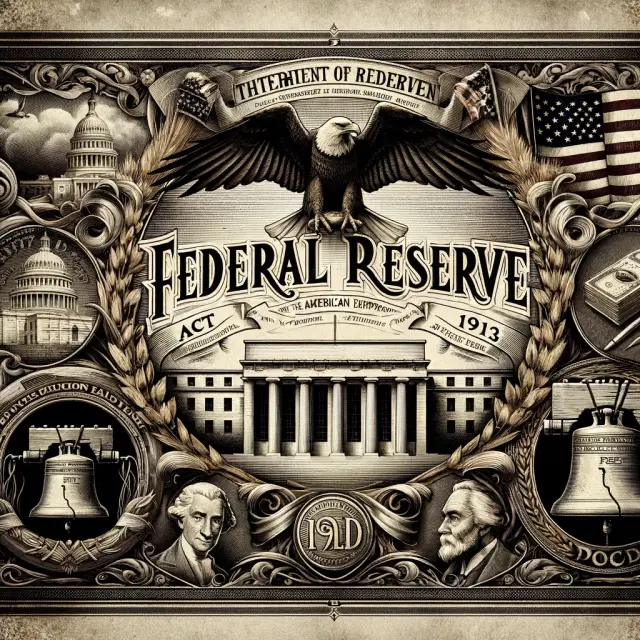
Introduction to the Federal Reserve Act of 1913 In the annals of American financial history, few pieces of legislation have been as pivotal as the Federal…
Introduction to the Federal Reserve Act of 1913
In the annals of American financial history, few pieces of legislation have been as pivotal as the Federal Reserve Act of 1913. This landmark act marked the inception of the Federal Reserve System, an institution designed to safeguard the U.S. economy by providing a more flexible and secure monetary and banking system. Prior to its enactment, the United States was plagued by financial instability, with frequent banking panics and economic crises disrupting the nation’s growth and eroding public confidence in the financial system. The creation of the Federal Reserve, often simply referred to as “The Fed,” was a response to this turmoil, aimed at ensuring U.S. economic stability through centralized control of the money supply and financial regulation.
The significance of the Federal Reserve Act of 1913 cannot be overstated. By establishing a central banking system, the Act introduced a mechanism for managing the nation’s currency, interest rates, and overall economic health. It represented a profound shift in how financial oversight and policy were approached, moving from a decentralized and often chaotic banking system to a structured, federally guided entity capable of responding effectively to economic challenges. The Fed’s role in promoting economic stability has evolved over the years, but its foundation was laid with this crucial piece of legislation, which continues to shape the financial landscape of the United States more than a century later.
This introduction to the Federal Reserve Act offers a glimpse into its historical context and enduring importance. As we delve deeper into the Act’s genesis, structure, and impact, we will uncover how it has become a cornerstone of modern economic policy, steering the United States through periods of upheaval and prosperity alike.

The Genesis of the Federal Reserve
The journey to the establishment of the Federal Reserve System is a tale of economic tumult, a quest for banking reform, and the evolution of national banks in the United States. Before the dawn of the 20th century, America’s banking landscape was a patchwork of state-chartered institutions and private banks, each issuing their own currency with varying degrees of reliability. This lack of uniformity in the banking sector led to widespread instability, with financial panics becoming a distressingly common occurrence. The Panic of 1907, in particular, underscored the dire need for a central institution capable of managing the nation’s financial health.
The early attempts at creating a centralized banking system were met with skepticism and resistance. The First and Second Banks of the United States, established in the late 18th and early 19th centuries, were early forerunners of national banking, but they faced fierce opposition from those who viewed them as monopolistic entities controlled by the elite. After the charter of the Second Bank was not renewed in 1836, the U.S. entered a period known as the “Free Banking Era,” where banks operated under state charters without federal oversight, leading to even greater financial instability.
It was against this backdrop of financial crises and public distrust that the idea for the Federal Reserve was born. The Panic of 1907 was a turning point, demonstrating the acute need for a central bank to act as a lender of last resort. The banking panic triggered a severe recession, only alleviated by private intervention from financiers like J.P. Morgan, who orchestrated a bailout that, while effective, highlighted the systemic vulnerabilities of the U.S. banking system.
Recognizing the unsustainable nature of this ad hoc financial management, Congress took action. Inspired by the need for stability and the desire to prevent future panics, the Federal Reserve Act of 1913 was conceived as a solution to the nation’s banking woes. The Act aimed to create a central banking system that would be resilient enough to manage economic crises, regulate the money supply, and oversee the burgeoning network of national banks. This move towards centralized banking was not just a response to past failures but a forward-looking measure intended to safeguard the U.S. economy from the kind of tumultuous events that had previously threatened its stability.
The creation of the Federal Reserve System represented a fundamental transformation in American financial policy and practice. By addressing the critical flaws in the U.S. banking system, the Federal Reserve Act laid the groundwork for a more stable, secure, and resilient economic framework. The genesis of the Federal Reserve is a testament to the power of reform and the enduring quest for financial stability in a rapidly evolving economic landscape.
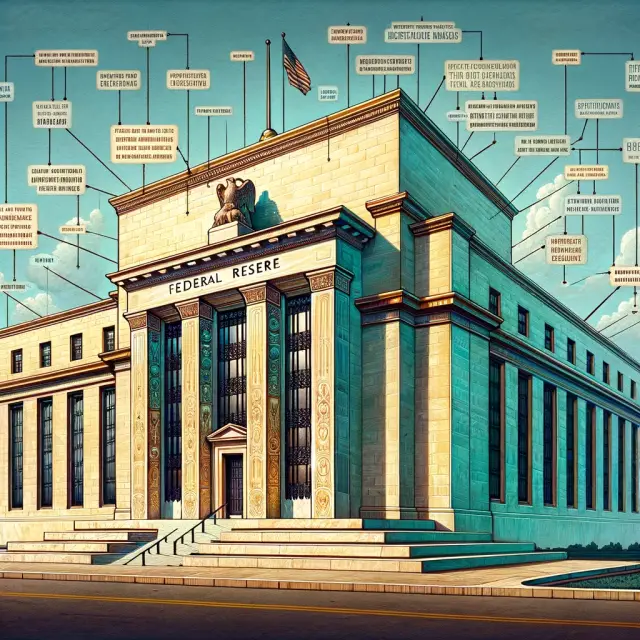
Key Features of the Federal Reserve Act
The Federal Reserve Act of 1913 laid the foundation for the establishment of the Federal Reserve System, a central banking system that would come to play a crucial role in shaping the economic destiny of the United States. This pivotal piece of legislation introduced several key features designed to stabilize the economy, manage inflation, and prevent banking crises that had periodically plagued the nation. At its core, the Act was a comprehensive response to the pressing need for an institution capable of overseeing the country’s monetary policy in a systematic and effective manner.
Establishment of the Federal Reserve System
The Act formally established the Federal Reserve System, an independent federal entity tasked with regulating the nation’s monetary supply and financial institutions. The System was designed to be both centralized to ensure efficiency and control, and decentralized to address the concerns of becoming too powerful and disconnected from local economic conditions. This balance was achieved through the creation of twelve regional Federal Reserve Banks, each serving a specific geographic area of the United States, thus catering to the nation’s diverse financial needs and conditions.
Introduction of a Centralized Monetary Policy
One of the Act’s cornerstone features was the introduction of a centralized monetary policy, primarily through the Federal Open Market Committee (FOMC), which is responsible for setting key interest rates and controlling the money supply. The ability to adjust the discount rate and engage in open market operations allowed the Federal Reserve to influence national interest rates, manage inflation, and steer the economy towards growth or restraint as needed.
Dual Mandate for Economic Stability
The Federal Reserve was given a dual mandate: to maximize employment and stabilize prices. This mandate guides the Fed’s policy decisions to this day, aiming to achieve a balanced economic growth by controlling inflation and fostering an environment conducive to job creation. The Act’s provisions for the Fed to use monetary tools to influence the economy were revolutionary, providing a framework for managing economic cycles more effectively than ever before.
Creation of a Lender of Last Resort
A critical feature of the Federal Reserve Act was the establishment of the Federal Reserve as the lender of last resort for banks in times of financial distress. This role was intended to prevent bank runs and provide stability to the banking sector, ensuring that banks had access to necessary funds to meet their obligations during periods of liquidity shortage.
Federal Reserve Notes
The Act authorized the Federal Reserve to issue Federal Reserve Notes—today known simply as dollars—as the national currency. This not only standardized the currency but also gave the Federal Reserve control over the money supply, a crucial tool in the execution of monetary policy.
Supervision and Regulation
Finally, the Federal Reserve Act provided for the supervision and regulation of member banks, establishing a system of checks and balances that included regular audits and the imposition of reserve requirements. This regulatory authority has expanded over time to include a broader range of financial institutions and activities, further strengthening the stability and integrity of the financial system.
The key features of the Federal Reserve Act were groundbreaking at the time of its enactment and remain central to the functioning of the U.S. economy. By establishing the Federal Reserve System and outlining its powers and responsibilities, the Act created a flexible, responsive framework for managing the nation’s monetary policy, ensuring economic stability, and fostering a healthier, more resilient economy.

The Structure and Functionality of the Fed
The Federal Reserve, often referred to as “The Fed,” is the backbone of the United States’ monetary system, ensuring economic stability and guiding fiscal policy. Established under the Federal Reserve Act of 1913, its structure is both complex and meticulously organized, designed to balance the diverse financial needs of the country. This section delves into the components that make up the Federal Reserve, highlighting the roles of the Federal Reserve banks and the Board of Governors.
Federal Reserve Banks: The Regional Pillars
The United States is divided into twelve distinct Federal Reserve districts, each with its own Federal Reserve bank. These banks serve as the operational arms of the Fed, implementing monetary policy directives at the regional level. From Boston to San Francisco, each district encompasses a unique section of the U.S. economy, ensuring that the Fed’s decisions reflect and respond to the country’s financial diversity. The locations are strategically chosen to cover all geographical areas, including Alaska and Hawaii, which fall under the San Francisco district.
These banks are not typical commercial entities; they hold the reserves of thousands of national and state banks, offering financial services exclusively to these institutions. This includes distributing currency, processing checks, and providing electronic payment services. Moreover, they act as the government’s bank, handling Treasury payments, selling government securities, and assisting with the national debt.
Board of Governors: Steering the Economic Ship
The Federal Reserve’s strategic direction is set by the Board of Governors, located in Washington, D.C. This board consists of seven members, each nominated by the President of the United States and confirmed by the Senate for staggered 14-year terms. This design ensures continuity and stability in monetary policy, limiting any single president’s influence over the central bank.
The Board of Governors oversees the Federal Reserve System’s operations, guiding monetary policy and regulation. They are responsible for setting reserve requirements and approving changes in the discount rate, a key interest rate for loans to financial institutions. The board also plays a crucial role in financial supervision, ensuring the safety and soundness of the nation’s banking system.
The Interplay of Structure and Functionality
Together, the Federal Reserve banks and the Board of Governors form a dynamic framework that adapts to the evolving U.S. economy. Their roles are distinct yet interdependent, creating a balance between national oversight and regional autonomy. This structure allows the Fed to respond effectively to both local and national financial challenges, from managing inflation to maximizing employment.
The functionality of the Fed extends beyond these foundational elements, incorporating various tools and mechanisms to manage the economy. These include adjusting the federal funds rate, buying and selling government securities, and more recently, implementing quantitative easing. Each action taken by the Fed is aimed at fulfilling its dual mandate: maximizing employment and stabilizing prices.
Understanding the structure and functionality of the Federal Reserve reveals the sophistication and foresight embedded in the Federal Reserve Act of 1913. It showcases how this century-old institution continues to be pivotal in steering the United States through financial uncertainties and towards economic prosperity.

The Fed’s Dual Mandate Explained: Understanding Employment Maximization and Price Stabilization
At the heart of the Federal Reserve’s mission lies a concept known as the dual mandate. This critical objective drives the Fed’s policy decisions and strategies, aiming to foster a balanced and healthy economy. But what exactly does this mandate entail, and how does it impact both the average consumer and the broader U.S. economy? Let’s dive into the intricacies of employment maximization and price stabilization to uncover their significance.
Nurturing Maximum Employment
The first pillar of the dual mandate is the pursuit of maximum employment. This doesn’t necessarily translate to a zero-unemployment rate, as the economy always has some level of frictional unemployment due to people transitioning between jobs. Instead, the Fed seeks to minimize unemployment caused by economic downturns and to ensure that as many people as possible who want to work can find jobs. Achieving this goal means creating a vibrant economic environment where businesses flourish and new job opportunities abound, reflecting a state of economic stability that benefits everyone.
Ensuring Price Stability
The second pillar focuses on price stabilization, which is equally crucial for economic well-being. Price stability means keeping inflation under control, avoiding both rapid price increases (inflation) and decreases (deflation). Inflation erodes purchasing power and can lead to a decrease in consumer spending, while deflation can lead to decreased business revenues and layoffs, further harming the economy. The Fed employs various tools, such as adjusting interest rates and conducting open market operations, to keep inflation at a target rate, which is currently set at 2% over the long run. This target is believed to be conducive to sustaining economic stability and promoting consumer and business confidence.
Balancing the Mandate
The Fed’s dual mandate requires a delicate balance. Too much focus on stimulating employment can lead to high inflation, while too much emphasis on controlling inflation could suppress job growth. The Federal Reserve uses a range of economic indicators, including employment rates, inflation expectations, and GDP growth, to guide its policy decisions. By adjusting monetary policy levers, such as the federal funds rate and the discount rate, the Fed aims to strike a balance that promotes a healthy economy.
The Impact on You
For the average consumer, the Fed’s dual mandate has tangible impacts. Stable prices mean that your dollar retains its value over time, making essentials like housing, food, and healthcare affordable. Maximum employment means more job opportunities and potentially higher wages, contributing to a better quality of life. For businesses, these conditions encourage investment and expansion, further fueling economic growth and innovation.
In conclusion, the dual mandate of the Federal Reserve serves as the cornerstone of its efforts to ensure a stable and thriving economy. By striving for maximum employment and price stability, the Fed plays a pivotal role in maintaining the economic stability of the United States, impacting every aspect of American life from the macroeconomic landscape to the financial well-being of individual citizens.

Impact and Influence on the U.S. Financial System
The enactment of the 1913 Federal Reserve Act marked a pivotal moment in the history of the United States’ financial landscape. By establishing the Federal Reserve System, often referred to simply as “The Fed,” this legislation introduced a centralized structure to oversee the nation’s monetary policy, aiming to provide a stable economic environment. Over a century later, the impact and influence of this act on the U.S. financial system and economy remain profound and multifaceted.
Stabilizing the Financial System
Prior to the Federal Reserve’s creation, the U.S. was plagued by frequent financial panics and bank failures, largely due to a lack of central control over the money supply and inadequate banking regulations. The Federal Reserve Act brought an unprecedented level of economic stability by instituting a central banking authority capable of managing the country’s monetary policy. This move effectively minimized the occurrence of banking crises, ensuring a more secure environment for depositors and investors alike.
Economic Influence
The Federal Reserve’s role in shaping monetary policy has had a significant economic influence. Through tools such as adjusting the federal funds rate, conducting open market operations, and setting reserve requirements, the Fed has been pivotal in steering the U.S. economy through periods of inflation, recession, and even depression. By influencing interest rates, the Fed can control the amount of money circulating in the economy, which in turn affects consumer spending, investment, and overall economic growth.
Financial System Impact
The financial system impact of the Federal Reserve extends beyond mere economic stabilization. The Fed also plays a crucial role in regulating and supervising banking institutions, ensuring the health and reliability of the financial system. This oversight function has become increasingly important in the wake of financial crises, such as the 2008 global financial meltdown, prompting the Fed to implement more stringent regulatory measures to prevent future collapses.
Fostering Global Economic Relations
The Federal Reserve also plays a key role in the international financial system. Through its policies, the Fed not only influences economic outcomes domestically but also impacts global markets and economies. The dollar’s status as the world’s primary reserve currency amplifies the global repercussions of the Fed’s monetary policy decisions, highlighting the Act’s far-reaching influence beyond the United States’ borders.
Conclusion
In summary, the 1913 Federal Reserve Act has profoundly shaped the course of the U.S. financial system and economy. By establishing a central bank to manage monetary policy, the Act has provided stability, fostered economic growth, and enhanced the resilience of the financial system against shocks. The Federal Reserve’s ability to adapt and respond to changing economic conditions has underscored the enduring relevance and necessity of this landmark legislation. Through its comprehensive approach to economic management, the Fed continues to play an indispensable role in maintaining the vitality and integrity of the U.S. economy, demonstrating the lasting impact and influence of the Federal Reserve Act on the nation’s financial landscape.

Modern Governance: The Fed’s Leadership
In the intricate world of U.S. financial regulation and policy, the Federal Reserve leadership stands as a cornerstone of economic oversight and stability. This leadership is embodied in the Federal Reserve Board of Governors and the Presidents of the Federal Reserve Banks, each playing pivotal roles in shaping monetary policy and ensuring the economic wellbeing of the nation.
The Board of Governors: A Closer Look
At the helm of the Federal Reserve System’s governance structure is the Board of Governors. This board is composed of seven members, including the Chair and Vice Chair, who are nominated by the President of the United States and confirmed by the Senate. Serving staggered 14-year terms, these governors ensure a continuity of policy and vision, minimizing the sway of political tides. Their roles are crucial in formulating monetary policies, regulating banks, and providing financial services to depository institutions and the federal government.
The Board’s composition is designed to reflect a broad spectrum of the U.S. economy, ensuring that decisions are made with a comprehensive understanding of the nation’s diverse financial landscape. This careful selection process ensures that board members come from varied economic backgrounds, offering insights that are crucial for balanced and effective monetary policy formulation.
Federal Reserve Bank Presidents: Regional Insights
Complementing the Board of Governors are the Presidents of the 12 Federal Reserve Banks, each overseeing a specific geographic district within the United States. These districts span from Boston in the East to San Francisco in the West, including pivotal financial hubs such as New York and Chicago. The Federal Reserve Bank Presidents bring regional economic insights into the broader national policy discussions, ensuring that local economic conditions and concerns are considered in the Fed’s monetary policy decisions.
These Presidents play a key role in the Federal Open Market Committee (FOMC), the body responsible for setting the nation’s monetary policy, particularly in terms of interest rates. Their contributions are vital in assessing economic conditions across the country, providing a ground-level view that complements the broader perspectives of the Board of Governors.
Ensuring Economic Stability Through Leadership
The combined leadership of the Board of Governors and the Federal Reserve Bank Presidents forms a robust framework for U.S. monetary policy and financial regulation. This structure allows for a balanced consideration of both national and regional economic conditions, facilitating policies that aim to maximize employment, stabilize prices, and moderate long-term interest rates.
In the ever-evolving landscape of the U.S. economy, the Federal Reserve leadership continues to adapt and respond to new challenges. Through a commitment to transparency, accountability, and innovation, the Fed’s governance ensures that the financial system remains resilient, supporting sustained economic growth and the financial wellbeing of all Americans.
This dynamic leadership model, underpinned by a blend of national oversight and regional insight, exemplifies the Federal Reserve’s commitment to its dual mandate and its pivotal role in the U.S. financial system. As the economy faces new challenges and opportunities, the Fed’s governance structure stands ready to guide the nation towards a stable and prosperous future.

Federal Reserve’s Monetary Tools: Exploring the Fed’s Strategies for Economic Management
In the intricate world of economic management, the Federal Reserve (the Fed) wields a set of powerful monetary policy tools designed to steer the United States through the ebbs and flows of financial stability. These tools are pivotal in influencing the country’s interest rates, money supply, and overall economic health. By understanding how the Fed utilizes these instruments, we can appreciate the nuanced mechanisms behind America’s economic governance.
Interest Rate Adjustments: The Heartbeat of Economic Policy
At the core of the Federal Reserve’s toolkit are its interest rate policies, notably the adjustment of the Federal funds rate. This rate, crucial in the financial sphere, is the interest rate at which depository institutions lend funds maintained at the Federal Reserve to one another overnight. It serves as a benchmark for many other interest rates, including mortgages, loans, and savings, thereby influencing spending and investment decisions across the economy.
The Discount Rate: Direct Influence on Banks
Another vital tool is the discount rate, the interest rate the Fed charges commercial banks and other depository institutions on loans they receive from their regional Federal Reserve Bank’s lending facility. Adjusting the discount rate either encourages banks to borrow more, injecting liquidity into the economy, or discourages borrowing, aiming to cool down economic overheating.
Open Market Operations: The Fed’s Buying and Selling Power
Open market operations (OMO) are among the most effective and frequently used monetary policy tools. Through the buying and selling of government securities (such as U.S. Treasuries) on the open market, the Fed directly influences the amount of money circulating in the economy. Purchasing securities adds money to the banking system, encouraging lending and spending, while selling securities withdraws money, aiming to curb inflation.
Quantitative Easing: A Response to Unprecedented Times
In periods of severe economic downturn, when traditional tools like adjusting interest rates are insufficient (often because rates are already near zero), the Fed turns to quantitative easing (QE). QE is a form of monetary policy where the Fed buys longer-term securities from the open market to increase the money supply and encourage lending and investment. Originally deployed during the 2008 financial crisis, QE aims to lower interest rates and increase private sector spending to stimulate the economy.
The Fed’s Balance Sheet: A Testament to Monetary Policy
The size and composition of the Federal Reserve’s balance sheet are direct outcomes of its monetary policy actions, especially noticeable during and after periods of quantitative easing. As the Fed purchases assets, its balance sheet expands, reflecting an increase in the money supply designed to foster economic activity.
Conclusion: The Fed’s Delicate Balancing Act
The Federal Reserve’s monetary policy tools—interest rate adjustments, the discount rate, open market operations, and quantitative easing—form the backbone of its strategy to manage the U.S. economy. Through these instruments, the Fed aims to achieve its dual mandate of maximizing employment and stabilizing prices. This delicate balancing act is crucial for maintaining economic stability, influencing everything from the interest rates on a car loan to the returns on retirement savings, and ensuring that the economic heartbeat of the nation continues to pulse steadily.
Common Misconceptions About the Federal Reserve Act
The Federal Reserve Act of 1913, a cornerstone in the foundation of the United States’ financial system, is often surrounded by a cloud of misunderstandings and myths. As we delve into some of these misconceptions, it’s important to separate fact from fiction to appreciate the full impact and intention behind this pivotal legislation.
Myth 1: The Federal Reserve Has No Government Oversight
Factual Clarification: One of the most persistent Federal Reserve myths is the belief that the Fed operates entirely independently without government oversight. In reality, while the Federal Reserve enjoys a degree of independence that is crucial for making unbiased policy decisions, it is subject to oversight by Congress. This ensures that while the Fed can adjust its policies to manage the economy effectively, it remains accountable to the democratic process.
Myth 2: The Federal Reserve Prints Money at Will
Factual Clarification: The phrase “printing money” is often used loosely to describe the Federal Reserve’s actions, but it’s a misconception that the Fed can simply print money as it sees fit. The process of increasing the money supply, primarily through digital means rather than physical printing, is a carefully considered policy decision aimed at ensuring economic stability. The Federal Open Market Committee (FOMC) decides on such measures with the dual mandate of maximizing employment and stabilizing prices in mind.
Myth 3: The Federal Reserve Act was Passed in Secret
Factual Clarification: Another popular myth suggests that the Federal Reserve Act was passed during a secret meeting and without proper approval. However, the Act was the result of extensive public and political discourse, including debates in Congress and input from various stakeholders in the banking and financial sectors. The Act was passed by Congress and signed into law by President Woodrow Wilson, following standard legislative processes.
Myth 4: The Federal Reserve Only Serves Big Banks
Factual Clarification: It’s a common belief that the Federal Reserve serves the interests of big banks at the expense of the general public. While the Fed does play a significant role in regulating large financial institutions to ensure the stability of the financial system, its mandate also includes broader economic objectives such as controlling inflation and maximizing employment. These goals are intended to benefit the entire economy, including the average citizen.
Myth 5: The Federal Reserve Can Solve All Economic Problems
Factual Clarification: Expecting the Federal Reserve to fix all economic issues is a misunderstanding of its capabilities and role. While the Fed is a powerful institution with significant influence over monetary policy, economic outcomes are influenced by a wide array of factors, including fiscal policy, global economic conditions, and private sector actions. The Fed’s tools are designed to manage the money supply and interest rates, but they are not a panacea for all economic challenges.
By addressing these factual clarifications, we can foster a better understanding of the Federal Reserve Act and its ongoing impact on the U.S. financial system. Dispelling these myths is crucial for an informed public discourse on monetary policy and economic stability.

FAQs: Everything You Need to Know About the Fed
1. What is the Federal Reserve Act of 1913?
The Federal Reserve Act of 1913 established the Federal Reserve System as the central banking system of the United States, aimed at providing the country with economic stability through effective monetary policy management.
2. Why was the Federal Reserve System created?
It was created to address banking panics and to create a more stable financial system by establishing a central bank to oversee and manage the nation’s monetary policy.
3. How does the Federal Reserve impact the U.S. economy?
The Fed impacts the economy by controlling interest rates, regulating banks, ensuring financial stability, and managing the country’s money supply to influence economic growth.
4. What is the dual mandate of the Federal Reserve?
The Fed’s dual mandate is to foster maximum employment and stabilize prices, aiming to achieve a balanced economy with low unemployment and controlled inflation.
5. Who oversees the Federal Reserve System?
The Federal Reserve System is overseen by the Board of Governors, a group of appointed members who are nominated by the President of the United States and confirmed by the Senate.
6. How many Federal Reserve districts are there?
There are 12 Federal Reserve districts, each with its own Reserve Bank, serving different parts of the United States.
7. Can the Federal Reserve print money?
Yes, the Federal Reserve has the authority to increase the money supply by conducting open market operations, effectively “printing money” through digital means rather than physically printing currency.
8. What tools does the Federal Reserve use to control monetary policy?
The Fed uses several tools, including setting the federal funds rate, conducting open market operations, and adjusting reserve requirements for banks.
9. How does the Federal Reserve set interest rates?
The Fed indirectly influences interest rates through the federal funds rate, which is the rate at which banks lend to each other overnight. This rate impacts other interest rates across the economy.
10. What role did the Federal Reserve play during the financial crisis?
During the financial crisis, the Fed implemented various programs, including quantitative easing, to inject liquidity into the financial system, stabilize banks, and encourage lending.
11. How often does the Federal Reserve meet to review monetary policy?
The Federal Open Market Committee (FOMC), responsible for monetary policy decisions, meets eight times a year to evaluate and adjust monetary policy as needed.
12. What is quantitative easing?
Quantitative easing is a monetary policy tool used by the Fed to stimulate the economy by purchasing government securities and other financial assets to increase the money supply and lower interest rates.
13. Does the Federal Reserve have any influence over fiscal policy?
No, the Federal Reserve does not have direct control over fiscal policy, which involves government spending and taxation decisions made by Congress and the President.
14. How does the Federal Reserve affect my personal interest rates?
The Fed’s policies indirectly affect personal interest rates on loans and savings through its influence on the overall financial conditions and the federal funds rate.
15. What is the difference between the Federal Reserve and the U.S. Treasury?
The Federal Reserve is the central bank responsible for monetary policy, while the U.S. Treasury is a government department responsible for fiscal policy, including taxation and government spending.
16. How is the Federal Reserve’s independence maintained?
The Federal Reserve operates independently within the government, with its decisions made without direct intervention from other government branches to ensure unbiased economic management.
17. What does the Federal Reserve do to combat inflation?
To combat inflation, the Fed may increase interest rates to cool down economic activity, making borrowing more expensive and reducing spending and investment.
18. How does the Federal Reserve promote financial stability?
The Fed promotes financial stability by supervising and regulating banks, providing financial services, and acting as a lender of last resort to ensure the banking system operates smoothly.
19. Can the Federal Reserve’s decisions be overridden?
While the Fed operates independently, its actions and policies are subject to oversight and review by Congress, though direct intervention in its decisions is highly uncommon.
20. How does the Federal Reserve’s policy affect the global economy?
As the central bank of the world’s largest economy, the Fed’s monetary policy decisions can have significant ripple effects across global financial markets, influencing global economic conditions and exchange rates.
 Next entry · No. 2A-B Trusts: Minimizing Estate Taxes Through Joint Trusts for Married Couples
See also
-
 No. 1,477
21 Sep 2024
19 min
Understanding the Federal Reserve System: Role, Structure, Mandate, and Independence
Finance Policy
No. 1,477
21 Sep 2024
19 min
Understanding the Federal Reserve System: Role, Structure, Mandate, and Independence
Finance Policy -
 No. 1,470
20 Sep 2024
25 min
Understanding the Federal Reserve’s Balance Sheet: A Key Indicator of Monetary Policy and Economic Health
Finance Policy
No. 1,470
20 Sep 2024
25 min
Understanding the Federal Reserve’s Balance Sheet: A Key Indicator of Monetary Policy and Economic Health
Finance Policy -
 No. 373
16 Apr 2024
22 min
Basket of Goods and Services: Understanding the Consumer Price Index (CPI) and Its Role in Measuring Inflation
Economics
No. 373
16 Apr 2024
22 min
Basket of Goods and Services: Understanding the Consumer Price Index (CPI) and Its Role in Measuring Inflation
Economics -
 No. 453
24 Apr 2024
18 min
Understanding the Role and Significance of the Federal Reserve Board of Governors
Finance History
No. 453
24 Apr 2024
18 min
Understanding the Role and Significance of the Federal Reserve Board of Governors
Finance History -
 No. 4,906
26 Jul 2025
22 min
Understanding the Taylor Rule: An Essential Guide for Institutional Investors
Finance Policy
No. 4,906
26 Jul 2025
22 min
Understanding the Taylor Rule: An Essential Guide for Institutional Investors
Finance Policy -
 No. 4,225
01 Jun 2025
22 min
Understanding Quantitative Easing 2: The Federal Reserve’s $600 Billion Economic Stimulus
Business Finance
No. 4,225
01 Jun 2025
22 min
Understanding Quantitative Easing 2: The Federal Reserve’s $600 Billion Economic Stimulus
Business Finance