Technical Analysis 101: A Comprehensive Guide for Institutional Investors

Discover the fundamentals of technical analysis as a powerful tool for identifying trading opportunities through price trends and patterns in this…
Understanding Technical Analysis
Technical analysis is an essential trading discipline for evaluating investments and discovering lucrative opportunities within price trends and patterns. By focusing on historical market data, such as price movement and volume, technical analysts aim to forecast future price developments in securities, including stocks, futures, commodities, fixed-income, currencies, and other instruments (CMT Association, 2021). In contrast to fundamental analysis, which centers on a company’s financial data, technical analysis offers an alternative perspective, grounded in the belief that past trading activity can serve as valuable indicators of future price movements.
Technical Analysis: A Historical Perspective
Technical analysis can trace its roots back to Charles Dow and the Dow Theory, originating in the late 1800s (Breese, 2017). Since then, it has evolved to include numerous patterns, signals, and trading systems created through extensive research. By analyzing trends, support levels, resistance zones, chart patterns, volume indicators, momentum oscillators, moving averages, and other technical tools, traders and investors can make more informed decisions in the financial markets.
Key Assumptions of Technical Analysis
Technical analysis is based on several underlying assumptions, which include:
- Markets are efficient with prices reflecting all publicly available information
- Price moves follow trends, regardless of time frame
- History tends to repeat itself, and emotional drivers influence price movements
Understanding the Role of Technical Analysis Indicators
Technical analysis incorporates a diverse range of indicators to help traders and investors better understand market trends, assess potential entry and exit points, and manage risk. Some commonly used technical indicators include:
- Trendlines
- Channels
- Moving averages
- Momentum indicators
- Volume indicators
- Oscillators
These indicators help to identify trends, support levels, resistance zones, and potential reversals in price movements. By combining these tools with a solid understanding of the underlying assumptions, traders can make more informed decisions and enhance their overall market analysis capabilities.
Technical Analysis: Advantages and Criticisms
Technical analysis offers several advantages, including its ability to be applied across various markets, securities, and time frames. Additionally, it provides a disciplined approach for making trading decisions based on historical price data, which can help to minimize emotional responses and promote better risk management. However, some criticize technical analysis for its reliance on historical price data and the potential for over-reliance on chart patterns without considering broader fundamental factors that may impact market movements.
Technical Analysis vs. Fundamental Analysis: A Comparison
While both technical and fundamental analysis provide valuable insights into financial markets, they differ in their approach to evaluating securities. Technical analysis focuses on historical price data, while fundamental analysis centers on a company’s financial information. By combining the strengths of both techniques, traders and investors can develop a more comprehensive understanding of market trends and make informed decisions based on multiple perspectives.
Conclusion: Embracing the Power of Technical Analysis
Technical analysis is an essential trading discipline that offers valuable insights into market trends, price patterns, and potential trading opportunities. By embracing technical analysis principles and incorporating various indicators to analyze historical data, traders and investors can make informed decisions that enhance their overall investment strategies. As markets continue to evolve, the ability to adapt and apply a well-rounded approach to market analysis will become increasingly important for long-term success in finance and investments.

Fundamentals of Technical Analysis
Technical analysis is a trading discipline that focuses on evaluating investments and identifying trading opportunities based on historical price trends and patterns. This approach differs significantly from fundamental analysis, which analyzes a company’s financial statements to determine its intrinsic value. While both methods have their merits, technical analysis offers some unique advantages for institutional investors.
Definition of Technical Analysis
Technical analysis is the study of historical price and volume data used to identify trends, chart patterns, and trading opportunities. It assumes that past trading activity can be valuable indicators of future price movements when combined with appropriate investment rules.
Comparison to Fundamental Analysis
Compared to fundamental analysis, which centers on a company’s financial reports, technical analysis concentrates on the statistical evaluation of price movements. Technical analysts believe that all publicly available information is already reflected in the stock prices and focus on analyzing these price trends for trading signals.
Assumptions of Technical Analysis
Technical analysis operates under several fundamental assumptions, including:
- Markets are efficient: Prices reflect all available information about a security.
- Price movements tend to repeat over time: Market sentiment influences price patterns, which can provide valuable insights into future trends.
- Historical price trends can be used to predict future price movements.
These assumptions form the basis of technical analysis and help analysts make informed trading decisions based on past price data. In contrast to fundamental analysis, which is concerned with a company’s financial situation, technical analysis focuses on the evaluation of supply and demand factors as reflected in historical market price trends.
Understanding the Differences: Technical Analysis vs. Fundamental Analysis
While both methods have their unique strengths and weaknesses, they cater to different investment objectives and time horizons. Institutional investors may employ a combination of fundamental and technical analysis to make more informed decisions based on comprehensive market insights.
In summary, technical analysis provides institutional investors with the means to evaluate investment opportunities by focusing on historical price trends and patterns. This approach allows investors to make informed decisions based on market sentiment and past trading activity. However, it’s essential to recognize that no single method can guarantee success and that a balanced approach incorporating both fundamental and technical analysis is often the best strategy for achieving long-term investment goals.
FAQs about Technical Analysis
- Can technical analysis be used for any security? Yes, technical analysis applies to various securities like stocks, bonds, futures, commodities, and currencies.
- Is technical analysis based on the Efficient Markets Hypothesis (EMH)? Yes, some aspects of technical analysis align with EMH as they assume that all publicly available information is already factored into prices.
- What tools are commonly used in technical analysis? Technical analysts employ various indicators like moving averages, trendlines, momentum indicators, and oscillators to identify trends and chart patterns.
Technical Analysis Tools and Indicators
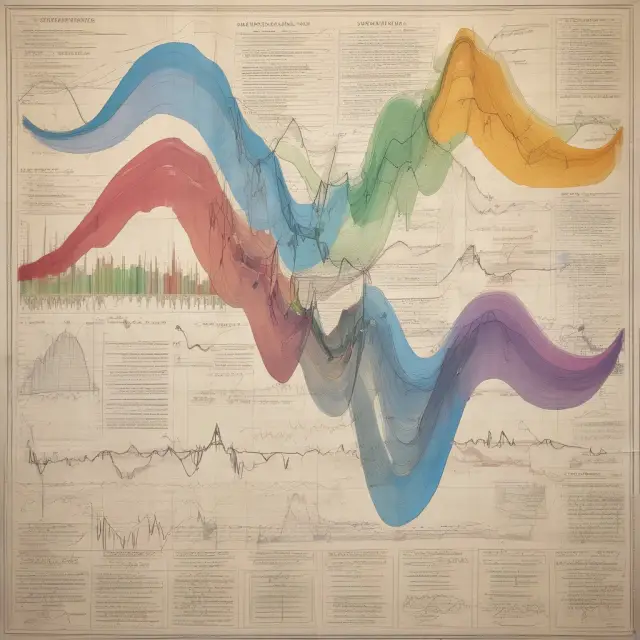
Investing and trading in financial markets requires an understanding of various technical indicators and tools to help evaluate securities and identify potential opportunities. Technical analysis, a prominent trading discipline, relies on these instruments to study market trends and patterns, ultimately offering valuable insights for institutional investors. This section delves into the world of common technical indicators and charting patterns, starting with trendlines, channels, moving averages, momentum indicators, price trends, chart patterns, volume and momentum indicators, oscillators, and moving averages.
1) Trendlines & Channels
A trendline is a line drawn on a chart connecting a series of highs or lows, used to identify the direction and strength of a market trend. Channels, also called trend channels, are formed when two parallel trendlines are drawn – one representing the uptrend (support) and another denoting the downtrend (resistance). These lines can help traders determine potential support or resistance levels.
2) Moving Averages
A moving average is a statistical tool used to analyze trends by calculating the average price of a security over a specified time period, with different time frames providing varying insights. Short-term moving averages (e.g., 5 days or 20 periods) can indicate short-term trends while longer-term averages (50, 100, or 200 days) provide more significant trends.
3) Momentum Indicators
Momentum indicators measure the rate of price change to determine potential buying or selling opportunities. Examples include the Moving Average Convergence Divergence (MACD), Relative Strength Index (RSI), and Stochastic Oscillator. These indicators can help traders identify overbought or oversold conditions and trends, such as trend reversals and continuations.
4) Price Trends
Price trends describe the overall direction of a security’s price movement based on various factors like investor sentiment, economic conditions, and market dynamics. Uptrends represent increasing prices, while downtrends represent declining prices. Understanding these trends can help traders make informed decisions about buying or selling securities.
5) Chart Patterns
Chart patterns are visual representations of price movements that provide insights into potential future price developments. Popular chart patterns include head and shoulders, triangles, wedges, flags, and pennants – each signaling different bullish or bearish market trends.
6) Volume & Momentum Indicators
Volume indicators, like on-balance volume (OBV), measure the buying and selling pressure based on trading volumes, helping traders understand the underlying strength of a trend. Momentum indicators, such as RSI and Stochastic Oscillator, compare the security’s price momentum to historical data, allowing traders to identify potential buy or sell signals.
7) Oscillators
Oscillators are technical indicators that oscillate between two extremes, providing insights into overbought (extreme buying) and oversold (extreme selling) conditions in the market. By analyzing the relationship between the security’s price and the oscillator, traders can identify potential buying or selling opportunities.
By understanding these technical indicators and tools, institutional investors can make informed decisions about entering or exiting a trade based on market trends and patterns. In the following sections, we will delve deeper into the assumptions underlying technical analysis and explore its limitations and criticisms.

Underlying Assumptions of Technical Analysis
Technical analysis is grounded on several assumptions that guide traders and analysts in their pursuit of profitable investment strategies based on market trends. Two essential beliefs underpin the technical analysis approach: markets are efficient, and price movements follow discernible patterns.
1. Markets are Efficient:
The first assumption of technical analysis is that the markets are efficient. Technical analysts believe that all available information about a security, including its fundamental data, is already reflected in its current price. The focus of technical analysis shifts to analyzing historical price movements and market sentiment to make informed trading decisions. This perspective aligns with the Efficient Markets Hypothesis (EMH), which assumes that stock prices reflect all publicly available information.
2. Price Movements Follow Discerning Patterns:
The second fundamental assumption is that price movements exhibit discernible patterns. Technical analysts believe that historical trends and chart patterns provide valuable insights into the market’s behavior and future price directions. While some might argue that these patterns are merely coincidences or random occurrences, technical analysis proponents maintain that they offer a reliable edge for predicting market shifts. This assumption is crucial to understanding how technical analysis indicators are derived and utilized by traders and investors.
The efficient markets hypothesis (EMH) implies that no investor can consistently outperform the broader market. However, EMH does not necessarily mean there is no value in technical analysis. Instead, it suggests that any potential edge gained through technical analysis lies in effectively interpreting price movements rather than relying on fundamental data alone.
As you dive deeper into the world of technical analysis, it’s essential to remember that these assumptions provide a solid foundation for understanding the logic and rationale behind this approach to investing and trading. By mastering technical analysis tools and indicators, you’ll be able to make informed decisions based on market trends and price movements, giving yourself an edge in today’s dynamic financial markets.
FAQs about Technical Analysis
How is Technical Analysis different from Fundamental Analysis?
– Technical analysis focuses on analyzing historical data (price movements, volume, momentum, etc.) to determine the future direction of securities or commodities, while fundamental analysis looks at the underlying financial and economic factors that influence a security’s intrinsic value.
Can I use both Technical and Fundamental Analysis?
– Yes, many traders and investors incorporate both technical and fundamental analysis in their investment strategies to gain a comprehensive perspective on securities or markets.
What are some popular Technical Analysis indicators?
– Commonly used technical analysis indicators include moving averages (SMA and EMA), trendlines, Bollinger Bands, MACD, RSI, Stochastic Oscillator, and Fibonacci retracement levels.
How do I start with Technical Analysis?
– Begin by understanding the basic concepts of technical analysis, including chart reading, trends, momentum, and support/resistance levels. Then, try practicing with demo accounts or paper trading before moving on to live trading.
Technical Analysis Indicators: Price Trends
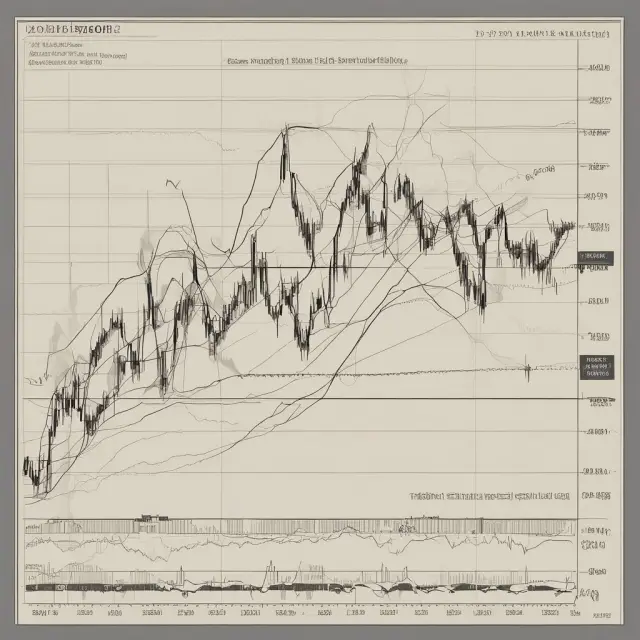
Technical analysis indicators play a crucial role in identifying current market trends and help traders make informed decisions about when to enter or exit positions. While there is no definitive list of technical indicators, most commonly used ones focus on price movements and patterns. In this section, we delve deeper into several essential indicators for determining price trends.
1. Moving Averages: Moving averages represent the average price over a specified period and help traders gauge the long-term trend direction by comparing it to the current price. There are various types of moving averages (such as simple moving averages, exponential moving averages, and weighted moving averages), each with its unique attributes, but they all share the common goal of smoothing out short-term market noise and highlighting underlying trends.
2. Trendlines: Trendlines are essential for technical analysis since they visually represent the direction of a trend. They can be drawn along highs or lows to determine an upward, downward, or sideways trend. Identifying trendlines provides insight into potential price targets and support/resistance levels, which can serve as valuable entry or exit points.
3. Support and Resistance Levels: These essential concepts represent the prices at which a security tends to find a floor (support) or a ceiling (resistance). By examining historical price data, traders can identify these levels and use them as indicators for future price movements. For instance, if a stock keeps bouncing off a specific price level multiple times, it is considered a support level. Conversely, if the stock consistently fails to break through a particular level despite attempts, it can be deemed a resistance level.
Understanding how technical analysis indicators function in relation to price trends enables traders to make informed decisions and capitalize on market opportunities. Stay tuned for further discussions on volume and momentum indicators in our subsequent sections.
Technical Analysis Indicators: Volume and Momentum
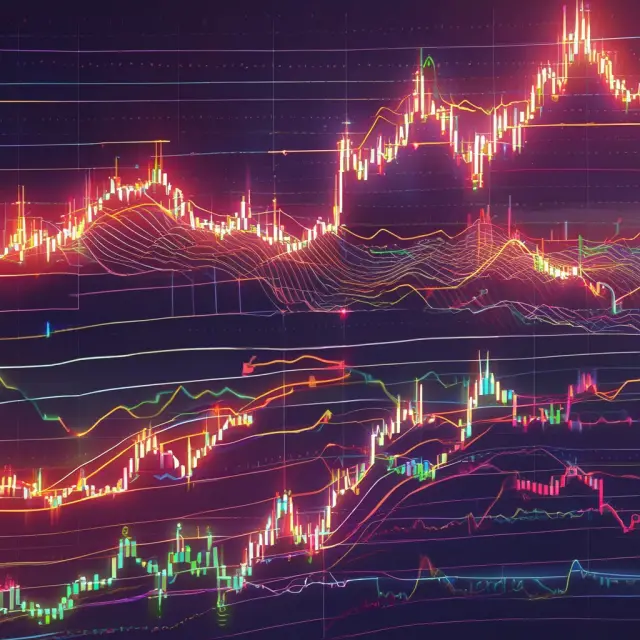
In technical analysis, two important concepts play a crucial role in making informed trading decisions – volume and momentum. While the former reveals the amount of trading activity happening in the market, the latter sheds light on the speed and direction of price movements. In this section, we delve into these critical indicators for a better understanding of their significance.
Volume Indicators: Understanding Market Demand and Supply
Volume is a vital component in technical analysis as it provides insights into the buying and selling activity surrounding securities. Volume indicators help investors gauge market sentiment by quantifying the strength of the trends, confirming price movements, and uncovering potential divergences. Some widely-used volume indicators include:
- On-Balance Volume (OBV): This indicator measures the net flow of buying and selling pressure by considering both the volume and the direction of price movements. It is calculated by comparing the cumulative total volume during an uptrend to that during a downtrend. Increasing OBV indicates bullish sentiment, while decreasing OBV suggests bearishness.
- Chaikin Money Flow (CMF): A momentum indicator that evaluates the relationship between price and volume, CMF quantifies buying and selling pressure by factoring in both price changes and volume fluctuations. It ranges from -1 to +1, with values closer to +1 indicating strong accumulation, and those closer to -1 representing distribution or selling pressure.
- Moving Average Convergence Divergence (MACD): While not a pure volume indicator, MACD includes the relationship between price and volume in its calculation. It consists of two lines – the moving average line and the signal line. The difference between these two lines reveals the underlying trend and potential buy or sell signals when they converge or diverge from the price.
Momentum Indicators: Identifying Trends and Reversals
Momentum indicators are another essential tool for technical analysts, enabling them to identify trends and reversals by measuring the rate of change in price movements. By examining momentum and its shifts, investors can make more informed decisions regarding buying or selling securities. Some popular momentum indicators include:
- Moving Averages: This category includes simple moving averages (SMA) and exponential moving averages (EMA), which smooth out price data by calculating the average of a security’s closing prices over a specific time frame. By comparing moving averages, traders can identify trends, determine potential support or resistance levels, and find entry/exit points based on crossovers between different moving averages.
- Relative Strength Index (RSI): RSI is an oscillator that measures the magnitude of recent price changes to evaluate overbought or oversold conditions in a security. It ranges from 0 to 100, with values above 70 indicating an overbought situation and those below 30 signifying an oversold one.
- Bollinger Bands: This trend-following indicator consists of three lines: the middle band (a simple moving average), an upper band (2 standard deviations above the middle band), and a lower band (2 standard deviations below the middle band). Bollinger Bands can help determine potential buy or sell opportunities based on price breakouts, as well as identify market volatility and trend strength.
By mastering volume and momentum indicators in technical analysis, investors can enhance their investment strategies, make more informed decisions, and capitalize on market trends with confidence.

Technical Analysis Indicators: Oscillators
Oscillators represent a vital class of technical indicators that help traders gauge market momentum and potential price reversals by measuring the relationship between price and its underlying trends. They oscillate above or below a base line, providing valuable insights into overbought or oversold conditions. Two widely popular oscillators are the Stochastic Oscillator and Relative Strength Index (RSI), both of which we will explore in detail.
Stochastic Oscillator: Developed by George Lane in 1953, the Stochastic Oscillator calculates where the current closing price stands within its price range over a specific time frame. The oscillator consists of two lines: %K and %D, with the latter being a moving average of %K. This indicator is highly versatile, offering multiple applications such as identifying potential buy or sell signals when the lines cross above or below the baseline, which usually corresponds to the 0% mark on the chart.
Relative Strength Index (RSI): Introduced in 1978 by J. Welles Wilder Jr., the RSI is a momentum oscillator that measures the magnitude of recent price changes to determine overbought or oversold conditions. This indicator operates within a range from 0 to 100, with readings above 70 considered overbought and values below 30 indicating oversold levels. Traders often use RSI as part of trend-following strategies or to identify potential entry points when the oscillator indicates that an asset may be reaching overbought or oversold conditions.
By examining historical price movements and employing these indicators, traders can gain a better understanding of market trends, identify potential reversals, and make more informed decisions based on real-time data. Additionally, technical analysis oscillators can be applied to various timeframes and securities, ensuring their relevance for both short-term and long-term trading strategies.
In conclusion, oscillators represent a powerful set of tools within the realm of technical analysis. By providing valuable insights into market momentum and potential price reversals, oscillators such as Stochastic Oscillator and RSI have proven instrumental in helping traders navigate financial markets with greater confidence and precision.

Technical Analysis: Limitations and Criticisms
While technical analysis has proven its worth as a valuable tool for analyzing securities, it does come with certain limitations and criticisms. Some argue that it may not be suitable for long-term investments or fundamental value investors, while others contend that the method’s reliance on historical price data makes it vulnerable to misinterpretations.
One of the primary concerns about technical analysis is its limitation to short-term trading decisions. Technical analysts focus on identifying trends and patterns within a security’s price action, which may not be as relevant for investors with a longer investment horizon. For those investing for the long term, it is crucial to consider the fundamental value of the business instead of relying solely on technical indicators.
Moreover, critics argue that technical analysis disregards the importance of company fundamentals in determining stock prices. They argue that short-term market movements and price trends do not necessarily reflect the underlying financial health of a company. This perspective raises questions about the validity of using historical data solely for forecasting future price movements without considering external factors, such as earnings reports or macroeconomic events.
Despite these limitations, many practitioners believe that technical analysis offers valuable insights when used in conjunction with fundamental analysis. The combination of both methods can provide a more comprehensive understanding of the securities being analyzed and lead to more informed investment decisions.
Another criticism leveled against technical analysis is its potential for misinterpretation or overreliance on certain indicators. Given the large number of chart patterns, indicators, and trading systems available, it’s not uncommon for traders to become overly reliant on a particular indicator or tool. This can lead to missed opportunities or incorrect interpretations based on false signals. To mitigate this risk, investors should continuously update their knowledge and remain skeptical of any single indicator’s ability to predict price movements accurately.
Addressing these criticisms, proponents argue that technical analysis is not meant to be a standalone investment approach but rather a complementary tool for making informed decisions. By combining the insights gained from both technical and fundamental analysis, investors can formulate a more well-rounded perspective on securities, helping them make better investment decisions.
Furthermore, some argue that even if technical analysis does not provide all the answers to successful investing or trading, it is still an essential skill for any serious investor or trader. By gaining an understanding of the underlying principles and patterns in market trends, investors can better anticipate market movements and adjust their strategies accordingly. This adaptability is crucial in today’s volatile markets where quick responses to changing conditions are necessary for long-term success.
In conclusion, while technical analysis has its limitations and criticisms, it remains a powerful tool for analyzing securities and identifying trading opportunities. By being aware of these challenges and combining it with fundamental analysis, investors can unlock the full potential of this valuable investment approach.

Technical Analysis vs. Fundamental Analysis
When it comes to stock analysis, two primary methods are commonly used: fundamental analysis and technical analysis. Both approaches offer distinct advantages and have their unique applications. In this section, we’ll delve into the differences between these two schools of thought and explore their advantages and limitations.
Fundamental Analysis: A Deeper Look Inside a Company
At its core, fundamental analysis is focused on understanding a company’s financial health by examining various factors such as earnings, revenue, cash flows, debt levels, management quality, and industry conditions. Fundamental analysts believe that these underlying factors drive the stock prices in the long term, making them essential for assessing a company’s worth. By analyzing financial statements and key performance indicators (KPIs), fundamental analysts can make informed investment decisions based on a company’s intrinsic value.
Technical Analysis: Identifying Market Trends and Patterns
On the other hand, technical analysis is concerned with understanding market trends and price movements by studying historical stock data, including prices, volumes, and trading patterns. Instead of focusing on a company’s fundamentals, technical analysts believe that past market data can provide valuable insights into future price trends and behaviors. By observing charts, trends, and chart formations, they aim to identify buying or selling opportunities based on the assumption that historical price patterns will continue to repeat themselves.
Comparing the Advantages and Disadvantages of Fundamental and Technical Analysis
Fundamental analysis provides a more comprehensive understanding of a company’s financial health and the underlying market conditions, making it an essential tool for long-term investors. Its focus on key financial metrics helps investors assess the intrinsic value of a stock and make informed decisions based on solid data. Moreover, fundamental analysis can provide valuable context when evaluating technical chart patterns, allowing investors to identify potential buy or sell opportunities based on both fundamentals and price trends.
However, fundamental analysis can be time-consuming and resource-intensive, requiring significant effort to gather, analyze, and interpret vast amounts of data. Additionally, the process involves a degree of subjectivity as analysts’ interpretations may differ significantly.
In contrast, technical analysis provides valuable insights into market trends and price patterns, making it an essential tool for short-term traders looking to capitalize on immediate buying or selling opportunities. Its focus on historical stock data enables investors to make decisions based on objective information, eliminating the need for extensive financial analysis. Moreover, technical analysis is more time-efficient than fundamental analysis, requiring less research and a shorter learning curve.
However, technical analysis also has its limitations. Since it relies solely on historical price and volume data, it does not take into account any new or emerging information that may impact a stock’s value. Additionally, technical analysis can be influenced by market sentiment and emotions, which can lead to false signals and incorrect interpretations of chart patterns.
Ultimately, both fundamental and technical analysis methods have their merits and challenges, making them complementary rather than competing approaches for evaluating stocks. Institutional investors often use a combination of both methods to make well-informed investment decisions based on a thorough understanding of a company’s fundamentals and the broader market trends.

FAQs about Technical Analysis
What is technical analysis?
Technical analysis is an investment discipline focused on evaluating securities through the study of statistical trends derived from trading activities, such as price movement and volume. It differs from fundamental analysis, which centers around a company’s financial statements, by primarily focusing on market sentiment and historical price patterns.
What are some common technical analysis tools?
Technical analysts utilize various tools to scrutinize supply and demand forces in the market, such as trendlines, channels, moving averages, momentum indicators, oscillators, and support and resistance levels. These tools help forecast short-term trading signals from price movements and enhance the evaluation of securities.
Who can benefit from technical analysis?
Institutional investors, professional traders, and retail investors can all benefit from employing technical analysis in their investment decision-making process. Technical analysis is particularly popular among commodity and forex markets where short-term price movements are critical.
What assumptions underlie technical analysis?
Technical analysis operates under two primary assumptions: the market discounts everything and even random market price movements exhibit patterns and trends. The first assumption, congruent with the Efficient Markets Hypothesis (EMH), suggests that all publicly available information is reflected in the stock price. The second assumption asserts that prices tend to follow discernible trends, making technical analysis an essential tool for understanding market sentiment.
What are the advantages of fundamental vs technical analysis?
Fundamental analysis and technical analysis have distinct advantages. Fundamental analysts focus on analyzing a company’s financial statements and business conditions, while technical analysts rely on price and volume data to evaluate trends and patterns. Both methods can complement each other in providing comprehensive insights into the securities market.
What are some limitations of technical analysis?
Critics argue that technical analysis may not be an accurate indicator of a stock’s intrinsic value, as it relies solely on historical price data without considering external factors affecting the business and economy. Additionally, some technical indicators might generate false signals or yield inconsistent results, leading to potential losses for investors.
In conclusion, technical analysis is an essential discipline in understanding market trends and identifying trading opportunities based on historical price patterns and volume data. By utilizing various tools and indicators, analysts can forecast short-term price movements and make informed decisions about securities. However, it’s important to remember that no investment strategy is foolproof, and technical analysis should be used as a complementary tool alongside fundamental analysis for a more comprehensive evaluation of the financial markets.
 Next entry · No. 4,916Understanding Technical Indicators: A Comprehensive Guide for Institutional Investors
See also
-
 No. 3,805
28 Apr 2025
20 min
Understanding Oscillators: Technical Analysis Tools for Overbought and Oversold Conditions
Financial Tools
No. 3,805
28 Apr 2025
20 min
Understanding Oscillators: Technical Analysis Tools for Overbought and Oversold Conditions
Financial Tools -
 No. 3,719
21 Apr 2025
21 min
Understanding and Leveraging the Opening Range in Trading
Business Finance
No. 3,719
21 Apr 2025
21 min
Understanding and Leveraging the Opening Range in Trading
Business Finance -
 No. 3,446
29 Mar 2025
19 min
Understanding Net Volume: A Technical Indicator for Professional and Institutional Investors
Financial Data Analysis
No. 3,446
29 Mar 2025
19 min
Understanding Net Volume: A Technical Indicator for Professional and Institutional Investors
Financial Data Analysis -
 No. 515
27 Apr 2024
19 min
Understanding Breakouts: A Key Concept for Institutional Investors in Finance and Investment
Investments
No. 515
27 Apr 2024
19 min
Understanding Breakouts: A Key Concept for Institutional Investors in Finance and Investment
Investments -
 No. 4,065
19 May 2025
20 min
Price Rate of Change (ROC) Indicator: Understanding Momentum in Finance
Financial Education
No. 4,065
19 May 2025
20 min
Price Rate of Change (ROC) Indicator: Understanding Momentum in Finance
Financial Education -
 No. 3,941
09 May 2025
17 min
Understanding Pennants: A Technical Analysis Continuation Pattern
Financial Education
No. 3,941
09 May 2025
17 min
Understanding Pennants: A Technical Analysis Continuation Pattern
Financial Education