The Evolution and Challenges of the European Economic and Monetary Union (EMU)

Explore The Evolution and Challenges of the European Economic and Monetary Union. From its origins to the present, learn about its objectives…
Introduction: What is the European Economic and Monetary Union?
The European Economic and Monetary Union (EMU), also referred to as the Eurozone, is an integral component of the European Union (EU) that fosters economic cooperation among its 19 member states by adopting a single currency – the euro. Established in 1994 following the Maastricht Treaty, the EMU represents a significant step towards greater financial integration within the EU and aims to ensure price stability, promote free movement of capital, and enhance economic cooperation among its members.
Historically, efforts to create a common European currency can be traced back to the 1950s with the Schuman Declaration, which marked the beginning of the European Coal and Steel Community (ECSC). The Maastricht Treaty, signed in 1992, laid the groundwork for the creation of the EMU through a three-phase process. During the first phase (1994-1998), the member states implemented the necessary institutional arrangements for a single monetary policy and established the European Central Bank (ECB) as the common central bank. The second phase began with the irrevocable fixing of exchange rates between national currencies on January 4, 1999. Finally, on January 1, 2002, the euro replaced the national currencies of all participating countries.
To join the EMU, countries are required to fulfill specific convergence criteria, including reasonable price stability, sustainable and responsible public finance, reasonable and responsible interest rates, and a stable exchange rate. With the adoption of the euro, member states relinquish control over their monetary policy, allowing the ECB to set interest rates and manage the supply of money within the Eurosystem.
While some EU countries have adopted the euro, others maintain their national currencies, including the United Kingdom, Switzerland, Norway, Denmark, Hungary, Poland, Czech Republic, Bulgaria, Romania, Croatia, and Sweden. These exceptions illustrate the differences between the wider European Union and the Eurozone.
The Future Challenges and Opportunities for the EMU
Despite its numerous achievements, the EMU faces several challenges that require careful attention. One of these challenges is the potential fragmentation among member states with diverging economic realities and varying responses to crises such as the European Sovereign Debt Crisis. Another challenge is maintaining public support for deeper integration in an increasingly globalized world where national interests often come into conflict. Furthermore, ongoing political developments like Brexit further complicate the future of the EMU and its relationship with non-members.
In conclusion, the European Economic and Monetary Union represents a significant achievement in the pursuit of greater economic cooperation within the EU. By providing a framework for monetary policy coordination, the EMU has fostered price stability, promoted the free movement of capital, and enabled closer economic ties among its members. Looking ahead, addressing the challenges facing the EMU will require careful consideration and innovative solutions to ensure that it remains an effective tool for advancing European integration and promoting economic growth in a rapidly changing global landscape.

Historical Context: Origins of the European Monetary Union
The concept of a single European currency has its roots in the aftermath of World War II, with French Foreign Minister Robert Schuman’s vision for economic cooperation to prevent future conflicts. However, it wasn’t until several decades later that the European Monetary Union (EMU) came into existence. This section delves into the origins and historical context surrounding the creation of the EMU.
The first significant attempt at creating a European Economic and Monetary Union was after World War I when Gustav Stresemann, then German Foreign Minister, asked for a “European currency” to promote peace in Europe during an assembly of the League of Nations (September 9, 1929). Sadly, his vision was overshadowed by the stock market crash in 1929 and the subsequent Great Depression. The idea of a European currency remained dormant until after World War II.
Rekindled interest came from Robert Schuman’s May 9, 1950, “Schuman Declaration,” which emphasized the need to create a single economic entity for Europe. This led to the Treaty of Paris in 1951 that established the European Coal and Steel Community (ECSC) between Belgium, France, Germany, Italy, Luxembourg, and the Netherlands. The ECSC was the first step towards economic integration and eventually evolved into the European Economic Community (EEC).
Although the Treaty of Paris was a milestone in European cooperation, it was not meant to be permanent. In the 1960s and ’70s, plans were proposed for deeper integration like the Werner Plan, but economic instability globally and within Europe delayed further steps. The European Monetary Union took shape under Jacques Delors’ leadership when he was asked in 1988 to propose concrete plans for economic integration.
The Maastricht Treaty of 1992 officially created the European Union (EU), establishing a timeline for the implementation of the EMU, including a common economic and monetary union, a central banking system, and a single currency. The European Central Bank (ECB) was established in 1998, and member states fixed their exchange rates to prepare for the introduction of the euro in 2002.
However, the EMU’s creation was not without challenges. Countries interested in joining had to meet certain convergence criteria, including reasonable price stability, sustainable public finance, responsible interest rates, and stable exchange rates. The European Sovereign Debt Crisis later highlighted the potential drawbacks of adopting a single currency, with countries like Greece struggling to balance fiscal policy while losing monetary flexibility.
The EMU’s future presents both challenges and opportunities as it continues to evolve towards greater economic integration. Understanding its origins provides context for navigating the complexities of this vital European institution.
Maastricht Treaty: The Birth of the EMU
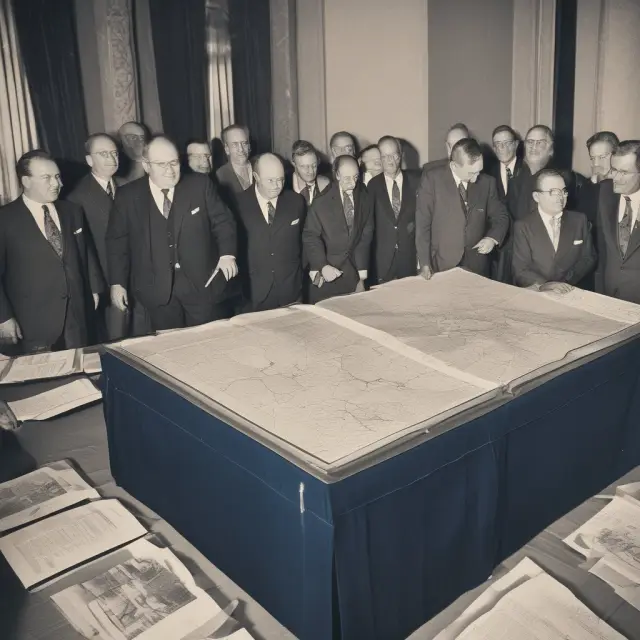
The Maastricht Treaty, officially titled the Treaty on European Union, marked a turning point in the history of European integration. Signed on February 7, 1992, this significant treaty led to the establishment of the European Economic and Monetary Union (EMU), which brought together several European Union (EU) member states into a unified economic system. The EMU, also known as the Eurozone, represents a cohesive economic entity characterized by coordinated economic and fiscal policies, a common monetary policy, and a single currency: the euro.
Prior to the Maastricht Treaty, there were several attempts to create a European monetary union, with the earliest efforts dating back to the 1920s. The first attempt was made by French Foreign Minister Robert Schuman in 1950, who proposed pooling the coal and steel industries of France and Germany as part of an effort to create lasting peace between these countries. This initiative led to the creation of the European Coal and Steel Community (ECSC) in 1952 among six founding members: Belgium, France, Germany, Italy, Luxembourg, and the Netherlands.
The ECSC was consolidated into the European Economic Community (EEC), but it was not a permanent treaty and was set to expire in 2002. To ensure a more concrete union, European politicians proposed plans such as the Werner Plan in the late 1960s and 1970s, which aimed at closer economic integration. However, these initiatives were delayed due to the worldwide economic instability caused by events like the end of the Bretton Woods currency agreement and the oil and inflation shocks of the 1970s.
The Maastricht Treaty, signed in 1992, laid the groundwork for a more comprehensive European Economic and Monetary Union. The treaty set forth specific objectives for economic policy convergence and established a timeline for creating and implementing the EMU. This included the creation of a central banking system and a common currency. In 1998, the European Central Bank (ECB) was established, and in 1999, conversion rates between member states’ currencies were fixed as a prelude to the introduction of the euro currency on January 1, 2002.
Countries joining the EMU are subject to convergence criteria, which include requirements related to price stability, sustainable public finances, reasonable interest rates, and stable exchange rates. This set of guidelines aims to ensure that member states maintain a level playing field in terms of economic health before adopting the common currency.
However, the adoption of a single currency for monetary policy also comes with challenges, particularly concerning fiscal matters. The EMU does not equate to a fiscal union, meaning that member states have their unique tax structures and spending priorities, leading to varying creditworthiness among them. As a result, countries that adopted the euro were able to borrow at low interest rates during the period before the global financial crisis. Yet, bond yields did not accurately reflect the different creditworthiness of individual member states, setting the stage for potential crises.
One such high-profile example of these challenges is Greece. In 2009, it was revealed that Greece had been understating its deficit since adopting the euro in 2001, and the country faced one of the worst economic crises in recent history. Despite a series of bailouts and emergency loans from the EU and other lenders, Greece remains a concern for the long-term stability of the common currency.
As of 2022, not all European countries have adopted the euro as their currency. Some EU members, including the U.K., Switzerland, Sweden, Norway, Bulgaria, Croatia, Czech Republic, Denmark, Hungary, Poland, Romania, and non-EU jurisdictions like Vatican City, Andorra, Monaco, and San Marino, maintain their own currencies.
In conclusion, the Maastricht Treaty played a crucial role in the establishment of the European Economic and Monetary Union, creating a common monetary policy, a central banking system, and ultimately, the euro currency among 19 Eurozone nations. The EMU’s creation was influenced by a rich historical context, with important milestones like the Schuman Declaration and the Werner Plan shaping the European integration process. Despite challenges, such as the European sovereign debt crisis, the EMU continues to play an essential role in economic cooperation among EU member states.
Key Takeaways
– The Maastricht Treaty established the European Economic and Monetary Union (EMU), also known as the Eurozone, which includes a common monetary policy, central banking system, and single currency: the euro.
– The EMU has its roots in the European Coal and Steel Community (ECSC) of 1952 among six founding members: Belgium, France, Germany, Italy, Luxembourg, and the Netherlands.
– The Maastricht Treaty laid the groundwork for a more comprehensive EMU by setting objectives for economic policy convergence, creating a timeline for establishing the EMU, and creating the European Central Bank (ECB).
– Countries adopting the euro must meet convergence criteria related to price stability, sustainable public finances, reasonable interest rates, and stable exchange rates.
– Not all European countries have adopted the euro as their currency; some EU members and non-EU jurisdictions maintain their own currencies.

Establishment of the European Central Bank (ECB)
The European Economic and Monetary Union (EMU), also known as the Eurozone, marked a significant milestone in European economic history with the establishment of the European Central Bank (ECB). The ECB plays a crucial role in ensuring price stability and implementing monetary policy within the EMU. With its headquarters in Frankfurt, Germany, it operates independently from political influences to safeguard the integrity and confidence in the euro currency.
The creation of the ECB was one of the main objectives outlined in the Maastricht Treaty signed in 1992, which paved the way for the EMU’s establishment. As part of the treaty’s economic policy convergence process, countries agreed to meet specific criteria (known as convergence criteria) before they could join the Eurozone and adopt the common euro currency.
The Maastricht Treaty established the European Monetary Institute (EMI) in 1994, which served as a precursor to the ECB. The EMI’s primary function was to oversee preparations for the establishment of the European System of Central Banks and the ECB. In 1998, after meeting the convergence criteria, eleven EU countries (Austria, Belgium, Finland, France, Germany, Ireland, Italy, Luxembourg, the Netherlands, Portugal, and Spain) adopted the euro as their official currency on January 1, 1999. Greece joined the Eurozone on January 1, 2001.
The ECB’s primary objective is to maintain price stability in the Eurozone by implementing monetary policy through setting interest rates and managing open market operations. The ECB also plays a crucial role in monitoring and supervising banks within the Eurosystem (consisting of the national central banks and the ECB). In 2003, the European Central Bank Act was adopted to grant the ECB full independence from political interference.
The ECB operates under the principle of proportionality, meaning that any interventions in the economic sphere should be limited to what is necessary to achieve its objective of price stability. The bank’s decision-making process involves a Governing Council consisting of the six members of the ECB’s Executive Board and the governors of all national central banks within the Eurosystem.
The establishment of the European Central Bank significantly strengthened the EMU, allowing it to better respond to economic challenges and maintain confidence in the euro currency as a global reserve currency. However, the ECB’s role extends beyond the Eurozone, as it also cooperates with other central banks and international financial institutions on various issues related to monetary policy and financial stability.

Common Currency and Convergence Criteria
The European Economic and Monetary Union (EMU), also known as the Eurozone, is an economic partnership between nineteen European Union member states that have adopted the euro currency as their legal tender. The EMU represents a significant step towards achieving greater economic integration within the EU, allowing for a common monetary policy, increased economic cooperation, and a single currency. However, joining this union does not come lightly as it demands strict adherence to specific convergence criteria.
The convergence criteria are economic conditions set by the European Union that countries must meet before being allowed to join the EMU. These guidelines were established to ensure that all participating economies share similar characteristics, ensuring the stability of the common currency and fostering a harmonious economic environment. The main criteria include:
- Price Stability: Countries must maintain inflation rates no more than 1.5 percentage points above the average of the three countries with the lowest inflation.
- Sustainable Public Finances: Governments should have public debt levels not exceeding 60% of Gross Domestic Product (GDP) and budget deficits below 3% of their respective GDPs.
- Exchange Rate Stability: Currencies should fluctuate within the European Monetary System’s Exchange Rate Mechanism (ERM II) with a margin not exceeding 15% against the euro.
- Long-Term Interest Rates: National long-term interest rates must be close to the average of the three countries with the lowest inflation.
These convergence criteria are essential in maintaining an effective and stable EMU. For instance, a country entering the EMU with high debt levels may find itself at risk for financial instability due to increased borrowing costs associated with higher interest rates. Alternatively, a country experiencing rampant inflation might see its currency devalued against other currencies within the union, impacting trade and economic cooperation.
By adhering to these convergence criteria, countries can enjoy the benefits of being part of a monetary union like greater exchange rate stability, reduced transaction costs, and increased financial integration. Additionally, the strict convergence process encourages fiscal discipline and economic reforms that make the member states more competitive within the European Union and beyond.
Although most EU member states have adopted the euro as their currency, some countries such as Denmark, Sweden, Switzerland, and the United Kingdom have opted out of the EMU. They either have their own currencies or choose to maintain monetary autonomy while participating in other aspects of the European Union. These decisions are made based on various reasons like political considerations, economic factors, or a desire to preserve national sovereignty.
In conclusion, the convergence criteria play an essential role in ensuring the stability and cohesion of the European Economic and Monetary Union. By implementing these economic conditions, participating countries can benefit from a stable currency, increased cooperation, and financial integration while fostering economic growth within the European Union.
European Monetary Union and the European Sovereign Debt Crisis
The European Monetary Union’s (EMU) significance extends far beyond being a monetary arrangement. It represents an economic union that includes 19 European Union (EU) member states, popularly known as the Eurozone. The EMU was established to ensure sustainable economic growth and stability within the EU through a common monetary policy, fiscal cooperation, and the use of a single currency – the euro. However, its creation also brought about new challenges, most notably the European sovereign debt crisis.
The convergence of economies in the EMU aimed at fostering greater economic unity among member states. The Maastricht Treaty, signed in 1992, set the stage for the monetary union’s implementation. A crucial element was the establishment of a single currency and the European Central Bank (ECB) to manage it. In 1998, the ECB started operations, and by the end of that year, member states fixed their exchange rates against the euro in preparation for its launch in 2002. The introduction of the common currency necessitated strict convergence criteria for countries interested in joining the EMU. These requirements included maintaining price stability, responsible fiscal policies, sustainable public finances, and converging interest rates.
The sharing of monetary policy among Eurozone members eliminated their ability to independently print money to pay off government debt or deficits, as well as compete with other European currencies. Although the euro offered a number of advantages – like low borrowing costs during the pre-global financial crisis era – it also led to a lack of fiscal flexibility and increased interconnectedness among member states’ economies.
This situation proved precarious when several countries faced sovereign debt crises, with Greece being one of the most prominent examples. Beginning in 2009, it was revealed that Greece had been underreporting its deficit since adopting the euro in 2001. The country subsequently suffered from a devastating economic crisis and accepted two EU bailouts in five years.
Greece’s predicament raised concerns regarding the future of the common currency, particularly amidst fears of contagion. Greece accounted for only about 2% of the overall Eurozone economy, but its crisis posed significant risks to other member states due to their interconnected economies and shared currency.
If Greece were to exit the EMU, it might face severe economic consequences such as capital flight, a loss of confidence in the new drachma, and potentially hyperinflation. These issues could significantly destabilize the entire Eurozone economy. To prevent this, the European Union provided Greece with multiple bailouts and emergency loans.
Although the Greek crisis was not unique, it highlighted the challenges posed by the intertwined nature of the EMU. It brought about a new era of fiscal austerity for Greece, which continues to impact its economy today. The crisis also emphasized the need for greater fiscal cooperation and coordination among Eurozone members to ensure stability within the union.
In conclusion, while the European Monetary Union offers numerous benefits like price stability, free trade, and economic integration, it also presents challenges such as increased interdependence and the loss of monetary flexibility. The European sovereign debt crisis underscores these challenges, particularly with regard to Greece’s experience. Despite these difficulties, the EMU remains a critical component of the European Union and continues to evolve in response to economic changes and challenges.

The European Union vs. The Eurozone
While the terms ‘European Economic and Monetary Union’ (EMU) and ‘European Union’ (EU) are often used interchangeably, it is essential to understand that they represent two distinct concepts. The primary difference lies in their scope and membership. This section aims to shed light on the differences between these two entities.
The European Economic and Monetary Union (EMU), also known as the Eurozone, refers to the economic and monetary agreement among 19 EU countries that have adopted the euro currency as their common currency. The EMU was established with the aim of promoting a stable monetary environment and closer fiscal coordination between its members.
On the other hand, the European Union (EU) is a political and economic union consisting of 27 member states. The EU’s primary objective is to promote peace, security, and prosperity among its members through the implementation of common policies in various sectors, including trade, agriculture, fisheries, and justice and home affairs, among others.
The European Union was established long before the EMU. Its roots can be traced back to the 1950s when the European Coal and Steel Community (ECSC) was formed, with the signing of the Treaty of Paris in 1951. The EU has since expanded its scope and membership through various treaties, most notably the Treaty of Maastricht in 1992, which paved the way for the establishment of the EMU.
While all member states of the European Union are part of the broader European project, not all have adopted the euro currency as their common currency. This means that there are EU countries that belong to the political and economic union but do not form part of the monetary union. Examples include the United Kingdom, Switzerland, Denmark, and Norway, among others.
The adoption of a single currency by EMU members implies that they surrender control over their monetary policy to the European Central Bank (ECB). This means that these countries no longer have the ability to devalue or revalue their currencies to gain a competitive advantage in international trade. Instead, the ECB sets interest rates and conducts monetary policy for the entire EMU.
In contrast, EU member states not part of the EMU retain control over their monetary policy and can adjust their exchange rates as needed to maintain competitiveness in international markets. This flexibility allows these countries to respond more effectively to economic shocks and maintain greater control over their economic destiny.
Despite the differences in their scope and membership, both the EU and EMU share common goals, such as promoting peace, stability, and prosperity among their members. However, the unique challenges faced by each union call for distinct approaches and policies to achieve these objectives. Understanding the differences between the two unions is crucial for investors, policymakers, and anyone interested in the European economic landscape.

Countries Using Their Own Currencies Outside the Eurozone
Not all European countries belong to the European Economic and Monetary Union (EMU), also known as the Eurozone, which adopts a common currency – the euro. Although most EU members are part of the EMU, some have opted to maintain their own currencies. In this section, we’ll explore the reasons behind this choice and examine some European countries that use their national currencies outside the Eurozone.
The decision for countries to abandon their pursuit of joining the EMU or remain within it is often driven by factors like sovereignty, economic considerations, and historical ties. Some countries prefer to maintain control over their monetary policy and have a unique set of circumstances that make adopting the euro infeasible or undesirable.
The United Kingdom, one of Europe’s largest economies, has historically chosen to remain outside the Eurozone. While it was an active member of the European Union (EU) until its exit in 2020 following a Brexit referendum, the U.K. never adopted the euro as its currency. The country had long maintained that retaining control over its interest rates and monetary policy was essential for managing its economy effectively.
Switzerland, another European country, decided not to join the EMU when it became an offer in 1992. Swiss officials argued that maintaining their own currency provided them with greater flexibility to manage their economy’s unique challenges, such as high debt and a large banking sector. Switzerland has also been successful at keeping inflation low and its currency strong due in part to its reputation for financial stability and attractive interest rates.
Norway, despite being an EU member of the European Economic Area (EEA), is not part of the EMU. Norway’s oil-rich economy necessitates maintaining control over its own currency, as the value of oil prices plays a significant role in determining its economic stability. Additionally, Norway has a history of strong ties to the Nordic region and prefers to manage its economy alongside Denmark, Sweden, and Finland.
Sweden is another EU member outside the Eurozone that maintains its currency, the krona. The country’s economy is robust, with high levels of productivity, a large export sector, and a stable banking system. Sweden argues that its flexible exchange rate provides it with an essential tool for managing inflation, interest rates, and economic growth.
Countries like Bulgaria, Croatia, Czech Republic, Denmark, Hungary, Poland, and Romania have all chosen to remain outside the Eurozone for various reasons, including maintaining their own monetary policy, preserving fiscal sovereignty, or being at different stages of economic development.
In conclusion, European countries maintain their own currencies outside the Eurozone due to a range of factors, from historical ties and national pride to economic considerations and sovereign concerns. While these countries may not enjoy the benefits of a common currency like the euro, they retain control over their monetary policy and can manage their economies according to their unique circumstances.
Next Section: The Future Challenges and Opportunities for the EMU (To be continued)

Future Challenges and Opportunities for the EMU
As we’ve explored, the European Economic and Monetary Union (EMU), or the Eurozone, has come a long way since its inception. From the initial vision of creating a single European currency to overcome devastating wars, through the establishment of various economic communities, and finally to the creation of the EMU with a common currency, there have been numerous challenges faced along the way. However, despite these hurdles, the union has continued to evolve, offering opportunities for further integration and growth. In this section, we will discuss potential future challenges and opportunities for the European Economic and Monetary Union (EMU).
Challenges: Fiscal and Political Differences
The absence of a fiscal union in the EMU creates a significant challenge when it comes to managing economic shocks. Although monetary policy is centralized under the European Central Bank (ECB), each member state maintains its budgetary policies. This divergence can create frictions, especially during times of financial instability, as we have seen with the European sovereign debt crisis. The uneven fiscal responses and bailout programs among member states have led to growing political tensions.
Another challenge for the EMU is the potential impact of Brexit on the union. As a founding member of the European Union but not part of the Eurozone, the U.K.’s departure has significant implications for the future of the EMU. While it remains uncertain how this will unfold, it is expected that the U.K.’s exit could lead to further discussions about potential reforms or even dissolution of the union.
Opportunities: Deepening Integration and Climate Change
Despite these challenges, there are also opportunities for the EMU to deepen its integration and tackle pressing issues, such as climate change. For instance, the European Union has already set ambitious targets to reduce greenhouse gas emissions by 2050 under the Paris Agreement. The EMU can play a crucial role in helping member states meet these goals by coordinating fiscal policies, providing financial support for renewable energy projects, and harmonizing regulations across borders.
Furthermore, there are ongoing discussions about the creation of a European Monetary Fund (EMF) that would serve as an alternative to the International Monetary Fund (IMF) in addressing financial crises within the EMU. This could provide a more efficient response mechanism for member states facing economic instability while maintaining the autonomy of each country’s fiscal policies.
In conclusion, the European Economic and Monetary Union (EMU) presents both challenges and opportunities as it continues to evolve. By addressing potential issues like fiscal and political differences and seizing opportunities such as deepening integration and climate change initiatives, the EMU can build a more resilient and interconnected economic union for its members.
FAQs:
What is the difference between the European Union (EU) and the Eurozone?
The EU is a political and economic alliance of 27 member states committed to shared democratic values, while the Eurozone refers specifically to the 19 member states that use the euro as their common currency.
What challenges does the EMU face moving forward?
Some of the key challenges for the EMU include managing fiscal and political differences between members, addressing the impact of Brexit on the union, and ensuring a coordinated response to financial crises.
How can the EMU deepen its integration?
The EMU can deepen its integration by harmonizing regulations, providing financial support for renewable energy projects, and creating a European Monetary Fund (EMF) to address financial crises more efficiently.
FAQ: Frequently Asked Questions About the European Economic and Monetary Union
The European Economic and Monetary Union (EMU), also known as the Eurozone, is a monetary union consisting of 19 European Union member states that have adopted the euro as their common currency. In this section, we will address some frequently asked questions about the European Economic and Monetary Union to provide you with a better understanding of its purpose, origins, and challenges.
Question: What is the European Economic and Monetary Union (EMU)?
Answer: The European Economic and Monetary Union (EMU) refers to the economic and monetary policies implemented among 19 EU member states that have adopted the euro as their common currency. It aims for a single market with free movement of goods, services, capital, and people while ensuring price stability.
Question: How did the European Monetary Union begin?
Answer: The origins of the European Monetary Union can be traced back to the Schuman Declaration in 1950, which called for the pooling of coal and steel resources among France, Germany, Belgium, Italy, Luxembourg, and the Netherlands. This led to the creation of the European Coal and Steel Community (ECSC) and eventually paved the way for further economic integration, culminating in the establishment of the EMU.
Question: What is the role of the Maastricht Treaty in creating the European Economic and Monetary Union?
Answer: The Maastricht Treaty of 1992, also known as the Treaty on European Union (TEU), set the framework for economic and monetary union among the European Union member states. It introduced convergence criteria that countries had to meet to adopt the common currency and established the European Central Bank (ECB) in 1998, which is responsible for ensuring price stability within the eurozone.
Question: What are the convergence criteria for joining the EMU?
Answer: To join the European Economic and Monetary Union, countries must meet several convergence criteria that ensure economic stability. These include maintaining price stability, sustainable public finances, reasonable interest rates, and stable exchange rates.
Question: How has the European Monetary Union affected the sovereign debt crisis in Europe?
Answer: The EMU’s adoption of a common currency led to monetary flexibility being forbidden, as no committed country may print its own money to pay off government debt or deficits. While this prevented individual countries from devaluing their currencies during the global financial crisis, it also exposed vulnerabilities in countries with weak fiscal policies, leading to various bailouts and economic instability among some European nations.
Question: What happened to Greece during the European Monetary Union’s sovereign debt crisis?
Answer: Greece faced significant challenges within the EMU due to its weak fiscal policies and misrepresentation of deficit data before adopting the euro. As a result, it received multiple bailouts from the EU in 2010 and 2012 to prevent defaulting on its debts. The crisis led to capital controls, economic instability, and fears of contagion to other European countries.
Question: Why do some European countries not use the euro as their currency?
Answer: Some European countries, such as the UK, Switzerland, Sweden, Norway, Bulgaria, Croatia, Czech Republic, Denmark, Hungary, Poland, and Romania, have chosen to maintain their own currencies instead of adopting the euro. Each country has its unique reasons for this decision, such as concerns over monetary policy or economic independence.
Question: What is the difference between the European Union (EU) and the Eurozone?
Answer: The European Union (EU) is a political and economic alliance of 27 countries that share democratic values, while the Eurozone is a subset of EU member states that have adopted the euro as their common currency. While all EU members can join the Eurozone, they must meet specific convergence criteria to do so.
 Next entry · No. 1,280Understanding Encumbrances: Types, Effects and Importance
See also
-
 No. 3,980
12 May 2025
25 min
Understanding PIIGS: The Derogatory Acronym That Defined the European Debt Crisis
Business Finance
No. 3,980
12 May 2025
25 min
Understanding PIIGS: The Derogatory Acronym That Defined the European Debt Crisis
Business Finance -
 No. 1,360
04 Sep 2024
20 min
Understanding the Role, Functions and Mandate of the European Central Bank (ECB)
Finance Policy
No. 1,360
04 Sep 2024
20 min
Understanding the Role, Functions and Mandate of the European Central Bank (ECB)
Finance Policy -
 No. 4,390
15 Jun 2025
19 min
Understanding Repudiation and Its Implications in Fixed Income Securities
Business Finance
No. 4,390
15 Jun 2025
19 min
Understanding Repudiation and Its Implications in Fixed Income Securities
Business Finance -
 No. 3,754
24 Apr 2025
22 min
Understanding Optimal Currency Areas: Robert Mundell’s Theory and Its Application to the Euro
Business Finance
No. 3,754
24 Apr 2025
22 min
Understanding Optimal Currency Areas: Robert Mundell’s Theory and Its Application to the Euro
Business Finance -
 No. 2,624
22 Jan 2025
21 min
Joint Bonds: Understanding Shared Guarantees and Their Role in Finance
Business Finance
No. 2,624
22 Jan 2025
21 min
Joint Bonds: Understanding Shared Guarantees and Their Role in Finance
Business Finance -
 No. 1,476
21 Sep 2024
19 min
Understanding the Federal Funds Rate: Impact, Determination and Difference
Business Finance
No. 1,476
21 Sep 2024
19 min
Understanding the Federal Funds Rate: Impact, Determination and Difference
Business Finance