The Evolution and Properties of Money: A Comprehensive Guide for Institutional Investors

Explore the history, properties, and evolution of money as a tool for transactions, from bartering to cryptocurrencies. Learn about its roles, risks, and…
Introduction to Money: An Essential Tool for Facilitating Transactions
Money is an integral part of modern economies, serving as a medium of exchange, unit of account, store of value, and standard of deferred payment. This article section will delve into the origins, history, and properties of money, emphasizing its importance in enabling seamless transactions between buyers and sellers.
The Origin of Money: From Bartering to Commodity Money
Money’s emergence as an intermediary good came about due to the limitations of barter trading. Bartering, the direct exchange of goods or services for other goods or services, had its challenges: the double coincidence of wants, where both parties needed to possess something that the other required. Money eliminated this problem by functioning as an intermediary commodity, enabling transactions and reducing transaction costs.
The First Forms of Money: Agricultural Commodities
The first types of money were agricultural commodities such as grain or livestock. These goods had desirable properties as they were durable, easily transported, and universally recognized. Cocoa beans, cowrie shells, and various tools also served as early forms of money due to their unique attributes.
Money’s Role: Medium of Exchange, Unit of Account, Store of Value, and Standard of Deferred Payment
Money plays a pivotal role in economies by facilitating transactions as a medium of exchange, acting as a unit of account for measuring value, serving as a store of value to save for future use, and functioning as a standard of deferred payment when settling debts. Understanding these functions provides valuable context for investors seeking to make informed decisions.
The Properties of Money: Fungibility, Durability, Portability, Recognizability, and Stability
Money’s usefulness stems from its essential properties: fungibility (interchangeable value), durability (long-lasting), portability (easy to transport), recognizability (readily identifiable), and stability (consistent in value). These properties minimize transaction costs and enable efficient monetary exchanges.
Market-Determined Money: Precious Metals and Commodities as Mediums of Exchange
Historically, precious metals like gold and silver served as market-determined money due to their inherent desirability and demand. Understanding these historical contexts offers valuable insights into the development of modern monetary systems.
Upcoming sections: Government-issued currency, fiat currency, and cryptocurrency, along with investing in money markets and best practices for money management. Stay tuned as we continue to explore this fascinating topic further!

How Money Emerged as an Intermediary Good: Eliminating the Problem of Bartering
Money, as we know it today, is a system of value that facilitates transactions between individuals and entities by acting as a medium of exchange. Before money came into existence, economies relied on barter trading, where goods were exchanged directly for other goods or services. However, this approach carried an inherent problem known as the double coincidence of wants. This predicament necessitated that both parties involved in a trade possess something that the other party required or wanted.
The origins of money can be traced back to agricultural commodities such as grain and livestock that emerged as the first forms of money due to their desirable properties. These goods were often in high demand, making them ideal intermediaries for exchange. Cocoa beans, cowrie shells, and agricultural tools have also been documented as early examples of money.
The primary advantage of using money as a medium of exchange is its ability to eliminate the issue of the double coincidence of wants. Money acts as an intermediary good that makes transactions more efficient and convenient for all parties involved. As economies grew more complex, money was standardized into currencies, making it easier to measure value and reduce transaction costs.
Money’s Properties: Fungeable, Durable, Portable, Recognizable, and Stable
To fully understand the importance of money, it is crucial to appreciate its unique properties that distinguish it from other goods or commodities. Money should be:
- Fungible: interchangeable, allowing for units to be used as equivalents in transactions without altering their value.
- Durable: lasting over time and able to retain its value and usefulness in future exchanges.
- Portable: easy to transport, enabling the exchange of value across long distances.
- Recognizable: readily identifiable by all parties involved, reducing transaction costs related to authentication.
- Stable: maintaining a consistent value over time to facilitate efficient transactions and planning for the future.
These properties enable money to function effectively as a medium of exchange, unit of account, store of value, and standard of deferred payment. In turn, they contribute to a more efficient and liquid economy by reducing transaction costs and making it easier for goods and services to be exchanged in various markets.
Stay tuned for the next section on market-determined money, where we will explore how precious metals and commodities functioned as mediums of exchange prior to government intervention.

Properties of Money: Understanding Fungibility, Durability, Portability, Recognizability, and Stability
Money, as a vital instrument for facilitating transactions in an economy, is expected to possess several inherent properties that enable seamless exchange. These properties include fungibility, durability, portability, recognizability, and stability. Let’s take a closer look at each one:
1. Fungibility: Interchangeable Value
Fungibility refers to the quality of an asset being mutually interchangeable or replaceable with another identical unit. In the context of money, fungibility implies that every unit is indistinguishable from any other unit, ensuring that one unit can be exchanged for another unit of equivalent value without complications. The ability to swap units without confusion reduces transaction costs and enhances convenience when engaging in commercial activities.
2. Durability: Long-Lasting
Durability is a crucial property of money since it enables the medium of exchange to survive over extended periods. A durable form of money ensures that it can be used for multiple transactions, eliminating the need for frequent replacement and reducing transaction costs associated with handling new money units. Furthermore, its longevity makes it an ideal store of value for both individuals and businesses.
3. Portability: Easy to Transport
The portability of money is a significant advantage as it allows for convenient exchange over large distances or between different markets. A portable form of money can be easily carried and exchanged with minimal effort, which is essential when engaging in international trade. Additionally, its transportability makes it an attractive choice for individuals who travel frequently or require access to various markets.
4. Recognizability: Easily Identified
Recognizability is another important characteristic of money as it ensures that all parties involved in a transaction can easily distinguish one unit from another. A recognizable form of money makes transactions more efficient and less prone to errors or disputes, which can save time and resources for both buyers and sellers. Furthermore, its recognizability allows for easier record-keeping and account management.
5. Stability: Consistent in Value
Finally, stability is a crucial property of money as it ensures that the value remains consistent over time. A stable form of money helps maintain trust among market participants and prevents unnecessary transaction costs associated with the volatility of other assets. For instance, if the value of money fluctuates significantly due to external factors like inflation or deflation, businesses may hesitate to engage in long-term planning or invest in capital projects, which can hinder economic growth.
Understanding these essential properties of money plays a critical role in making informed financial decisions and navigating complex markets. By recognizing the significance of fungibility, durability, portability, recognizability, and stability, investors can better assess potential investment opportunities, manage risk, and stay competitive within their industries.
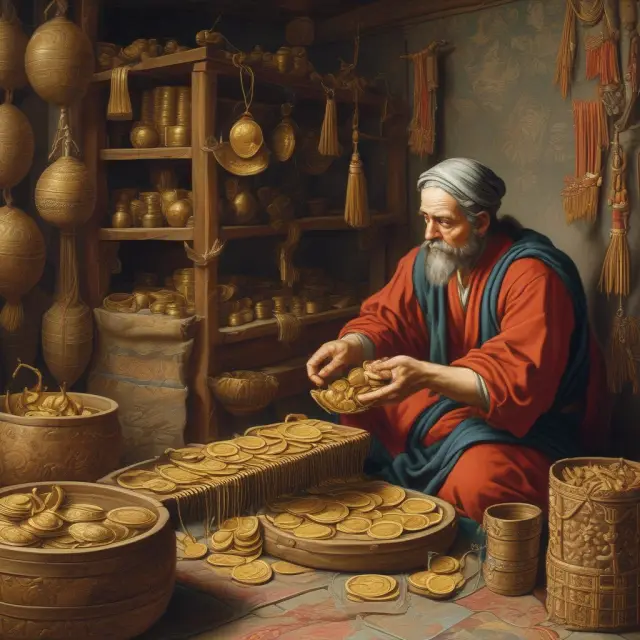
Money’s Role as a Medium of Exchange, Unit of Account, Store of Value, and Standard of Deferred Payment
Money performs several essential functions in an economy that make it indispensable. As a medium of exchange, it facilitates transactions between buyers and sellers. A unit of account enables measuring the value of goods or services. Money serves as a store of value by allowing us to save for future use without losing its value. Lastly, money functions as a standard of deferred payment when settling debts.
Medium of Exchange
In ancient economies, people often relied on bartering to trade goods and services. However, the double coincidence of wants posed a significant problem, limiting transactions to those where both parties needed each other’s offerings. The emergence of commodities as money resolved this issue by acting as an intermediary good that could be exchanged for various goods and services.
Unit of Account
Money simplifies the process of measuring value by serving as a unit of account. It allows us to compare the worth of different commodities or services, making transactions easier and more efficient. By assigning a monetary value to goods and services, it becomes possible to establish markets, track economic activity, and make informed decisions.
Store of Value
As a store of value, money enables individuals to save for future purchases or emergencies without worrying about the depreciation of their savings. This function is crucial since not all transactions can be completed immediately. Stable and durable forms of money, like precious metals, served as effective stores of value throughout history before the advent of paper currencies and fiat money.
Standard of Deferred Payment
Money plays a vital role in settling debts by functioning as a standard of deferred payment. This function is particularly important when dealing with long-term obligations or complex financial arrangements. The ability to make payments over time, such as through installments or interest, relies on the stability and acceptability of money as a means of exchange.
Understanding these functions of money helps investors make informed decisions and navigate the complex world of finance and investing. By recognizing how money facilitates transactions, acts as a unit of account, serves as a store of value, and functions as a standard of deferred payment, institutional investors can effectively manage their portfolios and maximize returns.
As we dive deeper into various investment opportunities, it’s essential to recognize the importance of understanding money’s role in our economy and financial systems. By considering how money evolves and adapts to changing circumstances, investors can make more informed choices about their investments and stay ahead of market trends.

Market-Determined Money: Precious Metals and Commodities as Mediums of Exchange
In the absence of government intervention, precious metals such as gold and silver have often functioned as market-determined money. This means that their value is derived from their desirability as mediums of exchange within a given market. Historically, gold and silver have been used extensively due to their scarcity, durability, and portability.
The emergence of market-determined money can be traced back to the problem of double coincidence of wants in barter systems. As economies grew more complex and people began trading goods over longer distances, it became increasingly difficult for every transaction to involve a good that both parties wanted or needed directly. Instead, they would often agree on a medium of exchange that was widely recognized and desirable as a store of value within the market.
Gold and silver’s scarcity, durability, and portability made them ideal candidates for market-determined money. These precious metals had intrinsic value and were relatively easy to transport across long distances. They also held their value well over time, making them an effective store of value for future transactions or as a means to settle debts.
The use of precious metals as market-determined money has several advantages. Since their value is determined by supply and demand within the market, they can act as a buffer against inflationary pressures caused by government intervention in monetary policy. For instance, if governments increase the money supply through printing more paper currency or creating debt, the real value of that currency can decrease relative to precious metals. As a result, investors may turn to gold and silver as a hedge against potential currency depreciation.
Moreover, market-determined money does not require any form of central authority or regulation, making it resilient in the face of political instability and economic shocks. This is particularly important in economies where governments lack credibility or stability, as seen during times of war, hyperinflation, or political turmoil.
However, market-determined money also has its limitations. Since their value is determined by market demand, the price of precious metals can be volatile and susceptible to speculation. Additionally, since they are physical assets, transporting large quantities of gold or silver poses logistical challenges and security risks. This makes them less convenient for everyday transactions compared to paper currencies.
Despite these limitations, precious metals continue to play an essential role as market-determined money in various markets around the world. They offer investors a hedge against potential currency depreciation and serve as a reminder of the importance of intrinsic value in monetary systems. However, the emergence of fiat currencies and government regulation has significantly reduced their prevalence as mediums of exchange in many economies.
In conclusion, understanding the historical background and properties of market-determined money provides valuable insights into the role that precious metals have played in facilitating transactions and serving as a store of value throughout history. By examining how gold and silver have been used as mediums of exchange and their advantages in comparison to government-issued currencies, we gain a deeper appreciation for the evolution of monetary systems and the complex interplay between market forces, government intervention, and economic stability.

Government-Issued Currency: Stability, Seigniorage, and Legal Tender
Governments have recognized the importance of money in facilitating trade and economic growth since ancient civilizations. To ensure stability, standardization, and control over their economies, governments began issuing currency as a legal tender. In this section, we explore how governments issue currency, the benefits for governments and economies, and the concept of legal tender that establishes it as the final means of payment in financial transactions.
Regulation and Standardization
Governments’ involvement in currency regulation can be traced back to ancient civilizations such as Greece, Rome, China, and Persia. They used coins made from precious metals like gold or silver as a standardized medium for exchanging value. This allowed the economy to grow more complex and trade to become more efficient.
Over time, governments began producing their currency to maintain control over its supply, ensuring stability in the economy. Central banks like the Federal Reserve were established to manage the issuance of currency, control interest rates, and stabilize prices. In this way, governments can protect their citizens from economic instability and the uncertainty that comes with relying on commodity money or market-determined currencies.
Benefits for Governments and Economies
Issuing currency as a legal tender enables governments to address several critical issues related to monetary systems. Some of the benefits include:
1. Economic stability: Central banks can regulate the money supply, ensuring price stability and reducing uncertainty in the economy. By controlling the amount of money in circulation, central banks can influence interest rates and maintain a stable exchange rate. This allows businesses to make informed decisions about investments and planning for future growth.
2. Seigniorage: Governments profit from issuing currency by charging fees on transactions or collecting interest on loans made with their currency. Seigniorage is the difference between the face value of currency and its production costs. It provides governments with a source of revenue, which can be used to fund public projects and invest in the economy’s growth.
3. Legal tender: The designation of currency as legal tender gives it credibility and ensures that debts are settled using this form of payment. By recognizing currency as the final means of payment, courts and government bodies are obligated to accept it for debt settlements. This enhances trust in the monetary system and encourages its usage within the economy.
Legal Tender: The Final Means of Payment
The legal tender status of currency is a critical component that enables governments to enforce the use of their issued currency as the final means of payment for settling debts. This designation allows the economy to function smoothly by reducing uncertainty and ensuring that transactions are resolved efficiently. Legal tender laws mandate that, when it comes to debt settlements, creditors can only demand repayment in the form of legal tender. This requirement encourages the use of the currency as a medium of exchange, making it an essential aspect of any functioning economy. In our next section, we will explore how money is used as an investment vehicle in various markets, including money markets and cryptocurrencies.

Fiat Currency: Backed by Government Economic Strength
Description:
In today’s modern economy, fiat currency serves as a significant form of money. Fiat currency, also known as government-issued or legal tender, is not backed by any commodity but rather derives its value from the issuing government and its economic strength. In this section, we will explore the advantages, challenges, and examples of fiat currencies throughout history.
Advantages:
The primary advantage of using fiat currency lies in its flexibility for governments to manage their economies by controlling the supply and demand of money through monetary policy tools such as interest rates, open market operations, and quantitative easing. These instruments enable central banks to influence inflation, economic growth, and employment levels. Furthermore, fiat currency reduces the need for physically transporting and storing valuable commodities, making transactions more efficient and convenient.
Challenges:
One of the main challenges associated with fiat currencies is their susceptibility to the possibility of inflation if not managed responsibly by governments. Inflation occurs when the supply of money grows at a faster rate than the economy’s ability to produce goods and services, resulting in increased prices for those goods and services. This can lead to a decrease in purchasing power for citizens and negatively impact savings and investments. Additionally, fiat currencies are subject to speculative attacks, where investors may attempt to exchange their holdings of fiat currency for other assets or foreign currencies due to a perceived lack of confidence in the issuing government’s ability to maintain its economic stability.
Examples:
Historically, many prominent fiat currencies include the German Reichsmark during World War II, the United States Dollar since 1971, and the British Pound Sterling throughout various periods. These currencies have demonstrated both successes and challenges in maintaining their value over time.
For instance, the German Reichsmark was backed by Adolf Hitler’s regime during World War II as part of a monetary policy strategy aimed at reducing inflation and increasing economic growth. This approach proved successful initially but ultimately led to hyperinflation when military losses caused Germany’s war economy to collapse, leading the currency to lose significant value in real terms.
In contrast, the United States Dollar has remained one of the most stable currencies globally due to its role as a reserve currency and strong economic fundamentals. The U.S. Federal Reserve employs various monetary policy tools to maintain price stability and protect the purchasing power of its citizens.
The British Pound Sterling, once the world’s primary reserve currency prior to World War II, faced challenges with maintaining its value due to political instability and economic downturns throughout history. Despite these challenges, the United Kingdom has managed to preserve the value of the pound by implementing various monetary policies and restoring confidence in their economy.
In conclusion, understanding the evolution and properties of fiat currency is crucial for institutional investors and financial markets as it forms the backbone of modern economic systems. Fiat currencies provide governments with the flexibility to manage their economies effectively while posing challenges related to inflation risk and speculative attacks. By examining the advantages, challenges, and historical examples of fiat currencies, we can gain valuable insights into this essential component of our global financial system.

Cryptocurrency: The Digital Form of Money
In today’s rapidly evolving financial landscape, digital currency has emerged as an alternative form of money that is gaining increasing popularity and acceptance. With no physical representation or tangible existence, cryptocurrencies function solely in the digital domain, representing a significant departure from traditional mediums of exchange. In this section, we will discuss the history, functionality, and key differences between cryptocurrency and conventional forms of money.
History and Evolution of Cryptocurrency
Cryptocurrencies have their roots in the late 1990s, with the emergence of cryptographic protocols such as Hashcash and B-money. However, it wasn’t until Satoshi Nakamoto released Bitcoin (BTC) in 2009 that digital currency began to capture the public’s imagination. Since then, hundreds of alternative cryptocurrencies have emerged, each with its unique features and applications.
Properties of Cryptocurrency as Money
While traditional money is characterized by its physical attributes such as durability, portability, fungibility, recognizability, and stability, cryptocurrencies exhibit distinct digital properties that enable them to function as a medium of exchange in the digital world. These properties include:
- Decentralization: Cryptocurrencies operate on decentralized networks, allowing users to transact directly with one another without intermediaries or central authorities.
- Transparency: The transactions that occur within a cryptocurrency network are publicly recorded on a distributed ledger called the blockchain, ensuring that all participants have access to an immutable record of exchanges.
- Security: Cryptographic algorithms are used to secure transactions and protect users’ funds from theft or unauthorized access.
- Divisibility: Unlike traditional currency, which is often issued in larger denominations, cryptocurrencies can be divided into smaller units, enabling microtransactions and more granular value exchanges.
- Programmability: Some cryptocurrencies offer smart contract functionality, allowing users to create self-executing transactions that can automate complex financial processes or enforce specific conditions.
Understanding the Implications of Cryptocurrency for Institutional Investors
The adoption and integration of cryptocurrencies into the global financial system have significant implications for institutional investors. As the market matures, new investment opportunities will emerge, requiring a thorough understanding of the underlying technology, risks, and potential rewards. By staying informed about the latest developments in this rapidly evolving space, institutional investors can position themselves to capitalize on the unique opportunities that digital currencies present.
In conclusion, money has come a long way from its early days as agricultural commodities and precious metals. Today’s financial landscape is characterized by an increasingly diverse range of monetary instruments and systems, including cryptocurrencies. By understanding the historical context, properties, and functions of money, institutional investors can make informed decisions about how to allocate their resources and navigate the complex financial world. As the future unfolds, it will be essential for investors to remain adaptable and open-minded, embracing new technologies and opportunities as they emerge.

Investing in Money Markets: Understanding the Risks, Rewards, and Opportunities
Money markets present institutional investors with an attractive investment avenue for short-term funds. These markets cater to various types of money market instruments, including treasury bills (T-bills), commercial paper, certificates of deposit (CDs), and other similar securities. Investing in money markets can offer competitive yields, low risks, and high liquidity. In this section, we will explore the key considerations for institutional investors when investing in money markets and outline investment strategies that can maximize returns while minimizing risk.
Types of Money Market Instruments
Institutional investors have a variety of money market instruments to choose from based on their investment objectives, time horizon, and liquidity needs. These include:
1. Treasury Bills (T-bills): T-bills are short-term obligations issued by the U.S. government with maturities ranging from 4 weeks to 52 weeks. They offer a low risk profile, as they are backed by the full faith and credit of the U.S. government, making them an attractive option for institutional investors seeking a safe investment.
2. Commercial Paper: Commercial paper is a short-term debt instrument issued by corporations or financial institutions with maturities ranging from 30 days to 270 days. It represents a promise to pay the face value of the instrument at maturity, and it offers slightly higher yields than T-bills due to the associated credit risk.
3. Certificates of Deposit (CDs): CDs are time deposits offered by banks with fixed maturities ranging from 7 days to several years. They provide investors with a guaranteed return on their investment for the specified term, but they come with penalties for early withdrawals.
4. Repurchase Agreements: Also known as repos or repurchase operations, repurchase agreements involve selling securities to a counterparty while simultaneously agreeing to buy them back at a later date at a predetermined price. Repos provide investors with short-term financing, allowing them to invest their excess cash in higher-yielding instruments until the repurchase agreement matures.
Key Considerations for Institutional Investors
Before investing in money markets, institutional investors should consider the following factors to ensure they are making informed decisions and mitigating potential risks:
1. Interest Rates: Monitoring interest rate trends is crucial when investing in money markets as short-term rates can significantly impact returns. Changes in interest rates influence the yields offered by various money market instruments, which can, in turn, affect an investor’s decision on which securities to purchase or sell.
2. Credit Risk: Although money market instruments are typically considered low risk, there is still a degree of credit risk associated with some types, such as commercial paper and other debt securities issued by financial institutions or corporations. Institutional investors must carefully evaluate the creditworthiness of issuers before investing to minimize potential losses from default.
3. Liquidity: Money markets provide high liquidity for institutional investors, making it easy to buy and sell instruments quickly without significantly affecting market prices. However, it is essential to be aware that certain types of money market securities may have varying degrees of liquidity based on factors such as maturity, issuer reputation, and market conditions.
4. Tax Considerations: Understanding the tax implications of investing in various money market instruments can help institutional investors minimize their overall tax burden. For example, T-bills are exempt from state and local income taxes because they are backed by the full faith and credit of the U.S. government, while other types of securities may be subject to federal, state, or local taxes depending on the investor’s jurisdiction.
Investment Strategies
To make the most of their investment in money markets, institutional investors can employ various strategies that optimize returns and manage risk effectively. Some common strategies include:
1. Diversification: Investors can spread their investments across different types of money market instruments to reduce concentration risk and potentially increase overall returns. This strategy allows them to capitalize on the varying yields offered by different securities while maintaining a balanced portfolio.
2. Dollar-Weighted Average Maturity (DWAM): A dollar-weighted average maturity (DWAM) strategy involves investing in securities with an average maturity that best matches the investor’s desired duration. This strategy can help optimize returns while minimizing interest rate risk by ensuring that an investor’s portfolio maintains a consistent maturity profile over time.
3. Cash Management: Institutional investors can use money markets for cash management purposes, such as managing excess cash balances or funding short-term working capital needs. By investing in money market instruments, they can earn competitive yields while maintaining easy access to their funds and minimizing counterparty risk.
In conclusion, understanding the risks, rewards, and opportunities of investing in money markets is crucial for institutional investors seeking to make informed decisions about deploying their short-term cash reserves. By considering key factors such as interest rates, credit risk, liquidity, and tax implications, institutional investors can create a well-diversified portfolio that maximizes returns while minimizing risks. Additionally, implementing strategies such as dollar-weighted average maturity (DWAM) or cash management techniques can further optimize the investment experience in this vital segment of the financial markets.

Money Management Best Practices: Enhancing Investment Performance
Effective management of your money is crucial for maximizing your returns and minimizing risk in your investment portfolio. As an institutional investor, it’s essential to understand best practices for proper asset allocation, diversification, risk management, monitoring, rebalancing, and maintaining liquidity.
Asset Allocation and Diversification
Properly allocating assets ensures that your investments are balanced based on your unique financial objectives and risk tolerance. A well-diversified portfolio spreads risk across various asset classes, sectors, and geographies. By optimizing your allocation, you can minimize losses during market downturns while maintaining a balance of growth and income opportunities.
Risk Management
Understanding the risks that come with investing is crucial for mitigating potential losses. Identify potential threats such as market risk, credit risk, liquidity risk, and operational risk, and implement strategies to protect your portfolio against these perils. This includes employing hedging techniques, using stop-loss orders, and diversifying across a range of investment vehicles.
Monitoring and Rebalancing
Regularly reviewing the performance of your investments helps you stay informed about their progress towards your goals and allows you to make necessary adjustments. Periodically rebalancing your portfolio can ensure that it remains aligned with your target asset allocation, maintaining an optimal balance between risk and reward.
Maintaining Liquidity
Liquidity refers to the ease with which you can convert assets into cash when needed. Ensure you have a sufficient amount of liquid assets available to meet potential short-term obligations or unexpected expenses without having to sell less favorable holdings at inopportune times. A diversified portfolio, including some high-liquid securities like Treasury bills, cash, or money market funds, can help maintain your financial flexibility.
In conclusion, implementing these best practices is a crucial step towards maximizing the performance of your investment portfolio and safeguarding against potential risks. By focusing on proper asset allocation and diversification, effective risk management, consistent monitoring, and maintaining adequate liquidity, you’ll be well-positioned to navigate the ever-changing financial landscape and achieve your long-term goals.

Frequently Asked Questions: Answering Your Queries on Money
Institutional investors often have various questions regarding the nature and role of money within their investment strategies. Below, we address some common inquiries surrounding this vital asset class.
What is money?
Money serves as a medium of exchange between individuals and entities for goods, services, or assets. It enables easy transactions with standardized value and facilitates the measurement of economic activity. Historically, money began as commodities like grain, cattle, or precious metals but has evolved to include paper currency and digital currencies like cryptocurrencies.
What are the properties of money?
Money should be fungible (interchangeable), durable, portable, recognizable, and stable to effectively facilitate transactions and serve as a store of value. Fungibility ensures that units are interchangeable; durability makes it long-lasting, while portability allows for ease of transportation. Recognizability enables quick identification, and stability maintains consistent value over time.
How does money work?
Money functions as a medium of exchange in transactions, serving as a unit of account to measure value and a store of value that can be saved or used for future purchases. By acting as an intermediary good, it eliminates the need for direct bartering.
What are some examples of money throughout history?
Money has taken various forms throughout history, from commodities like cowrie shells and salt to government-issued currencies like banknotes and coins. Digital currencies, such as Bitcoin, represent a more modern manifestation of this essential economic tool.
What are the advantages of using money?
Using money allows for reduced transaction costs, increased efficiency, and standardization in trading activities. It enables the measurement and comparison of values across different commodities or services and facilitates long-distance transactions. Additionally, it can serve as a store of value and be used to settle debts.
What is the difference between market-determined money and government-issued currency?
Market-determined money emerges from bartering activities within markets, with desirable goods serving as intermediaries due to their ease of exchange and durability. Government-issued currency, on the other hand, is standardized and recognized as legal tender, offering benefits like reduced transaction costs and improved stability.
What is fiat currency?
Fiat currency is government-issued money not backed by a physical commodity but instead derives its value from the economic strength of the issuing government. It can be used to implement monetary policy through adjusting the money supply, affecting interest rates and inflation levels.
How do institutional investors invest in money markets?
Institutional investors may consider investing in various types of money market instruments, such as treasury bills, commercial paper, or repurchase agreements, to secure short-term returns with minimal risk. Proper asset allocation, diversification, and risk management are crucial for optimizing investment performance.
In conclusion, a deep understanding of the historical development, properties, functions, and investment opportunities surrounding money is essential for institutional investors seeking to maximize their financial returns and navigate complex market dynamics.
 Next entry · No. 3,247Understanding Money Flow: Calculation, Indicators, and Significance for Traders
See also
-
 No. 4,496
23 Jun 2025
20 min
Understanding Risk Neutral: A Concept in Investing
Business Finance
No. 4,496
23 Jun 2025
20 min
Understanding Risk Neutral: A Concept in Investing
Business Finance -
 No. 3,912
06 May 2025
20 min
Understanding Passive Income: Definitions, Types, and Taxation
Business Finance
No. 3,912
06 May 2025
20 min
Understanding Passive Income: Definitions, Types, and Taxation
Business Finance -
 No. 3,820
29 Apr 2025
20 min
Understanding Other Current Liabilities: A Comprehensive Guide for Institutional Investors
Business Finance
No. 3,820
29 Apr 2025
20 min
Understanding Other Current Liabilities: A Comprehensive Guide for Institutional Investors
Business Finance -
 No. 2,844
08 Feb 2025
20 min
Understanding Leveraged Leases: A Comprehensive Guide for Financial Investors
Business Finance
No. 2,844
08 Feb 2025
20 min
Understanding Leveraged Leases: A Comprehensive Guide for Financial Investors
Business Finance -
 No. 2,633
22 Jan 2025
20 min
Understanding the Job Openings and Labor Turnover Survey (JOLTS): An Indicator for Institutional Investors
Business Finance
No. 2,633
22 Jan 2025
20 min
Understanding the Job Openings and Labor Turnover Survey (JOLTS): An Indicator for Institutional Investors
Business Finance -
 No. 3,728
22 Apr 2025
22 min
Understanding Open Outcry: A Historical Look into Trading Pits Before Electronic Trading Systems
Finance History
No. 3,728
22 Apr 2025
22 min
Understanding Open Outcry: A Historical Look into Trading Pits Before Electronic Trading Systems
Finance History