Understanding Open Outcry: A Historical Look into Trading Pits Before Electronic Trading Systems

Explore the history of Open Outcry, the trading method that dominated stock exchanges before electronic systems took over.
Introduction to Open Outcry
Open outcry was the traditional method of conducting trades within a trading pit, a designated area on a stock exchange where market participants would gather and communicate orders through a series of verbal bids, offers, and hand signals. This system allowed for efficient, transparent, and fair price discovery that thrived in the intense competition among traders.
The History of Open Outcry
Open outcry has roots dating back to ancient trading floors, but it gained significant popularity during the late 1800s with the introduction of commodity exchanges such as the Chicago Board of Trade (CBOT). Traders gathered within these pits to execute trades based on various commodities. The use of hand signals and verbal communication streamlined transactions and created a dynamic atmosphere that could be both exhilarating and challenging for traders.
Understanding the Trading Pit
Trading pits are physical sections of a larger trading floor, designed with risers or uneven floor levels to facilitate eye contact between participants. Traders would stand within these areas and engage in face-to-face negotiations to execute trades. The trading pit’s layout enabled traders to respond quickly to changes in market conditions and adjust their strategies accordingly.
How Open Outcry Works
The open outcry process involved a trader declaring an intention to sell or buy at a specific price, with other traders responding accordingly. This was similar to an auction where all participants had the chance to compete for orders. The result was transparent markets and fair price discovery, as market participants were privy to real-time information on available offers and bids.
Role of Market Makers in Open Outcry Trading
Market makers acted as intermediaries within the pit, facilitating trades between buyers and sellers. They provided liquidity by quoting both buy and sell prices for a security. The market maker would earn a spread (difference between their buy and sell price) when a trade was executed. Their presence allowed for increased efficiency in trading and ensured that there was always an available counterparty for trades.
Benefits of Open Outcry Trading
Open outcry provided several advantages over other methods, including transparency, real-time information access, and efficient price discovery. The intense competition among traders within the pit ensured that prices reflected true market conditions. This contrasted with over-the-counter (OTC) trading where transactions were conducted privately between two parties, leading to less transparency in pricing and potentially creating information asymmetry.
Comparing Open Outcry vs. Electronic Trading Systems
The shift from open outcry to electronic trading systems was driven by several factors such as speed, cost reduction, and market manipulation risks. Electronic trading systems offer faster execution times and lower transaction costs compared to open outcry. However, the loss of real-time, subjective information exchange found in open outcry trading pits is a significant drawback for some traders.
The End of Open Outcry Trading
Despite its historical significance, open outcry trading has largely been replaced by electronic trading systems, with most exchanges transitioning to automated order execution methods. The benefits of increased efficiency, lower costs, and reduced market manipulation risks have made electronic trading the preferred choice for the modern trading landscape. Nonetheless, the nostalgia for pit trading remains alive through popular culture and serves as a reminder of its unique atmosphere and the importance of adaptability within the financial markets.
FAQ: Open Outcry Trading Frequently Asked Questions
What is the difference between open outcry and over-the-counter trading?
Open outcry involves face-to-face negotiations in designated areas on a stock exchange, resulting in transparent pricing. Over-the-counter trading, however, takes place privately between two parties, leading to potentially less transparency in pricing.
How long does a trading day last for open outcry exchanges?
Regular market hours typically run from 8:30 a.m. to 4:15 p.m. Eastern Standard Time. However, some commodity-focused exchanges like CBOT have shorter trading sessions.
How does electronic trading differ from open outcry in terms of accessibility?
Electronic trading is available nearly 24 hours a day and can be accessed from home computers or smartphones, while open outcry was limited to specific times and locations on exchange floors.

Trading Pits: Physical Sections of Trading Floors
Trading pits, now reminiscent of a bygone era, were physical sections of trading floors where open outcry once took place. Open outcry was the primary method for communicating trade orders in these pits. The exchange floor design catered to this unique trading process. Trading pits had risers or uneven floor levels to facilitate eye contact between as many traders as possible, allowing for direct communication and face-to-face negotiations. In an open outcry pit, a trader wanting to sell at a particular price would call it out in the pit, while another interested buyer would respond by confirming they’d purchase at that same price. This exchange resembled an auction, enabling transparency, efficient markets, and fair price discovery (Gombola & Schroeder, 2014).
Open outcry trading was a competitive environment where participants had to rely on temporary information asymmetry for success. However, the information parity that comes with electronic trading systems now allows both retail and institutional traders to profit from increased market efficiency (Cao et al., 2015). The design of trading pits catered to the needs of this competitive environment by facilitating efficient communication between interested parties.
In an open outcry pit, most trades occurred among participants in the crowd itself, with a smaller number acting as market makers at the edges. Market makers served as intermediaries who aggregated order flow from other traders (Cont & MacKinlay, 1995). The layout of trading pits fostered an environment where information could spread quickly and efficiently between interested parties.
Open outcry trading differs from over-the-counter trading in several ways, one of the most significant being transparency. In open outcry, all participants have access to the same information at the same time, ensuring a level playing field. Over-the-counter trades are conducted privately between two parties, making it more difficult for outsiders to assess market conditions and potential opportunities (Brennan & Cao, 2015).
The trading day in an open outcry pit typically lasted from 8:30 a.m. to 4:15 p.m. Eastern Standard Time. However, some commodities like corn futures and options had different hours, running from 9:30 a.m. to 1:15 p.m. The first electronic trading system, Globex, was introduced in 1992, offering near 24-hour availability for trades (Miller & O’Brien, 2017). While open outcry has largely been replaced by electronic systems like the Globex, it holds a significant place in history as one of the most efficient and transparent methods of exchange.
Trading Places, starring Eddie Murphy and Dan Aykroyd, is an entertaining portrayal of the methods, challenges, and information asymmetry experienced in open outcry trading pits. The film provides valuable insights into a world that now exists primarily in history books and nostalgia. Despite this, the evolution of trading has brought about increased efficiency and decreased costs, making it unlikely that open outcry will ever return as a primary method for exchange.
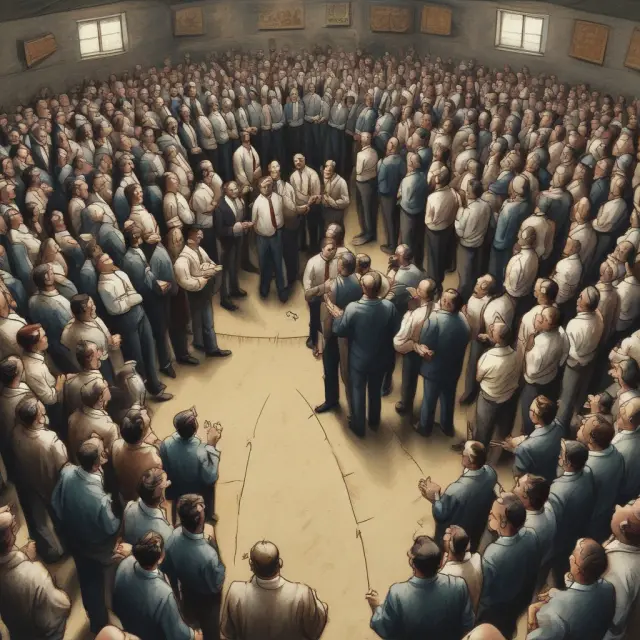
How Open Outcry Works
Open outcry was the primary means of communication in stock, option, and futures exchanges before the advent of electronic trading systems. In open outcry trading pits, traders used verbal and hand signal communications to convey trade orders. This section will explain the process of open outcry trading and how contracts are made in this unique trading environment.
Trading Pits as Physical Trading Spaces
Open outcry trading occurs in dedicated physical sections of a trading floor, referred to as pits. These areas were designed to maximize interaction between traders with uneven floor levels or risers to facilitate eye contact among participants. In an open outcry pit, one trader might announce their intent to sell at a specific price, and another would respond by agreeing to buy at that same price.
The Auction-Like Nature of Open Outcry Trading
This exchange process resembles an auction as all participants have the chance to compete for orders, leading to transparency, efficient markets, and fair price discovery. The majority of trading takes place between traders in the pit and a smaller number of market makers positioned on the edge of the pit. Market makers provide liquidity by accepting both buy and sell orders from pit traders.
Understanding Contracts in Open Outcry Trading
In open outcry trading, contracts are made when a trader declares their intention to sell at a particular price, and another trader confirms their willingness to buy at the same price. These trades occur between any two participants at any given time, creating a dynamic and competitive environment.
The Role of Market Makers in Open Outcry Trading
Market makers serve an important role in open outcry trading as they provide liquidity by accepting both buy and sell orders from pit traders. Traders typically approach market makers to execute their trades, which pass through the larger crowd of traders in the pit. Market makers use temporary information asymmetry to profit from price discrepancies in the market and help maintain a fair and efficient trading environment.
The Advantages of Open Outcry Trading
Open outcry trading offers several advantages, including efficiency, transparency, and fair price discovery due to the auction-like nature of the pits. The competition within open outcry trading fosters a dynamic, real-time marketplace where participants can interact with each other in person.
Comparing Open Outcry Trading to Over-the-Counter (OTC) Trading
Unlike open outcry trading, over-the-counter (OTC) trades are negotiated privately between two parties without the involvement of a public exchange or central price reference point. This difference leads to varying degrees of transparency and market depth depending on the specific markets involved. OTC trades can be more flexible due to customizable contract terms, but they lack the price transparency and liquidity offered by open outcry trading pits.
The End of Open Outcry Trading: A Historical Perspective
Although open outcry was once a dominant method for trading securities, its usage has significantly decreased with the rise of electronic trading systems. Electronic trading offers advantages such as reduced costs, improved execution speeds, and increased accessibility to real-time market information. However, some traders lament the loss of intangible information that was only available in the open outcry environment. Movies and documentaries like Trading Places provide a glimpse into this unique aspect of trading history.
In conclusion, understanding open outcry trading is crucial for anyone interested in financial markets or the evolution of trading practices. The competitive atmosphere, efficiency, and transparency created by open outcry pits have influenced modern trading systems and continue to shape the way markets operate today.
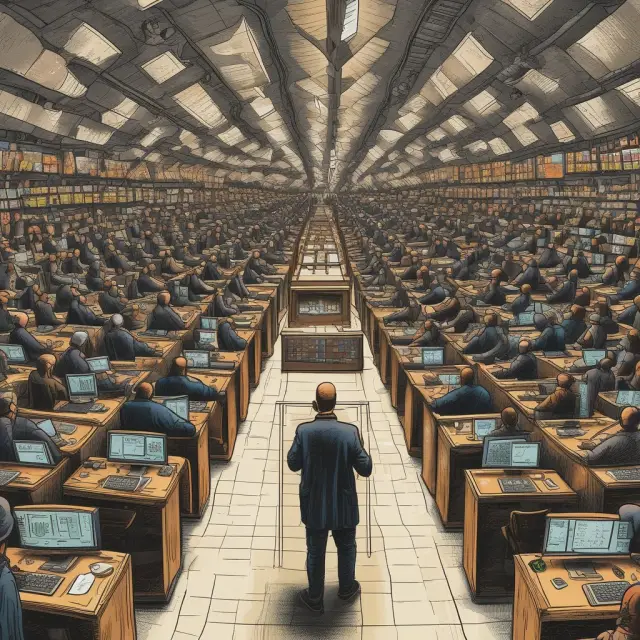
The Role of Market Makers in Open Outcry Trading
Market makers, also referred to as specialists, play a crucial role within the open outcry system. Their presence ensures that continuous trading occurs and liquidity is maintained in the market. Market makers are essentially intermediaries between buyers and sellers who facilitate trades by standing at the edge of trading pits with their order books displayed openly. By continuously quoting buy and sell prices, they create a two-way market for all types of securities or commodities being traded within that pit. This allows traders in the pits to execute transactions against these market makers, enabling seamless price discovery and efficient trading.
The role of market makers is essential because open outcry is an auction-like system that relies on transparency and fair competition between all participants. Market makers provide liquidity and price continuity by constantly updating their quotes based on the ongoing supply and demand dynamics of the pit. In doing so, they absorb any imbalance in buy or sell orders, allowing trades to occur even when there is a lack of immediate counterparties in the pit itself.
Market makers earn their income through the bid-ask spread—the difference between the price at which they’re willing to buy and the price at which they’re selling a particular security or commodity. As a result, market makers make money whenever a trade is executed against them. The spread acts as an incentive for market makers to be well informed about the market and to maintain a deep understanding of the underlying fundamentals of the asset being traded. This knowledge not only benefits the market maker but also offers advantages to pit traders looking to execute trades in a transparent, fair marketplace.
Market makers can also play an influential role within trading pits, as their presence and quotes shape the overall sentiment and direction of the market. They often interact with other traders by providing valuable insights or information about potential order flow or upcoming news events that may impact the market. These interactions help to maintain a vibrant, dynamic, and efficient open outcry environment where all participants can benefit from real-time market intelligence and informed decision making.
With the advent of electronic trading systems, market makers have adapted to new technology by migrating their roles to automated platforms that allow them to provide liquidity in real-time for various financial instruments worldwide. While the open outcry method is no longer a dominant force in modern trading floors, understanding its historical significance and the role of market makers within it provides valuable context for anyone interested in the evolution and inner workings of today’s complex financial markets.
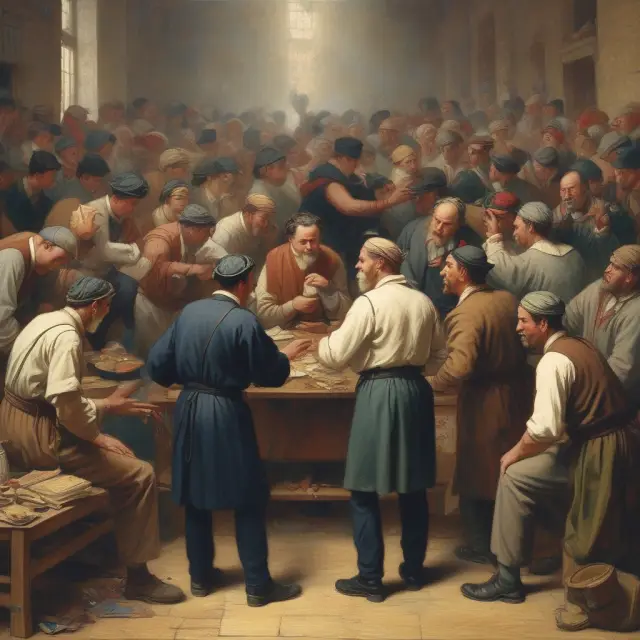
Efficiency, Transparency, and Fair Price Discovery
Open outcry trading was an auction-like process that brought efficiency, transparency, and fair price discovery to financial markets long before electronic trading systems. In the heart of the stock exchanges, options, and futures markets, traders would engage in fierce competition within physical trading pits. These areas, designed with risers or uneven floor levels for optimal eye contact among participants, saw buyers and sellers make contracts through verbal and hand signals (Fabozzi & Reilly, 2014). Open outcry’s efficiency stemmed from its real-time communication and the opportunity for multiple traders to compete in the trading process. Market prices and trade information were available to all participants.
Price discovery was a critical component of open outcry trading, as it allowed buyers and sellers to interact directly, establishing a fair market price (Cowen Institute, n.d.). Transparency was also a key factor, with traders able to observe the actions of their counterparts, leading to informed decisions based on accurate information. This transparent environment reduced potential manipulation opportunities and created a more reliable marketplace for financial transactions.
When one trader declared they wanted to sell at a specific price, another would respond by buying if they agreed. This exchange was similar to an auction, with all traders in the pit having an opportunity to participate and set their bids or asks. The fast-paced nature of open outcry trading demanded heightened focus from traders, as the quick exchange of information could lead to profit opportunities.
Competition among traders was a significant driver of efficiency in the pits. Traders often relied on temporary information asymmetry for success (Taleb, 2001). However, with more information parity in today’s markets, retail and institutional traders can now profit from greater trading efficiency and increased participation.
Open outcry trading differed significantly from over-the-counter (OTC) trading where transactions were negotiated privately between two parties. While pit trading had its advantages, such as transparency and fair price discovery, it was also more vulnerable to manipulation due to the physical nature of the process. With electronic trading systems now dominating financial markets, it is unlikely that open outcry will return in its original form.
However, the significance of open outcry cannot be understated. Movies and documentaries like ‘Trading Places’ have captured the essence of this once-prevalent method for communicating trade orders. The competitive spirit, intensity, and human element of pit trading continue to fascinate those who experienced it or are interested in learning about its history.
In conclusion, open outcry trading paved the way for efficient financial markets by offering transparency and fair price discovery through an auction-like process. Although it has been replaced by electronic trading systems, its impact on financial markets remains evident as traders continue to learn from its lessons and reflect upon the human side of the industry.

Difference Between Open Outcry and Over-the-Counter Trading
Open outcry and over-the-counter (OTC) trading are two distinct methods of buying and selling securities and commodities. Understanding these differences is essential as they each have unique advantages and disadvantages, which can significantly impact your trading experience.
Open Outcry: Transparent Trading in the Pits
In open outcry trading, participants engage in a competitive bidding process where prices are determined through verbal and hand signal communication within trading pits. It is an auction-like system where all traders have access to real-time market information. This transparency makes it easier for buyers and sellers to make informed decisions.
Traders at stock, option, and futures exchanges use open outcry to communicate their intentions to buy or sell securities through a series of hand signals and shouts. The high level of competition within the pits ensures that markets are efficient and fair. It is essential to note that pit trading is different from OTC trading in terms of transparency.
OTC Trading: Negotiated Trades between Two Parties
In contrast, OTC trading involves direct negotiations between two parties for the purchase or sale of a security without the need for an exchange or auction house. This type of trading is popular among financial instruments like bonds, currencies, and derivatives. One significant difference with open outcry trading is that in OTC markets, participants may not have access to real-time information about prices and volume. Instead, traders rely on their counterparty for disclosure of information or market data provided by third parties.
Comparing the Transparency Levels
The primary difference between open outcry and OTC trading is the level of transparency they offer. Open outcry trading benefits from a high degree of transparency, where all participants have access to real-time market information. This transparency results in efficient markets and fair price discovery, as traders are able to make informed decisions based on accurate market data.
On the other hand, OTC trading involves more opaque market conditions due to the lack of a central exchange or auction house. While some traders may prefer the privacy of negotiating deals directly with counterparties, the absence of real-time information can result in increased risk and uncertainty. Additionally, there is a greater potential for information asymmetry in OTC markets, which can make it more challenging for traders to evaluate opportunities and assess risks accurately.
In conclusion, open outcry trading and over-the-counter trading are two distinct methods of buying and selling securities with their own advantages and disadvantages. Understanding the differences between these methods is crucial when choosing the best trading platform or strategy that suits your investment goals and risk tolerance.
With open outcry’s high level of transparency, it provides an efficient market environment where traders can make informed decisions based on accurate market information. In contrast, over-the-counter trading offers greater flexibility in negotiating deals directly with counterparties but may come with increased risks due to the lack of real-time market data. By considering your investment objectives and risk appetite, you can decide which method aligns best with your needs as a trader or investor.
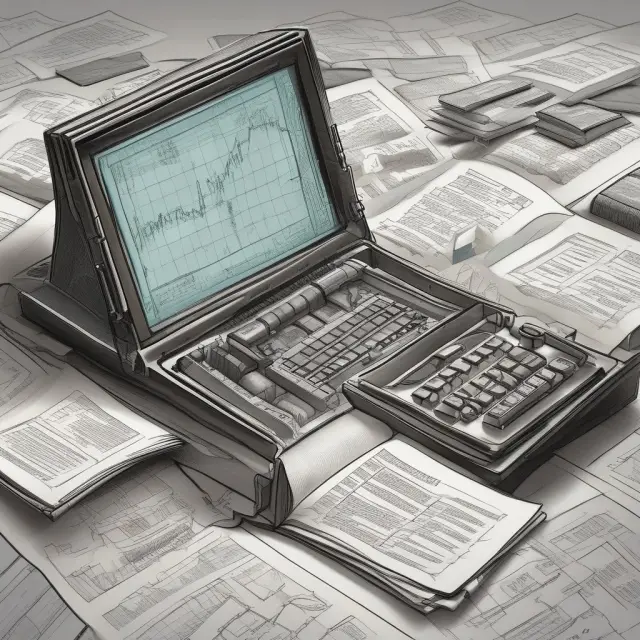
Open Outcry vs. Electronic Trading Systems: A Comparison
Open outcry and electronic trading systems serve two distinct purposes in the financial market; however, it’s important to understand their differences in terms of costs, speed, and market manipulation risks.
Costs: Electronic trading has significantly reduced transaction costs for traders compared to open outcry. The latter required physical presence at exchange floors, which came with added expenses such as travel and accommodation. In contrast, electronic systems allow traders to execute trades from the comfort of their homes or offices, eliminating location-related expenses.
Speed: Electronic trading offers faster trade execution compared to open outcry due to real-time processing capabilities. Traders can input orders instantly into the system, and transactions are executed in a matter of milliseconds. Open outcry relied on verbal communication between traders, which could lead to delays as traders exchanged information and negotiated deals.
Market Manipulation Risks: The open outcry trading method allowed for more opportunities for market manipulation due to its physical nature. Traders could engage in tactics such as front running or spoofing by using hand signals or verbal cues, which could lead to significant profits but also left the market vulnerable to deceitful practices. Electronic trading systems have significantly reduced these risks since all transactions are recorded and monitored in real-time by regulatory bodies.
Another crucial difference between open outcry and electronic trading lies in their transparency levels. Open outcry provided a clear view into the inner workings of the market as traders exchanged information, leading to efficient markets and fair price discovery. However, this transparency also allowed for more opportunities for market manipulation. In contrast, electronic trading systems offer greater anonymity since transactions are executed between counterparties without revealing their identities or intentions. This anonymity can be both a benefit and a drawback as it allows for more informed decision-making but also poses the risk of hidden intentions.
Despite these differences, both open outcry and electronic trading systems have their merits and limitations. Open outcry provided traders with unique insights into market sentiment, while electronic trading offers a more efficient and cost-effective way to execute trades. Understanding the strengths and weaknesses of each method is essential for traders as they adapt to the ever-evolving financial landscape.
In conclusion, open outcry and electronic trading systems serve different roles in the financial market. While open outcry was a crucial part of trading history, the advent of electronic systems has ushered in a new era of efficiency, cost savings, and reduced market manipulation risks. Understanding their differences can help traders navigate the complexities of the financial markets effectively.
The End of Open Outcry Trading
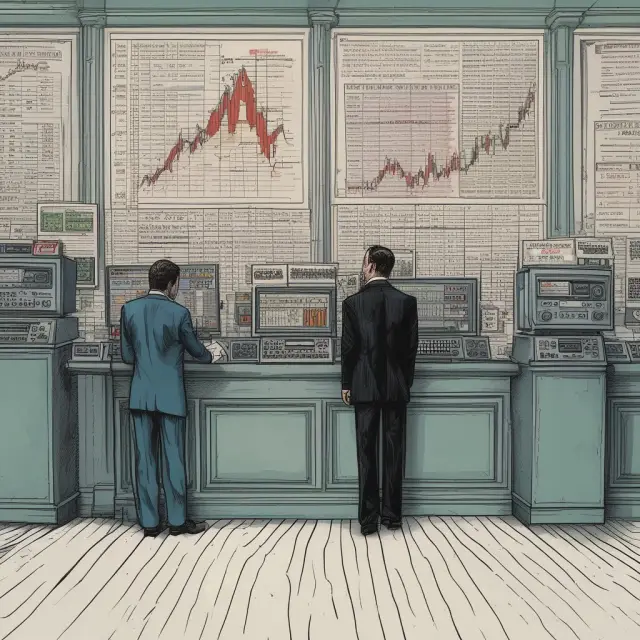
Open outcry was a significant aspect of the financial markets for centuries, but it gradually faded away with the rise of electronic trading systems. This traditional trading method, characterized by verbal and hand signal communication between traders in pits, offered numerous advantages such as transparency, efficient price discovery, and fair market competition. However, electronic trading has proven to be even more efficient and convenient for traders, leading to its widespread adoption since the 1990s.
Open outcry exchanges and electronic trading systems differ primarily in their methods of trade execution. In open outcry pits, traders would communicate face-to-face, making contracts by declaring a price and having it accepted by another trader. The pit resembled an auction environment where all participants had the opportunity to compete for orders. This trading style led to efficient markets and fair price discovery due to its transparency. In contrast, over-the-counter (OTC) trading involved private negotiations between two parties.
Open outcry was a costly and labor-intensive process compared to electronic trading systems. Traders had to travel to the exchange, pay for floor access, and employ various intermediaries to help facilitate their trades. These costs were eliminated with electronic trading, which can be accessed from anywhere in the world through a computer or smartphone.
One of the primary advantages of open outcry was the intangible information that traders could glean from observing other traders and the mood of the pit. Electronic trading eliminates this dynamic, as orders are executed purely based on price and volume without any subjective assessment of intentions or motivations. Some traders believe that this aspect of open outcry cannot be replicated electronically, but many argue that the current market environment is far more efficient with decreased transaction costs and increased competition.
Trading Places, a popular 1983 movie that featured Dan Aykroyd and Eddie Murphy, provided an entertaining look into the world of open outcry trading pits. The film showcases the intensity, competition, and information asymmetry experienced by traders in these environments. Despite its nostalgic value, it is unlikely that open outcry will ever return as a dominant method for trading at exchanges. Electronic trading offers numerous advantages, such as lower transaction costs, faster trade execution speeds, and increased accessibility. As a result, the financial markets have become more efficient and inclusive than ever before.

Popular Culture and Nostalgia for Open Outcry Trading
The vibrant, fast-paced environment of open outcry trading pits continues to fascinate both the financial industry and the general public. This fascination is reflected in numerous movies and documentaries that capture the essence of trading during this era. As electronic trading systems have replaced open outcry trading, nostalgia for this method still lingers among traders.
Open Outcry’s Allure in Movies: Trading Places (1983)
Trading Places, a 1983 American comedy film directed by John Landis and written by Timothy Harris and Herschel Weingrod, offers an entertaining look into the world of pit trading. The story revolves around two commodities brokers, Dan Aykroyd and Eddie Murphy, who switch places to test their theories about how the economy works.
Trading Places presents various aspects of open outcry trading, including the aggressive competition among traders, the role of market makers, and the importance of information asymmetry. While the movie takes liberties with some trading concepts for comedic effect, it sheds light on the complexities and excitement of trading during this time period.
Documentaries: Quants: The Alchemists of Wall Street (2010)
Another perspective on open outcry trading comes from the 2010 documentary “Quants: The Alchemists of Wall Street.” This film focuses on the quantitative analysis and mathematical models used by traders to make informed decisions in various markets.
One segment of the documentary explores how traders in New York City’s bond pit used hand signals to communicate trades among themselves during open outcry trading sessions. These subtle hand gestures conveyed critical information that allowed traders to execute transactions quickly and efficiently. The documentary also highlights how technology has revolutionized the trading industry since the open outcry era, leading to more efficient processes and a greater emphasis on data analysis.
The Lasting Impact of Open Outcry Trading
Even as electronic trading systems have replaced open outcry trading pits, remnants of this method continue to influence the financial industry today. Traders often refer to the sense of atmosphere and competition that once prevailed in the pits. The legacy of open outcry trading can be observed in modern trading practices such as:
- Market Making: Many high-frequency traders and market makers still employ elements of open outcry trading when communicating with one another, even in electronic trading systems. Hand signals or vocal cues might be used to signal trades or provide information on market conditions.
- Price Discovery: Despite the shift to automated pricing mechanisms, human judgment and intuition continue to play a role in price discovery. Traders often consult multiple sources of information, including market news, analyst reports, and real-time sentiment analysis, when making decisions.
- Information Asymmetry: While electronic trading systems have significantly reduced information asymmetry compared to the open outcry era, traders still encounter situations where they possess unique or exclusive knowledge that can influence their trades. For example, a trader might have access to inside information about a company merger or acquisition before it becomes public knowledge, allowing them to make informed investment decisions based on this edge.
- The Human Element: Open outcry trading emphasizes the importance of human interaction and intuition in financial markets. Traders rely on their gut instincts and ability to read market conditions, as well as their communication skills, to succeed. These qualities continue to be valued in modern trading environments, even if the specific methods used have changed.
- Nostalgia: As open outcry trading becomes a part of history, it remains an intriguing period that captivates traders and financial enthusiasts alike. The unique dynamics of pit trading and the colorful characters who populated these spaces continue to inspire movies, documentaries, and books, as well as serving as a reminder of the ever-evolving nature of finance and investment.

FAQ: Open Outcry Trading Frequently Asked Questions
1. **What is open outcry?**
Open outcry refers to the verbal and hand signal communication used in trading pits before electronic trading systems took over. In these pits, traders made contracts through shouts and signals. Open outcry trading was a competitive process where all participants had a chance to compete for orders, leading to efficient markets and fair price discovery.
2. **How is an open outcry pit structured?**
Trading pits are physical sections of trading floors, with uneven floor levels or risers, enabling traders to make eye contact with as many others as possible. Traders establish contracts when one declares they want to sell at a specific price and another responds that they will buy it. The pit operates much like an auction where all participants have the opportunity to participate.
3. **What is the difference between open outcry trading and over-the-counter (OTC) trading?**
The primary difference lies in transparency: open outcry is conducted publicly, while OTC trading involves negotiating privately between two parties. In open outcry, all information is visible to everyone present in the pit, promoting a level playing field and efficient markets.
4. **Who are market makers in open outcry trading?**
Market makers act as intermediaries within the trading pits, providing liquidity by standing at the edge of the pit and buying or selling contracts to maintain continuous trading. Their role is essential for efficient trade execution between traders in the pit.
5. **How long does an open outcry trading day last?**
A standard trading day for open outcry exchanges runs from 8:30 a.m. to 4:15 p.m., Eastern Standard Time, while some commodity markets such as corn futures and options only operate between 9:30 a.m. and 1:15 p.m. Electronic trading systems like Globex, however, are available nearly around the clock.
6. **Why was open outcry replaced by electronic trading?**
Electronic trading systems offer various advantages over open outcry, including cost reduction, faster trade execution, and a lower risk of manipulation. They make it easier for interested parties to access real-time information about market trends and prices from virtually anywhere.
7. **What is unique about open outcry trading compared to electronic systems?**
Open outcry provided pit traders with an intangible sense of the market environment that cannot be replicated in electronic systems. Some traders miss the subjective assessment of a buyer or seller’s intentions or motivations, which was crucial for successful trading. However, these benefits are unlikely to make open outcry relevant again given the current state of trading efficiency and information accessibility.
 Next entry · No. 3,729Understanding Operating Activities: The Key Drivers of a Company’s Core Business
See also
-
 No. 4,968
01 Aug 2025
20 min
Understanding Tick Size in Finance: Incremental Changes for Stocks, Futures and Forex
Financial Data Analysis
No. 4,968
01 Aug 2025
20 min
Understanding Tick Size in Finance: Incremental Changes for Stocks, Futures and Forex
Financial Data Analysis -
 No. 5,755
05 Oct 2025
20 min
Understanding Wire Transfers: A Comprehensive Guide for Institutional Investors
Business Finance
No. 5,755
05 Oct 2025
20 min
Understanding Wire Transfers: A Comprehensive Guide for Institutional Investors
Business Finance -
 No. 5,722
02 Oct 2025
25 min
The Perilous World of Widow Maker Trades: Understanding Investments with Devastating Potential
Finance Policy
No. 5,722
02 Oct 2025
25 min
The Perilous World of Widow Maker Trades: Understanding Investments with Devastating Potential
Finance Policy -
 No. 5,262
24 Aug 2025
18 min
Understanding Unissued Stock: The Hidden Shares In a Company’s Treasury
Business Finance
No. 5,262
24 Aug 2025
18 min
Understanding Unissued Stock: The Hidden Shares In a Company’s Treasury
Business Finance -
 No. 4,911
27 Jul 2025
20 min
A Comprehensive Guide to Technical Analysis: Understanding Chart Patterns, Indicators, and Strategies
Finance Policy
No. 4,911
27 Jul 2025
20 min
A Comprehensive Guide to Technical Analysis: Understanding Chart Patterns, Indicators, and Strategies
Finance Policy -
 No. 4,763
14 Jul 2025
22 min
Understanding the Stock Market: Functions, Regulation, Significance, and Trading
Business Finance
No. 4,763
14 Jul 2025
22 min
Understanding the Stock Market: Functions, Regulation, Significance, and Trading
Business Finance