The Fascinating History and Strength of the New Zealand Dollar (NZD)

Discover the captivating history of New Zealand's dollar, including its origins, design, and impressive strength in this comprehensive guide.
A Brief Introduction to the NZD
The New Zealand dollar (NZD) is the official currency of New Zealand, representing the value of 100 cents and commonly identified by the symbol $ or NZ$. The NZD has a rich history dating back to pre-official currency usage during the 1800s and underwent significant transformations throughout the decades leading up to its current form.
Originally, New Zealand adopted a decimalized monetary system in 1967 when it switched from the British pound to dollars and cents. Prior to this change, New Zealand had used British currency, including pounds, shillings, and pence. The first official New Zealand coins were issued in 1934, featuring native bird designs on the reverse side. The Bank of New Zealand produced these coins, which became known for their bright colors and intricate detailing.
In 1934, the Reserve Bank of New Zealand was established to become the sole supplier of banknotes. Early banknotes featured various designs, including Maori King Tawhiao on some denominations, along with native birds and plants. Over time, New Zealand transitioned away from the British monetary system and adopted an entirely dollar-based system in 1967.
The NZD’s Value: Fixed Exchange Rates to Floating (1935-1999)
Throughout its history, the NZD underwent significant changes in its value relative to other currencies like the U.S. dollar. During the fixed exchange rate period from 1935 to 1985, the New Zealand dollar was pegged to the US dollar and experienced various devaluations as a result of economic fluctuations. In March of 1985, the currency was floated freely, allowing its value to fluctuate based on market demand and supply conditions.
Designing the NZD: Banknotes and Coins
Since its inception, New Zealand’s currency has been characterized by vibrant colors and intricate designs that showcase native birds, historical figures, and iconic landmarks. The country’s first official coins, issued in 1934, featured native bird species on the reverse side. Later, banknotes depicted prominent New Zealanders such as Edmund Hillary, Kate Sheppard, Apirana Ngata, and Ernest Rutherford along with various designs representing different aspects of the nation’s heritage.
The Power of the NZD: Strength and Performance
Understanding the factors that influence the value of the New Zealand dollar is crucial to understanding its strength and performance. The country’s strong economy, high FX turnover, and open market activities contribute significantly to its popularity in the forex markets. Additionally, economic indicators like dairy prices, tourism numbers, and global economic events play a role in shaping the value of the NZD/USD cross.
The NZD’s Value: Factors Influencing the New Zealand Dollar
Numerous factors influence the value of the New Zealand dollar, including but not limited to interest rates, dairy prices, tourism numbers, and global economic events. By examining these factors, we can better comprehend how the NZD is affected by various market conditions and make informed investment decisions.
For example, as one of the world’s biggest exporters of whole milk powder, New Zealand’s economy relies heavily on dairy prices. When milk prices are on the rise, the New Zealand economy tends to do well, leading to a stronger NZD. Similarly, tourism plays a vital role in the country’s economy and is another factor influencing its currency strength.
The Relationship Between NZD and US Dollar: Interest Rates and Open Market Activities
Understanding the relationship between the New Zealand dollar and U.S. dollar involves examining their respective interest rates and open market activities. For instance, when the Federal Reserve intervenes in open market activities to make the U.S. dollar stronger, the value of the NZD/USD cross may decline due to the strengthening US dollar. The interest rate differential between the Reserve Bank of New Zealand (RBNZ) and the Federal Reserve can also influence these currencies when compared to each other.
In summary, the history and strength of the New Zealand dollar provide valuable insights into the economic landscape of the country and its relationship with other global currencies. From understanding its decimalization process and early designs to exploring factors that shape its value in today’s forex markets, the NZD continues to captivate investors and traders alike due to its unique qualities and intriguing past.
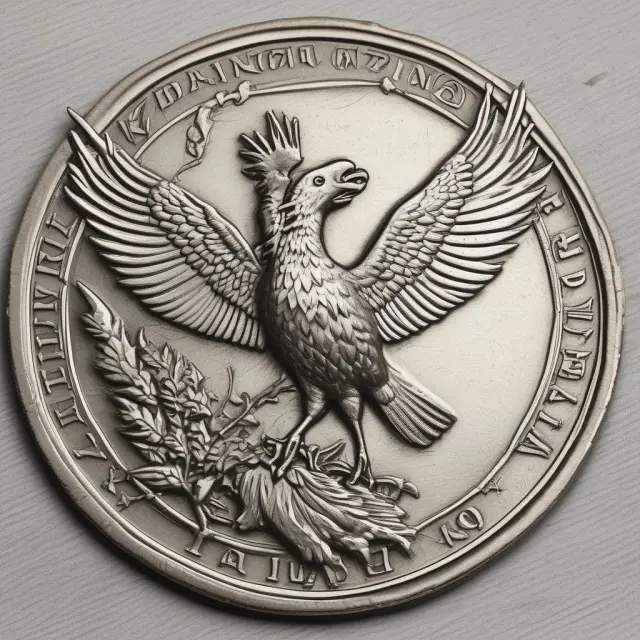
Decimalization of the NZD
The New Zealand dollar (NZD) is the official currency of New Zealand, denominated into 100 cents and represented by the symbol $ or NZ$. This section sheds light on a significant milestone in the history of the NZD: decimalization. Before this transition from pounds, shillings, and pence to dollar-based money, New Zealand relied heavily on British currency.
In 1967, New Zealand adopted the decimal monetary system as part of a comprehensive reform of its financial structure. This switch was a crucial step towards modernizing its economy and aligning it with other major trading partners who had already made the change. The transition from the British monetary format to dollars and cents was completed on July 10, 1967.
The decimalization process led to the issuance of new banknotes and coins, all adhering to the $1, $2, $5, $10, and $20 denominations. The design of these early currency notes was distinctive, featuring native birds such as the kiwi on the reverse side along with prominent citizens of New Zealand, including Edmund Hillary, Kate Sheppard, Apirana Ngata, and Ernest Rutherford.
The Reserve Bank of New Zealand (RBNZ) was established in 1934 and began issuing official coins that year. Prior to this, New Zealand had been using a combination of its own unofficial currency and British currency. The first banknotes were printed by the government between 1865 and 1872, and by the end of World War I, the New Zealand dollar was recognized as the sole legal tender.
The decimalization process involved extensive preparation to ensure a smooth transition for all sectors within the economy. Banks, businesses, and individuals were given ample time to adjust their records and accounting systems accordingly. The government even went so far as to print educational materials explaining the conversion rates between pounds, shillings, and pence to dollars and cents.
The changeover was carried out in stages: the old currency continued to be used until December 31, 1967, while the new coins were introduced on June 1, 1967, and the new banknotes followed on July 10, 1967. The transition was completed successfully, with no significant disruptions to the economy or public confidence.
In summary, decimalization of the NZD in 1967 marked an essential moment in New Zealand’s financial history. It allowed the country to modernize its currency and align it with the global trend towards decimal currencies. The process was well-executed, ensuring minimal disruption and establishing confidence in the new monetary system.

The Early Years: 1800s to 1934
New Zealand’s monetary history is rich and diverse, dating back to the late 1800s. Before decimalization in 1967, New Zealand used its own coins and banknotes while still accepting British currency as legal tender. The first official New Zealand coins were issued in 1934, showcasing unique native birds on their reverse side – a tradition that continues to this day with the $1 coin displaying an image of the flightless kiwi.
Preceding these official coins, from the late 1800s until decimalization, New Zealand’s currency saw various forms. The earliest known use of New Zealand currency was in the form of tokens, created between 1846 and 1859, mostly in Auckland and Wellington. These tokens had designs featuring colonial figures, scenes of New Zealand landscapes, or Maori motifs.
From 1853 to 1867, New Zealand used the British pound, shilling, and pence system. However, with the introduction of decimalization, a new currency was required – one that was truly New Zealand’s own. The first official New Zealand coins were produced in 1934 by the Royal Mint in London, bearing images of native birds such as the tui, kiwi, and mōhua on their reverse side.
In 1933, the Reserve Bank of New Zealand was established, issuing its first banknotes in 1935. These notes showcased various designs, from the Maori King Tawhiao to the Coat of Arms and even the native Fiordland’s Mitre Peak. These early banknotes were replaced in 1940 as World War II approached.
The first banknotes issued by the Reserve Bank of New Zealand featured Queen Elizabeth on their obverse side, while the reverse side showcased a vibrant array of New Zealand flora and fauna. Since then, the designs have undergone multiple changes, reflecting significant events in the country’s history. For instance, between 1953 and 1974, banknotes featured prominent New Zealanders like Edmund Hillary, Kate Sheppard, Apirana Ngata, and Ernest Rutherford.
Throughout its early years, New Zealand currency has maintained a focus on representing the country’s natural beauty and history through its designs. Today, it continues to be an important aspect of New Zealand’s identity.

From Fixed Exchange Rates to Floating (1935-1999)
The New Zealand dollar experienced significant changes in its relationship with the U.S. dollar from 1935 to 1999, transitioning from fixed exchange rates to a floating currency regime. Prior to decimalization and the introduction of the NZD, New Zealand utilized pounds, shillings, and pence for monetary transactions.
In 1935, the Reserve Bank of New Zealand (RBNZ) was established as the sole issuer of banknotes in New Zealand. The initial notes showcased various designs representing local figures like Edmund Hillary, Kate Sheppard, Apirana Ngata, Ernest Rutherford, and native birds and plants.
Decimalization occurred in 1967, replacing the British monetary format with a dollar-based currency system. However, the NZD was initially fixed to the U.S. dollar at a rate of $1 NZD = $0.53 USD. This exchange rate remained until March 12, 1985, when the NZD became a floating currency, allowing its value to fluctuate against other currencies based on supply and demand dynamics.
The introduction of floating rates granted New Zealand more autonomy in managing its monetary policy and responding to economic conditions. The RBNZ could now set interest rates to better control inflation and stabilize the economy without being constrained by foreign exchange rate targets.
Since the 1985 shift, the NZD has exhibited remarkable resilience as a high-yielding currency, often attracting carry trade investments due to its comparatively higher interest rates compared to other currencies like the Japanese yen or Swiss franc. Moreover, it is a popular choice for international investors seeking exposure to New Zealand’s strong economic fundamentals and booming industries such as tourism and agriculture (particularly dairy).
The transition from fixed exchange rates to a floating currency regime marked a crucial step in New Zealand’s monetary history. It allowed the NZD to become a stable and increasingly valuable currency, playing a significant role in shaping the country’s economic landscape and financial future.
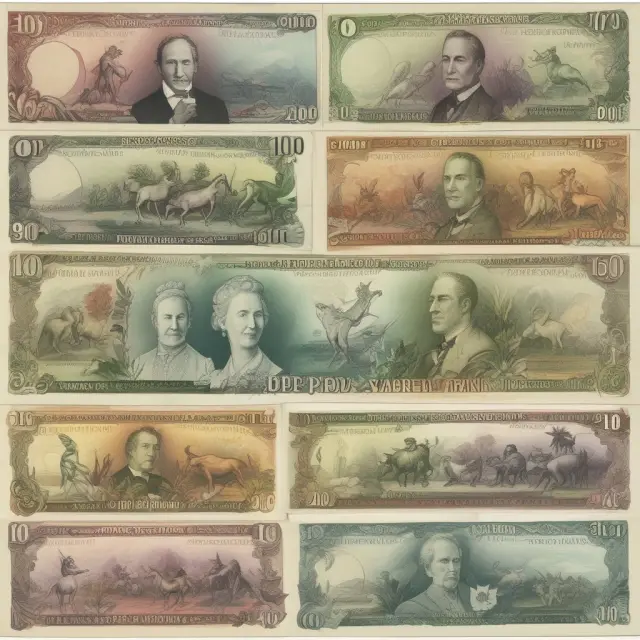
Designing the NZD: Banknotes and Coins
The New Zealand dollar (NZD) is known for its vibrant designs, which have evolved through various stages since decimalization in 1967. Let us delve deeper into the history of the NZD’s banknotes and coins, examining their significance, unique features, and the people and creatures depicted on them.
In the early days following the transition from pounds, shillings, and pence to decimal currency, the Reserve Bank of New Zealand (RBNZ) introduced new notes in 1934 that bore images of key figures from New Zealand’s history, such as Edmund Hillary, Kate Sheppard, Apirana Ngata, and Ernest Rutherford. To reflect the country’s natural heritage, banknotes featured prominent birds and plants on their reverse sides.
However, the design changes did not stop there. In 1967, when the NZD replaced its predecessor, the New Zealand pound, a new series of notes was released with even more vivid colors and designs. Notably, these banknotes contained images of native birds on their reverse sides, continuing a tradition that began in the colonial era.
The most recent update to the currency occurred in 2016 when the RBNZ introduced a brand-new design for both notes and coins. These contemporary versions showcase a diverse range of New Zealand flora and fauna, as well as historical figures, in bold colors and intricate patterns. For instance, the $10 note features renowned poet James K. Baxter, while the reverse side displays the kiwi and kowhai—New Zealand’s national bird and national flower, respectively.
Coins have also undergone several transformations throughout New Zealand’s monetary history. Since 1934, they have featured a range of designs that include native birds, historical figures, and symbols significant to the country. For example, the $2 coin, issued in 1990, bears an image of Sir Edmund Hillary and Tenzing Norgay, the first climbers to reach the summit of Mount Everest.
The polymer or plastic banknotes produced since 1999 have offered several advantages, including improved security against counterfeiting and enhanced longevity. These features ensure that the distinctive designs and historical significance of each NZD note continue to be appreciated by its users and collectors alike.

The Power of the NZD: Strength and Performance
Understanding the New Zealand dollar (NZD) is essential, especially for those interested in foreign exchange markets or investing. The NZD, which was introduced as a decimalized currency in 1967, is the official currency of New Zealand. It replaced the British monetary format, consisting of pounds, shillings, and pence (GBP), which was previously used by the country for over 150 years. The NZD is denominated in cents, with one dollar being made up of 100 cents.
Since its introduction, the New Zealand dollar has seen significant transformations, including decimalization, fixed exchange rates with other currencies, and floating exchange rates. This section delves into these changes, explaining their impact on the NZD’s strength and performance.
Decimalization of the NZD took place in 1967 as part of a broader monetary reform. Before decimalization, New Zealand used its pre-decimal currency based on pounds, shillings, and pence. However, with the transition to dollars and cents, transactions became simpler, and accounting became more efficient. In 1934, the Reserve Bank of New Zealand (RBNZ) was established as the sole issuer of banknotes in New Zealand. The RBNZ began issuing its first official coins in 1934. These coins featured native birds on the reverse side, with King Tawhiao and Queen Elizabeth II appearing on the obverse sides for different periods.
Following decimalization, the NZD remained tied to the US dollar through fixed exchange rates until March 1985. During this period, the New Zealand economy went through significant changes, including the introduction of floating exchange rates. This change gave New Zealand greater flexibility in managing its monetary and fiscal policies independently.
In 1967, when the NZD was decimalized, it was printed on linen or paper. In 1999, the RBNZ introduced polymer or plastic notes to replace their paper counterparts. The shift to plastic notes significantly improved the security and longevity of the NZD compared to its paper predecessors.
The NZD/USD cross is a popular pair among forex traders as it is influenced by factors affecting both currencies’ values, such as interest rate differentials, dairy prices, tourism numbers, and global economic events. As a high-yielding currency, the NZD is often used in carry trades, with investors buying it using lower-yielding currencies like the Japanese yen or Swiss franc. This demand can influence the NZD’s exchange rate against these currencies.
The New Zealand dollar has proven to be a stable currency due to its strong economy and positive outlook. It is also considered one of the most traded currencies globally, making it an essential component in foreign exchange markets. The NZD’s vibrant designs, which include images of native birds, historical figures, and bright colors, add to its appeal.
In summary, understanding the New Zealand dollar’s history and performance is crucial for anyone interested in foreign exchange or investing. From decimalization to fixed and floating exchange rates, the NZD has undergone numerous transformations that have shaped its current status as a stable and liquid currency.

NZD/USD Correlation and Interest Rates
Understanding the intricacies behind exchange rates can be quite complex, especially when it comes to analyzing the relationship between two specific currencies like the New Zealand dollar (NZD) and the U.S. dollar (USD), known as the NZD/USD pair. In foreign exchange markets, currencies are quoted in pairs, such as 1 New Zealand dollar (NZD) being equivalent to X United States dollars (USD). The value of this pair is determined by various factors, including interest rates and open market activities, which we will delve deeper into below.
Interest Rates: One influential factor that impacts the exchange rate between two currencies is the difference in their respective interest rates. When investors borrow one currency to purchase another, they are essentially taking on additional risk due to the uncertainty of future exchange rate fluctuations. As such, the interest rates offered by each central bank play a crucial role in determining which currency is more desirable for investment purposes. A higher interest rate for one currency makes it more attractive to hold, driving demand for that currency and, subsequently, strengthening its value against other currencies like the NZD/USD pair.
For instance, let’s assume the Reserve Bank of New Zealand (RBNZ) sets an interest rate higher than the Federal Reserve (Fed). As a result, investors may choose to buy New Zealand dollars with their U.S. dollars and hold them, earning a higher return on investment in the process. This increased demand for NZD leads to its appreciation against USD, resulting in a strengthening of the Kiwi against the Greenback.
Open Market Operations: Another essential aspect that can influence exchange rates is open market activities conducted by central banks. When central banks intervene in foreign exchange markets by buying or selling their own currencies, they impact supply and demand dynamics, which, in turn, can significantly affect the value of the respective currencies involved.
For example, if the RBNZ sells NZD to purchase USD, it increases the supply of New Zealand dollars in the market while reducing its holding of US dollars. This action can lead to a decrease in demand for the Kiwi and, subsequently, a lower exchange rate against the Greenback. On the flip side, buying NZD with USD will have the opposite effect, as seen in Figure 1.
Figure 1: Central Bank Interventions and Exchange Rates
In summary, interest rates and open market activities play a significant role in determining the value of currency pairs like the NZD/USD pair. By understanding these factors, investors can make more informed decisions when trading foreign currencies and profit from potential opportunities presented by exchange rate fluctuations.

Factors Influencing the Value of the NZD
The value of the New Zealand dollar (NZD) is subject to various internal and external factors that can significantly impact its worth against other currencies, particularly the United States dollar (USD). Let’s take a closer look at some key elements affecting the NZD:
1. Dairy Prices
As one of the world’s largest exporters of dairy products, New Zealand’s economy is highly dependent on global dairy prices. When milk prices are high, New Zealand’s economy performs well, and the currency appreciates in response. Conversely, low dairy prices can lead to a weaker NZD.
2. Tourism Numbers
Tourism is another significant contributor to New Zealand’s economic stability. An increase in international visitors results in higher revenue for local businesses, leading to a stronger economy and currency. In contrast, decreasing tourist numbers can cause the NZD to weaken.
3. Global Economic Events
Several macroeconomic events, such as interest rates, inflation, or changes in exchange rate policies, have the power to influence the value of the New Zealand dollar. For instance, if a country increases its interest rates, investors may seek higher yields by moving their funds to that currency, which can result in an appreciation of the respective currency against others.
4. Exchange Rates and Interest Rates
The relationship between exchange rates and interest rates plays a significant role in determining the NZD’s value against other currencies, such as the US dollar. When the Reserve Bank of New Zealand (RBNZ) changes its interest rate compared to other central banks, it can influence the currency pair’s direction.
5. Carry Trade
The New Zealand dollar is often considered a carry-trade currency due to its relatively high yield. In this context, investors borrow money from low-yielding currencies (such as the Japanese yen or Swiss franc) and use it to purchase the NZD, capitalizing on the interest rate differential.
6. Political Instability
Political instability within New Zealand or in neighboring countries can negatively impact investor confidence and, subsequently, lead to a weaker NZD. For example, if there is uncertainty regarding potential changes to economic policy or political upheaval in the region, investors may move their funds to safer currencies, causing the NZD to depreciate.
In conclusion, various factors influence the New Zealand dollar’s value, including dairy prices, tourism numbers, global economic events, exchange rates, interest rates, and political instability. Understanding these elements can help investors make informed decisions regarding currency trading and better comprehend the dynamics of this fascinating currency.

Why Is the NZD So Strong?
The strength of a currency is often determined by several factors, including its economy’s stability and growth potential. In the case of the New Zealand dollar (NZD), its reputation as a stable currency stems from multiple reasons.
First and foremost, New Zealand has a robust and diverse economy that relies on various industries such as tourism, agriculture, and manufacturing. Tourism is an essential sector in the country, bringing in millions of visitors annually and contributing significantly to the economy’s growth. New Zealand’s position as one of the world’s leading exporters of milk powder further strengthens its economic foundation.
Another crucial aspect that adds to the NZD’s strength is the Reserve Bank of New Zealand (RBNZ)’s monetary policy, which focuses on maintaining stable inflation and a flexible exchange rate. By keeping interest rates competitive and providing an accommodative environment for businesses, the RBNZ encourages foreign investment and supports the value of the NZD in international markets.
In addition, the New Zealand government has taken significant steps to secure its currency against counterfeiting by transitioning to polymer or plastic banknotes since 1999. These notes last four times longer than traditional linen notes and are more resilient to wear and tear. Furthermore, the NZD’s high FX turnover makes it a popular choice among international traders seeking yield.
The relationship between the NZD and other currencies is also essential in understanding why the New Zealand dollar remains strong. For instance, the NZD often displays a positive correlation with its neighboring Australian dollar (AUD), as both currencies share similar economic conditions and trade flows. Additionally, the interest rate differentials between the RBNZ and other central banks, such as the Federal Reserve, can significantly impact the value of the NZD in relation to other currencies.
However, it is important to note that a strong currency is not always advantageous for every sector of an economy. For industries heavily reliant on exports, a stronger NZD might lead to lower competitiveness and reduced demand, ultimately affecting economic growth. Nonetheless, the overall benefits of having a stable currency like the New Zealand dollar far outweigh any potential disadvantages, as it provides investors with confidence and stability in their financial dealings.

Trading the NZD: Liquidity and Yield
The New Zealand dollar (NZD) is not only known for its vibrant designs and colorful notes, but it is also one of the most popular currencies to trade in the forex market. This popularity can be attributed to several factors, including its high FX turnover and robust economic fundamentals.
A Currency Trading Powerhouse
New Zealand’s currency, the NZD, has a significant presence in the global forex markets due to its high liquidity. According to the Bank for International Settlements (BIS), New Zealand is among the top 10 countries with the largest FX turnover relative to its Gross Domestic Product (GDP). This means that a large volume of transactions involving NZD takes place in the forex markets every day.
Reasons for High Liquidity
Several factors contribute to New Zealand’s high currency liquidity, including:
- Multinational corporations and foreign-owned banks with a significant presence in New Zealand. These entities frequently engage in currency swaps to minimize foreign exchange (FX) risk as part of their international business activities.
- Strong trade relations: New Zealand is an important trading nation, with substantial exports and imports contributing significantly to its economy. As a result, the NZD is a frequently traded currency for various transactions between different countries.
- Currency swaps: Given New Zealand’s high FX turnover and the presence of multinational corporations and foreign-owned banks in the country, numerous currency swaps occur daily to mitigate risk in international business deals.
- Large foreign investments: Foreign investors are increasingly interested in investing in New Zealand, particularly in its thriving sectors like real estate, tourism, and agriculture. These investments result in transactions involving NZD.
Stable Economic Fundamentals
Strong economic fundamentals further solidify the NZD’s position as a popular currency to trade. These include:
- Growth rate: New Zealand’s economy has remained resilient, with steady growth and low unemployment rates. This economic stability makes the NZD an attractive investment option for traders.
- Interest Rates: The Reserve Bank of New Zealand (RBNZ) sets interest rates to keep inflation in check while promoting sustainable economic growth. Higher interest rates make the NZD more appealing to investors as they can earn higher returns on their investments.
- Dairy Prices and Tourism Numbers: New Zealand is a significant exporter of dairy products, making it susceptible to international market volatility. However, strong demand for these exports leads to a thriving economy and a stronger currency. Additionally, the country’s tourism industry is a major contributor to its economy, attracting millions of visitors every year.
In conclusion, the New Zealand dollar (NZD) is more than just a colorful and unique currency; it plays a crucial role in international forex markets due to its high liquidity and robust economic fundamentals. Understanding these factors can help investors make informed decisions when trading the NZD or analyzing its potential performance within global financial markets.
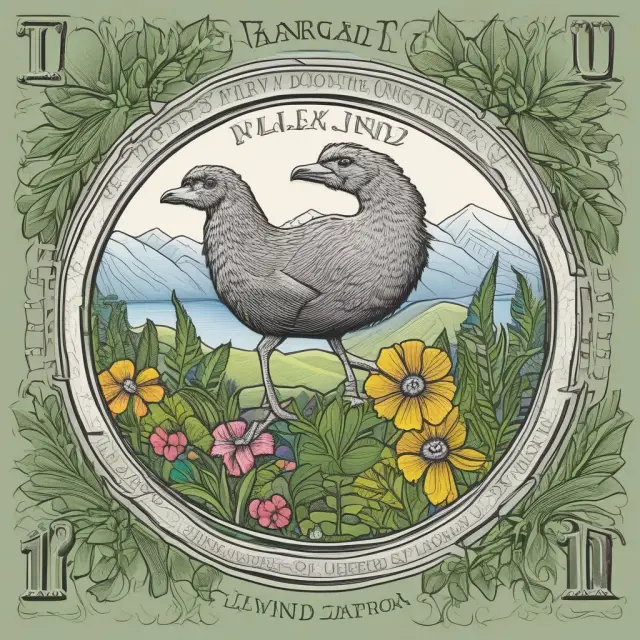
The Aesthetics of the NZD: Colorful Designs and Historical Figures
A unique aspect of the New Zealand dollar (NZD) is its vibrant aesthetic, which has been an integral part of its history since its inception. The currency has undergone several redesigns over the years to reflect the country’s rich heritage, cultural significance, and the changing times.
After decimalization in 1967, New Zealand transitioned from pounds, shillings, and pence to a dollar-based system. However, the first official banknotes were not printed until 1934. These early notes featured prominent citizens of New Zealand like Edmund Hillary, Kate Sheppard, Apirana Ngata, and Ernest Rutherford on the reverse side, along with native birds and plants.
The Reserve Bank of New Zealand (RBNZ), which was established in 1933 as the sole supplier of banknotes, introduced a series of designs between 1934 and 1967. The currency underwent another significant change when it adopted polymer or plastic notes in 1999. This new form of banknote proved more secure against counterfeiting and increased longevity due to its ability to last four times longer than regular linen or paper notes.
The most recent update came in 2016, with even brighter colors and advanced security features that make it visually appealing as well as difficult for counterfeiters to replicate. The NZD’s design is not only aesthetically pleasing but also a testament to the country’s diverse heritage and natural beauty.
One side of each banknote features Queen Elizabeth II, while the reverse side showcases native birds, plants, and important historical figures. This tradition of honoring New Zealand’s natural world and its people is continued in the design of the coins as well. The $1 coin, for example, bears the image of the kiwi bird, which is both a national emblem and an endemic species unique to New Zealand.
The aesthetic appeal of the NZD has also contributed significantly to its popularity among collectors and investors. It is not only an attractive investment due to its intrinsic value but also an interesting piece of history that connects users with New Zealand’s cultural heritage.
In summary, the New Zealand dollar’s captivating designs are more than just eye-catching visuals; they tell a story of New Zealand’s past and serve as a reminder of its rich heritage and natural beauty.
FAQ (Frequently Asked Questions)
What is the NZD (New Zealand Dollar)?
The New Zealand dollar (NZD) is New Zealand’s official currency, with the symbol $ or NZ$. It replaced the British monetary format in 1967 and was first officially issued as a decimalized currency.
How did the NZD evolve from pre-official currency to an official one?
From the mid-1800s, New Zealand used its own coins and banknotes before British currency became legal tender in 1933. The first official coins were issued based on the British pound, shilling, and pence. Decimalization occurred in 1967 with the introduction of dollar-based money.
What was unique about New Zealand’s early banknotes?
The Reserve Bank of New Zealand (RBNZ) produced banknotes featuring designs such as native birds, Maori King Tawhiao, and Fiordland’s Mitre Peak. The first coins displayed native birds on their reverse side.
Why is the NZD known as the ‘Kiwi’?
The Kiwi is a flightless bird native to New Zealand, and its image appears on the nation’s $1 coin. This nickname pays homage to this unique creature.
What are the differences between paper notes and polymer (plastic) notes?
Since 1999, the Reserve Bank of New Zealand has used plastic or polymer banknotes made from polypropylene material. These notes last longer than regular paper ones, have increased security features, and can withstand various environmental conditions without being damaged.
How is the strength of the NZD influenced?
The value of the New Zealand dollar is affected by factors like interest rate differentials between the RBNZ and the Federal Reserve, global economic events, dairy prices, and tourism numbers.
What makes the NZD a popular currency for trading in forex markets?
The New Zealand dollar is a highly liquid currency due to its high FX turnover when compared to GDP, international traders seeking yield, numerous companies and banks with international ownership, and a large economy heavily reliant on exports and imports.
 Next entry · No. 3,604Ordinary and Necessary Expenses in Finance: What Are O & NE, and How Do They Affect Tax Deductions?
See also
-
 No. 2,640
23 Jan 2025
23 min
Understanding the Japanese Yen: History, Trading, and Safe Haven Currency Status
Finance Policy
No. 2,640
23 Jan 2025
23 min
Understanding the Japanese Yen: History, Trading, and Safe Haven Currency Status
Finance Policy -
 No. 4,992
03 Aug 2025
21 min
A Comprehensive Guide to Understanding the Tobin Tax: Its History, Mechanics, and Controversies
Finance Policy
No. 4,992
03 Aug 2025
21 min
A Comprehensive Guide to Understanding the Tobin Tax: Its History, Mechanics, and Controversies
Finance Policy -
 No. 4,939
29 Jul 2025
19 min
Understanding Terms of Trade: An Essential Metric for Institutional Investors
Finance Policy
No. 4,939
29 Jul 2025
19 min
Understanding Terms of Trade: An Essential Metric for Institutional Investors
Finance Policy -
 No. 4,906
26 Jul 2025
22 min
Understanding the Taylor Rule: An Essential Guide for Institutional Investors
Finance Policy
No. 4,906
26 Jul 2025
22 min
Understanding the Taylor Rule: An Essential Guide for Institutional Investors
Finance Policy -
 No. 4,333
10 Jun 2025
22 min
Understanding the Real Effective Exchange Rate (REER): An Essential Indicator for Institutional Investors
Finance Policy
No. 4,333
10 Jun 2025
22 min
Understanding the Real Effective Exchange Rate (REER): An Essential Indicator for Institutional Investors
Finance Policy -
 No. 3,666
17 Apr 2025
22 min
The Old Lady: Understanding the Colloquial Nickname for the Bank of England
Finance Policy
No. 3,666
17 Apr 2025
22 min
The Old Lady: Understanding the Colloquial Nickname for the Bank of England
Finance Policy