Understanding Amortized Loans: Payment Structure and Key Differences from Balloon and Revolving Debt

Learn about the workings of amortized loans and their differences with balloon and revolving debt in this comprehensive guide.
What Is an Amortized Loan?
An amortized loan is a type of financing where borrowers repay their loans through equal, fixed installments consisting of both the interest and the principal component. In essence, every payment you make toward your amortized loan consists of two parts: a portion that goes towards paying off the accumulated interest and another that goes towards reducing the outstanding principal balance. This method results in a predictable repayment schedule as the amount paid each month is consistent.
Amortized loans differ significantly from other types of debt, such as balloon loans or revolving debt like credit cards, which have varying payment structures. With an amortized loan, you can plan for your future payments and budget accordingly since the interest and principal portions change over time. Let us delve deeper into the fundamental components of an amortized loan to better understand how it functions.
Section Title: Understanding Amortized Loans: Definition and Key Components
An amortized loan is a debt financing option that allows you to repay both interest and principal through equal, fixed installments over the life of the loan. This type of financing is widely used for home mortgages, auto loans, personal loans, and even business loans. The key components of an amortized loan include:
- Fixed monthly payments: Consistent, uniform repayment schedule with equal parts allocated to interest and principal.
- Predetermined repayment period: Known duration of the loan term.
- Equal installments: Regular installments made up of a combination of interest and principal components.
When compared to other types of loans, amortized loans provide several advantages for borrowers seeking predictability in their financial obligations. With equal monthly payments, budgeting for future repayments becomes easier as the amount due remains constant. Additionally, this consistent payment schedule can help improve your credit score over time by ensuring regular on-time payments.
In the following sections, we will explore how an amortized loan works in practice and compare it to other types of loans like balloon loans and revolving debt, offering you a comprehensive understanding of this popular financing solution.

How Does an Amortized Loan Work?
An amortized loan is a type of loan where the borrower pays a fixed amount each period, which consists of both the interest due and the reduction of the principal balance. The key distinction between this loan structure and other loan types lies in its repayment schedule. Unlike balloon loans or revolving debts such as credit cards, amortized loans are paid off fully over their term with equal periodic payments that apply to the interest and principal components of each payment.
Interest and Principal Components
The interest on an amortized loan is calculated based on the current balance of the loan. The borrower pays this interest amount during a specific period, followed by the remaining portion going towards the reduction of the outstanding principal. As time passes and payments are made, the interest component decreases while the principal component increases. This inverse relationship between interest and principal within each payment ensures that the debt is paid off entirely by the end of the loan term.
Loan Calculations
To calculate amortized loan payments, several factors come into play: the current balance of the loan, the interest rate for the period, and the term length (number of periods). First, the monthly payment amount is determined based on the above factors. Then, each payment consists of two components: interest expense for that period and a reduction to the principal balance.
Inverse Relationship
As payments are made over the loan’s term, the interest portion decreases while the principal portion increases. This inverse relationship between the interest and principal within each payment ensures that the entire debt is paid off by the end of the loan term. The following diagram illustrates this relationship visually.
Additional Topics for Exploration
– Understanding Amortized Loans vs. Balloon Loans and Revolving Debt (Credit Cards)
– Calculating Amortized Loan Payments
– Advantages and Disadvantages of Amortized Loans
– Real-life examples of using amortized loans for purchasing property, consolidating debt, or funding business projects
– Impact of Interest Rates on Amortized Loans
By diving deeper into these topics, readers gain a well-rounded understanding of amortized loans and their role in personal finance.

Amortized Loans vs. Balloon Loans
Understanding the key differences between amortized loans and balloon loans is essential for any prospective borrower as both loan structures offer unique features and benefits. While an amortized loan requires equal, fixed payments over a defined term to pay off both principal and interest, balloon loans feature lower initial payments that increase significantly at maturity.
An amortized loan’s regular, equal monthly installments comprise both principal and interest components. The primary aim is to ensure full repayment of the outstanding debt by the end of the term. This stable payment approach allows borrowers to plan their finances effectively. However, early repayment or lump-sum payments can result in significant savings due to reduced interest charges over the loan’s duration.
Balloon loans, on the other hand, feature smaller, typically lower initial payments for a predefined period—usually 5 to 7 years. These loans are ideal for borrowers with large projects or short-term cash flow concerns as they offer lower upfront costs and immediate access to substantial funds. However, at maturity, balloon loans require significant repayment of the remaining loan balance. This final payment can be challenging, especially if interest rates have risen significantly since the loan origination.
The primary distinction between amortized loans and balloon loans lies in their payment structures and repayment terms. Amortized loans offer a more predictable monthly expense profile as each payment is equally allocated towards principal and interest. Balloon loans, however, come with lower initial payments that escalate significantly at maturity, making them less suitable for borrowers seeking long-term financial stability or those sensitive to changes in market conditions.
In summary, both amortized loans and balloon loans serve as crucial financing tools with distinct advantages tailored to specific borrowing needs. Choosing between the two structures depends on one’s financial objectives and capacity to manage interest rate fluctuations and loan payments throughout its term.
Amortized Loans vs. Revolving Debt (Credit Cards)
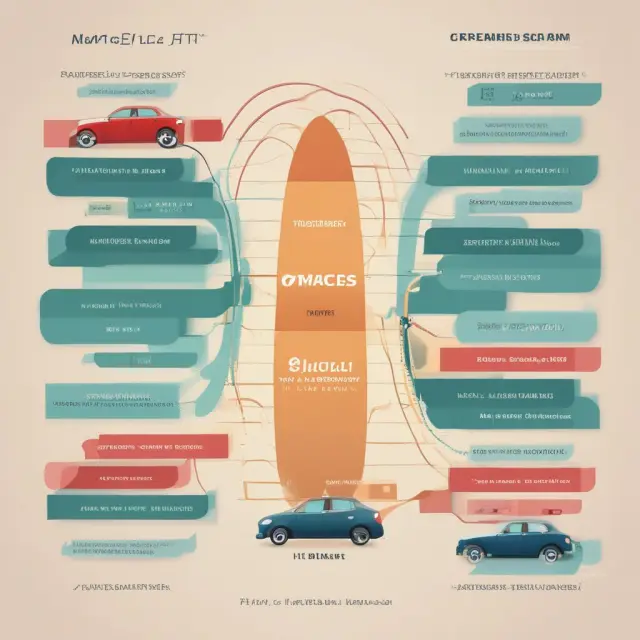
When considering various financing options, it is essential to differentiate between amortized loans and revolving debt, particularly credit cards. Although both types of debt allow individuals to borrow funds, they differ significantly in payment structures and interest calculations.
Amortized Loans: Fixed Payments and Principal Reduction
In an amortized loan–like a mortgage or car loan–borrowers make equal payments over the loan’s term. Each payment consists of both the interest portion and principal reduction. This structure results in steady repayment schedules and long-term financial stability. As you progressively pay off your loan, a larger percentage of each payment goes towards reducing the principal. Consequently, the interest portion decreases and eventually disappears as the borrower pays down their debt.
Revolving Debt: Flexible Payments and Interest Calculation
Revolving debt, such as credit cards, functions differently. Borrowers are granted a revolving line of credit within predefined credit limits. They can draw against this limit for various expenses and make payments when required. However, unlike amortized loans, no fixed payment schedule exists; borrowers may choose to pay the minimum monthly payment or more depending on their financial circumstances.
With revolving debt, interest is calculated differently as well. Instead of applying payments towards both principal and interest like an amortizing loan, credit card issuers apply only the interest expense for a given billing cycle to the revolving balance, causing the outstanding balance to remain constant or even increase if minimum payments are made. This structure can lead to long-term debt accumulation, making it essential to prioritize paying more than the minimum amount when possible.
Comparative Analysis: Advantages and Disadvantages
While amortized loans offer clear repayment schedules and predictable costs, revolving credit cards provide flexibility for borrowers in managing their expenses. Below is a summary of advantages and disadvantages associated with each type of debt.
Amortized Loans
Pros
– Predictable monthly payments
– Clear timeline for loan repayment
– Opportunity to pay off the entire loan amount over time
Cons
– Lack of flexibility in payment schedules
– Inability to access borrowed funds once repaid (unless refinanced)
– May require larger upfront payment (down payments on loans like a mortgage)
Revolving Debt
Pros
– Flexible repayment terms and options
– Ability to maintain available credit limit for future use
– Opportunity to make lump sum payments or pay off the balance in full at any time
Cons
– Potential for long-term indebtedness and high interest expenses
– Risk of accruing additional debt while maintaining a revolving credit line
– Unpredictable monthly payment amounts based on usage and interest charges
To better illustrate how these financing options differ, let’s delve into an example comparing an amortized car loan with a revolving credit card.
Example: Amortized Car Loan vs. Revolving Credit Card
Assume Bob takes out a $10,000 5-year car loan at an annual interest rate of 6%. The monthly payments on this loan total $228. In contrast, John borrows the same amount using a credit card with an annual percentage rate (APR) of 18% and makes only the minimum monthly payment ($274). While both individuals have borrowed $10,000, their repayment terms and structures vary significantly.
Bob’s amortized car loan structure will see him make equal monthly payments over five years, with a portion of each payment going towards paying off the principal balance and interest. By the end of the term, he will have fully paid off his debt.
John’s revolving credit card debt, on the other hand, will accrue interest based on the outstanding balance at the beginning of each billing cycle. While he can make monthly payments towards his debt, a large portion goes towards interest charges due to the high APR. If John continues making only the minimum payments for five years, he may end up paying significantly more than Bob in total and still owe a substantial balance when the term ends.
In summary, understanding the differences between amortized loans and revolving debt is crucial before committing to any financial obligation. While both loan types serve their unique purposes, it’s important to weigh the advantages and disadvantages of each before deciding which option best fits your financial situation and goals.
Calculating Amortized Loan Payments
Understanding amortized loans involves delving into their payment structure and the mechanics of how these types of loans function. When considering an amortized loan, it’s essential to know that monthly payments are split between principal reduction and interest expense. In this section, we will discuss calculating amortized loan payments using examples to provide clarity on how these payments are determined.
An Amortization Loan in a Nutshell
Before exploring the calculation process, it’s crucial first to understand the fundamental components of an amortized loan. An amortized loan is a debt obligation where borrowers repay their loans by making equal, periodic payments over the term of the loan. These payments consist of both interest and principal, with the majority of the payment being allocated towards interest early in the loan’s life.
The Loan Payment Formula
Calculating an amortized loan payment involves utilizing a loan payment formula that takes into account the loan amount (principal), annual interest rate, and term length. The following steps will guide you through calculating your monthly mortgage payments using this information:
- Determine the constant, ‘m’ which is calculated as follows: m = [r/12]^n * [p/[1-(1+r/12)^(-n)] where ‘r’ is the annual interest rate in decimal form, ‘n’ is the number of monthly payments, and ‘p’ is the principal loan amount.
- Multiply the constant ‘m’ by the total monthly payment to find the principal portion: p = m * T where ‘T’ is the total monthly payment.
- Subtract the principal portion from the total monthly payment to find the interest portion: I = T – p.
Consider an example to better illustrate this process. Suppose you secure a $200,000 mortgage with an annual interest rate of 4%. The term length is set at 30 years (or 360 monthly payments). Using the given formula:
m = [r/12]^n * [p/[1-(1+r/12)^(-n)]
m = [0.04/12]^360 * [$200,000/[1-(1+0.04/12)^(-360)]
Using a calculator or financial software to solve this formula, we find that the total monthly mortgage payment is approximately $951.73. Further calculations reveal that the principal portion of each payment is about $587.26 and the interest portion is $364.47.
In conclusion, calculating amortized loan payments involves understanding how the loan formula works to determine equal monthly payments that reduce both principal and interest over the life of the loan. Knowing this information can help you make informed decisions when considering an amortized loan for a new car, home purchase, or other financial endeavors.

Advantages and Disadvantages of Amortized Loans
Understanding the Pros and Cons of Amortized Loans
Amortized loans have gained immense popularity due to their numerous benefits. However, it’s crucial to consider both sides of the coin when making a decision about this type of loan. In this section, we will discuss the advantages and disadvantages of amortized loans to help you make an informed choice.
Advantages of Amortized Loans
1. Fixed Repayment Schedules: One major advantage of amortized loans is that they come with a fixed repayment schedule. This means the borrower knows exactly how much they need to pay each month, helping them plan their finances accordingly. The consistent payments create financial stability and can help build good credit.
2. Long-Term Financial Stability: By paying off both principal and interest in equal installments, amortized loans provide long-term financial stability. This structure ensures the debt will be paid off by the end of the loan term. Once the loan is repaid, there’s no ongoing obligation to pay back any additional funds.
3. Predictability: Amortized loans offer predictability as their equal monthly payments remain constant throughout the loan term. This helps borrowers understand and manage their financial obligations more effectively.
Disadvantages of Amortized Loans
1. Inability to Make Additional Principal Payments: A major disadvantage of amortized loans is that they do not allow for additional principal payments without incurring a prepayment penalty fee. This can limit the borrower’s ability to save money over time by paying down their debt faster.
2. High Initial Interest Payments: The initial installments on an amortized loan are primarily dedicated to interest payments, which can lead to substantial amounts of interest paid throughout the loan term. Depending on your financial situation and goals, this may not be an ideal arrangement.
3. Potentially Long Repayment Terms: Amortized loans often have long repayment terms, such as 15 or 30 years for a mortgage. This can result in paying more interest over the loan term, especially if interest rates are high during the initial stages of your loan.
In conclusion, understanding the advantages and disadvantages of amortized loans is crucial before choosing this type of loan. By considering both the pros and cons, you will be better equipped to make an informed decision that suits your financial situation and goals.

Amortized Loan Examples and Use Cases
Amortized loans are commonly used to finance major purchases such as real estate or automobiles, but they can also be employed in various other ways. Let’s explore some typical use cases for amortized loans, along with a few real-life examples.
Purchasing Property: One of the most common applications for an amortized loan is to finance the acquisition of real estate. Homebuyers can take out a mortgage–a type of amortized loan secured by the property itself–to purchase a house or condominium. The borrower makes regular, fixed payments over the term of the loan, which gradually reduces the principal balance and eventually leads to full repayment.
Consolidating Debt: Another use case for an amortized loan is debt consolidation. Borrowers can take out a personal loan with a longer repayment period–typically secured by an asset like a car or a savings account–to pay off numerous high-interest debts, such as credit card balances. This approach simplifies monthly payments and often results in lower interest rates, making it easier to manage finances and save money over the long term.
Funding Business Projects: Entrepreneurs might also consider using an amortized loan for business financing, especially when seeking capital to invest in major projects like purchasing equipment or expanding inventory. Amortized loans provide a fixed payment schedule, ensuring that businesses can allocate resources efficiently and plan their cash flow accordingly.
Real-life Example 1: Home Purchase
Let’s say Sarah, a single mother, wants to buy her dream home for $250,000 with a 30-year mortgage at an interest rate of 3%. With an amortization loan calculator, she can determine that her monthly payment will be $964. Over the life of the loan, Sarah will pay a total of $334,187, of which $79,187 is interest and $255,000 is principal repayment.
Real-life Example 2: Debt Consolidation
Another example involves Jane, who has multiple credit card balances totaling $20,000 at an average annual percentage rate (APR) of 18%. She can consolidate her debt using a three-year amortized personal loan with a fixed interest rate of 10%. With monthly payments of $683.72, Jane saves money by reducing the total cost of borrowing from $25,947.33 to $22,628.51 while paying off her debt faster than if she continued with her credit cards.
Real-life Example 3: Business Expansion
Finally, consider Tom’s business, which needs an additional $50,000 for inventory expansion. Tom takes out a five-year amortized loan at an interest rate of 6% with monthly payments of $1,219. This consistent payment schedule allows Tom to budget effectively and invest in growing his business while gradually paying off the debt over time.
In conclusion, understanding how amortized loans work provides insight into their versatility and value for a wide range of financial situations. By considering use cases like purchasing property, consolidating debt, and funding business projects, one can better appreciate the benefits of amortized loans and their potential impact on long-term financial goals.

Impact of Interest Rates on Amortized Loans
Interest rates significantly influence the monthly payments and the total loan cost for amortized loans. A lower interest rate results in lower monthly payments, while a higher interest rate leads to larger payments. Understanding how interest rates impact monthly payments can help borrowers make informed decisions when choosing a loan or refinancing an existing one.
Interest Rate Effects on Payments
The interest rate plays a crucial role in the initial monthly payment amount for an amortized loan. A lower interest rate means a smaller portion of each payment goes towards interest, while more goes to reducing the principal balance. In contrast, high-interest rates require larger portions of each payment to be dedicated to the interest expense. The inverse relationship between interest and principal in payments is essential to understand when evaluating various interest rates and loan terms.
Total Loan Cost
Interest rates also impact the total cost of an amortized loan over its term. A lower interest rate results in less interest being paid throughout the life of the loan, reducing the overall cost for the borrower. Conversely, a higher interest rate increases the total amount of interest paid and the total cost of the loan.
Refinancing:
Borrowers may refinance their amortized loans if interest rates significantly decrease, allowing them to take advantage of lower monthly payments or save on interest over the loan term. Refinancing involves taking out a new mortgage with better terms than the original one, replacing it. However, there are costs associated with refinancing, such as closing fees and application fees, which must be weighed against the potential savings before making the decision to refinance.
An Example
Consider two borrowers who take out a $150,000 mortgage over 30 years. The first borrower obtains an initial interest rate of 4%, while the second borrower receives a rate of 5%. The monthly payments for each borrower will differ based on their respective interest rates.
Borrower A: Monthly Payment – $681.71, Total Interest Paid – $133,609.88, Total Loan Cost – $163,609.88
Borrower B: Monthly Payment – $745.27, Total Interest Paid – $162,486.32, Total Loan Cost – $162,486.32
The difference in interest rates leads to a $63.56 increase in the monthly payment for Borrower B but results in a significantly larger total interest cost and loan cost compared to Borrower A. Although it might seem counterintuitive that a higher interest rate could lead to more savings, this occurs due to the differing effects on monthly payments and the total loan cost over the life of the loans.
In conclusion, understanding how interest rates affect amortized loans can help borrowers make informed decisions when choosing a loan or refinancing an existing one. Lower interest rates result in smaller monthly payments and reduced total loan costs, whereas higher interest rates may require larger monthly payments but could still lead to savings depending on the loan term.
Amortizing a Home Mortgage: A Closer Look
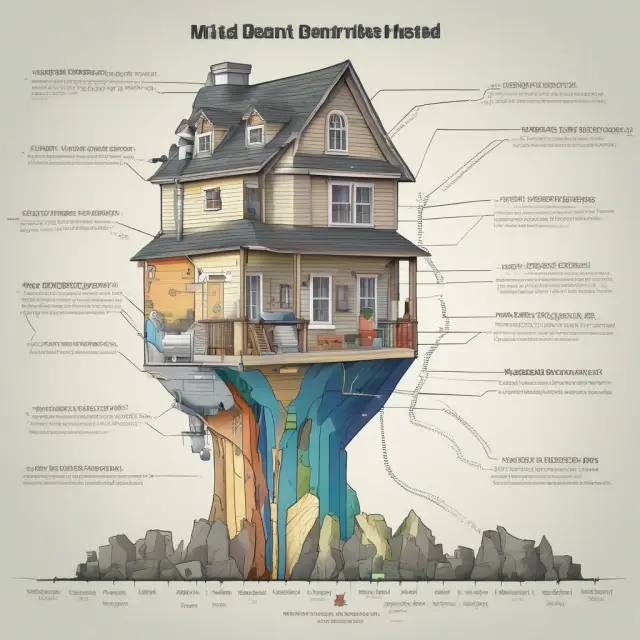
When considering a home mortgage, understanding the intricacies of amortized loans is crucial in making an informed decision. Amortized mortgages are a popular choice for financing real estate purchases due to their fixed monthly payments and long-term financial stability. However, they come with specific requirements and conditions that differ from other types of loans such as balloon or revolving debt.
An amortized mortgage is a type of loan where scheduled, periodic payments are applied to both the outstanding loan principal and the accrued interest during each repayment term. Unlike other loan structures, these equal monthly payments pay off both interest and principal portions, resulting in a gradual decrease in the loan balance over time.
Mortgage payments consist of two parts: an amount for the interest due (calculated based on the current mortgage balance) and a portion to reduce the principal amount. The interest portion is calculated using the current interest rate and the outstanding loan balance, while the remaining portion is allocated towards reducing the principal.
Unlike a balloon loan with its large final payment at the end of the term, amortized mortgages spread the entire loan amount over the agreed-upon repayment period. This structure provides homeowners with the predictability and convenience of fixed monthly payments. Furthermore, each mortgage payment’s principal portion increases as the interest component decreases, eventually resulting in a fully paid off property at the end of the term.
In contrast to revolving debt like credit cards, amortized mortgages require specific documentation for approval, such as proof of income and assets, employment records, and credit scores. The documentation serves as an assurance that you have the capability to repay the loan over its duration.
Amortized mortgage interest rates vary based on market conditions and your financial profile. A lower interest rate results in smaller monthly payments and less total interest paid over the term, while a higher interest rate leads to larger monthly payments and more total interest paid. Homeowners can refinance their mortgages when interest rates decrease significantly, potentially reducing their overall loan cost.
To calculate the monthly mortgage payment for an amortized loan, lenders use various formulas, including the loan amount, annual interest rate, and repayment term. The payment is then divided by 12 to obtain a monthly payment amount. This approach ensures that each monthly payment consists of equal parts of both interest and principal payments throughout the loan’s life cycle.

FAQs about Amortized Loans
Question 1: What is the difference between amortized loans and revolving debt, like credit cards?
Answer: While both types of loans involve borrowing money for use in various ways, there are notable differences. Amortized loans have set payment schedules with equal installments applying to both interest and principal throughout their life. In contrast, revolving debt–such as credit card debt–doesn’t require equal monthly payments or a fixed loan amount. Instead, consumers make minimum monthly payments on the revolving balance while maintaining an available credit limit for borrowing more.
Question 2: Is it possible to pay off an amortized loan earlier?
Answer: Yes! While paying off an amortized loan early isn’t mandatory, doing so can help save money over time in interest payments. Borrowers can make additional principal payments or larger monthly installments when their budget allows.
Question 3: How does the length of a loan term impact my monthly payments?
Answer: The longer your loan term, the smaller your monthly payments will be due to the extended repayment period. However, this also means you’ll pay more in interest over the life of the loan compared to making smaller, shorter-term loans or paying off larger debts sooner.
Question 4: What is a balloon payment?
Answer: A balloon payment is a large lump sum repayment made at the end of a loan term, often found in commercial real estate and residential mortgage loans. This final payment covers the remaining principal balance after the scheduled amortization period. Balloon payments can be challenging for borrowers since they require large, upfront cash payments upon loan maturity.
Question 5: Are there advantages to taking out an amortized loan versus a balloon loan?
Answer: Yes! Amortized loans have several advantages over balloon loans due to their fixed payment schedules and the consistent application of payments to both interest and principal throughout the term. This can help borrowers build financial stability, avoid unexpected balloon payments, and save on long-term interest costs.
Question 6: Is it necessary to refinance an amortized loan?
Answer: Refinancing an amortized loan might be a wise choice if current interest rates have dropped significantly since you initially took out the loan or if your income has increased, allowing for larger monthly payments. This can lead to lower monthly payments and/or long-term interest savings. However, it’s essential to weigh potential costs, such as closing fees, against the benefits of refinancing before making a decision.
 Next entry · No. 164Anchoring and Adjustment: A Powerful Cognitive Bias in Finance and Business
See also
-
 No. 5,961
25 Sep 2026
12 min
Extra Mortgage Payments: What $200 a Month Actually Saves
Mortgage
No. 5,961
25 Sep 2026
12 min
Extra Mortgage Payments: What $200 a Month Actually Saves
Mortgage -
 No. 646
14 May 2024
19 min
Cash Out Refinancing: Maximizing Your Home Equity for Financial Flexibility
Mortgage
No. 646
14 May 2024
19 min
Cash Out Refinancing: Maximizing Your Home Equity for Financial Flexibility
Mortgage -
 No. 289
09 Apr 2024
19 min
Understanding Average Outstanding Balance: Implications for Lenders and Borrowers
Financial Tools
No. 289
09 Apr 2024
19 min
Understanding Average Outstanding Balance: Implications for Lenders and Borrowers
Financial Tools -
 No. 5,971
05 Oct 2026
18 min
Car Loan Term: 48, 60, 72 or 84 Months - Which to Choose
Personal Finance
No. 5,971
05 Oct 2026
18 min
Car Loan Term: 48, 60, 72 or 84 Months - Which to Choose
Personal Finance -
 No. 5,962
26 Sep 2026
12 min
Biweekly Mortgage Payments: The Saving Is Real, the Fee Is Not
Mortgage
No. 5,962
26 Sep 2026
12 min
Biweekly Mortgage Payments: The Saving Is Real, the Fee Is Not
Mortgage -
 No. 5,736
03 Oct 2025
19 min
William J. O’Neil: An Investment Legend and His Contributions
Business Finance
No. 5,736
03 Oct 2025
19 min
William J. O’Neil: An Investment Legend and His Contributions
Business Finance