Understanding and Calculating the Asset Turnover Ratio for Effective Investment Analysis

Understand & calculate the Asset Turnover Ratio for effective investment analysis. Learn its formula, interpretation, limitations & compare Walmart, Target…
Introduction to the Asset Turnover Ratio
The asset turnover ratio is an essential financial metric for investors as it reveals how effectively a company utilizes its assets to generate sales. The ratio compares a firm’s annual revenue or sales to its total assets, offering insights into the efficiency with which the business converts its resources into income. By assessing the asset turnover ratio, investors can evaluate the productivity and profitability of companies within the same sector.
A higher asset turnover ratio implies that a company is efficiently using its assets to generate sales, while a lower ratio suggests inefficiencies or potential issues in inventory management or underutilized assets. In industries with smaller asset bases but high sales volumes such as retail and consumer staples, higher asset turnover ratios are typically observed due to the need to quickly convert inventories into sales. On the other hand, companies within capital-intensive sectors like utilities and real estate often have low asset turnover ratios due to their significant asset bases and long-term nature of operations.
To determine a company’s asset turnover ratio, first calculate its average total assets by adding the beginning and ending balances and dividing by two. Next, divide the annual sales or revenue by this average figure. This will yield the asset turnover ratio, which can be expressed as a decimal or ratio.
Understanding Interpretation of an Asset Turnover Ratio
When evaluating the asset turnover ratio, it is crucial to consider industry benchmarks for accurate comparison. A company with a high ratio in a capital-intensive sector might not necessarily outperform competitors with lower ratios if their industries typically have different requirements. For instance, a retailer with a high asset turnover ratio may be praised for efficiently converting inventory into sales, whereas a utility company’s low ratio could simply reflect the nature of its long-term assets and operational focus.
Comparing Asset Turnover Ratios Across Industries
As previously mentioned, comparing asset turnover ratios across industries is only meaningful when comparing similar companies within the same sector. For example, a comparison of Walmart and Target versus AT&T and Verizon can provide valuable insights into how efficiently these firms are using their assets to generate revenue.
Using Asset Turnover Ratio as Part of DuPont Analysis
The asset turnover ratio is an essential component of DuPont analysis, a systematic approach for evaluating financial performance across corporate divisions. Along with profit margin and financial leverage ratios, the asset turnover ratio helps investors gain a deeper understanding of return on equity by dissecting how effectively a company generates sales from its assets and manages operating expenses.
Stay tuned for upcoming sections discussing Fixed Asset Turnover Ratio, limitations, and a comparison between Walmart, Target, AT&T, and Verizon’s asset turnover ratios.

Asset Turnover Formula and Calculation
The asset turnover ratio (ATR) is a valuable financial metric used to assess a company’s ability to generate sales from its assets. By calculating this ratio, investors gain insights into how effectively a business uses its assets to drive revenue growth. The formula for the ATR involves dividing total sales or revenues by the average of beginning and ending assets:
Asset Turnover = (Beginning Assets + Ending Assets) / 2 Total Sales
To calculate the asset turnover ratio, investors must first determine the company’s total sales. This figure can be found in the income statement. Next, locate both the starting and ending asset balances on the balance sheet to obtain the average assets for the year. By adding the beginning and ending asset values and dividing by two, we derive the average asset value used in the calculation of the asset turnover ratio.
Higher ratios indicate a more efficient use of assets to generate revenue. Generally speaking, companies with high asset turnover ratios tend to be those with significant sales volumes or low asset bases, such as retailers and consumer goods manufacturers. Conversely, industries with large asset bases and low asset turnover ratios include utilities and real estate sectors.
While comparing the asset turnover ratios of companies in different sectors may not be productive, investors can use this metric to evaluate a company’s performance within its industry or sector. A decline in a company’s asset turnover ratio compared to previous years or its competitors may signal operational inefficiencies.
In some instances, analysts and investors may prefer to assess the efficiency of specific asset classes, such as fixed assets or current assets. In these situations, ratios like the fixed asset turnover ratio (FATR) and the working capital ratio are utilized instead. The FATR compares net sales with fixed assets, while the working capital ratio evaluates the use of financing from working capital to generate sales.
Regardless of which ratio is employed, understanding a company’s asset utilization can provide crucial insights for investors seeking to make informed decisions. By examining trends in asset turnover ratios over time, as well as comparing ratios among competitors within an industry, investors can assess the operational efficiency and effectiveness of their investment targets.

Understanding the Interpretation of an Asset Turnover Ratio
The asset turnover ratio provides valuable insights into a company’s ability to generate revenue from its assets. A high asset turnover ratio indicates that a company is efficiently utilizing its assets to produce sales, while a low ratio suggests inefficiency. However, it’s essential to interpret the asset turnover ratio within context, as different industries may exhibit vastly varying ratios due to inherent sectoral characteristics.
Comparing Asset Turnover Ratios Across Industries
The retail industry and consumer staples often possess high asset turnover ratios because they have substantial sales volumes relative to their asset bases. In contrast, utility and real estate firms generally exhibit lower ratios as a result of their significant asset bases and the slow-moving nature of their industries. For example, Walmart’s asset turnover ratio was 2.3x for FY 2020, while Target had a 2.0x asset turnover ratio during the same period. In contrast, AT&T and Verizon had asset turnover ratios below one (0.32x and 0.42x, respectively), which is expected given their sizeable asset bases.
Comparing companies within the same sector can yield significant insights into a firm’s operational efficiency. For instance, an industry comparison of AT&T and Verizon reveals that Verizon turned its assets more efficiently in FY 2020 than its competitor, despite being part of the same telecommunications-utilities sector.
Using Asset Turnover Ratio as Part of DuPont Analysis
The asset turnover ratio is a crucial element in DuPont analysis, which breaks down return on equity (ROE) into three components: profit margin, asset turnover, and financial leverage. By examining these three elements, investors can gain a more comprehensive understanding of a company’s performance. The first step of DuPont analysis involves calculating the ROE as follows:
ROE = Profit Margin (Revenue / Net Income) × Asset Turnover (AA / Revenue) × Financial Leverage (AE / AA)
The asset turnover ratio reveals how effectively a company utilizes its assets to generate sales or revenue. It’s important to note that the asset turnover ratio in DuPont analysis is calculated using average annual assets (AA), instead of the total assets used in the simple asset turnover ratio calculation.
In conclusion, the asset turnover ratio offers essential insights into a company’s operational efficiency and profitability. It’s crucial to consider industry benchmarks when comparing asset turnover ratios and to examine trends over time to assess whether a company’s asset usage is improving or deteriorating. By incorporating the asset turnover ratio as part of a comprehensive analysis, investors can gain a more informed perspective on a firm’s financial health and performance.
Stay tuned for the next section: ‘Fixed Asset Turnover Ratio: Measuring Fixed Assets’ Efficiency in Generating Sales.’

Comparing Asset Turnover Ratios Across Industries
The asset turnover ratio’s relevance extends beyond its utility as an indicator of a single company’s efficiency. Comparing this metric across similar companies within the same industry sector provides valuable insights into how effectively each organization utilizes its assets to generate sales. The significance of sector-specific benchmarks lies in the fact that industries vary considerably when it comes to asset intensity and sales volume.
Retail and consumer staples, for example, demonstrate small asset bases but high sales volumes. This results in relatively high average asset turnover ratios compared to other sectors. Conversely, utility companies and real estate firms exhibit large asset bases with low sales volumes, leading to lower asset turnover ratios. Comparing the asset turnover ratios of Walmart and Target with those of AT&T and Verizon offers a clear illustration of this principle.
Walmart and Target, both retailers, boast asset turnover ratios significantly higher than their counterparts in the telecommunications sector. For FY 2020, Walmart reported an asset turnover ratio of 2.3x while Target’s was 2.0x. In comparison, AT&T and Verizon, telecom companies, displayed asset turnover ratios below one, which is typical for their industry.
Comparing the asset turnover ratios within the same sector, however, provides more meaningful insights. Analyzing the efficiency of AT&T and Verizon in relation to one another sheds light on how effectively each company leveraged its assets in generating sales within their specific industry. From this perspective, Verizon demonstrated a faster asset turnover rate than AT&T, which might suggest that it was using its assets more efficiently.
The significance of sector-specific benchmarks is further underscored when comparing companies operating in different sectors. Investors should exercise caution when attempting to compare the asset turnover ratios of retailers with those of utility companies, for instance. Instead, they should focus on analyzing similar companies within their respective industries and use industry benchmarks as a point of reference.
By examining these sector-specific trends in asset turnover ratios, investors can gain valuable insights into each company’s operational efficiency and make more informed investment decisions.

Using Asset Turnover Ratio as Part of DuPont Analysis
Investors and financial analysts often use multiple financial metrics to assess a company’s performance. DuPont analysis, introduced by the DuPont Corporation in the 1920s, is an analytical framework that evaluates a firm’s return on equity (ROE) through three major components: asset turnover ratio, profit margin, and financial leverage. This section focuses on the first component, asset turnover ratio, and its role within DuPont analysis.
Asset Turnover Ratio in DuPont Analysis
DuPont analysis is a valuable tool for understanding the relationship between a company’s revenue, assets, profitability, and financial structure. The first step of this analysis examines ROE by breaking it down into three components: asset turnover ratio, profit margin, and financial leverage. Asset turnover ratio is one crucial component that reveals how effectively a company is utilizing its assets to generate sales or revenues.
The formula for asset turnover ratio can be calculated as:
Asset Turnover = Total Sales (or Revenue) / Average Total Assets
Let’s examine the relationship between asset turnover ratio and DuPont analysis in more detail:
1. Calculating Asset Turnover Ratio
To calculate asset turnover, investors or analysts first determine a company’s average total assets by averaging its beginning and ending assets. The following formula is used to calculate the average total assets:
Average Total Assets = (Beginning Assets + Ending Assets) / 2
Next, the total sales or revenue for the period under consideration are calculated. Finally, the asset turnover ratio is calculated by dividing the total sales or revenue by the average total assets:
Asset Turnover Ratio = Total Sales / Average Total Assets
2. Interpreting the Asset Turnover Ratio within DuPont Analysis
The asset turnover ratio in DuPont analysis represents how effectively a company generates sales from its assets. A higher ratio suggests that a firm efficiently uses its assets to generate revenue, while a lower ratio indicates that a company may not be using its assets productively.
By examining the asset turnover ratio alongside other financial metrics like profit margin and financial leverage, investors can gain a deeper understanding of how a company’s efficiency in generating sales relates to its overall financial performance. This holistic perspective enables more informed investment decisions.
Stay tuned for further sections on Fixed Asset Turnover Ratio, its limitations, and real-world examples using Walmart, Target, AT&T, and Verizon’s asset turnover ratios.

Fixed Asset Turnover Ratio: Measuring Fixed Assets’ Efficiency in Generating Sales
The Asset Turnover Ratio, introduced earlier, provides insight into a company’s ability to generate revenue from its total assets. However, investors might be interested in knowing how efficiently companies are using their fixed assets – such as property, plant, and equipment (PP&E – to generate sales. This is where the Fixed Asset Turnover Ratio comes in.
Fixed Asset Turnover: A Definition and Calculation
The Fixed Asset Turnover Ratio, also known as net asset turnover or investment turnover ratio, measures a company’s ability to earn revenue from its fixed assets by calculating the number of times these assets are turned over in generating sales. The formula for this ratio is:
Fixed Asset Turnover = Net Sales / Average Total Fixed Assets
Investors calculate net sales by subtracting any returns and allowances from the total revenue reported on the income statement, while average total fixed assets are calculated as the sum of the beginning and ending balances divided by two. This ratio allows investors to determine if a company is effectively using its long-term assets to generate revenue.
Interpreting Fixed Asset Turnover Ratios
Like the asset turnover ratio, a higher fixed asset turnover ratio signifies greater efficiency in utilizing assets for generating sales. Companies with high ratios can typically produce more sales from their existing infrastructure and equipment compared to those with lower ratios. However, it’s crucial to consider industry benchmarks when evaluating fixed asset turnover ratios as different industries might have varying average ratios based on their nature.
Comparing Fixed Asset Turnover Ratios Across Industries
Comparing fixed asset turnover ratios between companies within the same sector offers valuable insights into how efficiently they are utilizing their long-term assets in generating sales. In contrast, comparing ratios across diverse industries could lead to misleading conclusions as certain sectors might naturally have higher or lower ratios due to their unique characteristics. For example, a manufacturing company and a retailer would likely exhibit different fixed asset turnover ratios due to the nature of their business models.
Using Fixed Asset Turnover Ratios in DuPont Analysis
The Fixed Asset Turnover Ratio is an essential component of DuPont Analysis – a method used for evaluating a company’s financial performance by breaking down Return on Equity (ROE) into three components: asset turnover, profit margin, and financial leverage. The first step in this analysis calculates ROE as follows:
ROE = Profit Margin × Asset Turnover × Financial Leverage
By evaluating the fixed asset turnover ratio as part of DuPont Analysis, investors can identify a company’s ability to generate sales from its long-term assets and better understand how these assets contribute to overall profitability.
In conclusion, understanding both the asset turnover ratio and the fixed asset turnover ratio provides valuable insights into how efficiently a company is using its assets – both current and fixed – in generating revenue or sales. While the asset turnover ratio measures a company’s overall efficiency, the fixed asset turnover ratio specifically focuses on the effectiveness of long-term assets. Investors can use this information to make more informed decisions when evaluating potential investment opportunities.

Limitations of Using the Asset Turnover Ratio
The asset turnover ratio is an essential financial metric to understand how efficiently a company generates sales from its assets. It provides valuable insights into a firm’s operational efficiency, revealing whether a higher or lower ratio indicates strengths or weaknesses. However, it is crucial to recognize that the asset turnover ratio does have some limitations that investors should consider when evaluating potential investments.
Firstly, the ratio itself might not provide a complete picture of a company’s asset utilization in generating revenues. For instance, differences in accounting practices and industry characteristics can significantly impact a firm’s asset turnover ratio from one year to another. Seasonality factors, large asset sales, or significant purchases may also skew the results, making it essential to consider trends and context when interpreting the data.
Secondly, comparing asset turnover ratios across industries should be done with caution. As previously mentioned, retail and consumer staples companies typically have higher asset turnover ratios due to their large sales volumes and smaller asset bases. On the other hand, industries such as utilities and real estate have lower asset turnover ratios due to the nature of their business models. Direct comparisons of asset turnover ratios between companies in different sectors are not particularly meaningful. Instead, it is more beneficial to focus on comparing companies within the same sector or industry group.
Lastly, asset turnover ratio should be used in conjunction with other financial metrics, such as return on assets (ROA) and gross profit margin, for a more comprehensive assessment of a company’s performance. A high asset turnover ratio does not necessarily equate to better financial health; it is just one aspect of evaluating a company’s efficiency and profitability.
In conclusion, the asset turnover ratio is an essential financial metric in understanding a company’s operational efficiency in generating sales from its assets. While it provides valuable insights, investors should be cautious when interpreting this ratio in isolation. By considering trends, sector comparisons, and other financial metrics, the asset turnover ratio can help inform investment decisions for a more complete analysis of a firm’s financial health.

Comparing Companies Using Asset Turnover Ratios: Walmart vs Target vs AT&T vs Verizon
To further understand the significance of asset turnover ratios, let’s delve deeper by comparing four companies from different sectors: retail (Walmart and Target) and telecommunications-utilities (AT&T and Verizon). By assessing their asset turnover ratios in 2020, we can observe how efficiently each company utilized its assets to generate sales.
First, let’s calculate the asset turnover ratios for Walmart, Target, AT&T, and Verizon:
Asset Turnover Ratios ($ Millions)
————————————-
| Company | Beginning Assets | Ending Assets | Avg. Total Assets | Revenue | Asset Turnover |
—————————————————————————————
| Walmart | $219,295 | $236,495 | $227,895 | $524,000 | 2.3x |
| Target | $42,779 | $51,248 | $47,014 | $93,561 | 2.0x |
| AT&T | $551,669 | $525,761 | $538,715 | $171,760 | 0.32x |
| Verizon | $291,727 | $316,481 | $304,104 | $128,292 | 0.42x |
The asset turnover ratio ranges from 0.32x for AT&T to 2.3x for Walmart. While a higher ratio is generally desirable because it implies efficient use of assets in generating sales, understanding industry context is crucial when comparing ratios. Retail companies like Walmart and Target typically exhibit higher asset turnover ratios due to their relatively smaller asset bases compared to the significant revenue generated from high sales volumes. Conversely, telecommunications-utilities companies, such as AT&T and Verizon, have large asset bases and lower asset turnover ratios because of the nature of their businesses.
Comparing asset turnover ratios within the same sector provides valuable insights into a company’s performance in utilizing its assets efficiently to generate sales. However, it is essential to note that trends over time and contextual factors should also be taken into account when interpreting these ratios. Additionally, comparing the ratios of companies with vastly different asset bases may not yield meaningful results.
In conclusion, an asset turnover ratio helps investors assess a company’s efficiency in generating sales from its assets. By calculating and comparing ratios across companies within the same sector, investors can identify potential strengths or weaknesses in a company’s operational efficiency. However, it is important to consider industry context, trends over time, and other relevant factors when making investment decisions based on asset turnover ratios.
The Importance of Trend Analysis for Asset Turnover Ratios
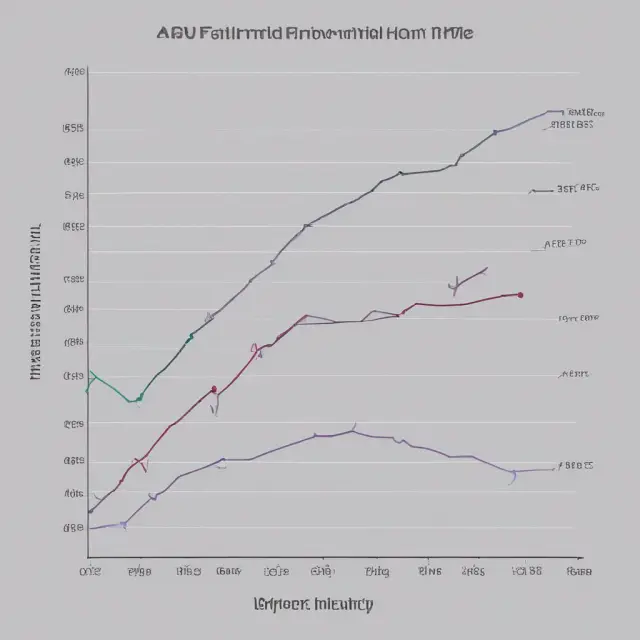
Understanding and analyzing trends in asset turnover ratios can provide valuable insights into a company’s financial performance over time. Analyzing the trend in the asset turnover ratio is crucial to determining whether a company’s efficiency in utilizing its assets to generate sales is improving or deteriorating. In this section, we will discuss why it is essential to examine trends instead of merely focusing on a single year’s asset turnover ratio and how this information can be utilized for effective investment analysis.
First and foremost, asset turnover ratios can be affected by various factors that may not be reflected in a one-year analysis. Seasonality and business cycles are significant influences on a company’s asset turnover ratio, especially in industries with distinct seasonal trends or cyclical business patterns. For example, retailers may experience higher sales volumes during specific periods, resulting in increased inventory levels and lower asset turnover ratios during those times. Conversely, companies in the construction sector may exhibit lower asset turnover ratios during economic downturns due to decreased demand for their products or services.
Moreover, a single year’s asset turnover ratio might not accurately represent a company’s long-term performance. Large asset purchases or sales can have significant impacts on a company’s asset base and, subsequently, its asset turnover ratio. For instance, if a manufacturing firm invests heavily in new machinery to expand production capacity, this investment will temporarily decrease the asset turnover ratio due to the increased value of the assets on the balance sheet. However, over time, the enhanced production capabilities could lead to higher sales volumes and improved efficiency, thereby reversing the initial dip in the asset turnover ratio.
Comparing a company’s asset turnover ratios across multiple years can help investors identify trends and assess whether the company is becoming more or less efficient in using its assets to generate revenue. Additionally, analyzing the trend of a company’s asset turnover ratio compared to industry peers can provide valuable context for investment decisions. For instance, if a company exhibits a declining asset turnover ratio over several years while its competitors maintain consistent or improving ratios, this discrepancy could be a red flag for potential inefficiencies or declining competitive positioning.
By focusing on trends instead of just a single year’s asset turnover ratio, investors can gain a more comprehensive understanding of a company’s financial health and performance. This information can ultimately assist investors in making informed investment decisions and assessing the long-term potential of various investment opportunities.

FAQ: Frequently Asked Questions about the Asset Turnover Ratio
When delving into the intricacies of investment analysis, asset turnover ratio stands out as a significant financial metric. This important ratio not only helps investors understand how effectively companies are using their assets to generate sales but is also essential for making informed comparisons between similar organizations in the same sector or industry grouping (Gilbert, 2017). In this section, we will address common questions related to the calculation, interpretation, and utilization of asset turnover ratios.
What exactly is the Asset Turnover Ratio?
The asset turnover ratio measures a company’s efficiency in generating sales or revenues from its assets (Investopedia, 2019). It calculates the ratio of total sales or revenues to average total assets during a given period. A higher asset turnover ratio indicates that the company is effectively using its assets to create revenue.
How can I calculate the Asset Turnover Ratio?
The formula for the Asset Turnover Ratio is: Asset Turnover = Beginning Assets + Ending Assets / Total Sales (Annual sales total). To determine the value of a company’s assets, first, locate its average asset value by calculating the midpoint between its beginning and ending asset values (total beginning assets + total ending assets / 2). Then, divide the total sales or revenue for the year by the average asset value.
What does an Asset Turnover Ratio of 2.3x signify?
A ratio of 2.3x implies that a company generates $2.30 in sales for every dollar invested in assets. This can indicate efficient asset usage and strong revenue generation, making it a desirable ratio for investors. However, keep in mind that industry standards and context are crucial when evaluating this ratio.
How do I compare different companies using the Asset Turnover Ratio?
Comparing the asset turnover ratios of different companies is most meaningful when they belong to the same sector or industry group. It’s essential to note that the ratio can vary significantly between industries, as some sectors naturally have higher asset turnover ratios than others (e.g., retail vs. utilities) (Gilbert, 2017).
What are the limitations of using the Asset Turnover Ratio?
The asset turnover ratio provides valuable insights but has its limitations. It may not reveal a complete picture of a company’s financial health, as it doesn’t account for other critical factors like profitability and debt management (Gilbert, 2017). Additionally, the ratio can be influenced by one-time events such as large asset sales or purchases, which may impact the assets under consideration.
Does a lower Asset Turnover Ratio always signify inefficient usage of assets?
No, a lower asset turnover ratio could result from several factors, including favorable market conditions (low inventory levels), efficient production processes, or strategic business decisions (Gilbert, 2017). It’s crucial to consider the industry context and business strategy when interpreting an asset turnover ratio.
What is the significance of Asset Turnover Ratio trends?
Analyzing the trend in a company’s asset turnover ratio can provide valuable insights into whether its asset usage is improving or deteriorating over time (Investopedia, 2019). Trend analysis can help investors identify potential issues and opportunities.
How does the Asset Turnover Ratio relate to DuPont analysis?
The asset turnover ratio plays a significant role in DuPont analysis, which is a financial system used to evaluate performance across corporate divisions (DuPont Corporation, 1920s). The first step of this analysis breaks down return on equity into three components: profit margin, asset turnover, and financial leverage. Asset Turnover = Profit Margin × Asset Turnover × Financial Leverage
What is the difference between Asset Turnover Ratio and Fixed Asset Turnover Ratio?
The main distinction lies in which assets are considered when calculating the ratios. The asset turnover ratio considers total assets, while the fixed asset turnover ratio focuses only on fixed assets (property, plant, and equipment) (Investopedia, 2019). Both ratios provide unique insights into a company’s efficiency in utilizing its assets for revenue generation.
By answering these frequently asked questions about asset turnover ratios, we aim to deepen your understanding of this essential financial metric and equip you with valuable tools for making informed investment decisions.
 Next entry · No. 246Understanding Asset Valuation: Net Asset Value, Absolute and Relative Valuation Methods
See also
-
 No. 1,549
02 Oct 2024
18 min
Understanding the Fixed Asset Turnover Ratio: Measuring Operational Efficiency
Accounting
No. 1,549
02 Oct 2024
18 min
Understanding the Fixed Asset Turnover Ratio: Measuring Operational Efficiency
Accounting -
 No. 4,507
24 Jun 2025
15 min
Understanding Return on Average Equity (ROAE): A More Accurate Measurement of Corporate Profitability
Corporate Finance
No. 4,507
24 Jun 2025
15 min
Understanding Return on Average Equity (ROAE): A More Accurate Measurement of Corporate Profitability
Corporate Finance -
 No. 607
06 May 2024
19 min
Understanding Capital Employed: Definition, Formula, and Importance for Institutional Investors
Corporate Finance
No. 607
06 May 2024
19 min
Understanding Capital Employed: Definition, Formula, and Importance for Institutional Investors
Corporate Finance -
 No. 3,938
09 May 2025
21 min
Understanding the Price/Earnings-to-Growth (PEG) Ratio: Calculating Stock Value with P/E and Expected Growth
Business Finance
No. 3,938
09 May 2025
21 min
Understanding the Price/Earnings-to-Growth (PEG) Ratio: Calculating Stock Value with P/E and Expected Growth
Business Finance -
 No. 3,737
23 Apr 2025
20 min
Understanding Operating Income: Its Significance and Calculation
Business Finance
No. 3,737
23 Apr 2025
20 min
Understanding Operating Income: Its Significance and Calculation
Business Finance -
 No. 3,563
08 Apr 2025
18 min
Understanding Normalized Earnings: A Key Metric for Analyzing Business Performance
Business Finance
No. 3,563
08 Apr 2025
18 min
Understanding Normalized Earnings: A Key Metric for Analyzing Business Performance
Business Finance