Understanding and Investing in the Technology Sector: A Comprehensive Overview of Tech Companies, Growth, and Subsectors

Learn about the technology sector's growth potential and history, as well as investment strategies for semiconductors, software, networking, hardware, and more.
Introduction to the Technology Sector
The technology sector, often shortened to tech sector or tech industry, refers to the segment of the economy that focuses on creating and distributing technologically based goods and services. This expansive sector encompasses businesses involved in electronics manufacturing, software creation, computer production, artificial intelligence, and various industries related to information technology (IT). The significance and growth potential of the technology sector are largely due to its role in enabling innovation for both consumers and businesses.
The technology sector is vital for various reasons:
- Consumer goods: Companies in this sector create innovative gadgets and devices, such as personal computers, mobile phones, wearable technology, televisions, and home appliances, constantly pushing the boundaries of what’s possible with new features and designs.
- Business innovation: Tech companies are essential for businesses to grow and thrive by providing enterprise software, managing logistics systems, protecting databases, and offering critical information services that enable strategic decision-making.
- Diversification: The technology sector is a popular investment choice due to its potential growth. It has been at the forefront of numerous economic booms and expansions, from semiconductors in the 1960s and 70s to the dot-com boom in the late 90s and early 2000s.
The technology sector has experienced continuous expansion since its inception. The initial focus was on semiconductors, computing hardware, and communications equipment. However, with the advent of software companies, the definition of the tech sector grew to include anything based on coding. Later, networking and internet companies emerged, creating subsectors like e-commerce, social media, and cloud-based computing. Although debates continue over how to define and categorize technology companies, the broad categories consist of semiconductors, software, networking and Internet, and hardware.
Investing in the Technology Sector: A Comprehensive Overview
Understanding the Significance of Tech Companies in the Economy
The technology sector’s importance lies in its ability to drive growth through innovation. It offers both consumers and businesses with groundbreaking products and services. By understanding the significance of tech companies, investors can make informed decisions when considering investments in this sector. In the next section, we delve deeper into the history and evolution of the technology sector, as well as the most attractive subsectors for investment.

Understanding the Significance of Tech Companies in the Economy
The technology sector has significantly impacted economies worldwide, providing essential goods and services to both consumers and businesses. These companies specialize in researching, developing, manufacturing, distributing, or servicing products and services related to electronics, software, computers, artificial intelligence (AI), and other information technology (IT) sectors. Tech companies play a pivotal role in driving innovation and growth, which is why they are often considered attractive investment opportunities.
Tech Companies and Business Growth: A Necessity in the Modern Economy
Businesses rely heavily on tech companies for various reasons. First, these firms create cutting-edge software solutions that help businesses manage their logistics systems, protect databases, make strategic decisions, and provide essential information for daily operations. Moreover, tech companies develop innovative technologies, such as cloud computing and AI, which enable businesses to scale and compete effectively in an increasingly digital landscape.
The Consumer Side of the Technology Sector: From Personal Computers to Wearables
On the consumer side, tech companies offer a wide range of products and services that enhance daily life. These include personal computers, mobile devices, wearable technology, home appliances, televisions, and more. Tech giants continually strive to introduce new features and improvements to keep up with ever-evolving consumer demands.
The Importance of Tech Companies in the Modern Economy: An Overview of the Technology Sector’s Evolution
The technology sector has seen significant transformations throughout its existence, with various subsectors emerging as technology advances. Initially anchored in semiconductors, computing hardware, and communications equipment, the tech sector expanded to include software companies that coded the medium for new business lines like e-commerce, social media, the sharing economy, and cloud-based computing.
The Diversity of Tech Companies: Semiconductors, Software, Networking & Internet, and Hardware
To better understand the technology sector, it is crucial to recognize its four primary subsectors: semiconductors, software, networking and internet, and hardware. Each subsector offers unique investment opportunities and growth prospects. Semiconductor companies produce chips for various electronic devices and continue to lead the way in technological innovation. Software companies create essential tools that businesses and consumers rely on daily, while networking and internet firms provide connectivity and communication services that enable a more interconnected world. Hardware manufacturers produce devices such as laptops, desktops, smartphones, tablets, and wearables to meet consumer needs.
Investing in the Technology Sector: Strategies for Institutional Investors
Institutional investors are increasingly drawn to the technology sector due to its growth potential and the competitive edge it provides. To invest in tech companies, institutional investors should consider diversifying their portfolios by investing across various subsectors, understanding the risks involved, and monitoring industry trends carefully. By taking a thoughtful approach, investors can capitalize on the long-term growth opportunities the technology sector offers.
In conclusion, the technology sector is an essential driver of innovation and economic growth. Tech companies have transformed our daily lives with consumer electronics and revolutionized businesses by creating essential software solutions, cloud computing platforms, and communication tools. As the industry continues to evolve, understanding its significance and investment potential will be crucial for both individual and institutional investors.
History of the Technology Sector: From Semiconductors to Software, Hardware, and Internet
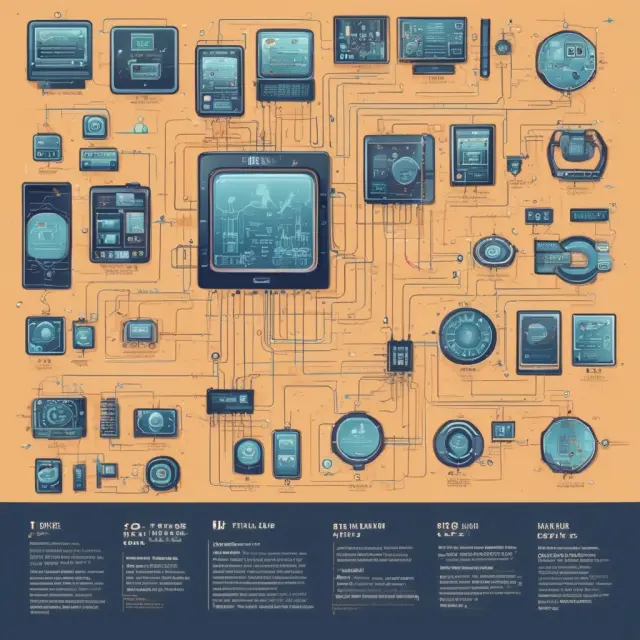
The technology sector has transformed dramatically since its inception, evolving from simple semiconductors and computing hardware into a diverse landscape encompassing software, networking and internet, and hardware. In this section, we delve into the rich history of the technology sector and pivotal innovations that have shaped its growth.
Initially, the technology sector was dominated by semiconductor companies like Texas Instruments, Intel, and Fairchild Semiconductor. These pioneering firms played a crucial role in driving technological advancements and developing the transistor – an essential building block for modern electronics. As semiconductors evolved, they gave birth to the computer industry. Early adopters such as IBM, Digital Equipment Corporation, and Hewlett-Packard introduced mainframe computers that revolutionized businesses by automating processes and handling complex calculations.
The emergence of software companies like Microsoft, Oracle, and Adobe brought about a new wave of innovation in the technology sector. Software became increasingly vital for businesses to manage their operations, creating demand for specialized solutions. The launch of operating systems (OS), databases, and office productivity applications enabled businesses to streamline their workflows and boost productivity.
The advent of networking and internet companies marked a significant turning point for the technology sector. Internet giants such as Google, Facebook, Twitter, Amazon, and Netflix disrupted industries and changed the way people communicate, consume media, shop, and access information. Social media platforms connect billions worldwide, enabling instant messaging, sharing content, and fostering online communities. E-commerce companies like Amazon transformed retail by offering convenience, competitive pricing, and unparalleled selection.
The hardware sector has continued to evolve in tandem with the software and internet industries, giving rise to mobile devices, gaming consoles, and virtual reality technology. Wearables, such as smartwatches and fitness trackers, have become increasingly popular, reflecting society’s growing reliance on technology for health and convenience.
The technology sector is a dynamic, ever-evolving industry that has redefined our daily lives and transformed industries. As technology continues to advance, new innovations are poised to reshape the way we live, work, and communicate. Stay tuned as we explore the most attractive investment destinations within this vibrant sector in the following sections.

The Most Attractive Investment Destination: The Technology Sector’s Growth Potential
Why Invest in the Technology Sector?
The technology sector, also known as tech or tech industry, is a significant and ever-evolving sector of the economy. It comprises companies involved in researching, developing, manufacturing, marketing, and distributing technological products and services. These businesses range from those dealing with hardware components such as semiconductors to those providing software solutions like enterprise software and consumer applications, as well as internet giants and emerging technologies like artificial intelligence and renewable energy.
Investors are drawn to the technology sector due to its growth potential, which often outpaces other sectors in the economy. Over the last few decades, the tech industry has experienced exponential growth and transformed the way we live, work, and communicate. This is largely due to innovations like smartphones, social media platforms, cloud computing, artificial intelligence (AI), and the Internet of Things (IoT).
Investing in the Technology Sector: Historical Context
Historically, the technology sector’s growth can be traced back to the semiconductor industry. Semiconductors are essential components for various electronic devices, including computers and smartphones. The development and miniaturization of these chips have been a driving force behind many technological advances. In the 1960s and 70s, the semiconductor industry was dominated by American companies such as Intel, Fairchild Semiconductor, Texas Instruments, and Motorola.
The late 1990s saw the emergence of another technology trend: the Internet boom. This period marked a significant shift in how businesses operated and interacted with customers. Companies like Amazon, Google, eBay, and Yahoo grew rapidly during this time, offering new business models and services that would change the way consumers shopped, searched for information, and connected with others online.
In recent years, technology giants such as Apple, Microsoft, Facebook, Alphabet (Google), Tesla, and Amazon have continued to push technological boundaries, introducing innovative products like self-driving cars, virtual reality headsets, and advanced AI systems that can learn and adapt to individual users’ preferences. These companies have revolutionized industries ranging from healthcare and finance to transportation and entertainment.
The Future of the Technology Sector: Growth Potential
The future of the technology sector looks bright, as new advancements continue to emerge in areas like quantum computing, autonomous vehicles, biotechnology, and renewable energy storage. These technologies have the potential to fundamentally change industries and create entirely new ones.
For example, quantum computing could revolutionize fields such as finance, logistics, and materials science by providing faster and more accurate solutions for complex problems. Autonomous vehicles, on the other hand, may drastically reduce transportation-related accidents, improve traffic flow, and increase accessibility for people with disabilities or those living in remote areas.
As these advancements unfold, they create opportunities for investors to capitalize on new trends before they become mainstream. However, investing in the technology sector requires a long-term perspective and the willingness to tolerate higher risk due to the unpredictability of emerging technologies. As such, it’s essential to diversify investments across various subsectors within the technology industry and consider different investment vehicles like mutual funds, exchange-traded funds (ETFs), and individual stocks.
The technology sector’s growth potential is truly remarkable, providing ample opportunities for investors looking to stay ahead of market trends and generate strong returns over the long term. As a result, it remains one of the most attractive investment destinations in the economy.

Semiconductor Subsector: Understanding Its Significance in Tech
The semiconductor subsector plays an indispensable role within the technology industry. Semiconductors, often referred to as microchips, are essential components in the manufacturing of electronics. These small yet powerful pieces of silicon-based materials serve as switches that control the flow of electric current, allowing for more complex electronic functions. They power the digital circuits in various electronic devices, from smartphones and computers to automobiles and industrial machinery.
The semiconductor industry’s evolution dates back to the late 1940s when the first point-contact transistors were developed at Bell Laboratories. The subsequent decades brought advancements such as integrated circuits and microprocessors, significantly increasing the capacity for information processing within electronic devices. As technology continued to progress, the demand for semiconductors grew exponentially, leading to a thriving global industry with numerous players competing in various segments.
Today, the semiconductor subsector is a critical driver of innovation and growth in the tech sector. Companies like Intel, Samsung, Taiwan Semiconductor Manufacturing Company (TSMC), Qualcomm, and NVIDIA are at the forefront of developing and manufacturing cutting-edge technology, pushing boundaries with smaller, faster, more energy-efficient chips.
Moreover, semiconductors have become essential in various industries beyond just consumer electronics. In automotive applications, they are used for engine control systems, safety features like airbag sensors, and advanced driver assistance systems (ADAS). The semiconductor industry also plays a vital role in the internet of things (IoT), with sensors and wireless communication components facilitating connectivity and data processing.
Looking forward, the semiconductor subsector is poised for continuous growth due to emerging trends such as artificial intelligence, autonomous vehicles, 5G networks, and the increasing adoption of IoT devices. These advancements will create new opportunities and applications for semiconductors, solidifying their importance in the technology sector.
In conclusion, understanding the semiconductor subsector is crucial when analyzing the technology industry’s potential growth and investment opportunities. It forms the foundation upon which countless electronic devices and industries are built, making it an attractive area for investors seeking to capitalize on the technological advancements shaping our future.

Software Subsector: Pillars of the Technology Industry
The Software subsector represents a significant and essential component of the technology industry. It encompasses businesses that create, develop, distribute, or license software solutions for both consumer and business applications. Software companies invest heavily in research and development to launch innovative products and features, often pushing the boundaries of what’s possible in the tech landscape. These businesses can be categorized into several subsectors: enterprise software, application software, systems software, and cloud-based services (SaaS).
Enterprise Software
Enterprise software refers to applications designed for larger organizations to manage business operations effectively. This includes Customer Relationship Management (CRM), Enterprise Resource Planning (ERP), and Supply Chain Management (SCM) software. These solutions help streamline internal processes, reduce costs, and optimize overall performance, making them crucial for the growth of businesses.
Application Software
Application software is designed to cater to individual users or small workgroups for specific tasks. Examples include productivity tools like Microsoft Office Suite, graphic design software, or media editing applications. Application software enhances user experiences by automating and simplifying tasks.
Systems Software
Systems software facilitates the operation of a computer system, managing hardware resources and providing essential services required to run application software. This category includes operating systems like Windows or macOS, device drivers, and firmware. Systems software ensures that computers can efficiently execute their primary functions.
Cloud-Based Services (SaaS)
Cloud-based services, also known as Software as a Service (SaaS), refers to applications accessed via the internet instead of installed on local devices or servers. Providers deliver these services through subscription models, allowing users to access advanced software features at a lower cost and with greater flexibility. Popular examples include Microsoft 365, Google Workspace, and Dropbox. The rise of SaaS has enabled businesses to scale operations quickly and cost-effectively while improving collaboration among teams.
The Software subsector’s growth potential is immense as companies continue to rely on advanced technology solutions for business growth and operational efficiency. With an increasing focus on digitization, automation, and data-driven decision making, the future of software companies looks bright, promising attractive investment opportunities for institutional investors.

Networking & Internet Subsector: Connectivity and Communication
The networking and internet subsector is an integral part of the technology sector that plays a significant role in our increasingly interconnected world. This subsector encompasses companies that provide the infrastructure, services, and platforms for connecting people and businesses to each other, as well as to the vast wealth of information on the World Wide Web. The networking and internet sector is essential for both consumers and businesses, enabling instant communication, e-commerce transactions, social media interaction, and remote work.
Historically, the networking and internet subsector has been marked by significant innovations and breakthroughs. In its infancy, the internet was a text-based communication platform where users could exchange emails or engage in online forums. However, as the technology advanced, we saw the rise of social media platforms like Facebook, Twitter, and Instagram, which transformed how people connect and interact. Additionally, the advent of high-speed internet enabled streaming services such as Netflix and YouTube, revolutionizing the way we consume media.
As our reliance on the networking and internet sector continues to grow, companies in this subsector are at the forefront of driving innovation and shaping new business models. One such trend is the increasing popularity of cloud computing services that allow users to store, manage, and process data remotely. Another notable development is the integration of artificial intelligence (AI) and machine learning into networking and internet technologies, which are improving our online experiences in various ways, from targeted advertising to personalized recommendations.
Investing in companies within the networking and internet subsector can offer attractive opportunities for growth-oriented investors. These businesses often have large addressable markets, strong competitive moats, and the ability to generate consistent revenue streams through subscription models or advertising revenues. Moreover, the rapid pace of innovation ensures that these companies are always at the cutting edge of new trends and technologies, providing an exciting investment landscape for those who can navigate the risks and challenges associated with investing in technology stocks.
However, it’s essential to acknowledge that investing in networking and internet stocks comes with its own set of risks. These include regulatory risks, competition from emerging technologies or companies, and market volatility. Moreover, given the rapid pace of innovation within this sector, even well-established companies can face disruption from new entrants or disruptive business models. Therefore, careful research, diversification across subsectors, and a long-term investment horizon are crucial for investors looking to participate in the growth potential of the networking and internet subsector.
Hardware Subsector: Devices and Gadgets
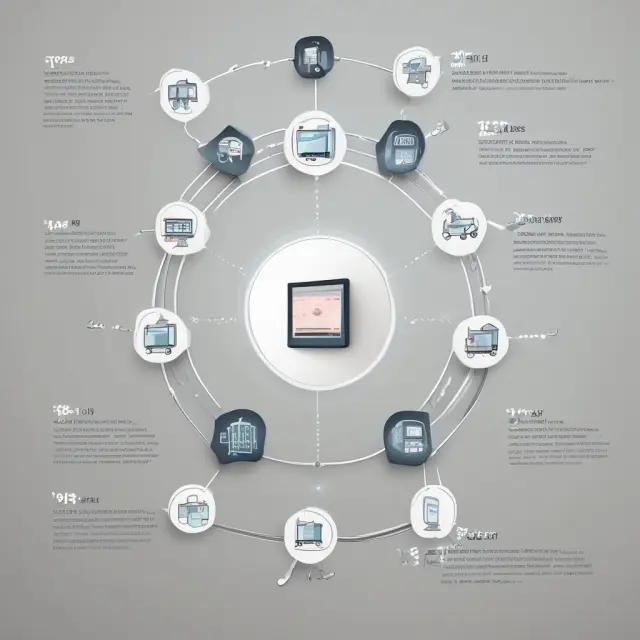
Investing in the technology sector is an attractive prospect for many investors due to its continuous growth potential, innovation, and influence on both consumers and businesses. The technology sector can be divided into several sub-sectors, one of them being hardware. Hardware refers to physical devices used in the technology industry, such as computers, mobile phones, tablets, wearable technology, and home appliances. This section explores the significance of the hardware subsector and discusses its future trends.
Hardware: A Significant Component of the Technology Sector
The hardware sector is crucial for businesses to grow and thrive. It provides essential tools that enable companies to streamline their operations, improve efficiency, and offer competitive products or services. For example, computers are utilized in industries like finance, manufacturing, healthcare, education, and entertainment to process and analyze data, manage financial transactions, create digital art, and educate students, respectively. Similarly, mobile phones have transformed communication between people, making it easier for them to connect from anywhere at any time.
History of the Hardware Subsector
Hardware has come a long way since its inception. It was once limited to bulky mainframe computers that occupied entire rooms. The evolution of hardware can be traced back to semiconductors, which led to the miniaturization of electronic devices. As technology advanced, innovations such as personal computers, laptops, tablets, and smartphones transformed how we communicate, work, and live. Wearable technology like fitness trackers, smartwatches, and virtual reality headsets represent the latest advancements in hardware and have paved the way for new industries and applications.
Future Trends in Hardware
The future of the hardware subsector is exciting as new technologies and trends continue to emerge. One such trend is the Internet of Things (IoT), which refers to devices connected to the internet and capable of collecting and sharing data. IoT devices include smart homes, industrial sensors, and wearable technology. Another trend is augmented reality (AR) and virtual reality (VR), which are transforming industries like education, gaming, and healthcare by providing immersive experiences that enhance learning, entertainment, and patient care. Lastly, advances in 3D printing and nanotechnology have the potential to revolutionize manufacturing processes and produce hardware that is smaller, lighter, and more efficient than ever before.
The Hardware Subsector: A Lucrative Investment Opportunity
Investing in hardware companies can yield significant returns as they often lead the way in developing new technologies and products. Moreover, with the increasing demand for hardware devices and applications across various industries, hardware stocks have shown impressive growth. Institutional investors looking to invest in hardware should conduct thorough research on companies’ financials, market trends, and growth potential before making an investment decision. By investing in hardware, institutional investors can benefit from long-term capital appreciation and stable dividends provided by established companies.
In conclusion, the technology sector’s hardware subsector offers a wealth of opportunities for investors looking to capitalize on technological innovations, growing demand, and transformative trends. Whether it be personal devices like smartphones or industrial applications such as 3D printing, understanding the significance and potential of the hardware subsector is essential for making informed investment decisions.

Investing in the Technology Sector: Strategies for Institutional Investors
The technology sector offers significant growth opportunities for institutional investors due to its diverse range of products and services, heavy investment in research and development (R&D), and potential future innovations. However, investing in tech stocks requires a thoughtful approach with careful risk management and diversification strategies. In this section, we explore various strategies institutional investors can employ when considering an investment in the technology sector.
Understanding Tech Companies’ Risk Profiles: Technology companies often undertake more significant risks to develop innovative products or services, such as investing in research and development for long-term projects with uncertain payoffs. Institutional investors must understand these risk profiles and carefully assess each company’s balance between near and long-term growth potential and financial stability.
Sector Diversification: Investing in the technology sector doesn’t necessarily mean putting all eggs in one basket. A well-diversified portfolio can help mitigate risks while still benefiting from the sector’s growth potential. Institutional investors may want to consider investing in a mix of subsectors like hardware, software, networking and internet, and semiconductors.
Geographical Diversification: The technology sector is not limited to the US market. Global markets offer additional opportunities for diversification. For example, emerging economies such as China and India have rapidly growing tech industries that may provide attractive investment opportunities. However, investors need to consider geopolitical risks, regulations, and cultural differences when investing abroad.
Value vs Growth: When considering technology stocks, it’s essential to evaluate both value and growth strategies. Value investors look for companies with strong fundamentals and solid financial performance, while growth investors focus on future potential and disruptive technologies. Institutional investors may employ a blend of both approaches, depending on their investment objectives and risk tolerance.
Investing in Tech IPOs: Initial Public Offerings (IPOs) can provide significant returns for investors, but they also come with unique risks, such as high volatility and potential regulatory uncertainty. Institutional investors must thoroughly research the company behind an IPO, including its financial health, management team, and market positioning before making a decision to invest.
In summary, investing in the technology sector requires careful planning, risk assessment, and diversification strategies. By understanding each tech company’s risk profile, diversifying their portfolio across subsectors and geographies, considering value vs growth, and carefully evaluating IPO opportunities, institutional investors can position themselves to benefit from the sector’s long-term potential while managing risks.

FAQ: Common Questions About the Technology Sector
Q1: What exactly is the technology sector?
A: The technology sector comprises businesses involved in researching, developing, or distributing technologically based goods and services. This category encompasses electronics manufacturing, software creation, computers, artificial intelligence, and other industries related to information technology (IT). Tech companies often invest heavily in research and development, taking on riskier projects for future potential growth.
Q2: Why is the technology sector so attractive for investment?
A: The technology sector’s appeal stems from its innovative nature. Companies within this sector are continually improving consumer goods like personal computers, mobile devices, wearable technology, home appliances, televisions, and more with new features. For businesses, technology companies create enterprise software, manage logistics systems, protect databases, and provide essential information and services for making strategic business decisions.
Q3: How significant is the growth potential of the technology sector?
A: The technology sector experiences steady growth, driven by the continuous emergence of new business lines that have never existed before. According to the U.S. Bureau of Labor Statistics, jobs in computer and information technology are projected to grow by 13% between 2020 and 2030.
Q4: What are the primary subsectors within the technology sector?
A: The technology sector can be broken down into several subsectors including semiconductors, software, networking and internet, and hardware. Semiconductors focus on creating electronic components for various applications, while software covers programming and coding for various industries. Networking and internet involve managing connectivity and communication platforms, and hardware refers to the actual devices, such as computers and wearable technology.
Q5: What are some notable tech companies in the industry?
A: Some of the most influential tech companies include Apple, Google, Amazon, Meta (formerly Facebook), Netflix, IBM, and Microsoft. These powerhouses drive innovation and growth within the technology sector.
Q6: Is there any disagreement about which industries belong under the ‘technology sector’ umbrella?
A: Yes, due to the ever-evolving nature of technology and the broad definition of the sector, there is ongoing debate regarding which industries should be classified as tech. Some argue that cloud computing companies should be categorized separately from software companies or consider having a whole new sector for each innovation. However, the current big buckets include semiconductors, software, networking and internet, and hardware.
 Next entry · No. 4,920Understanding the TED Spread: A Measure of Credit Risk
See also
-
 No. 3,712
20 Apr 2025
20 min
Understanding Open Source Software: A Gamechanger in Finance and Investment
Tech Tools
No. 3,712
20 Apr 2025
20 min
Understanding Open Source Software: A Gamechanger in Finance and Investment
Tech Tools -
 No. 5,746
04 Oct 2025
23 min
Uncovering the Power of Windows of Opportunity in Finance and Investment
Business Finance
No. 5,746
04 Oct 2025
23 min
Uncovering the Power of Windows of Opportunity in Finance and Investment
Business Finance -
 No. 5,686
29 Sep 2025
18 min
Understanding Whartonites: A Deep Dive into Graduates from the Prestigious Wharton School
Business Finance
No. 5,686
29 Sep 2025
18 min
Understanding Whartonites: A Deep Dive into Graduates from the Prestigious Wharton School
Business Finance -
 No. 5,555
19 Sep 2025
21 min
Understanding Very Small Aperture Terminals (VSAT) for Finance and Investment
Business Finance
No. 5,555
19 Sep 2025
21 min
Understanding Very Small Aperture Terminals (VSAT) for Finance and Investment
Business Finance -
 No. 5,513
15 Sep 2025
18 min
VoIP: Understanding the Revolutionary Technology Transforming Communication in Finance and Investment
Business Finance
No. 5,513
15 Sep 2025
18 min
VoIP: Understanding the Revolutionary Technology Transforming Communication in Finance and Investment
Business Finance -
 No. 5,238
23 Aug 2025
18 min
Understanding the Rare World of Unicorns: How Private Startups Become Billion-Dollar Companies
Business Finance
No. 5,238
23 Aug 2025
18 min
Understanding the Rare World of Unicorns: How Private Startups Become Billion-Dollar Companies
Business Finance