Understanding Average Propensity to Consume: Measuring Income Spending and Savings

Explore the meaning, calculation, significance, and factors that influence Average Propensity to Consume (APC). Learn how it impacts financial planning…
Introduction
Understanding Average Propensity to Consume (APC) is crucial when assessing an individual’s or a nation’s financial situation and economic health. This critical economic indicator measures the ratio of spending to income, revealing how much of one’s earnings are allocated for consumption versus savings. In this article, we delve deeper into the concept of average propensity to consume, its significance, calculation methods, comparisons, and factors influencing it.
What is Average Propensity to Consume?
Average propensity to consume (APC) is a measure of the percentage of income that an individual or nation spends on goods and services instead of saving. It provides valuable insights into financial behavior patterns and can be instrumental in forecasting economic growth trends. The calculation of APC involves dividing total consumption by total income, providing information about where income is being allocated.
Measuring Average Propensity to Consume
To calculate average propensity to consume, first determine an individual or nation’s spending (consumption) and income (earnings) levels. Next, divide the consumption figure by the income figure: APC = Consumption / Income. The resulting ratio indicates how much of the income is being spent as opposed to saved.
High vs. Low Average Propensity to Consume
A high average propensity to consume implies that a significant portion of income is being spent, which in turn drives economic growth through increased demand for goods and services. Conversely, a low APC signals less consumption and a potential economic slowdown as fewer goods are demanded. These patterns can be observed at both the individual and national levels.
Average Propensity to Consume and National Financial Health
A higher average propensity to consume generally signifies a stronger economy with increased consumer spending, driving job growth and business expansion. Conversely, lower APCs indicate an economic downturn as people save more and spend less, potentially leading to decreased demand for goods and services.
Stay tuned for the following sections: Marginal Propensity to Consume, Average Propensity to Consume vs. Propensity to Save, Impact of APC on Businesses and Markets, and Factors Influencing Average Propensity to Consume.

What Is Average Propensity to Consume?
Average propensity to consume (APC) represents the ratio of an individual or national economy’s spending on goods and services compared to its earned income. It is a crucial economic indicator measuring the percentage of disposable income that is spent rather than saved. Calculating APC provides insight into the economic health, as well as the consumer behavior of households or countries.
For instance, if a family spends $40,000 annually on goods and services while earning $60,000 in total income, their average propensity to consume would be 0.67 (or 67%). Economists often utilize APC as a tool for forecasting economic growth, as higher consumption levels point to more robust economies with increased demand for goods and services.
APC is particularly valuable when analyzed over time or compared across entities. By tracking an individual’s APC throughout their lifetime, they can assess their savings habits and plan accordingly for future financial goals. Economists, in contrast, can compare nations’ average propensities to consume to understand differences in consumer behavior, economic stability, and overall financial health.
Understanding APC’s Significance:
The average propensity to consume plays a pivotal role in determining the economic direction of both individual households and national economies. In the case of an economy with a high APC, more income is being spent on goods and services, driving demand for labor and contributing to increased production. Conversely, when an economy has a low APC, less money is being spent, potentially signaling economic instability or job insecurity.
Additionally, comparing average propensities to consume across income groups can provide insight into the financial habits of different demographics. Lower-income households may exhibit higher APCs due to their necessity to spend a larger portion of their earnings on basic needs, leaving little room for saving. Higher-income households, conversely, are more likely to have lower APCs as they can afford to save a larger percentage of their income.
APC and National Financial Health:
An economy with a high average propensity to consume is generally considered healthy and prosperous because it demonstrates strong consumer demand for goods and services. This drives economic growth, stimulates businesses, and creates jobs. However, it is essential to remember that APC should be analyzed in conjunction with the average propensity to save (APS), as they are inverse values; their sum equals 100%. Understanding both measures provides a more comprehensive assessment of a nation’s overall financial situation.
In conclusion, understanding average propensity to consume is an essential component for individuals and economists seeking insight into the spending habits of households or nations. By evaluating APC in conjunction with other economic indicators, such as the average propensity to save, one can effectively assess the current state and future direction of both personal and national financial health.

Measuring Average Propensity to Consume
The Average Propensity to Consume (APC) is a significant economic ratio that measures how much of an individual or nation’s total income is spent on goods and services instead of being saved. APC plays a crucial role in forecasting economic growth as it reveals the spending behavior of consumers, ultimately driving demand for products and services.
To calculate APC, divide the average consumption expenditure by the average household income:
APC = Average Consumption / Average Income
Let’s consider two scenarios, one at an individual level and another at a national level.
Individual Scenario: An individual with a monthly salary of $3,000 has an average consumption expenditure of $2,500. Calculate APC as follows:
APC = 2,500 / 3,000 = 0.83 or 83%
This means that the individual spends 83 cents out of each dollar earned, leaving 17 cents for savings.
National Scenario: Assume a country’s economy has a gross domestic product (GDP) equivalent to its disposable income of $500 billion for the previous year. The total savings of the economy was $300 billion, and the rest was spent on goods and services. To determine APC, we calculate it as:
APC = 500 – 300 / 500 = 0.4 or 40%
Here, 40 cents of each dollar is being consumed, meaning that 60 cents are saved. Economists use the APC to gauge national financial health and economic growth trends.
Interestingly, APC and its inverse, Average Propensity to Save (APS), sum up to one because all income must be either spent or saved. A nation’s savings ratio can indicate its average propensity to save and is calculated as the difference between income and spending divided by income.
In conclusion, understanding Average Propensity to Consume provides valuable insights into economic health and growth trends at an individual and national level. It plays a crucial role in determining overall financial stability and influences investment decisions for businesses and markets.

High vs. Low Average Propensity to Consume
Understanding the distinction between high and low average propensity to consume (APC) is crucial when examining an individual’s or nation’s financial situation. APC, as we have seen, is a critical economic indicator that measures the percentage of income allocated for consumption versus savings. A higher APC indicates a stronger economy, with consumers demanding more goods and services. Conversely, a lower APC signifies a slower economy with less demand for these items.
The average propensity to consume is highest for low-income households since their earnings may barely cover necessities, leaving them little disposable income for savings. High-income earners tend to save more due to increased cash flow after covering essential expenses. Economists focus on middle-income households, as their spending habits often reflect broader economic trends and sentiment.
A high APC is generally favorable for an economy as it fuels demand for goods and services, spurring growth, business expansion, and job creation. However, a low APC can signify reduced consumer confidence or economic uncertainty. Economists closely monitor this trend to anticipate future shifts in the economy.
The following graph illustrates how the average propensity to consume varies depending on income levels: . The curve shows that a larger percentage of lower-income households’ earnings goes towards consumption, while higher-income earners typically save a greater proportion. This relationship is consistent across countries and time periods.
The APC is linked to the average propensity to save (APS), which measures the percentage of income not spent on consumption but saved instead. The total sum of APC and APS always equals one because all income must be either saved or consumed. For instance, if an individual spends 70% of their income, they save 30%. This leaves no room for wastage or loss; every penny is accounted for.
Comparing the average propensity to consume and average propensity to save can shed light on a nation’s financial health. A high savings rate (low APC) indicates that households are well-prepared for emergencies, retirement, and other long-term goals. Conversely, a low savings rate (high APC) suggests potential risks such as insufficient emergency funds, unsecured debts, or an overreliance on credit.
In conclusion, the distinction between high and low average propensity to consume plays a significant role in understanding economic trends and financial planning. By examining consumption patterns across income levels and timeframes, individuals and governments can make informed decisions regarding savings strategies, debt management, and fiscal policy.

Average Propensity to Consume and National Financial Health
Understanding Average Propensity to Consume (APC) goes beyond an individual’s financial management or consumption habits; it also holds significant relevance in evaluating a nation’s economic health. The APC, calculated as the ratio of total consumption spending to total income, provides valuable insights into a country’s economic status and future growth prospects.
A high average propensity to consume implies that the population spends a larger portion of their disposable income on goods and services. This increased demand stimulates business expansion, job creation, and overall economic growth. Conversely, lower APC levels suggest a slowdown in consumer spending and potential economic downturns.
Considering income distribution across various income groups can reveal interesting trends. For instance, low-income households often demonstrate higher APCs due to their necessity to spend most or all of their earnings on essentials. In contrast, high-income households typically have lower APCs due to the availability of disposable income for savings and investments.
Analyzing changes in a country’s average propensity to consume over time can provide essential context when assessing economic trends. For instance, if the APC increases significantly, it could indicate rising consumer confidence and expanding economic opportunities. Conversely, a declining APC may signal economic instability or reduced consumer purchasing power.
Comparing the APC of different countries offers a unique perspective on their relative financial positions. Countries with high average propensities to consume generally experience strong economic growth due to robust domestic demand. Comparatively, nations that save more and spend less tend to have slower growth rates but may benefit from long-term financial stability.
Economists employ the concept of average propensity to consume in their forecasting models. They can estimate future economic trends based on historical APC data and anticipate changes in consumption spending and overall economic activity. This information is critical for making informed policy decisions related to fiscal, monetary, or regulatory measures.
In conclusion, understanding average propensity to consume offers valuable insights into a nation’s financial health and future growth prospects. By examining both historical trends and international comparisons, economists can better anticipate economic shifts and make data-driven recommendations for policymakers.

Marginal Propensity to Consume
When studying an economy’s spending and saving patterns, economists look beyond average propensity to consume (APC) and also consider marginal propensity to consume (MPC). While APC measures the overall spending habits of a nation or individual based on past income levels, MPC determines how additional income affects consumption.
The concept of MPC is derived from understanding that as income increases, so does consumption, but not in a linear fashion. Income gains could lead to increased consumption levels only up to a specific point, after which an individual might choose to save any excess. This behavior varies among households and nations, making marginal propensity to consume a more dynamic measure of spending habits than APC.
Marginal propensity to consume is calculated as the change in consumption divided by the change in income. It shows how much of each additional unit of income will be spent on goods or services. MPC can provide valuable insights into an economy’s short-term responsiveness to changes in income levels.
For instance, assume a household has an average propensity to consume of 0.8 and spends $40,000 annually on living expenses with an income of $50,000. If the household receives a $3,000 raise, they might decide to save some of it or even spend more if prices rise. The marginal propensity to consume for this household can be calculated as follows:
ΔC / ΔY = ($43,000 – $40,000) / ($53,000 – $50,000) = 0.92
In this example, the household spends an additional $3,000 for every $3,000 increase in income, meaning it has a marginal propensity to consume of 0.92. This figure shows that the household is spending more than its previous average ratio on each additional dollar earned.
By examining MPC trends over time or among demographic groups, economists can better understand how individuals or nations will respond to income changes and adjust their economic forecasts accordingly. A higher marginal propensity to consume implies that a larger proportion of an increase in income will be spent immediately, resulting in stronger consumer demand for goods and services. Conversely, a lower marginal propensity to consume indicates that a greater percentage of new income will go towards savings, suggesting less spending on current products.
When evaluating the relationship between APC and MPC, it’s important to note that they are inverse measures of one another. As APC decreases (consumers save more), MPC increases (the marginal additional dollar spent grows), and vice versa. By considering both APC and MPC, economists can paint a comprehensive picture of an economy’s income distribution, consumption habits, and overall economic health.
Marginal propensity to consume is also a crucial factor when evaluating fiscal policies such as tax cuts or stimulus packages. Understanding how much additional income will be spent versus saved helps determine the potential impact on economic growth, employment, and inflation. This information can guide policymakers in making informed decisions about public spending and revenue policies.
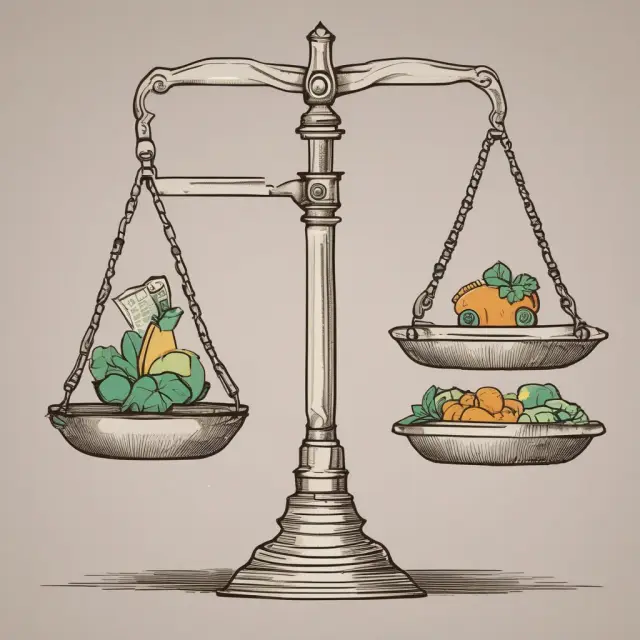
APC vs. Propensity to Save
Understanding Average Propensity to Consume and Propensity to Save are two essential economic indicators that help in assessing an individual’s or a nation’s spending and saving behavior. While both concepts are related, they serve distinct purposes when it comes to analyzing the financial health and overall economic situation of entities. In this section, we will discuss the differences between Average Propensity to Consume (APC) and Propensity to Save (PTS), and how these two ratios impact individuals and economies.
First, let’s briefly recap what APC is. The average propensity to consume refers to the percentage of income spent on goods and services. It is calculated by dividing total consumption or spending by total income or earnings. For instance, an individual with a $50,000 annual salary who spends $35,000 on living expenses and savings has an average propensity to consume of 70%.
On the other hand, Propensity to Save (PTS) is defined as the percentage of income that is saved. It can be calculated by subtracting total consumption or spending from total income and then dividing this difference by total income. To continue our example above, if someone saves $15,000 per year out of a $50,000 income, they have a propensity to save of 30%.
Now that we have established the definitions let’s explore their differences:
1) Inverse relationship: The sum of the average propensity to consume and the propensity to save is always equivalent to one. This inverse relationship signifies that every unit of income spent on consumption or savings equals a unit not saved or consumed, respectively. As a result, an individual’s disposable income (total earnings after taxes) can be expressed as the difference between their consumption and savings:
Total Disposable Income = Total Income – Savings
2) Economic implications: From an economic standpoint, average propensity to consume and propensity to save have contrasting effects on the economy. A higher APC indicates strong consumer demand and a thriving economy, while a lower PTS signals a cautious approach towards spending and potential financial insecurity. Conversely, a higher PTS implies savings for future investments or emergencies, which can contribute to economic stability and growth through interest accumulation.
3) Impact on businesses and markets: For businesses, these ratios provide valuable insights into consumer behavior. An understanding of average propensity to consume and propensity to save helps companies tailor their marketing strategies, production plans, and pricing structures. This, in turn, can lead to increased sales, profits, and growth opportunities.
In conclusion, Average Propensity to Consume and Propensity to Save are crucial economic indicators that offer insights into individuals’ spending and saving habits and the overall health of economies. By understanding these ratios, we can make informed decisions regarding personal financial planning, investment strategies, and economic policy-making. Stay tuned for our next article where we will dive deeper into Average Propensity to Save and discuss its significance in various contexts.

Impact of APC on Businesses and Markets
Average Propensity to Consume (APC) plays a significant role in both personal and national financial health, but it also has substantial implications for businesses and markets. Understanding this impact can help investors make informed decisions about where to allocate their resources.
Businesses rely on consumer spending to fuel their growth. Companies depend on consumers buying their goods or services to generate revenue. Higher average propensity to consume (APC) indicates greater demand for products, which can lead to increased sales and higher profits for businesses. Conversely, lower APC signals reduced demand, potentially impacting a company’s bottom line negatively.
When the average propensity to consume is high, consumer spending increases, leading to an economy in expansion mode. This growth attracts businesses looking to capitalize on increased demand. In turn, businesses expand their operations by hiring more workers and investing in infrastructure, contributing to overall economic prosperity.
Additionally, a higher APC can lead to inflationary pressure. When consumers spend more, the prices of goods and services may increase due to the higher demand outpacing supply. This price growth can impact investors through stock valuations and bond yields, as companies’ earnings may be negatively affected while interest rates rise in response to inflation.
Conversely, a lower APC can lead to decreased economic activity. Lower demand for goods and services reduces sales and revenue for businesses. In turn, businesses are forced to cut costs by laying off employees or reducing investments. Lower consumer spending can also impact stock prices negatively as investors sell off assets due to perceived risk.
Market sectors are not immune to the effects of APC shifts. For instance, industries with high sensitivity to income levels, such as luxury goods and housing, tend to experience greater volatility when APC changes occur. In contrast, sectors that cater to essentials like food and healthcare may be less impacted by fluctuations in consumer spending due to their necessity.
Understanding the impact of average propensity to consume on businesses and markets can help investors make informed decisions about where to allocate resources. By analyzing APC trends across various industries, an investor can identify sectors poised for growth or those facing challenges and adjust their investment portfolios accordingly.

Factors Influencing Average Propensity to Consume
Understanding the concept of average propensity to consume (APC) is essential for individuals and economists alike, as it provides insights into the relationship between income and spending within an economy. Although APC can be calculated through dividing consumption by income, there are various factors that can influence this ratio at both individual and national levels.
One significant factor influencing average propensity to consume is disposable income. Disposable income refers to the amount of money available for spending after taxes and other mandatory deductions have been subtracted from total income. Households with higher disposable income may have a lower APC as they can save more, whereas those with lower disposable incomes might need to spend a larger proportion of their earnings, leading to a higher average propensity to consume.
Another crucial factor is the stage of the economic cycle. During an expansionary phase, when employment levels are high and wages are growing, consumer confidence tends to rise, driving up spending and resulting in a higher APC. Conversely, during recessions or economic downturns, households tend to be more cautious with their spending, leading to a lower average propensity to consume as they save more to mitigate financial uncertainty.
Personal preferences and lifestyle choices also significantly impact APC. For instance, some individuals might prioritize saving for retirement or other long-term goals, leading to a lower APC despite having a sufficient income. In contrast, others might choose to live beyond their means and spend most of their earnings, resulting in a higher APC.
At the national level, government policies and economic conditions can have a significant impact on average propensity to consume. For example, taxation policies that encourage saving through tax incentives or disincentives for consumption can influence savings behavior and thus affect APC. Additionally, factors such as inflation, interest rates, and exchange rates can significantly impact consumer spending patterns, which in turn affects the national APC.
Understanding these factors that influence average propensity to consume is crucial for individuals making personal financial decisions and for economists evaluating economic trends and forecasting future growth. By analyzing these factors and their interrelationships, one can gain a more comprehensive understanding of both individual and national spending patterns and the broader implications for economic growth.
In summary, average propensity to consume is an essential economic indicator that can be influenced by several factors at both the individual and national levels, including disposable income, the stage of the economic cycle, personal preferences, lifestyle choices, government policies, inflation, interest rates, exchange rates, and more. Understanding these factors and their interactions can provide valuable insights into consumer spending patterns and economic trends, enabling informed decision-making for individuals and economists alike.

Conclusion: The Role of Average Propensity to Consume in Financial Planning and Policy Making
Understanding the significance of average propensity to consume (APC) is essential for both individuals and economists. This economic concept measures the percentage of income that a household or nation allocates towards spending versus saving. By examining APC, we can draw valuable insights into financial planning, investment decisions, and policy making.
For individuals, monitoring their personal average propensity to consume provides information about their spending habits and potential for saving. By knowing how much of their income is being allocated to consumption versus savings, individuals can make informed decisions regarding budgeting, debt management, and long-term financial goals.
For economists and governments, tracking the APC of nations offers critical data for economic forecasts, monetary policy, and fiscal planning. An economy with a higher average propensity to consume indicates increased consumer demand for goods and services, which can lead to economic expansion, job growth, and overall prosperity. Conversely, a lower APC signals decreased spending and potential economic contraction.
APC is particularly informative when analyzed over time or compared across nations or income groups. By comparing the average propensity to consume of different countries, economists can gain insights into their relative levels of consumer spending versus saving and assess potential trade implications. For instance, a country with a relatively high APC may experience greater demand for foreign goods due to its lower savings rate.
Moreover, studying trends in APC across various income groups within a nation can shed light on economic inequality and provide valuable data for social welfare policies. For example, if low-income households consistently display higher average propensities to consume than high-income households, policymakers may need to consider initiatives aimed at increasing savings among the lower income demographic or expanding access to affordable financial services.
In conclusion, average propensity to consume is a vital economic concept that plays a crucial role in both personal and national financial planning and policy making. By understanding APC trends and recognizing its impact on economic growth, individuals and policymakers can make informed decisions aimed at fostering long-term prosperity and stability.

FAQs about Average Propensity to Consume
What does Average Propensity to Consume (APC) represent?
Average Propensity to Consume (APC) refers to a measure of the percentage of income an individual or an economy spends instead of saving. It is calculated by dividing average consumption or spending by income. A higher APC value indicates more consumption and less savings, while a lower APC value implies the reverse.
What’s the difference between Average Propensity to Consume (APC) and Average Propensity to Save (APS)?
Average Propensity to Consume (APC) and Average Propensity to Save (APS) are interconnected as their sum always equals one. APC measures consumption as a percentage of income, while APS represents savings as a percentage of income. A higher APC value implies lower APS, and vice versa.
What’s the significance of Average Propensity to Consume (APC) for an individual?
For an individual, understanding their APC is essential in managing their budget effectively. Knowing how much of their income is spent versus saved helps them determine their spending habits and establish financial goals accordingly.
How can Average Propensity to Consume (APC) influence the economy?
When the average propensity to consume (APC) for an economy is high, it indicates that a larger portion of income is being spent on goods and services, driving economic growth. Conversely, a lower APC implies less spending, potentially causing slower economic expansion.
What factors can impact Average Propensity to Consume (APC)?
Factors affecting an individual’s average propensity to consume include income level, personal preferences, debt load, and changes in prices of goods and services. For economies, factors like inflation, interest rates, taxes, and employment levels can influence APC.
How does the Average Propensity to Consume (APC) vary among different socio-economic classes?
The average propensity to consume typically differs across income brackets, with lower-income households generally having a higher APC due to spending a larger proportion of their income on necessities. Higher-income households usually have a lower APC as they can afford to save more.
What’s the relationship between Average Propensity to Consume (APC) and Marginal Propensity to Consume (MPC)?
Average Propensity to Consume (APC) measures the overall consumption behavior, while Marginal Propensity to Consume (MPC) examines how changes in income impact consumption. MPC is a derivative of APC, as it represents the change in consumption when income changes by a certain amount.
 Next entry · No. 291Understanding Different Cost Basis Methods for Mutual Fund Tax Reporting
See also
-
 No. 1,065
23 Jul 2024
18 min
Understanding Disposable Income: Net Income After Taxes – A Key Economic Indicator
Business Finance
No. 1,065
23 Jul 2024
18 min
Understanding Disposable Income: Net Income After Taxes – A Key Economic Indicator
Business Finance -
 No. 4,424
17 Jun 2025
20 min
Understanding Retail Sales: A Key Economic Indicator for Investors
Economics
No. 4,424
17 Jun 2025
20 min
Understanding Retail Sales: A Key Economic Indicator for Investors
Economics -
 No. 4,099
22 May 2025
19 min
Procyclic: Understanding the Correlation between Economic Indicators and Business Cycles
Economics
No. 4,099
22 May 2025
19 min
Procyclic: Understanding the Correlation between Economic Indicators and Business Cycles
Economics -
 No. 3,945
09 May 2025
19 min
Understanding Per Capita: A Key Concept in Economics and Statistical Analysis
Economics
No. 3,945
09 May 2025
19 min
Understanding Per Capita: A Key Concept in Economics and Statistical Analysis
Economics -
 No. 3,074
26 Feb 2025
16 min
Marginal Propensity to Consume (MPC): Understanding the Connection Between Income, Consumption, and Saving
Economics
No. 3,074
26 Feb 2025
16 min
Marginal Propensity to Consume (MPC): Understanding the Connection Between Income, Consumption, and Saving
Economics -
 No. 1,414
12 Sep 2024
20 min
Understanding the Expenditure Method for Calculating Gross Domestic Product: A Comprehensive Guide
Economics
No. 1,414
12 Sep 2024
20 min
Understanding the Expenditure Method for Calculating Gross Domestic Product: A Comprehensive Guide
Economics